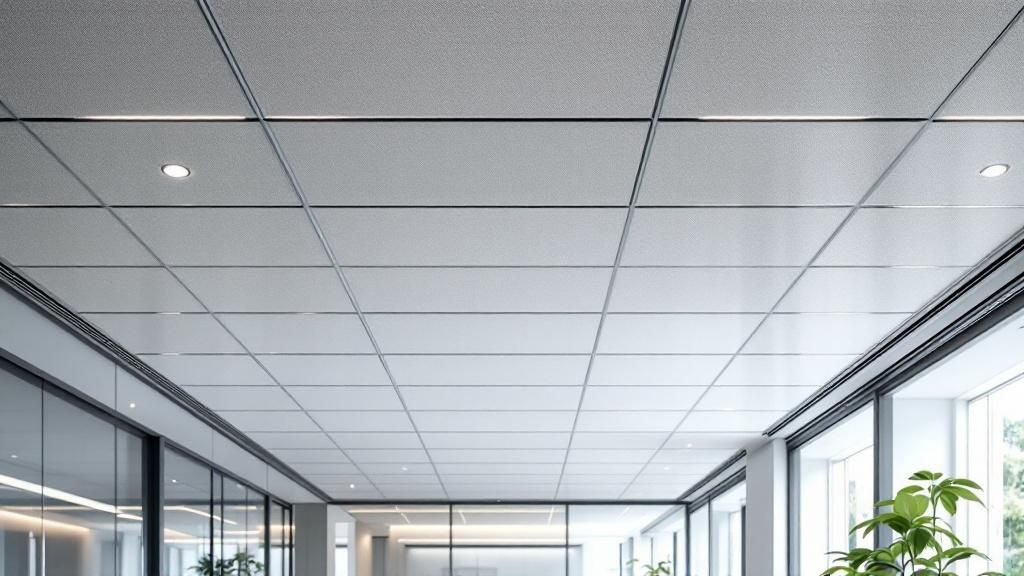
A Guide to Acoustic Ceiling Panels
At their core, acoustic ceiling panels are specialized tiles built to do one thing really well: absorb sound. By soaking up sound waves, they cut down on echo and background noise, making it easier to hear what matters and creating a much more comfortable space. Think of them as the unsung heroes of good room acoustics, critical for improving speech clarity and taming chaotic sound.
How Acoustic Panels Transform Room Sound
Ever walked into a cavernous lobby or a busy open-plan office and been hit by a wall of noise? That overwhelming, jumbled sound isn't just about volume; it's about sound waves bouncing wildly off hard surfaces like concrete floors, glass, and drywall. This effect is called reverberation.
An acoustic ceiling panel is basically a sponge for sound. Just like a kitchen sponge soaks up water, these panels are made from porous materials that trap sound energy and convert it into a tiny, unnoticeable amount of heat. This simple process stops sound waves from ricocheting around the room, killing echoes before they even have a chance to start.
The Science of Sound Absorption
The main job of an acoustic panel is sound absorption, which is often confused with soundproofing. While they sound similar, they solve completely different problems.
- Sound Absorption: This is all about improving the sound quality inside a room. By absorbing extra sound energy, panels reduce echo and make speech much clearer. The goal is to make the space more functional and pleasant.
- Soundproofing: This is about blocking sound from traveling between spaces. It’s about keeping noise in or out. While some heavy-duty acoustic panels might help a little with this, it’s not their primary function.
The real magic of acoustic ceiling panels lies in their ability to manage a room's reverberation time—how long it takes for a sound to completely fade away. In a room full of hard surfaces, this can be several seconds, creating a muddy, noisy mess. With the right panels, you can bring that time down to under a second.
Why Reverberation Matters
To really get what these panels do, you have to understand reverberation. Picture yourself shouting in an empty gymnasium. Your voice hangs in the air, bouncing off every surface and turning into a garbled echo. Now, imagine that same gym filled with people and soft furnishings. The sound is instantly clearer. Acoustic panels act just like those furnishings, but for your ceiling.
By getting reverberation under control, these panels deliver some huge benefits:
- Enhanced Speech Intelligibility: In classrooms, boardrooms, or anywhere clear communication is a must, panels make sure every word comes through crisp and clear.
- Reduced Noise Distractions: For open offices, they're a lifesaver. They help muffle the constant hum of background chatter, keyboard clicks, and other sounds that kill concentration.
- Improved Overall Comfort: A loud, echoey space is just plain stressful. Acoustic treatment makes any environment feel calmer and more welcoming for everyone.
Of course, panels are just one piece of the puzzle. You might also want to look into how other systems affect your room’s acoustics. For instance, optimizing audio in your space with soundbars or surround sound can work hand-in-hand with your acoustic strategy. Ultimately, it’s all about creating an environment that sounds just right for its purpose, whether that’s focused work, great conversation, or an incredible movie night.
A Look at Acoustic Panel Materials
Picking the right material for your acoustic ceiling panels is a lot like choosing the right tires for a car. You have to balance performance, longevity, and cost. Get it right, and the ride is smooth. Get it wrong, and you’ll notice. The material you select is the single biggest factor in how a room will sound and feel, so let's break down the most common options.
The Go-To Choice: Fiberglass
When it comes to acoustic performance, fiberglass is the undisputed champion. It's the industry workhorse for a good reason. The magic lies in its construction—countless fine glass strands are woven into a dense mat, creating millions of tiny air pockets.
Think of it like a sound trap. When sound waves from conversations or office clatter hit the panel, they get caught in these pockets. Their energy converts into a tiny amount of heat, and just like that, the noise is absorbed instead of bouncing back into the room. This makes fiberglass fantastic for soaking up mid-to-high frequency sounds, which is why you see it everywhere from boardrooms to classrooms.
The Tougher Cousin: Mineral Wool
Next up is mineral wool, sometimes called rock wool. This stuff is made by melting down rock and spinning it into fibers, kind of like making cotton candy. The result is a dense, tough panel that's not just good with sound, but also brings some serious brawn to the table.
What really makes mineral wool stand out are its bonus features:
- Fire Resistance: It’s naturally non-combustible and can handle incredibly high heat, which is a huge plus for fire safety codes.
- Moisture and Mold Resistance: Because it’s made from rock, there’s nothing for mold or mildew to feast on. This is critical in humid areas or spaces like commercial kitchens.
It's a bit heavier and can cost more than fiberglass, but for commercial projects where durability and safety are non-negotiable, mineral wool is an easy choice.
Acoustic Panel Material Comparison
To make things a little clearer, here's a quick side-by-side look at how these common materials stack up.
| Material | Sound Absorption | Fire Resistance | Aesthetics | Best For |
|---|---|---|---|---|
| Fiberglass | Excellent (especially high frequencies) | Good | Standard, functional | Offices, schools, recording studios |
| Mineral Wool | Very Good | Excellent (non-combustible) | Utilitarian | Commercial buildings, healthcare, high-traffic areas |
| Wood Fiber | Good | Good | Natural, textured | Restaurants, creative spaces, eco-conscious designs |
| Recycled Cotton | Excellent | Poor (can be treated) | Soft, colorful | Homes, studios, spaces prioritizing sustainability |
| Perforated Metal | Varies (depends on backing) | Excellent | Modern, sleek, industrial | Airports, lobbies, high-end retail |
Each material has its own sweet spot. The key is matching its strengths to the demands of your space.
The Green Team: Eco-Friendly Options
If sustainability is high on your list, you're in luck. The world of acoustic materials has gone green, and you don't have to sacrifice performance.
Panels made from wood fiber (often wood wool bound with cement) offer solid sound absorption with a unique, textured look that adds a ton of warmth to a room. You also have panels made from recycled cotton or denim, which are acoustic powerhouses that divert waste from landfills. They bring a soft, inviting finish to a space.
Choosing an eco-friendly panel isn't a compromise. Many of these materials have impressive NRC ratings and can help your project earn green building certifications. It’s a win for your ears and a win for the planet.
This chart shows just how effective these panels can be, particularly with the kinds of sounds that cause the most distraction.
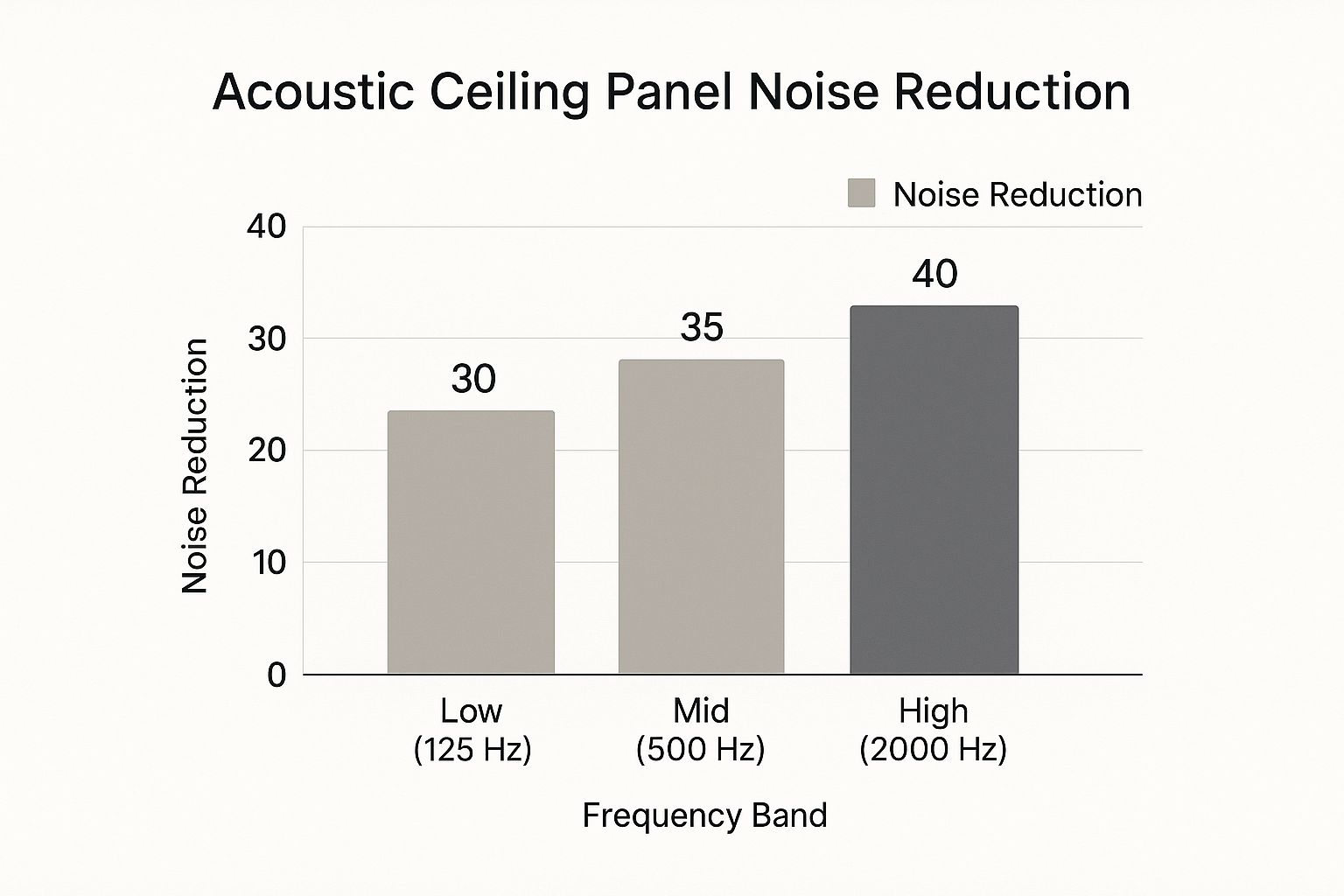
As you can see, they excel at knocking down those higher-frequency sounds—the chatter and clatter that kill concentration.
Beyond the Basics: Aesthetic and Specialty Materials
Sometimes, function just isn't enough; you need form, too. This is where specialty materials come into play. Take perforated metal panels, for example. They offer a clean, industrial look that’s perfect for spaces like airports, modern offices, or high-end retail shops.
The design is clever—sound passes through the tiny holes in the metal and gets absorbed by an acoustic backing (like fiberglass) hidden behind it. You get the sleek, durable finish of metal without sacrificing sound control. While they’re a premium option, they solve two problems at once.
If you want to see the full range of what's out there, this guide to acoustic ceiling tiles is a great place to dig deeper. At the end of the day, the right material is the one that ticks all the boxes for your specific project.
Understanding Acoustic Performance Ratings
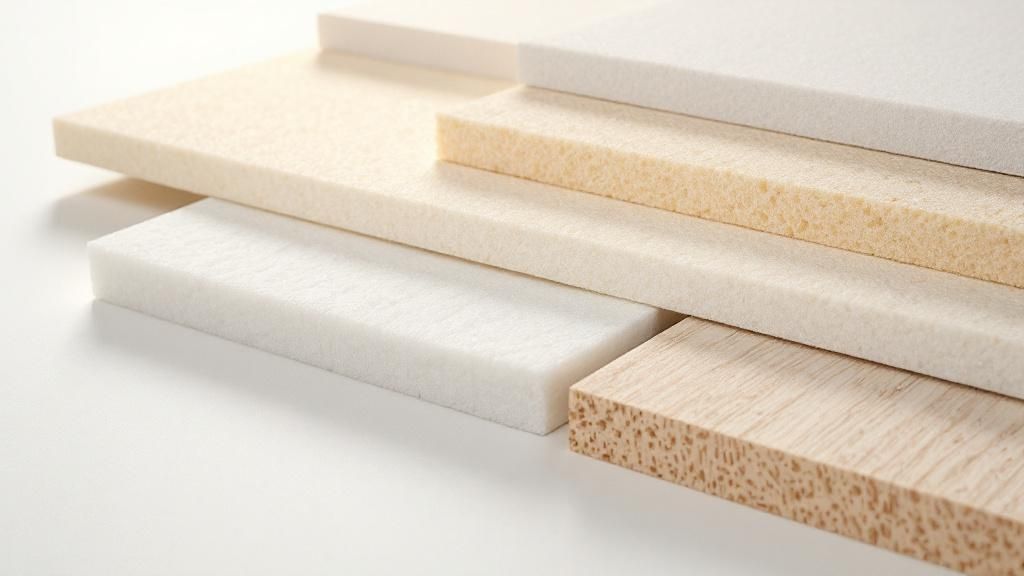
When you start looking at acoustic ceiling panels, you’ll quickly run into a few technical specs. The acronyms and numbers on a product sheet might look a bit intimidating, but they’re actually your best friends in this process. They tell you exactly how a panel will behave in your space.
Think of these ratings like the nutrition facts on a food label. They give you the hard data you need to stop guessing and start making smart choices. The two most important metrics you absolutely need to know are the Noise Reduction Coefficient (NRC) and the Ceiling Attenuation Class (CAC).
Each one measures a completely different aspect of sound control. Getting the difference between them is the key to creating the exact acoustic environment you’re aiming for.
Decoding Noise Reduction Coefficient (NRC)
The Noise Reduction Coefficient (NRC) is the rating you'll see most often. It’s a straightforward score that tells you how much sound a panel absorbs. It’s measured on a simple scale from 0 to 1—the higher the number, the more sound gets soaked up.
Let's make that more concrete:
- An NRC of 0 is like a polished mirror. When light hits a mirror, it bounces right back. A material with an NRC of 0 does the same thing with sound waves, reflecting everything and absorbing nothing. Think of a bare concrete wall.
- An NRC of 1 is the opposite, like a black hole. Sound goes in and never comes out. A material with an NRC of 1 is a perfect sound absorber, soaking up 100% of the sound that hits it.
Most acoustic ceiling panels you’ll find have an NRC somewhere between 0.50 and 0.95. So, a panel with an NRC of 0.75 is absorbing 75% of the sound waves hitting its surface and reflecting the other 25% back into the room. If you’re trying to quiet down an open-plan office, a busy restaurant, or any space where echo and chatter are the problem, a high NRC is what you need.
This need for better noise control is driving a huge market trend. The ceiling tiles market in the Middle East and Africa, for example, is booming. It already covered over 1 billion square metres and is on track to hit nearly 2.55 billion square metres by 2034, all thanks to massive commercial and infrastructure projects. This massive growth underscores just how important it is to find materials that both look good and kill noise. You can dive deeper into this regional construction trend and see its impact on building materials.
Understanding Ceiling Attenuation Class (CAC)
While NRC is all about managing sound inside a room, Ceiling Attenuation Class (CAC) is about stopping sound from traveling between rooms. This rating measures how well a ceiling panel blocks sound from leaking up through the plenum—that empty space above the drop ceiling grid—and into the room next door.
CAC is your privacy rating. It’s less about echo and all about preventing conversations in one office from being overheard in the next. A higher CAC score means better sound isolation between rooms.
This is a non-negotiable metric in places where confidentiality is critical, like:
- Healthcare clinics and patient exam rooms
- Private offices and corporate boardrooms
- Law firms and financial institutions
A typical office ceiling panel with a CAC rating of 35 is considered good. If you find yourself easily hearing what your neighbors are talking about, a low CAC is almost certainly the culprit. When you’re picking panels for a space where privacy matters, you have to look for a high CAC rating just as much as a good NRC. Getting that combination right is what delivers both comfort and confidentiality.
The Real-World Benefits of Acoustic Ceilings
Technical ratings are one thing, but the real magic of acoustic ceiling panels is how they completely change the feel of a room. This isn't just about making a space quieter; it's about making it work better for the people in it. The results are real and measurable, impacting everything from how well we work and learn to how much we enjoy a meal out.
Think about spaces where being heard clearly is everything. In a classroom, an echoey room means a teacher's voice gets lost and students miss out. The right acoustic treatment makes sure every lesson lands, without forcing teachers to shout. The same goes for a boardroom—when you’re making big decisions, you can't afford to have people asking, "Can you say that again?"
Boosting Focus and Well-being
In any modern office, distractions are the enemy of good work. That constant buzz of chatter, phones ringing, and keyboards clacking away can completely derail your concentration. Acoustic ceiling panels are like a sponge for that extra noise, soaking it up to create a calmer, more productive atmosphere.
This isn’t just about getting more done. Constant noise actually drives up stress and makes people feel drained. By getting the sound under control, you create a workspace that’s not only more efficient but genuinely healthier and less taxing for your team.
An acoustically balanced space isn't a luxury; it's a fundamental part of good design. It lets a room do what it was designed for—whether that's learning, working, or socializing—without fighting against a wall of noise.
Enhancing the Customer Experience
For any business that deals with the public, from restaurants to retail shops, the vibe is critical. A loud, chaotic space is an instant turn-off, often causing people to cut their visit short and think twice about coming back. This is where acoustics become a serious business tool. A good example is improving acoustics in restaurants, where a comfortable sound level makes people relax, stay longer, and ultimately spend more.
This focus on creating comfortable acoustic environments is a huge trend, especially in busy cities. The architectural acoustic panel market across the Middle East has exploded, driven by a growing understanding of how noise pollution affects our health and productivity. With all the construction happening in the UAE and beyond, creating interiors that look great and sound great is no longer an afterthought—it's a priority.
More Than Just Sound Control
The advantages of acoustic ceiling panels go way beyond just dialing down the noise. They're also key players in a building's overall look, feel, and safety.
- Aesthetic Versatility: Forget the boring old tiles of the past. Today's panels come in a massive range of colors, textures, and finishes. They can disappear into a ceiling for a clean look or become a standout design feature all on their own.
- Safety and Compliance: Many acoustic materials, like mineral wool or certain gypsum products, are fantastic at resisting fire. This is a huge deal for meeting strict building codes and adds a crucial layer of safety. Our guide on gypsum ceiling tiles digs deeper into how they balance safety and sound control.
- Improved Lighting: A lot of modern panels are designed with a highly reflective surface. This simple feature helps bounce natural and artificial light around the room more evenly, making the whole space feel brighter and more open. It can even help cut down on electricity bills.
How to Choose the Right Acoustic Panels

Picking the right acoustic ceiling panels can feel like a huge task, but it really comes down to matching the product to your space. The perfect choice hits that sweet spot between acoustic performance, visual style, and a few practical must-haves. Before you even glance at a product catalog, the very first step is to get crystal clear on your needs.
Think about the main purpose of the room. Is it a buzzing open-plan office where you need to tame the constant chatter? Or is it a private boardroom where every word spoken needs to stay within those four walls? The answer will steer every other decision you make.
Aligning Performance with Purpose
Once you've defined what your space is for, you can start translating that purpose into hard numbers. This is where those technical ratings—Noise Reduction Coefficient (NRC) and Ceiling Attenuation Class (CAC)—become your best friends. They help you move from a vague goal like "making it quieter" to a specific, measurable target.
Here’s a simple way to think about it:
- For busy, collaborative spaces like call centers, cafeterias, or open offices, the top priority is soaking up sound inside the room to kill echoes and lower the overall noise level. For these areas, you'll want a high NRC rating, usually 0.70 or more.
- For spaces where privacy is key, think medical exam rooms, law offices, or private executive suites. Here, the goal is to stop sound from bleeding into the next room. That means you need to prioritize a high CAC rating, aiming for 35 or higher to keep conversations confidential.
Choosing panels isn’t about chasing the highest numbers on the spec sheet. It’s about striking the right balance for your unique environment. A library needs fantastic sound absorption (high NRC) but probably doesn’t need a massive privacy rating (CAC). A row of therapy rooms, on the other hand, needs the exact opposite.
Considering Aesthetics and Design
Let's be honest, acoustic ceiling panels take up a lot of visual real estate. They aren't just a utility item anymore. The days of being stuck with one boring, functional option are long gone. Today's panels can either disappear into your ceiling for a clean look or become a bold architectural statement.
When you're thinking about the look and feel, consider a few key things:
- Texture: Are you going for a modern, minimalist vibe with a smooth, clean finish? Or do you want a textured surface to add a bit of depth and character?
- Color: White is the classic choice because it reflects light so well, but panels now come in a whole spectrum of colors. You can easily match your brand's palette or your overall design scheme.
- Edge Details: This subtle detail makes a big difference. A standard square edge gives you that classic, visible grid look. A tegular or "revealed" edge drops the panel just below the grid, creating a more dimensional, shadowed effect.
These choices should feel like a natural extension of your interior design. A sleek tech office might look best with smooth, white panels and a hidden edge, while a funky creative agency could use bright, colorful panels to show off its personality.
This blend of function and design is a huge force in the construction world, especially in fast-growing regions. Take the Kingdom of Saudi Arabia, for example. It's currently the leading market for architectural acoustic panels across the Middle East and Africa. This boom is driven by the nation's Vision 2030 initiative, which includes massive investments in new infrastructure and mega-projects—all of which demand sophisticated acoustic solutions. You can read more about how sustainability and large-scale projects are shaping the market for these materials.
Factoring in Practical Requirements
Beyond sound and style, a handful of practical details will make sure your panels are right for the job and will last for the long haul. Don't skip these crucial factors.
Moisture Resistance is non-negotiable in certain areas. Think commercial kitchens, bathrooms, locker rooms, and indoor pool facilities. A standard panel will quickly sag, stain, and fall apart in those humid conditions. You absolutely need to look for panels specifically rated for high humidity.
Light Reflectance (LR) is another spec to watch. A high LR value means the panel bounces more light back into the room. This makes the space feel brighter and can actually cut down on your electricity bill by reducing the need for artificial lighting—a huge plus for any large commercial building.
And of course, budget always has a seat at the table. It's tempting to just grab the cheapest option, but try to think in terms of long-term value. Investing a bit more upfront for a panel with the right performance and durability means you won't be paying to replace it in a few years. It ensures the space works the way it was meant to from day one.
Installation and Maintenance Best Practices
Getting the most out of your acoustic ceiling panels really comes down to two things: a solid installation and a little bit of upkeep. A proper setup from the get-go ensures you actually get the sound control you paid for, while a simple care routine keeps them looking great and working effectively for years.
The go-to installation method is the suspended grid system. Think of it as a metal framework that hangs just below your main structural ceiling. This creates a grid, and the acoustic panels simply drop into place. It’s a brilliant design because it gives you easy access to the space above—the plenum—where all the wiring, pipes, and HVAC systems live.
If you're curious about the different types of panels that fit these systems, this guide on ceiling acoustic panels is a great resource.
Why Professional Installation Matters
A suspended grid might look simple enough for a weekend project, but this is one area where calling in the pros pays off. An expert ensures the grid is perfectly level and securely anchored, all while meeting local building codes.
That professional touch guarantees the system is safe, but it also protects its acoustic performance. Even tiny gaps or an uneven frame can let sound leak through, undermining the whole point of the installation.
A correctly installed acoustic ceiling panel system performs optimally from day one. It prevents issues like sagging, ensures maximum sound absorption, and aligns perfectly for a clean, professional finish that DIY approaches often struggle to achieve.
Keeping Your Panels in Top Condition
The good news is that taking care of acoustic ceiling panels is incredibly straightforward. You don't need any special equipment—just a gentle, consistent approach.
A Simple Cleaning Routine:
- Dusting: Start by gently removing any loose dust with a soft-bristled brush or the brush attachment on your vacuum. It’s best to do this first so you don't smudge dirt into the panel.
- Spot Cleaning: For a small scuff or smudge, you'd be surprised what a good-quality rubber eraser can do. It can often lift the mark right off without a trace.
- Damp Wiping: For anything more stubborn, use a soft, clean cloth or sponge that's just barely damp with water. Make sure you wring it out completely; too much water can cause stains or damage the panel.
Here's a critical tip: whatever you do, don't just grab a can of regular paint. Standard paint will clog up the tiny pores that make the panels so effective at absorbing sound, essentially ruining their acoustic properties. If you want to change the color, always use paints or coatings made specifically for acoustic tiles.
Frequently Asked Questions
When you start digging into acoustic ceiling panels, a few common questions always seem to pop up. It makes sense—you want to be sure you're matching the right product to your space. Here are some straightforward answers to the things we get asked most often.
Can I Paint Acoustic Ceiling Panels?
This is a big one, and the answer is a qualified "yes." You can, but you have to be very careful about how you do it.
Slapping on a coat of standard latex or acrylic paint is a surefire way to ruin your panels. That thick paint clogs up all the tiny, porous openings on the panel's surface—the very features that allow it to absorb sound in the first place. You’ll essentially turn your high-performance acoustic tile into a plain, non-acoustic one.
If you absolutely need to change the color, you must use a special, acoustically transparent paint. This type of paint is formulated to be thin enough to coat the fibers without sealing the critical sound-absorbing pores.
How Much Do Acoustic Ceiling Panels Cost?
The cost for acoustic ceiling panels is all over the map, and it's not just about the tile itself. You have to think about the entire system.
Several key things drive the price:
- Material: Basic fiberglass panels are your most affordable entry point. As you move up to materials like mineral wool, wood fiber, or perforated metal, the price tag naturally climbs.
- Performance Ratings: Panels with higher Noise Reduction Coefficient (NRC) or Ceiling Attenuation Class (CAC) numbers will cost more. Better performance comes from more advanced engineering and materials.
- Aesthetic Features: A standard, square-edge tile is the baseline. If you want custom colors, unique textures, or fancier edge details like a tegular or concealed look, expect to pay a premium.
- Installation: Don't forget labor. The complexity of the grid, local labor rates, and the state of your current ceiling all play a big part in the final installed cost.
The best way to look at it is as a long-term investment. You're not just buying tiles; you're buying a more comfortable, productive, and functional space.
Are Acoustic Panels and Soundproofing the Same Thing?
Absolutely not. This is probably the most common mix-up, but they solve two completely different problems.
Acoustic panels are all about sound absorption. Their goal is to improve the sound quality inside a room. They soak up echoes and reduce reverberation, making speech clearer and the environment less noisy. Think of them as a tool for acoustic comfort within a space.
Soundproofing, on the other hand, is about sound blocking. It's designed to stop sound from traveling between spaces. This is what you need for privacy or to keep noise from leaking into a quiet room from a loud one. Soundproofing relies on heavy, dense materials and specific construction methods to create an airtight barrier. While a dense acoustic panel might block a tiny bit of sound, that’s not its real job.
Ready to create a more comfortable and productive environment? Yasu Trading Co. LLC offers a complete range of high-performance building materials, including the perfect acoustic ceiling panels for your project. Request a quote today and let our experts help you find the right solution.