
Acoustic Ceiling Tiles: Find the Best Soundproofing Solutions
Ever walked into a room and felt overwhelmed by the noise? The constant chatter, ringing phones, and clatter that all seems to bounce off the walls? Acoustic ceiling tiles are designed to tackle exactly that problem.
Think of them less like a simple ceiling covering and more like sound sponges. They're specially engineered panels that soak up sound waves, dialing down the echo and background noise to create a calmer, more productive atmosphere. Their main job is to improve a room's acoustics, making speech clearer and getting rid of all that disruptive clamor.
Silencing Your Space with Acoustic Ceiling Tiles
Picture a busy open-plan office. Phones are ringing off the hook, keyboards are clicking away, and multiple conversations are happening at once, creating a constant hum of distraction. It's nearly impossible to focus. Or, imagine a classroom where the teacher's voice gets lost in a wash of echoes, making it a struggle for students to hear and learn. These aren't unusual situations; they highlight a huge challenge in modern buildings: managing sound.
This is where acoustic ceiling tiles come in. They are the go-to solution for this very issue. Unlike standard gypsum or drywall panels that just reflect sound back into the room, these tiles are made from porous, sound-absorbing materials. When sound waves hit the tiles, they don't just bounce off. Instead, they get trapped in the material's tiny fibers and pores, where the sound energy is converted into a minuscule amount of heat. The noise is effectively captured rather than being left to ricochet around the space.
How They Transform a Room
It's important to understand this isn't about total soundproofing, which is designed to block noise from getting in or out. This is about sound absorption—improving the acoustic quality inside the room. The change might seem subtle, but it's powerful.
- Less Echo and Reverberation: Hard surfaces like concrete floors and glass walls are notorious for creating echoes. Acoustic tiles absorb these reflections, resulting in a crisper, cleaner sound.
- Clearer Conversations: By cutting down on background noise, speech becomes much easier to understand. This is a game-changer for offices, classrooms, and healthcare environments.
- Better Focus and Comfort: Quieter spaces simply feel better. They reduce the mental fatigue that comes from constant noise, helping people concentrate and feel more comfortable.
This technology isn't just a "nice-to-have" anymore; it's becoming a standard in commercial construction. The demand is surging, especially in our region. The ceiling tile market in the Middle East and Africa, which is heavily driven by acoustic solutions, was estimated to cover a massive 1009.12 million square meters in 2024. And it's not slowing down. Projections show it growing at a compound annual rate of 9.7% through 2034, thanks to the rapid urban development and huge commercial projects across the UAE and Saudi Arabia. You can dive deeper into this market growth with data from Expert Market Research.
The core purpose of acoustic ceiling tiles is to manage sound within a space, not just to cover a structural element. They are a functional component of interior design that directly impacts the comfort and productivity of the people inside.
At the end of the day, these tiles play a dual role. They are a practical building material, yes, but they're also a critical tool for creating better places to work, learn, and heal. From bustling corporate headquarters to quiet hospitals, acoustic ceiling tiles offer a straightforward and effective way to take control of a room's soundscape.
The True Value of Superior Sound Control

Sure, acoustic ceiling tiles make a room quieter. That’s the obvious part. But the real value? It runs much deeper. This isn't just about hushing a space; it's about crafting an environment where people can thrive. The knock-on effects are massive, touching everything from employee productivity and patient health to a building's energy bills.
Imagine a busy office. The constant chatter, ringing phones, and whir of printers create a low-level hum of stress. We've all been there. Research consistently shows this kind of noise pollution can tank productivity. Acoustic tiles work by soaking up those distracting sound waves, creating pockets of calm where people can actually concentrate and do their best work.
The same goes for schools. When a teacher's voice carries clearly across a classroom instead of getting lost in a jumble of echoes, students learn more effectively. It’s a simple equation: better acoustics equal better comprehension.
Fostering Wellbeing and Health
There’s a direct, well-proven link between sound and our health. Constant exposure to noise spikes stress levels, which we all know can lead to serious health problems down the road. Acoustic ceiling tiles are a surprisingly effective tool for tackling this often-overlooked workplace hazard.
Nowhere is this more critical than in healthcare. A quiet hospital isn't a luxury; it's a core component of healing. Studies have shown that calmer environments can directly speed up patient recovery times.
- Reduced Stress: A peaceful setting lowers anxiety and helps patients get the restorative sleep they desperately need to heal.
- Improved Communication: When doctors and nurses can communicate without shouting over background noise, the risk of mishearing critical information plummets. It’s a matter of patient safety.
- Enhanced Privacy: Good acoustics also create speech privacy, making difficult conversations between doctors, patients, and families feel more secure and dignified.
When you invest in acoustics, you’re really investing in people’s health. Whether it’s for a corporate wellness initiative or a patient-first healthcare model, sound control is fundamental to creating spaces that truly support us.
More Than Just Sound Absorption
Modern acoustic ceiling tiles are far more than one-trick ponies. They are a genuinely multifaceted building material, delivering value that makes them a savvy choice for just about any commercial project.
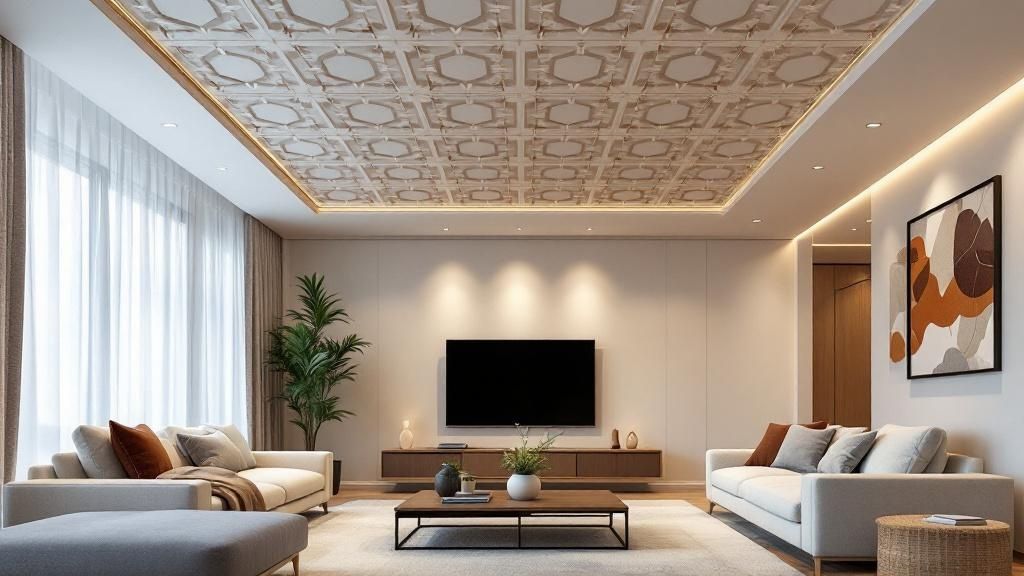
Forget the drab, pock-marked tiles of the past. Today's options are a designer's dream. You can find them in a huge range of textures, colors, and patterns, from sleek, modern panels to rich, warm wood-look finishes. This means architects no longer have to choose between acoustics and aesthetics; they can integrate top-tier sound control as a beautiful design element.
But the benefits don't stop at looks. Many acoustic tiles are designed with a high light reflectance value. In simple terms, they bounce more light around the room. This can drastically cut down on the need for artificial lighting, which translates directly to lower energy consumption and smaller utility bills.
And, of course, there’s fire safety—a non-negotiable. Reputable acoustic tiles are manufactured to meet strict fire-resistance ratings. In a fire, they help slow the spread of flames, buying precious time for people to evacuate safely. It’s an essential layer of protection for both people and property, making these tiles a truly holistic solution.
4. What Are the Different Types of Acoustic Ceiling Tiles?
Choosing the right acoustic ceiling tile isn't just about looks. It's about finding the perfect material for the job. Each one brings its own mix of sound control, toughness, and style to the table. Think of it like picking tires for a car—you wouldn't use racing slicks for off-roading, and the same logic applies here.
Get this decision wrong, and you could end up with a space that still echoes or tiles that start to look worn out way too soon. A steamy commercial kitchen, a bustling school hallway, and a hushed boardroom each have very different needs. Getting to know the materials is the first step toward making a smart investment.
The Most Common Materials
Let's break down the go-to options you'll find on the market.
Fiberglass
These are the acoustic heavyweights. Made from incredibly fine glass fibers, fiberglass tiles boast some of the best Noise Reduction Coefficient (NRC) ratings you can get. They are super lightweight, which makes installation a breeze. The downside? They can sag in high-humidity environments and are a bit more fragile than other options.
Best for: Spaces where sound control is everything—think recording studios, home theaters, or open-plan offices where you need to kill every last bit of echo.
Mineral Fiber
This is your jack-of-all-trades. Mineral fiber tiles are probably the most common type you'll see, and for good reason. They're made from a mix of natural and recycled stuff like slag wool and perlite, giving you a fantastic balance of sound absorption, durability, and value. They are the reliable all-rounders that work almost anywhere, from retail shops to classrooms.
Specialty Materials for Specific Needs
Sometimes, a project calls for something extra—whether it's extreme durability or a high-end look.
Metal
Usually made from perforated aluminum or steel, metal tiles offer a sleek, modern aesthetic and are built to last. The metal itself might seem like it would bounce sound around, but the tiny holes (perforations) let sound pass through to an acoustic backing. This toughness makes them perfect for high-traffic zones like airports, transit hubs, and gyms.
Wood
When you need to bring warmth and a touch of class to a space, wood is the answer. It adds a natural, elegant vibe to boardrooms, auditoriums, and upscale restaurants. Just like metal, the wood is often grooved or perforated to manage acoustics. It’s a premium choice with a price tag to match, but the visual impact is undeniable.
Gypsum
Known for being tough and incredibly fire-resistant, gypsum is a major force in the ceiling market. The MEA ceiling tile market, valued at USD 436.5 million in 2024, is expected to climb to USD 830.2 million by 2033, and gypsum is a big reason why. When perforated and paired with an acoustic backer, it does a great job of controlling sound.
It's a really solid, balanced performer. If you want to dive deeper, you can explore our detailed guide on the benefits of gypsum ceiling tiles.
Acoustic Ceiling Tile Material Comparison
To make things a bit easier, here’s a quick comparison of the materials we’ve covered. Think of this as a cheat sheet to help you match the right material to your space and budget.
| Material Type | Primary Benefit | Best For | Average Cost |
|---|---|---|---|
| Fiberglass | Superior Sound Absorption | Studios, Theaters, Open Offices | $$ |
| Mineral Fiber | Balanced Performance & Value | General Commercial, Schools, Retail | $ |
| Metal | Durability & Modern Look | High-Traffic Areas, Airports, Gyms | $$$ |
| Wood | High-End Aesthetics & Warmth | Boardrooms, Auditoriums, Luxury Venues | $$$$ |
| Gypsum | Durability & Fire Resistance | Commercial Spaces, Healthcare | $$ |
Ultimately, there's no single "best" material. The right choice is always the one that best fits the unique demands of your project—balancing acoustics, environment, looks, and budget.
How to Select the Perfect Acoustic Tile
Choosing the right material is a great first step, but if you want to truly get a handle on your space’s acoustics, you need to learn to speak the language of performance ratings. All those technical specs on a product data sheet might look a bit intimidating at first, but they are your single best tool for making sure your project is a success. They tell you exactly how a tile will behave in the real world.
Making an informed choice is about more than just aesthetics. It means getting to grips with a few key metrics that define a tile’s ability to manage sound, improve safety, and even help you cut down on operational costs. Don't think of these ratings as complex jargon; see them as a straightforward guide to matching the right tile to your specific problem.
Understanding Sound Absorption with NRC
First up, and arguably the most important metric, is the Noise Reduction Coefficient (NRC). Think of an acoustic tile as a sound sponge. The NRC rating simply tells you how much “sound” that sponge can soak up.
It's measured on a scale from 0 to 1. A rating of 0 means the material reflects every bit of sound that hits it (like a pane of glass), while a 1 means it absorbs everything. So, a tile with an NRC of 0.70 will absorb 70% of the sound energy in a room.
For most commercial spaces—think open-plan offices or bustling restaurants—a tile with an NRC of 0.65 or higher is a solid baseline. But for environments where quiet is non-negotiable, like recording studios or critical meeting rooms, you’ll want to aim for an NRC of 0.80 or more.
Think of NRC this way: It’s all about controlling noise within a single room. A high NRC is your best weapon against echo, reverb, and that general distracting clamor that makes a space feel loud and chaotic.
Blocking Sound Between Rooms with CAC
While NRC tames noise inside a room, what about sound that tries to travel between rooms? That’s where the Ceiling Attenuation Class (CAC) comes into play. CAC measures how well a tile can block sound from passing up through the ceiling plenum and into an adjacent space.
This is absolutely vital for privacy. Imagine a row of private offices or consultation rooms in a hospital. You simply can't have conversations from one room bleeding into the next. A higher CAC rating means better sound blocking and, ultimately, more confidentiality.
- Low CAC (below 25): This is poor performance. Sound will easily pass from one space to the next.
- Good CAC (35 or higher): This is what you need for private offices, boardrooms, and patient rooms where speech privacy is a top priority.
This is a particularly important factor in the Middle East, where a construction boom is driving huge demand for high-performance acoustic solutions. While the global market for acoustic ceiling tiles was valued at USD 4.25 billion in 2023, the MEA region is experiencing faster growth. Here, the key selection criteria often come down to high NRC ratings and robust fire resistance, ensuring both comfort and safety in brand-new developments. You can dive deeper into the data on the MEA ceiling tiles market.
Essential Safety and Functional Ratings
Beyond just acoustics, a few other ratings are critical for any project. Don't gloss over these—they have a direct impact on safety, running costs, and the long-term look and feel of your space.
Fire Resistance
This one is non-negotiable. Tiles are tested and assigned a fire rating (Class A, B, or C) based on their performance in a fire. Class A is the gold standard, meaning the material offers the best resistance to flame spread and smoke development. For any commercial project, you should always insist on a Class A rated tile to meet building codes and ensure the highest level of safety.
Light Reflectance (LR)
Light Reflectance (LR) is a simple metric that measures how much light a tile’s surface bounces back into the room. A tile with a high LR value (typically above 0.80 or 80%) can dramatically brighten a space. This reduces the need for artificial lighting, which translates into real, tangible savings on your energy bills over the long run. It’s an easy win for creating a more pleasant and energy-efficient environment.
A Practical Guide to Installation and Upkeep
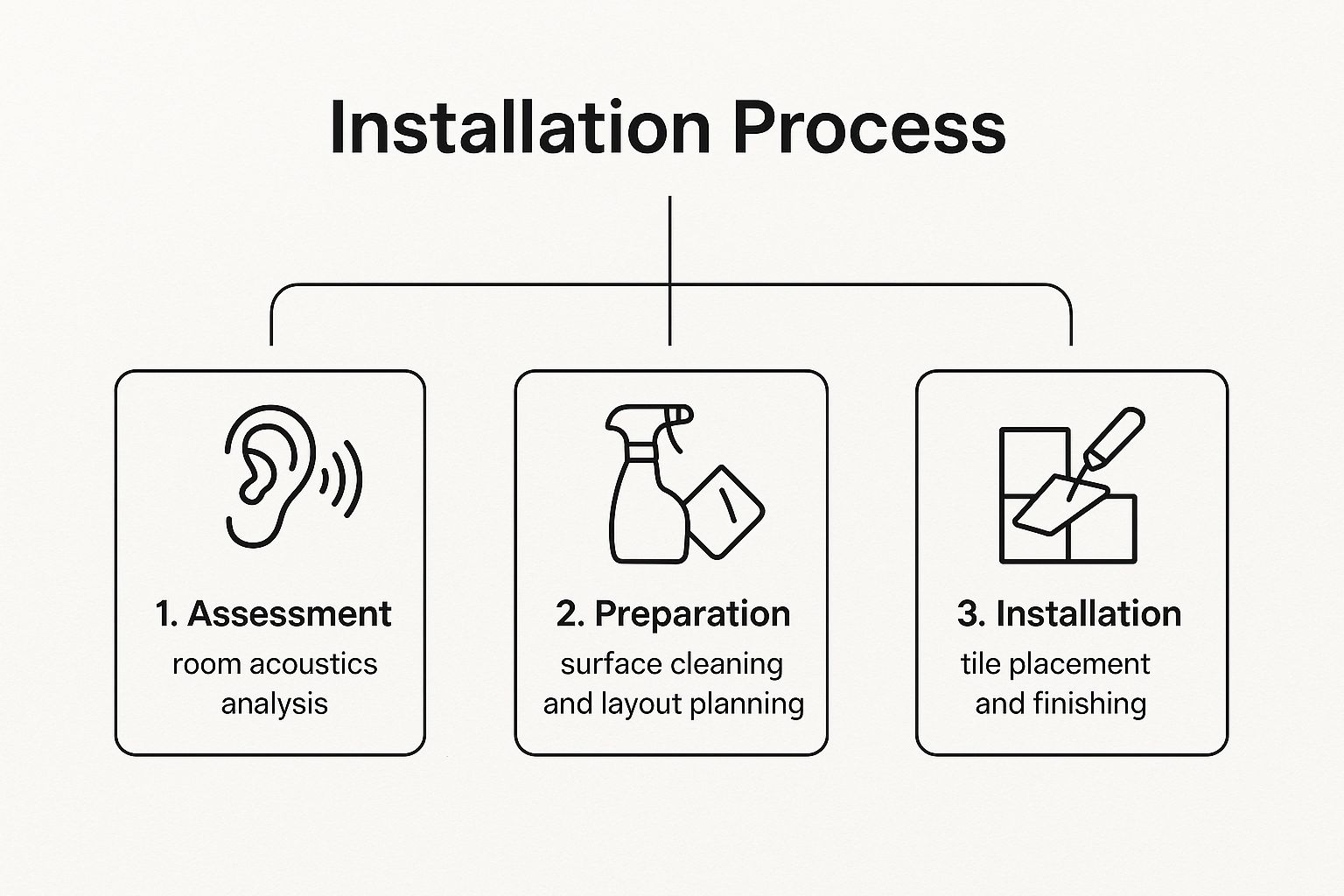
So, how do acoustic ceiling tiles actually get up there? Seeing the process laid out makes it far less intimidating, breaking a big job down into a series of clear, manageable tasks. Even if you hire a pro—which we almost always recommend for a flawless, safe finish—understanding the work involved is a huge advantage for any project manager or building owner.
The go-to method is the suspended or "drop" ceiling grid. This system creates a handy space, the plenum, between your original ceiling and the new tiles. It’s the perfect spot to hide away all the messy stuff: wires, pipes, and HVAC ducts. On top of that, this air gap actually helps with sound management. The whole installation is a logical sequence that, when done right, gives you a clean, functional, and quiet ceiling.
The Installation Blueprint
At its heart, putting in a suspended ceiling is all about precision. Get the measurements right from the start, and everything else falls into place. The goal is a grid that's perfectly level, square, and totally secure.
Measure and Plan: First things first, measure the room’s length and width to get the total square footage. This tells you exactly how many tiles and grid pieces you’ll need to buy. From there, you'll want to sketch out a layout to make sure the grid looks balanced and the border tiles on the edges are all a consistent, pleasing size.
Install Wall Molding: Snap a level line around the room's entire perimeter. This line marks where the top of your grid will sit. You’ll then fasten the wall molding right along this line, creating the outer frame that supports the whole grid structure.
Position Main Runners: The main runners are the long, heavy-duty backbones of the grid. They hang from the structural ceiling with hanger wires. Getting the spacing right here is absolutely critical for the grid's strength—always follow the manufacturer's guide.
Add Cross Tees: Next, you'll snap shorter cross tees into the main runners at regular intervals. This creates the final square or rectangular pockets for your tiles to sit in and completes the interlocking framework.
Set the Tiles: This is the satisfying part. Carefully angle each tile, lift it up through one of the grid openings, and then gently lower it down until it rests snugly on the grid's flanges.
Maintaining Your Acoustic Investment
Once your new ceiling is up, a little bit of care will go a long way in keeping it looking great and absorbing sound effectively for years to come. Proper upkeep is all about preventing damage and keeping that clean, professional look. While some ceiling systems, like those made with gypsum board, offer a different kind of finish, you can find out more on their specific care in our guide on installing a gypsum board ceiling.
A proactive maintenance routine is far more effective and less costly than reactive repairs. Regular, light cleaning and prompt attention to minor issues can double the lifespan of your acoustic ceiling.
Just follow these straightforward tips to keep your tiles looking brand new:
- Routine Cleaning: Regularly dust the tiles with a soft brush or the brush attachment on your vacuum. This simple step stops dust from building up, which can make the tiles look dull and even clog the tiny pores that help absorb sound.
- Handling Stains: For a small smudge or scuff mark, try a good-quality rubber eraser or a cleaner made specifically for ceiling tiles. Always test it on a hidden spot first. Definitely avoid using water, as it can cause permanent damage to most types of tiles.
- Replacing Damaged Tiles: If a tile gets badly stained, chipped, or broken, the best fix is a simple replacement. That’s the real beauty of a grid system—you just pop the old tile out, drop a new one in, and your ceiling looks perfect again in a matter of minutes.
Budgeting for Your Acoustic Ceiling Project
Let's talk money. Getting a handle on the financial side of an acoustic ceiling project is the first step to a successful installation. It's easy to fixate on the price per tile, but the reality is that the total cost is a mix of the acoustic ceiling tiles themselves, the hardware that holds them up, and the skilled labor needed to put it all together.
Think of it less as an expense and more as an investment. You're investing in better productivity, greater comfort, and even a higher property value down the line.
The tiles are, without a doubt, the biggest piece of the cost puzzle. Your basic mineral fiber tiles are usually the most wallet-friendly, making them a go-to for many general commercial spaces. But if you need top-tier sound absorption for a recording studio or want a specific look with high-end fiberglass, metal, or wood, you can expect the price to climb. A tile's technical stats, like its NRC and CAC ratings, are also directly tied to its cost.
Breaking Down the Main Expenses
So, what else goes into the final bill? To avoid any nasty surprises, you need to account for a few other key components.
- Grid System: This is the metal skeleton that holds your ceiling tiles in place. It’s made up of main runners, cross tees, and wall moldings. The quality, finish, and even the brand of the grid system will influence the price.
- Labour Costs: Unless you're a seasoned pro, you'll want to hire one. Professional installation isn't just about making it look good; it's about safety and ensuring the ceiling performs acoustically as it should. Labor rates can vary quite a bit based on how complex the job is, the height of the ceiling, and general market rates here in the UAE.
- Specialised Features: Need to integrate custom lighting? HVAC vents? Sprinkler systems? Any of these special features will add to the installation time and, consequently, the final cost.
Looking at the full picture from the get-go helps you build a budget that’s both realistic and complete.
The Return on Investment of Great Acoustics
It’s tempting to focus solely on the upfront cost, but the true value of a properly installed acoustic ceiling reveals itself over the long term. A well-designed acoustic space pays you back in ways that go far beyond the initial quote.
Think of acoustic control not as a cost center, but as a value creator. Every dirham spent on improving sound quality directly contributes to a more efficient, healthier, and more valuable property. This is a foundational element of modern, people-centric building design.
For a business, this payback comes in the form of fewer distractions, which leads to a real, measurable jump in employee focus and output. In a hospital, it can mean calmer environments that help patients recover faster. For building owners, a property with great acoustics is just more attractive, often commanding higher rents and boosting its overall market value.
This investment also plays right into the growing trend of sustainable building. Choosing high-quality, durable tiles means they’ll last longer, cutting down on future replacement costs. To learn more, exploring the benefits of various sustainable construction materials can offer a broader view on building for long-term value.
When you budget properly for acoustic performance, you’re not just spending money—you’re making a smart financial move that will pay dividends for years to come.
Frequently Asked Questions
When you start digging into acoustic ceiling tiles, a few questions always seem to pop up. Let's clear the air and tackle some of the most common ones so you can move forward with your project confidently.
Can Acoustic Tiles Completely Soundproof a Room?
This is probably the biggest misunderstanding out there, so let's set the record straight: no, they can't. Acoustic ceiling tiles are fantastic at sound absorption, but that’s a completely different job from soundproofing.
Here’s a simple way to think about it. Sound absorption is like putting a sponge in a puddle. The sponge soaks up the water (sound waves) that are already in the space, which means less splashing around (echo and reverb). Soundproofing is like building a dam to stop water from getting into the puddle in the first place.
Your acoustic tiles will dramatically improve how a room sounds on the inside by cutting down on echo and making conversations clearer. They won't, however, stop the noise from the upstairs office from bleeding through. True soundproofing is a much bigger construction job involving things like mass-loaded vinyl and specially built walls.
How Much Noise Do Acoustic Tiles Actually Reduce?
So, what kind of real-world difference can you expect? The impact is measured by the Noise Reduction Coefficient (NRC) we talked about earlier.
If a tile has an NRC of 0.75, it means it’s absorbing 75% of the sound that hits its surface and only bouncing 25% back. Trust me, you can feel that difference. It can take a clattery, chaotic office and turn it into a space where you can actually hear yourself think, reducing background noise to a gentle hum. It’s the key to turning a distracting environment into a productive one.
The goal isn't total silence; it's clarity. A good acoustic ceiling drastically cuts down on reverberant noise, which is the primary cause of poor speech intelligibility and that feeling of being in a "loud" room.
Are Acoustic Tiles Suitable for Home Theaters?
Absolutely! They’re an excellent choice for creating that perfect movie-watching environment, with just one thing to keep in mind. Getting the sound right is everything for a home theater, and acoustic tiles are brilliant at absorbing stray sound, killing echoes, and making sure every line of dialogue is crystal clear.
Here's exactly what they do for a home cinema:
- Tame Reflections: Sound waves won't bounce wildly off your ceiling, which can make the audio from your expensive speakers sound muddy.
- Improve Clarity: By soaking up that echo, every whisper and sound effect comes through with precision.
- Create an Immersive Feel: A room with controlled acoustics just feels more like a real theater, pulling you right into the film.
Just remember our chat about absorption versus blocking. The tiles will perfect the sound inside your theater, but they won't stop the deep bass of an action movie from rumbling into the room above. For that, you’d need to look at dedicated soundproofing solutions. But for most home setups, a ceiling with high-NRC tiles hits that sweet spot of performance and practicality.
At Yasu Trading Co. LLC, we provide a wide range of high-performance acoustic ceiling tiles and all the necessary building materials to create quieter, more productive spaces. Request a quote today to find the perfect acoustic solution for your project.