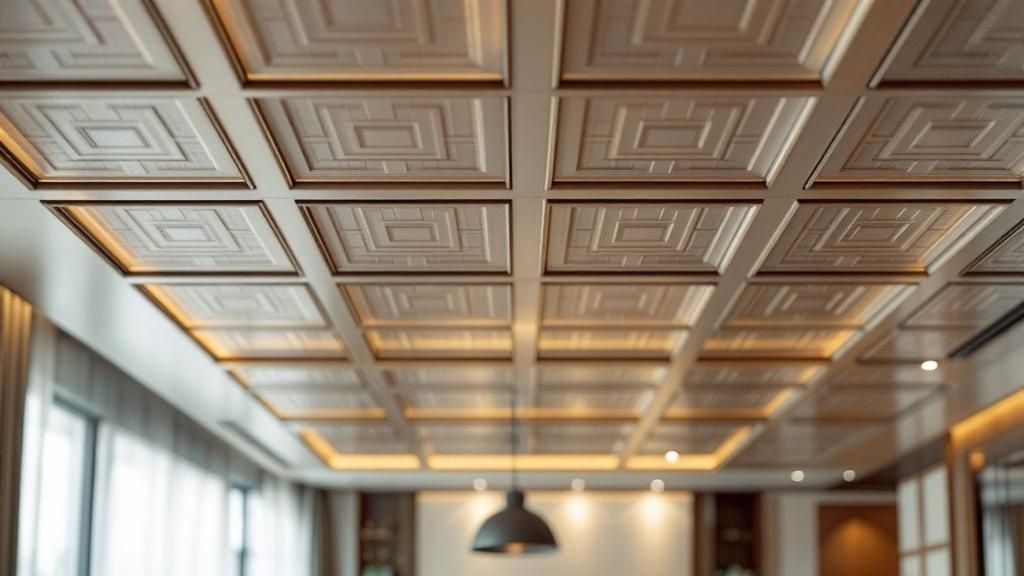
Aluminium Ceiling Tiles: Stylish & Durable Solutions
Take a moment to look up the next time you're in a modern office, a busy airport terminal, or a stylish hotel lobby. Chances are, you're looking at aluminium ceiling tiles. They've become the go-to choice for architects and designers who need a solution that delivers on both sophisticated looks and serious performance.
Why Aluminium Ceiling Tiles Are a Fixture in Modern Buildings
Forget thinking of these tiles as just a simple cover-up. In contemporary architecture, aluminium ceilings are a core part of the design philosophy. They mark a real shift away from materials that are merely functional to integrated systems that bring together performance, longevity, and a sharp, clean aesthetic. They aren't just covering a ceiling; they're helping to define the building's entire character.
This is particularly true in places with demanding climates, like the UAE. Here, the constant heat and humidity mean that materials have to stand up to corrosion and moisture. It’s not a "nice-to-have"—it's a must. Aluminium is a natural fit for these environments, holding its own where other materials would quickly warp, stain, or break down.
To better understand what makes these tiles so versatile, here's a quick look at their core characteristics.
Key Attributes of Aluminium Ceiling Tiles at a Glance
| Attribute | Description |
|---|---|
| Durability | Naturally resistant to corrosion, rust, and moisture, making them ideal for humid climates and long-term use. |
| Lightweight | Easy to handle and install, which reduces labor costs and lessens the structural load on the building. |
| Design Flexibility | Available in a vast range of profiles, finishes, and colors to match any architectural vision. |
| Acoustic Performance | Perforated options, when paired with acoustic insulation, effectively control sound and reduce echo. |
| Low Maintenance | The smooth, non-porous surface is easy to clean and doesn't require frequent repainting or refinishing. |
| Fire Resistance | Aluminium is non-combustible, adding a critical layer of safety to commercial and public spaces. |
| Sustainability | It is a highly recyclable material, aligning with modern green building standards. |
As you can see, the benefits go far beyond just looking good. These tiles solve multiple problems at once.
The Perfect Marriage of Form and Function
The real magic of aluminium ceiling tiles is how they manage to tick so many boxes simultaneously. They're incredibly lightweight, which makes life easier for installers and puts less strain on the building's frame. Yet, at the same time, they offer a staggering amount of design freedom.
Designers can pick from a huge menu of options to create just the right feel:
- Sleek Clip-In Tiles: These are perfect for creating a clean, monolithic look you see in corporate headquarters where a seamless finish is everything.
- Linear Plank Systems: Use these to draw the eye, create a sense of movement in long hallways, or add visual interest to large open-plan areas.
- Perforated Panels: In noisy places like restaurants or transit hubs, these panels are a game-changer. Paired with an acoustic backing, they do an amazing job of soaking up sound and killing echo.
By blending crisp, modern aesthetics with high-impact functionality, aluminium ceilings have really raised the bar for what’s possible in commercial and upscale residential interiors. They offer a solution that is as practical as it is stylish.
At the end of the day, choosing aluminium ceiling tiles is about investing in a reliable, low-maintenance, and visually impressive system. Their built-in durability means they'll look just as good decades from now as they do on day one, making them a smart, long-term play. This fusion of practical benefits and high-end style is exactly why they’ve become a signature of quality construction around the world.
The Core Benefits of Choosing Aluminium Ceilings
When you're weighing your options for ceiling materials, the practical advantages of aluminium ceiling tiles really make them stand out. These aren't just surface-level benefits; they have a real impact on your project's budget, safety, and how well it holds up over time. It’s a powerful combination of toughness and practicality that you just don't find in many other materials.
One of the biggest wins with aluminum is its incredible durability. The material naturally shrugs off rust and corrosion, which is a must-have feature for the humid climates we see across the UAE. While other materials might start to stain, sag, or break down when exposed to moisture, aluminum keeps its clean look and structural strength for decades.
This built-in resilience makes it a perfect fit for all kinds of spaces, from steamy kitchens and bathrooms to massive commercial buildings where you need a solution that lasts.
Safety and Simplified Installation
Beyond standing up to the elements, aluminum brings a crucial safety benefit to the table: it’s non-combustible. That fire-retardant quality is a non-negotiable for places like hospitals, schools, and offices, where strict building codes and keeping people safe are the top priorities.
On top of that, aluminum is surprisingly light. Think about it—a lighter material puts less stress on the building's overall frame. This not only makes the engineering side of things simpler but also speeds up the installation process. It’s less work, less hassle, and that translates directly into cost savings for your project.
The lightweight nature of aluminium panels reduces the overall dead load on a building’s structure, which can lead to more efficient building design and potentially lower construction costs.
Long-Term Value and Sustainability
The smart financial choice doesn't stop once the installation is done. Aluminum ceilings are incredibly low-maintenance. Their non-porous surfaces are a breeze to clean, and you won’t have to worry about repainting or refinishing—a hidden cost that often comes with other ceiling types. Over the building's entire lifespan, that low upkeep adds up to huge savings in both time and money.
Sustainability is another key reason aluminum is becoming so popular. It’s one of the most recycled and recyclable materials in the world.
- High Recyclability: A huge portion of the aluminum used in buildings today has already been recycled, which cuts down on the need for new raw materials.
- Green Building Support: Opting for aluminum can help you earn credits for green building certifications like LEED (Leadership in Energy and Environmental Design).
This focus on sustainability makes aluminium ceiling tiles a responsible, forward-thinking choice for any modern construction project. If you're curious about how different options stack up, our guide on various types of panelling for ceilings offers some great context.
The benefits we’ve talked about are really baked into the material itself. For a wider look at aluminum's performance against other materials, this guide provides some helpful comparisons. At the end of the day, aluminum offers a complete package that perfectly balances performance, safety, and long-term value.
Finding Your Style With Different Types And Finishes
Think of an aluminum ceiling as more than just a cover for pipes and wires. It's a massive canvas, a key design feature that can completely define the vibe of a room. The first step in tapping into that potential is getting to know the different systems and finishes out there. What you choose will dictate the look, the texture, and the whole personality of your space.
The system type is all about the ceiling's basic structure and how it looks. Each one creates a totally different effect. A corporate boardroom, for instance, might call for a clean, unified surface, while a buzzing retail store could benefit from something more dynamic and textured.
Exploring Core System Types
Your main decision will come down to a few core systems, each offering a distinct visual punch.
- Lay-In Tiles: These are the workhorses of the ceiling world—super common and versatile. The tiles just drop into a visible grid, which means getting into the space above the ceiling for maintenance is a breeze. That's why you see them everywhere in offices and commercial buildings where easy access to wiring and plumbing is a must.
- Clip-In Tiles: If you're after a cleaner, more seamless appearance, clip-in tiles are your answer. They attach to a hidden grid, so the support structure is completely out of sight. This creates a smooth, continuous look that’s perfect for high-end hotel lobbies, art galleries, and any space going for a sleek, minimalist feel.
- Linear Planks: Using long, narrow aluminum planks, these systems are fantastic for creating a sense of direction and flow. They can make a room feel longer or wider and are brilliant for guiding the eye down corridors, through transit hubs, or across big open-plan areas.
- Open-Cell Designs: For a bold, modern statement, open-cell ceilings create a grid-like pattern with gaps between the cells. They're great for adding a sense of depth and are often used to partially screen the utilities above while still allowing for airflow and easy integration of lights.
No matter which system you go with, a flawless installation is everything. This visual guide breaks down the essential steps for a typical installation.
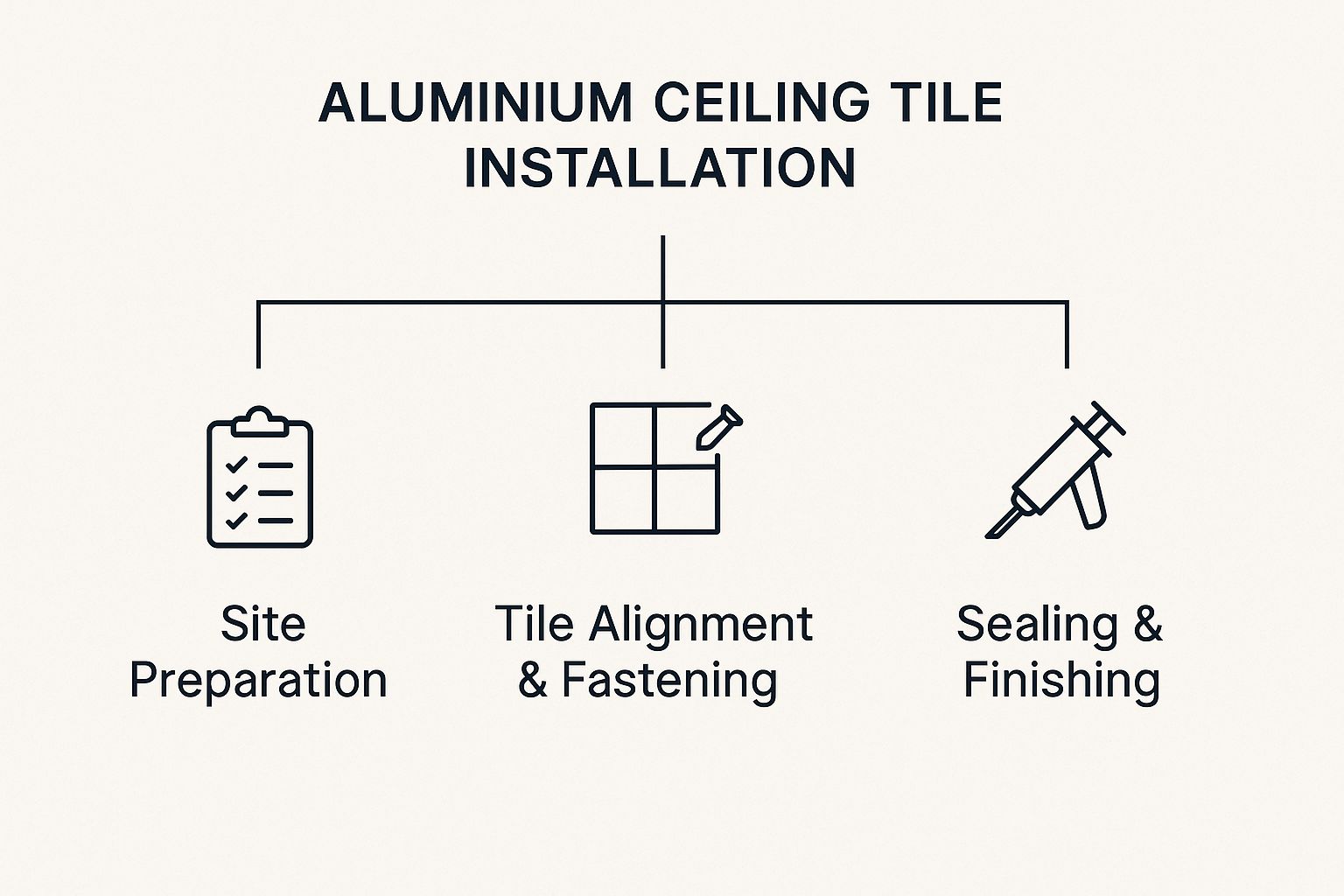
As the diagram shows, a great result really comes down to solid prep work, getting the alignment just right, and paying attention to those final finishing touches.
A World Of Finishes
Once you've picked your system, the finish is where the real fun begins—it’s what brings your design to life. Sure, standard white is always an option, but the true power of aluminum ceiling tiles is in the incredible range of textures and colors available.
The finish on an aluminum ceiling tile does so much more than add color. It brings in texture, plays with light, and sets the whole emotional tone for the space.
Just imagine giving a traditional library a cozy warmth with a rich wood-grain finish, or lending a tech startup's office an industrial cool with a brushed metallic sheen. The right finish can completely transform a room. Think about how other aluminum details, like a sophisticated contemporary glass aluminum pendant light, will play off your chosen tiles. You can even get custom-printed graphics to slap your company logo or a unique piece of art right onto the ceiling. To dive deeper into all the options, check out our complete guide on https://yasutrading.com/blog/aluminum-ceiling-tiles/.
Understanding Key Performance Specifications
Looks are one thing, but the real power of aluminum ceiling tiles is what they do behind the scenes. Their technical performance isn't just a list of specs on a data sheet; it directly creates a safer, more comfortable, and more efficient building. For architects and facility managers, getting to grips with these metrics is how you make smart decisions with lasting impact.
This is where the rubber meets the road—where function truly defines form. After all, a beautifully designed tile isn't much good if it can't control sound, help manage the temperature, or keep a space clean. Each specification solves a real-world problem.
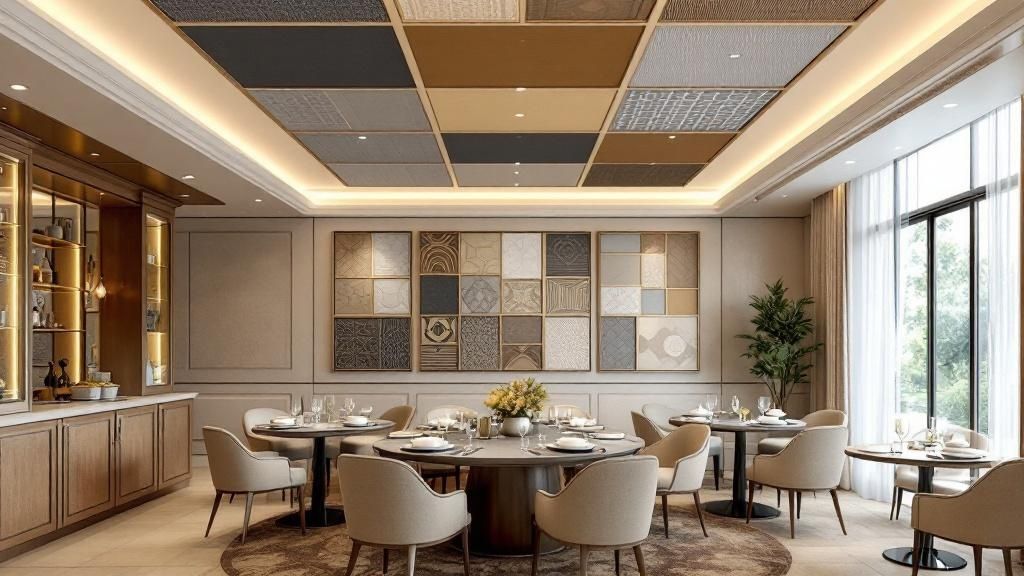
Mastering Sound With Acoustic Control
Ever tried to have a conversation in a bustling open-plan office or a busy restaurant where the noise just bounces off every surface? That's where acoustic performance makes all the difference. While standard solid aluminum tiles offer some sound reflection, the real workhorses for noise control are perforated aluminum ceiling tiles.
Think of the perforations as tiny sound traps. When you pair these tiles with an acoustic insulation backing—usually a mineral wool or fiberglass pad—they absorb sound waves instead of letting them echo around the room. The result is a dramatic reduction in echo and reverberation.
- Noise Reduction Coefficient (NRC): This is the key rating, measured from 0 to 1. A higher NRC means more sound gets absorbed, which is exactly what you want for a quieter, more focused environment.
- Application: You'll find perforated aluminum tiles are a must-have in places like auditoriums, classrooms, call centers, and healthcare facilities—anywhere speech clarity and low noise levels are essential.
Achieving Superior Thermal Efficiency
Ceilings are a surprisingly big player in a building's thermal performance, helping to regulate indoor temperatures and, by extension, energy costs. On its own, aluminum is a conductor. But when you install it as part of a suspended ceiling system, you create a pocket of air between the tile and the structural slab above.
That trapped air acts as an insulating barrier, slowing down heat transfer. In a climate like the UAE's, this is a huge benefit. The ceiling system helps keep the cool, conditioned air in the room, easing the load on HVAC systems and bringing down those energy bills. For an extra boost, adding insulation above the tiles turns the ceiling into a highly effective thermal shield.
Upholding Uncompromising Hygiene Standards
In some places, cleanliness isn't just a preference; it's a non-negotiable requirement. Think hospitals, labs, and commercial kitchens. Here, your choice of material is a critical health and safety decision, and aluminum's non-porous surface makes it a standout performer.
Unlike materials with pores that can trap moisture and harbor mold or bacteria, the smooth, hard surface of aluminum ceiling tiles is incredibly simple to clean and sanitize. This makes them a go-to solution for sterile environments where strict infection control protocols are in place.
This single characteristic has been a major factor in the material's growing popularity. In fact, the Middle East and Africa ceiling tiles market was valued at around USD 2.34 billion in 2021, with metals like aluminum seeing a surge in demand for high-hygiene applications. If you're interested in the market's trajectory, you can review the complete research on ceiling tile trends. This sharp focus on hygiene proves that aluminum ceiling tiles don't just look clean—they support a genuinely sanitary space.
Getting Installation and Maintenance Right
An aluminium ceiling tile system can look incredible, but its success truly hinges on two things: a solid installation and proper long-term care. Think of it this way—a sloppy installation can ruin even the most premium materials, while good maintenance protects your investment and keeps the ceiling looking sharp for years to come.
The real hero of any tile ceiling is the suspension grid. This metal framework is the backbone, and it has to be perfectly level and square. If it's even slightly off, you'll see it immediately in the form of crooked lines or unsightly gaps between panels. It's also just common sense to handle the tiles carefully during installation to avoid scratches, dents, or bent corners before they’re even in place.
Proper Installation Techniques
Every system has its own quirks, and mixing up the installation methods is a classic mistake that can be frustrating and expensive to fix.
- Lay-In Systems: These are the most common and fairly forgiving. The trick is to gently place the tiles into the grid, letting their own weight do the work. You don't want to force them in; a snug, comfortable fit is what you're aiming for.
- Clip-In Systems: These demand a bit more finesse. Each panel needs to be pushed firmly into the hidden suspension runners until you hear a distinct "click." You have to double-check that every clip is securely engaged. If not, you risk panels sagging down the road, which completely undermines that smooth, seamless look.
A well-installed ceiling is a silent partner in your space—it does its job beautifully without calling attention to itself. A bad installation, on the other hand, is an eyesore you can't ignore.
Simple and Effective Maintenance
Once your aluminium ceiling tiles are up, keeping them looking brand new is surprisingly easy. Thanks to their durable, non-porous surface, they're much lower maintenance than many alternatives. If you're curious about how they stack up against other options, our article on gypsum board ceilings offers a great comparison.
For day-to-day cleaning, all you really need is a soft microfiber cloth. You can use it dry for dusting or slightly damp with a bit of water and a mild, non-abrasive soap for smudges. Just be sure to avoid harsh chemical cleaners or scratchy pads, as they can wear away the protective finish.
And what if a tile gets damaged? This is where grid systems really shine. With a lay-in system, you just lift the old tile out and pop a new one in. For clip-in systems, there's a simple tool to release the panel, letting you swap it out in minutes without disrupting the entire ceiling. This effortless maintenance ensures your ceiling remains a clean and impressive feature of your space for a very long time.
How to Choose the Right Tiles for Your Project
Alright, let's talk about making the right choice. Selecting the best aluminium ceiling tiles isn’t just about picking a color you like; it’s about strategically matching the material’s capabilities to what your project truly demands. With all the options out there, it's easy to get overwhelmed. But don't worry, we can break it down into a simple, logical process.
First things first: what is the primary purpose of the space? Seriously, this one question will steer almost every other decision. Are you designing a bustling open-plan office where echoing conversations could kill productivity? Or are you working on an indoor swimming pool area where humidity is a constant battle? The answer points you directly to the right tile.
A high-end retail shop has a completely different set of needs than a school hallway. For the boutique, aesthetics are everything. For the school, you're looking for something that can take a beating and keep the noise down.
Your Practical Selection Checklist
By asking yourself a few pointed questions, you can quickly cut through the noise and zero in on the perfect tile, finish, and features. Think of this as your project’s ceiling blueprint.
What's the core function? For spaces that need to be quiet—like libraries, clinics, or boardrooms—perforated tiles with acoustic backing are a must. In high-moisture zones like commercial kitchens or bathrooms, a powder-coated finish is non-negotiable for fighting off corrosion.
What’s the design vision? If you're going for that seamless, almost invisible ceiling look, sleek clip-in tiles are the way to go. But if you want to add some visual drama or create a sense of direction, a linear plank system could be the perfect fit.
What's the budget? Lay-in systems are generally the most wallet-friendly option and make future maintenance a breeze since you can pop tiles out easily. On the other hand, custom finishes or intricate open-cell designs will have a higher upfront cost but deliver a visual punch that can define a space.
Vetting Suppliers and Quality
Once you’ve got a clear picture of what you need, the last piece of the puzzle is finding a supplier you can trust. It’s tempting to just go with the lowest price, but that can be a big mistake. You need to look at their reputation and the actual quality of what they’re selling.
When you're talking to potential suppliers, always ask about quality certifications and product warranties. A strong warranty isn't just a piece of paper; it’s a direct signal of the manufacturer's belief in how long their product will last and perform.
Look for a partner who provides detailed technical sheets and can actually advise you on the best aluminium ceiling tiles for your specific job. That’s how you end up with a ceiling that not only looks fantastic on day one but continues to perform without issues for years to come.
Common Questions About Aluminium Ceiling Tiles
Even after you've narrowed down your choices, a few last-minute questions always seem to pop up when specifying a new ceiling system. That's completely normal. Getting clear, practical answers is the final step to feeling confident in your decision. Let's tackle some of the most common things people ask about aluminium ceiling tiles.
One of the biggest questions we get is about moisture, especially for tricky spaces like bathrooms or commercial kitchens. While any aluminium tile is fairly tough, you absolutely need a powder-coated finish for areas with constant high humidity or direct water contact. Think of it as a protective seal—it creates a durable barrier that stops rust and corrosion in their tracks, keeping the ceiling looking clean and new for years.
Fire safety is another hot topic, and for good reason. Here’s the good news: aluminium is inherently non-combustible. That's not an added feature; it's a core property of the material. This makes aluminium ceilings a go-to choice for commercial buildings, schools, and any public space where hitting strict fire codes isn't just a suggestion, it's a requirement.
Are Aluminium Ceilings Good For Soundproofing?
This is probably the most important question we hear, and the answer isn't a simple yes or no. A standard, solid aluminium tile will reflect sound, just like a tiled floor or a painted wall would. They aren't designed for acoustics on their own.
But—and this is a big but—they become fantastic for sound control when you opt for perforated tiles with an acoustic insulation backing.
Think of the perforations as tiny doorways for sound. They let the sound waves pass right through the metal tile instead of bouncing off it. The waves then get trapped and absorbed by the soft insulation pad tucked behind it.
This setup is a game-changer for reducing echo and background noise. It makes conversations clearer and spaces feel much calmer, which is why you see it so often in busy offices, classrooms, and restaurants. So, while a basic tile won't do much for sound, a perforated acoustic system is one of the most effective solutions out there.
Ready to specify the perfect ceiling for your project? The experts at Yasu Trading Co. LLC can guide you through our extensive selection of building materials to find the ideal solution. Explore our offerings and request a quote today at https://yasutrading.com.