A Guide to Aluminium Sheet Cladding
Aluminium sheet cladding is, at its heart, a sophisticated finishing system for the outside of a building. Think of it as a protective and decorative 'skin' that shields the main structure from the elements while offering incredible design freedom. It's a favourite in modern architecture for good reason—it’s remarkably lightweight, exceptionally durable, and gives buildings a clean, sleek look.
The Architectural Skin of Modern Buildings
It’s helpful to think of aluminium cladding not as a simple wall covering, but as a building’s high-tech outer garment. In the same way technical gear protects an athlete from harsh conditions without adding bulk, this cladding system defends a building’s core from environmental threats like the UAE's intense UV radiation, driving rain, and wind.
Crucially, this 'skin' isn't part of the building's structural frame. Instead, it’s an external layer fixed onto it, creating a powerful first line of defence that serves two vital purposes: performing flawlessly and defining the building's visual identity.
A Fusion of Form and Function
First and foremost, the job of aluminium sheet cladding is protection. It forms a formidable barrier that preserves the integrity of the walls underneath, stopping water from getting in and shielding them from the physical impact of sand and debris. This role is absolutely essential for extending a building's lifespan and cutting down on long-term maintenance headaches.
At the same time, its second role is all about aesthetics. Aluminium is an incredibly versatile material, allowing architects to bring bold and sophisticated designs to life that just wouldn't be possible with heavier, traditional materials. The panels can be shaped, curved, and finished in a huge array of colours and textures, from subtle matte greys to eye-catching metallic sheens.
It's this perfect blend of practicality and design freedom that has made aluminium cladding a true staple of contemporary architecture. It solves real-world environmental challenges without forcing architects to compromise on their creative vision.
At its core, aluminium cladding is an engineered solution that elevates a building from a mere structure to a piece of resilient architecture. It elegantly combines robust protection with limitless design potential, making it indispensable for today's ambitious projects.
Market Growth and Regional Demand
You don't just have to take our word for it—the market trends tell the same story. The aluminium cladding market in the Middle East & Africa is poised for serious expansion. Projections show a compound annual growth rate of around 7.7% for aluminium composite panels between 2025 and 2030.
This surge is tied directly to the region's sharp focus on building modern, energy-efficient, and sustainable projects. You can read more in the MEA aluminium composite panels market forecast.
What Makes Aluminium Cladding Such a Smart Choice?
When you’re deciding on the skin of a building, you're juggling aesthetics, performance, and long-term costs. Aluminium sheet cladding is one of those rare materials that doesn't ask you to compromise. It delivers on all fronts, making it a go-to choice for modern construction, especially in a tough climate like the UAE.
These aren't just surface-level perks, either. The benefits of aluminium run deep, influencing everything from the building's structural design to how quickly it can be built and how it will look decades from now. Let’s break down exactly why it’s become such a cornerstone of contemporary architecture.
Built to Withstand the Elements
One of the biggest wins for aluminium cladding is its sheer resilience. Forget about the rust you’d see on steel or the rot and warping that plagues wood. Aluminium has a natural defence mechanism. When it's exposed to the air, it forms a thin but incredibly tough layer of aluminium oxide on its surface, which acts like a self-healing shield against corrosion.
This makes it a perfect fit for the UAE’s coastal cities, where the combination of high humidity and salt in the air can be brutal on other materials. It also holds its own against the relentless sun, resisting fading and structural fatigue year after year.
Think of a good aluminium cladding system as a long-term investment in your building's health. It dramatically cuts down on the need for future repairs and replacements, saving you a fortune in lifecycle maintenance costs compared to other options.
Surprisingly Light, Incredibly Strong
Here's a fact that surprises many: aluminium has a fantastic strength-to-weight ratio. It weighs about one-third as much as steel, yet it has all the rigidity needed to create massive, seamless facades. This isn't just a neat piece of trivia; it has real-world consequences for a project.
- Lighter Load on the Structure: Because the panels are so light, they put far less stress on the building's foundation and frame. This can actually lead to savings in the structural design itself, as you don't need as much heavy-duty reinforcement to hold up the building's "skin."
- Faster, Safer Installation: On-site, crews can handle and lift lighter panels more easily and quickly. This can genuinely speed up construction timelines and reduce labour costs, making the whole process smoother.
- More Creative Freedom: When your material is light, you can get more adventurous. Architects can design dramatic overhangs, sweeping curves, and complex shapes without being limited by the sheer weight of traditional materials like stone or concrete.
A Blank Canvas for Designers
Beyond its practical strengths, aluminium cladding is an architect's dream. It’s a material that can be shaped, bent, and finished to bring almost any design vision to life, giving buildings that clean, modern look that defines so much of today's skyline.
Panels can be cut and folded into all sorts of geometric patterns or fluid forms. But the real magic is in the finishes.
- Powder Coating: This gives you a durable, even colour in literally any shade you can imagine from the RAL colour chart.
- PVDF (Polyvinylidene Fluoride) Finishes: This is the premium choice for holding onto colour. It’s brilliant at resisting fading and chalking from UV exposure, keeping the building looking vibrant for years.
- Anodising: This process thickens the natural oxide layer, creating a tough, metallic finish that’s highly resistant to scratches and wear.
With this kind of palette, designers have the power to create buildings that aren't just well-protected, but are also true works of art.
The Green Choice for Modern Building
In today's world, the environmental impact of our building materials matters more than ever. Aluminium shines here, too. It’s 100% recyclable and can be melted down and reused again and again without losing any of its amazing properties.
What's really impressive is that the recycling process uses only around 5% of the energy it takes to create new aluminium from raw bauxite ore. That’s a massive reduction in its carbon footprint. By choosing aluminium, you’re supporting a circular economy—one where materials stay in use instead of ending up in a landfill. It’s a responsible choice for any forward-thinking project.
Exploring Cladding Types and Finishes
When it comes to aluminium sheet cladding, the decision goes far deeper than just picking a colour. You're actually choosing the core technology of the panels and a finish tough enough to handle the relentless UAE environment. This choice has a ripple effect on everything from the building's structural load and fire safety to how it will look ten years down the line.
Not all aluminium cladding is the same. Far from it. The two main players you'll come across are Solid Aluminium Panels (SAPs) and Aluminium Composite Panels (ACPs). They might look similar from the ground, but their construction tells a completely different story about performance, weight, and where they work best.
Differentiating Panel Types
Picking between SAP and ACP is one of those foundational decisions in any cladding project. Think of it like choosing between solid hardwood flooring and top-tier engineered wood – both are fantastic materials, but they're built for different purposes and bring distinct advantages to the table.
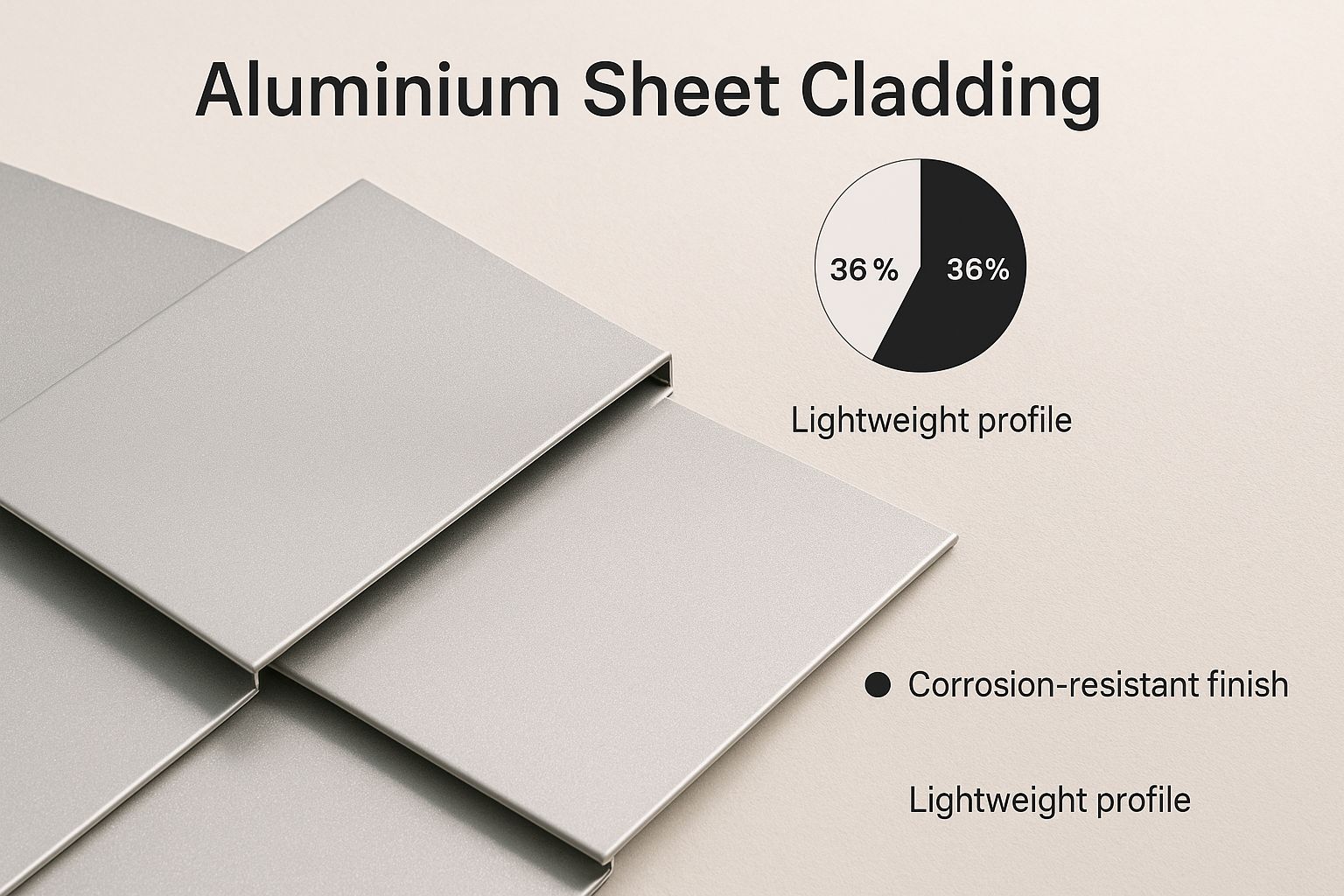
The image above really captures how these panels, through precision engineering, lock together to form a protective and elegant architectural skin.
Solid Aluminium Panels (SAP): The name says it all. These are single, solid sheets of aluminium, usually around 3mm thick. This monolithic design makes them incredibly strong, rigid, and, crucially, non-combustible. This is a massive plus for high-rise buildings or any project where fire safety regulations are non-negotiable.
Aluminium Composite Panels (ACP): Picture a sandwich. ACPs are made of two thin aluminium skins fused to a central core. That core can be polyethylene (PE), but in the UAE, you'll almost always find it made from a fire-retardant (FR) mineral compound to satisfy local civil defence codes. ACPs are remarkably lighter than their solid counterparts, which makes a world of difference during handling and installation.
At its core, the difference is simple: SAP is pure, solid metal, offering uncompromising fire resistance and strength. ACP is a clever composite, delivering a lightweight, flexible, and often more budget-friendly solution without sacrificing a premium look.
Comparing Aluminium Cladding Panel Types
To get the best fit for your project, you need to weigh their characteristics against your specific needs—from budget and design complexity to regulatory compliance. This table breaks it down.
| Feature | Solid Aluminium Panel (SAP) | Aluminium Composite Panel (ACP) |
|---|---|---|
| Fire Resistance | Inherently non-combustible (A1/A2 rated). The safest choice. | Performance depends on the core. An FR core is essential for compliance. |
| Weight | Heavier, which can impact the building’s structural load and installation. | Significantly lighter, reducing stress on the structure and simplifying handling. |
| Rigidity & Flatness | Extremely rigid, but can sometimes show minor imperfections over large areas. | Exceptional flatness due to the bonded 'sandwich' structure. Looks incredibly smooth. |
| Fabrication | Can be bent and shaped, but it takes more specialised machinery and skill. | Very easy to cut, fold, and curve into complex and creative shapes. |
| Cost | Generally has a higher initial material cost. | More cost-effective, particularly for large-scale projects with tight budgets. |
This choice between SAP and ACP is just one piece of the puzzle. To see how these materials stack up against other modern options, our article on exploring trending construction materials in Dubai provides a wider perspective.
Selecting The Right Protective Finish
Once the panel type is sorted, your next crucial decision is the surface finish. This isn't just about colour; this coating is your building's frontline shield against harsh UV rays, dust, and humidity. It determines whether the facade will look pristine for years or start to fade and chalk prematurely.
The two workhorses in this space are Polyester (PE) and Polyvinylidene Fluoride (PVDF).
Polyester (PE) Coating: PE is a solid, cost-effective finish that’s perfect for interior jobs or exterior areas that aren't in the direct line of fire from the sun. It gives you a great colour range and a smooth surface. However, its UV resistance isn't on the same level as PVDF, making it a risky choice for exteriors constantly battered by the desert sun.
Polyvinylidene Fluoride (PVDF) Coating: This is the undisputed champion for exterior cladding. PVDF is a high-performance finish known for its incredible durability and resistance to just about everything—fading, chalking, you name it. Its superior UV stability means colours stay true and vibrant for 20 years or more, even in our climate. For any serious project in the UAE, PVDF isn't just a recommendation; it's a necessity for protecting your investment and ensuring long-term aesthetic appeal.
Navigating Design and Structural Challenges
Looks are one thing, but when it comes to aluminium sheet cladding, performance is everything—especially in a climate as demanding as the UAE's. A successful project means thinking beyond the surface and tackling the real engineering and design hurdles head-on. We're talking about creating a facade that isn't just beautiful, but also acts as a tough, smart shield against scorching heat, high winds, and fire.
This is where the real expertise comes in. It's about getting into the technical nitty-gritty, from managing how the metal expands under the desert sun to meeting strict local safety codes. Every single detail matters. The end game is a building envelope that works flawlessly for decades, keeping both the structure and the people inside it safe.
Engineering for Extreme Heat and Ventilation
In the UAE, where summer temperatures can feel relentless, heat management is priority number one for any architect. A standard building facade can act like a giant radiator, absorbing solar heat and pumping it straight inside, which sends cooling costs through the roof. This is precisely why a ventilated facade system is so crucial.
Think of it as giving the building its own breathable skin. The aluminium cladding sheets are mounted onto a sub-frame, which creates a deliberate air gap between the cladding and the building’s main wall. This gap is a game-changer, acting as a powerful thermal buffer.
- Heat Dissipation: As the sun beats down on the aluminium, the air in the cavity heats up. Hot air rises, creating a natural convection current—what engineers call the "chimney effect." This process constantly sucks cooler air in from the bottom and pushes hot air out at the top, stopping most of that heat from ever touching the building itself.
- Moisture Management: That same air gap is also the perfect escape route for any moisture that might find its way past the outer joints. It prevents water from getting trapped in the wall, where it could cause serious damage over time.
This clever design gives a massive boost to the building's energy efficiency. It cuts down the reliance on air conditioning, which in turn lowers the building's running costs and its overall carbon footprint.
Fire Safety and Material Compliance
When it comes to modern construction, fire safety is absolutely non-negotiable, particularly for the high-rise towers that dot the skyline. The UAE has some of the world's most stringent fire safety regulations, and any aluminium cladding system has to meet them, no exceptions. The real key here is what’s inside the panel—the core material.
It’s essential to specify panels with a fire-retardant (FR) or non-combustible mineral core. These advanced materials are specifically engineered to resist catching fire and, more importantly, to stop flames from spreading. It's a feature that can be the difference-maker in protecting lives and property.
Any project using aluminium sheet cladding must comply with the UAE Fire and Life Safety Code of Practice. It’s not just good practice to work with suppliers who provide current certifications from Civil Defence authorities—it’s a legal requirement.
If you want to get a better handle on these rules, our guide on navigating the regulations for building materials in the UAE is a great place to start.
Wind Loads and Structural Integrity
Wind is a powerful, constant force acting on the tall structures that define the UAE. The cladding system has to be engineered to take a beating from high winds without failing. This means doing the maths carefully to figure out the right panel thickness—usually 3mm for high-rise buildings—and designing a sub-frame (or fixing system) robust enough to transfer all that force back to the building’s main structure.
Engineers also have to plan for thermal expansion and contraction. In the heat of the day, aluminium panels expand; at night, they shrink. The fixing system and the sealant used in the joints must be designed to allow for this natural movement without stressing, buckling, or damaging the panels. You can see how these challenges are solved in the real world by looking at a variety of completed construction projects, which offer great practical insights. Using high-quality sealants that stay flexible even after years of intense UV exposure is vital for the facade's long-term health.
Getting Installation and Maintenance Right
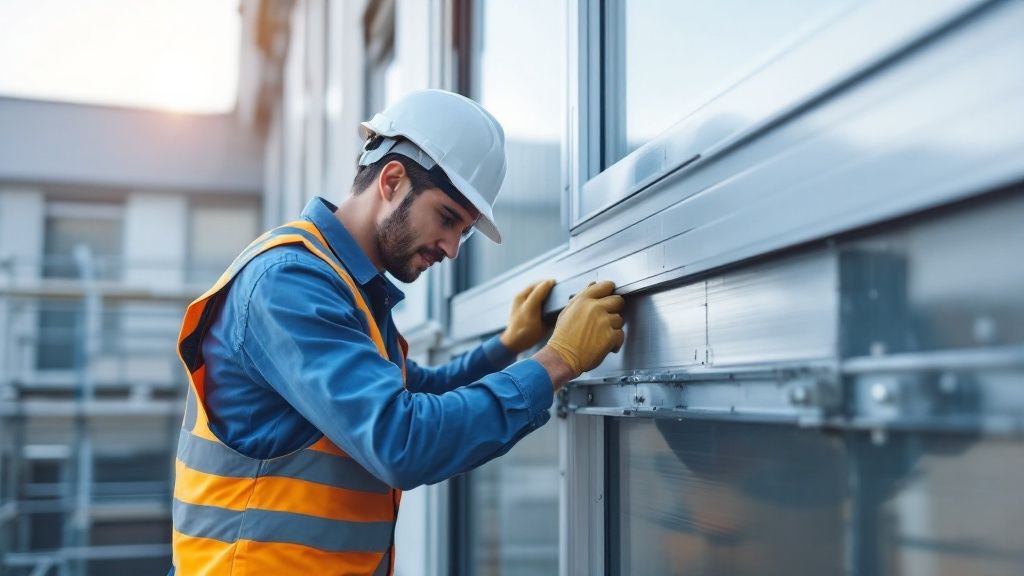
You can choose the most advanced aluminium sheet cladding on the market, but if the installation is sloppy, you’ll never get the performance you paid for. Precision isn't just a nice-to-have; it's absolutely critical for the facade's lifespan, safety, and final look. A great installation is what turns a pallet of panels into a seamless, high-performance skin for your building.
Likewise, a simple maintenance routine is your best friend for protecting that investment over the long haul. Especially in the UAE's tough climate, a little proactive care goes a long way, stopping small issues before they snowball into big, expensive problems.
The Foundation of a Flawless Installation
The real work of installation begins way before the first panel goes up. It all starts with prepping the substrate—the wall structure underneath. This surface has to be clean, dry, and perfectly flat to give the cladding system a solid base to anchor to.
Next up is the sub-frame, the hidden skeleton that will hold every panel in place. Usually built from aluminium or galvanised steel, this framework demands absolute precision. It's what creates that all-important air gap in a ventilated facade and ensures every single panel aligns perfectly.
Think of a well-installed sub-frame as the unsung hero of the entire cladding system. It doesn’t just deliver a flawless visual finish; it also manages wind loads and gives the metal panels the space they need to expand and contract with the temperature, preventing ugly buckling and stress.
For a deeper dive into the hands-on techniques of working with metal sheets, this detailed metal roofing installation guide offers some great transferable skills and insights.
Common Installation Mistakes to Sidestep
Even tiny errors during installation can create massive headaches down the road, from water leaks to discoloured panels. Knowing what to watch out for is half the battle.
- Poor Substrate Prep: Skipping the proper cleaning and levelling of the wall will almost guarantee an uneven facade and weak fixing points.
- Shoddy Sealing: Any gaps in the sealant or poorly fitted waterproofing membranes are like an open invitation for water to get in, causing all sorts of damage behind the scenes.
- Forgetting Expansion Gaps: Aluminium expands and contracts. If you don't leave enough room for this natural movement, the panels will inevitably warp and distort.
- Over-tightening Fixings: This is a classic mistake. Cranking down too hard on the screws can actually deform the aluminium sheet cladding panels, creating little dimples on the surface and putting the material under stress.
A Simple, Effective Maintenance Plan
One of the best things about aluminium cladding is how low-maintenance it is, but that doesn't mean no maintenance. A straightforward, regular cleaning schedule is usually all it takes to keep the finish looking sharp and to prevent the build-up of abrasive sand and dust.
A little proactive care ensures the building’s facade stays as impressive as the day it was finished.
Annual Inspection and Cleaning Checklist:
- Walk the Perimeter: At least once a year, do a thorough visual inspection of the whole facade. Keep an eye out for any dings, loose fixings, or sealant that's starting to crack or pull away from the joints.
- Give It a Gentle Wash: Use a mild, non-abrasive detergent mixed with clean water. A soft cloth or sponge is perfect for the job—anything harsher could scratch the finish.
- Rinse It Clean: Make sure to rinse the surface completely to get rid of any soap residue.
- Check the Joints: Pay close attention to the sealant between panels. If you spot any that looks dried out, cracked, or is peeling, it’s time to have it professionally replaced to keep the facade weathertight.
Understanding the Costs of Aluminium Cladding
When you're budgeting for an aluminium sheet cladding project, don't get fixated on a simple per-square-metre price. That's only part of the story. The total cost is a mix of the materials you choose, how complex the design is, and the specifics of the installation itself.
Think of it less as an expense and more as a long-term investment in your building's performance and kerb appeal. Understanding where the money goes is the first step to creating a realistic budget and figuring out where you can be smart with your spending without cutting corners on quality.
Core Material and Finish Quality
The first big cost driver is the panel itself and the finish that protects it. Solid Aluminium Panels (SAPs), being solid metal, naturally have a higher upfront cost than their composite cousins, Aluminium Composite Panels (ACPs). But even with ACPs, the choice of core—especially a fire-retardant one—will nudge the price up.
Just as important is the finish. A top-tier Polyvinylidene Fluoride (PVDF) coating is practically a necessity for surviving the harsh UAE climate, but it costs more than a standard Polyester (PE) finish. This is one of those "pay now or pay later" situations. That extra investment pays for itself over time with incredible colour retention and weather resistance, keeping your building looking sharp for years.
Panel Thickness and Market Dynamics
The thickness of the aluminium sheet is another piece of the cost puzzle. Thicker panels are often required for high-rise buildings to handle higher wind loads, and they cost more. It's that simple. To give you some perspective, the Middle East and Africa market for pre-painted aluminium sheets—a key part of cladding—was valued at around USD 353.8 million back in 2022.
A huge chunk of that market, 79.03% of the revenue share that year, was for panels in the 2.5 mm to 3.0 mm thickness range. This shows a clear preference in the region for a sweet spot between robust durability and practical installation.
Viewing your cladding system as a long-term asset is essential. The initial cost is balanced by decades of low maintenance, improved energy efficiency, and sustained property value, delivering a strong return on investment.
Design Complexity and Labour Costs
This is where things can really vary. A simple, flat facade is relatively straightforward and cost-effective to install. But start throwing in complex curves, intricate patterns, or lots of corners, and the price will climb. These features demand specialised fabrication and much more time on-site, which directly impacts labour costs.
The expertise of your installation team and local labour rates also play a massive role. And remember, ensuring your materials meet local regulations isn't just a suggestion—it's critical for project approval and ensuring the cladding lasts. For a detailed breakdown of these local requirements, take a look at our guide on building materials quality standards in the UAE. If you're looking for broader strategies, this article on reducing overall construction costs has some great insights.
Frequently Asked Questions About Aluminium Cladding
When you're specifying materials for an aluminium sheet cladding project, a lot of questions can pop up, especially in a market as demanding as the UAE. To help you move forward with confidence, we've put together some clear, direct answers to the things architects, developers, and contractors ask us most.
This isn't just a list; it’s a way to tackle the big concerns head-on. We're talking about performance in extreme heat, crucial fire safety standards, and long-term durability. Think of this as the final layer of detail you need to get your project planning right.
How Does Aluminium Cladding Perform in the UAE’s Extreme Heat?
Aluminium cladding is a natural fit for hot climates. Its surface is inherently reflective, which helps bounce a good amount of solar heat away before it even has a chance to be absorbed. That’s your first line of defence in keeping the building cooler.
But the real magic happens when it's part of a ventilated facade system. This design intentionally leaves an air gap between the cladding and the structural wall. This gap acts as a thermal buffer, creating a "chimney effect" where hot air can rise and vent out. It's a simple concept with a huge impact, improving insulation, easing the load on your AC systems, and ultimately, cutting down energy costs. Plus, a quality PVDF finish is non-negotiable here—it provides the UV resistance needed to stop the intense desert sun from fading the colour.
What Are the Fire Safety Standards for Aluminium Cladding in the UAE?
Fire safety isn't just a priority in the UAE; it’s a core principle backed by some of the strictest building codes in the world. For aluminium cladding, this means the regulations demand panels with fire-retardant (FR) or non-combustible mineral cores, especially for high-rise buildings and public venues.
Every project has to follow the UAE Fire and Life Safety Code of Practice to the letter. This code is very specific about using materials that are proven to limit the spread of flames and keep smoke production to a minimum.
Partnering with a supplier who provides current compliance certifications from the local civil defence authorities isn't just a good idea—it's essential. This paperwork is absolutely critical for getting project approval and, more importantly, for ensuring the safety of everyone inside the building.
Is Aluminium Cladding an Environmentally Friendly Choice?
Yes, it really is. Aluminium is widely seen as a sustainable building material, and for good reason. It’s one of the most recycled materials on earth, and the best part is that it can be recycled over and over again without losing any of its inherent strength or quality.
The recycling process itself is incredibly efficient, using only about 5% of the energy needed to create new aluminium from scratch. That’s a massive reduction in its carbon footprint. On top of that, its light weight means lower emissions during transport, and its ability to improve a building's thermal performance helps cut energy use for years to come. It’s a smart choice for modern, responsible construction.
How Long Does Aluminium Sheet Cladding Typically Last?
If you get the installation done professionally and stick to a simple maintenance routine, a high-quality aluminium sheet cladding system will easily last for 40 years or more. The two biggest factors that determine its lifespan are the quality of the panel itself and, crucially, the type of protective finish that's been applied.
A top-tier PVDF coating, which is the gold standard for major projects, will often come with a manufacturer's warranty of up to 20-25 years. This warranty typically covers issues like fading, chalking, and delamination, giving you peace of mind that the building’s facade will stay vibrant and pristine for decades. It's an investment in protecting both the aesthetic and financial value of your property.
For all your project needs, from high-performance aluminium sheet cladding to a full range of certified construction materials, trust Yasu Trading Co. LLC to deliver quality and reliability. Explore our offerings and request a quote today at https://yasutrading.com.