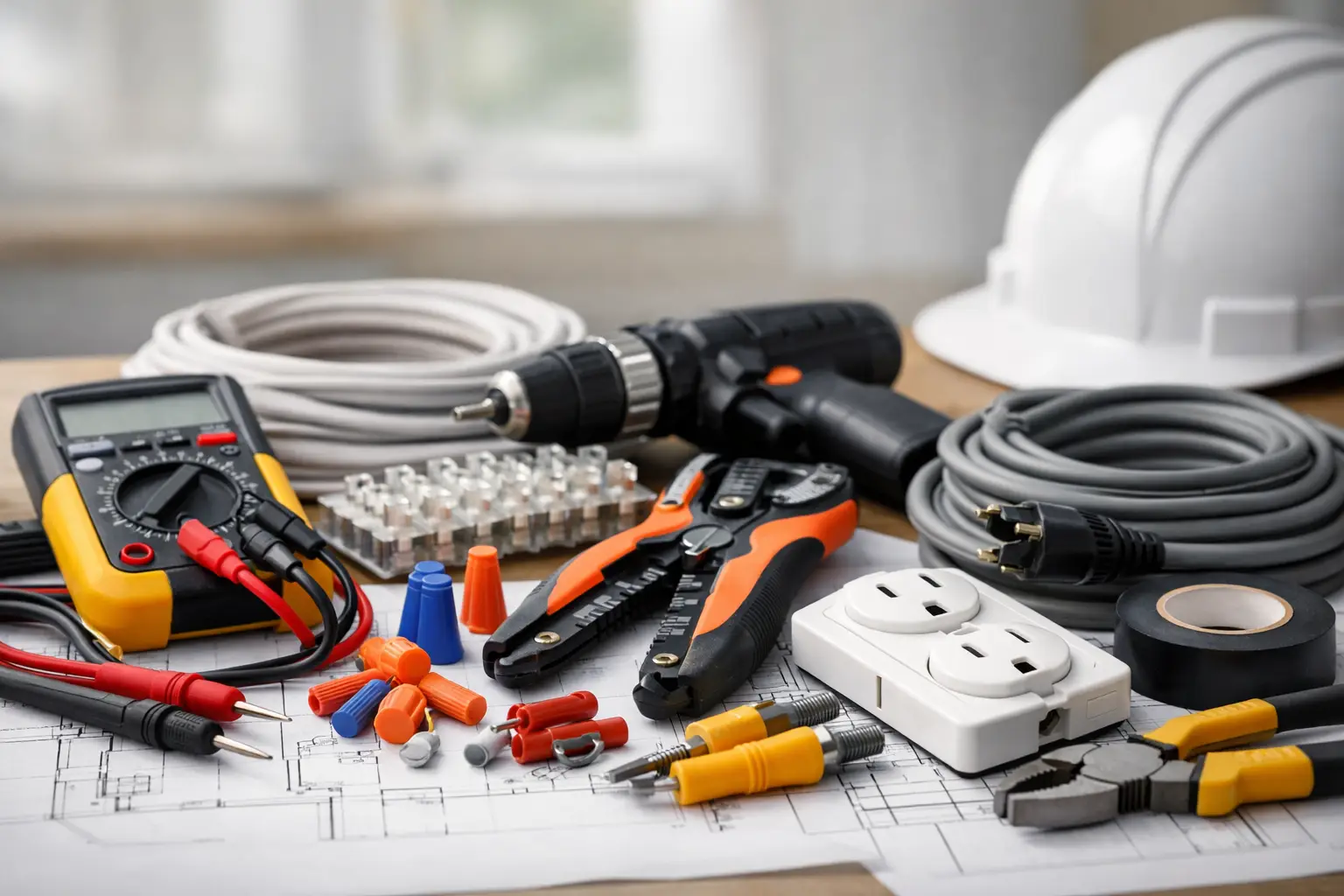
Best Electrical Accessories for Contractors
A delayed electrical installation is rarely caused by one major item. More often, it is the missing gland, incorrect connector, undersized junction box, or non-matching tape that stops a crew from closing ceilings, pulling cables, or completing testing. Choosing the best electrical accessories for contractors means buying the small but essential components that protect workmanship, meet project specifications, and keep every workfront productive.
For UAE contractors, selection must go beyond unit price. Electrical accessories need to suit the installation environment, cable type, load requirement, authority-approved drawings, and required IP rating. They also need to be available when the site needs them. A low-cost item that requires a three-day replenishment can cost far more in idle labor and missed handover dates.
What Makes Electrical Accessories Site-Ready?
Electrical accessories are the supporting components used to route, join, terminate, protect, identify, and control electrical systems. They may be small in size, but they have a direct effect on safety, inspection outcomes, and the service life of an installation.
The right product is not automatically the most expensive option. A fit-out contractor working in a dry internal office area may need a different box, switch, or conduit fitting than an MEP contractor installing equipment connections in a plant room, external service area, or high-humidity location. The specification should always lead the purchase decision.
A dependable procurement plan checks four points before materials reach the site: compatibility with cables and containment, required electrical and environmental rating, approved brand or project submittal status, and quantity by floor, zone, or work package. This approach prevents the common problem of having cable and conduit on site but lacking the accessories required to complete the run.
Best Electrical Accessories for Contractors by Application
Cable glands, lugs, and termination accessories
Cable termination is where poor accessory selection quickly becomes a safety and reliability issue. Cable glands provide strain relief and help maintain enclosure protection where cables enter panels, junction boxes, and equipment. Select the gland material and size around the cable outside diameter, armoring requirement, location, and enclosure rating.
For armored cables, use the correct armored cable gland system with suitable earth continuity components. For unarmored cables, ensure the selected gland provides a secure grip without damaging the cable sheath. Indoor nylon glands can be practical for appropriate applications, while brass or nickel-plated brass options are often specified where higher mechanical strength and durability are required.
Lugs, ferrules, heat-shrink sleeves, cable markers, and insulating boots should be treated as part of the termination package, not as afterthoughts. Correctly sized, crimped lugs reduce resistance and heat buildup. Ferrules improve neatness and contact reliability for stranded conductors entering terminal blocks. When ordering, match each accessory to conductor size and confirm the crimping tool and die are available to the installation team.
Junction boxes and adaptable boxes
Junction boxes protect cable joints and provide accessible points for distribution, branch connections, and equipment wiring. The best choice depends on the number of entries, cable bending space, cover type, and environmental exposure.
For concealed or dry-area installations, standard adaptable boxes may meet the requirement. Plant rooms, rooftops, parking areas, and wet-service zones usually call for boxes with a suitable IP rating, secure cable entries, and covers that can withstand the site environment. A box that is too shallow or crowded may make compliant jointing difficult and create maintenance problems later.
Contractors should also consider installation speed. Boxes with multiple knockouts, mounting points, and matching glands can reduce site modifications. Keeping common box sizes in planned stock gives crews a practical fallback when drawings change or services clash with another trade.
Conduit fittings and cable containment accessories
Conduit systems only perform as intended when the fittings are correctly matched. Couplers, bends, saddles, bushes, inspection tees, adaptable fittings, locknuts, and reducers allow installers to build continuous, protected routes without improvised connections.
PVC conduit accessories are widely used for concealed and light-duty applications, while metal conduit and fittings may be required where the specification calls for greater mechanical protection. The material, diameter, and joining method must remain consistent across the system. Mixing incompatible fittings can create weak points, poor alignment, or gaps that compromise cable protection.
Do not underestimate saddles and supports. Inadequate spacing causes conduit sagging, poor appearance, and stress at joints. Order support accessories in line with the containment quantity rather than estimating them only after conduit installation begins.
Switches, sockets, and plates
Switches and sockets are visible to the end user, but their importance extends beyond appearance. They must match the rated current, voltage, mounting arrangement, and design standard specified for the project. For commercial spaces, consistency in finish, plate profile, and modular configuration matters across hundreds of rooms or workstations.
Choose heavy-duty products for high-use areas such as workshops, service corridors, kitchens, and common facilities. Weatherproof sockets and switched outlets are appropriate where dust, moisture, or washdown exposure is expected. For fit-out work, confirm whether the client requires a specific series, color, or approved manufacturer before bulk ordering. A substitute that looks similar may not match installed modules or approved samples.
Cable ties, clips, markers, and electrical tape
These consumables are often the first items to run short and the last items included in a rushed purchase order. Yet they are essential for cable management, identification, pulling preparation, temporary securing, and final finishing.
Use cable ties suited to the environment and required tensile strength. Standard nylon ties can suit many internal applications, while UV-resistant ties are better for exposed areas. Select clips and cleats based on cable diameter, routing method, and support requirement. For larger power cables, the support system must control movement and maintain orderly spacing, not merely hold the cable in place.
Electrical tape should provide reliable insulation and adhesion at the temperatures expected in service. Keep color-coded tapes available for identification tasks, but do not use tape as a substitute for approved mechanical protection, correct joints, or proper termination methods.
Insulation, testing, and maintenance accessories
A completed installation must be testable and maintainable. Insulating sleeves, terminal blocks, DIN rail accessories, cable labels, warning tags, and panel identification materials support safe commissioning and future service work.
For maintenance teams, a well-labeled panel and clear cable identification save time during fault finding and reduce the risk of incorrect isolation. For contractors, these accessories help deliver cleaner handover documentation and a more professional final installation. They should be included in the project bill of materials from the start, especially for high-rise, retail, hospitality, and industrial projects with extensive distribution systems.
How to Buy Electrical Accessories Without Creating Site Delays
The most effective purchasing method is to buy accessories as installation kits tied to each system. For example, a cable containment order should account for conduit, fittings, supports, boxes, glands, pull wires, and identification materials. A panel connection package should include appropriate glands, lugs, ferrules, heat shrink, earth accessories, and labeling items.
This reduces fragmented buying and prevents installers from mixing brands or product types simply because the correct component was unavailable. It also gives procurement teams clearer control over quantities, approved alternatives, and delivery priorities.
For fast-moving items, maintain a minimum site or warehouse buffer based on crew consumption and lead time. This is especially useful for cable glands, conduit fittings, ties, tapes, junction boxes, and common socket accessories. Bulk purchasing may improve wholesale pricing, but only when storage conditions and project release schedules are controlled. Some items can be bought in larger quantities; specialized switches, gland sizes, or rated enclosures are better ordered against verified drawings and takeoffs.
Compliance and Brand Authenticity Matter
Electrical accessories should support the approved project specification and applicable local authority requirements. Confirm ratings, manufacturer documentation, batch consistency, and whether the product is suitable for the intended system. Safety-critical components should never be replaced with unverified alternatives solely to close a short-term price gap.
Authorized brands, clear warranty support, and technical guidance lower procurement risk. This is particularly relevant when accessories interface with switchgear, fire-rated systems, external equipment, or high-load circuits. If a proposed alternative is necessary, submit it through the proper project approval process before installation.
Yasu Trading Co. LLC supports contractors with consolidated electrical procurement, inventory-backed supply, and site delivery for urgent and project-based requirements. For projects across Dubai, Sharjah, Abu Dhabi, Fujairah, and Ras Al Khaimah, a coordinated order can reduce supplier follow-up and help crews receive compatible materials together.
Before releasing your next electrical purchase order, review the accessories line by line against the installation sequence. The components that seem minor on paper are often the ones that determine whether a crew can complete, test, and hand over the work on schedule.