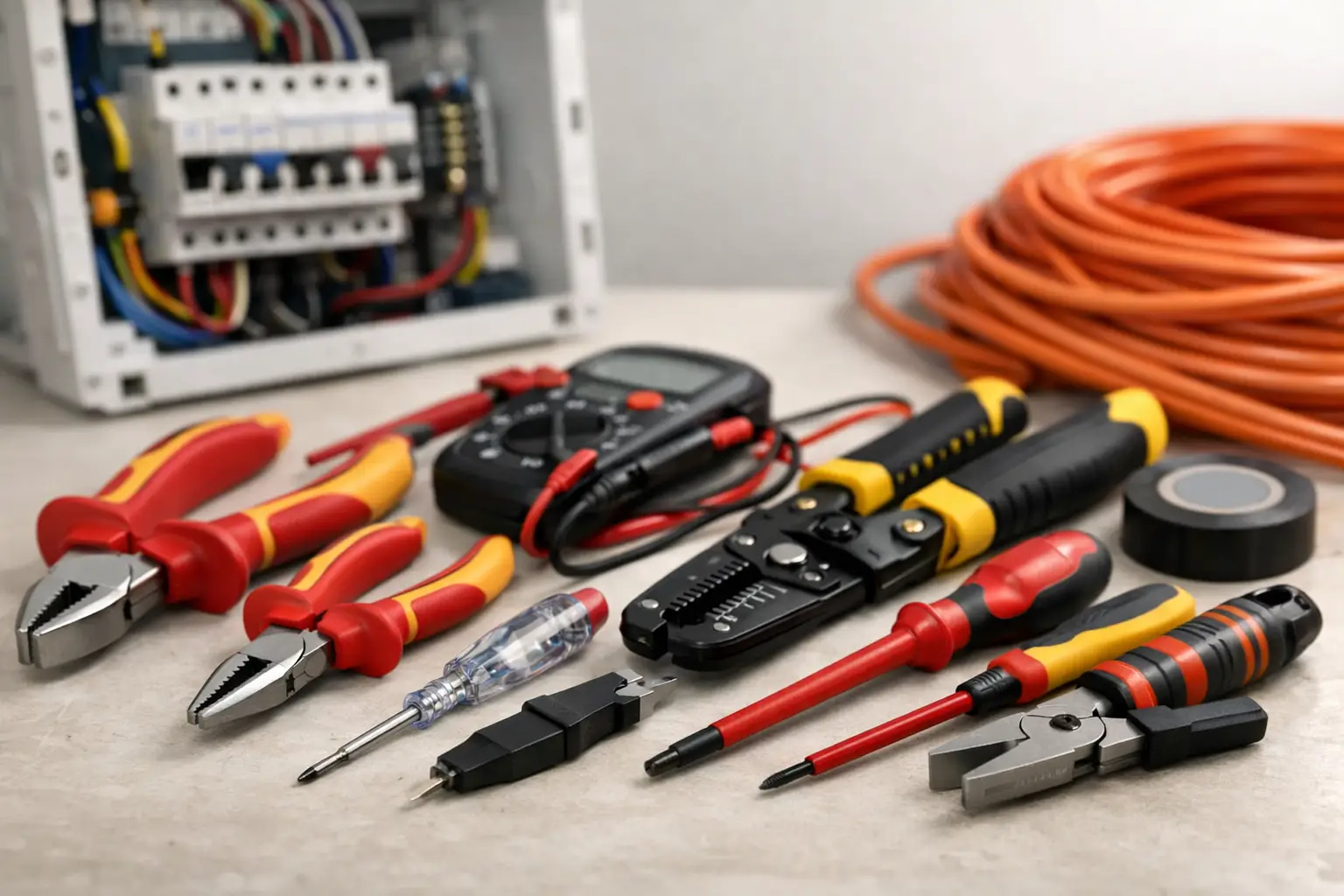
Best Hand Tools for Electricians
A missed strip length, a weak crimp, or a tester that gives inconsistent readings can slow an electrical job faster than most procurement teams expect. The best hand tools for electricians are not just about comfort in the pouch - they directly affect installation quality, testing accuracy, safety, and how quickly a crew can close out work without rework.
For contractors, MEP teams, and maintenance operations, tool selection should be treated the same way as material selection. If the cable lugs, conduits, and protection devices are specified properly but the hand tools are inconsistent, the result is still lost time on site. Good tools reduce call-backs, support cleaner terminations, and help teams maintain output across repetitive tasks.
What makes the best hand tools for electricians?
The right answer depends on the work. An electrician handling control panels and low-voltage terminations will prioritize precision and access in tight spaces. A site team pulling cables and terminating distribution boards will care more about durability, leverage, and repeatable cutting performance. Maintenance crews often need compact, multi-use tools because response speed matters more than carrying a full bench setup.
Even with those differences, a few criteria stay constant. Electrical hand tools should be reliable under daily use, sized for real jobsite conditions, and suitable for the voltage and application involved. Grip quality matters, but so do jaw alignment, blade hardness, stripping consistency, and certification for insulated tools where live-work risk exists. Buying the cheapest option usually saves very little once replacement cycles, damaged conductors, and slow finishing work are factored in.
Core electrician hand tools every serious team needs
Insulated screwdrivers
Screwdrivers are basic, but for electricians they are not interchangeable general-purpose tools. A proper insulated screwdriver set gives better control at terminals, breakers, contactors, and switchgear components. Tip precision matters because poor fit rounds screw heads and wastes time during tightening and removal.
For procurement, it makes sense to stock a range that covers slotted, Phillips, and terminal-specific profiles used across panel work and final fixing. On large projects, having enough identical sets across crews also improves consistency. One common problem on active sites is mixed tool quality within the same team, which leads to uneven installation speed.
Linesman pliers and combination pliers
These remain among the best hand tools for electricians because they handle cutting, twisting, gripping, and pulling in one tool. Linesman pliers are especially useful when electricians are working with copper conductors repeatedly through the day. The leverage and jaw strength can make a visible difference in fatigue levels.
Combination pliers bring more versatility, especially for maintenance teams and technicians moving between tasks. The trade-off is that a highly specialized cutting tool may outperform them on repeated heavy-duty use. For general electrical contracting, though, they remain a standard requirement.
Long nose pliers and side cutters
Long nose pliers help with access inside crowded boxes, DBs, and control enclosures. They are ideal for shaping conductors, reaching clips, and handling smaller components without damaging surrounding wiring. Side cutters, on the other hand, are about clean cuts and speed.
These two tools are often underestimated during purchasing because they seem inexpensive. In practice, low-grade versions dull quickly and start crushing instead of cutting. That usually shows up first in finishing quality, then in labor efficiency.
Wire strippers
A dependable wire stripper is one of the highest-impact tools in electrical work. Inconsistent stripping damages conductors, weakens terminations, and creates avoidable troubleshooting later. Automatic strippers can speed repetitive work, while manual strippers often give better control on varied cable sizes.
It depends on the application. Fit-out and final fixing teams may benefit from automatic models where repeated conductor sizes are common. Service and maintenance teams often prefer manual strippers because they deal with mixed cable types and need more feel. Either way, the tool should match the conductor range actually used on site.
Cable cutters
Standard pliers should not be expected to handle every cable cutting task. Dedicated cable cutters produce cleaner cuts, especially on larger conductors, and reduce hand strain on repetitive work. This matters when crews are terminating significant volumes of cable for power distribution, HVAC connections, or control systems.
A poor cut can deform the conductor and slow stripping and lugging. On bigger jobs, that delay repeats hundreds of times. For project buyers, this is where tool quality clearly affects productivity, not just preference.
Crimping tools
A proper crimping tool is essential anywhere lugs, ferrules, or terminals are used. This is not a category where approximation works. Incorrect crimp profiles lead to loose connections, heat buildup, failed inspections, and maintenance issues after handover.
The best choice depends on the termination standard and connector types being used. Some projects require dedicated ferrule crimpers for panel work, while others need heavier crimping tools for cable lugs. Matching the crimper to the consumable matters as much as buying a recognized brand.
Test and measurement tools electricians should carry
Electricians do not work with mechanical hand tools alone. Safe and efficient fault finding depends on having dependable testing tools alongside the standard cutting and termination kit.
Voltage testers and multimeters
A basic voltage tester is fast and practical for immediate verification, but a quality multimeter offers wider diagnostic capability. For maintenance teams, this is one of the most frequently used tools in the pouch. For project electricians, it becomes critical during commissioning, fault tracing, and final checks.
Accuracy, display readability, and build quality matter. Cheap testers may appear to work until readings become inconsistent under field conditions. That is a risk no site team should absorb, especially where shutdown decisions or energization checks depend on the result.
Clamp meters
Clamp meters are especially useful where current measurement is needed without breaking the circuit. They are common in facilities maintenance, generator work, HVAC electrical diagnostics, and load verification. Not every electrician needs one at all times, but every serious electrical operation should have them available.
This is where centralized procurement helps. Rather than each crew buying tools ad hoc, standardizing core testing equipment across teams can improve reliability and training consistency.
Tool quality, safety, and compliance are connected
The best hand tools for electricians are also the tools that help reduce jobsite risk. Insulated tools should be selected for appropriate applications, not bought as a checkbox item. Certification, brand reliability, and intended voltage use all matter. So does replacement discipline. A damaged insulated handle or worn cutting edge is not a minor issue on an active site.
For professional buyers, the bigger point is operational. A trusted B2B supply partner should be able to support not only hand tools, but also related electrical components, cable accessories, fasteners, consumables, and site delivery requirements in one procurement cycle. That reduces coordination time and helps keep installation teams supplied without last-minute market runs.
How contractors should buy electrician hand tools
If you are buying for one technician, comfort and preference can lead the decision. If you are buying for multiple crews, standardization becomes more important. Look at the actual work mix first. New build, fit-out, maintenance, industrial service, and panel assembly all place different demands on the tool kit.
Then assess replacement frequency and abuse levels honestly. Some sites are hard on tools. In those cases, buying mid-tier tools repeatedly may cost more than specifying durable professional-grade options from the start. It also helps to separate daily-carry tools from shared specialty tools. Every electrician needs core cutters, pliers, screwdrivers, and strippers, but not every technician needs the same crimping or diagnostic setup.
Availability should also influence the purchase. A good tool program fails quickly if replacements and matching accessories are hard to source. That is why many contractors prefer procurement through a supplier that can support ongoing stock, project quantities, and fast dispatch when urgent replenishment is needed.
Yasu Trading Co. LLC supports this model well because electrical teams rarely need hand tools alone. They often need a combined supply of electrical items, power tools, safety products, and general construction hardware delivered on a schedule that protects site progress.
The real value of the right tools
Electricians judge tools by feel, but project performance shows the bigger picture. Cleaner cuts, tighter terminations, faster testing, and fewer tool failures all translate into labor efficiency. Over a project cycle, that matters far more than the small difference between basic and professional-grade hand tools.
The smartest buying decision is not the lowest upfront price. It is the set of tools that keeps crews safe, productive, and ready to finish work properly the first time. When that happens, procurement does its job quietly - and the site keeps moving.