UAE Building Material Hardware Explained
Think of building material hardware as the skeleton of a building. It's the silent, hardworking system holding everything together – from the massive seismic anchors deep in the foundation to the finely-tuned hinges on a fire door. These parts are the unsung heroes that guarantee a building's strength, safety, and performance over the long haul, especially in a tough climate.
Why Building Hardware is More Than Just Nuts and Bolts
In the UAE's world of ambitious construction, it’s easy to get caught up in the big picture—the sweeping designs, the gleaming steel, the vast concrete structures. But the real success of any project, whether it's a soaring skyscraper or a luxury coastal villa, truly hinges on the quality of its hardware. This isn't just about buying commodities; it's about specifying a critical system that underpins the entire structure's integrity, function, and the safety of everyone inside.
Picture this: a cutting-edge glass facade installed without fasteners designed to handle thermal expansion. Or a heavy, high-traffic door hung with hinges that simply aren't rated for thousands of opening and closing cycles. These small details can quickly snowball into major failures, leading to expensive fixes and a damaged reputation.
The Bedrock of Performance and Safety
Every single piece of hardware has a specific job to do, and getting it right is non-negotiable. This means looking past the price tag and understanding the role each component plays.
- Structural Integrity: Anchors, bolts, and connectors are the unseen workhorses. They transfer immense loads and fight back against forces like high winds and seismic shifts.
- Functional Longevity: Hinges, locks, and door closers are put to the test every single day. They have to operate smoothly, year after year, even when exposed to sand, heat, and humidity.
- Life Safety Systems: When it comes to fire-rated doors and emergency exits, the hardware is absolutely critical. It’s not just about meeting regulations; it’s about saving lives.
The right hardware is what takes a project from simply being built to being built to last. It’s the difference between a building that just stands there and one that performs flawlessly for decades.
A Market That Mirrors the Region's Vision
The sheer importance of these components is reflected in the numbers. The Middle East's construction materials market, which includes a huge range of building hardware, is a powerhouse, valued at around USD 28.43 billion. This growth is fuelled by non-stop urbanisation and massive infrastructure projects right here in the UAE. With a projected compound annual growth rate (CAGR) of 2.9%, the demand for top-tier hardware isn't slowing down. You can learn more about the regional construction materials market growth and see the detailed analysis.
Ultimately, getting a handle on the world of building material hardware is all about a change in mindset. It’s time to see every screw, bracket, and handle not as a cost to be minimised, but as a crucial investment in the building's resilience, safety, and future value. This guide will give you that foundational understanding.
Getting to Grips with the Core Categories of Construction Hardware
When you first step onto a project site, the sheer variety of building material hardware can be a bit overwhelming. From massive bolts to tiny screws, it’s a world of its own. But to really get a handle on it, it helps to break everything down into three main groups. Thinking about hardware this way simplifies procurement and makes sure no critical component gets missed.
Each category has a very specific job, a bit like the different systems in the human body. One group forms the skeleton, another handles how we interact with our environment, and the third manages all the vital services. Understanding this framework is the first step to seeing how a building is more than just a structure—it’s a cohesive, functioning system.
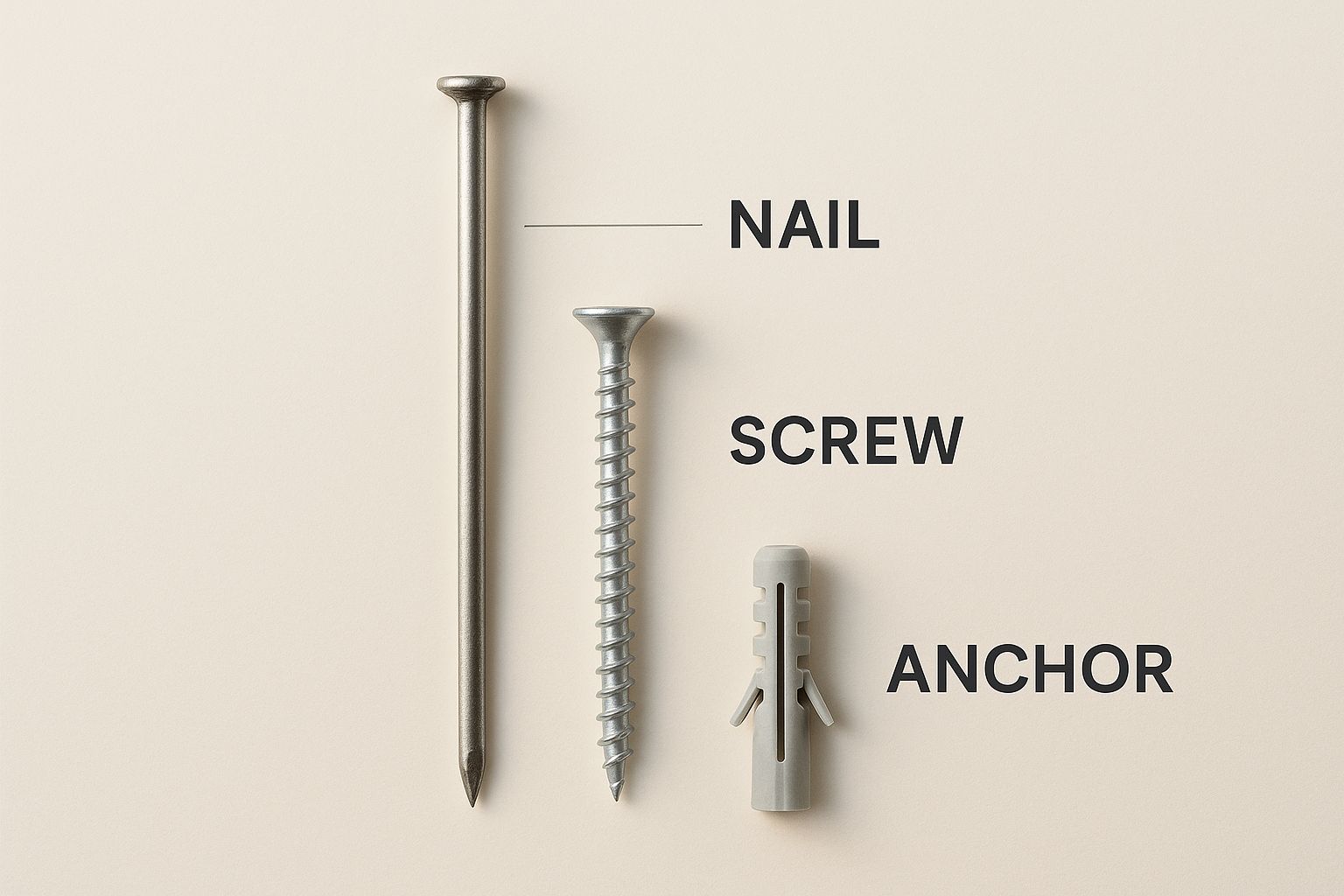
This image gives you a quick look at some of the most basic pieces of hardware that form the foundation of these categories.
As you can see, it all starts with the essentials—the nails, screws, and anchors. These are the unsung heroes found in almost every part of a build, from the initial framing right through to the final finishes.
To help you get a clearer picture, here's a quick overview of how these categories break down in the real world.
Overview of Building Material Hardware Categories
| Hardware Category | Primary Function | Common Examples | Key Materials |
|---|---|---|---|
| Structural Hardware | Provides strength, stability, and load-bearing capacity to the building's frame. | Anchors, bolts, connectors, plates, rebar, structural screws. | High-strength steel, galvanised steel, stainless steel. |
| Finishing Hardware | Focuses on aesthetics, security, and the daily interaction with the building. | Door handles, locks, hinges, window latches, cabinet pulls, faucets. | Stainless steel (Grades 304/316), brass, aluminium, zinc alloys. |
| MEP Hardware | Supports the Mechanical, Electrical, and Plumbing systems. | Pipe hangers, duct supports, conduit fittings, cable trays, valves. | Galvanised steel, copper, PVC, brass. |
This table lays out the fundamental differences, but let's dive into what makes each category unique and essential on any UAE construction project.
Structural Hardware: The Building’s Skeleton
First up is structural hardware. This is the heavy-duty stuff, the real workhorse category responsible for a building’s strength and stability. These are the components holding the main frame together, connecting it to the foundation, and ensuring it can stand up to everything from its own weight to the high winds we see across the UAE.
Think about the massive foundations of a tower like the Burj Khalifa. The specialised anchors used there have one job: to transfer the building's immense load deep into the earth. It's all about raw power and engineering you can bet your life on.
You'll find items like these in this category:
- Anchors and Bolts: Used to fix steel beams to concrete or join massive precast panels.
- Connectors and Plates: These tie timber or steel frame elements together, creating one solid, rigid structure.
- Reinforcing Bars (Rebar) and Ties: The backbone of any strong concrete or masonry work.
Structural hardware is where safety is non-negotiable. A failure here isn't just a defect; it's a catastrophic risk to the entire building. The focus is always on strength, period.
These parts are almost always made from high-strength steel, often galvanised or given special coatings to fight off corrosion—an absolute must in the humid, coastal climate of the UAE. Their selection isn't about looks; it’s driven by precise engineering calculations.
Finishing Hardware: Where Looks Meet Performance
Next, we have finishing hardware. If structural hardware is the skeleton, finishing hardware is everything you see, touch, and use every day. This category is where raw structure becomes a functional, liveable space. It's where aesthetics, security, and day-to-day use come together.
Picture the door handles on a villa on the Palm Jumeirah. They have to look fantastic, of course, but they also need to operate smoothly for years despite being blasted by salty air. The same standard applies to window latches, cabinet pulls, and all the locks. Here, performance is a blend of durability, user-friendliness, and visual appeal.
This category is incredibly broad and includes:
- Door Hardware: Everything from hinges, locks, and handles to closers and panic bars.
- Window Hardware: The locks, handles, hinges, and mechanisms that make windows work.
- Cabinetry Hardware: All the knobs, pulls, hinges, and drawer slides you can think of.
- Bathroom and Kitchen Fixtures: Faucets, showerheads, and towel rails also fall under this umbrella.
Materials are all over the map, from Grade 316 stainless steel for coastal applications to brass, aluminium, and zinc alloys. They come in every finish imaginable, like brushed nickel, chrome, or the ever-popular matte black.
MEP Hardware: The Building’s Nervous System
Finally, there’s MEP hardware. This group supports all the Mechanical, Electrical, and Plumbing systems. Think of it as the building's nervous and circulatory system, making everything from the air conditioning and lights to the water and Wi-Fi possible.
Most of this hardware stays hidden behind walls and above ceilings, but it’s absolutely critical. It includes the clamps holding HVAC ducts, the fittings for electrical conduit, and the brackets supporting heavy plumbing lines.
Take a large hotel, for instance. The plumbing system's reliability depends on thousands of fittings, valves, and supports all working together perfectly. Understanding components like the different types of faucet valves is key to ensuring both performance and long-term maintainability for the facilities team.
Key MEP components include:
- Pipe Hangers and Supports: To securely hold plumbing and crucial fire-suppression pipes.
- Duct Supports and Straps: Essential for keeping HVAC ductwork properly aligned for efficient airflow.
- Electrical Conduit Fittings and Boxes: To safely route and protect all the electrical wiring.
Sorting every piece of building material hardware into these three categories gives you a clear and logical way to approach any project. It’s a simple framework that helps ensure every component, from a massive structural bolt to a simple cabinet knob, gets the attention it deserves.
Choosing Hardware That Survives the UAE Climate
Here in the UAE, the environment isn't just a backdrop for our projects; it's an active stakeholder. The combination of intense sun, high humidity, airborne sand, and coastal salt creates one of the most aggressive settings on earth for building materials. For building material hardware, this isn't just a challenge—it’s a relentless battle for survival. Get this choice wrong, and you’re looking at rapid failure, compromised safety, and expensive replacements.
Think of it like choosing the right tyres for your 4x4. You’d never take standard road tyres into the desert; they just aren’t built for that kind of punishment. In the same way, generic hardware designed for milder climates will quickly break down when exposed to the UAE’s unique conditions. Understanding the science behind how materials perform is absolutely essential for long-term success.
This is especially critical for the building envelope—the first line of defence against the elements. The market for facades, roofing, and cladding in this region is massive and growing. Valued at roughly USD 7.51 billion, this sector is projected to expand by 4.0% each year, all driven by the demand for durable, energy-efficient solutions. This just underscores how vital it is to select robust hardware to hold these advanced systems together.
The Unseen Enemies: Corrosion and Thermal Stress
Two of the biggest threats to hardware in the region are corrosion and thermal expansion. They work silently, often out of sight, until the damage is already done.
Corrosion is simply nature’s way of returning refined metals to a more stable state, like rust. But in the UAE's coastal zones, the salty, humid air acts like a powerful catalyst, putting this process into overdrive. A standard steel screw that might last for decades elsewhere could be riddled with serious rust in a matter of months.
Thermal expansion is the other invisible force at play. Materials expand in the heat and shrink in the cold. With the extreme daily temperature swings we see here—from scorching midday sun to much cooler nights—this constant movement puts incredible stress on every fastener, joint, and fixing. If the hardware can't accommodate this cycle, you’ll end up with loose connections, cracked materials, and eventually, system failure.
Selecting Your Material Champions
To fight back against these forces, experienced engineers and contractors in the UAE turn to a trusted group of high-performance materials. These aren't just "nice-to-haves"; they are absolute necessities for any project built to last.
- Stainless Steel (Grade 316): This is the gold standard for coastal projects, often called "marine grade" for good reason. Its higher molybdenum content gives it far superior resistance to chloride corrosion from salt spray. It's the go-to for balustrades, facade fixings, and any hardware exposed to the sea air.
- Anodized Aluminium: While aluminium is naturally resistant to corrosion, the anodizing process creates an even tougher, more durable protective layer. This makes it an ideal choice for window frames, door hardware, and decorative pieces that have to endure both sun and sand.
- Hot-Dip Galvanised Steel: For structural parts where raw strength is the priority, hot-dip galvanizing is key. This process coats the steel in a thick, protective layer of zinc, which sacrifices itself to protect the steel beneath and dramatically extend the component's lifespan.
Choosing the right material grade isn't about over-engineering; it's about matching the hardware’s resilience to the environment's hostility. A small upfront investment in Grade 316 stainless steel, for example, prevents much larger replacement costs and safety risks down the line.
Getting to grips with these material properties is fundamental to successful construction here. For a deeper dive, check out our guide on how to choose the right construction materials for Dubai's climate.
The Hidden Threat of Galvanic Corrosion
There’s another destructive issue that’s less obvious but just as damaging: galvanic corrosion. This electrochemical reaction kicks off when two different metals touch each other in the presence of an electrolyte—like our humid, salty air. One metal (the anode) corrodes very quickly, while the other (the cathode) is protected.
A classic mistake is using stainless steel screws to attach an aluminium panel. In this scenario, the aluminium will corrode at an alarming rate right around the screws, weakening the entire connection. To stop this from happening, you have to:
- Use fasteners made from the same metal (or a compatible one) as the parts you're joining.
- If you can't, then you must isolate the different metals with non-conductive washers or coatings, like nylon or neoprene.
By carefully thinking through all these environmental factors—from the obvious heat to hidden chemical reactions—you can specify building material hardware that doesn’t just get the job done, but stands strong for decades to come.
Mastering Fasteners, Fixings, and Anchors
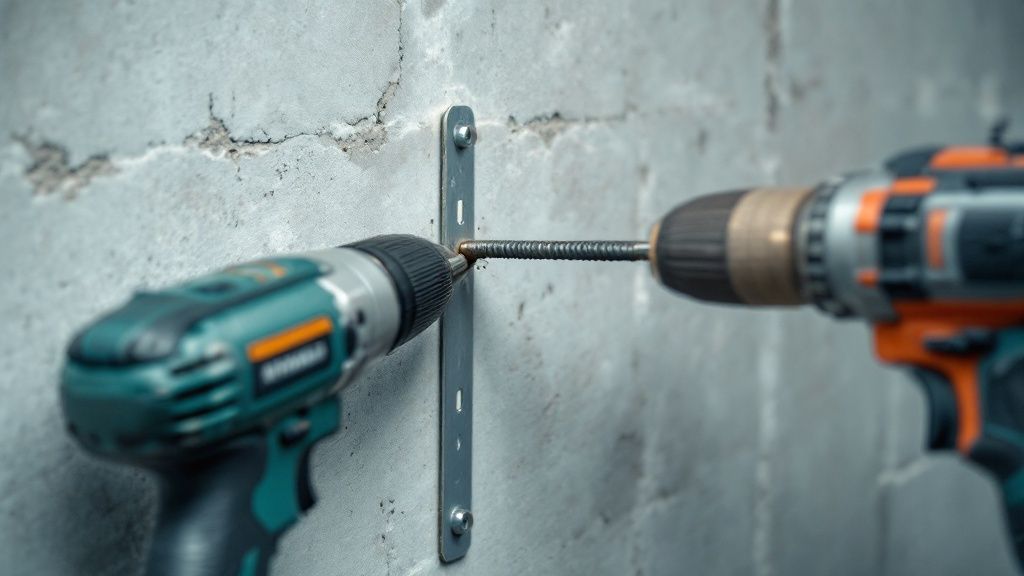
It’s easy to focus on the big-ticket items—the steel beams, the concrete slabs—but the truth is, a building’s strength often comes down to its smallest parts. Fasteners, fixings, and anchors are the unsung heroes of any construction project. They are the essential stitches holding the entire structure together, and getting them wrong can lead to failures that are both costly and dangerous.
While people often throw these terms around interchangeably, they represent distinct categories of building material hardware. Each has a very specific job to do. For any construction professional in the UAE, mastering this trio is fundamental to ensuring every connection is secure, from deep foundations to the finest interior finishes.
For a great starting point, our beginner's guide is a must-read: https://yasutrading.com/blog/exploring-building-hardware-a-beginners-guide/
Distinguishing Fasteners, Fixings, and Anchors
The first step is to get the language right. The best way to think about it is by asking what you’re connecting and what forces you’re trying to resist. This simple approach makes it much clearer which component is right for the job.
- Fasteners are the most direct connectors. Think of a screw joining two pieces of wood. They create their own threads or use existing ones to pull objects together.
- Fixings come into play when a simple fastener isn't enough. They are used to attach something to a substrate, often needing a helper like a plug or sleeve. A classic example is using a wall plug to hang a heavy mirror on a plasterboard wall.
- Anchors are the heavy-hitters. These are engineered to create a powerful, load-bearing connection to solid substrates like concrete or masonry. You'll see them used for securing structural steel, heavy machinery, and other critical elements.
The core difference lies in the load and the substrate. A simple screw is a fastener; that same screw used with a plastic plug becomes part of a fixing; a heavy-duty bolt expanding into concrete is an anchor.
This isn’t just academic. Consider that the construction aggregate market in the Middle East, valued at around USD 7.72 billion, is all about creating the concrete that forms our buildings. That massive volume of concrete is useless without the correct anchors specified to create secure, load-bearing connections.
Understanding Key Performance Metrics
Choosing the right component is about more than just its name; you have to understand how it performs under pressure. There are three key metrics that tell you how a fixing or anchor will behave under stress.
1. Load-Bearing Capacity
This is the big one: what is the maximum weight or force the component can safely handle? It's the most basic specification, but absolutely the most critical.
2. Shear Strength
This measures how well the component resists forces trying to slice it sideways, perpendicular to its length. It’s vital for things like façade panels or any connection supporting a hanging load.
3. Pull-Out Resistance
Exactly what it sounds like, this is the force needed to pull an anchor or fixing straight out of the base material. This is crucial for anchors in concrete and masonry, where the entire connection depends on the anchor's grip.
Avoiding Common and Costly Mistakes
Using the wrong hardware can lead to anything from a minor cosmetic issue to a catastrophic structural failure. We see it all the time. A particularly dangerous mistake here in the UAE is using an anchor designed for solid concrete in hollow blockwork. The anchor’s expansion mechanism can easily shatter the block's thin internal walls, leaving you with a connection that has almost no strength.
Likewise, specifying a fixing without properly considering the substrate is a recipe for disaster. It's not just about the hardware in isolation, either. Proper roof flashing installation, for example, is essential for a waterproof building envelope, and that process relies entirely on using the correct fasteners for the job.
The solution is diligence. Always check the technical data sheet for the specific product you’re using. Match its specifications precisely to the substrate and the load it needs to handle. This simple step prevents rework, guarantees safety, and protects the long-term integrity of the entire structure.
Your Playbook for Smart Hardware Procurement
Sourcing building material hardware is much more than just a line item on a purchase order; it's a fundamental part of managing risk. For procurement managers and site engineers across the UAE, getting these choices right protects project timelines, budgets, and most importantly, the integrity of the finished structure. This calls for a strategic mindset that prioritises long-term performance over a quick win on cost.
It’s tempting to hunt for the cheapest option, but that’s a dangerous game. The real goal is to build a solid evaluation framework, making sure every single component meets the project's tough specifications. A small saving on a counterfeit or low-grade product can quickly evaporate, leading to catastrophic failures and repair bills that make the initial discount look tiny.
Verifying Quality and Authenticity
Documentation is your first line of defence against poor quality. Any reputable piece of hardware will come with technical data sheets (TDS) and certifications. Think of these as the component's CV, outlining its capabilities and proving it meets international standards. Learning to properly read these documents is a non-negotiable skill.
Don't just give them a quick glance. Dig into the specifics—look for performance metrics like load capacity, material grade (e.g., SS316), and corrosion resistance ratings. These details are your guarantee that the product can actually handle the UAE's demanding climate and the specific stresses of your project.
You should also be on the lookout for key certifications. These are strong indicators of quality:
- ISO 9001: Shows the manufacturer has a robust quality management system.
- CE Marking: This signals conformity with health, safety, and environmental standards in Europe, which is often used as a global benchmark for quality.
- Specific Third-Party Test Reports: For critical items like anchors, always ask for independent lab results that verify things like pull-out strength and shear performance.
Counterfeit products are a huge risk in our industry. They might look the part, but they often use the wrong materials and engineering, making them dangerously unreliable. Your best protection is to always source from authorised, reputable distributors.
Navigating Supply Chain Complexities
Once you’re confident in verifying quality, the next puzzle is the supply chain itself. A delay in hardware delivery can bring a multimillion-dirham project to a screeching halt. A truly smart procurement strategy involves carefully balancing the benefits and drawbacks of both local and international suppliers to head off this risk.
Local suppliers in the UAE are brilliant for their faster lead times and flexibility—a massive advantage when you're up against tight deadlines. On the other hand, international suppliers might give you access to highly specialised components or better pricing on massive bulk orders, but this usually comes with the trade-off of longer shipping times and customs headaches.
Building a Supplier Evaluation Framework
The end goal here is to move past simple one-off transactions and start building relationships with reliable partners. A great supplier isn't just a vendor; they become an extension of your project team. When you're assessing potential suppliers, your framework should focus on a few key factors.
Try creating a simple scorecard based on these criteria:
- Quality Assurance: Do they provide clear, complete documentation and certifications for everything they sell? No excuses.
- Reliability and Stock Levels: Can they hit delivery dates consistently? Do they actually keep enough stock of essential items?
- Technical Support: Is their team knowledgeable enough to answer technical questions and guide you to the right component for a tricky application?
- Reputation and Track Record: What’s their history of serving major projects in the region? Can they give you solid references?
By putting this playbook into action, you turn procurement from a simple cost centre into a genuine strategic advantage. It ensures every piece of hardware on your site is verified, reliable, and sourced from a partner you can count on. To get a better feel for the options out there, a good first step is https://yasutrading.com/blog/comparing-building-hardware-suppliers-in-the-uae/.
What's Next for Construction Hardware?
The hardware we use in construction isn't standing still. Far from it. New technologies, a serious push for sustainability, and evolving building methods are constantly changing the game. If you're working on projects here in the UAE, keeping up with these shifts is what separates a good build from a great one—one that's not just solid, but also smart and efficient.
One of the biggest waves we're seeing is the move to smart hardware. We're talking about more than just a fancy lock. Imagine fixtures with built-in sensors that can track how often a door is used in a busy mall or even detect a tiny water leak before it becomes a disaster. This kind of tech gives building managers real-time data, turning reactive repairs into proactive maintenance.
The Green Revolution in Hardware
Sustainability is no longer a buzzword; it's a core requirement. This shift is hitting the hardware market hard, with a growing demand for products made from recycled metals or through manufacturing processes that don't leave a massive carbon footprint. This is all part of a larger conversation around eco-friendly building materials, and it's directly impacting how we choose everything from hinges to handles for green-certified projects.
The future isn't just about making hardware stronger or smarter. It's about making it kinder to our planet. This focus on both performance and responsibility is completely changing how we think about procurement.
New Ways of Making and Building
How hardware is made is also getting a complete overhaul, thanks to some incredible new technologies.
- 3D Printing (Additive Manufacturing): Need a completely custom bracket for a unique facade or a specific replacement part for a heritage restoration? 3D printing makes it possible to create bespoke hardware on-demand. For architects pushing design boundaries in the UAE, this is a massive advantage.
- Hardware for Modular Builds: Prefabricated and modular construction is taking off because it's fast and precise. This method needs its own unique set of hardware—things like quick-connect systems and adjustable fittings that allow for rapid assembly on-site. It's all about saving time without sacrificing quality.
All these trends point in one direction: a more connected, responsive, and sustainable way of thinking about the nuts and bolts of our buildings.
Your Building Hardware Questions, Answered
When you're dealing with the specific challenges of building in the UAE, a lot of questions about hardware come up. Getting the right answers is non-negotiable—it's about safety, following the rules, and making sure your work lasts.
Let's dive into some of the most common queries we hear from construction pros on the ground and get you some clear, practical advice.
What’s the Best Hardware for Coastal Projects in the UAE?
If you're building anywhere near the coast, from Dubai Marina to Saadiyat Island, your biggest fight is against corrosion from salt. Hands down, the best material for the job is Grade 316 stainless steel. It's known as marine-grade for a reason; it contains molybdenum, which gives it superior protection against the chloride in sea spray that causes rust.
For things like window frames or certain decorative pieces, anodized aluminium is also a fantastic option. The anodizing process creates an incredibly tough, protective skin that holds up against both salt and abrasive sand. Just be sure to avoid lower-grade stainless steel (like Grade 304) or any unprotected carbon steel in these environments—they simply won't last.
How Can I Spot Quality Hardware and Avoid Fakes?
Making sure your hardware is legitimate is one of the most important parts of the procurement process. Your first line of defence should always be the paperwork. Insist on seeing the Technical Data Sheet (TDS) for every component. This is the document that proves its specs, like material makeup, load capacity, and corrosion resistance ratings.
Beyond that, keep an eye out for key certifications that signal quality:
- ISO 9001 certification tells you the manufacturer has solid quality management systems in place.
- Third-party test reports from recognised labs give you unbiased proof of how critical items, like structural anchors, will perform under pressure.
The single best way to avoid counterfeit products is to stick with authorised, reputable suppliers. If a price from an unknown source seems too good to be true, it’s usually a massive red flag for poor-quality materials that could put your entire project at risk.
Can I Use the Same Anchors for Both Concrete and Blockwork?
Absolutely not. This is a common but extremely dangerous mistake we see on job sites. Solid concrete and hollow blockwork behave in completely different ways, and each requires a specific type of anchor.
If you try to use an expansion anchor (meant for solid concrete) in a hollow block, you’ll likely crack or shatter the block's thin internal walls. The result? A fixing with virtually no pull-out strength. For blockwork, you need to use anchors made for hollow materials, like sleeve anchors or chemical anchors that use a special sieve sleeve. Always, always match the anchor to the material you're drilling into.
For a reliable supply of certified, high-performance building material hardware that meets the rigorous demands of any UAE project, trust the experts at Yasu Trading Co. LLC. Explore our extensive range and get a fast, accurate quote for your needs at https://yasutrading.com.