Building Materials Dubai: Your Ultimate Guide
Securing the right building materials in Dubai is more than just a logistical task; it’s the very foundation of any successful construction project. In a city that never stops building, understanding the forces that shape this market isn't just helpful—it's essential for anyone from developers to project managers looking to navigate the procurement landscape.
Understanding the Dubai Construction Landscape
You only have to look at Dubai’s skyline to see it’s a story of ambition and non-stop growth. This relentless development fuels a massive, ever-present demand for building materials, creating a completely unique ecosystem for sourcing and procurement. It's not just one thing, but several powerful forces all working together that keep this engine running.
The most visible drivers are the city's legendary mega-projects. Think of the vast new residential communities or the huge infrastructure overhauls—these are the projects that consume incredible volumes of foundational materials like steel and concrete, not to mention all the specialized finishing products.
Key Market Dynamics
At the same time, the residential sector is booming all on its own. This isn't happening in a vacuum; it’s directly supported by visionary government plans like the Dubai 2040 Urban Master Plan. The goal is to improve quality of life and grow the population, which naturally means more homes, schools, and commercial buildings are needed.
Of course, this kind of supercharged growth comes with its own set of headaches. Recent market data paints a clear picture of the pressures involved.
The housing market has seen an incredible boom, with over 42,000 residential sales in the first quarter of 2025 alone. To keep up, about 95 new projects were launched to add nearly 28,600 new units, with experts forecasting the total housing supply will hit around 300,000 units by 2028.
This explosion in demand, coupled with global supply chain hiccups and inflation, has sent material prices soaring. We're also seeing a major shift in how business gets done. Suppliers, feeling the financial squeeze themselves, are now frequently demanding full payment upfront. The old days of 120 or 150-day credit terms are quickly disappearing. This completely changes the game, dramatically increasing upfront costs and forcing developers to be incredibly buttoned-up with their financial planning. You can dig deeper into these market dynamics and their impact on the construction equipment sector.
The table below breaks down the main factors creating this high demand for building materials in Dubai.
Key Drivers of Dubai's Building Material Demand
| Driving Factor | Description | Impact on Materials |
|---|---|---|
| Mega-Projects | Large-scale infrastructure, commercial, and residential developments that define the city's growth. | Creates massive, consistent demand for basic materials (concrete, steel) and specialized products. |
| Dubai 2040 Urban Plan | A government strategy to increase population and enhance livability, guiding future development. | Fuels sustained demand for residential, community, and commercial construction materials. |
| Housing Market Boom | A rapid increase in property sales and new project launches to meet population growth. | Intensifies immediate demand for a wide range of materials, from structure to finishes. |
| Tourism & Expo Legacy | Ongoing development of hotels, attractions, and event venues to support a world-class tourism hub. | Drives demand for high-end, durable, and aesthetically pleasing building materials. |
These drivers work in concert, creating a market that is both challenging and full of potential for those who know how to navigate it.
Current Opportunities and Challenges
For anyone involved in sourcing building materials in Dubai, this environment presents a classic case of double-edged swords.
- Opportunity: The constant flow of projects creates a stable, predictable market. If you can plan ahead, the demand is there.
- Challenge: Skyrocketing costs and tough payment terms mean you need rock-solid budget management and secure financing from day one.
- Opportunity: The government's push for sustainability and innovation opens the door for new, high-performance materials to enter the market.
- Challenge: A shortage of skilled labor can throw a wrench in project timelines and affect the entire supply chain, right down to specialized installers.
Getting a firm grasp of this context is the real first step. It's what allows project managers and developers to make smart decisions, see market shifts before they happen, and build resilient strategies. In Dubai, a successful project doesn't start with the first shovel in the ground—it starts with a deep understanding of the forces shaping the city itself.
The Core Building Blocks of Dubai Construction
Think about a building for a second. It’s a lot like a living thing. You’ve got the skeleton holding everything up, the skin that gives it protection and personality, and the complex network of veins and arteries that keeps it running. It’s no different in construction. The various categories of building materials in Dubai are handpicked to fill each of these roles, and every single one is vital to the structure’s strength, performance, and long-term health.
Getting a handle on these main categories is your first step toward understanding the logic behind every skyscraper, villa, and major infrastructure project across the city. This isn't just about grabbing materials off a shelf; it's about piecing together a high-performance system that can stand up to one of the world's most demanding environments.
The Structural Skeleton
First things first, you need a skeleton. This is where structural materials come in—they’re the literal bones and muscles of a building. Their job is to carry all the weight, fight back against forces like wind and gravity, and provide the basic shape and stability. In Dubai’s world of ambitious architecture, two materials absolutely dominate this space.
- Reinforced Concrete: This is the workhorse. By combining the immense compressive strength of concrete with the tensile strength of steel rebar, you get a material that can form the foundations, columns, beams, and slabs for the vast majority of buildings here.
- Structural Steel: Prized for its incredible strength-to-weight ratio, steel is the go-to for creating the frameworks of Dubai's famous super-tall towers and massive, wide-open structures like airport terminals and stadiums.
Without these powerhouse materials, no architectural vision would ever get off the ground. They are the unsung heroes making sure a building stands strong and secure for decades to come.
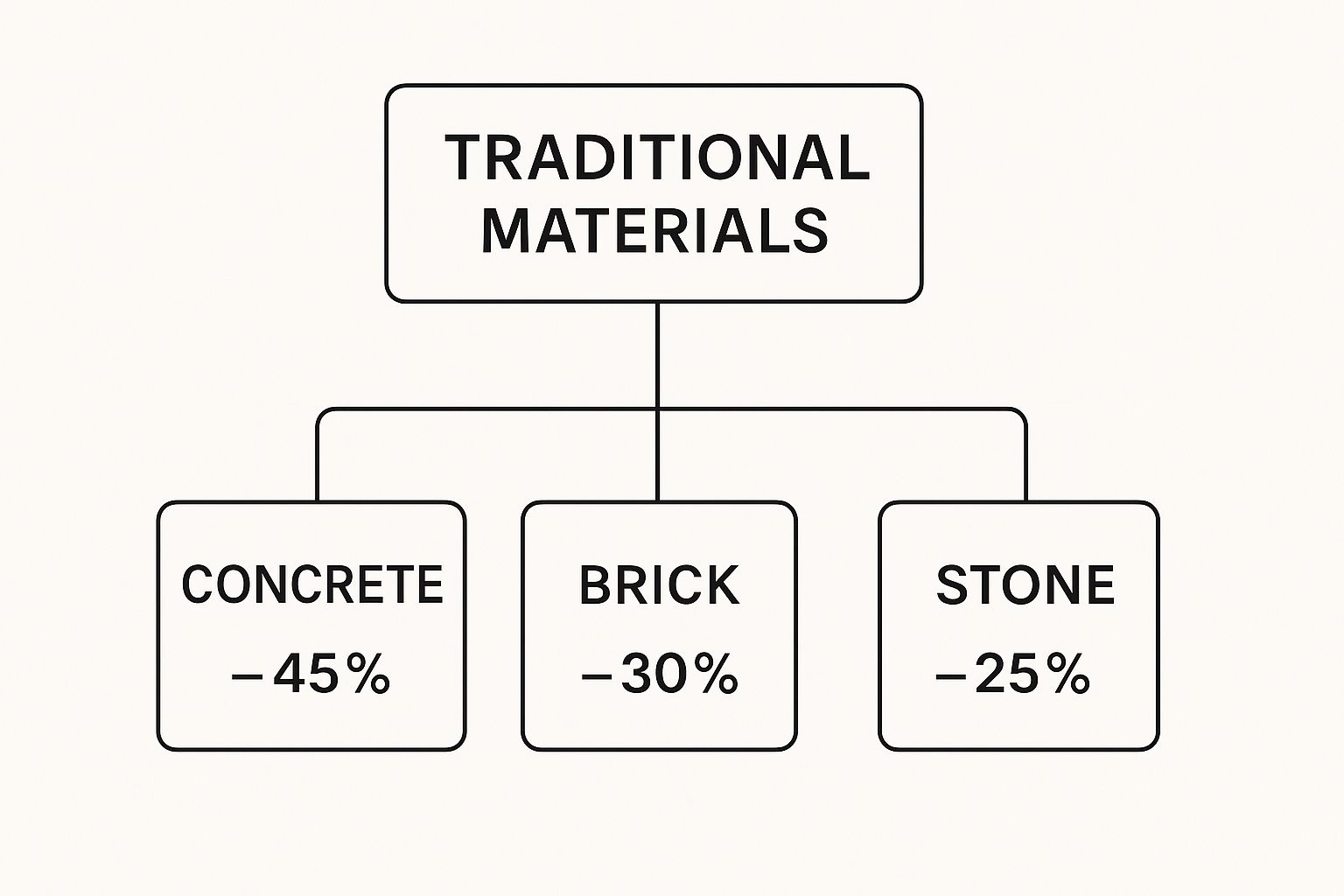
The image below really drives home how much the local construction scene relies on traditional materials, especially concrete.
The numbers don't lie. Concrete isn't just a player; it's the foundation of the game, making up almost half of all traditional material use in Dubai's projects.
The Protective Skin and Finishes
With the skeleton firmly in place, it’s time to give the building its "skin" and finish the interiors. These materials pull double duty: they shield the structure from the elements while also defining its visual identity and aesthetic appeal. This is where a building truly gets its character.
Some of the key players in this category include:
- Façade Systems: From sleek glass curtain walls to aluminium composite panels (ACP) and classic natural stone cladding, these systems are a building’s frontline defence against the intense desert heat and sun.
- Plaster and Paint: Inside, these materials create the smooth, durable surfaces that provide the final pop of colour and texture, bringing an interior designer's vision to life.
- Flooring and Tiling: Materials like porcelain, ceramic, marble, and vinyl are all chosen based on a careful balance of durability, ease of maintenance, and pure style.
These are the elements people see, touch, and interact with every single day, so getting them right is absolutely critical for the final user experience.
The Functional Systems: MEP
The last piece of the puzzle is the material for the Mechanical, Electrical, and Plumbing (MEP) systems. You can think of these as the building’s circulatory and nervous systems—they are what make a space liveable, comfortable, and functional. Sourcing top-quality MEP components is non-negotiable for operational efficiency and safety.
MEP materials are the unseen heroes of a functional building. They include everything from copper pipes and PVC conduits to electrical wiring, switchgear, ductwork for air conditioning, and fire suppression systems. A failure in any of these components can compromise the entire building's operation.
In a climate like Dubai's, the HVAC (Heating, Ventilation, and Air Conditioning) components are particularly crucial. The quality of the pipes, ducts, and insulation used here has a direct line to a building's energy bills and its ability to keep people cool and comfortable inside.
As the market continues to evolve, staying on top of the latest options is essential. For anyone looking to dig deeper, it’s worth exploring trending construction materials in Dubai to see how they’re shaping modern projects. These newer materials often deliver better performance, especially for MEP and finishing work, reflecting a wider industry move toward efficiency and sustainability that lines up perfectly with Dubai's green building goals.
Navigating Dubai's Building Codes and Standards
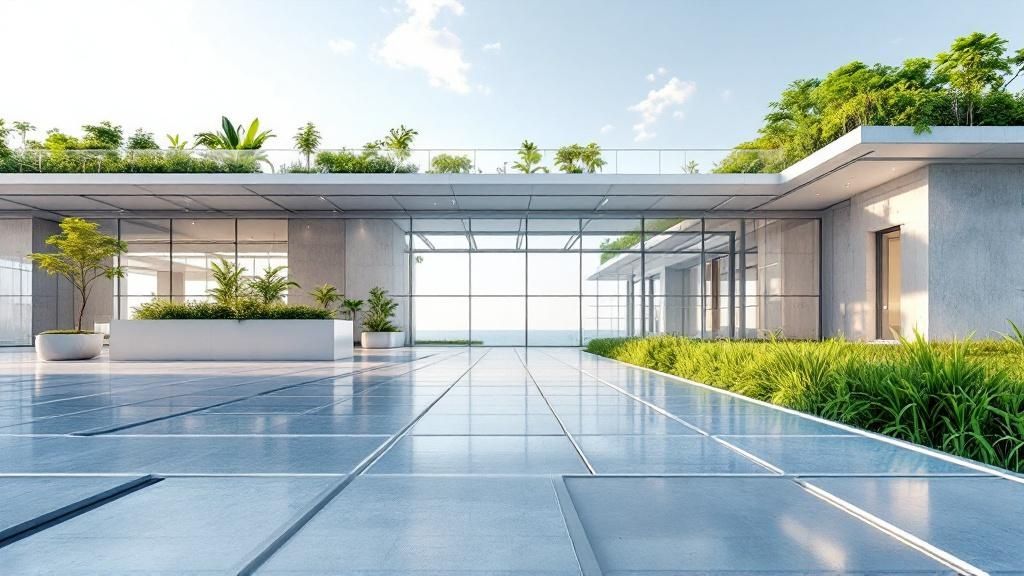
In Dubai's construction scene, the rules aren't just suggestions. They are the absolute bedrock of every project, big or small. Attempting to build here without a profound respect for the city's building codes is like constructing a skyscraper on shifting sand—it’s just not going to work. This strict framework is in place for a reason: it guarantees every structure is not only safe and world-class but also resilient enough to thrive in our unique regional climate.
Think of the regulatory bodies as expert gatekeepers. They’re here to make sure every single nut, bolt, pipe, and panel meets an exceptionally high bar. Sourcing building materials in Dubai without fully grasping this is a massive gamble. It’s a risk that can easily lead to eye-watering fines, project-stopping delays, and the nightmare of ripping out and replacing non-compliant work.
The Key Authorities You Must Know
At the core of this entire system, there are two primary organisations that every developer, contractor, and supplier must get familiar with. Their stamp of approval is non-negotiable; it's the ultimate seal of quality for any material destined for a construction site.
- Dubai Municipality (DM): This is the main governing body. The DM sets the overarching regulations and building codes for the whole emirate. Their approval is mandatory at every single stage, from the first design sketch to the final walk-through inspection.
- Dubai Central Laboratory (DCL): Working directly under the DM, the DCL is the hands-on testing and certification authority. They put materials through rigorous tests to confirm they meet the required standards for performance, safety, and durability. A DCL certificate is solid proof that a material is ready for the job.
For any supplier, having DCL-certified products isn't just a bonus; it's a badge of honour. It immediately signals to clients that their materials have been independently verified to stand up to Dubai's challenging environment—from the intense heat and humidity to the coastal salinity. That assurance is what project integrity is built on.
A project's success often hinges on its weakest link. If a single unapproved material fails, it can compromise the safety and longevity of the entire structure. That’s why the DCL’s role is so critical—it validates the strength of every link in the chain.
Getting a handle on this process is vital. For anyone looking to dig deeper into the details, you can learn more about the crucial role of building materials quality standards in the UAE and how they directly shape project success.
The Rise of Green Building with Al Sa'fat
Dubai is looking beyond just safety and durability. The city is pushing hard towards a greener, more sustainable future, and this vision is baked directly into its regulations with the Al Sa'fat system. Introduced by the Dubai Municipality, Al Sa'fat is a green building rating system that's now mandatory for all new construction.
The system works on a tiered model—Bronze, Silver, Gold, and Platinum—with each level demanding more from the project. This has had a huge impact on material selection. The rules now insist on using materials that boost energy efficiency, conserve water, and come from responsible sources.
This shift has completely changed the conversation around building materials in Dubai. Now, project teams have to ask new questions:
- Sustainable Sourcing: Where did these materials come from? The regulations favour locally sourced products and recycled content to shrink a project's carbon footprint.
- Energy Performance: Things like high-performance insulation, solar-reflective coatings, and energy-efficient glazing are no longer nice-to-haves; they are often mandatory requirements.
- Water Efficiency: To protect our most precious resource, low-flow plumbing fixtures and water-saving systems are now standard.
Al Sa'fat isn't just about earning a "green" sticker. It's a smart, practical framework designed to create buildings that are more affordable to run, healthier for the people inside them, and kinder to our environment. Complying with these standards means choosing materials that clear both hurdles: the traditional safety codes and the building's overall sustainability rating. Mastering this dual requirement is the new definition of excellence in Dubai's construction industry.
Sourcing Strategies and Cost Management
Getting the right building materials in Dubai at the right price is a constant juggling act. This isn't just about chasing the lowest quote. It's about building a supply chain that's both resilient and predictable, one that protects your project from expensive delays and quality nightmares. In a market as dynamic as Dubai's, your sourcing strategy is every bit as critical as your blueprints.
The logistics alone can be a real headache, pushing project managers to decide where, exactly, to get their supplies. This almost always boils down to a core choice: source locally within the UAE, or look to international markets? Each path has its own set of pros and cons that can make or break your timeline and budget.
Local vs. International Procurement
The decision between a local and an international supplier isn't always cut and dried. A local supplier can get you materials much faster with simpler logistics, which is a massive win when you're up against a tight deadline. They also have that priceless, on-the-ground understanding of regional standards and what the Dubai Municipality expects.
On the flip side, sourcing internationally can open the door to highly specialised materials or even lower unit costs, especially if you're buying in huge quantities. But that route is full of its own hurdles.
- Longer Lead Times: International shipping can throw a major wrench in your schedule, making it tough to react when you need something unexpectedly.
- Logistical Complexity: You're suddenly dealing with customs, import duties, and complex shipping arrangements that can quickly get overwhelming.
- Quality Control: Trying to verify the quality and compliance of materials from halfway around the world is a whole lot harder than inspecting them in a local warehouse.
For most projects in Dubai, the smart money is on partnering with a well-stocked local supplier like Yasu Trading Co. It cuts out the risks of international shipping and gives you the assurance that all materials already meet DCL standards. You get both speed and peace of mind.
Navigating Market Volatility and Budgets
Dubai's construction market is never static. Prices for essentials like steel and cement can swing wildly based on global demand, supply chain hiccups, and local trends. That kind of volatility is a major challenge for anyone trying to manage costs.
This constant motion is part of a bigger story. The UAE's construction materials market, with Dubai at its heart, was valued at around USD 16.2 billion in 2024. Experts predict it will hit USD 20 billion by 2030, mostly thanks to residential projects. While that growth is exciting, it brings its own set of problems, like rising raw material costs and logistical bottlenecks that squeeze procurement teams. You can dive deeper into the UAE's construction market growth and challenges in this analysis.
To keep your budget from spiralling, you need a few key strategies in your back pocket:
- Effective Negotiation: Don't just take the first price offered. A good relationship with your supplier opens the door for real negotiation, particularly for bulk orders.
- Explore Alternatives: Work with your supplier to find cost-effective alternatives that still deliver on performance and meet every regulation. Sometimes, a different brand or material can do the same job for less.
- Adapt to New Payment Terms: A lot of suppliers are shifting away from credit to upfront payments, so sharp financial planning is essential. Get your financing sorted early and keep the lines of communication with your supplier wide open to prevent hold-ups.
Key Takeaway: The best project managers in Dubai don't just react to market shifts—they get ahead of them. Building a flexible procurement plan and a strong relationship with a trustworthy local supplier is your best defence against blown budgets and busted timelines.
By mixing smart negotiation, clever material choices, and adaptable financial planning, you can keep costs under control. This proactive approach ensures your project stays on track, even when the market throws you a curveball. A solid sourcing strategy is your number one tool for protecting both your schedule and your bottom line.
How To Choose The Right Building Material Supplier
Choosing a supplier for building materials in Dubai is about so much more than just finding the lowest price on a quote sheet. Your supplier isn't just a vendor; they're a critical project partner.
Think of it this way: the right one is an extension of your team, helping you navigate risks and keep everything moving smoothly. The wrong one? They can quickly become your single biggest source of delays and budget nightmares.
To make the right call, you need a clear, methodical approach. It’s about looking past the sales pitch and digging into the criteria that actually matter. This framework will help you find a partner who delivers real value, ensuring your project is built on quality and reliability from day one.
Evaluating The Product Catalogue
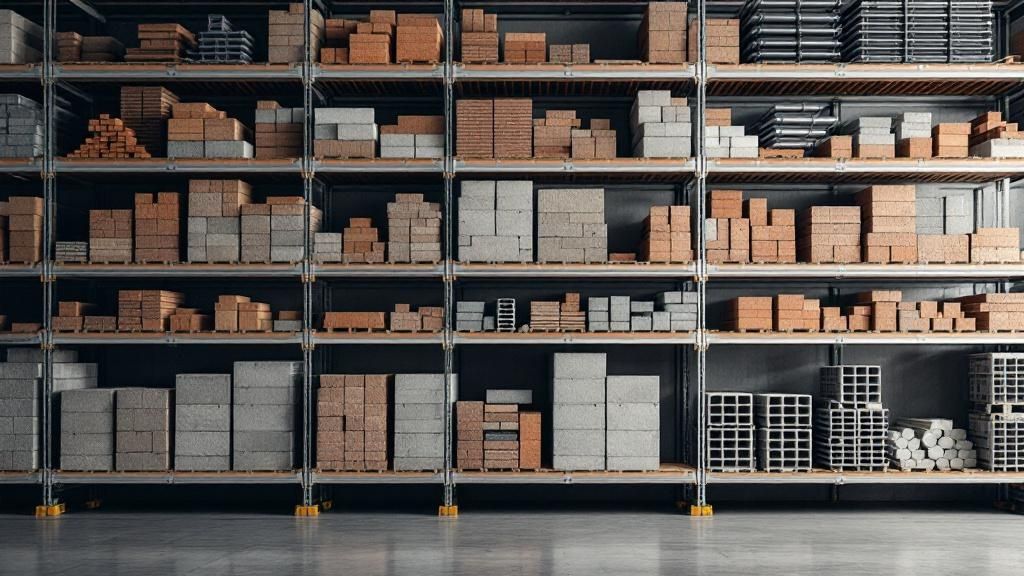
First things first, can they actually get you what you need? A top-tier supplier should have a deep and wide inventory that covers all the bases—from structural necessities and MEP components to finishing touches and vital safety gear. Having a one-stop-shop is a massive advantage.
When you work with a single, well-stocked supplier, you immediately simplify your procurement. It cuts down on the admin work of juggling multiple vendors, endless purchase orders, and complex delivery schedules. A supplier like Yasu Trading Co. really shines here, offering a diverse portfolio that covers pretty much every phase of construction, saving you headaches and valuable time.
Verifiable Quality and Compliance
In Dubai's construction scene, compliance is everything. A supplier's talk about quality is nice, but it has to be backed by hard proof. Don't just take their word for it.
A reliable supplier will have no problem showing you their product documentation. We’re talking about essential certifications like ISO for quality management and, most importantly, Dubai Central Laboratory (DCL) certificates. The DCL mark is your absolute assurance that a material has been properly tested and approved for use in the local market.
If you use materials without these certifications, you're opening your project up to huge risks, including hefty fines and orders to tear down and redo work. A supplier who makes their certifications a priority understands what’s at stake. This is a non-negotiable step—your first line of defence against shoddy materials.
Logistical Strength and Reliability
A fantastic product catalogue means nothing if the materials never make it to your site on time. A supplier's logistics game is just as crucial as their inventory. You have to get a real sense of their delivery infrastructure and their track record for being dependable.
Get straight to the point and ask them some direct questions:
- What's your typical lead time for standard items?
- How do you handle urgent, last-minute requests for materials?
- Can you give me references from projects that are a similar size to mine?
On-time delivery is the lifeblood of any construction schedule. A supplier with a solid reputation for punctuality and a strong delivery network prevents that costly domino effect of having a whole site stand idle, waiting for a truck to show up.
For a deeper dive into this topic, you can read our complete guide to choosing the right building materials supplier in the UAE, which covers even more factors to consider.
Market Reputation and Customer Support
Finally, look for a supplier with a strong, established reputation in the Dubai market. A long track record is usually a good sign of consistent performance and happy clients. Do a little digging—check online reviews, look for client testimonials, and see if they have any case studies.
Beyond their reputation, check out their customer support. Are they quick to respond? Do they actually know what they're talking about? Because when a problem pops up—and in construction, it always does—you need a supplier who picks up the phone and is ready to help you find a fix. A partner like Yasu Trading Co. blends deep market insight with dedicated support, turning procurement from a simple transaction into a genuine partnership that helps your project succeed.
How Mega-Projects Shape the Materials Market
You can’t talk about construction in Dubai without talking about its mega-projects. These massive, ambitious ventures—from entire new communities to landmark tourist destinations—are the real engines of the local building industry. They act like giant magnets, pulling in unbelievable quantities of materials and bending the entire supply chain to their will and timelines.
When a project like a new master-planned community gets the green light, it sends immediate shockwaves through the market. This isn't just a slow, steady increase in demand. It’s an abrupt, colossal need for very specific materials, all at once. Suppliers suddenly find themselves fielding enormous orders for foundational items like concrete, steel, and aggregates, all needed yesterday to hit aggressive construction targets.
The Ripple Effect of Infrastructure Investment
The connection between the government's vision and private-sector activity is incredibly direct here. Take a major highway expansion, for example. It's not just about the asphalt for the road surface. You need massive amounts of steel for bridges, concrete for barriers and supports, and a complex web of MEP components for lighting and drainage. Every single kilometre of new road translates into a clear, predictable shopping list for material suppliers.
This is playing out right now across the emirate. Public investment is a major catalyst for the demand for building materials in Dubai. Just look at the city's AED 16 billion Main Roads Development Plan, set to run from 2024 to 2027. This plan alone includes 22 distinct projects aimed at overhauling the road network. On top of that, a separate five-year plan will add another 634 kilometres of internal roads through residential and commercial areas.
These initiatives create a huge, sustained demand for essentials like concrete, steel, and asphalt. It’s no surprise that forecasters see the UAE's construction industry growing at an average of 4% annually through 2029. You can read more about how Dubai's roads plan drives market growth and what it means for material demand.
Anticipating Market Shifts
For any developer or contractor, understanding this dynamic isn't just interesting—it's a critical strategic advantage. It lets you get ahead of market trends instead of just being swept along by them.
By monitoring upcoming government tenders and project announcements, you can forecast future demand spikes for specific materials. This foresight enables you to plan procurement more effectively, potentially locking in prices before a surge hits or securing supply while it's still readily available.
Suddenly, procurement isn't just a logistical chore; it becomes a strategic tool. This kind of forward-thinking gives you the confidence to navigate price swings and material shortages, ultimately giving you far more control over your budget and schedule in Dubai’s fiercely competitive construction scene.
Frequently Asked Questions
When you're dealing with building materials in Dubai, a lot of questions pop up. It's totally normal, especially when you're juggling tight timelines, strict budgets, and the pressure of a major project. Getting good, honest answers is what separates a smooth project from a stressful one. Here are some of the most common questions we get asked.
What Is The Most Critical Factor When Selecting Building Materials In Dubai?
Everyone thinks about the price tag first, and that's fair. But honestly, the single most critical factor is compliance with Dubai Municipality regulations and Dubai Central Laboratory (DCL) standards.
If you use materials that aren't certified, you're looking at a world of pain: project shutdowns, huge fines, and the nightmare scenario of having to rip everything out and start over. Always, always put certified materials first—ones that can handle Dubai’s intense heat, humidity, and salt-laden air, and that meet all the safety codes, including the Al Sa'fat green building rules.
How Can I Verify If A Supplier In Dubai Is Reliable?
Spotting a reliable supplier isn't just about finding the lowest price. You need to do a little digging. A truly solid supplier will have:
- A long, proven history in the local market.
- Happy clients and project references you can actually check.
- The right paperwork, like ISO quality certifications and DCL certificates for their products.
But it goes deeper than that. A dependable supplier won't hide anything about their quality control. They should be able to hand over any documentation you need and have their logistics so dialed in that you never have to worry about a late delivery.
A reliable partner does more than just sell you materials. They bring expertise to the table, answering your technical questions and helping you cut through the red tape of local regulations. That kind of value goes way beyond just filling an order.
Are Sustainable Building Materials More Expensive in Dubai?
Sometimes, yes—the initial price for some sustainable materials can be a bit higher than for conventional ones. But that's changing fast. With Dubai's Al Sa'fat green building regulations now mandatory, demand for eco-friendly products is way up, and that’s helping bring prices down to earth.
What's really important, though, is to think about the total cost of ownership. Sustainable materials almost always pay for themselves over time with huge savings on energy and water bills. They deliver a much stronger return on investment across the building's entire life.
If you're looking for a partner who guarantees compliance, quality, and reliability for your project, that's what we do at Yasu Trading Co. LLC. Take a look at our wide range of certified building materials and see how we can keep your project on track and on budget. Visit us to request a quote today.