Top Building Materials Sharjah | Quality Supplies & Guidance
Getting your hands on the right building materials in Sharjah is more than just a box-ticking exercise; it's the bedrock of your entire project. It sets the tone for everything that follows, from the quality of the build to the health of your budget. The emirate is a powerhouse for sourcing materials, offering everything from basic structural necessities to high-end finishing touches, often at prices that are hard to beat.
Getting to Grips with Sharjah's Building Materials Market
Picture Sharjah's construction market as a massive, sprawling souq—a dynamic hub where developers, contractors, and builders from all over the UAE converge. Its prime location and fiercely competitive landscape make it the go-to destination for projects far beyond its borders. It’s not just a place to pick up supplies; it's a finely-tuned ecosystem built for speed, efficiency, and smart spending.
And this isn't just talk. The numbers paint a clear picture. The market for building materials in Sharjah is worth around AED 8.9 billion a year, making it the second-largest construction centre after Dubai. Fueling this engine are over 400 verified suppliers spread across its 18 industrial zones. If you want to dive deeper, you can learn more about the leading suppliers in Sharjah and find the ideal partner for your next job.
So, Why Source in Sharjah?
A few key ingredients make Sharjah such a compelling place to buy your materials. Getting your head around these advantages can seriously impact your project's timeline and bottom line.
Here’s what makes it stand out:
- Serious Cost Savings: On average, you can expect material costs to be 15-20% lower than in neighbouring emirates. On a large-scale project, those savings really start to add up.
- A Massive Range of Choices: With so many suppliers in one place, you get access to a huge inventory. We're talking everything from standard concrete blocks to specialised, eco-friendly alternatives.
- Logistics That Just Work: Sharjah's close proximity to major ports and its solid infrastructure mean getting materials to your site anywhere in the UAE is a smooth, efficient process.
Sourcing your materials in Sharjah gives you a genuine competitive advantage. You can slash overall project costs without ever having to cut corners on quality. It’s this financial edge that keeps the emirate’s market buzzing.
Think of this guide as your map to navigating this bustling landscape. We'll walk you through the essential material types, show you how to check for quality, and share some insider tips for smarter purchasing. In the end, it's all about helping you source smarter, not just harder, so your project is built on solid ground with quality materials secured at the best possible price.
The Essential Materials for Any Sharjah Project
Every single construction project, whether it’s a soaring skyscraper on the corniche or a family villa in Al Qarayen, starts with the same thing: a solid list of materials. In a place like Sharjah, where bold architecture has to stand up to some seriously demanding weather, getting this list right is the first real step toward building something that lasts.
Think of it like stocking a chef's kitchen. You can't create a masterpiece without the right core ingredients.
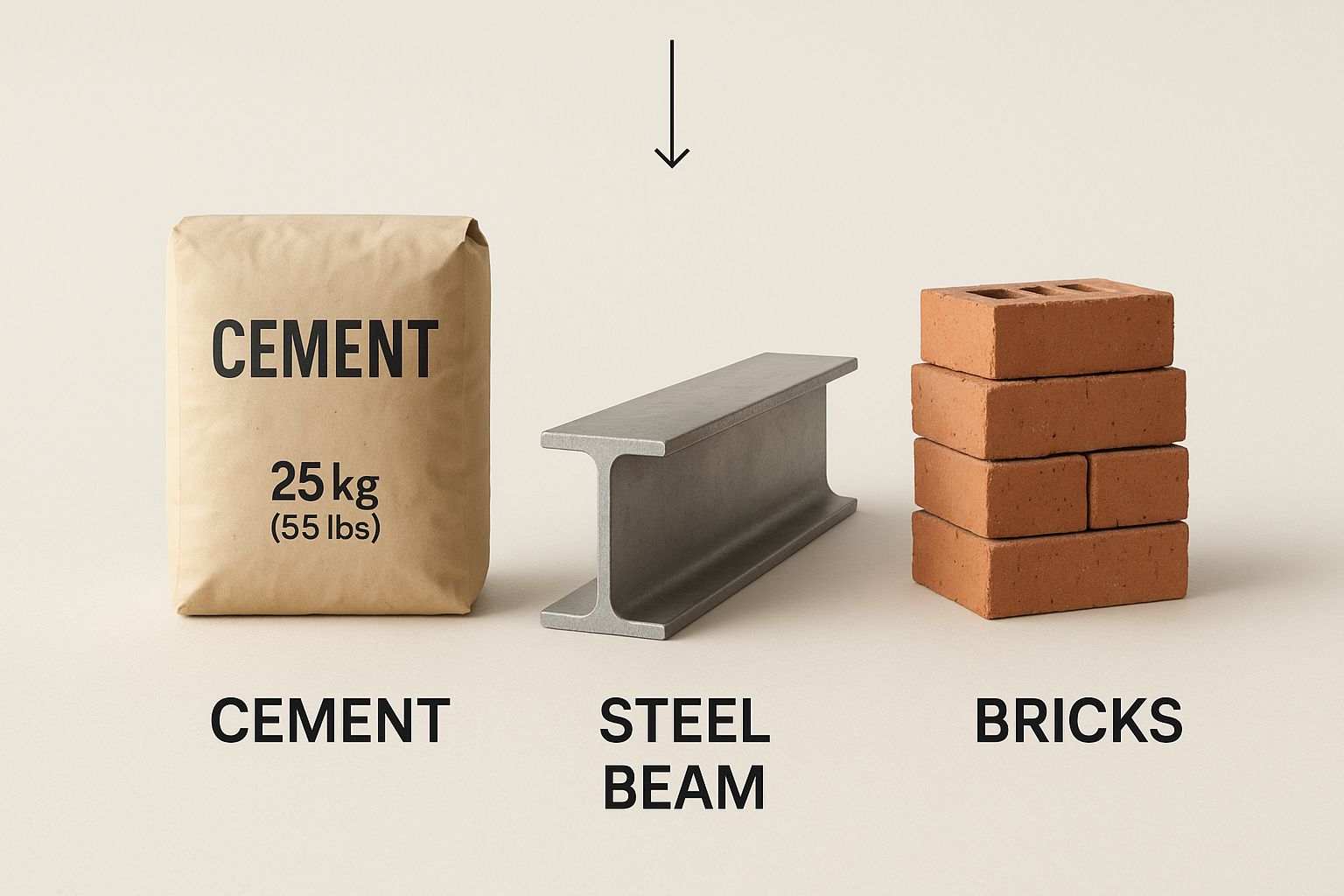
First, let's look at the foundational trio that forms the backbone of almost every structure here: concrete, steel, and masonry.
Each one has a critical, non-negotiable job to do, forming the very skeleton of the building. Getting these right from the start is everything.
To help you get a clearer picture, here’s a quick breakdown of the most common materials and how they fit into a typical Sharjah project.
Essential Building Materials and Their Applications in Sharjah
This table categorises common building materials and outlines their primary uses and key considerations for projects in the Sharjah climate.
| Material Category | Specific Materials | Primary Application | Local Considerations |
|---|---|---|---|
| Structural | Reinforced Concrete, Structural Steel | Foundations, columns, beams, slabs | Must withstand high temperatures and salinity; specialised concrete mixes are common. |
| Masonry | Concrete Blocks, AAC Blocks | Walls (internal and external) | AAC blocks are favoured for their superior thermal insulation, crucial for reducing cooling loads. |
| Finishing | Tiles, Plaster, Paint, Cladding | Floors, walls, ceilings, building exteriors | Materials need high UV resistance and durability to handle intense sun and occasional sandstorms. |
| MEP | PVC/Copper Pipes, Cables, HVAC Ducts | Plumbing, electrical wiring, air conditioning | All components must meet SEWA/DEWA standards and be rated for high ambient temperatures. |
As you can see, the local environment heavily influences material selection beyond just basic strength requirements.
Structural and Foundational Components
The skeleton of your building is its structural system. These are the heavy lifters—the parts responsible for holding everything up and fighting against the forces of nature. Their job is to provide strength, stability, and sheer longevity. The choice of materials here isn't about preference; it's dictated by pure engineering.
To figure out exactly what you need, you'll be working closely with detailed construction drawings. These plans spell out everything, from the specific grade of concrete to the diameter of every last piece of rebar.
Here are the workhorses of this category:
- Reinforced Concrete: The classic mix of cement, sand, and aggregate, but with a twist for our climate. In Sharjah, you’ll find suppliers offering specialised blends with additives that fight back against heat and saline environments, ensuring the structure doesn't degrade over time.
- Structural Steel: For beams, columns, and trusses, nothing beats steel for its incredible strength-to-weight ratio. It’s the go-to for high-rise towers and wide-open commercial spaces for a reason.
- Masonry and Blocks: This covers everything from standard concrete blocks to the increasingly popular autoclaved aerated concrete (AAC) blocks. AAC is a local favourite because it’s a fantastic thermal insulator, which translates directly into lower air conditioning bills.
Finishing and Architectural Materials
With the frame up, it's time to give the building its personality. Finishing materials are what you see, touch, and interact with every day. They define the aesthetic, protect the structure from the elements, and make the inside spaces liveable and welcoming.
These materials are the "skin" of the project, both inside and out. It’s where design vision meets real-world performance.
Choosing your finishes is a careful dance between looks, durability, and budget. A top-notch finish doesn't just look better on day one; it saves a fortune in maintenance down the line—a massive factor for any property owner in the UAE.
Key players here include things like flooring, cladding, paints, and plaster. You’ll see a lot of porcelain tiles used for floors because they’re tough as nails. For exteriors, cladding systems are chosen specifically for their ability to take a beating from the relentless sun and sand.
Mechanical, Electrical, and Plumbing (MEP) Supplies
Tucked away behind walls and above ceilings are the systems that make a building function: Mechanical, Electrical, and Plumbing (MEP). Think of these as the building’s circulatory and nervous systems, delivering power, water, and cool air where they need to go. Skimping on MEP quality is a recipe for disaster.
The MEP world is vast, but it boils down to:
- Electrical: All your wiring, conduits, circuit breakers, and light fixtures. Every single component must be compliant with local standards (like those from SEWA) to guarantee safety.
- Plumbing: This is your network of pipes, fittings, and fixtures for water and drainage. Materials like PVC and copper are chosen based on what they’re carrying and the local water conditions.
- HVAC: In Sharjah, air conditioning isn't a luxury; it's a lifeline. This category includes everything from the giant chillers and air handling units down to the ducts and vents that make an indoor space comfortable.
Of course, beyond these big categories, you have an endless list of hardware—fasteners, adhesives, door handles, and locks. For a deeper dive, our https://yasutrading.com/blog/the-ultimate-guide-to-choosing-building-hardware-in-dubai/ offers some great advice that’s just as relevant here in Sharjah. Nailing these small details is just as crucial as getting the foundation right.
Meeting Quality Standards and Certifications
In construction, quality isn't just a nice-to-have—it's a non-negotiable legal and structural mandate. When you're sourcing building materials in Sharjah, wading through the sea of standards and certifications can feel overwhelming. But it’s the single most critical step you can take to protect your project's integrity, safety, and long-term value.
Think of these certifications as a quality passport. Without that official stamp, you're buying materials on blind faith alone. A proper certification from a recognised body is the only real proof that a product will perform as advertised, stand up to the region's climate, and meet all local regulations. It's what separates a durable, successful build from one riddled with expensive failures and legal headaches.
Key Regulatory Bodies in the UAE
As you talk to suppliers, you’ll hear a few acronyms come up again and again. These organisations are the gatekeepers of quality in the UAE’s construction industry, and knowing who they are is crucial for checking if a material is legitimate.
Here are the main authorities whose approval you should be looking for:
- Sharjah Municipality (SM): This is the local authority setting the rules. For any project inside the emirate, compliance with SM's building codes and material standards is an absolute must.
- Emirates Authority for Standardisation and Metrology (ESMA): Operating at the federal level, ESMA sets national standards for countless products, including building materials. Their ECAS certification is a trusted mark of quality across the entire UAE.
- Dubai Municipality (DM) and the DCL Mark: While the Dubai Central Laboratory (DCL) certification is technically for Dubai, it’s widely respected as a benchmark for high quality across the region. Many top-tier suppliers in Sharjah will stock DCL-certified products to prove their materials are a cut above the rest.
No matter the size of your project, never just take a supplier's word for it. Always ask to see the official certification documents for the materials. A reputable supplier will have them on hand and won't hesitate to show you.
How to Verify Material Quality
Checking certifications is a simple process that can save you from a world of trouble down the line. It just takes a bit of diligence. After all, a substandard steel bar might look identical to a certified one, but the difference becomes catastrophic when it fails under pressure.
Here's a straightforward checklist to follow:
- Request the Certificate: Ask your supplier for the product’s certification from bodies like ESMA or DCL.
- Check the Details: Make sure the certificate isn't expired and that the product name and model number on it are an exact match for what you're buying.
- Look for Markings: Certified products almost always have a mark (like the DCL logo) physically stamped or printed on the item or its packaging.
- Confirm with the Issuing Body: For really critical components, you can often go to the authority's website and verify the certificate's validity directly through their online portal.
This simple process is what ensures the steel you’re buying has the right tensile strength or that your electrical cables are insulated properly to prevent a fire. To get a deeper understanding, check out our complete guide on building materials quality standards in the UAE. A few minutes of verification offers peace of mind and protects your entire investment.
Smart Sourcing and Procurement Strategies
How you get your hands on building materials in Sharjah is just as important as their quality. A savvy procurement plan can be the make-or-break factor for your project's budget and timeline. It's not about just hunting down the lowest price; it's about building a supply chain that's reliable, resilient, and makes financial sense for the long haul.
Think of it like this: are you just grabbing groceries for tonight's dinner, or are you managing the entire supply logistics for a busy restaurant? One is a quick transaction. The other demands foresight, smart negotiation, and solid relationships. In Sharjah's fast-paced construction scene, you absolutely need to adopt the restaurant owner's mindset.
Bulk Purchasing Versus Phased Buying
One of the first big calls you'll have to make is how you'll order. Do you buy everything in one go to lock in the price? Or do you purchase materials in stages as you need them? Each path has its own set of pros and cons, especially in a dynamic market like Sharjah.
Bulk Purchasing: This is where you place one massive, upfront order for most of the materials you'll need. The biggest draw here is the potential for a hefty per-unit discount. Suppliers love big orders and are usually willing to drop their prices. The catch? You need a lot of cash upfront and a secure place on-site to store everything without it getting damaged or walking off.
Phased Buying (Just-in-Time): With this approach, you order materials as you need them for each phase of the job. It’s brilliant for your cash flow, spreading the cost out over the project's life and cutting down on storage headaches. The risk, however, is that you're exposed to price hikes and potential delays if a supplier suddenly runs out of what you need.
For huge developments with a clear, predictable schedule, buying in bulk can save a fortune. But for smaller jobs or tricky renovations, phased buying gives you the flexibility and financial control you need.
Building Strategic Supplier Relationships
Sure, price matters. But the cheapest quote isn't always the best value. Honestly, one of the most powerful tools in your procurement toolkit is building long-term, strategic relationships with a few trusted suppliers of building materials in Sharjah. When a supplier gets to know your business, they stop being just a vendor and become a partner who’s genuinely invested in your success.
A strong supplier relationship acts as a buffer against market volatility. When supply chains are tight or demand spikes, a loyal, long-term customer is far more likely to get prioritised for stock and receive flexible support than a one-time buyer chasing the lowest price.
This kind of partnership pays off in very real ways. You might get better payment terms (though that's getting rarer), first dibs on new stock, and solid advice on alternative materials if your first choice isn't available. It’s an investment in reliability that really proves its worth when things don't go according to plan.
Navigating Current Market Realities
The way we buy materials has changed a lot recently. Economic shifts have thrown some new curveballs our way, demanding smarter sourcing than ever. For instance, in 2025, the market was hit with major price spikes for building materials thanks to supply chain chaos and inflation. This new reality has pushed suppliers to demand full payment upfront, killing the 120-150 day credit terms that were once standard. This puts a huge strain on a contractor's immediate cash needs and can seriously affect project costs. You can find more detail on these shifts and their effects on the UAE's construction sector here.
To handle this tougher climate, you've got to be tactical:
- Diversify Your Supplier Base: Loyalty is great, but don't put all your eggs in one basket. Having two or three vetted suppliers for your most critical materials gives you a backup plan and a bit of negotiating power.
- Negotiate Beyond Price: If suppliers won't budge on the price, see where else you can find value. Ask for bundled delivery fees, an extended warranty, or maybe a better return policy for any materials you don't end up using.
- Lock in Prices with Contracts: If you're on a long-term project, try to sign a contract that freezes the price of essential materials for a specific period. It’s your best defence against a volatile market.
Future Trends in Sharjah Construction Materials

The skyline of tomorrow is being sketched out today, and the real change is happening at the very core of the materials we use. The world of building materials in Sharjah is on the cusp of a major transformation, pushed forward by ambitious national goals, new technology, and a real hunger for smarter, more resilient buildings.
This isn’t just about making things look good. It's about completely rethinking how buildings stand up to Sharjah's unique and demanding climate. The UAE’s Net Zero 2050 strategic initiative is the main driver here, forcing the entire industry to look for solutions that are tough, reliable, and genuinely eco-friendly. It’s setting a new standard for everyone.
The UAE's construction material market, which was valued at around USD 16.7 billion in 2025, is expected to swell to USD 20 billion by 2030. A huge part of that growth is tied to these new sustainability rules, which are raising the bar for building material suppliers across the Emirates.
The Rise of Green Building Materials
The most significant trend you’ll see right now is the rapid move towards green, or sustainable, materials. These are products specifically engineered to leave a smaller environmental footprint, from the moment they're made to the day they're eventually replaced.
For any project in Sharjah, this means creating buildings that are more energy-efficient, healthier places to be, and ultimately, cheaper to run in the long term.
Here are a few examples that are quickly becoming the new norm:
- Low-VOC Paints and Finishes: Your standard paints can release volatile organic compounds (VOCs) that mess with indoor air quality. The shift to low-VOC alternatives is making our homes and offices much healthier spaces.
- Recycled Steel: Making steel from scratch is incredibly energy-intensive. Using recycled steel gives you the same structural muscle but with a fraction of the carbon emissions, a huge win for the environment.
- High-Performance Insulation: In our climate, good insulation is everything. Advanced materials that keep the cool air in and the hot sun out are critical. They drastically cut the load on air conditioning systems, which are one of the biggest energy hogs in the UAE.
The move to green materials isn't just about being eco-conscious; it's a savvy business decision. Buildings made with sustainable products often fetch higher property values and have lower running costs, offering a fantastic return on investment over time.
Technology Reshaping Material Management
It's not just the materials themselves that are changing; the tech we use to manage them is getting a serious upgrade, too. Digital tools are bringing a whole new level of accuracy and efficiency to how we buy and use building materials, slashing waste and leading to better project results.
Building Information Modelling (BIM) is leading this charge. Think of it as creating a detailed 3D digital blueprint of a building before you even break ground. This model lets project managers calculate the exact amount of every single material needed, from tonnes of concrete right down to the last nut and bolt. That kind of precision all but eliminates the costly problem of over-ordering.
We’re also seeing a big rise in prefabrication and modular construction. With this method, parts of a building are made in a controlled factory environment and then shipped to the site to be assembled. It's not only faster but also produces far less waste and guarantees a much higher and more consistent build quality. As we look ahead, Sharjah's construction will undoubtedly embrace more green tech; this guide to residential solar panel installation offers a glimpse into that evolving world.
A Comparative Look at Material Choices
To really get why these future-focused materials are so important, it helps to put them head-to-head with their traditional counterparts. The table below gives a clear snapshot of how these modern alternatives stack up, highlighting the long-term benefits for any project built in Sharjah.
Comparison of Traditional vs. Sustainable Building Materials
| Feature | Traditional Material (e.g., Standard Concrete) | Sustainable Alternative (e.g., Green Concrete) | Benefit for Sharjah Projects |
|---|---|---|---|
| Composition | High percentage of Portland cement. | Uses industrial by-products like fly ash or slag. | Reduces carbon footprint and diverts waste from landfills. |
| Performance | Standard durability and thermal properties. | Often offers enhanced durability and better thermal insulation. | Leads to stronger structures and lower cooling costs. |
| Lifecycle Cost | Lower initial cost but potentially higher maintenance. | May have a slightly higher upfront cost but lower long-term costs. | Delivers superior ROI through energy savings and longevity. |
In the end, all these trends point to a smarter, more responsible construction industry. For anyone involved in sourcing building materials in Sharjah, staying on top of these changes is no longer optional. It's the only way to deliver projects that are not just up to code, but are also competitive and built to last for generations.
How to Choose the Right Supplier in Sharjah
You’ve specified your materials, you’ve got your budget, but now comes the make-or-break decision: choosing the right supplier for your building materials in Sharjah. This isn't just about placing an order; it’s about creating a partnership that will literally form the foundation of your entire project.
Think of your supplier as a key player on your construction team. You wouldn't hire a project manager based solely on who asks for the lowest salary, would you? Of course not. You’d look for experience, reliability, and a proven track record. The same exact logic applies here. A rock-bottom quote from a shaky supplier can quickly turn into a nightmare of costly delays, subpar materials, and stress you just don't need.
Moving Beyond the Price Tag
While your budget is obviously important, getting fixated on the lowest price is one of the most common—and costly—mistakes in this business. Real value is found in a supplier's overall service and reliability. Before you even think about signing a purchase order, you need to do a bit of homework.
Here’s a practical checklist to help you vet potential partners:
- Inventory and Range: Do they have what you need, when you need it? A supplier with a comprehensive stock of materials can be a genuine one-stop-shop, which massively simplifies your procurement process.
- Logistics and Delivery: Can they get materials to your site on schedule, without fail? Ask about their delivery fleet, their typical lead times, and how they handle last-minute, urgent requests. Their answer tells you a lot.
- Real-World Expertise: A good supplier doesn't just move boxes. Their team should be a resource, offering solid advice on material specs or suggesting smart alternatives if your first choice isn't available.
A Step-by-Step Vetting Process
To make sure you’re partnering with a truly professional outfit, you need a clear vetting process. Putting in this work upfront is the best insurance you can buy against problems down the road.
Check Their Trade Licence: This is non-negotiable. First thing you do is confirm they are a legally registered business in Sharjah. A legitimate company will have no problem providing a copy of their trade licence.
Ask for Client References: Don't be shy. A confident, established supplier will gladly share contacts for a few recent clients—ideally ones who have run projects similar to yours. Give them a call and ask candid questions about delivery times, material quality, and customer service.
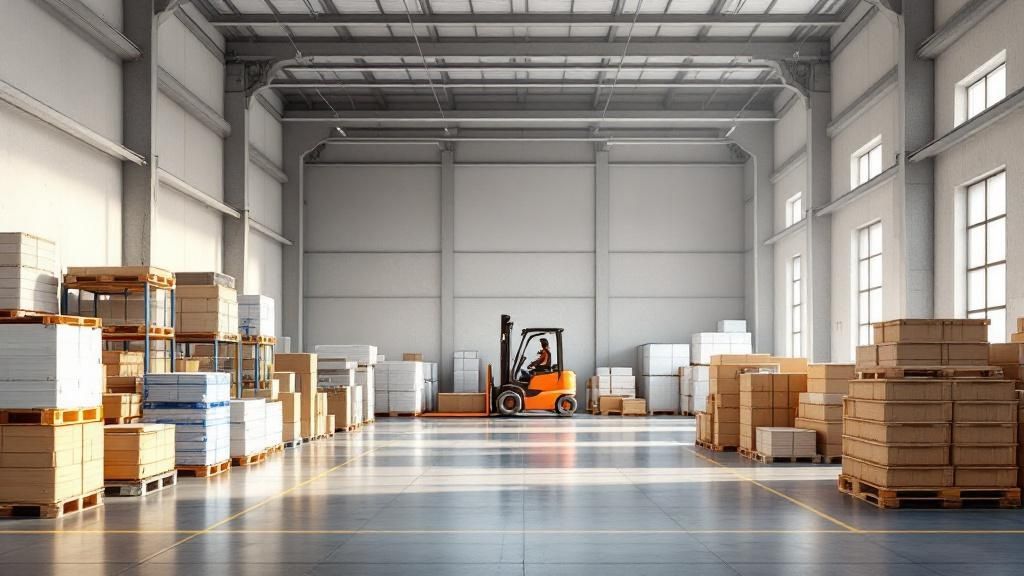
Pay Them a Visit: If you can, go see their operation for yourself. A trip to their warehouse or yard gives you an instant feel for their professionalism, how they store materials, and the true scale of their inventory. You can learn more in an hour on-site than you can in a week of emails.
Choosing a supplier is an investment in your project's stability. A reliable partner will proactively communicate, solve problems, and work with you to keep your project on track, proving their worth far beyond the initial quote.
Ultimately, finding a dependable source for building materials in Sharjah and building a strong relationship with them is one of the smartest things a contractor can do. For a deeper dive into this critical choice, check out our guide on how to choose the right building materials supplier in the UAE. Getting this right from the start ensures your project is built not just with quality materials, but on a foundation of a quality partnership.
Frequently Asked Questions
When you're sourcing building materials in Sharjah, a lot of questions can pop up. It's a busy market, and knowing the ins and outs can save you a ton of hassle. We get these queries all the time from project managers, contractors, and homeowners, so we’ve put together some straight-to-the-point answers.
Think of this as your quick guide to solving those practical procurement challenges.
Are Building Materials Really Cheaper In Sharjah Than In Dubai?
In a word, yes. On average, you can expect materials in Sharjah to be about 15-20% cheaper than what you’d find in Dubai. It’s a pretty significant saving, and it comes down to a few key factors: lower overheads for suppliers, the massive scale of the industrial areas, and fierce local competition that keeps everyone’s pricing honest.
But that doesn’t mean every single screw will be cheaper.
The only way to know for sure is to get detailed quotes from suppliers in both emirates. A bit of legwork comparing prices based on your specific material list will always get you the best deal.
What Is The Best Way To Procure Materials For A Small Residential Project?
If you're working on something smaller, like a villa extension or a simple renovation, don't overcomplicate things. Your best bet is to find one solid, well-stocked supplier in one of Sharjah’s industrial zones and stick with them.
Here’s why that approach works so well:
- Simplified Logistics: You’re dealing with one delivery schedule, not trying to juggle five different trucks from five different vendors.
- Relationship Building: When you give a supplier all your business, you tend to get better service and maybe even some wiggle room on the final price.
- Reduced Complexity: It just makes your life easier. Less paperwork, fewer phone calls, and more time to focus on the actual construction.
Trying to piece-meal your order from a dozen different places on a small job is usually more trouble than it's worth.
Do Suppliers In Sharjah Offer Delivery Services Across The UAE?
They absolutely do. Any reputable building material supplier in Sharjah will have its own fleet of trucks ready to go. They're set up to deliver materials to job sites right across the UAE—Dubai, Abu Dhabi, you name it. Sharjah's central location is a huge advantage for them.
Just be sure to iron out the details before you commit to a big order. Ask about their delivery radius, how long it will take to get to your site, and what the transport costs are. Getting this clear from the start means no surprise delays or bills down the line. If you're looking for more general information, you can also check out these Commonly Asked Questions.
At Yasu Trading Co. LLC, we provide a comprehensive range of certified building materials and hardware to support projects of any scale. From structural essentials to high-quality finishes, we are committed to delivering excellence and reliability. Request your quote today and build with confidence.