UAE Building Materials Trading Success Guide
It’s easy to think of building materials trading as a simple act of buying and selling. In reality, it’s the very engine that powers the construction of entire nations. Here in the UAE, this trade is the lifeblood of architectural ambition, the unseen force that brings everything from world-famous skyscrapers to critical infrastructure projects out of the blueprints and into reality.
The Engine of the UAE’s Construction Boom
Picture the UAE's construction scene as one giant, incredibly complex assembly line—a factory for building world-class cities. The building materials trading industry is the master logistics network that keeps that line moving.
Traders are the ones conducting this symphony of supply. They ensure every single component, from the foundational steel and concrete to the final touches of specialised glass and interior fixtures, shows up in the right place, at exactly the right time. Without this constant, organised flow of materials, project timelines would grind to a halt and the region's ambitious visions would stay on paper. The scale is enormous, the stakes are sky-high, and for those who can navigate the complexity, the opportunities are just as big.
Understanding the Market’s Scale
The sheer value of construction in this part of the world says it all. The broader Middle East construction market, valued at a staggering USD 337.43 billion in 2024, proves the constant demand for a solid materials supply chain. And it’s not slowing down; projections show it growing to USD 401.17 billion by 2030, spurred on by national strategies like the UAE's Future Roadmap. You can dig deeper into data on this regional growth trend to see what’s behind the numbers.
This incredible growth creates a constant, urgent need for materials, making the trading sector both incredibly active and fiercely competitive. The key players in this ecosystem are:
- Global Manufacturers: The original source of raw and finished materials, from steel mills in Asia to marble quarries in Europe.
- Trading Companies: The essential link in the chain, managing the sourcing, financing, import logistics, and local distribution.
- Main Contractors: The builders who depend on traders for a consistent and timely supply of materials for their large-scale projects.
- Sub-contractors: The specialists handling electrical, plumbing, or interior fit-outs, who need very specific, high-quality components.
Success in this industry isn’t just about getting the best price. It comes down to reliability, quality control, and the ability to build a resilient supply chain that can handle global disruptions and meet the tight deadlines of modern construction.
The Role of a Trading Partner
A good trading partner is so much more than just a supplier. They become a crucial extension of a construction company’s own procurement team. Their real job is to take on the headaches of international sourcing, customs clearance, and local warehousing.
For a contractor, this is a game-changer. It means they can concentrate on their core business—building—instead of getting bogged down in the logistical nightmare of chasing hundreds of different materials from dozens of suppliers across the globe. In the fast-paced world of UAE construction, where any delay costs serious money, this partnership is the secret to staying efficient and on schedule.
Understanding the Core Material Categories
To really get a handle on building materials trading in the UAE, you need to think beyond a simple shopping list. The true expertise comes from understanding why certain materials are always in demand and how they slot into the massive puzzle of a construction project.
It’s a bit like a chef stocking their pantry. It’s not just about having ingredients; it’s about knowing you need flour, sugar, and eggs because those are the foundations for the cakes, breads, and pastries everyone wants.
In the UAE, the "menu" is all about ambitious skyscrapers, sprawling residential communities, and futuristic commercial hubs. This directly fuels the demand for specific groups of materials. Each category has its job, whether it’s providing the core strength of a structure or adding the visual wow-factor that defines modern Emirati architecture. Grasping these groups is the first step to anticipating what the market will need next.
This isn’t a small-time game, either. The construction materials market in the Middle East and Africa (MEA) was valued at an estimated USD 28.43 billion in 2024 and is on a steady upward climb. That growth is driven by intense urbanisation and a pipeline of mega-projects, making the basics more vital than ever. You can see a full breakdown in the regional construction materials market report for more detailed data.
Structural and Foundational Materials
These are the non-negotiables. The absolute workhorses of any project, forming the skeleton that holds everything else up. Think of them as the big, heavy-lifting items traded in enormous volumes. Their price and availability can single-handedly dictate a project's budget and timeline. When the construction sector is booming, demand for these materials goes through the roof.
Here are the key players:
- Cement and Concrete: This is the bedrock of modern construction. Ready-mix concrete is so indispensable that its price fluctuations are a major industry indicator.
- Steel Products: From rebar and structural beams to sheet metal, steel provides the tensile strength needed to build high-rises, bridges, and airports.
- Aggregates: Sand, gravel, and crushed stone are the unsung heroes. They’re the bulk in concrete and the base for roads and site prep.
When you're dealing with these raw inputs, you also have to consider the machinery behind them. For example, getting quality aggregates often requires specialised construction equipment like rock crushers to process quarried stone into the right grades for concrete.
Finishing and Architectural Materials
Once the skeleton is up, it’s time to give the building its personality. These are the materials that define the look, feel, and function of the space. This is where trends, sustainability, and sheer luxury come into play, whether it’s for a five-star hotel lobby or a sleek corporate office.
This is where a trader’s real value becomes clear. It’s not just about supplying a product. It's about sourcing the exact tile, glass panel, or wood finish that matches the architect's vision and meets specific performance standards.
This category is incredibly diverse and includes just about everything you can see and touch in a finished building:
- Glass and Facade Systems: You can't have the iconic skylines of Dubai and Abu Dhabi without them. The focus is increasingly on high-performance, energy-efficient, and even "smart" glass.
- Gypsum and Plasterboard: The go-to material for interior walls and ceilings, creating the perfectly smooth surfaces that are ready for paint or cladding.
- Tiles and Marble: High-end stone and ceramics are perpetually in demand for stunning floors, walls, and decorative features in both luxury homes and commercial properties.
To see how these different elements come together on a real job site, take a look at our breakdown of the essential building materials for construction projects in Dubai. It really shows the incredible range of opportunities that exist in this market.
Developing Your Sourcing and Procurement Strategy
In the building materials trading game, your success isn't just about what you sell. It's about how and where you get it. A solid procurement strategy is the blueprint for your entire business, directly shaping your costs, project timelines, and, most importantly, your reputation. It's a critical decision that demands a clear-eyed view of the market.
At its heart, your strategy boils down to a fundamental choice: source your materials from local suppliers here in the UAE, or import them from international markets? Each path has its own set of perks and pitfalls. The right answer changes depending on the material, the project, and your business model. This isn't just a hunt for the lowest price; it's about crafting a supply chain you can truly depend on.
Just think about the essentials—cement, steel, and timber. These are the building blocks of any project, and they're at the very centre of these sourcing decisions.
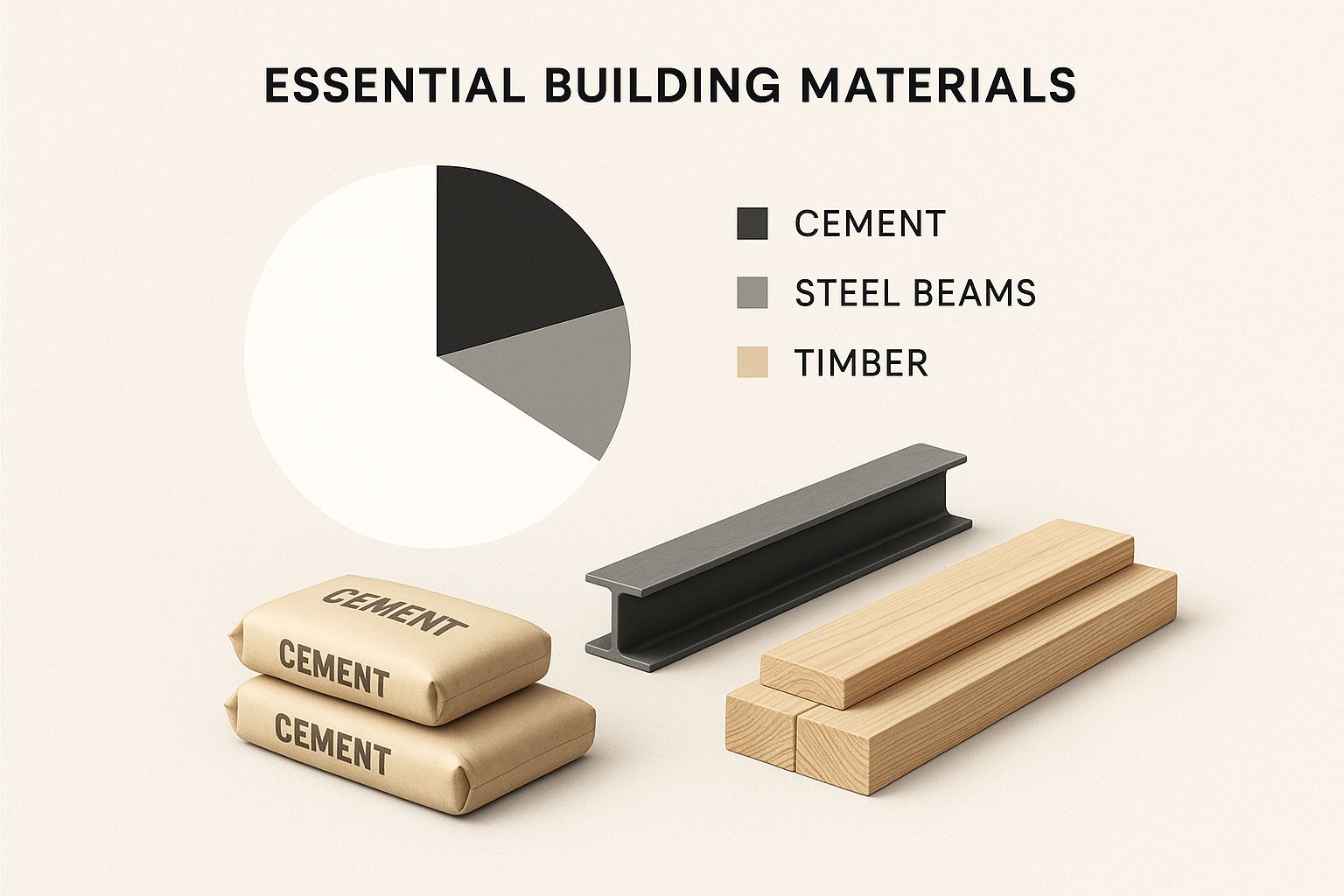
The image above gives you a closeup of these core materials. They are often traded in massive volumes, making them incredibly sensitive to logistics and where they come from.
Choosing Between Local and International Sourcing
Deciding whether to buy locally or look abroad is a strategic balancing act.
Sourcing locally offers speed and simplicity. Lead times are much shorter, logistics are a breeze, and it’s far easier to communicate. Being able to physically inspect materials and build face-to-face relationships is invaluable, especially in the UAE.
But going local isn't without its own challenges. You might find a limited product variety, or you could face higher costs for certain specialised items. For example, the average price of ready-mix concrete—a local staple—jumped by 11.2% in 2023 alone. That shows you just how quickly local market shifts can hit your bottom line.
On the other hand, importing opens up a global catalogue. You gain access to a much wider range of products, often at a lower unit cost, particularly when you’re buying in bulk. This is a huge advantage for items like specialised steel or unique architectural finishes that just aren't made here.
The trade-off? Complexity. You'll be juggling international shipping, customs clearance, currency fluctuations, and much longer lead times. Each of these introduces its own set of risks you have to manage.
To help you weigh your options, here's a quick comparison:
Comparing Local vs International Sourcing Models
| Factor | Local Sourcing | International Sourcing |
|---|---|---|
| Lead Times | Shorter (days/weeks) | Longer (weeks/months) |
| Logistics | Simpler, lower risk | Complex, higher risk |
| Product Variety | Potentially limited | Vast range of options |
| Cost | Can be higher for certain items | Often lower unit cost, especially in bulk |
| Relationship Building | Easier (face-to-face) | More challenging (remote) |
| Quality Control | Easier to inspect physically | Relies on third-party verification |
| Regulatory Hurdles | Minimal (local standards) | Navigating customs & import duties |
Ultimately, the smartest move is often a hybrid one. Don't fall into the trap of a one-size-fits-all approach. It makes sense to source bulky, time-sensitive materials locally while importing those specialised, high-value items where the cost savings or uniqueness justifies the extra legwork.
Vetting Suppliers and Building Partnerships
No matter where your materials come from, your suppliers are your most important asset. A cheap supplier who delivers late or provides shoddy materials isn't a bargain; they're a liability. Proper vetting is absolutely non-negotiable.
Start by looking past the price tag. You need suppliers with a proven track record, solid financial footing, and glowing industry references. For a step-by-step walkthrough, our guide on comparing building material suppliers in Dubai gives you a complete framework for making the right call.
Beyond the initial checks, your goal should be to build genuine partnerships. This means clear communication, fair contracts, and mutual respect. A true partner works with you to solve problems, handles urgent requests, and gives you a heads-up on price hikes or supply issues. This collaborative spirit turns a simple transaction into a strategic alliance—one that will help your business navigate market storms and come out stronger.
Navigating UAE Import Regulations and Compliance
Finding the perfect materials is one thing. Getting them across the border without a hitch? That's a whole different ball game. This is where many building materials trading operations either sink or swim.
The UAE's regulatory framework can feel like a labyrinth at first glance. But every rule, every piece of paper, is there for a good reason: to ensure the safety and quality of every single material used in the nation’s ambitious construction projects.
Getting compliance wrong isn't just a minor hiccup. It can freeze your entire supply chain. We’re talking about costly delays, hefty fines, and sometimes, your entire shipment being turned away at the port. Think of understanding the rules not as a chore, but as a fundamental part of your business strategy.
Key Regulatory Checkpoints
To get through this landscape successfully, you need to know the main checkpoints. Each one is a step designed to verify the quality, origin, and safety of your materials. The region is known for its detailed regulatory requirements, and as nextmsc.com points out, these can seriously delay projects if you're not on top of your game.
Here's what you absolutely must have a handle on:
- Customs Duties and Tariffs: For most building materials coming into the UAE, you'll be looking at a standard customs duty of around 5% of the CIF value (that’s Cost, Insurance, and Freight). It seems simple, but getting the valuation or product classification wrong can lead to some painful penalties.
- Import Permits: Don't get caught out. Certain specialised or controlled materials need specific import permits before they even leave the port of origin. Forgetting this is a surprisingly common and expensive mistake.
- Mandatory Certifications: This is a big one. A huge range of products requires a Certificate of Conformity. This means they must meet standards set by bodies like the Emirates Authority for Standardisation and Metrology (ESMA) and Dubai Municipality.
Imagine your compliance paperwork is a passport for your goods. If it's missing the right visas and stamps from authorities like Dubai Municipality, your materials are effectively stuck. They'll be stranded at the port, and your project's timeline and budget will start to bleed.
The Role of Dubai Municipality Certification
If you're operating in or supplying to Dubai, the Dubai Municipality (DM) regulations are your bible. The DM runs a thorough product certification scheme to make absolutely sure that building materials and systems are safe and fit for purpose.
This means putting products through rigorous testing and factory inspections to prove they meet specific performance standards. Materials like thermal insulation, structural steel, and many concrete admixtures must display a DM certification mark. If they don't have it, they simply cannot be used on any construction site in Dubai.
We get into the nitty-gritty of these rules in our guide on navigating the regulations for building materials in the UAE.
Essential Documentation for Smooth Clearance
Want to avoid getting stuck in customs? Your paperwork has to be perfect. The vast majority of delays come down to simple, avoidable inconsistencies between documents.
Your standard checklist for any shipment should always include these essentials:
- Commercial Invoice: This needs to clearly state the buyer, seller, full descriptions of the products, quantities, and their value. No vague descriptions.
- Packing List: A detailed breakdown of what’s in each package, including its weight and dimensions.
- Certificate of Origin: This document, certified by a Chamber of Commerce in the country of origin, proves where the goods were made.
- Bill of Lading or Air Waybill: The official transport document from your shipping carrier.
- Test Reports and Certificates: Any required third-party test results or conformity certificates must be ready and included.
When you start treating compliance as a strategic priority instead of just bureaucratic red tape, you turn a major potential headache into a smooth, efficient part of your building materials trading operation.
Optimising Your Logistics and Supply Chain
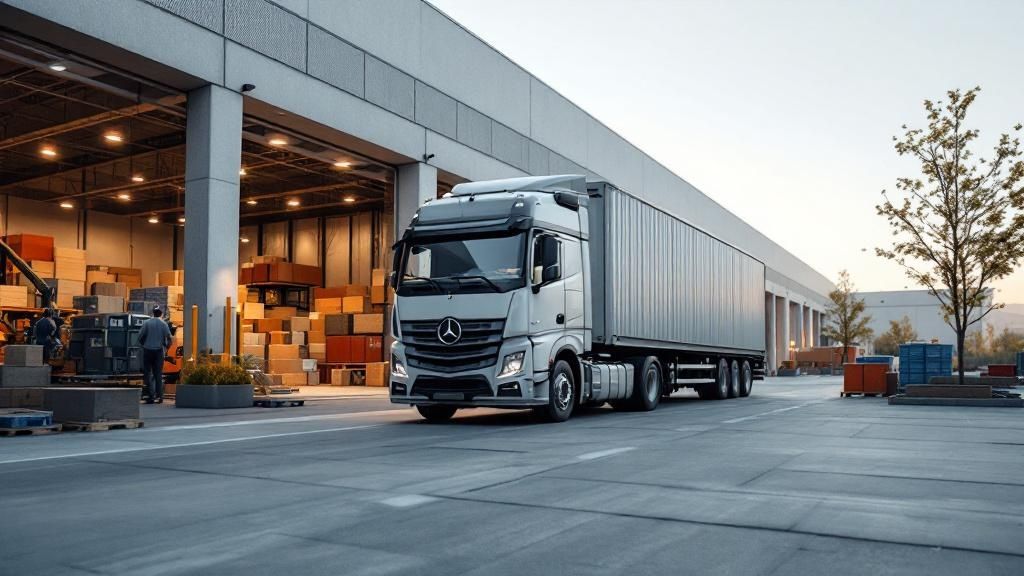
In the world of building materials trading, your supply chain isn't just a part of the business—it's the central nervous system. A single hiccup, whether it's a delayed ship, a jam-packed port, or a misplaced container, can send shockwaves through your entire operation, wrecking project timelines and budgets. It's a massive puzzle: getting tonnes of material from a factory halfway across the world to a specific building site, right when it's needed.
Success here isn't about simply booking a freighter. It’s about building a supply chain that's resilient, smart, and always one step ahead. You have to anticipate the bottlenecks before they form and create a system that can take a hit without crumbling.
The complexity often starts thousands of miles away. A single project might pull steel from one continent, specialised glass from another, and finishing touches from a third. Juggling these international freight movements is the first big challenge, and it demands a real-world understanding of shipping lanes, carrier dependability, and container logistics.
Capitalising on the UAE’s Strategic Advantages
One of the biggest perks of trading in the UAE is its phenomenal infrastructure, especially the free zones. Places like the Jebel Ali Free Zone (JAFZA) aren't just glorified storage depots; they are powerful strategic hubs engineered to make global trade flow smoothly.
By operating from a free zone, you can import materials in bulk from anywhere without getting hit with immediate customs duties. This lets you build up a central stockpile, breaking down massive shipments into smaller, project-specific orders ready for distribution across the UAE and the wider region. It’s a model that offers incredible flexibility and can seriously improve your cash flow.
Think of a free zone as your strategic reserve. It gives you the power to buy materials when prices are right, store them cost-effectively, and then deploy them at a moment's notice to meet local demand. In a market that moves this fast, that’s a game-changing competitive edge.
Nailing the Last-Mile Delivery
Getting your shipment safely to a UAE port is only half the job done. The final, and arguably most critical, leg of the journey is the last-mile delivery—getting those materials from your warehouse to the active construction site. This is where even the most meticulously planned logistics can unravel.
Construction sites are organised chaos, with specific access points, tight delivery windows, and zero room for error. A truck that shows up at the wrong gate or at the wrong time can throw the entire project schedule into disarray. That final step demands laser-focused coordination with site managers, smart route planning to dodge traffic, and absolutely reliable local transport partners.
Getting last-mile logistics right comes down to:
- Coordinated Scheduling: Talking directly with contractors to know exactly what they need and when, fitting into their daily build plan.
- Site-Specific Planning: Understanding the layout of every unique construction site—where to enter, where to unload, and what equipment is on hand.
- Real-Time Tracking: Using technology to monitor your deliveries and give accurate arrival times, so site crews can be ready.
Beyond just moving goods, you also have to protect them. Your inventory is a huge capital investment, especially when it’s sitting on-site. Implementing solid construction site theft prevention tips is crucial to guard your valuable materials and avoid the costly losses that bring projects to a halt.
At the end of the day, an optimised supply chain creates a seamless current, flowing from an international factory right to the hands of a local tradesperson. It's about blending global reach with precision on the ground. When you master international freight, leverage the UAE's free zones, and perfect that final mile, you're building the operational backbone you need to win.
Here is the rewritten section, crafted to sound completely human-written and natural, following all your instructions.
Managing Financial Risk in a Volatile Market
Anyone who has been in the building materials trading game for more than a minute knows the market is anything but predictable. Prices for staples like steel, gypsum, and timber can swing dramatically on the back of global events, turning what looked like a healthy profit into a painful loss almost overnight. Managing this financial risk isn't just a "nice-to-have"—it's a core survival skill.
Think of it like this: you can't control the weather, but you can build a solid roof over your head. For a trader, that roof is a smart financial risk management strategy. It’s about more than just reacting; it’s about understanding the forces that move the market and having the right tools in place to protect your margins from the storm.
Key Drivers of Price Volatility
Price swings aren't random acts of nature. They're ripples from much larger economic and geopolitical waves. Getting a handle on these drivers is the first step toward anticipating market shifts instead of just being hit by them.
A few key factors are always at play:
- Global Commodity Shifts: The price you lock in Dubai is often tied to a mine in Australia or a factory in China. A production halt halfway across the world or a sudden demand spike from another region sends shockwaves that land right on your balance sheet.
- Currency Fluctuations: When you’re importing materials, you're playing in the foreign exchange market whether you like it or not. The UAE dirham is pegged to the US dollar, so a strengthening dollar can make your imports from Europe or Asia cheaper. But when it weakens, your costs climb.
- Geopolitical Events: Nothing disrupts supply chains faster than trade disputes, political turmoil, or regional conflicts. These events breed uncertainty, and uncertainty almost always sends prices soaring as everyone scrambles to secure stock.
"In building materials trading, ignoring financial risk is like sailing without a compass. You might be fine for a while, but when the market shifts, you'll find yourself lost at sea with no way to protect your margins."
Practical Risk Mitigation Techniques
Building financial resilience means having a toolkit ready to go. These techniques are designed to help you lock in costs and shield your business from sudden price shocks, making sure you can deliver for your clients without wiping out your profit.
Here are three strategies I’ve seen work time and time again:
Forward Contracts: This is your most direct line of defence. A forward contract is a simple agreement with a supplier to buy a set amount of material at a fixed price for a future date. It completely takes the guesswork out of your cost, no matter how wild the market gets in the meantime.
Hedging: This is a bit more advanced, but incredibly powerful. Hedging means using financial instruments to offset your risk in the physical market. For instance, if you need to buy a lot of steel in three months, you could take a position in the commodity futures market. If the physical steel price goes up, your futures position gains value, effectively cancelling out the higher cost.
Supplier Diversification: Putting all your eggs in one basket—even with a fantastic supplier—is a huge risk. By cultivating relationships with several suppliers in different parts of the world, you give yourself options. If one supplier faces logistical problems, gets hit by local issues, or just becomes too expensive, you can pivot without missing a beat.
This kind of proactive planning is becoming more crucial than ever. For example, recent analysis suggests construction costs in the UAE could jump by 2% to 5% in 2025, largely due to global uncertainty and ongoing supply chain issues. You can read more on how these factors will impact regional construction. By putting these risk management strategies into practice, you can insulate your business from the worst of these bumps and maintain stability, even when the market is anything but.
Frequently Asked Questions
Jumping into the world of building materials trading in the UAE can feel a bit overwhelming at first. There are a lot of moving parts—licensing, logistics, fierce competition, and new tech—and it’s completely normal to have questions. We get them all the time from both newcomers and even seasoned pros.
Think of this section as your straightforward guide. We've compiled the most common questions we hear and answered them in plain English to give you the clarity you need to move forward.
What Is the Most Essential Licence for Trading?
First things first, you can't operate without a Commercial Licence. This is the non-negotiable starting point. You'll need to get one specifically for 'Building Materials Trading' from the Department of Economic Development (DED) in the emirate you're setting up in, whether that's Dubai, Abu Dhabi, or elsewhere.
But that's just the baseline. Depending on what you're selling, you might need more paperwork. If you plan to trade in things like specialised chemicals, certain types of insulation, or fire-rated products, expect to get additional approvals from bodies like Dubai Municipality or the Ministry of Interior. Always check the specifics for your product list.
How Do Free Zones Benefit Materials Traders?
For any business with an eye on the international market, free zones like the Jebel Ali Free Zone (JAFZA) are a game-changer. They are built to be powerful hubs for sourcing, storing, and distributing goods across the region.
Here’s why they’re so attractive:
- 100% Foreign Ownership: You control your entire business without needing a local partner.
- Zero Duties: You won’t pay import or export duties on materials you trade within the zone or send to other countries.
- Streamlined Logistics: The customs processes are much simpler, and you're working with world-class infrastructure designed for high-volume trade.
This setup is perfect for traders who want to bring in materials in bulk, store them without racking up huge costs, and then distribute them to projects in the UAE or beyond as orders come in.
What Are the Biggest Challenges for New Traders?
Every new trader faces a few common hurdles. Honestly, the biggest one is the intense price competition. It's a market driven by high volume and often thin margins, which means building solid, long-term relationships with clients isn't just a nice-to-have—it's essential for survival.
Another major headache can be the import regulations. The paperwork has to be perfect. Any mistake can lead to frustrating and expensive delays at the port. Finally, there's the constant operational test of getting your materials delivered to construction sites on time. Nailing that last-mile delivery is crucial. The best way to get ahead is to build a rock-solid network of both reliable suppliers and loyal customers.
It's also worth noting how technology is changing the game. Things like Building Information Modeling (BIM) and AI are making projects more precise, which in turn affects what materials are in demand and how quickly they're needed. To get a better sense of this shift, you can read more about how technology is shaping the regional construction market and what that means for suppliers.
At Yasu Trading Co. LLC, we live and breathe the complexities of supplying the UAE's fast-paced construction industry. From the core materials that form the foundation to the specialised hardware that adds the finishing touches, we deliver quality products and reliable service to keep your projects moving forward.
Let us simplify your procurement and help you build with the best. Request a quote from Yasu Trading Co. LLC today.