Upgrade Your Space with Ceiling Acoustic Panels
Understanding How Ceiling Acoustic Panels Really Work
To get a feel for how ceiling acoustic panels work, imagine standing in a large, empty gymnasium. If you shout, your voice seems to bounce everywhere—off the hard floor, the solid walls, and especially the wide, open ceiling. This chaotic jumble of echoes is called reverberation. Now, picture that same gym filled with soft mats and wall padding. The echo would be much less noticeable.
Ceiling acoustic panels operate on a similar idea, but with more specific engineering. They aren't about blocking sound like a solid wall. Instead, they are designed to absorb sound energy, transforming a noisy, echoing room into one that feels calm and clear.
Think of a sound wave like a ping-pong ball. When it hits a hard surface, like a typical plasterboard ceiling, it bounces back with nearly all its energy. This constant ricocheting is what creates distracting echoes and raises the overall noise level. Ceiling acoustic panels, on the other hand, are made of porous, fibrous materials. When the sound wave "ball" hits a panel, it doesn't just bounce back. It enters the panel's structure and gets lost in a maze of fibres.
The Science of Sound Absorption
As the sound wave navigates through the panel's material, something interesting happens. The sound wave's energy causes friction against the fibres, and this friction converts the sound energy into a very small amount of heat. This process is called acoustic absorption. It effectively stops the sound wave in its tracks, preventing it from reflecting back into the room. It’s like a catcher’s glove swallowing the impact of a fast-pitched baseball, instead of a brick wall that would send it flying back.
This absorption is exactly why these panels are so useful in spaces like:
- Open-plan offices: They soak up constant chatter and ringing phones, stopping conversations from echoing across the room and helping people to concentrate.
- Restaurants: By reducing the clatter of plates and background noise, they let diners talk comfortably without shouting, making the experience more enjoyable.
- Classrooms: A teacher's voice can travel clearly to every student without being drowned out by echoes, which greatly helps with learning and understanding.
From Nuisance to Comfort: The Regional Focus
The benefits of these acoustic solutions are gaining recognition globally. For instance, the Middle East's architectural acoustic panels market has grown considerably, driven by a better appreciation of how noise pollution impacts health and productivity. This growing awareness in areas like the UAE has encouraged businesses to invest in quality acoustic treatments. Ceiling acoustic panels are a top choice for managing sound in both new and renovated buildings.
You can find more details on this trend in reports covering the Middle East's architectural acoustic panel market. Understanding this simple principle of absorption helps explain why just adding a few bits of furniture often isn't enough to fix a real noise issue, and why properly engineered acoustic products are essential for true acoustic comfort.
Navigating The World Of Panel Materials And Types
Choosing the right ceiling acoustic panels goes far beyond picking a colour. It’s about matching the panel's core material to your specific needs for sound control, safety, and design. Think of it like choosing the right wood for a guitar; the material defines the instrument's tone, and in this case, the panel's material dictates its acoustic performance. Each option provides a unique blend of sound absorption, durability, and visual appeal.
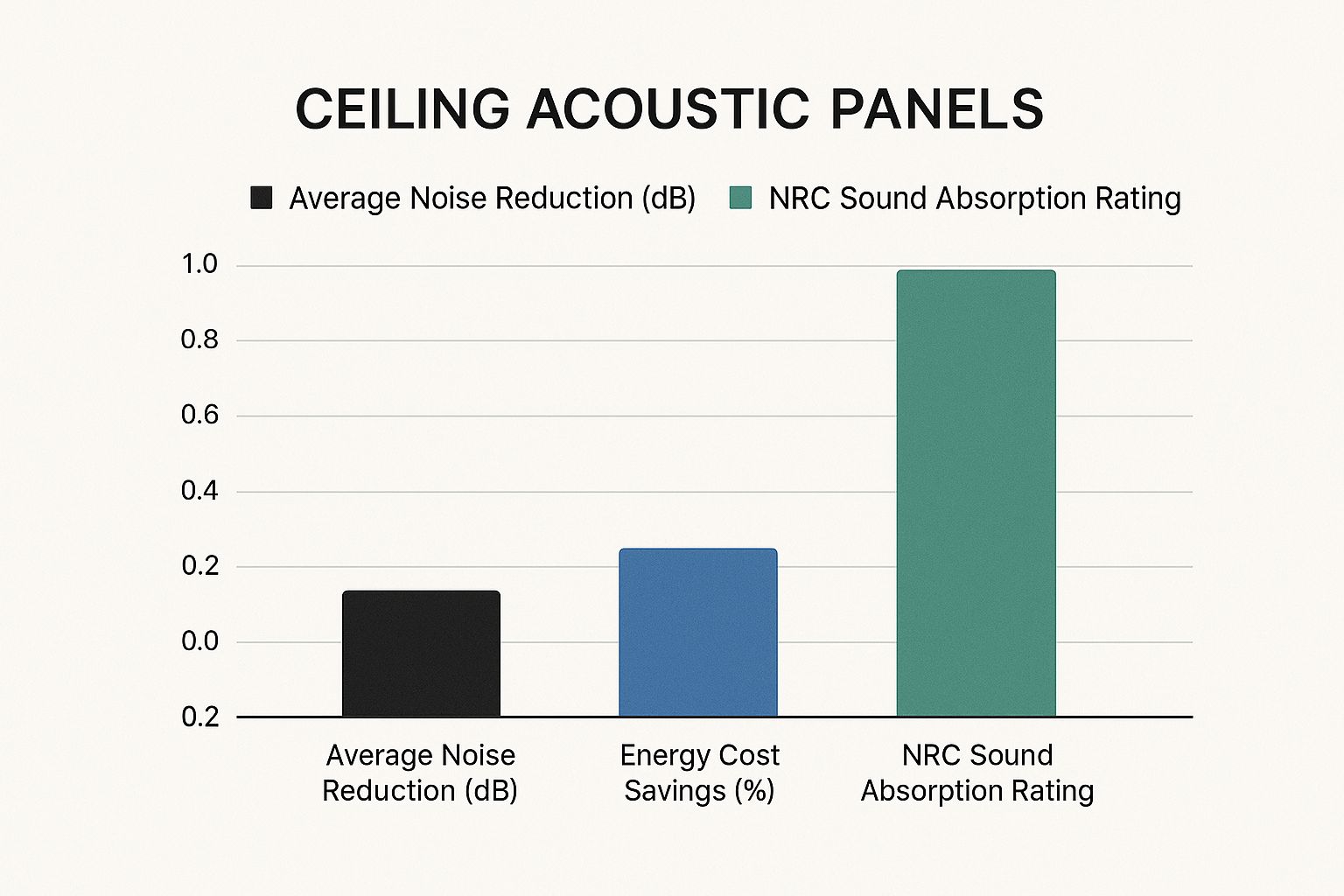
This chart shows key performance metrics for common panel types, including noise reduction, potential energy savings, and sound absorption ratings. The data makes it clear how different materials are suited for specific jobs, stressing the need to align a panel's strengths with your room's acoustic challenges. Grasping these material differences is the first step toward a smart decision.
Common Materials And Their Strengths
The world of acoustic materials is filled with variety, but a few key players are consistently used for their reliability and effectiveness. Each brings a unique set of properties, making them ideal for different settings.
To help you distinguish between them, here is a breakdown of their characteristics, performance, and best-fit applications.
| Material Type | Sound Absorption Rating | Fire Resistance | Durability | Best Applications | Price Range |
|---|---|---|---|---|---|
| Fibreglass | Excellent (NRC 0.85-1.0) | Good (Class A) | Moderate | Offices, classrooms, recording studios, home theatres | $$ |
| Mineral Wool | Excellent (NRC 0.95-1.0) | Superior (Non-combustible) | High | Industrial facilities, commercial kitchens, plant rooms | $$$ |
| Fabric-Wrapped Panels | Good to Excellent | Depends on core & fabric | Moderate to High | Restaurants, hotels, corporate offices, auditoriums | $$$ |
| Polyester (PET) | Good (NRC 0.75+) | Good (Class A) | High | Creative workspaces, public areas, schools | $$ |
| Wood Wool | Good (NRC 0.60-0.80) | Good (Class A) | Very High (Impact-resistant) | Gymnasiums, workshops, high-traffic corridors | $$$$ |
| Perforated Metal/Gypsum | Varies with infill | Excellent | Very High | Airports, modern offices, transport hubs | $$$$ |
Table Key:
- NRC (Noise Reduction Coefficient): A rating from 0 to 1, where higher numbers mean better sound absorption.
- Price Range: $ (Low) to $$$$ (High)
This table shows that while materials like mineral wool offer top-tier fire safety, options like fabric-wrapped panels provide unmatched design flexibility. Your choice depends on balancing performance, safety, and aesthetic goals.
A Closer Look At Key Materials
Let's explore what makes each of these materials tick.
Fibreglass: A true staple in the acoustics industry, fibreglass panels are the dependable workhorses for sound control. They excel at absorbing mid-to-high frequency sounds, which makes them perfect for taming echoes and chatter in offices and classrooms. Their lightweight construction also makes them easy to install.
Mineral Wool: Often called rock wool, this material is made by melting and spinning basalt rock. Mineral wool panels offer acoustic performance on par with fibreglass but come with a major benefit: superior fire resistance. This quality makes them essential for places with strict fire safety regulations, such as industrial plants and commercial kitchens.
Fabric-Wrapped Panels: When appearance is as critical as acoustics, fabric-wrapped panels are the go-to solution. They consist of a fibreglass or mineral wool core wrapped in a decorative, acoustically transparent fabric. This allows for nearly endless customisation of colour and texture, helping them blend into the design of restaurants, hotels, or corporate headquarters.
Modern And Specialised Panel Materials
Alongside traditional choices, newer materials are providing unique advantages, from sustainability to specialised performance.
Polyester (PET): Often produced from recycled plastic bottles, PET panels are a sustainable choice that has become very popular. They are tough, resistant to moisture, and provide good acoustic dampening. Their modern, felt-like finish often makes them a design statement, ideal for creative offices and public spaces.
Wood Wool: Made by binding wood fibres with cement, wood wool panels offer a unique, textured aesthetic while delivering reliable acoustic control. They are exceptionally durable and resistant to impacts, making them well-suited for high-traffic zones like gymnasiums, workshops, and school hallways where panels might get bumped or hit.
Perforated Metal or Gypsum: These panels work a bit differently. A solid front panel, made of either metal or gypsum, is punctured with tiny holes. Sound waves travel through these perforations and are trapped and absorbed by an acoustic infill material behind it. This construction results in a clean, modern look with strong acoustic capabilities. While standard gypsum boards reflect sound, you can explore how specialised versions contribute to ceiling systems by reading our guide on gypsum ceiling tiles. Their sleek finish makes them a great fit for high-tech offices, airports, and other contemporary architectural projects.
Choosing Panels That Actually Solve Your Problems
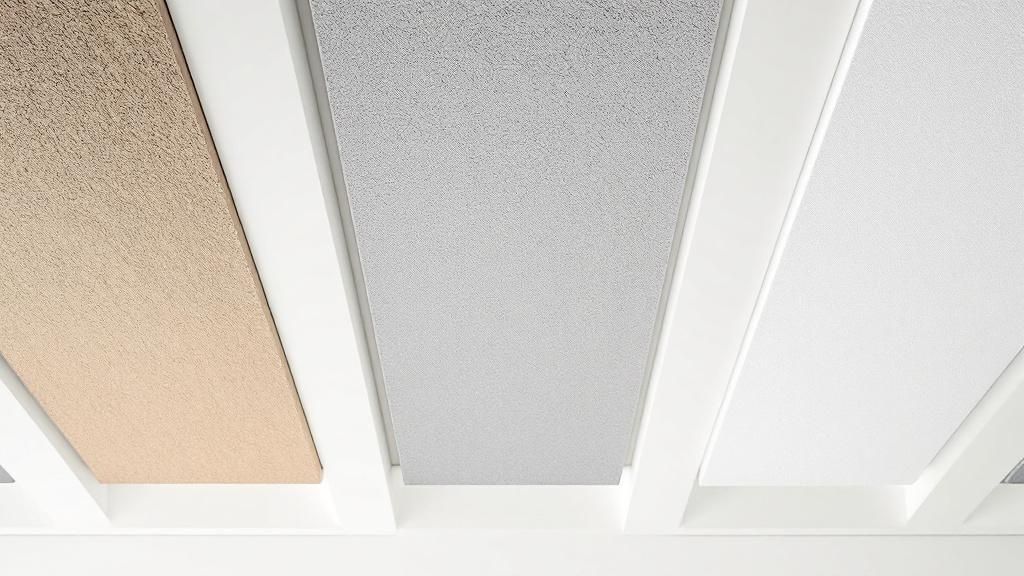
Picking the right ceiling acoustic panels isn't like grabbing a product off a shelf. Think of it more like being a detective for your room's sound problems. The best solutions come from correctly matching the panel's features to the specific acoustic challenges of your space. The good news is you don’t need a degree in acoustics to get it right. By understanding a few key points, you can make a smart choice that delivers real improvement, turning a noisy, frustrating room into a pleasant one.
Your first step is simply to listen. What is the actual problem? Is it the sharp, clanging echo of plates in a busy restaurant? Or is it the constant, low drone of overlapping conversations in an open-plan office? High-frequency noises, like clatter and chatter, are best absorbed by porous materials such as fibreglass or fabric-wrapped panels. In contrast, low-frequency rumbles from machinery or heavy footfall might need thicker, denser panels to be properly absorbed.
Reading Your Room’s Acoustic Clues
Beyond the type of sound, the physical makeup of your room is a major factor in choosing the right panels. Two critical elements to look at are the ceiling height and how the room is used, as these directly shape how sound travels and which solutions will work best.
Ceiling Height: In spaces with very high ceilings, such as atriums or converted warehouses, sound has more room to bounce around, creating serious reverberation. For these areas, suspended baffles or "clouds" that hang from the ceiling are usually more effective than panels fitted flush against the ceiling. They catch sound waves from many angles and have a larger surface area for absorption, which is vital for taming echoes in big, open spaces.
Room Usage: The purpose of a room sets the acoustic goal. A lively restaurant doesn’t need to be silent; it just needs to manage noise so that conversations at one table don't interfere with others. Here, placing panels strategically above dining zones can create comfortable sound pockets. A school classroom, however, demands high speech intelligibility. This means panels must be selected and positioned to soak up echoes that blur the teacher’s voice, ensuring everyone can hear clearly. A Noise Reduction Coefficient (NRC) rating of 0.80 or higher is often suggested for these kinds of listening-focused environments.
Balancing Performance, Aesthetics, and Budget
In the end, your choice must balance acoustic requirements with practical limits. A frequent mistake is picking a panel just because of its price or look, only to discover it doesn't fix the noise issue. It’s important to weigh all your factors together to make the best decision.
First, define your main goal—are you trying to reduce echo, make speech clearer, or do a bit of both? Then, look at the room’s physical dimensions to decide if standard panels or suspended options are a better fit. Finally, factor in your design tastes and budget. This method helps you choose ceiling acoustic panels that not only look good but, more importantly, do the job they were meant for: making your space sound better. This balanced approach helps avoid disappointment and leads to a more effective, lasting solution.
Why The Acoustic Panel Market Is Exploding Right Now
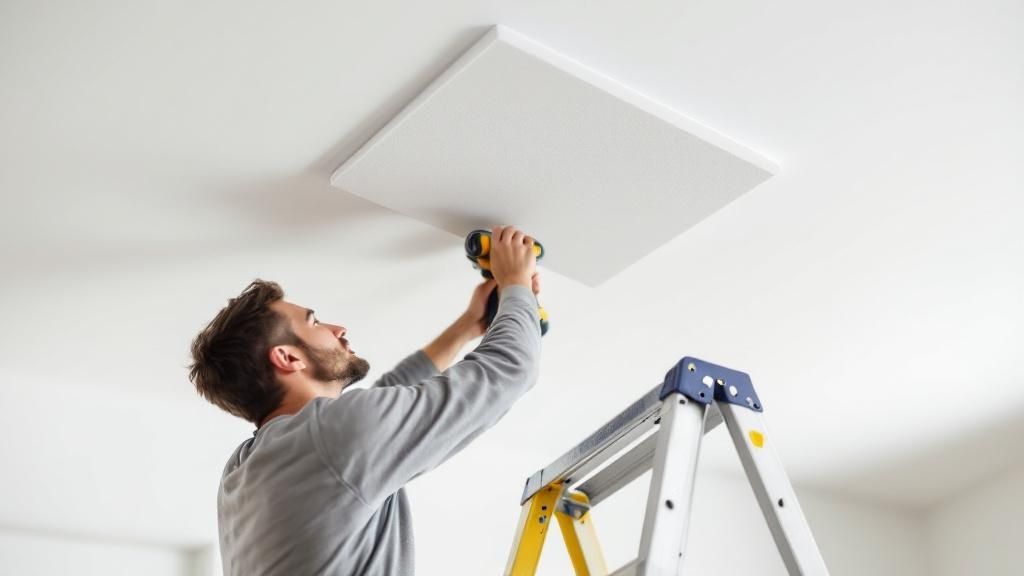 The market for ceiling acoustic panels is currently experiencing a remarkable surge, shifting them from a specialist product for places like recording studios to a mainstream building material. This growth is powered by a confluence of new workplace designs, a greater focus on personal well-being, and impressive material developments. It’s no longer just about silencing a loud room; it's about creating spaces that actively support our health, focus, and overall quality of life.
A primary reason for this change is how we now view noise. What was once dismissed as a simple annoyance is now recognised as a significant disruptor. In open-plan offices, for instance, the constant hum of background chatter can seriously hinder concentration and output. Likewise, restaurants are realising that poor acoustics can ruin a dining experience. This increased awareness means architects and designers are placing acoustic comfort at the forefront of their plans, rather than adding it as an afterthought.
The Forces Fuelling Demand
Several interconnected trends are pushing the acoustic panel market forward, creating a landscape filled with new possibilities for consumers and builders.
Construction and Urbanisation: Fast-paced development, particularly in busy urban areas, generates a high demand for effective noise control. As more high-density residential and commercial buildings are erected, products like ceiling acoustic panels become vital for ensuring occupant comfort and privacy. The sheer scale of this is enormous. In 2024, the Middle East and Africa (MEA) ceiling tiles market, a close relative of acoustics, reached a volume of about 1,009.12 million square metres. This market is expected to grow at a rate of around 9.70% each year through 2034, showing huge ongoing investment in ceiling solutions. You can discover more about this market growth and what it means for the industry.
Focus on Sustainability: There is a strong and growing desire for building materials that are environmentally responsible. This has encouraged manufacturers to create new solutions, resulting in panels made from recycled materials like PET plastic bottles or natural fibres such as wood wool. These products provide excellent acoustic properties while meeting green building standards. You can learn more about the importance of these materials by checking out our guide on eco-friendly construction.
Aesthetic Integration: The days of dull, purely functional panels are over. Today’s ceiling acoustic panels are central design features. Available in countless colours, shapes, and textures, they can be used to craft stunning visual statements while discreetly managing a room's sound. This blend of style and substance makes them incredibly popular for design-focused projects in hospitality, corporate, and retail environments. This market boom means more choice, better prices, and more advanced features for anyone looking to improve their space.
Installation Strategies That Actually Work
Successfully fitting ceiling acoustic panels is more than just a mechanical task; it's an art that mixes technical precision with a real-world understanding of your space. The right installation strategy makes sure the panels not only look professional but also deliver the promised acoustic performance. Choosing between a DIY job and calling in professionals often depends on the project's complexity and the mounting system you need.
For simple projects with lightweight foam or PET panels on a flat, even ceiling, a skilled DIYer might manage just fine. However, for most commercial jobs involving heavier materials like mineral wool or complex systems, professional installation is the only way to go. Experts have the experience to handle unexpected problems, ensure the structure is sound, and achieve a perfect finish, which is essential for getting the best sound absorption.
Choosing the Right Mounting System
The way you attach panels to your ceiling directly affects how well they work and how safe they are. Mounting systems aren't a one-size-fits-all solution; they are picked based on the panel's weight, the ceiling material, and the specific acoustic goal.
- Direct-Mount Adhesives: This is the most straightforward method, perfect for lightweight panels on a smooth, solid ceiling like plasterboard. A strong construction adhesive is put on the back of the panel, which is then pressed firmly into place. It’s a quick and clean process but needs a perfectly prepared surface and isn’t suitable for heavy panels or textured ceilings.
- Mechanical Fasteners: For a more secure connection, z-clips or impaling clips are the tools for the job. Impaling clips are fixed to the ceiling, and the panel is simply pushed onto them. Z-clips create a hidden mounting system where one clip goes on the wall and the other on the panel, letting them lock together. These are great for heavier panels and create a small air gap, which can slightly improve low-frequency absorption.
- Suspended Grid Systems: This is the standard for most commercial drop ceilings. Panels are simply placed into an existing or newly installed T-bar grid. This method makes it easy to access the ceiling void for maintenance. A key point is to ensure that existing fixtures, like lights or vents, are properly worked into the plan. Our information on integrating a ceiling access panel can be useful when planning this kind of installation.
- Suspended Cables (Clouds and Baffles): For rooms with high ceilings or where you can't mount directly, panels can be hung using aircraft cable and special hardware. This creates acoustic "clouds" (horizontal panels) or "baffles" (vertical panels). This method is highly effective because it exposes more of the panel's surface to sound waves, boosting absorption.
Common Pitfalls to Avoid
Even with the right system, mistakes can weaken your project's results. One of the most common problems is poor surface preparation. Adhesives won't stick to dusty, greasy, or uneven surfaces. Another frequent mistake is improper spacing and alignment. Panels that aren't perfectly straight look unprofessional and can be visually jarring. It's vital to use a laser level and a chalk line to map out your grid before you start.
Finally, ignoring safety protocols, especially when working at height or with heavy panels, can lead to serious accidents. Always use the right safety gear and make sure the ceiling structure can handle the extra weight.
Real-World Success Stories Across Industries
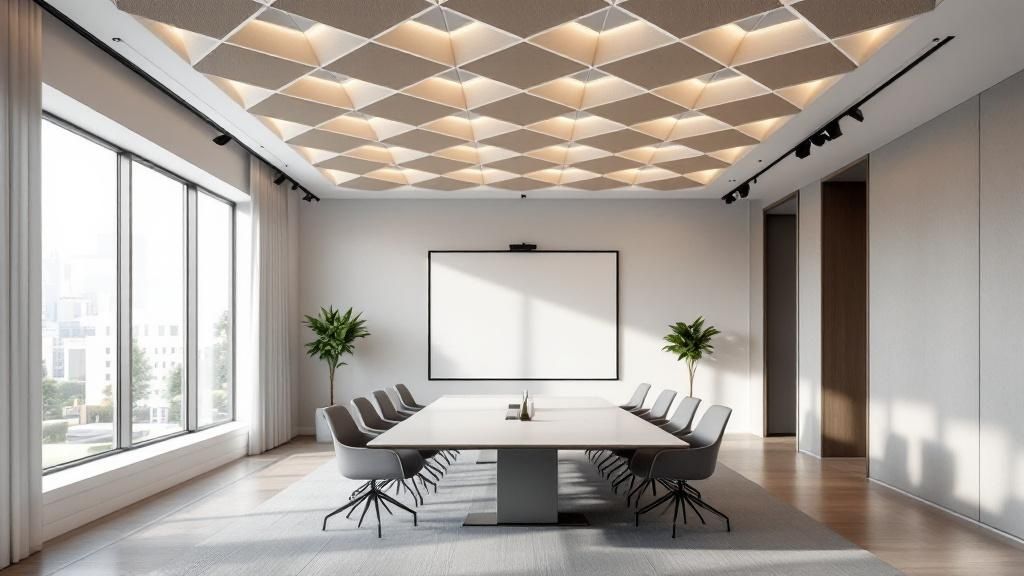
The best way to appreciate the power of ceiling acoustic panels is to see them in action, solving real-world sound problems. These panels aren't just a theoretical fix; they are practical tools that noticeably improve how a space feels and operates. From bustling offices to quiet clinics, their applications show how targeted acoustic control can meet specific needs.
The demand for these sound-absorbing solutions is growing, especially in commercial construction. In 2024, the MEA ceiling tiles market, which includes a significant share of ceiling acoustic panels, reached a revenue of USD 436.5 million. This figure is expected to surge to about USD 830.2 million by 2033, reflecting a healthy annual growth rate of 7.4%. This expansion is primarily fuelled by commercial projects in the region's developing urban centres. You can discover more insights about the Middle East and Africa ceiling market to understand the full scope of this trend, which shows how essential good ceiling solutions have become in modern buildings.
Success in Corporate and Hospitality Environments
In corporate offices, the move towards open-plan layouts introduced a persistent problem: distracting background noise. The effective solution has been the strategic placement of ceiling acoustic panels.
- Case Study: The Focused Office: A tech company in Dubai noticed productivity dipping due to the constant hum of its large, open workspace. By fitting fabric-wrapped panels directly above collaboration areas and individual desks, they cut reverberation time by over 50%. This straightforward adjustment reduced distractions and led to a sharp drop in noise-related complaints.
Likewise, the atmosphere in restaurants and cafes is key to keeping customers happy. A room that’s too loud makes it hard to talk, often pushing diners to go elsewhere.
- Case Study: The Intimate Eatery: A popular Jumeirah restaurant kept hearing from customers that it was too noisy during busy periods. They decided to install suspended acoustic clouds made from PET felt above the main dining room. These panels soaked up the sound of clattering cutlery and loud conversations, creating a far more enjoyable dining experience. The outcome was a noticeable rise in positive reviews that specifically praised the comfortable atmosphere.
Essential Applications in Specialised Sectors
The need for precise acoustic management is even more critical in sectors like education and healthcare, where clear communication and comfort are not just desirable, but necessary.
Education: In a classroom, every word from the teacher needs to be crystal clear. Echoes can garble speech, making it difficult for students to follow along. Schools are now frequently using high-performance ceiling acoustic panels with an NRC of 0.80 or higher to guarantee excellent speech intelligibility. This directly helps create a better learning environment for students.
Healthcare: Hospitals and clinics have to strike a delicate balance between patient comfort and privacy. Acoustic ceiling solutions are vital for absorbing sound in waiting rooms, hallways, and patient rooms. This lowers the general noise level, fostering a calmer, more healing space while also helping to keep conversations confidential—a fundamental requirement in patient care.
Your Action Plan For Better Acoustic Comfort
Turning a loud, distracting room into a place of peace and clarity doesn't have to be a complicated task. By breaking it down into a few straightforward steps, you can create a clear path forward. This action plan pulls together the key ideas we've discussed and gives you a practical roadmap for choosing the right ceiling acoustic panels for your space.
Step 1: Assess Your Acoustic Environment
Before you can pick the right solution, you need to understand the problem. Imagine you're a sound detective investigating your room. Listen closely and ask a few key questions:
- What kind of noise are you dealing with? Is it the sharp, high-frequency sound of chatter and clicking keyboards, or is it a deep, low-frequency hum from an air conditioning unit?
- How is the room used? A classroom needs excellent speech clarity so students can hear the teacher. A restaurant aims for a pleasant, energetic buzz, not an overwhelming racket. An office requires a quiet backdrop for concentration.
- What does the space look like? Take note of the ceiling height, the overall size of the room, and how many hard surfaces are present. Large windows, concrete floors, and plasterboard walls are all culprits that reflect sound waves and create echoes.
Answering these questions will help you zero in on the types of panels best suited for your specific acoustic challenge and room layout.
Step 2: Define Your Priorities and Constraints
Every project is a balance between performance, appearance, and cost. It's important to decide what matters most to you before you start shopping. The following checklist is designed to help you think through these factors and make a clear decision.
To help you organise your thoughts, we've created a simple checklist. Use it as a practical tool to weigh your needs and narrow down the perfect ceiling acoustic panel solution for your project.
Ceiling Acoustic Panel Selection Checklist
| Evaluation Criteria | Questions to Consider | Impact on Selection | Priority Level |
|---|---|---|---|
| Acoustic Performance | What NRC rating is needed to quiet my space? Do I need panels that absorb sound, block it, or do a bit of both? | This determines the core material and thickness required. Higher NRC ratings mean better sound absorption. | |
| Aesthetics & Design | Do the panels need to blend in seamlessly or make a bold statement? Should they match a specific colour palette or architectural style? | This will guide your choice between options like customisable fabric-wrapped panels, rustic wood wool, or modern PET felt. | |
| Budget | What is my total budget for the materials? Have I accounted for the cost of installation? | This will influence the material choice and whether a direct-mount or more complex suspended system is feasible. | |
| Safety & Compliance | Are there building codes or fire safety regulations I must follow for this space? | This will narrow your search to materials with a Class A fire rating, such as mineral wool or certain fibreglass cores. | |
| Installation Method | Is this a project I can handle myself, or will I need to hire a professional installer? | This affects whether you choose simple direct-mount panels or a more involved suspended grid or baffle system. |
This checklist helps ensure you don't overlook a critical requirement. By setting your priorities now, you can avoid feeling overwhelmed by the options later.
Step 3: Select and Implement
With your assessment complete and your priorities clearly defined, you're now ready to make a final choice. Look back at the different types of ceiling acoustic panels and installation methods we've covered. Your checklist will point you toward the best fit for your needs, ensuring your investment not only improves the look of your space but also delivers a noticeable improvement in acoustic comfort.
Ready to bring quiet and focus back to your environment? The expert team at Yasu Trading Co. can help you find the premium building materials and acoustic solutions you need. Request a quote today and take the first step toward a more peaceful space.