Your Guide to Construction Hardware UAE
In the world of construction hardware in the UAE, the right components aren't just accessories. They're the absolute backbone of a project, ensuring everything from structural integrity to long-term safety. Think about it—from Dubai's skyline-defining towers to Abu Dhabi's sprawling mega-projects, every single bolt, hinge, and bracket has a job to do. A non-negotiable one.
Quality hardware is the essential connective tissue that turns an architect's vision into a resilient, lasting structure.
Why Quality Hardware is the Bedrock of UAE Construction
Could you imagine building a world-class skyscraper with cheap, substandard fasteners? It’s unthinkable, especially in a market defined by both iconic ambition and incredibly strict safety rules. The role of construction hardware goes so much deeper than just holding pieces together. It's a fundamental pillar supporting a building's entire lifecycle, directly impacting its strength, safety, and durability for decades to come.
Here in the UAE, where projects consistently push the boundaries of what's possible in engineering, choosing the right hardware is one of the most critical decisions you'll make from day one.
This intense focus on quality is a direct result of the sheer scale of the industry. The UAE construction market is a global powerhouse, and it’s not slowing down.
The selection of certified, high-performance construction hardware isn't just a best practice—it's a core requirement for mitigating risk. It safeguards investments, protects human lives, and ensures the longevity of assets in a very demanding environment.
The Scale of Demand
The constant pipeline of new residential, commercial, and infrastructure projects creates a massive, sustained demand for reliable hardware. This economic engine is reflected in some serious market growth projections. For instance, the UAE's construction sector has been valued at around USD 40 billion in recent years. That figure is expected to climb to an incredible USD 52.66 billion by 2030, which just goes to show the relentless pace of development. For a closer look, check out this insightful UAE construction market analysis.
This growth creates a competitive and often complex marketplace for sourcing these essential components. Making the right choice involves far more than just comparing price tags. It requires a solid understanding of:
- Structural Integrity: You need to be certain every component can handle the specified loads and environmental stresses, from high winds to the region's extreme heat.
- Regulatory Compliance: Adhering to the strict standards set by bodies like Dubai Municipality isn't optional. These rules are in place to guarantee safety and quality across every single project.
- Project Longevity: Using corrosion-resistant, durable materials is key. It prevents premature failure and dramatically reduces maintenance headaches and costs down the line.
The visual below from the Dubai Chamber really drives home the vibrancy of the sector and the key segments pushing it forward.
What this all reinforces is that construction is a cornerstone of the local economy. For contractors and developers, efficiently navigating the supply chain for construction hardware in the UAE is make-or-break for project success. Failing to get quality materials on time can trigger costly delays and, worse, compromise the integrity of the entire structure.
Of course. Here is the rewritten section, crafted to sound completely human-written and natural, following all your specified requirements.
What Are the Main Types of Construction Hardware? A Breakdown
To make smart procurement decisions, you have to move beyond just a simple shopping list. You need to understand the why behind each bolt, bracket, and hinge. On any given UAE construction site—whether it’s a skyscraper taking shape in Business Bay or a luxury villa on the Palm Jumeirah—hardware is never just one thing. It's an entire ecosystem of specialised components, all working together.
Getting a handle on the main categories is your first step towards sourcing with confidence. It’s a bit like putting together a world-class football team. You wouldn’t just sign ten strikers, would you? You need defenders, midfielders, and a solid goalkeeper, each with a very specific job. It's the same with construction hardware; each category is designed to solve a particular structural puzzle.
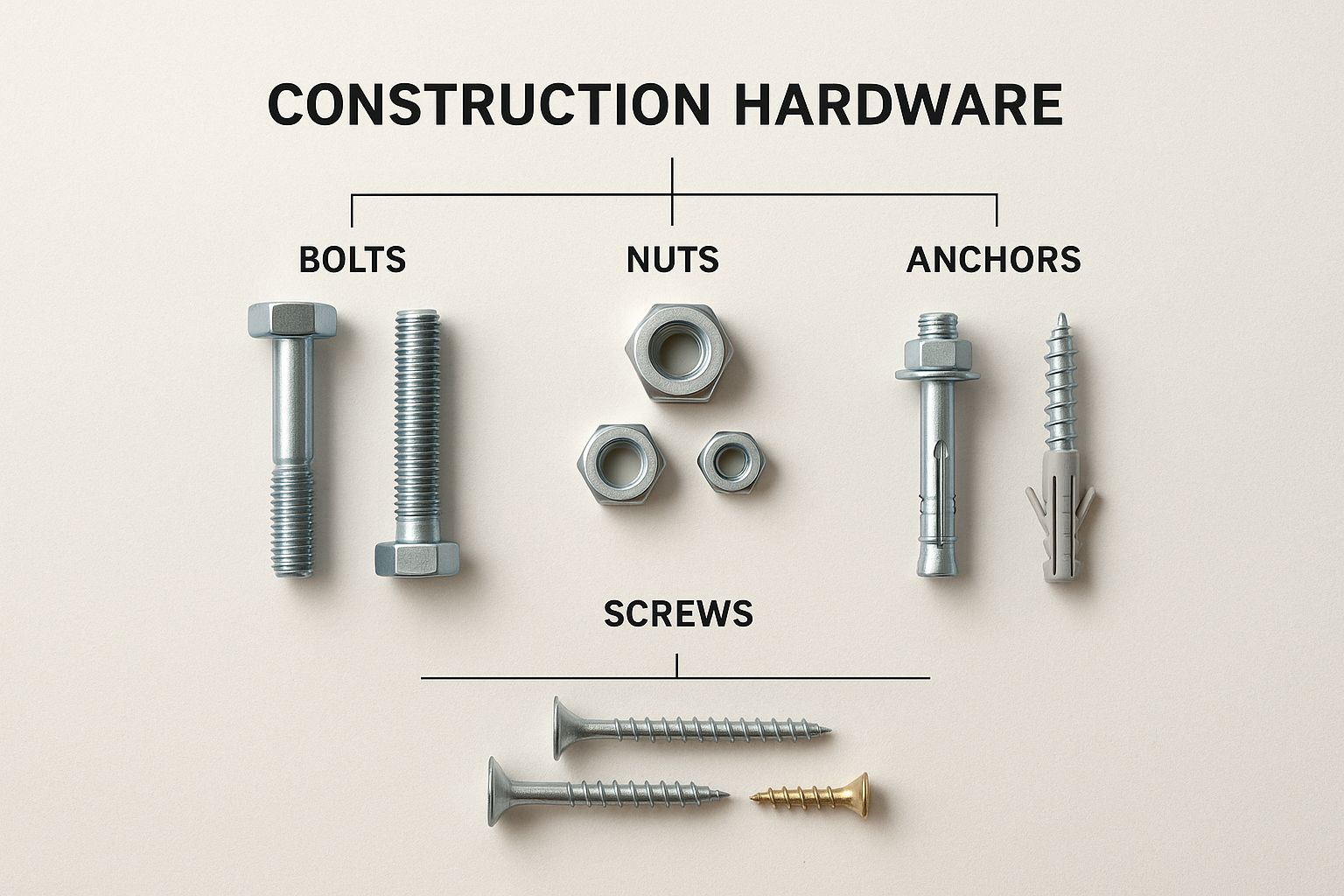
This image gives you a great visual overview of the main hardware families you'll come across.
It really clarifies how everything, from the tiniest screw to the heaviest structural plate, has its own vital role to play in the bigger picture of the project.
To give you a clearer picture, I've put together a quick reference table. It breaks down the key hardware categories, gives some common examples, and shows you exactly where they fit into typical UAE construction projects.
Essential Construction Hardware Types and Applications
| Hardware Category | Common Examples | Primary Application in UAE Projects |
|---|---|---|
| Fasteners & Fixings | Screws, bolts, nuts, washers, concrete anchors, rivets | Securing facade panels, assembling steel frameworks, fixing internal partitions, and general assembly. |
| Structural Connectors | Joist hangers, base plates, post caps, truss plates, hurricane ties | Transferring loads between beams and columns, reinforcing roof trusses, and ensuring frame stability. |
| Door & Window Hardware | Hinges, locks, handles, door closers, panic bars, window operators | Ensuring security, functionality, and fire safety in commercial, residential, and hospitality buildings. |
| Safety Hardware | Scaffolding clamps, lifting eyes, safety hooks, guardrail posts | Creating a safe working environment on-site for personnel during the construction phase. |
This table is a great starting point, but let’s dive a bit deeper into what makes each of these categories so critical.
1. Fasteners and Fixings
This is where it all begins. Fasteners—your nuts, bolts, screws, and anchors—are the absolute lifeblood of assembly on any site. Think of them as the high-strength thread that stitches a building together, holding everything from massive steel frames and facade panels to simple internal partitions.
The two things you absolutely must get right here are material compatibility and load capacity. It’s not just about finding a bolt that fits. Using the wrong type of anchor in a concrete slab, for instance, could spell disaster under stress. For any construction hardware UAE project, especially near the coast, matching the fastener's material (like A4/316 stainless steel) to the environment is crucial for fighting off corrosion.
2. Structural Connectors
If fasteners are the stitches, then structural connectors are the joints and bones of the skeleton. This group includes engineered components like joist hangers, timber connectors, and heavy-duty base plates. Their one job is to safely transfer immense loads between structural elements. They are absolutely fundamental to the integrity of floor systems, roof trusses, and the building's primary frame.
These parts are non-negotiable when it comes to safety. Their specifications are the result of complex engineering calculations, and there is zero room for error. Swapping them for uncertified or lower-grade alternatives isn't cutting a corner; it's directly compromising the building's stability.
Choosing the right structural connector always comes down to three key checks:
- Load Calculation: Does the connector’s rating exceed the shear, tension, and compression forces it will face?
- Code Compliance: Is the product certified and approved under the building codes set by authorities like the Dubai Municipality?
- Correct Installation: Even the world’s best connector is useless if it’s not installed exactly according to the manufacturer's instructions.
3. Door and Window Hardware
Often mistaken as mere finishing touches, this hardware is actually critical for the building's day-to-day function, security, and even its energy efficiency. We’re talking about everything from heavy-duty commercial hinges and high-security locks to smooth-operating door closers and panic exit devices for emergencies.
In the UAE's booming hospitality and commercial sectors, the quality of this hardware has a direct impact on both the user experience and public safety. A hotel door, for example, needs a tough lockset, a perfectly calibrated door closer, and durable hinges to handle thousands of cycles without failing. Crucially, any hardware for fire-rated doors must have specific certifications to comply with the UAE Fire and Life Safety Code of Practice—a make-or-break factor for project handover.
4. Safety Hardware
This last category is all about protecting your most valuable asset: your people on site. These are the items that might not end up in the finished building but are absolutely essential for safe construction operations. Think scaffolding clamps, certified lifting eyes, safety hooks, and the fixings for temporary guardrails.
The quality here is paramount. A single faulty scaffolding coupler or a weak lifting anchor can lead to truly devastating consequences. Procurement managers have a duty to ensure every piece of safety hardware is not only load-rated and certified but also regularly inspected for any signs of wear. Sourcing these items from a reputable construction hardware UAE supplier who provides transparent documentation and test certificates isn't just good practice—it's a core part of your project's risk management strategy.
Navigating UAE Standards and Compliance
In the UAE's world-class construction sector, rules aren't just red tape—they're the bedrock of every successful project. When it comes to sourcing construction hardware UAE, getting compliance right is non-negotiable. It’s what protects your investment, your reputation, and most importantly, the people who will live and work in the structures you build.
Think of the regulations not as a hurdle, but as a framework for excellence. They’re designed to uphold the country’s incredibly high standards.
Cutting corners on compliance is a recipe for disaster. Sourcing materials that don't meet these strict requirements can lead to failed inspections, orders to rip out already-installed components, massive project delays, and eye-watering fines. Even worse, it introduces serious safety risks that no responsible contractor would ever entertain.

You absolutely have to understand this framework. The system is built to ensure every single product—from a structural bolt to a simple door hinge—performs exactly as it should under the region's unique climate and operational demands.
The Key Regulatory Gatekeepers
To stay compliant, you first need to know who makes the rules. In the UAE, two main bodies are the gatekeepers for product quality and conformity in the construction industry. Each one holds the key in its respective emirate.
- Dubai Municipality (DM): The DM is the top authority for all construction in Dubai. It sets and enforces the building codes, regulations, and performance standards that every single project must follow.
- Abu Dhabi Quality and Conformity Council (QCC): Over in Abu Dhabi, the QCC has a similar mission. It was created to elevate the quality of both local and imported products, building a solid infrastructure for quality control across the emirate.
At the end of the day, both organisations are working to make sure the materials hitting the market are safe, reliable, and fit for purpose. This not only protects the public but also strengthens the UAE's entire economy.
Decoding Essential Certifications
When you're looking at construction hardware, certifications are your proof of compliance. They're the official stamp of approval telling you that a product has been put through its paces and meets all the necessary standards.
The Dubai Central Laboratory (DCL) Mark is one of the most critical certifications you'll encounter. This mark means the product has been thoroughly tested and evaluated by the DCL, which is part of the Dubai Municipality. It’s your assurance of quality, safety, and conformity with both local and international standards.
Seeing that DCL mark should give you real confidence that the hardware is approved for use in Dubai. Always ask your supplier for a valid Certificate of Conformity for any product carrying this mark. If you have any doubts, you can verify its authenticity through official DM channels. For a closer look, our guide to understanding UAE construction supply regulations breaks this down even further.
The UAE Fire and Life Safety Code of Practice
Beyond general quality, nothing is more important than fire safety. The UAE Fire and Life Safety Code of Practice is the rulebook. It's a detailed document that dictates exactly how materials and systems must perform to stop the spread of fire and ensure people can get out safely.
This code has a direct impact on the hardware you choose. For instance:
- Door Hardware: Things like hinges, locks, latches, and closers on fire-rated doors must be fire-tested and certified themselves. Using the wrong hardware on a fire door completely voids its rating.
- Panic and Emergency Exit Devices: These devices must meet strict operational standards so you know they’ll work flawlessly in an emergency, letting people exit without a second thought.
- Fixings and Anchors: Even the small stuff matters. The anchors used to hold up fire-resistant panels have to be rated to withstand extreme heat without failing.
Following this code isn't just about passing an inspection; it's a fundamental life-safety responsibility. When sourcing construction hardware in the UAE, partnering with suppliers who truly understand and can document compliance with the Fire and Life Safety Code is essential for every project, from the tallest tower to a family villa.
A Practical Guide to Procuring Hardware in the UAE
Sourcing construction hardware in the UAE’s fast-paced market isn’t just about finding a supplier—it’s about having a rock-solid strategy. A well-thought-out procurement plan is what separates a smooth-sailing project from one bogged down by costly delays and quality headaches. It’s how you turn a simple purchasing task into a real competitive advantage.
This process kicks off long before you even think about placing an order. It all starts with meticulous planning and a crystal-clear understanding of your project’s unique demands. Getting this foundation right ensures every dirham you spend goes directly toward quality, compliance, and hitting your deadlines. In a market this hot, you can't afford to get it wrong.
The sheer scale of development across the Emirates only adds to the pressure. With the UAE construction market experiencing a compound annual growth rate (CAGR) of 7.3% in recent years and projected to reach AED 189.59 billion by 2025, the strain on supply chains is immense. This boom makes getting your hands on the right construction hardware UAE more critical than ever. You can dig deeper into these figures with this detailed industry databook.
The Procurement Blueprint Step-by-Step
A disciplined approach to sourcing hardware will save you an incredible amount of time, money, and frustration. Think of it as your roadmap, guiding you from the initial planning stages right through to the final inspection on site.
Develop a Precise Bill of Quantities (BOQ): Your BOQ is everything. It needs to be painfully specific. Don’t just list "M12 anchor bolt"; specify the material grade (like "A4/316 Stainless Steel"), required certifications (e.g., "DCL Approved"), and, of course, the exact quantities. Any vagueness here is a recipe for getting the wrong quotes and, worse, the wrong products.
Think Local vs. International: For the vast majority of standard construction hardware, sticking with a reputable local UAE supplier is your best bet. They offer much faster lead times, know the local compliance rules inside and out, and make logistics a breeze. Only look overseas for highly specialised or proprietary items you simply can’t find in the region.
Negotiate Smartly: Price is a big piece of the puzzle, but it’s not the only piece. Your negotiations should also lock down payment terms, firm delivery schedules, and clear policies for what happens if you need to return or replace non-conforming products. A truly good deal is one that balances cost with total reliability.
Implement Robust Quality Control (QC): Don't wait until you're desperate for the materials to start your QC checks. The minute a shipment arrives, have a designated team member on hand to verify it against the purchase order and your BOQ. This means checking specs, quantities, and any required certification marks on the spot.
Ultimately, a proactive procurement strategy is about managing risk. By planning meticulously, choosing certified local suppliers, and running strict quality checks, you build resilience into your project’s supply chain. You’re protecting your timeline and budget from the curveballs that can derail a project.
Verifying Quality Upon Delivery
The moment a hardware shipment hits your site is a make-or-break point. A quick glance isn't going to cut it. Your team needs to be trained to perform a thorough receiving inspection to confirm you received exactly what you paid for.
Your on-site verification checklist should be simple but non-negotiable:
- Document Review: Match the delivery note against your original purchase order. Are the product codes and quantities a perfect match?
- Physical Inspection: Scan for any obvious signs of damage, like rust or manufacturing flaws. For fasteners, it’s worth spot-checking a few for correct dimensions and thread quality.
- Certification Verification: Look for the required certification marks (like the DCL mark on Dubai projects) on the products or packaging. If the Certificate of Conformity wasn't sent ahead of time, ask for the physical copy.
This straightforward process catches problems at the gate, preventing faulty or non-compliant hardware from ever being installed. This is one piece of a much larger puzzle, of course. For a wider perspective, check out our guide on essential building materials for construction projects in Dubai. By taking these steps, you transform procurement from a necessary evil into one of your most powerful tools for success.
How to Choose the Right Hardware Supplier
Let’s be honest, choosing a supplier for your construction hardware UAE needs is just as critical as getting your structural steel or concrete mix right. This isn’t just about placing an order; you’re selecting a project partner. Get it right, and quality materials show up on time and on budget. Get it wrong, and you're looking at catastrophic delays, compliance headaches, and even serious safety risks.
In a market as busy as the UAE's, you need a clear framework for making this decision. It's about looking past the price tag and seeing the full value a supplier brings to your project. That means digging into everything—from their product range and certifications to their delivery track record and what happens when things go wrong.
The first step is simply understanding who’s out there. Different types of suppliers serve different needs, and picking the right one for your project's scale is essential.
Matching Supplier Type to Project Need
The UAE hardware market isn’t a one-size-fits-all environment. It’s made up of a few key types of players, and knowing the difference will save you a lot of time and trouble.
- Large-Scale Distributors: Think of these as the industry titans. They have massive warehouses, a huge variety of products, and sophisticated logistics to get it all to your site. They’re the perfect fit for large, complex projects that need a wide range of materials and a rock-solid supply chain.
- Niche Importers and Specialists: These suppliers are the experts in specific categories, like high-performance architectural hardware or specialised fire-rated fittings. They have deep product knowledge and can get you unique international brands that the big distributors might not stock.
- Local Manufacturers: Sourcing directly from a UAE-based manufacturer can be a game-changer. It often means better value, the ability to customise certain parts, and much shorter lead times. Plus, it’s a great way to support the local economy.
The sheer scale of development in the region makes this choice more important than ever. Back in 2023, the UAE construction equipment market was estimated at 20.4 thousand units, and it’s projected to soar to 28.5 thousand units by 2029. This boom shows just how much we rely on a strong supplier network for everything, from heavy machinery down to the last nut and bolt. You can dig deeper into these numbers in this market report from Arizton.
The Supplier Vetting Checklist
Once you have a shortlist of potential partners, it’s time to put them under the microscope. A methodical approach helps you compare them fairly and spot any red flags before you’re locked in.
A supplier's true value isn't just in their pricing; it's in their reliability and unwavering commitment to compliance. A cheap quote for non-certified hardware isn't a saving—it's a major liability waiting to happen.
To help you vet potential suppliers thoroughly, here’s a practical checklist outlining what really matters.
Supplier Evaluation Checklist for UAE Construction Projects
This table is designed to guide your conversations and help you systematically compare potential suppliers. Use it to ensure you cover all the critical bases before making a final decision.
| Evaluation Criterion | Key Questions to Ask | Importance Level (High/Medium/Low) |
|---|---|---|
| Product Quality & Range | Can you provide complete technical datasheets? What is your QA process? | High |
| Official Certifications | Can you supply valid Certificates of Conformity for all regulated items (e.g., DCL, UAE Fire Code)? | High |
| Pricing & Transparency | Are quotes all-inclusive? Are there hidden fees for delivery or documents? What are your payment terms? | High |
| Local Stock & Lead Times | What products do you stock locally in the UAE? What are your typical lead times for standard vs. imported items? | Medium |
| Delivery & Logistics | What's your track record for on-time delivery? How do you handle logistical challenges on-site? | High |
| After-Sales Support | What's your policy for returns or replacing incorrect items? Who is our dedicated point of contact for support? | Medium |
| Technical Expertise | Can your team provide technical advice or help with material selection? | Medium |
| Reputation & References | Can you provide references from similar projects in the UAE? | Medium |
Ultimately, a methodical evaluation ensures you find a partner who will truly support your project's goals, not just sell you parts.
Building a strong, transparent relationship with a dependable supplier is a direct investment in your project’s success. For a more detailed breakdown, we’ve put together the ultimate guide to choosing building hardware in Dubai, which dives even deeper into these strategies. A reliable partner makes sure you get the compliant, high-quality construction hardware UAE projects demand, every single time.
Future Trends in UAE Construction Hardware
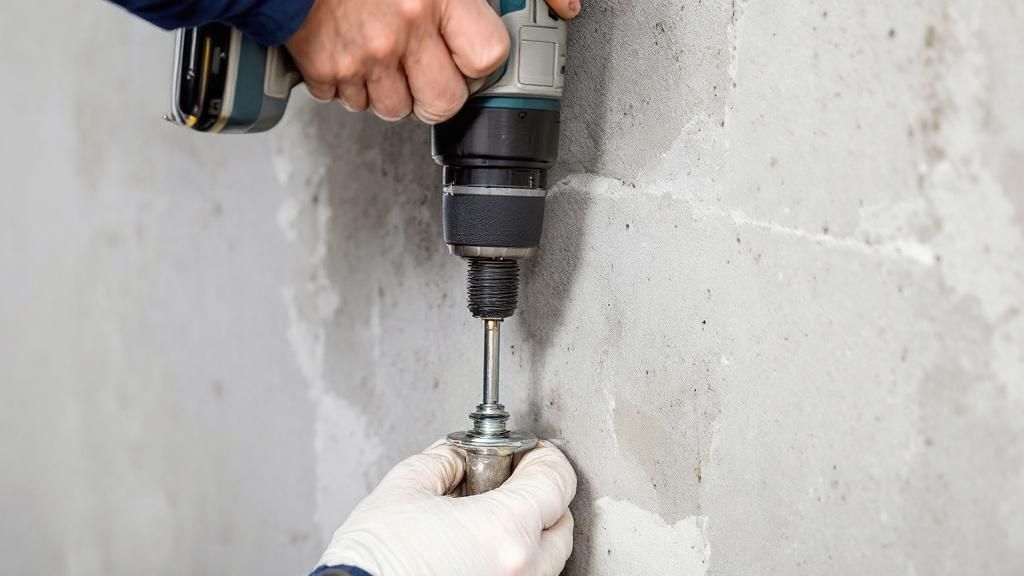 The world of construction hardware in the UAE isn't sitting still. With every new giga-project and ambitious sustainability goal, the very nuts, bolts, and anchors holding our buildings together are getting a serious upgrade. The future isn't just about making steel stronger; it’s about sourcing smarter, greener, and more resilient solutions built for the next generation of UAE architecture.
For contractors and developers, keeping an eye on these shifts is more than just good practice—it's a competitive edge. Getting ahead of the curve means you can spec next-generation hardware that boosts efficiency, tightens up safety, and adds long-term value to your asset. This turns procurement from a simple cost centre into a strategic move, aligning your project with the UAE's vision for a high-tech, sustainable future.
The Rise of Green Hardware
Sustainability has moved from a "nice-to-have" to a core principle of the UAE's national development. This shift is felt right down to the hardware you choose, especially with rating systems like Abu Dhabi's Estidama Pearl Rating System putting every single component under the microscope.
What does this look like in practice? It’s a growing demand for:
- Recycled Content: Sourcing hardware with a high percentage of recycled metal is becoming standard, as it slashes the carbon footprint of production.
- Low-VOC Coatings: Finishes and protective coatings that release fewer volatile organic compounds are crucial for better indoor air quality—a key factor in green building ratings.
- Durability and Longevity: It's simple, really. Corrosion-resistant materials that last longer mean fewer replacements and less waste over the building's entire lifecycle.
Smart Hardware and the IoT Revolution
The next big leap? Embedding digital tech directly into the hardware itself. This "smart hardware" transforms passive components into active data points, completely changing how we manage buildings and ensure safety. Think of it as giving the structure its own nervous system, one that can report back on its own health.
Smart hardware transforms buildings from static structures into dynamic environments. Embedded sensors can monitor structural stress in real-time, while IoT-enabled access control provides unparalleled security and operational insight. This is where physical durability meets digital intelligence.
We're already seeing some of these innovations gain traction:
- IoT-Enabled Locks: Smart access systems, especially for commercial and hospitality projects, allow for remote management, heightened security, and detailed access logs.
- Embedded Structural Sensors: Tiny sensors built right into anchors or connectors can monitor stress, temperature, and humidity, giving you an early warning of potential structural issues.
- Automated Systems: Think smart door closers and window operators that link up with the building management system (BMS) to fine-tune energy efficiency and climate control.
Advancements in Material Science
The UAE's unique climate—with its intense heat, humidity, and coastal salt spray—is a constant battle for any material. To win this fight, material science is pushing out a new class of hardware engineered for extreme resilience.
The focus here is on developing new alloys and composites that are not just stronger, but also lighter and incredibly resistant to corrosion. These advanced materials don't just extend the hardware's lifespan; they can even reduce a building's overall structural load. Sourcing construction hardware UAE suppliers who are already on board with these next-gen materials will be the key to building structures that don't just look good on day one, but stand strong for decades.
Frequently Asked Questions
When you're dealing with construction hardware UAE projects require, questions are bound to come up. From the project site to the procurement office, everyone needs quick, clear answers. We've gathered some of the most common queries we hear from project managers, engineers, and procurement specialists to give you a straightforward reference.
Think of this as your go-to guide for making informed decisions on the fly.
What Is the Most Important Factor When Choosing Hardware?
While budget is always a factor, the single most critical element is compliance with local UAE regulations. It’s that simple. Using hardware that isn’t certified by authorities like the Dubai Municipality (DM) or fails to meet the UAE Fire and Life Safety Code isn't just a mistake; it's a recipe for project failure.
This goes far beyond simple paperwork. Non-compliant hardware leads to real-world consequences:
- Failed inspections and expensive, time-consuming rework.
- Serious legal trouble for both the contractor and the developer.
- Unacceptable safety risks that endanger lives.
In the UAE, certified quality isn't negotiable. Choosing compliance over minor cost savings is the only way to protect your project’s timeline, budget, and reputation. It’s the very bedrock of building responsibly in this region.
Should I Source from Local or International Suppliers?
This is a classic strategic dilemma, and frankly, there's no one-size-fits-all answer. It really hinges on what you need.
For the vast majority of standard construction hardware, local UAE suppliers are your best bet. They offer quicker delivery, they live and breathe regional compliance like DCL certification, and the logistics are far simpler.
On the other hand, you might need to look internationally for very specialised or custom-made items you just can't find in the local market. But for your day-to-day fasteners, connectors, and fittings, a trusted, certified local supplier is almost always the most reliable and sensible choice for projects in the Emirates.
How Do I Verify if Hardware Is Certified for Dubai?
Verification is a step you can't afford to skip. Don't just take a supplier's word for it—get the proof. The most dependable method is to ask for and carefully review the official documentation for any construction hardware UAE purchase.
Always request a valid Certificate of Conformity. For any project in Dubai, you should be able to see the Dubai Central Laboratory (DCL) certification mark right on the product or its packaging. If anything feels off, take the extra step and verify the document through the Dubai Municipality’s official channels. A little due diligence here is your best defence against counterfeit materials.
At Yasu Trading Co. LLC, our entire business is built on simplifying your procurement process. We provide a massive range of fully certified, high-grade construction hardware, so you don't have to worry about compliance. Our team ensures every single product meets the UAE's demanding standards, giving you the peace of mind to build safely and keep your project moving.
Find your compliant hardware solutions at https://yasutrading.com.