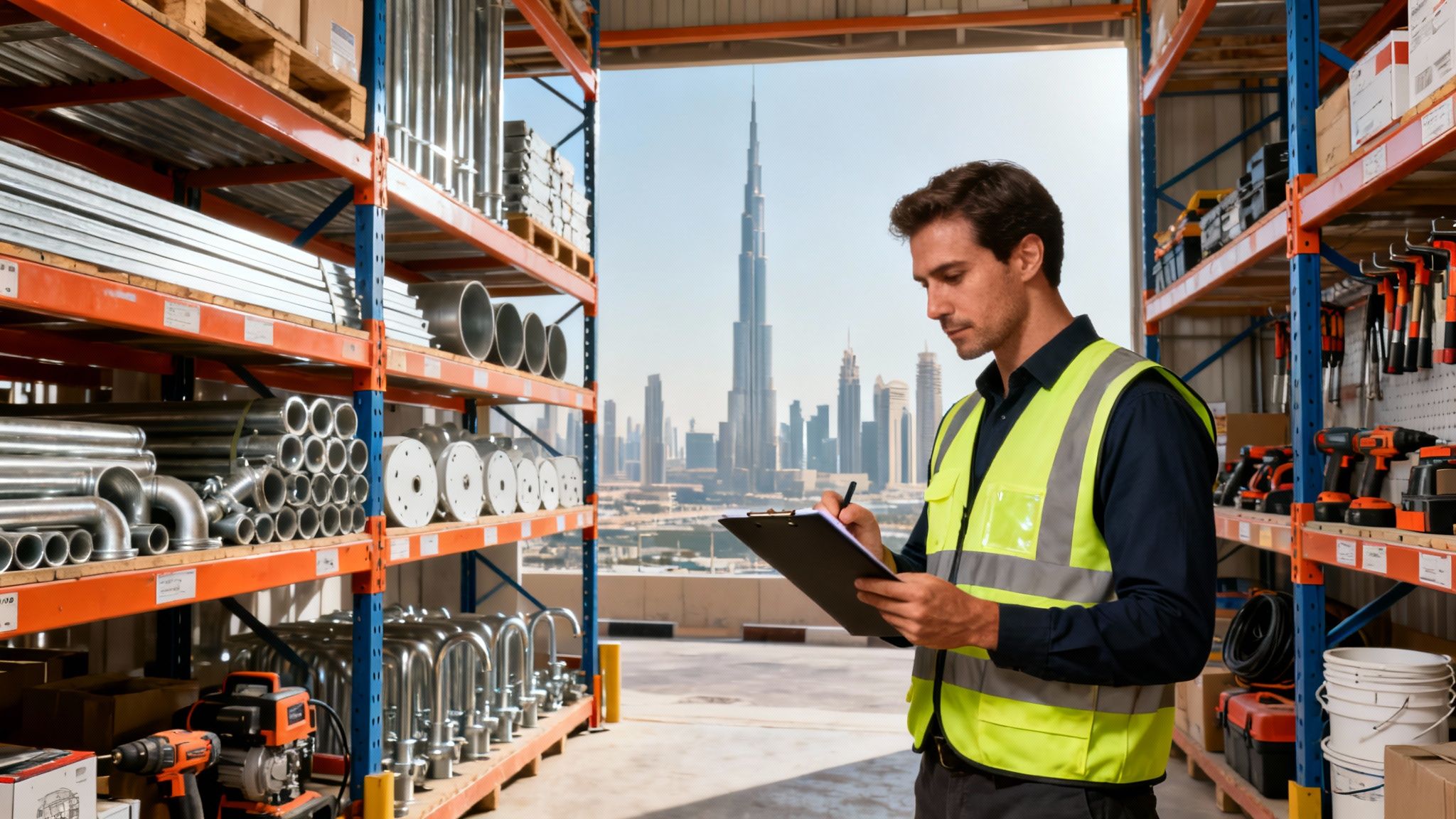
Construction Hardware Wholesale Dubai: Your Guide to Sourcing Top Materials
If you're searching for construction hardware wholesale in Dubai, you're tapping into a market that's the very engine of the Middle East's development boom. At the centre of it all are major suppliers like Yasu Trading Co. LLC, who stock everything from foundational hardware to the final finishing fixtures for the city's iconic skyscrapers and sprawling communities. Think of this guide as your on-the-ground playbook for sourcing materials in this fast-paced environment.
Why Dubai Is a Global Hub for Construction Hardware
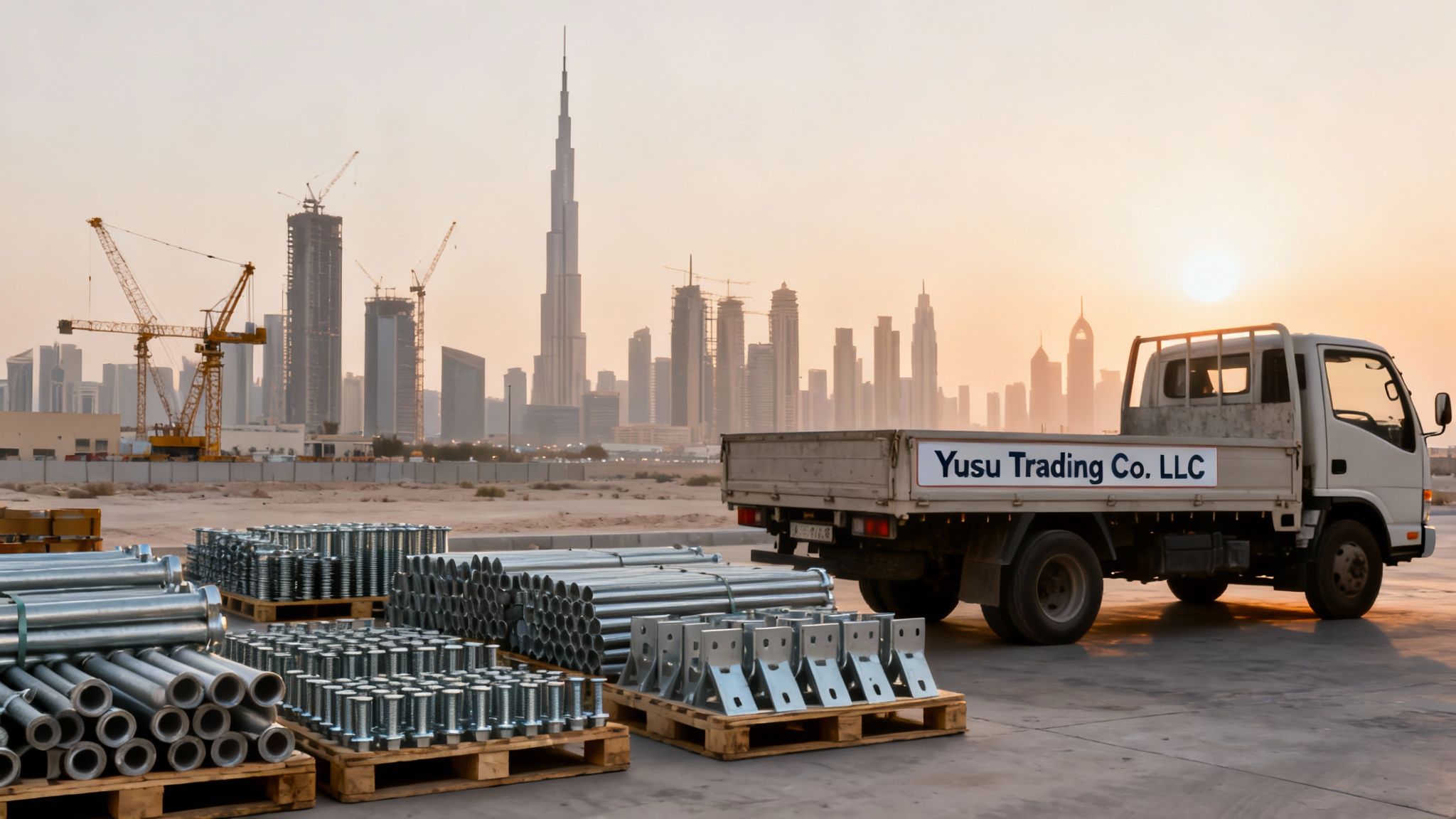
Dubai isn't just a city of incredible buildings; it's the operational heart of the entire region's construction industry. Its strategic location, world-class logistics, and non-stop development plans have created a vital ecosystem for sourcing building materials. For any contractor or developer, getting to grips with this landscape is the first real step toward a successful project.
The best way to picture Dubai’s wholesale market is as a massive, centralised toolbox for the entire Gulf Cooperation Council (GCC) region and beyond. It’s the meeting point where global manufacturing and regional demand collide, creating a marketplace that’s as competitive as it is diverse. But with that scale comes a lot of complexity.
The Scale of Opportunity
The sheer volume of construction work in the UAE creates a relentless demand for quality hardware. This constant need has nurtured a strong network of specialised suppliers who are equipped to handle orders of any size, from a small renovation to a full-blown mega-project. The market's growth is directly linked to the country's ambitious vision for the future.
The UAE construction market is an absolute powerhouse. Industry analysis projects its value to hit USD 42.75 billion in 2025 and swell to USD 52.66 billion by 2030. With Dubai alone accounting for 41.6% of all construction activity in 2024, the demand is undeniable. You can find a complete breakdown of this data in the full market analysis on MordorIntelligence.com.
Winning in this market goes far beyond just comparing price lists. It’s about truly understanding a supplier's capabilities, checking product certifications, and knowing their logistics are solid enough to keep your project on budget and on schedule.
Key Players in the Ecosystem
The market is filled with everyone from massive distributors to niche, specialised traders. Companies like Yasu Trading Co. LLC, based in Dubai's Nakheel Centre, are pivotal because they bring a huge variety of products together under one roof. This makes life much easier for contractors, who can source nearly everything they need from a single point of contact instead of juggling dozens of different vendors.
These key players bring some serious advantages to the table:
- Comprehensive Inventory: They offer direct access to an enormous range of products, from structural steel and plumbing fittings to advanced electrical systems and safety gear.
- Logistical Expertise: They have a deep understanding of local regulations, import/export rules, and have built efficient delivery networks that span the entire UAE.
- Quality Assurance: They build strong relationships with trusted manufacturers and are committed to meeting both local and international quality standards.
This guide will walk you through the practical steps of sourcing, vetting suppliers, and managing logistics, giving you a solid framework for success in the UAE's demanding construction sector.
Identifying the Right Hardware for Your Project
Choosing the right hardware for a construction project is a lot like casting for a movie. Every single part, no matter how small, has a critical role to play in the final performance. If you get it wrong, you’re not just looking at a bad review; you’re facing costly rework, serious safety hazards, and maintenance headaches that can last for years.
A simple list of materials from a blueprint just doesn't cut it. You need to understand the why behind each choice—how materials interact with each other, how they’ll stand up to Dubai’s unique climate, and whether they meet local building codes. From a soaring skyscraper to a five-star hotel, every project has its own script that dictates the hardware it needs.
The Structural Backbone of Your Build
The skeleton of any structure is its precision-engineered building materials. We’re talking about the essentials: structural steel, fasteners, anchors, and rebar. These aren't just commodities; they're the components that bear the load, fight off environmental stress, and make sure the building is still standing decades from now.
Using substandard fasteners, for example, is like building a solid frame with weak glue. The whole system is compromised from the start.
This is even more critical in Dubai, where materials have to battle extreme heat, humidity, and the occasional seismic tremor. Opting for certified, high-grade steel and corrosion-resistant fasteners from a trusted construction hardware wholesale Dubai supplier isn't just a good idea—it's the non-negotiable first step to building something safe and durable.
Essential Systems for Functionality and Safety
Look beyond the core structure, and you'll find the systems that make a building functional and safe. Each one demands a specific category of hardware, and cutting corners here can have some pretty dire consequences.
Let’s break down the main categories:
- Plumbing and Sanitary Fittings: Think of a building’s plumbing as its circulatory system. A cheap pipe or a faulty fitting can lead to leaks, which quickly spiral into water damage, mould, and even structural decay. The repair bill for that will dwarf any initial savings. High-quality valves, pipes, and fixtures are your best defense.
- Electrical Fixtures and Components: The electrical system is the building's nervous system, from the wiring and conduits to the switches and circuit breakers. In a market pushing smart city initiatives, this now includes advanced gear for automation and energy management. Using uncertified electrical products is a massive fire risk and a guaranteed way to fail a Dubai Municipality inspection.
- HVAC Systems: In Dubai’s climate, the HVAC system is the building's respiratory system. It's vital. Good hardware—ducts, vents, fans, and thermostats—doesn't just ensure comfort and air quality; it has a direct impact on the well-being of occupants and the building’s running costs.
While you're at it, don't forget specialised needs like temporary site security. To get a better feel for your options, you can check out this guide on the different types of fencing for construction sites to keep your project secure from day one.
Tailoring Hardware to Project Type
The specific hardware you need will change dramatically based on what you're building. A one-size-fits-all approach is a recipe for disaster, as different environments have completely different demands for durability, aesthetics, and compliance.
Just look at these distinct project types in Dubai:
- Luxury Hotels and Resorts: These projects are all about blending top-tier function with high-end aesthetics. We’re talking designer sanitary ware, premium door handles, and internationally compliant electrical outlets for guests from around the world.
- Commercial Towers and Offices: Here, the focus shifts to durability, efficiency, and safety for high-traffic zones. That means heavy-duty door closers, commercial-grade plumbing, and certified fire safety equipment like smoke seals and panic bars.
- Residential Villas and Communities: For residential builds, hardware has to be reliable, easy to use, and cost-effective when you're buying in bulk. This covers everything from durable kitchen fittings and secure locking systems to weather-resistant outdoor fixtures.
- Smart City and Industrial Developments: These projects demand specialised, often advanced, hardware. Think smart electrical fixtures for automated buildings, heavy-duty industrial fasteners, and specialised tools built for massive infrastructure work.
The success of your project really hinges on selecting components designed for their specific job. Sourcing from a wholesale supplier with a deep and diverse inventory means you can find the perfect fit, ensuring every single part performs its role flawlessly.
Ultimately, choosing the right hardware is a strategic move that affects your budget, timeline, and the final quality of your build. To see the kind of variety available for every project type, you can browse a comprehensive catalogue of construction hardware and building materials to find certified, reliable solutions.
How to Vet Wholesale Suppliers in Dubai
Picking a partner for your construction hardware wholesale Dubai needs isn't just a transaction; it’s more like choosing a co-pilot for a long and complex flight. The right one makes the journey smooth, keeping you on schedule and navigating any turbulence with skill. The wrong one? They can ground your project before it even gets off the runway, leading to catastrophic delays and budget blowouts.
This vetting process is your essential pre-flight check. It’s about looking past the shiny catalogue and the attractive price list to really dig into a supplier's operational backbone. Think of it as performing serious due diligence on a critical business partner. You need a solid system to gauge their reliability, their quality control, and their overall ability to support your project from the ground up.
The flowchart below gives you a bird's-eye view of how hardware needs shift depending on the project type—a crucial starting point before you even begin talking to suppliers.
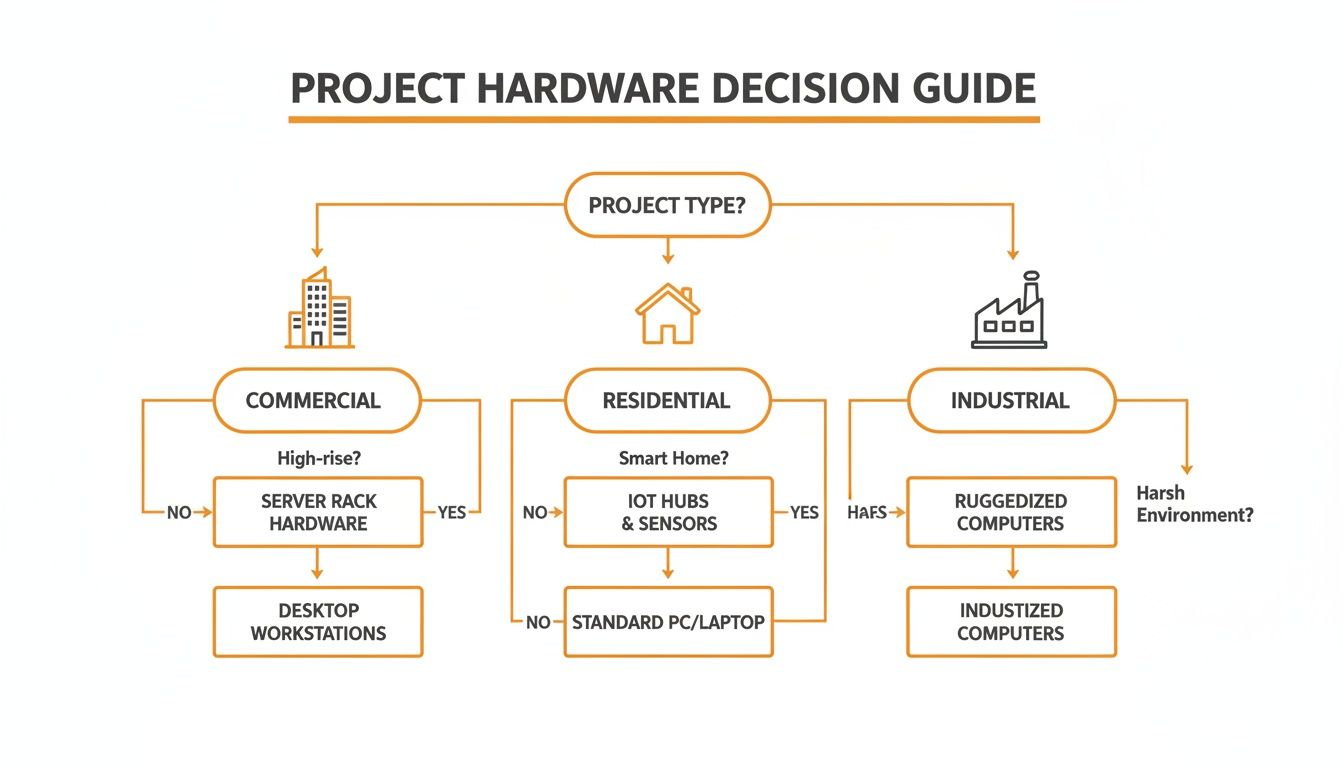
As you can see, whether you're building a commercial tower, a residential villa complex, or an industrial warehouse, your specific hardware list will dictate the kind of supplier you need. You're looking for someone with specialised stock and a proven track record in that exact sector.
The Certification Checklist
First things first: certifications. In Dubai, product quality isn’t just a nice-to-have; it's a legal requirement enforced by strict regulations. A supplier’s ability to hand over certified material documents is a non-negotiable green light. It’s the clearest proof of their commitment to safety and compliance.
Here are the big ones to ask for:
- ISO Certification: This is an international gold standard. It tells you the supplier has solid quality management systems baked into their operations, which points to consistency and reliability.
- ESMA Conformity: The Emirates Authority for Standardisation and Metrology (ESMA) is the gatekeeper for product safety in the UAE. Make sure materials, especially anything electrical or plumbing-related, carry this mark.
- Dubai Municipality (DM) Approval: Many building materials need a specific nod from the Dubai Municipality before they can be used in local projects. A good supplier will have this paperwork organised and ready to go.
Asking for these credentials right out of the gate is the fastest way to weed out the pretenders. Any supplier that hesitates or can't produce these documents is a massive red flag. Walk away.
Assessing Inventory and Reliability
A supplier's warehouse is the true heart of their business. How deep their stock runs and how well it's organised tells you everything about their ability to deliver what they promise, when they promise it. A slick catalogue is useless if the products are always on backorder.
A supplier with deep inventory acts as a buffer for your project, absorbing unexpected demands and preventing supply chain disruptions from causing costly work stoppages. Their reliability is your project's insurance policy.
Think about this: the UAE's building materials market is on a tear, projected to jump from USD 6.75 billion in 2024 to a staggering USD 11.44 billion by 2033. This explosive growth, fuelled by mega-projects and relentless urbanisation, puts incredible strain on supply chains. It makes a supplier’s logistical muscle more critical than ever. You can read more about the UAE's thriving building materials market on imarcgroup.com.
When you're trying to separate the pros from the amateurs, a simple comparison can be incredibly revealing. Here’s a quick checklist to help you spot the differences between a reliable supplier and one that’s likely to cause you headaches.
Key Supplier Evaluation Criteria
Evaluation Criterion Reliable Supplier (e.g., Yasu Trading Co.) High-Risk Supplier Certification & Compliance Readily provides ISO, ESMA, and DM approvals. Vague about certifications or can't produce documents. Inventory Depth Maintains a large, diverse, and well-organised stock. Frequently out of stock on core items; long lead times. Product Quality Offers branded, traceable materials with clear specs. Sells unbranded or low-quality alternatives. Logistical Capability Owns a delivery fleet; offers clear delivery timelines. Relies on third-party couriers; delivery is unreliable. Communication Proactive, clear, and technically knowledgeable staff. Slow to respond; provides inconsistent information. Pricing Transparency Provides clear, itemised quotes without hidden fees. Offers vague pricing that changes unexpectedly. After-Sales Support Has a clear returns policy and a dedicated support team. Difficult to reach post-purchase; no clear issue resolution. This table isn’t just a checklist; it's a framework for your conversations. A truly dependable supplier will tick all the right boxes without you having to push.
Evaluating Support and Transparency
Finally, don't forget the human element. How does the supplier’s team handle your questions, your quote requests, and, most importantly, your problems? A transparent and responsive partner can save you from a world of frustration.
Here are the green flags to look for:
- Clear Communication: They should give you prompt, accurate answers to technical questions and be completely honest about stock levels and delivery schedules.
- Transparent Quoting: Top-tier suppliers often have smooth processes, like an online portal to request quotes, which makes procurement simpler and ensures you get crystal-clear cost estimates.
- After-Sales Support: What’s their plan if a product shows up defective or the wrong item gets delivered? A solid partner will have a straightforward returns policy and a support team ready to fix issues fast.
On the flip side, be wary of suppliers with wishy-washy pricing, vague answers, or a suspicious lack of verifiable client testimonials. These are tell-tale signs of trouble ahead. By rigorously checking each potential partner against these points, you can build relationships that are a genuine asset to your project's success.
Getting Smart with Procurement and Pricing
Let's talk about the money side of things. Getting the best deal on construction hardware isn't just about haggling; it’s about understanding how the Dubai market works so you can protect your project's bottom line without ever sacrificing quality.
The world of construction hardware wholesale in Dubai has a few different ways of pricing things. If you get a handle on these, you’re already a step ahead. It's a bit like picking a mobile phone plan—sometimes pay-as-you-go makes sense, but other times, a comprehensive package offers far better value.
Common Pricing Models You'll Encounter
The most common model you'll see is the bulk-order discount. It’s simple supply and demand: the more you buy of a single item, the less you pay for each one. This is your go-to for high-volume consumables that you'll burn through on any site, like fasteners, screws, or standard pipe fittings.
Then there's the project-based package. This is where a supplier bundles everything you need for a specific phase—or even the entire build—into one comprehensive quote. This approach not only simplifies your logistics down to a single point of contact but can also unlock some serious savings.
Sourcing all the fixtures for an entire building from one trusted supplier doesn’t just make your life easier; it gives you serious negotiating leverage. This consolidated approach can easily shave 10-15% off your total costs compared to piecing it all together from different vendors.
These packages are a lifesaver on large residential or commercial projects where you absolutely need consistency in the quality and finish of your hardware.
What Actually Drives the Cost of Hardware?
A lot of factors go into the final price tag on any piece of hardware. Knowing what these are puts you in a much stronger position when you're negotiating. It’s all about understanding exactly what you’re paying for.
These elements are why two seemingly identical items can have very different prices:
- Material Origin and Grade: It's no surprise that hardware made in Europe from high-grade stainless steel will cost more than a standard-grade alternative sourced from elsewhere. The quality and durability are built into the price.
- Brand Reputation: Big, established brands often carry a premium. You're not just buying the item; you're paying for decades of proven performance, reliability, and the peace of mind that comes with solid warranty support.
- Certifications and Compliance: When a product has certifications from bodies like ISO or ESMA, it means it has been through some tough testing. The cost of that rigorous compliance process is naturally reflected in the price.
Once you understand these drivers, you can make smarter trade-offs. You might decide to invest in a premium brand for critical structural elements but go with a more budget-friendly (yet still certified) option for non-load-bearing fixtures.
Practical Tips for Smarter Procurement
Effective procurement is a game of timing and strategy. It's about more than just the price. If you align your purchasing with your project's timeline, you can avoid both budget blowouts and the costly delays that happen when you’re waiting on materials.
Here are a few tips to sharpen your approach:
- Phase Your Purchases: Don't order everything at once. Work with your supplier to schedule deliveries that match each stage of construction. This keeps your site from getting cluttered with materials you don’t need yet and is much healthier for your cash flow.
- Provide a Clear Bill of Quantities (BOQ): A detailed and accurate BOQ is your best friend. It helps suppliers give you a precise quote right from the start, which means fewer nasty surprises down the line. To make it even easier, you can request a free, detailed quotation through online platforms designed for just this purpose.
- Build Real Relationships: Stop thinking of your suppliers as just vendors. When you build a genuine, long-term partnership with a reliable wholesaler, it can lead to much more than just better pricing. You get priority service, flexibility when you need it, and access to invaluable technical advice.
Mastering these strategies turns procurement from a simple line item into a powerful tool for controlling your budget and keeping your project running smoothly.
Navigating Logistics and Compliance in Dubai
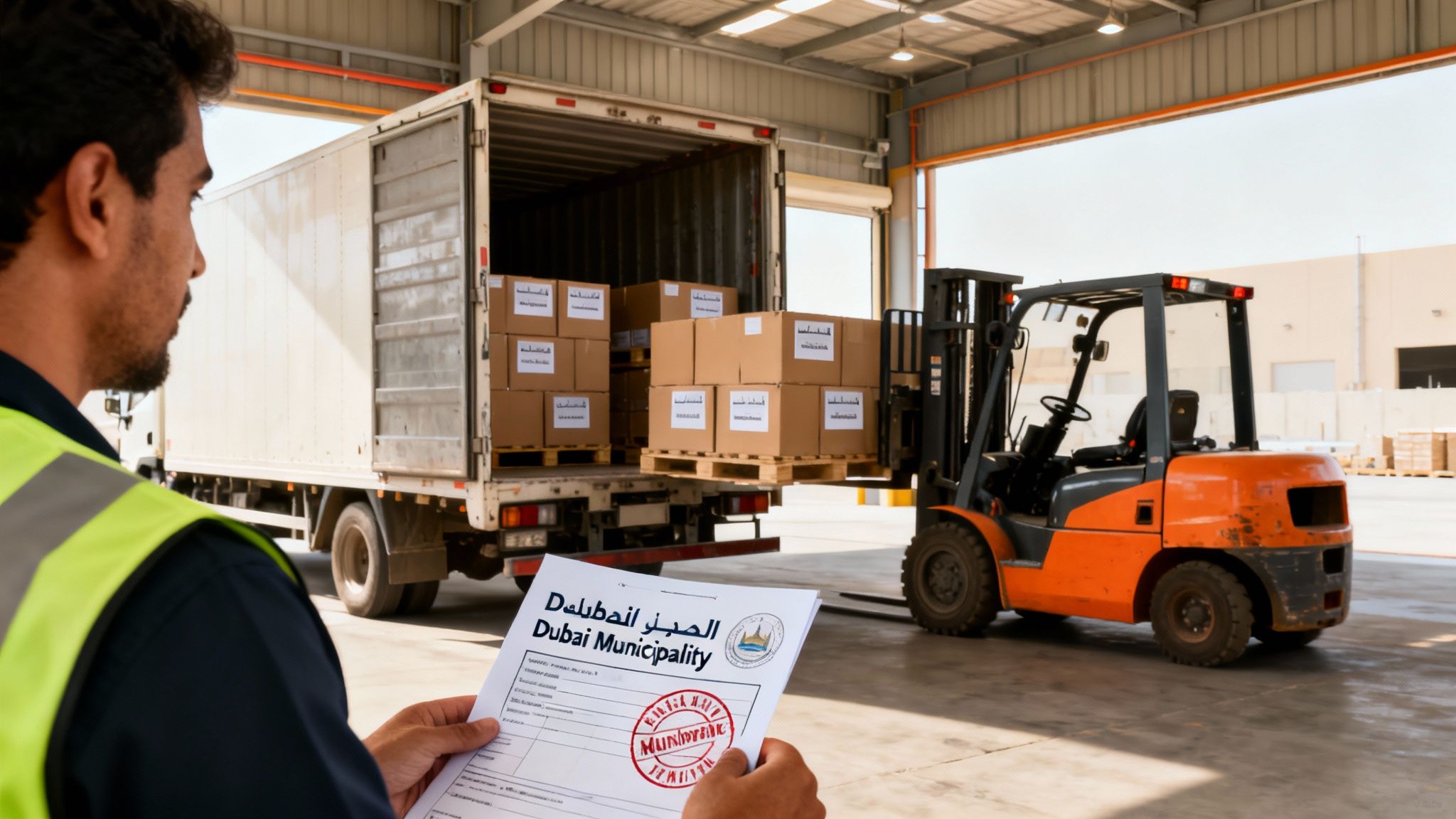
Finding the right hardware is only half the battle. The real challenge? Getting those materials delivered to your site, on schedule, and in perfect alignment with Dubai's strict regulations. This is where logistics and legal know-how become the backbone of your entire project.
Think of your supply chain as the project's lifeblood. Just one snag—a shipment stuck in customs, a missing certificate, or a failed inspection—can bring everything to a grinding halt, triggering costly delays and blowing up your budget. Success in construction hardware wholesale Dubai hinges on getting materials from the supplier's warehouse to your worksite without a hitch.
This is precisely why experienced local suppliers are worth their weight in gold. They've already mastered the maze of local rules, from navigating import duties to ensuring material traceability, making sure every delivery keeps your project humming along.
Mastering Dubai's Regulatory Framework
You can't just wing it when it comes to Dubai's building codes and import laws. The city is serious about safety and quality, and it shows in a rigid set of regulations that are non-negotiable for every single project.
Here are the key areas you need to nail:
- Dubai Municipality (DM) Building Codes: These rules are extensive, covering everything from the structural integrity of a bolt to the fire rating of a door handle. Your supplier absolutely must provide hardware that comes with the required DM approvals.
- Import and Customs Clearance: If you're sourcing materials from overseas, a smooth passage through customs is non-negotiable. A supplier with well-oiled processes can keep your shipment from getting buried in paperwork at the port.
- Material Traceability: You’ll need a clear paper trail proving where your materials came from and that they meet all certification standards. This is crucial for getting your final project sign-offs.
Getting this wrong isn't a small mistake. It can lead to immediate work stoppages, steep fines, and the nightmare scenario of having to rip out non-compliant materials. Your best insurance policy is a supplier who has this process down to a fine art.
The Importance of a Robust Supply Chain
A solid supply chain isn't just about moving products from point A to B; it's about precision, timing, and constant communication. The top wholesale suppliers in Dubai have poured resources into their logistics to keep up with the city’s breakneck construction pace.
Your supplier’s logistical strength is a direct reflection of their ability to support your project. A well-organised delivery network with real-time tracking and clear communication is the difference between a project that runs like clockwork and one plagued by constant uncertainty.
This level of logistical precision is becoming even more critical. Consider the rise of automated building technologies—the market for autonomous construction equipment in the UAE is projected to jump from USD 446.7 million in 2024 to USD 844.2 million by 2030. This shift requires perfectly timed deliveries of everything from smart fixtures to the power tools needed to keep automated systems running. You can find more insights on this growing market on grandviewresearch.com.
Partnering with a seasoned supplier who gets these complexities is a game-changer. They aren't just selling you hardware; they’re providing a complete logistical solution that slots right into your project schedule, protecting your timeline and bottom line at every turn.
Finding Your Strategic Hardware Partner
You’ve got the essentials down. Now it’s time to move from theory to action, because in Dubai's high-stakes construction world, your hardware supplier isn't just another vendor—they're a critical part of your team. Think of them less as a transactional seller and more as a partner invested in your project's success from the ground up.
Success hinges on getting four things right: clearly defining what you need, rigorously vetting your potential suppliers, procuring materials intelligently, and navigating the complexities of logistics and local regulations. Each step builds on the last, creating a rock-solid supply chain you can count on.
The Value of a True Partner
What's the difference between a vendor and a partner? It's huge. A vendor simply sells you what’s on the order form. A partner, on the other hand, invests in your project’s outcome. They bring expertise, reliability, and a proactive approach that can save you from costly delays and unexpected problems down the road.
This is exactly the kind of relationship a company like Yasu Trading Co. LLC aims to build. They know that supplying construction hardware wholesale in Dubai is about more than just moving boxes. It’s about ensuring every single item, from the heavy-duty structural bolts to the final electrical fixtures, meets strict quality and compliance standards. It's about providing peace of mind along with the products.
A true partner doesn't just drop pallets at your site. They deliver confidence and consistency, turning potential supply chain nightmares into a smooth, predictable part of your project.
Your Next Steps to Project Success
With the insights from this guide, you’re now equipped to make decisions that will directly affect your project's budget, timeline, and final quality. The learning part is over; it's time to put it into practice.
Here’s a straightforward plan to get started:
- Define Your Needs: Get specific. Create a detailed Bill of Quantities (BOQ) that covers everything your project requires, from structural must-haves to the finishing touches.
- Shortlist Potential Suppliers: Use the criteria we covered—certifications, inventory size, and delivery capabilities—to narrow your list down to a few serious contenders.
- Initiate Contact: Reach out with your BOQ. How they respond is your first real test. Look for quick, clear communication and a transparent quoting process.
Following these steps will put you on the right track to finding a wholesale hardware supplier who acts like a genuine partner. Take that first step today and secure a supply chain that will help turn your construction vision into a solid reality.
Your Questions, Answered
Stepping into Dubai's wholesale construction hardware market can feel like a lot to take in. It's only natural to have questions, especially when project budgets and timelines are on the line. Let's clear up some of the most common queries we hear from contractors and developers.
Can I Really Buy Small Quantities from a Wholesaler?
It’s a common misconception that wholesalers only deal in massive, pallet-sized orders. While they certainly specialize in bulk, most suppliers are more flexible than you might think, particularly if you need specialized or high-value items.
Of course, the best prices are always found in bulk. Think of it like this: anyone can buy a single box of screws, but ordering an entire pallet gives the supplier significant purchasing power, and they pass those savings on to you. For ongoing projects, building a relationship with a supplier is key—it often opens the door to better terms, even when you need a mix of small and large quantity items.
How Can I Be Sure About Quality on a Huge Order?
Any wholesale supplier worth their salt has a rigorous quality control system. This isn't just about a quick visual check; it's a multi-stage process. It starts with sourcing materials exclusively from certified manufacturers who meet both international standards (like ISO) and local regulations set by bodies like ESMA. From there, they conduct their own in-house batch testing and inspections when shipments arrive at their warehouse.
To protect your project, you should always ask for documentation. Don't be shy about requesting:
- Material Test Certificates: These are crucial. They verify the specific chemical and physical properties of materials like steel, proving they are what they claim to be.
- Certificates of Conformity: This document confirms that a product meets all the necessary safety and quality benchmarks for use in the UAE.
- Batch Traceability Records: This gives you a clear line of sight from your job site right back to the factory floor where the product was made.
What Kind of Payment Terms Should I Expect?
This can vary quite a bit from one supplier to another. If you're a new customer, it's pretty standard to be asked for an upfront payment, usually somewhere between 30% and 50%, with the rest due when the materials are delivered.
Once you've built a solid relationship and have a history of paying on time, things often get more flexible. You might be offered options like post-dated cheques or even credit facilities that give you anywhere from 30 to 90 days to pay. The most important thing is to get these terms clarified right at the quotation stage so there are no surprises down the road.
Building a long-term, trusted relationship with your supplier is the best way to secure more favourable payment terms. Consistent business demonstrates reliability, making you a valued partner rather than just another customer.
Do the Quoted Prices Include VAT and Delivery?
This is a critical detail to watch. In the UAE, there’s a 5% Value Added Tax (VAT) on almost all goods and services, and construction hardware is no exception. You absolutely need to confirm if the prices you're being quoted are inclusive or exclusive of VAT. In most business-to-business transactions, quotes will show the pre-VAT price, with the tax added to the final invoice.
Delivery is almost always quoted as a separate line item. The cost will naturally depend on how much you're ordering, where it's going, and how quickly you need it. The best suppliers typically run their own delivery fleets, which often means more reliable service and better rates than you'd get from a third-party courier.
For a partner that understands the complexities of sourcing in Dubai and provides certified, high-quality materials with transparent pricing, look no further than Yasu Trading Co. LLC. Let us handle the details so you can focus on your project’s success. You can see our full range of products and get in touch through our website at https://yasutrading.com.