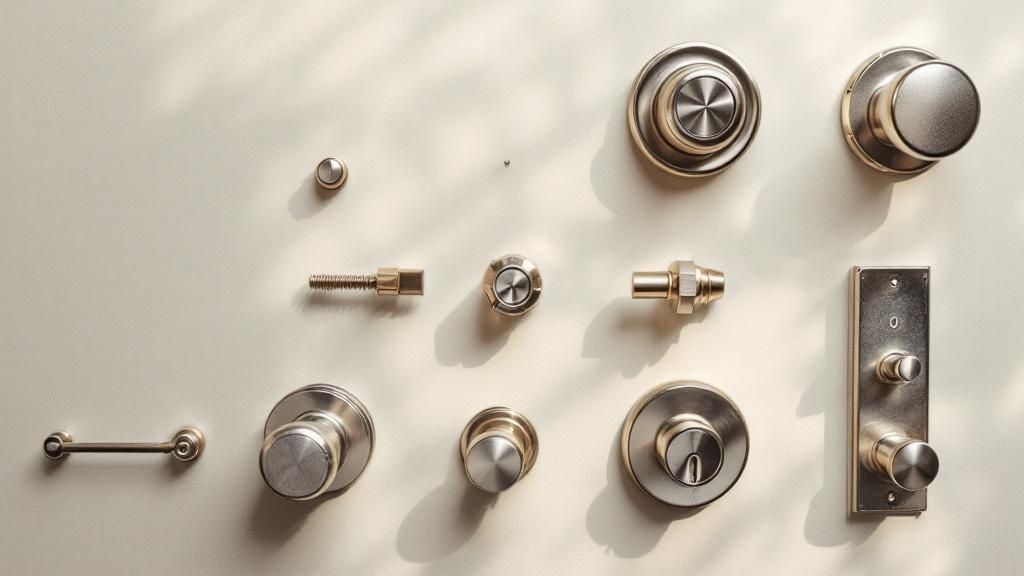
Choosing Door Locks and Handles in the UAE
Welcome to our complete guide on door locks and handles, where we dive into the intersection of security and style. Choosing the right hardware for your doors isn't just about looks—it’s one of the most important decisions you'll make for the safety, functionality, and feel of your home.
Choosing the Right Hardware for UAE Homes
Think of your front door hardware as a handshake. It’s the first impression you make on guests and the steadfast guardian that protects your personal space. This dual role makes picking the right combination of door locks and handles a crucial task for any homeowner or property manager here in the UAE.
This guide is here to walk you through it all, from the simple, time-tested mechanics of a traditional lock to the slick convenience of today's smart home tech. We'll also look at how regional factors in the UAE—like the major push for smart cities and an expectation for high-level security—influence the hardware on the market. In a place where grand aesthetics and robust safety are equally prized, trends in hardware are always evolving.
What You Will Learn
Our aim is simple: to equip you with the practical knowledge to choose with confidence. We’ll break down the essentials into a few key areas.
- Core Lock Types: We’ll cover everything from the workhorse deadbolt to the latest smart locks.
- Handle Styles: You’ll learn how to perfectly match handles to your home’s architectural and interior design.
- Materials and Finishes: Discover the best options that can stand up to the local climate.
- Installation and Upkeep: Get our best practices for ensuring your hardware lasts and performs flawlessly for years.
Choosing the right hardware involves balancing security needs, design preferences, and functional requirements. For a broader perspective on sourcing materials in the region, our ultimate guide to choosing building hardware in Dubai provides additional valuable insights.
By the time you're done reading, you’ll be able to select hardware that not only looks fantastic but is perfectly suited to protect and elevate your home or office. We're going to cut through the technical jargon and give you clear, straightforward advice to help you sort through the huge market of door locks and handles.
Let's start by exploring the different types of locks out there and what makes each one the right choice for certain situations.
Getting to Know Your Core Lock Options
Choosing the right lock can feel overwhelming, but it really boils down to understanding a few key types. Think of it as learning the basic tools in a toolbox—each one is designed for a specific job, offering a different blend of security and convenience for your doors.
Let's start with the undisputed champion of home security: the deadbolt lock. Unlike the simple spring-latch on a doorknob, which can be pried open, a deadbolt uses a solid steel bolt that slides deep into the doorframe. It's a simple, brutish mechanism, and that's exactly why it's so effective against forced entry.
Deadbolts aren't one-size-fits-all, though. They come in two main flavors, and picking the right one is crucial.
Single-Cylinder vs. Double-Cylinder Deadbolts
A single-cylinder deadbolt is what you'll find on most front doors. It has a keyhole on the outside and a simple thumb-turn knob on the inside. This setup gives you solid security from the outside but allows for a quick, keyless exit in an emergency. No fumbling for keys if you need to get out fast.
On the flip side, a double-cylinder deadbolt needs a key on both sides. This is a great choice for doors with glass panels nearby. Why? Because a burglar can't just smash the glass, reach in, and unlock the door. The trade-off, however, is a potential safety hazard in a fire or other emergency, which is why they’re not always the best fit for a primary exit.
Key Takeaway: It's a classic security vs. safety dilemma. For most solid doors, a single-cylinder deadbolt hits that sweet spot of robust protection and easy escape.
The Everyday Workhorses: Knob and Lever Locks
While deadbolts are the heavy hitters, knob locks and lever handle locks are the workhorses handling our daily comings and goings. They combine the handle and the locking mechanism into one neat package, making them the default choice for interior doors like bedrooms and bathrooms.
Knob locks are the traditional round handles we all know. Lever handles, with their flat, press-down design, are a more modern and accessible option, especially for kids or anyone who finds gripping a small knob difficult. Just remember, these are built for convenience, not high security. Their latch mechanisms are no match for a dedicated deadbolt, so they should never be the only lock on an exterior door. If you want to get into the nitty-gritty of hardware components, our beginner's guide to exploring building hardware is a great place to start.
Smart Locks: Security for the Modern Age
The world of door locks and handles has gone digital, and smart locks are leading the charge. These devices ditch the traditional key for things like PIN codes, fingerprint scans, or your smartphone. Imagine letting a guest in while you're at work, getting a notification when the kids get home, or checking if you remembered to lock the door—all from your phone.
This isn't just a niche trend; it's a massive shift, especially here in the UAE. In fact, deadbolt-style smart locks already make up about 51.88% of the market in the Middle East & Africa. With the regional market set to grow at a blistering 21.3% CAGR between 2025 and 2030, you'll be seeing them everywhere from hotels to homes.
The Ever-Useful Padlock
Last but not least, we have the humble padlock. It's the only lock on this list that isn't bolted to a door, which is exactly what makes it so useful. From garden sheds and gates to gym lockers, padlocks are the go-to for securing just about anything else. They come in all shapes and sizes, from simple combination locks to heavy-duty models that laugh at bolt cutters. A good padlock is a flexible and essential part of any solid security plan.
Matching Handle Styles to Your Home's Design
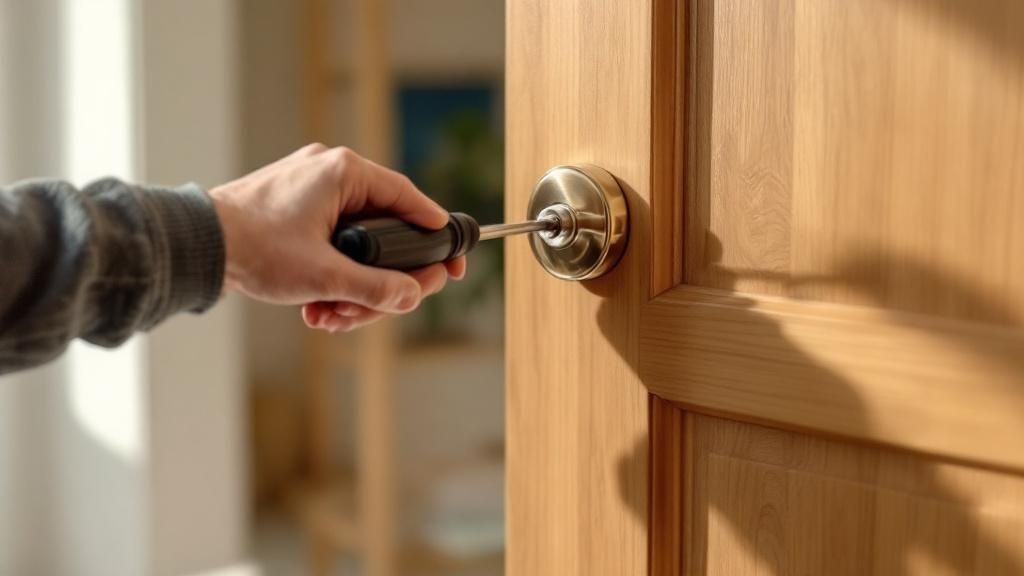
Think of a door handle as your home's handshake—it's often the very first thing you or your guests interact with. It's so much more than just a mechanism for opening a door; the right handle is a crucial design detail that shapes the feel of a room and makes it work better for you. Choosing from the vast world of door locks and handles is really about finding that perfect marriage of style and substance.
This single choice sets the tone for your entire space. A heavy, ornate handle communicates something entirely different from a sleek, minimalist one. Let's dig into the most common handle styles and figure out which ones best complement different architectural designs.
The Effortless Accessibility of Lever Handles
Lever handles have become a go-to for modern homes, and it's easy to see why. Their ergonomic design is incredibly simple—just a gentle push down is all it takes to open the door. This makes them a fantastic choice for families with young kids, older adults, or anyone who finds gripping a traditional knob difficult.
Ever tried opening a door with your hands full of groceries? With a lever handle, you can just use your elbow. It's a small convenience that makes a big difference. This focus on accessibility aligns perfectly with universal design principles, making levers a smart, future-proof choice for any property. Plus, their clean lines are a natural fit for the minimalist vibe popular in contemporary apartments and villas across the UAE.
Timeless Appeal of Traditional Doorknobs
You can't go wrong with a classic. The traditional doorknob is still a beloved staple in home design for its compact, symmetrical shape that feels right at home in everything from a heritage-style villa to a simple bedroom. They're also less likely to snag on your clothes or bags as you walk by—a nice little bonus in busy hallways.
And they aren't all perfectly round, either. You can find them in elegant oval or egg shapes that add a quiet touch of class. While they do require a good twist to operate, their classic look and solid feel make them the undisputed choice for achieving a traditional or vintage aesthetic.
A handle doesn't just open a door; it completes a design narrative. The style you choose should feel like a natural extension of your home's character, whether that’s modern and streamlined or classic and ornate.
Making a Statement with Pull Handles
If you want your entrance to have some real presence, nothing beats a pull handle. You'll typically see these on main entry doors—large, often vertical handles that you simply pull toward you. The action is basic, but the visual impact is anything but.
Picture the towering glass doors of a Dubai skyscraper or the grand wooden entrance to a luxury hotel; they almost always feature bold, beautiful pull handles. They’re available in a massive range of materials and designs, from industrial stainless steel bars to custom-forged bronze masterpieces. A pull handle signals importance and is the perfect choice for a front door where you want to make a truly memorable first impression.
Sleek and Minimalist Flush Pulls
What about when you want the hardware to just disappear? That's where flush pulls come in. These handles are recessed right into the door, creating a totally smooth, flat surface. They are the ultimate solution for sliding doors, pocket doors, and modern cabinetry where a regular handle would get in the way or ruin the clean lines. Flush pulls are the essence of minimalist design—all function, no fuss.
Selecting Durable Materials and Finishes
When you're choosing door locks and handles, it’s easy to get caught up in the look. But the material and finish are so much more than just a style choice. They're your first line of defense against daily wear, scuffs, and even the demanding UAE climate.
Think of it this way: the material is the hardware's inner strength, while the finish is its protective—and stylish—armor. Getting this combination right means your hardware won't just look fantastic on day one, but it will work smoothly for years. A weak material or a finish that chips away can compromise both the look and security of your doors far too quickly.
Let's dig into the most common materials to help you strike that perfect balance between lasting style and rugged performance.
Core Materials: The Foundation of Strength
The metal at the heart of your hardware dictates its fundamental character. It determines everything from its heft and feel in your hand to how well it stands up to a bump from a moving box. Each option brings something different to the table, making it suitable for different homes and uses.
Here are the heavy hitters you’ll most often see:
- Stainless Steel: This is the undisputed modern workhorse. Prized for its incredible strength and fantastic resistance to rust and corrosion, stainless steel is a brilliant pick for any door, inside or out. It’s especially smart for homes in coastal areas where salty air can be a problem. Its clean, sleek look is a natural fit for contemporary designs.
- Brass: If you’re after a touch of classic elegance, you can't go wrong with brass. This strong, corrosion-resistant alloy gains a gorgeous, rich patina over time that adds real character. Solid brass feels substantial and durable, signaling a commitment to quality craftsmanship.
- Zinc Alloy: Looking for a great all-rounder? Zinc alloy offers a fantastic mix of design flexibility and value. It's easily cast into complex, detailed shapes, which is why you’ll see it used for many modern handle designs. While it’s not quite as tough as solid brass or stainless steel, it’s a reliable choice for interior doors and other less demanding spots.
Now, let's look at how these materials stack up in a side-by-side comparison.
To help you choose the best option for your needs, this table breaks down the key characteristics of the most popular materials used for door hardware.
Comparison of Common Door Hardware Materials
| Material | Best For | Durability | Corrosion Resistance | Typical Finishes |
|---|---|---|---|---|
| Stainless Steel | Modern aesthetics, exterior doors, coastal areas | Excellent | Excellent | Brushed, Polished |
| Brass | Traditional and classic styles, adding warmth | Very Good | Very Good | Polished, Antique, Satin |
| Zinc Alloy | Intricate designs, interior doors, budget-friendly | Good | Good | Chrome, Nickel, Matte Black |
Ultimately, the best material depends on where the hardware will be used and the style you're aiming for. For a front door, stainless steel is hard to beat, while brass or zinc alloy can be perfect for adding personality indoors.
This chart below visualizes how lock durability is officially graded. The ANSI (American National Standards Institute) tests show how many opening and closing cycles a lock is certified to handle.
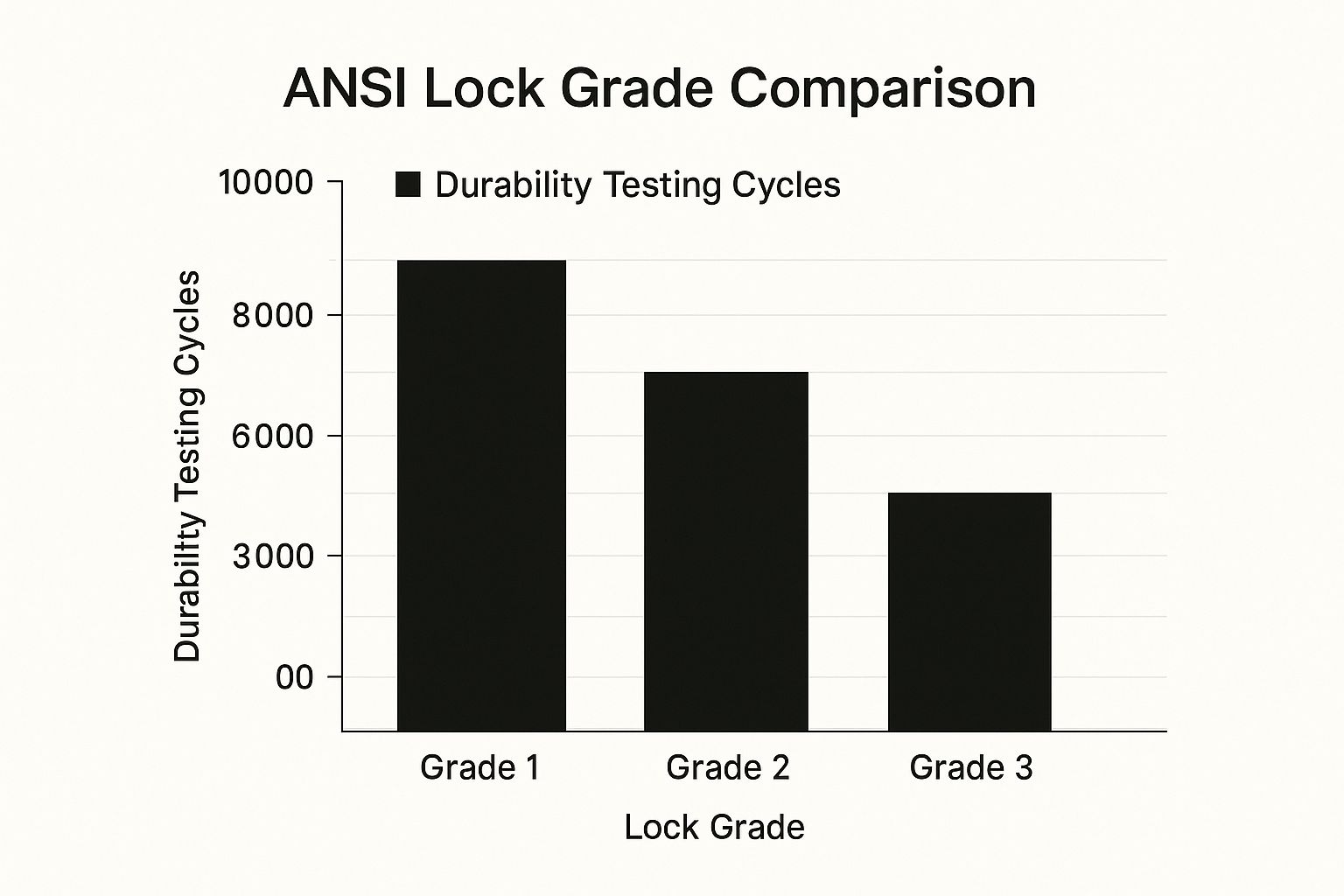
As you can see, a Grade 1 lock is a true beast, tested for more than three times the cycles of a basic Grade 3 lock. It’s a powerful reminder of why matching the grade to your door's traffic is so important.
Finishes: The Art of Protection and Style
With the core material chosen, it’s time for the finish. This top layer does two crucial jobs: it shields the metal underneath from moisture, fingerprints, and scratches, and it sets the final color and texture of the hardware.
The right finish not only complements your decor but also dictates your maintenance routine. A high-shine finish might look stunning but will require more frequent cleaning than a finish designed to hide everyday marks.
Understanding the practical side of finishes is the key to picking one that fits your lifestyle.
- Polished: Finishes like polished chrome or polished brass give you that brilliant, mirror-like shine. It’s a striking, luxurious look, but it’s also a magnet for fingerprints and water spots. Be prepared for regular polishing to keep it looking its best.
- Brushed or Satin: This has become one of the most popular choices for a reason. A brushed finish—think satin nickel or brushed brass—has a soft, muted look with fine lines that do an amazing job of hiding minor scratches and smudges. It’s a practical, low-maintenance workhorse.
- Matte Black: Bold and undeniably contemporary, matte black has taken the design world by storm. Its non-reflective surface creates a powerful contrast, especially against light-colored doors, and it pairs perfectly with industrial or minimalist styles.
- Antique: Looking for that lived-in, rustic feel from day one? Finishes like antique brass or oil-rubbed bronze are chemically treated to speed up the natural aging process. This creates a deep, rich look with subtle highlights that exude traditional charm.
The Rise of Smart Locks in the UAE
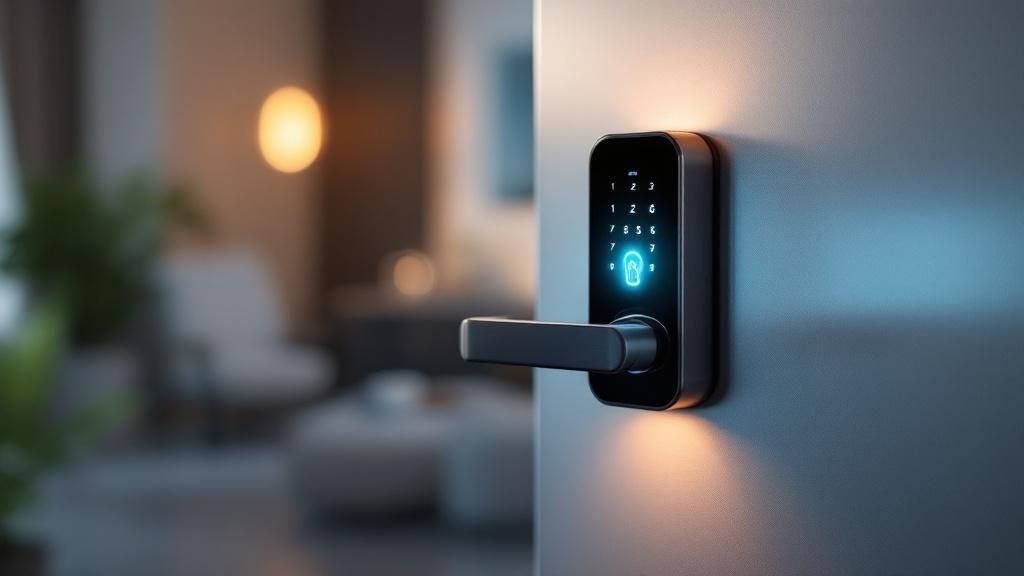
Let's face it, the traditional metal key is starting to feel a bit old-fashioned. We're seeing a massive shift in how people think about home access, moving away from physical keys and toward the digital convenience and total control offered by smart locks. These aren't just gadgets; they're a genuine leap forward in home security, especially in a tech-forward place like the UAE.
Instead of fumbling for a key, a smart lock lets you in with your smartphone, a PIN code, a fingerprint, or even a voice command. This tech essentially plugs your front door into the rest of your connected life, giving you a level of control that once felt like science fiction. Imagine letting a delivery driver in while you're at your desk or double-checking that your door is locked while you're on vacation thousands of miles away.
This move toward smarter access isn't happening in a bubble. The Middle East & Africa smart door lock market was valued at around USD 147.36 million in 2023 and is on track to hit USD 315.57 million by 2028. That explosive growth is being driven by the UAE's smart city ambitions and the simple fact that more of us are bringing Internet of Things (IoT) devices into our homes.
How Smart Locks Connect and Communicate
The real magic behind a smart lock is its connectivity. Getting a handle on how these devices talk to your phone and other gadgets is the first step in picking the right one.
Bluetooth Connectivity: This is the most common way they connect, mostly because it sips power. A Bluetooth lock talks directly to your smartphone when you're nearby—usually within a few meters. It’s perfect for that seamless, keyless entry experience as you walk up to your door.
Wi-Fi Connectivity: For true remote control, you need Wi-Fi. Locks with built-in Wi-Fi (or a separate Wi-Fi bridge) connect directly to your home network. This is what lets you lock or unlock your door and get alerts from absolutely anywhere in the world.
These connection methods are what enable all the cool features that make a smart lock so much more than just a lock.
Core Features That Define a Smart Lock
Going keyless is just the beginning. Smart locks come packed with practical features that boost both your security and your day-to-day convenience, giving you a crystal-clear picture of who's coming and going.
Here are the key functions to look for:
- Keyless Entry: Use a keypad, fingerprint, or your phone. No more worrying about lost keys or getting copies made.
- Remote Access and Control: Lock or unlock your door from anywhere with an app. This is a game-changer for letting in trusted visitors, like a cleaner or a contractor, when you're not around.
- Activity Logs: Get a real-time feed of every time the door is used. It’s a simple way to know who entered and when, adding a powerful layer of peace of mind.
- Guest Access Codes: Create temporary or recurring digital "keys" for guests. You can set them to work only during specific times—perfect for a short-term rental or a weekly service.
Integrating a smart lock is often the first step in building a fully connected smart home. It acts as the gatekeeper, linking security with automation systems for lighting, cameras, and alarms.
This kind of integration is what creates a truly seamless experience. For example, you could set a routine where unlocking your door after dark automatically turns on the hallway lights. Choosing the right smart lock involves the same careful consideration as other critical building components. You can learn more in our guide on how to select the right building hardware for your Dubai projects.
As homes across the UAE get smarter and more connected, the demand for intelligent door locks and handles is only going to grow. They offer a compelling mix of tough security, everyday convenience, and modern style, making them a worthwhile upgrade for any property.
Practical Installation and Maintenance Tips
Picking out high-quality door locks and handles is a great first step, but their real-world performance and longevity come down to one thing: proper installation and regular care. Think of your door hardware like a finely tuned machine. Even the best-made engine won't perform well if it's not installed correctly and given a little attention now and then.
This is all about protecting your investment and making sure everything works smoothly for years to come. Whether you're a seasoned DIY pro or calling in a locksmith, getting the installation right is non-negotiable. A misaligned lock isn’t just a daily annoyance; it’s a gaping hole in your security.
Getting the Installation Right
You'd be surprised how often installation goes wrong. The number one culprit? A tiny misalignment between the lock's latch or deadbolt and the strike plate on the doorframe. We're talking a millimeter of difference—enough to make the mechanism stick, grind, or fail to lock all the way. That tiny gap is all it takes to weaken your door.
The old carpenter's rule is your best friend here: measure twice, drill once. Your new hardware will come with a paper template. Use it. It’s your map to marking the drilling points with precision. Double-check that the backset—the distance from the door's edge to the center of the main hole—matches your lock model perfectly.
A correctly installed lock should feel almost effortless. If you find yourself jiggling the key, or having to shove the door shut to get it to lock, that’s a red flag. It means the components are under constant stress and will wear out far sooner than they should.
To get a sense of how often these small oversights become big headaches, it’s worth looking at commercial door accessory failure statistics. The data shows that neglecting the basics is often the root cause of failure.
Your Simple Maintenance Checklist
Once everything is perfectly installed, a little upkeep is all it takes to keep your hardware in fighting shape. It’s easy to forget about it, but skipping maintenance can lead to sticky mechanisms, ugly finishes, and, worst of all, a lock that doesn't do its job. A proactive approach is simple and goes a long way.
Here’s a quick and easy checklist to keep your door locks and handles working like new.
Clean Your Hardware Regularly: Grab a soft, damp cloth and some mild soap and water. Gently wipe down the handles, roses, and lock faces. Avoid harsh chemical cleaners or anything abrasive. They can strip the protective coating right off, ruining beautiful finishes like brass or oil-rubbed bronze.
Lubricate the Moving Parts: Once a year, give the lock's internals a little TLC. A dry lubricant like graphite powder or a silicone-based spray is perfect. A quick puff into the keyway and a light spray on the latch bolt is all it takes. This keeps things moving smoothly. Steer clear of oil-based lubricants like WD-40—they’re notorious for attracting dust and gunk, which will gum up the works over time.
Tighten All Screws Periodically: All the opening and closing can cause screws to slowly work their way loose. Every six months or so, take a screwdriver and give the mounting screws a gentle tightening. Check the handles, strike plates, and deadbolts. A snug fit keeps the hardware stable and reduces stress on all the internal parts.
Following these simple steps will add years to the life of your hardware, keeping it looking great and, most importantly, keeping your home secure.
Your Door Hardware Questions, Answered
Choosing the right door locks and handles can feel overwhelming. With so many options for security, style, and function, it's natural to have questions. Let's tackle some of the most common ones we hear from homeowners and builders.
What’s the Most Secure Lock for My Front Door?
When it comes to your home's main entry, nothing beats a Grade 1 certified deadbolt. A deadbolt uses a solid steel bolt that slides deep into the doorframe, offering serious resistance against anyone trying to force their way in. It's a massive step up from a simple spring-latch knob.
For top-tier security, you've got a couple of great options. If your door has glass panels nearby, a double-cylinder deadbolt (keyed on both sides) is a smart choice. Otherwise, a high-quality smart deadbolt gives you the best of both worlds: robust physical security plus modern features like tamper alerts and a log of who comes and goes.
Can I Really Install a New Door Handle Myself?
Absolutely. If you're just swapping out an old handle for a new one with the same measurements, it's usually a simple job for a Saturday afternoon. Most new locksets even come with a handy template and instructions.
All you'll probably need is a tape measure and a screwdriver. The game changes if you're working with a brand-new, undrilled door or installing a more complex smart lock system. In those cases, calling in a professional locksmith is your best bet to ensure everything is fitted perfectly and works securely.
How Do Smart Locks Get Power? What if the Wi-Fi Cuts Out?
Most smart locks run on standard AA batteries, which can last anywhere from several months to a full year. You don't have to worry about being caught off guard—they're designed to send low-battery alerts to your phone long before they run out of juice.
Because they’re battery-operated, a power outage in your home won't affect them. And if your Wi-Fi drops? You’ll lose the ability to control the lock remotely, but you can always fall back on the keypad, fingerprint scanner, or the good old-fashioned physical key.
This kind of failsafe design is fueling a huge trend. The Middle East smart lock market was valued at around USD 50.3 million and is poised for major growth as more people demand both convenience and stronger security. You can dig deeper into the regional smart lock market trends on cognitivemarketresearch.com.
Whether you're managing a large-scale development or simply upgrading your home, sourcing high-quality door hardware is non-negotiable. Yasu Trading Co. LLC provides a premium selection of building materials, including a diverse range of door locks and handles that meet the highest standards for security and design. Explore our extensive product range and request a quote today at yasutrading.com.