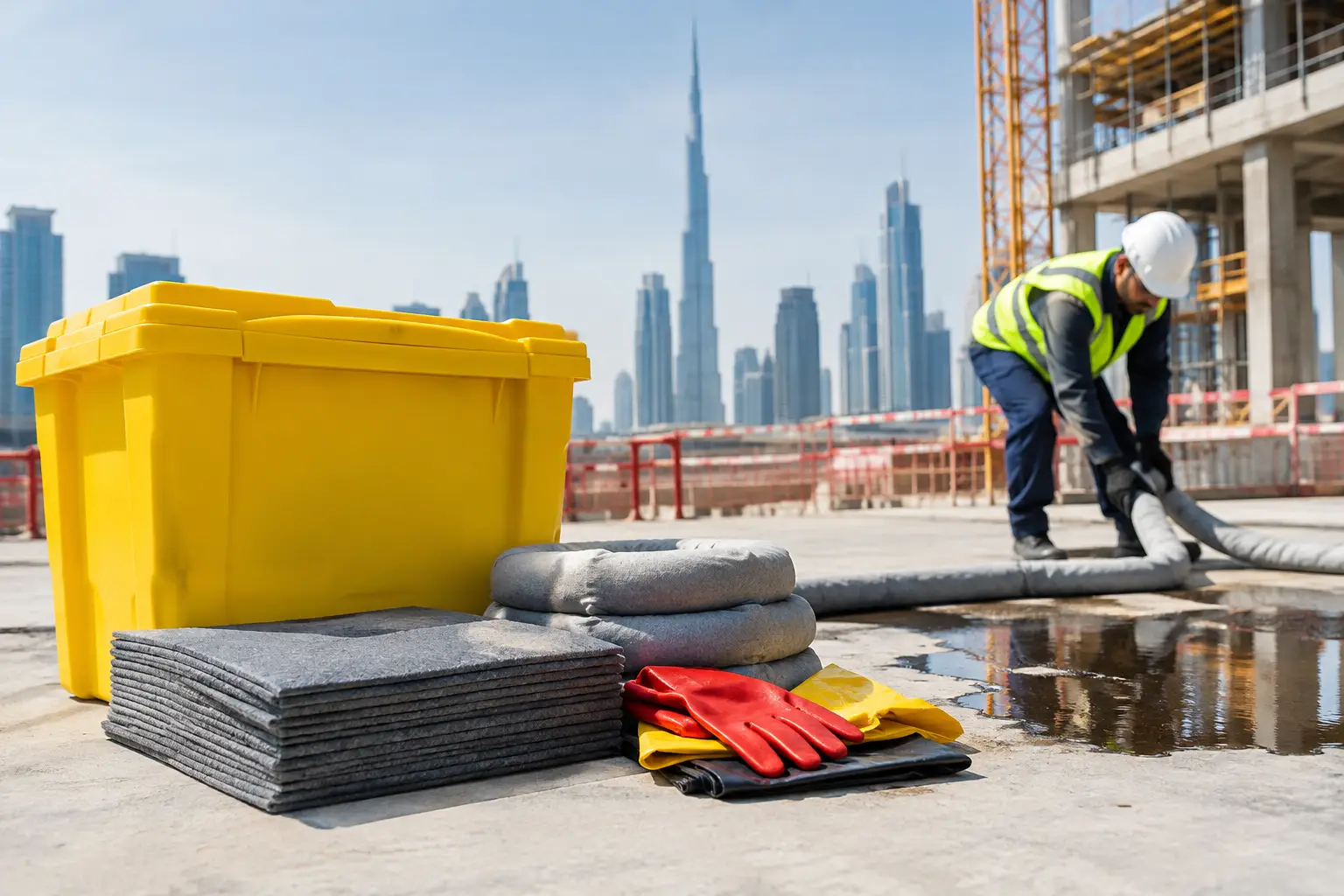
Dubai Construction Spill Kits for Active Jobsites
A leaking hydraulic hose beside an excavator, a tipped paint container in a fit-out area, or a diesel drip at the temporary generator can stop more than one task. It can create a slip risk, contaminate a drain, hold up an inspection, and pull supervisors away from planned work. Dubai construction spill kits give site teams the immediate materials needed to contain and recover common liquids before a minor incident becomes a schedule problem.
For contractors, the right kit is not simply a box of absorbents placed near the gate. It is a planned response resource matched to the fluids on site, the size of the work area, and the people expected to use it. Procurement teams should specify spill kits alongside fire and safety equipment, tools, chemicals, and temporary works supplies from the start of mobilization.
What a Construction Spill Kit Should Handle
A construction spill kit is a collection of containment, absorption, and disposal materials used to control accidental releases. Most kits contain absorbent pads, socks, or booms; loose absorbent granules; protective gloves; disposal bags; and clear instructions. The exact contents should reflect the site hazard assessment and the safety data sheets for products stored or used on site.
On an active project, spills generally fall into three practical groups. Oils and fuels from vehicles, generators, compressors, and plant require oil-only absorbents that repel water and capture hydrocarbons. General maintenance spills may involve coolant, lubricants, water-based chemicals, or paint, where universal absorbents are often suitable. Solvents, acids, alkalis, and other hazardous substances may require chemical-rated absorbents and additional personal protective equipment.
This distinction matters. A universal kit may be useful for general workshop and maintenance areas, but it is not automatically the correct response for every chemical. Sending the wrong absorbent to a spill can create unsafe handling conditions or leave the team without adequate protection. The product label, SDS, and project HSE procedure should always determine the response method.
Selecting Dubai Construction Spill Kits by Site Risk
The most reliable way to buy spill kits is to work backward from site activity, not forward from a standard kit size. A high-rise project with a dedicated diesel storage area, mobile plant, basement dewatering, and multiple finishing trades needs a different arrangement than a small office fit-out.
Match capacity to the credible spill
Capacity is usually measured by the volume a kit can absorb. Small 20- to 30-liter kits are practical for service vehicles, supervisor cabins, and localized maintenance points. Mid-range kits can support workshops, generator areas, and loading zones. Larger wheeled kits are better suited to fuel storage, plant yards, or sites where a credible release could exceed a handheld kit's capacity.
Do not select capacity based only on the smallest likely leak. Consider the largest realistic release before isolation, including a damaged container, ruptured hose, or dispensing error. If a 200-liter drum is stored on site, a 20-liter kit may still be useful for minor drips, but it cannot be the only control available.
Specify absorbents for the fluid type
Oil-only pads and socks are a sensible choice near diesel equipment, fuel transfer points, and marine-adjacent work because they absorb hydrocarbons while resisting water. Universal pads and granules work well in general construction zones where the likely releases are mixed, non-aggressive liquids. Chemical spill kits are intended for hazardous chemicals and should be selected with direct reference to the substances being handled.
Granules have value on rough concrete and uneven surfaces, while pads are faster to place under equipment or around small leaks. Socks and booms are used to surround a spill, block its route, and protect drains. A good site setup usually needs all three, rather than relying on one absorbent format.
Include the response accessories people forget
Absorbent material alone does not complete a response. Teams need suitable gloves, goggles or face protection where the hazard requires it, disposal bags, ties, labels, and a scoop or scraper for recovered material. Drain covers are especially valuable where runoff could enter surface-water channels or service openings.
For chemical risks, the kit must be aligned with the PPE requirements on the relevant SDS. A pair of general work gloves is not a universal substitute for chemical-resistant protection. This is where technical product guidance prevents a procurement shortcut from becoming a site exposure issue.
Placement Matters More Than Storage Room
A fully stocked kit is ineffective if it is locked in a store two floors away from the incident. Place kits where releases are most likely, where they can reach drains, and where crews can access them without waiting for permission or keys.
For many projects, that means positioning units near generator and fuel areas, equipment maintenance points, chemical stores, loading bays, paint and adhesive work zones, and washout areas. Vehicle-mounted kits are useful for maintenance crews moving between compounds, towers, and remote work fronts.
Keep each kit visible, labeled, and clear of stacked materials. During frequent site moves, spill-kit locations should be included in the site layout update and toolbox talks. Workers should know who to notify, where the nearest kit is, and when to escalate rather than attempting cleanup beyond their training or available equipment.
Build Spill Control Into Procurement and Mobilization
Spill control is often purchased reactively after a near miss or during an inspection preparation rush. That approach usually leads to mismatched kit types, missing PPE, and scattered buying from several suppliers. A better method is to include spill response requirements in the site mobilization schedule.
Start with the project risk register, chemical inventory, plant list, and storage plan. Then establish the kit types, quantities, capacities, and locations needed for each work phase. Early civil works may require greater coverage around diesel-powered plant and hydraulic equipment. During fit-out, paint, adhesives, cleaning chemicals, and small-volume solvent use may become the more relevant risk.
Procurement managers should also plan replenishment. Once pads, socks, or disposal bags are used, they must be replaced immediately. A kit that looks complete from outside but has been partially used is a false control. Assigning periodic checks to the HSE team or storekeeper helps maintain readiness, while a simple issue record shows which consumables are being used most often.
Consolidated sourcing can make this easier. When spill kits, PPE, sealants, paint accessories, cleaning supplies, and safety signage are coordinated through one inventory-backed construction supplier, buyers reduce urgent purchase orders and avoid losing time to separate vendor follow-ups. For multi-site contractors, dependable dispatch and site delivery are as relevant to spill-response materials as they are to tools or fasteners.
Protect Compliance, People, and Project Progress
Site spill response should fit the project's approved environmental and HSE procedures. The first action is typically to stop the source if it is safe to do so, protect people from exposure, prevent the liquid from reaching drains or soil, and notify the designated supervisor. Cleanup and waste handling should follow the material's classification and site disposal process.
Do not treat used absorbents as ordinary general waste without checking the substance recovered. Oil-contaminated pads, chemical residues, and mixed waste may need controlled handling and disposal under the project's requirements. Documentation may also be necessary for significant events, recurring leaks, or spills involving hazardous materials.
Inspections frequently reveal simple failures: kits blocked by materials, no visible signage, expired or missing PPE, empty disposal bags, or teams unaware of the kit location. These are avoidable issues when the procurement specification includes inspection readiness, not only product availability.
A Practical Kit Plan for Contractors
For a typical construction project, the most effective arrangement is rarely one oversized kit. It is a layered setup: small units close to mobile crews and local work areas, medium kits at predictable maintenance and storage points, and larger response capacity where fuel or higher-volume liquids are controlled. The exact mix depends on the project scope, substances present, drainage layout, and client requirements.
Before ordering, confirm the fluid hazards, expected spill volume, required PPE, drain-protection needs, disposal process, and replenishment responsibility. Request product specifications that clearly state absorbency capacity and intended use, rather than selecting by cabinet size or price alone.
A ready spill kit cannot prevent every leak, but it gives trained crews the means to act in the first critical minutes. That protects people, keeps work areas usable, and helps the site maintain control when the schedule has no room for avoidable disruption.