
Top Electrical Suppliers in Dubai | Quality & Reliable Solutions
Picking the right electrical suppliers in Dubai can make or break your project. It’s a decision that goes far beyond just comparing prices; it directly influences your timeline, your budget, and most importantly, your project's safety. The best suppliers act less like a shop and more like a partner, offering DEWA-compliant gear, extensive local stock, and real-world technical know-how.
Decoding Dubai's Electrical Supply Market
With Dubai’s skyline constantly changing, the demand for electrical components is relentless. We're not just talking about sourcing some wires and breakers here. We're talking about finding a supplier who truly gets the local landscape—from navigating DEWA regulations to managing the logistical quirks of the UAE.
The numbers don't lie. The UAE power market hit a value of 183.67 terawatt-hours (TWh) in 2024 and is on track to reach 240.86 TWh by 2033. That’s a staggering amount of growth, and it puts immense pressure on supply chains. This is exactly why a supplier's operational strength is just as critical as what's in their catalogue.
What Sets a Top-Tier Supplier Apart
So, how do you spot the good ones? A truly great supplier in Dubai stands out in a few key areas that protect your project from the kind of delays that blow up budgets.
Look for these non-negotiables:
- Serious Local Inventory: Ask them straight up: can you handle a massive order today without waiting for a shipment from overseas? A supplier with a deep, well-managed local warehouse is worth their weight in gold.
- Mastery of DEWA Compliance: This is a big one. They need to live and breathe the specific requirements of the Dubai Electricity and Water Authority. Supplying compliant materials isn't a bonus; it's the bare minimum.
- Real Technical Support: Do they have actual engineers on staff? You want a team that can do more than just read part numbers. Can they review your schematics, offer advice, or suggest a more cost-effective alternative that still meets spec?
- Logistical Muscle: How good are they at getting materials to your site? A slick delivery network across Dubai and the other Emirates means you get what you need, when you need it.
To help you keep track, here's a quick rundown of what to look for when you're vetting potential partners.
Key Supplier Evaluation Criteria at a Glance
| Criteria | Why It Matters for Dubai Projects | Red Flag to Watch For |
|---|---|---|
| DEWA & Local Regulation Compliance | Prevents costly rejections, fines, and project delays. Non-negotiable for safety and legal sign-off. | Vague answers about certifications or unfamiliarity with the latest DEWA circulars. |
| Deep On-Hand Inventory | Ensures immediate availability for urgent needs, avoiding long import lead times that can stall construction. | Constant back-orders or "it's on the next shipment" excuses. Their warehouse is just a small office. |
| In-House Technical Expertise | Provides valuable advice on product selection, value engineering, and troubleshooting complex requirements. | Sales staff who can't answer technical questions without "checking with someone." |
| Proven Logistical Capabilities | Guarantees timely and accurate deliveries to often-congested and hard-to-access construction sites. | A disorganised delivery process, late shipments, or an inability to provide tracking. |
Ultimately, a supplier's real value isn't just in the products they sell. It’s in their ability to anticipate problems and keep your project moving forward.
If you want to get into the nitty-gritty of the components themselves, our comprehensive guide to electrical fittings and materials is a great place to start. It’ll give you the technical background needed to make smarter procurement choices.
Assessing Product Quality and Authenticity
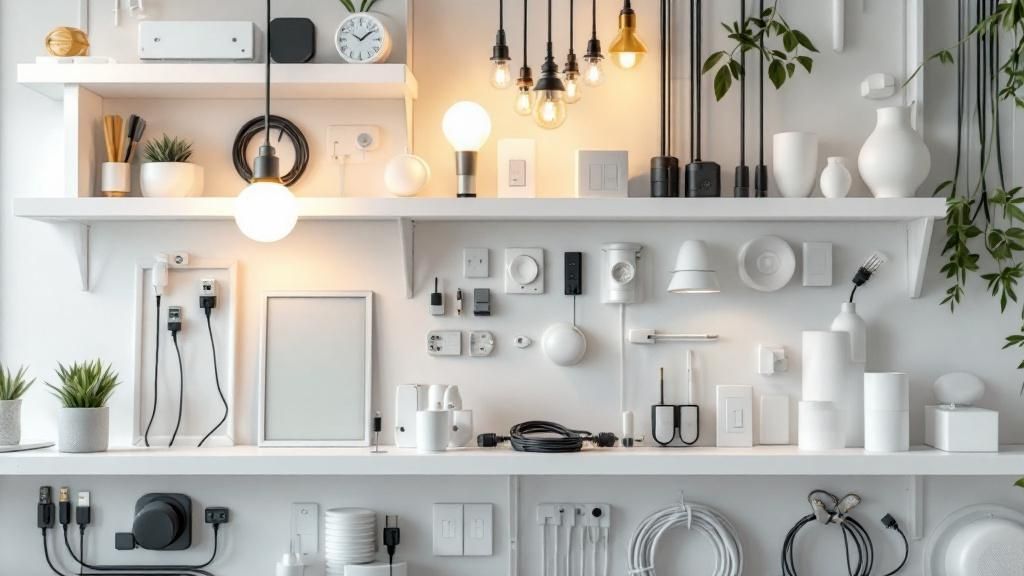
A supplier’s catalogue tells you a lot about their dedication to quality. The best electrical suppliers in Dubai aren’t just offering a massive list of parts; they provide a carefully chosen selection of certified, high-performance components from globally respected brands. It’s the difference between a random warehouse and a specialised armoury for your project.
Let's take a real-world example: a new commercial tower going up in Business Bay. A top-tier supplier will have a deep inventory of DEWA-compliant switchgear from brands like ABB, Siemens, or Schneider Electric. This pretty much guarantees your installation will fly through inspections. On the flip side, a vendor pushing cheaper, uncertified alternatives is introducing huge risks, from project delays to serious safety hazards.
Counterfeit electrical components are a massive problem, creating very real fire and electrocution risks. Your vetting process has to include solid steps to verify product authenticity directly with any potential supplier.
Verifying Genuine Components
Before you even think about placing a large order, put a clear verification protocol in place. This one small action can save you from a catastrophic failure later on.
Here’s what you should be demanding from any potential partner:
- Manufacturer Authorisation Letters: Always ask for official proof that they are an authorised distributor for the brands they stock. No letter, no deal.
- Traceability Records: Request batch or serial numbers for critical items. This lets you trace the product right back to the factory floor.
- Physical Inspection: If you can, get your hands on the products. Look for flimsy packaging, misspellings on labels, or logos that just don't look right—these are dead giveaways of fakes.
The UAE's switchgear market is a massive part of the supply chain, dominated by heavy-hitters like ABB Ltd and Siemens AG. High-voltage switchgear is particularly important, driven by the demands of the oil and gas industry. Making sure your supplier provides authentic parts from these leading names is non-negotiable for your project's integrity.
Choosing a supplier with a proven track record of authentic products isn't about brand loyalty; it's fundamental risk management. A single counterfeit circuit breaker can take down an entire electrical system.
Ultimately, you need to understand and enforce strict quality control. For a much deeper dive into this, I'd recommend reading our guide on the rigorous building materials quality standards in the UAE.
Gauging a Supplier's Technical Expertise

In Dubai's fast-paced construction scene, the best electrical suppliers in Dubai aren’t just vendors; they’re partners. There’s a world of difference between a supplier who just fills an order and one who brings real technical skill to the table. That difference becomes critical when you're staring down complex schematics and a non-negotiable deadline.
The real measure of a supplier is whether their team can function as an extension of your own.
Let’s say you’re midway through a hotel project in Jumeirah and hit a snag with the lighting control system. A top-tier supplier won't just try to sell you more gear. They'll have an engineer on hand who can actually read your drawings, get what the problem is, and give you solid advice.
Vetting Engineering Capabilities
Before you sign any agreements, you need to dig into their technical know-how. This isn’t about a pop quiz; it’s about understanding how they think and who is on their team.
Get practical with your questions. You should be asking things like:
- Value Engineering: "Can you look at our bill of materials and suggest alternative products that perform better or save us money, while still being fully DEWA compliant?"
- On-Site Support: "Do you provide hands-on support at the site for tricky installations or troubleshooting? Tell me about a time you did this for another client."
- Project Experience: "Can you show me case studies or give me references from projects that were similar in size and complexity to ours?"
Here’s a pro tip: Don't just ask if they have a technical team—ask to speak with them. A ten-minute chat with their lead engineer will tell you more about their real-world capabilities than any slick brochure.
From Order Taker to Problem Solver
You really see a supplier's expertise shine when things go wrong.
Imagine a specific circuit breaker you need is out of stock everywhere, with a massive lead time. A basic, transactional supplier will just tell you it's delayed. End of story. Your project stalls.
A true technical partner, on the other hand, immediately gets to work. They'll find a fully compliant, DEWA-approved alternative that meets or even exceeds the original specs. More importantly, they'll hand you all the technical data sheets and certification documents you need to get the switch approved by your consultants without a fuss.
That’s the kind of proactive problem-solving that keeps your project on track and separates the good suppliers from the ones you can’t live without.
Navigating DEWA Compliance and Certifications
In Dubai’s construction world, compliance isn't just a box to tick—it's the very foundation of a project. Every wire, switch, and circuit breaker has to meet the rigorous standards set by local authorities. The ultimate stamp of approval comes from the Dubai Electricity and Water Authority (DEWA), and any supplier you even consider must have their paperwork in perfect order.
When you're vetting electrical suppliers in Dubai, be direct. Don't just accept their claims at face value; ask to see the actual documents. A genuinely reliable supplier won't hesitate and will have everything ready to go.
This isn’t about a single certificate. You're looking for a complete compliance portfolio that shows they truly understand and respect local regulations.
Key Certifications to Verify
Think of this as building a case for a supplier's credibility. Your checklist should be non-negotiable, ensuring your project stays on schedule and fully compliant.
Always ask for and check these documents:
- DEWA Approval Certificates: This is the big one. Request specific approvals for the exact components you need, whether it's switchgear, cables, or meters.
- ISO Certifications: An ISO 9001 certificate is a great sign. It tells you they have solid quality management systems in place to ensure consistency.
- RoHS Compliance: The Restriction of Hazardous Substances directive is crucial for both safety and environmental responsibility. It guarantees products are free from certain harmful materials.
If a supplier hesitates or makes excuses when you ask for these documents, consider it a massive red flag. A true partner knows how critical this is to your project’s success and legal standing and will have everything organised and on hand.
This level of due diligence applies across the board, a point we cover in more detail in our guide on navigating the regulations for building materials in the UAE.
Good suppliers are also looking ahead, aligning with Dubai's smart city ambitions. They’re already stocking advanced tech like smart meters. This isn't just a niche market; the Middle East distribution meter market was valued at a huge USD 4.96 billion in 2024, spurred by government efforts to curb energy waste. You can read more about the growth of the regional meter market on grandviewresearch.com. Working with a supplier who gets this trend means you're not just building for today—you're building for tomorrow.
Taking a Hard Look at Supply Chain and Logistics
Let's be honest, the best electrical components in the world are useless if they're stuck in a warehouse or on a ship when you need them on-site. Here in Dubai, project timelines are non-negotiable. A single late delivery isn't just an inconvenience; it can cause a domino effect of delays that throws your entire schedule—and budget—into chaos.
This is why digging into a supplier's logistics isn't just a box to tick; it's as critical as verifying their product certifications. You need to look past the sales pitch and understand their real-world capabilities.
How do they navigate the notorious traffic around JAFZA or Dubai Industrial City during peak hours? Do they have their own dedicated delivery fleet, or are they relying on third-party couriers? A supplier with seasoned drivers who know every back road and shortcut is worth their weight in gold. You're not just looking for a supplier; you're looking for a logistical partner.
Local Stock and Realistic Timelines
The very first question I always ask potential electrical suppliers in Dubai is, "What does your local inventory actually look like?" You want to hear that they have a massive, well-organised warehouse, preferably in a strategic hub like the Jebel Ali Free Zone (JAFZA).
A deep local stock is your best defence against the unpredictability of international shipping. It means they can get you out of a jam with an urgent order, keeping your project moving.
When you're talking timelines, get specific. Break it down into two clear categories:
- The Everyday Stuff: For your standard items—think cables, conduits, basic circuit breakers—what’s the delivery turnaround? You should expect them on-site within 24 to 48 hours. Anything longer is a red flag.
- The Custom Gear: What about specialised equipment like custom-built panels or specific high-voltage gear? A trustworthy supplier won't just give you a vague estimate. They'll provide a clear, realistic timeline and proactively keep you updated on its progress.
This quick overview gives you a ballpark idea of unit pricing for key electrical components in Dubai. It's a useful starting point for your budget.
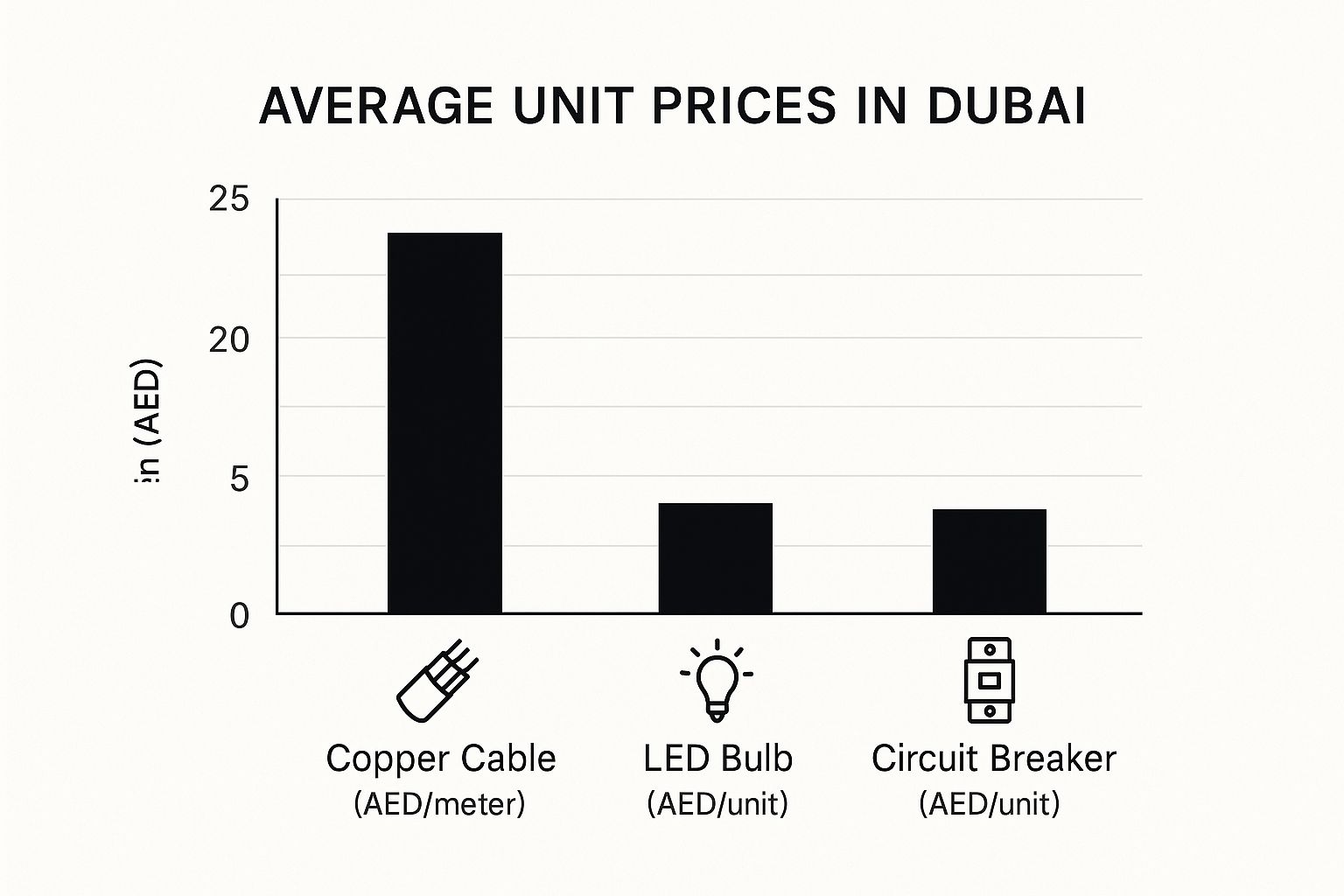
But remember, while price always matters, chasing the lowest unit cost can backfire spectacularly if the supplier can't deliver reliably.
A supplier who truly understands the construction game knows that the cost of downtime on-site far outweighs any small savings on materials. They invest heavily in their own infrastructure—warehousing, smart inventory management, and solid relationships with freight companies—to make sure they hit their delivery promises, every single time.
Comparing Supplier Logistics Models
It's helpful to think about the logistical pros and cons between the big players and the smaller specialists. A major distributor in JAFZA operates differently from a niche supplier focusing on one type of product.
| Logistics Aspect | Large Distributor (e.g., in JAFZA) | Niche Specialist Supplier |
|---|---|---|
| Inventory Breadth | Vast. Stocks a wide range of common items from many brands. | Narrow but deep. Excellent stock of their specific product line. |
| Delivery Speed (Standard) | Very fast, often same-day or next-day due to large fleet and stock. | Can be quick, but may have a less frequent delivery schedule. |
| Flexibility | Less flexible. Processes are standardised for high volume. | More adaptable. Can often accommodate urgent or unusual requests. |
| Geographic Reach | Extensive. Well-established routes across Dubai and the Northern Emirates. | Might be more localised or have specific delivery zones. |
| Specialised Handling | May have less expertise in handling highly specialised or delicate items. | Experts in handling their specific products, ensuring they arrive safely. |
Ultimately, the choice depends on your project's needs. For the bulk of your standard materials, a large distributor's efficiency is hard to beat. But for that critical, specialised component, a niche supplier's expertise might be the safer bet.
Think of a supplier’s logistics network as an insurance policy for your project timeline. Their ability to deliver predictably is an asset that protects your budget and your reputation from the kind of surprises no project manager wants.
Your Questions About Dubai Electrical Suppliers, Answered
When you're vetting potential electrical suppliers in Dubai, a few key questions always come up. As a project manager, you need straight answers, not vague promises. Let's cut through the noise and talk about what really matters before you sign on the dotted line.
We hear these questions all the time from professionals on the ground.
Are There Any Hidden Costs?
The first thing that trips people up is the real cost of imported goods. A supplier's initial quote might look great on paper, but you have to dig deeper to understand the landed cost.
Get specific and ask them directly:
- Does your quote include all import duties?
- Who handles customs clearance, and are those fees baked into the price?
- What happens to the cost if there are shipping delays?
Unexpected charges showing up at the port can blow a hole in your budget. Insist on total transparency from day one.
What’s the Real Deal with Warranties and Support?
Next, you need to think about what happens after the products arrive on site. A "manufacturer's warranty" sounds good, but it's only as solid as the local supplier supporting it.
Don't just nod when they mention a warranty. Ask them how they manage claims. Are you going to be stuck dealing with an overseas manufacturer's customer service, or will they take care of everything for you right here in Dubai? A supplier that offers strong, local after-sales support is worth its weight in gold when a critical component fails.
A supplier’s warranty policy tells you everything you need to know about their confidence in their products and their commitment to you. If you're getting vague answers on support, that's a massive red flag.
Finally, never forget about DEWA. It’s not enough for a supplier to just say their products are "DEWA-compliant." You need to see the proof. Ask for the specific DEWA approval documents for the exact items you're buying. A partner you can trust will have this paperwork ready to go, making sure you sail through inspections without any nasty surprises.
For a partner who provides transparent pricing, comprehensive support, and fully compliant electrical solutions, trust Yasu Trading Co. LLC. Explore our extensive range of certified products and request a quote today at https://yasutrading.com.