7 Facility Management Best Practices for the UAE in 2025
In the dynamic landscape of the UAE's construction and hospitality sectors, excellence is not just an aspiration; it's a requirement. As skyscrapers reshape skylines and luxury hotels set new standards, the role of the facility manager has evolved into a strategic function critical for operational efficiency, safety, and profitability. Standard procedures are no longer sufficient. To thrive, professionals must adopt advanced facility management best practices that leverage technology, data, and proactive strategies.
This guide delves into seven essential practices tailored for the unique demands of the UAE market. From predictive maintenance that pre-empts costly breakdowns in critical HVAC systems to data-driven space optimisation for mixed-use developments, these strategies are designed to deliver tangible results. We will explore actionable insights, real-world examples, and implementation steps to help you elevate your operations.
Our focus is on providing practical solutions for challenges specific to the region, such as managing high-energy consumption and ensuring compliance within a complex regulatory framework. By mastering these core areas, you can ensure your facilities not only meet but exceed the world-class standards expected in the UAE, driving value and guaranteeing long-term asset performance.
1. Master Proactive Operations with Preventive Maintenance Management
Shifting from a reactive "fix-it-when-it-breaks" model to a proactive strategy is the cornerstone of modern facility management best practices. Preventive maintenance (PM) embodies this shift, focusing on scheduled, systematic activities designed to pre-empt equipment failures. This involves regular inspections, cleaning, lubrication, and replacing components before they reach their failure point, which is essential for maintaining operational continuity and extending asset lifespan.
In the demanding climate of the UAE, where HVAC and MEP (Mechanical, Electrical, and Plumbing) systems are under constant strain, a robust PM programme is not just beneficial, it's critical. It directly reduces unexpected downtime, minimises costly emergency repairs, and ensures a consistently safe and comfortable environment for occupants, whether in a high-rise hotel in Dubai or a large-scale construction site in Abu Dhabi.
Why Prioritise Preventive Maintenance?
Adopting a preventive approach moves your operations from a state of constant crisis management to one of controlled, predictable upkeep. The benefits are tangible and directly impact your bottom line and operational efficiency. For instance, global leaders like Toyota have long championed this through their Total Productive Maintenance (TPM) programmes, integrating maintenance into the very fabric of manufacturing to achieve near-zero breakdowns.
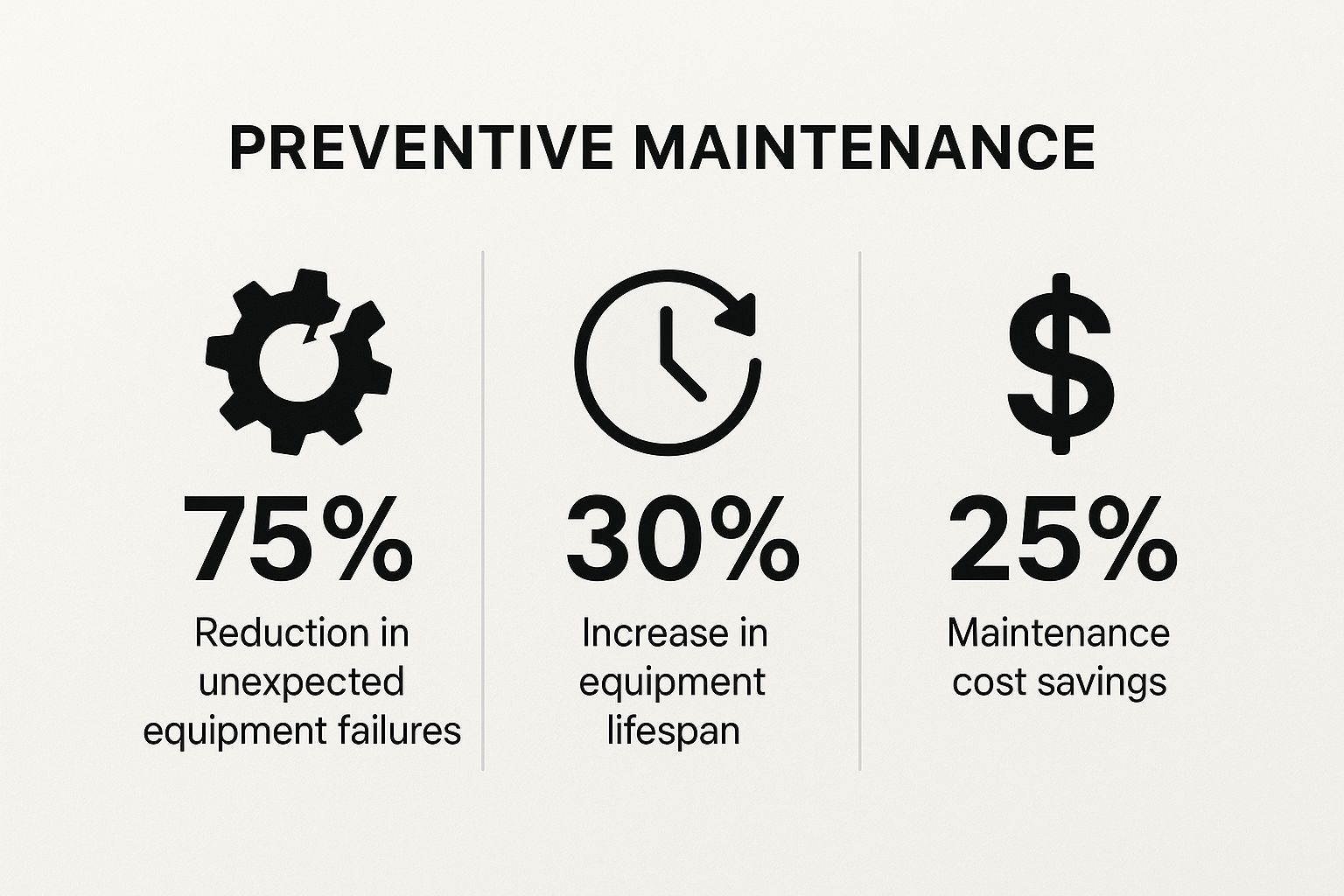
This infographic highlights the powerful impact of a well-executed preventive maintenance strategy.
These figures clearly show that investing in preventive measures yields significant returns by drastically cutting down on failures and extending the useful life of critical assets.
Actionable Implementation Steps
- Start with Critical Assets: Don't try to implement a facility-wide programme overnight. Identify your most critical equipment (e.g., chillers, elevators, fire safety systems) and build your PM plan around them first.
- Leverage Technology: Utilise a Computerised Maintenance Management System (CMMS) or mobile maintenance apps to automate scheduling, track work orders in real-time, and collect performance data.
- Empower Your Team: Provide comprehensive training to your technical staff on proper inspection techniques and the importance of data logging. An empowered team is your first line of defence against equipment failure.
- Review and Refine: Maintenance is not a "set-it-and-forget-it" task. Regularly analyse performance data to adjust maintenance intervals and optimise your strategy. For structured planning, you can explore resources to create a preventive maintenance schedule template.
2. Leverage Integrated Workplace Management Systems (IWMS)
Moving beyond siloed spreadsheets and disjointed applications is a critical step in modernising facility operations. An Integrated Workplace Management System (IWMS) is a comprehensive software platform that centralises multiple facility and real estate management functions into a single, unified system. This technology consolidates everything from space and maintenance management to lease administration and sustainability tracking, providing a single source of truth for all operational data.
For complex environments like the UAE's sprawling mixed-use developments or technologically advanced hospitality venues, an IWMS is transformative. It breaks down data silos between departments, enabling a holistic view of building performance. This centralised data management and analytics capability empowers facility managers to move from day-to-day firefighting to strategic, data-driven decision-making, which is a cornerstone of effective facility management best practices.
Why Prioritise IWMS Integration?
Adopting an IWMS platform elevates facility management from a purely operational function to a strategic business partner. It provides the visibility needed to optimise resource allocation, reduce operational costs, and enhance the occupant experience. Global corporations have demonstrated the immense value of this approach; for example, JPMorgan Chase utilises IBM TRIRIGA to manage its vast portfolio of over 4,000 locations, driving efficiency and standardisation across its global real estate operations.
This integration provides a powerful competitive advantage. By connecting previously disparate functions like maintenance scheduling and energy consumption, managers can identify cause-and-effect relationships that would otherwise go unnoticed, leading to more intelligent and cost-effective operational strategies.
Actionable Implementation Steps
- Conduct a Thorough Needs Assessment: Before selecting a vendor like Archibus or Planon, meticulously map your current processes and identify key pain points. A clear understanding of your specific needs ensures you choose a system that solves your unique challenges.
- Secure Executive Sponsorship: An IWMS implementation is a significant business transformation project, not just an IT upgrade. Secure strong buy-in from senior leadership to champion the change and ensure adequate resources are allocated.
- Start with a Pilot Programme: Rather than a full-scale, "big bang" rollout, begin with a pilot implementation in a single building or department. This allows you to test the system, gather user feedback, and refine your processes in a controlled environment.
- Invest in Comprehensive Training: The most powerful software is useless if your team doesn't know how to use it. Develop a robust training programme and provide ongoing support to ensure high user adoption and maximise your return on investment.
3. Space Optimization and Utilization Analytics
Moving beyond simple space allocation, this advanced facility management best practice involves a data-driven approach to maximise the efficiency of every square metre. It uses technologies like IoT sensors, workplace analytics platforms, and occupancy studies to gather objective data on how physical spaces are actually being used, rather than relying on assumptions. This allows facility managers to make informed, strategic decisions about layout, design, and allocation, ensuring that real estate assets deliver maximum value.

In the dynamic UAE market, where commercial real estate is a significant investment and hybrid work models are gaining traction, understanding space utilisation is crucial. It helps organisations right-size their portfolios, reduce operational costs on underused areas, and design workspaces that genuinely support employee productivity and well-being, from corporate headquarters in DIFC to collaborative hubs in Masdar City.
Why Prioritise Space Analytics?
Adopting space analytics transforms facility management from a cost centre into a strategic business partner. By understanding real-world usage patterns, you can eliminate wasted space, reduce energy consumption, and create more effective environments. For example, global technology leader Cisco famously used occupancy analytics to re-evaluate its real estate needs, ultimately reducing its global office footprint by 30% while improving employee experience.
Similarly, workplace furniture giant Steelcase integrates sensors and analytics into its own headquarters to continuously optimise its 440,000 sq ft facility. This data-first approach, popularised by platforms like Density and VergeSense, proves that optimising physical space is as critical as optimising any other business process.
Actionable Implementation Steps
- Start with a Pilot Area: Before a full-scale deployment, select a specific floor or department for a pilot study. This allows you to test technologies, refine your data collection methods, and demonstrate value with a smaller, controlled investment.
- Combine Data Sources: Supplement quantitative data from sensors with qualitative feedback from employees. Use surveys, focus groups, and interviews to understand the 'why' behind the usage patterns, ensuring changes meet actual user needs.
- Communicate with Transparency: Be open with occupants about what data is being collected and why. Emphasise that the goal is to improve the workplace environment and not to monitor individuals, addressing privacy concerns proactively.
- Integrate with Workplace Strategy: Ensure your space optimisation efforts are aligned with broader business objectives, such as HR policies on flexible working or IT initiatives for collaboration tools. This creates a cohesive and effective workplace ecosystem.
4. Energy Management and Sustainability Programs
Integrating energy management and sustainability into core operations is a defining feature of advanced facility management best practices. This approach goes beyond simply reducing utility bills; it involves a holistic strategy to minimise environmental impact, enhance corporate reputation, and achieve long-term operational resilience. It encompasses everything from optimising HVAC performance and lighting systems to implementing comprehensive waste reduction programmes and exploring renewable energy sources.
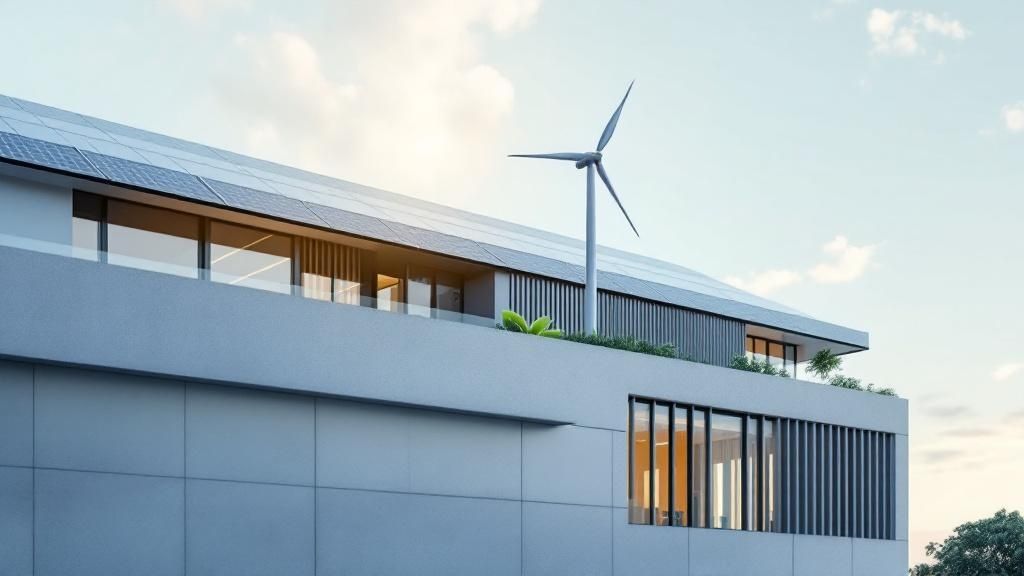
In the UAE, a region focused on ambitious sustainability targets under initiatives like the UAE Net Zero by 2050 strategic initiative, this practice is not just good for business, it is a strategic imperative. For hotels, construction sites, and residential communities, effective energy management directly translates to lower operational costs, compliance with evolving regulations, and a powerful appeal to environmentally conscious clients and residents.
Why Prioritise Energy Management and Sustainability?
Adopting a robust sustainability programme positions your facility as a leader in responsible management, yielding benefits that extend far beyond cost savings. It fosters innovation, improves occupant well-being, and future-proofs assets against rising energy costs and stricter environmental laws. Global giants exemplify this value: Apple powers its corporate facilities with 100% renewable energy, while Interface Inc. achieved its "Mission Zero" goal, eliminating its negative impact on the planet.
These efforts demonstrate a commitment to sustainability that builds significant brand value and operational excellence. Leading frameworks like the LEED certification programme and tools like ENERGY STAR Portfolio Manager provide structured pathways for facilities to measure, manage, and improve their environmental performance, making sustainability an achievable and verifiable goal.
Actionable Implementation Steps
- Conduct an Energy Audit: Start by performing a comprehensive energy audit to identify areas of high consumption and "quick win" opportunities for reduction. This forms the baseline for all future efforts.
- Set Measurable Goals: Establish clear, quantifiable sustainability targets (e.g., reduce energy consumption by 15% in two years, divert 50% of waste from landfill). This ensures your efforts are focused and trackable.
- Leverage Technology and Automation: Implement building automation systems (BAS) and smart technologies from providers like Schneider Electric or Johnson Controls to optimise HVAC, lighting, and power usage in real-time.
- Engage and Empower Stakeholders: Create "green teams" and launch awareness campaigns to involve employees and occupants. Their participation is crucial for the success of recycling programmes and energy-saving behaviours. Further insights can be found by exploring the principles of eco-friendly construction.
5. Risk Management and Emergency Preparedness
Effective facility management extends beyond daily operations to encompass preparedness for the unexpected. A comprehensive approach to risk management involves systematically identifying, assessing, and mitigating potential threats to your facility, occupants, and assets. This proactive stance ensures business continuity and a swift, organised response to any crisis, from a power outage to a major security incident.
In the dynamic environment of the UAE, with its large-scale infrastructure and high-profile events, robust emergency preparedness is a non-negotiable component of facility management best practices. For hospitality venues, construction sites, and residential communities, having clear protocols for emergencies is crucial for safeguarding lives and protecting significant investments. It is the difference between controlled recovery and chaotic disruption.
Why Prioritise Risk Management and Emergency Preparedness?
Adopting a structured risk management framework transforms your facility's resilience, moving from reactive damage control to proactive threat mitigation. The benefits are profound, ensuring operational stability and occupant safety. For instance, major hospital facilities demonstrated incredible resilience during the COVID-19 pandemic, activating pre-planned emergency protocols to manage patient surges and maintain critical care services, a testament to the power of preparedness.
Similarly, financial institutions rely on ISO 22301 business continuity standards to ensure their operations can withstand natural disasters or cyber-attacks, protecting both customer data and market stability. This highlights how a formalised plan is essential for any critical facility.
Actionable Implementation Steps
- Conduct Thorough Risk Assessments: Regularly identify potential hazards specific to your facility, from technical failures like burst pipes to external threats like security breaches. Analyse both the likelihood and potential impact of each risk.
- Develop Clear Emergency Response Plans (ERPs): Create detailed, step-by-step procedures for various scenarios (e.g., fire, medical emergencies, power failure). Ensure these plans define roles, responsibilities, and clear communication channels.
- Practise Through Regular Drills: Plans are ineffective if they are not practised. Conduct regular evacuation drills, lockdown simulations, and tabletop exercises to ensure your team and occupants know precisely how to respond in a real emergency.
- Coordinate with Authorities: Build relationships with local emergency services, such as Civil Defence and police. Share your emergency plans and understand their procedures to ensure a seamless, coordinated response during an incident. You can find further insights in our guide to construction risk management.
6. Embrace Data-Driven Decision Making and Analytics
Transitioning from gut-feel decisions to evidence-based strategies is a hallmark of high-performing facility management. This best practice involves the systematic collection, analysis, and visualisation of data to inform every aspect of operations. By implementing sensors, IoT devices, and powerful analytics platforms, managers can gather real-time data on everything from energy consumption and occupancy patterns to asset performance and maintenance needs.
In a dynamic market like the UAE, where large-scale venues, sprawling malls, and luxury hotels demand peak efficiency, data provides the clarity needed for strategic optimisation. It enables managers to move beyond simple reporting to predictive and prescriptive analytics, anticipating future needs and identifying opportunities for significant cost savings and service improvements. This data-first approach is fundamental to modern facility management best practices.
Why Prioritise Data and Analytics?
Adopting a data-driven culture transforms facility management from a cost centre into a strategic business partner. The ability to quantify performance, justify budgets with hard numbers, and pinpoint inefficiencies provides a significant competitive advantage. For example, global real estate services firm CBRE utilises its analytics platform to manage over five billion square feet of property, leveraging data to drive operational excellence and enhance asset value for clients worldwide.
Similarly, MIT’s campus uses a network of over 40,000 sensors to optimise building performance, demonstrating how granular data can lead to macro-level improvements in energy use, space utilisation, and occupant comfort. This proves that harnessing data is key to unlocking the full potential of any built environment.
Actionable Implementation Steps
- Define Clear Objectives: Before collecting any data, establish what you want to achieve. Set specific Key Performance Indicators (KPIs) for areas like energy reduction, maintenance response times, or space utilisation to guide your data strategy.
- Invest in Data Quality and Integration: Ensure the data you collect is accurate, consistent, and clean. Use systems that can integrate information from various sources (e.g., BMS, CMMS, IoT sensors) to create a single, unified view of your facility's operations.
- Empower Your Team with Training: Your staff must be comfortable using analytics tools. Provide training on data interpretation and how to use platforms like Microsoft Power BI or Tableau to turn raw numbers into actionable insights.
- Focus on Actionable Insights: The goal is not just to accumulate data but to extract meaningful information that drives decisions. Create dashboards that visualise key trends and highlight anomalies, allowing your team to act quickly and effectively.
7. Vendor and Service Provider Management
Effective facility management rarely happens in isolation. It relies on a carefully orchestrated network of external partners, from specialised MEP contractors to cleaning services and security firms. A strategic approach to managing these vendors is a crucial facility management best practice, moving beyond simple procurement to build strong, performance-driven relationships that deliver value and mitigate risk. This involves rigorous selection, clear contract management, and continuous performance monitoring.
In the fast-paced UAE market, where large-scale projects and high-end hospitality venues depend on a multitude of third-party services, a disorganised approach to vendor management can lead to service gaps, budget overruns, and compliance issues. By formalising this process, organisations ensure every external service provider acts as a seamless extension of their in-house team, aligning with operational goals and quality standards.
Why Prioritise Vendor Management?
Treating vendors as strategic partners rather than just suppliers transforms service delivery from a transactional exchange to a collaborative effort focused on long-term value. This strategic alignment is critical for maintaining high standards and operational resilience. Global facility management leaders like JLL and CBRE have built their reputations on integrated service models, demonstrating how expert vendor management can drive efficiency and innovation across vast, complex portfolios.
This proactive management ensures you receive consistent, high-quality service, control costs effectively, and maintain operational continuity, especially for critical functions.
Actionable Implementation Steps
- Develop Clear Service Level Agreements (SLAs): Define your expectations from the outset. Your SLAs should include specific Key Performance Indicators (KPIs), such as response times for emergency call-outs, standards for cleanliness, or uptime guarantees for maintained equipment.
- Conduct Thorough Vendor Due Diligence: Before signing any contract, verify credentials, check references, and ensure the vendor has the necessary licenses and insurance required to operate in the UAE. This protects your organisation from liability and performance risks.
- Maintain Regular Communication: Schedule regular performance review meetings to discuss KPI achievements, address challenges, and plan upcoming activities. Open dialogue fosters a partnership mentality and allows for proactive problem-solving.
- Implement Backup Plans: For mission-critical services like power generation, water supply, or life safety systems, always have a contingency plan. This may involve identifying and pre-vetting secondary or even tertiary service providers to ensure swift action during an emergency.
7 Key Facility Management Practices Compared
| Item | Implementation Complexity 🔄 | Resource Requirements ⚡ | Expected Outcomes 📊 | Ideal Use Cases 💡 | Key Advantages ⭐ |
|---|---|---|---|---|---|
| Preventive Maintenance Management | Moderate to high; requires systems, training, and ongoing effort | Significant upfront investment; consistent allocation | Reduces equipment failures by 70-80%; extends lifespan by 20-40%; lowers maintenance costs | Facilities needing to reduce downtime and extend asset life | High reliability; cost savings; safety and compliance |
| Integrated Workplace Management Systems (IWMS) | High; complex implementation and change management | High investment; extensive customization and training | Streamlined facility operations; improved strategic planning and compliance | Large organizations needing unified facility management | Centralized data; eliminates silos; comprehensive control |
| Space Optimization and Utilization Analytics | Moderate; needs sensor deployment and data expertise | Investment in IoT sensors and analytics personnel | Reduces real estate costs by 15-30%; boosts employee productivity | Offices adopting flexible, hybrid, or growing workspaces | Cost savings; data-driven space planning; supports hybrid work |
| Energy Management and Sustainability Programs | High; involves technology upgrades and broad implementation | High upfront technology costs; specialized expertise | Utility cost reductions 20-40%; improved ESG scores; regulatory compliance | Organizations targeting sustainability and energy efficiency | Cost reductions; sustainability; compliance and incentives |
| Risk Management and Emergency Preparedness | Moderate to high; requires coordination and regular updates | Ongoing investment in training, systems, and drills | Minimizes downtime; protects safety; reduces liability and insurance costs | Facilities exposed to operational, safety, or disaster risks | Safety assurance; regulatory compliance; business continuity |
| Data-Driven Decision Making and Analytics | High; needs infrastructure and skilled analysts | Significant investment in technology and talent | Proactive management; operational efficiency; actionable insights | Organizations aiming for evidence-based decision-making | Improved efficiency; transparency; trend identification |
| Vendor and Service Provider Management | Moderate; involves contract management and performance oversight | Resources for vendor selection, monitoring, and negotiations | Cost savings; improved service quality; scalable delivery | Businesses working with multiple external suppliers | Access to expertise; cost control; performance management |
Building the Future: Your Next Steps in Facility Management Excellence
Navigating the dynamic landscape of the UAE's construction and hospitality sectors requires more than just maintaining buildings; it demands a strategic, forward-thinking approach to facility management. The seven core pillars we have explored, from data-driven decision-making to sophisticated vendor management, are not isolated tactics. Instead, they form a powerful, integrated framework for operational excellence. Implementing these facility management best practices is the definitive step towards transforming your properties from simple physical assets into high-performing, resilient, and sustainable environments.
Mastering this framework means moving beyond reactive problem-solving. It involves a fundamental shift towards proactive control and strategic optimisation. Whether it is leveraging an IWMS to unify disparate operations or using space utilisation analytics to inform future design, each practice empowers you to unlock hidden value, reduce operational expenditure, and enhance the end-user experience. This commitment is what distinguishes a standard facility from a premier one in a market that constantly raises its benchmarks for quality and innovation.
Turning Insight into Actionable Strategy
The journey towards elevating your facility management standards does not have to be an overwhelming overhaul. The key is to adopt a measured, strategic implementation plan. Here are your next steps:
- Conduct a Comprehensive Audit: Begin by evaluating your current operations against the best practices outlined in this article. Identify the most significant gaps and the most promising opportunities for improvement. Where are your biggest pain points? Is it in reactive maintenance costs, energy consumption, or vendor performance?
- Prioritise for Impact: You cannot implement everything at once. Rank your initiatives based on potential return on investment, urgency, and alignment with your organisation’s broader goals. For many in the UAE, focusing on energy management and sustainability can yield immediate cost savings and bolster corporate reputation. For others, optimising preventive maintenance schedules might be the most critical first step.
- Embrace Incremental Change: Start with a pilot project. Select one building, a specific floor, or even a single system like HVAC to test new processes or technologies. This allows you to measure results, refine your approach, and build momentum and buy-in for wider-scale deployment. Proving the value on a small scale makes it easier to secure resources for a full rollout.
- Foster a Culture of Continuous Improvement: True mastery of facility management best practices is not a one-time project; it's an ongoing commitment. Regularly review performance data, solicit feedback from occupants and technical teams, and stay informed about emerging technologies and methodologies.
By systematically integrating these principles, you are not just improving efficiency; you are future-proofing your assets. You are building a foundation of operational resilience that can adapt to market shifts, technological advancements, and evolving regulatory demands, ensuring your properties remain valuable, safe, and competitive for years to come.
Ready to elevate your facilities with superior components and equipment? For access to premium building hardware, advanced safety solutions, and smart fixtures essential for implementing modern facility management best practices, partner with Yasu Trading Co. LLC. Explore our extensive catalogue and discover how our high-quality products can support your journey towards operational excellence at Yasu Trading Co. LLC.