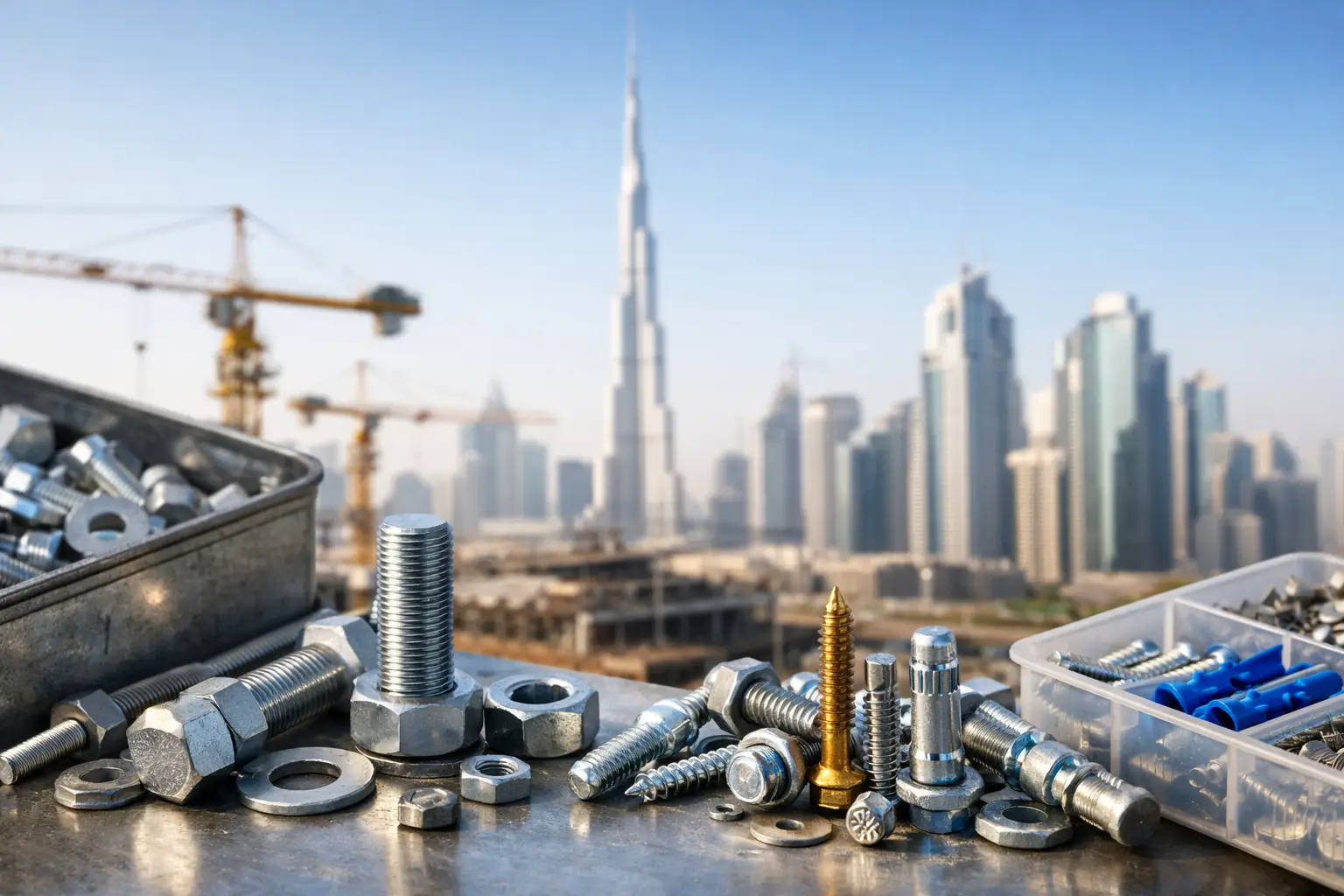
Fasteners Supplier Dubai for Reliable Site Supply
A missing box of anchor bolts can stop a concrete crew. The wrong screw coating can create a corrosion issue that appears months after handover. Choosing a fasteners supplier Dubai contractors can depend on is therefore not a small purchasing decision. It directly affects installation quality, inspection readiness, labor productivity, and the ability to keep every trade working to program.
For contractors, MEP subcontractors, fit-out teams, and facilities managers, the right supplier is not simply the one with the lowest unit rate. It is the supplier that can confirm the specification, hold dependable stock, issue an accurate quotation, and deliver the correct quantity to site when it is required.
Why Fastener Procurement Creates Jobsite Risk
Fasteners are often purchased in high volumes and low individual values, which can make them easy to underestimate during procurement. Yet they connect structural supports, cable containment, pipe brackets, HVAC assemblies, doors, fixtures, and equipment. A mismatch in diameter, thread type, grade, material, or coating can lead to rework, failed pull-out performance, corrosion, or a delayed inspection.
The risk increases when a project relies on multiple vendors for related requirements. One supplier may stock self-drilling screws but not the matching washers. Another may offer anchors without verified load data or suitable accessories. The procurement team then spends time coordinating partial deliveries while supervisors wait for materials that should have arrived together.
A capable fasteners supplier in Dubai reduces that exposure by treating fasteners as a specification-led category, not a commodity order. This means asking where the item will be installed, what substrate it will fix into, whether it is exposed to moisture or chemicals, and whether a consultant-approved brand or certification is required.
Start With the Application, Not the Product Name
Terms such as “anchor,” “bolt,” or “screw” are too broad for a reliable purchase order. A site team should define the application before selecting the item. Fastening into concrete is different from fastening into hollow block, steel purlins, drywall framing, or aluminum sections. Each condition changes the suitable fixing method.
For example, a wedge anchor may be appropriate for a qualified concrete application, while a chemical anchor may be needed where edge distance, embedment depth, or load conditions demand a different solution. A self-drilling screw can save time on light-gauge steel, but its drilling capacity, head style, washer type, and corrosion protection must match the assembly.
The same discipline applies to common site consumables. Drywall screws, chipboard screws, machine screws, nuts, washers, threaded rods, U-bolts, rivets, and cable ties all have performance variables that matter. Procurement should provide the drawing reference, material grade where specified, quantity, finish, and intended use. Clear information prevents substitutions that look similar on a shelf but behave differently in service.
Material and Coating Must Suit the Environment
Dubai projects face heat, humidity, dust, and, in some locations, salt-laden air. Indoor, dry installations may accept zinc-plated products where the approved specification allows. External, wet-area, plant room, coastal, or chemically exposed applications can require higher corrosion resistance, including stainless steel or specified protective coatings.
There is a cost trade-off. Higher-grade materials are more expensive, but replacing corroded supports, brackets, or fixings after completion costs far more than selecting correctly at the procurement stage. The right choice depends on the consultant specification, location of installation, expected service environment, and required design life.
Verify Compatibility Across the Assembly
A fastening system should be considered as a complete assembly. The bolt, nut, washer, anchor body, threaded rod, bracket, channel, and substrate must work together. Mixing materials without checking compatibility can create avoidable issues, including corrosion or incorrect fit.
For MEP work, this is particularly relevant when supporting pipes, conduits, cable trays, and HVAC services. Threaded rod sizes must match channel nuts and clamps. Pipe supports need the appropriate inserts, saddles, or rubber lining where vibration control or pipe protection is required. Ordering connected items from one inventory-backed source simplifies this check and reduces the chance of a site receiving components that cannot be assembled together.
What to Expect From a Fasteners Supplier Dubai Contractors Use
A supplier should be assessed on operational performance as much as product range. Fasteners are frequently needed at short notice because quantities change after site measurement, design coordination, or inspection comments. A supplier that only takes orders is not enough. Contractors need a partner that can respond to the realities of active construction sites.
Look for four practical capabilities:
- Inventory depth: Core fasteners, anchors, threaded rods, nuts, bolts, washers, screws, rivets, and support accessories should be available in common sizes without repeated backorder delays.
- Specification guidance: Sales teams should be able to clarify product grade, finish, dimensions, fixing method, and appropriate alternatives when a requested item is unavailable.
- Accurate fulfillment: Carton quantities, piece counts, sizes, and related accessories must be checked before dispatch. A fast delivery is not helpful if it contains the wrong thread pitch or insufficient washers.
- Site delivery capability: Same-day or next-day dispatch can protect installation sequences, especially when urgent materials are sent directly to a project rather than collected by a site team.
Price remains important, especially on bulk packages, but it should be compared against the full procurement cost. A lower unit price can lose its value if it creates multiple deliveries, site collection trips, excess wastage, or noncompliant substitutions. Wholesale pricing with consistent availability is usually more valuable than a one-time low quote that cannot be repeated for the next phase.
Consolidate Fasteners With Related Construction Materials
Fasteners rarely arrive on site alone. An MEP contractor may need threaded rods and anchors alongside plumbing pipes and fittings, electrical components, cable management items, sealants, hand tools, and safety equipment. A fit-out team may require screws, wall plugs, adhesives, paint accessories, sanitary ware fittings, and power tool consumables within the same delivery window.
Consolidating these requirements with a single B2B supplier reduces vendor coordination and gives procurement teams a clearer view of deliveries, invoices, and material status. It can also help prevent small but costly omissions. If a cable tray support order includes channel, threaded rod, spring nuts, washers, anchors, and cutting accessories, the installation team is more likely to start work without waiting for a secondary purchase.
Yasu Trading Co. LLC supports this type of consolidated procurement with jobsite-ready construction hardware and building materials, backed by project-based quoting and rapid dispatch. For buyers managing multiple packages, this approach reduces the number of supplier follow-ups without reducing control over approved specifications.
Build a Better Fastener Purchase Order
A well-prepared purchase order makes fulfillment faster and safer. Instead of requesting “screws” or “anchors,” include the product type, diameter, length, thread or head requirement, material or finish, quantity, and intended application. If the item follows an approved submittal, attach the relevant reference or state the required brand and model.
For anchors and safety-sensitive fixings, include the substrate and load-related requirement where available. This helps the supplier flag obvious concerns before dispatch. It does not replace engineering approval or manufacturer installation instructions, but it gives procurement a stronger first check.
Project teams should also plan replenishment points for high-consumption items. Screws, washers, wall plugs, cutting discs, sealants, and cable ties are easy to run short of during busy work fronts. Reviewing usage by floor, zone, or installation package allows the site to order before stock reaches a critical level, rather than after labor has already been interrupted.
Fast Delivery Matters Only When It Is Correct
Rapid delivery is valuable in Dubai, Sharjah, Abu Dhabi, Fujairah, and Ras Al Khaimah, where project schedules can leave little room for material gaps. But speed should never mean accepting unverified products. The target is accurate, municipality-compliant materials delivered on time, with clear documentation and a supplier available to address a specification question.
Before placing the next bulk order, ask a practical question: can this supplier provide the same approved fastener, in the required quantity, for the next delivery as well? If the answer is uncertain, the project is carrying unnecessary procurement risk. Choose a supply partner that protects the installation sequence, then let the site team focus on building rather than chasing boxes of hardware.