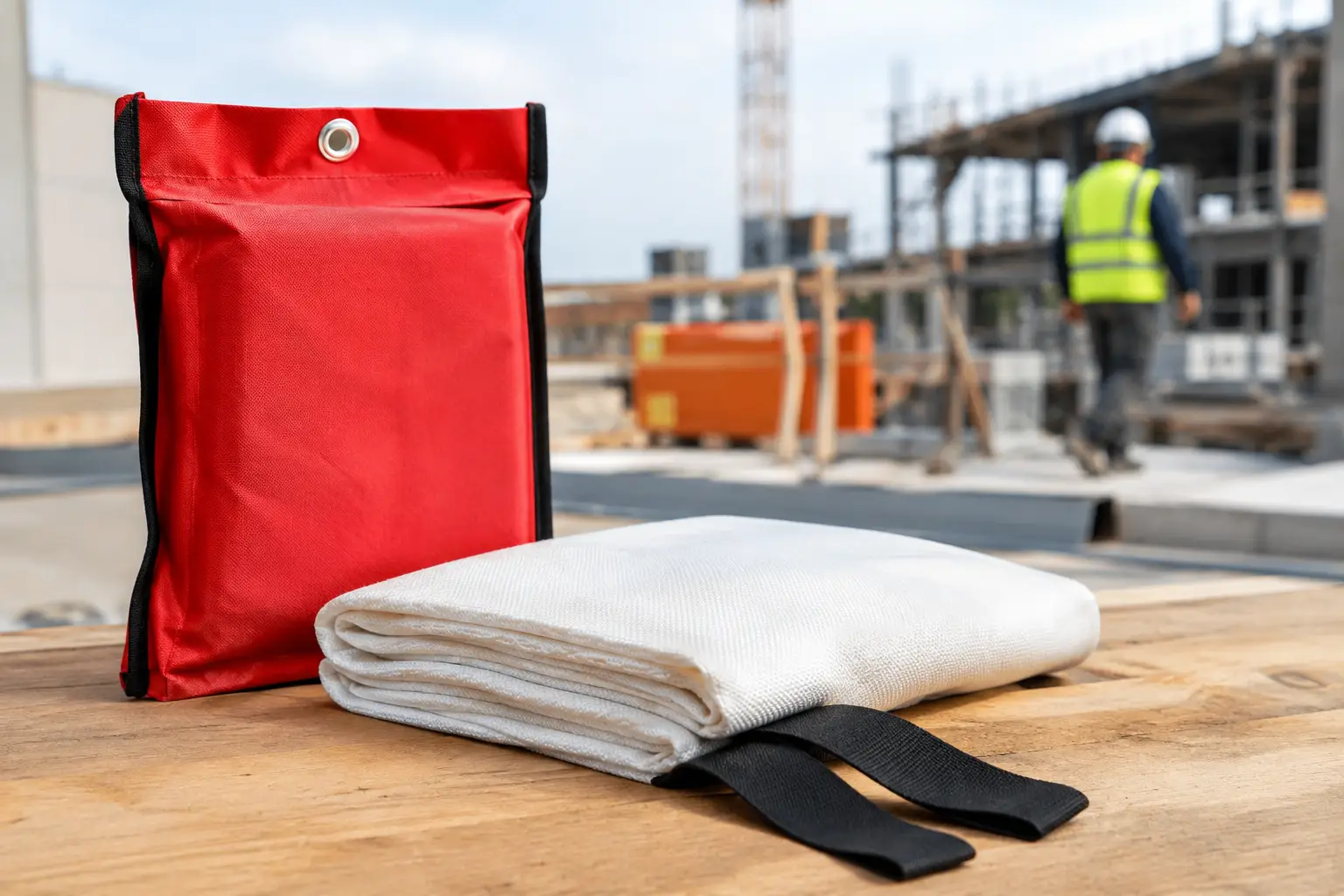
Fire Blankets for Construction Sites: Buying Guide
A fire incident can stop a work area long before it becomes a major loss. A small pan fire in a site kitchen, an ignition near temporary works, or burning clothing after a minor flare-up requires an immediate, controlled response. Fire blankets give crews a simple way to smother certain small fires without discharging powder, foam, or water across finished work, equipment, and occupied areas.
For contractors and facilities teams, the purchase decision is not simply about keeping a red pouch on the wall. Fire blankets must suit the hazard, be available at the point of need, and sit within an approved site fire plan. The wrong product, poor placement, or an untrained response can create a greater risk rather than solve one.
Where Fire Blankets Fit on a Construction Site
Fire blankets are designed to cut off a fire's oxygen supply. They are most useful for small, contained incidents where the user has a clear exit route and can act without placing themselves in danger. Typical applications include site kitchens, staff accommodation, welfare units, canteens, and maintenance spaces where cooking equipment is present.
They can also support emergency preparedness near controlled hot-work areas, but they are not a substitute for the correct extinguisher, a fire watch, or hot-work controls. A blanket intended for kitchen use should not automatically be treated as a welding blanket or a shield for high-temperature fabrication work. These products have different construction, temperature performance, and intended uses.
For most active projects, the right approach is layered protection: suitable extinguishers, fire blankets where their use is appropriate, alarm and evacuation arrangements, trained personnel, and clear access routes. The blanket is one tool in that system, not a standalone compliance solution.
Selecting Fire Blankets by Application
Start with the risk assessment for each area. Site welfare facilities with stovetops, fryers, or microwaves have different requirements from a mechanical room, a workshop, or a façade installation zone. Procurement teams should request product documentation that confirms the blanket's intended application, dimensions, materials, and applicable certification or test standard required by the project specification.
Kitchen and Welfare Areas
Kitchen fire blankets are commonly installed close to cooking areas because they can quickly smother a small cooking fire without spreading burning oil with water. They should be housed in a clearly marked, wall-mounted container that is visible and reachable without crossing the hazard.
Size matters. A blanket must be large enough to cover the likely source of fire while allowing the user to keep their hands protected behind the fabric. Smaller units may suit compact pantry areas, while larger welfare kitchens may require a more substantial blanket or multiple units based on layout and risk assessment.
Do not place the blanket directly above a cooker or behind the appliance. The user should be able to retrieve it from a safe position, approach only if conditions permit, and leave immediately after the fire is covered.
Hot Work and Maintenance Areas
Where grinding, welding, soldering, or cutting is carried out, specify purpose-made welding blankets, curtains, or thermal protection products rather than assuming a standard fire blanket will handle sparks and molten metal. The relevant product must match the work temperature, spark exposure, and protection needed for nearby surfaces.
This distinction prevents a common procurement error: buying one product under the broad description of “fire blanket” and using it for every fire-related activity on site. For hot-work permits, the project team should follow the method statement and select controls approved for that operation.
Clothing Fire Response
A fire blanket may be used to help smother burning clothing only when it is safe to do so and personnel have been trained in the site emergency procedure. Never cover a person's face or restrict their ability to breathe. The priority is to raise the alarm, call emergency services, use the safest practical response, and provide medical attention.
Site induction should reinforce that no worker is expected to fight a fire. If a fire is growing, producing heavy smoke, blocking an exit, or involving unknown materials, evacuation is the correct action.
Placement Is a Procurement and Site-Planning Decision
A high-quality blanket stored in the wrong place is unlikely to help during an emergency. Before ordering, review welfare-unit drawings, kitchen layouts, access paths, and the location of other fire and safety equipment. The aim is to place equipment where it can be reached quickly without forcing a person toward flames or smoke.
Install blankets at a consistent, visible height and use clear identification signage. Keep the area in front of the cabinet free from stacked materials, temporary partitions, and equipment. On fast-moving projects, fire points can disappear behind deliveries or be moved during fit-out work. Include them in routine housekeeping and safety inspections.
For multi-floor projects, each welfare area should be assessed independently. A blanket on the ground floor does not protect a pantry on level 12. The same principle applies to temporary accommodation, security cabins, and remote work zones.
What to Check Before Issuing an Order
Buying based on unit price alone can introduce avoidable compliance and operational risk. Ask suppliers to confirm the product's intended use and provide the documents needed by the consultant, main contractor, or safety team. Check that the packaging includes clear deployment instructions and that the casing supports practical wall mounting.
For project procurement, verify these points before approval:
- The blanket is suitable for the identified fire risk and required project specification.
- The size provides adequate coverage for the intended location and likely use.
- The product is supplied in a protective, clearly marked container with mounting provisions.
- Instructions are legible, durable, and understandable for the site workforce.
- Certification, manufacturer information, and batch or traceability details are available when required.
- Spare or replacement units can be supplied consistently across multiple project locations.
A low-cost blanket without reliable documentation may delay handover or fail a consultant review. For large sites, standardizing an approved product across welfare units also makes inspections and replacement ordering faster.
Inspection, Replacement, and Worker Training
Fire blankets do not need complex servicing, but they should not be ignored after installation. The responsible safety team should inspect them during scheduled fire-point checks. Confirm that the pouch or cabinet is intact, the blanket is present, access is clear, and the instructions remain readable.
Replace any blanket that has been deployed, contaminated, torn, wet, or exposed to damage. Do not fold a used blanket and return it to service. Its condition and performance can no longer be assumed, and a replacement is a minor cost compared with the risk of failure during an emergency.
Training should be brief, practical, and tied to the actual site layout. Workers need to understand when a blanket may be appropriate, how to pull it from its container, how to protect their hands while approaching a small contained fire, and when to abandon the attempt. Most importantly, they must know the alarm process and evacuation route.
Short toolbox talks are effective when new welfare units open, kitchen equipment changes, or subcontractor teams rotate onto site. Training should never encourage workers to take unnecessary risks. A fire blanket is for an incipient fire only, with a safe escape route always maintained.
Avoid These Common Site Errors
The first error is treating every blanket as the same product. Kitchen fire blankets, welding blankets, and heat-resistant covers may look similar in a catalog, but their intended uses differ. Match the product to the task and obtain technical confirmation where the specification is unclear.
The second is placing equipment for visual compliance rather than safe access. A blanket mounted beside the cooking hazard but inaccessible during a fire does not provide meaningful protection. Site teams should walk the route a user would take, not just review a drawing.
The third is assuming a blanket replaces extinguishers. Construction projects need a fire strategy based on the materials, work activities, occupancy, and authority requirements. Fire blankets should complement that strategy, especially in kitchens and welfare areas where a clean, quick method of smothering a small fire has real value.
Keep Safety Supplies Ready for the Next Shift
Fire safety equipment should be available when the site needs it, not after a purchase request works through several vendors. Consolidating fire blankets, extinguishers, safety signage, PPE, tools, and general site materials under a dependable supply plan reduces coordination time and helps keep work areas inspection-ready.
Yasu Trading Co. LLC supports contractors with jobsite-ready fire and safety equipment, wholesale project quoting, and dispatch planning for active UAE sites. Specify the hazard, location, quantity, and project requirements at the quotation stage so the correct blanket is delivered with the documentation and accessories your team needs.
A fire blanket is a modest item, but its value depends on disciplined selection and placement. Put the right product within reach, keep it inspected, and make sure every crew knows that getting out safely always comes first.