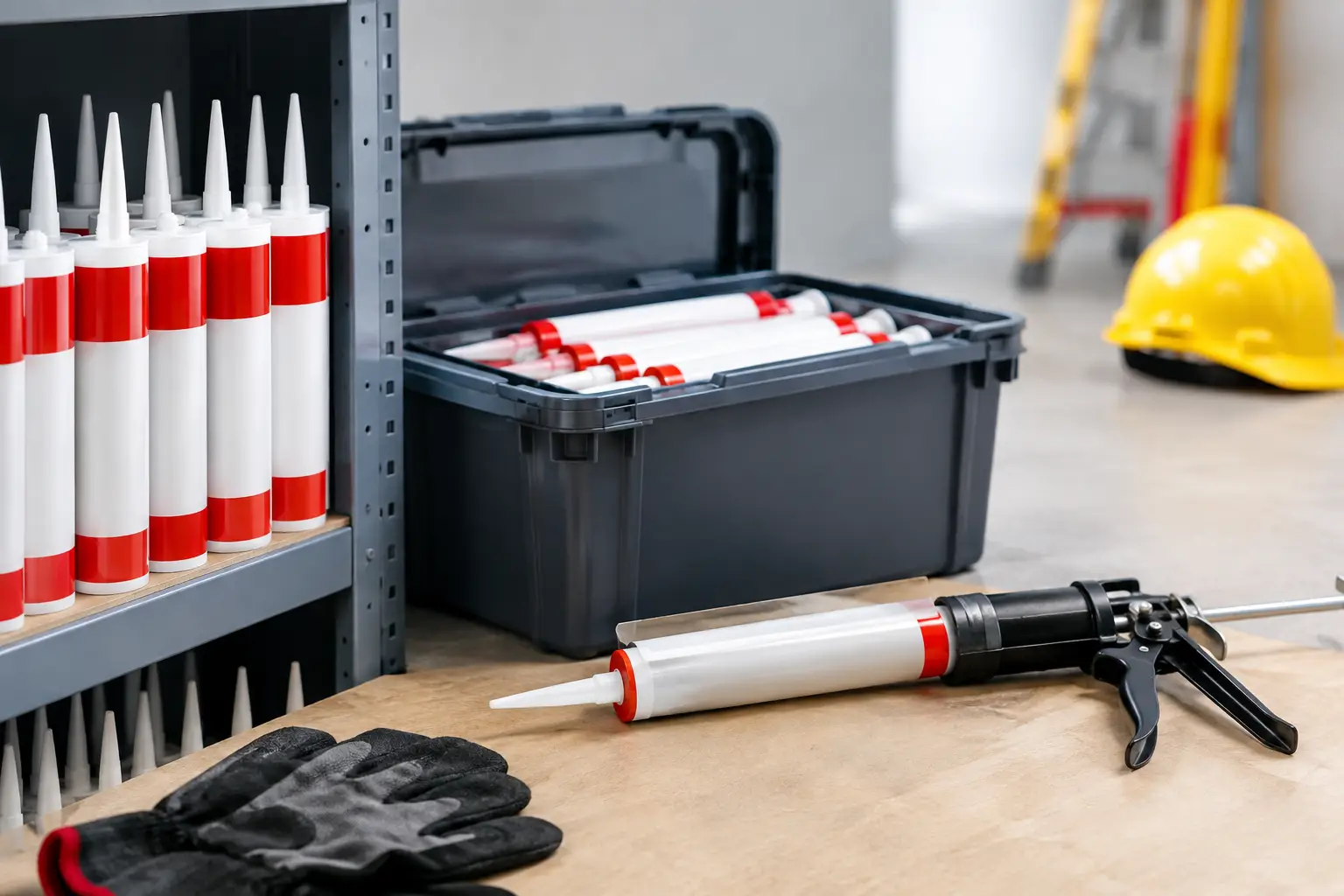
Firestop Sealant Storage for Reliable Site Use
A firestop sealant cartridge can look perfectly usable after sitting in a site container, yet fail when it matters most: at application, during a firestop inspection, or when the project team needs traceable proof of compliance. For contractors, firestop sealant storage is not a housekeeping detail. It is a material-control requirement that affects system performance, waste, inspection readiness, and handover risk.
Unlike general-purpose sealants, firestop products are installed as part of a tested passive fire protection system. Their shelf life, storage temperature, packaging condition, and batch traceability all need to remain under control from delivery through installation. A low-cost storage mistake can create expensive rework across multiple penetrations, joints, or service risers.
Why Firestop Sealant Storage Affects Compliance
Firestop sealants are formulated to perform within specific tested conditions. Depending on the product, they may be intumescent, ablative, silicone-based, acrylic-based, or hybrid materials designed for joints, cable penetrations, pipe penetrations, and mixed-service openings. The product is only one part of the approved system, but it must still arrive at the point of installation in usable condition.
High temperatures, direct sunlight, freezing exposure, excessive humidity, and damaged packaging can affect consistency, cure behavior, adhesion, or extrusion. Not every product reacts the same way, which is why the manufacturer’s technical data sheet and label instructions take priority over a general warehouse rule.
For project procurement teams, this creates a simple operational requirement: do not treat firestop stock like ordinary consumables. Material that cannot be identified, is past its marked shelf life, or has been stored outside the manufacturer’s stated conditions should be quarantined before it reaches the workface.
This matters especially on phased projects. Firestop products may be delivered during an early MEP stage but installed weeks or months later after cables, pipes, ducts, and insulation are complete. Without organized stock rotation, approved material can expire quietly at the back of a container while new deliveries are used first.
Start Control at Goods Receiving
Good storage begins before cartons are placed on a rack. The receiving team should inspect each delivery against the purchase order, approved submittal, and required firestop system specification. This is the moment to catch incorrect products, incomplete documentation, short shelf life, or transport damage.
Check the product name, color where relevant, size, batch or lot number, manufacturing date, expiration date, and storage statement on the label. Cartridges should be free from punctures, crushed nozzles, split seams, leakage, or signs of heat damage. For sausages and foil packs, look closely for tears, swelling, hardened material, or broken outer cartons.
A practical receiving record should capture the delivery date, quantity, batch number, expiry date, storage location, and project allocation. This may be managed through a warehouse system or a controlled spreadsheet, but it must be accessible when the QA/QC team or consultant asks for traceability.
Do not accept a delivery simply because the brand is approved. The remaining shelf life also matters. A small urgent repair package may be acceptable with a shorter remaining life if it will be installed immediately. For a major high-rise package intended for staged work, procurement should request stock with sufficient usable shelf life for the planned sequence and contingency period.
Warehouse Conditions That Protect Product Performance
Keep stock within the manufacturer’s temperature range
The correct temperature range is product-specific. Many sealants require storage in a cool, dry, covered environment, often within a defined range shown on the packaging or technical data sheet. In hot climates, an unconditioned warehouse, parked delivery vehicle, or steel site container can exceed that range quickly.
Do not assume that shade alone is enough. A closed container exposed to afternoon sun may become far hotter than ambient conditions. Where air-conditioned storage is not practical, use a properly ventilated, insulated, covered storage area and monitor conditions during peak heat periods. If the product instructions call for temperature-controlled storage, the project should provide it rather than relying on a general materials store.
Cold exposure can also be a problem for certain water-based products. If material has been exposed to temperatures outside the stated limit, do not attempt to decide its suitability by appearance alone. Segregate it and obtain manufacturer guidance through the authorized supply channel.
Store cartons upright, dry, and off the floor
Keep cartons on pallets or shelving, not directly on concrete floors where moisture, dust, and accidental flooding can damage packaging. Maintain clearance from walls where condensation may occur, and protect stock from roof leaks, washdown areas, and high-traffic routes.
Store cartridges and sausages in their original sealed cartons until they are issued to the installation crew. Original packaging helps protect labels, prevents UV exposure, and preserves batch information. Loose cartridges piled in a toolbox may save a few minutes during distribution, but they make stock control and product identification much harder.
Avoid stacking cartons beyond the supplier’s guidance. Excessive load can deform cartridges, crush foil packs, and damage dispensing accessories. Keep different firestop products separated and clearly labeled. Similar-looking cartridges can have very different approved uses, and a storage mix-up can lead to incorrect installation.
Apply first-expire, first-out discipline
Use first-expire, first-out rather than simply first-in, first-out. Shelf life is the controlling factor. Mark each received carton with a visible expiry label and place the earliest expiry materials at the front of the issuing rack.
A monthly expiry review is usually sufficient for central warehouse stock, while active sites may need weekly checks where material is being moved between stores, floors, and work fronts. Set an escalation point before expiration - for example, 60 or 90 days depending on package size and consumption rate - so procurement can reallocate stock to an active project or stop further deliveries.
Site Storage Requires Tighter Daily Control
The warehouse may be organized, but material condition is often lost after site issue. Firestop crews commonly work across risers, ceilings, service corridors, and plant rooms. Sealant can be left in direct sun, placed beside hot works, or carried between floors without any record of who received it.
Issue only the quantity needed for a defined shift or work area whenever possible. Keep reserve cartons in the designated controlled store, then replenish crews through a daily issue process. This reduces loss, limits exposure, and makes it easier to trace materials used in a particular zone.
On active floors, store sealants in closed, shaded cabinets or portable storage boxes away from welding, grinding, chemical products, and water exposure. Do not leave cartridges on window ledges, inside vehicles, or in open areas near façade work. These locations can expose them to both heat and physical damage.
Partly used cartridges require a clear rule. If the manufacturer permits short-term retention after opening, cap and identify them with the opening date, then store them according to the stated instructions. If there is no approved retention method, do not return opened product to controlled new stock. It should be used promptly for suitable work or disposed of according to site procedures.
Protect Traceability Alongside the Sealant
Firestop inspections are system inspections. The inspector may need confirmation of the sealant model, the penetration type, backing material, depth, annular space, and applicable tested detail. A sealant cartridge without its product identity or batch reference can create avoidable questions even if the installation looks acceptable.
Keep labels and cartons available until the relevant installation area has passed QA/QC review. For larger packages, record the batch number against the work zone, floor, riser, or penetration register. Site photos can also help when they show the product label before application and the completed installation afterward.
This does not replace correct installation. Crews still need the approved firestop detail, compatible accessories, proper surface preparation, and the right application tools. However, controlled storage and batch records give the project team a defensible chain from approved procurement to completed work.
Common Storage Failures That Create Rework
Most firestop sealant losses are preventable. The recurring issues are familiar: expired cartridges found during a close-out inspection, mixed product cartons issued to crews, materials stored in overheated containers, and cartons damaged by water or poor stacking.
Another common failure is over-ordering without a release plan. Bulk purchasing can improve unit pricing, but it only produces savings when the project has suitable storage capacity and a consumption forecast. For long-duration programs, staged call-offs may be a better choice than placing the full sealant requirement on site at once.
The right approach depends on project size, installation sequence, manufacturer requirements, and site storage conditions. A controlled central warehouse may support larger stockholding. A constrained fit-out floor with no climate-controlled store should receive smaller, more frequent quantities.
For contractors managing multiple material categories, firestop stock should also be separated from general adhesives and sealants. The products may share a shelf in a procurement list, but they do not carry the same compliance exposure. A trusted B2B supply partner can help align delivery quantities, approved brands, technical documentation, and site dispatch schedules so materials arrive when the workfront is ready.
Yasu Trading supports contractor procurement with jobsite-ready materials, technical product guidance, and coordinated delivery for projects that cannot afford delays caused by incorrect or poorly controlled stock.
Before the next firestop delivery is released, confirm three things: where it will be stored, who will control expiry rotation, and how the batch will be tied to the installation area. Those simple decisions keep a critical compliance material ready for the moment the inspector asks for proof.