A Pro's Guide to the Floor Trap Drain
A floor trap drain is one of those essential plumbing fixtures that’s easy to overlook. Installed right into the floor, its main job is to get rid of excess water, but it also has a crucial secondary function: stopping foul sewer gases and pests from making their way into a building. It's the silent guardian of a building's hygiene, using a built-in water seal as a simple but effective barrier.
The Unsung Hero of Building Hygiene
In any construction project, there are components working tirelessly behind the scenes to ensure everything is safe, clean, and comfortable. The floor trap drain is a perfect example. While it might just look like a grate in the floor, its role is fundamental to both the hygiene and the structural integrity of a building.
You can think of it like a one-way security gate for your entire plumbing system. It lets wastewater flow out without a problem but slams the door on anything trying to come back up the pipes. This simple mechanism is your first line of defense against hazardous sewer gases and pests that would otherwise have a direct route into living and working spaces.
The Two Critical Jobs of a Floor Trap Drain
At its core, a floor trap drain performs two primary functions, and both are equally important for creating a sanitary environment. Getting a handle on this dual role is the key to understanding just how valuable they are in modern construction.
Efficient Water Drainage: The most obvious job is collecting and channeling water away—whether it's from spills, routine cleaning, or overflows—and sending it into the main drainage system. This is what prevents water from pooling on the floor, which is not only a slip hazard but can also lead to serious, long-term moisture damage to the flooring and sub-floor structure.
A Barrier Against Odors and Pests: The real magic of a floor trap drain is hidden from view. The "trap" is just a U-shaped bend in the pipe that is designed to hold a small amount of water at all times. This little puddle of water creates an airtight seal, effectively blocking foul-smelling fumes and insects from traveling up from the sewer lines and into the room.
For construction professionals, choosing the right floor trap drain isn't just a simple plumbing decision. It’s about maintaining the high standards of health and safety that clients expect. A small mistake here can quickly spiral into major headaches, from persistent bad odors to serious hygiene concerns that are difficult and costly to fix later.
When it comes right down to it, the humble floor trap drain is a non-negotiable part of any safe, clean, and well-built structure.
How a Floor Trap Drain Actually Works
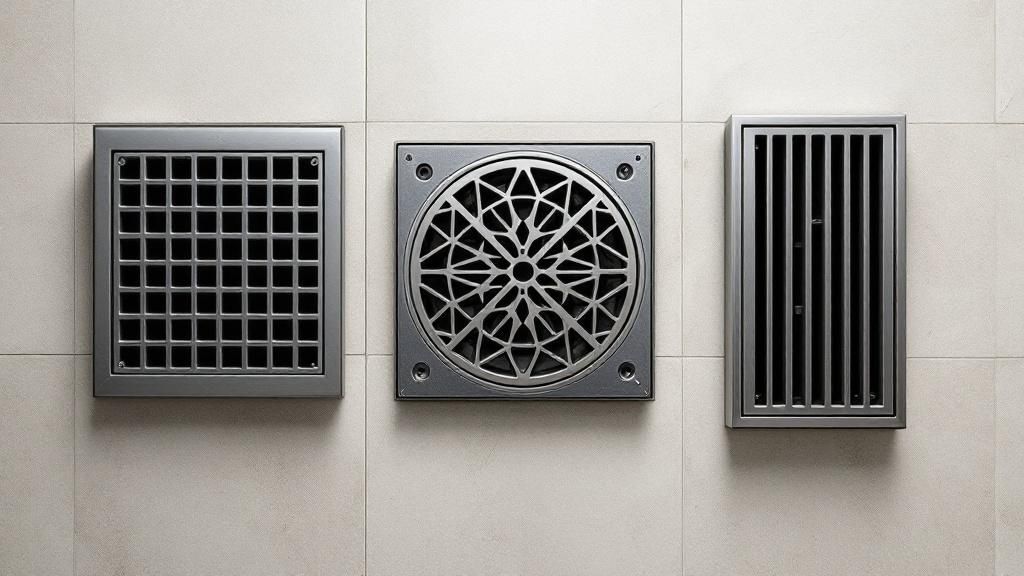
To really get why they're so essential, you have to look past the simple grate on the floor. The real genius of a floor trap drain is its simple, reliable design. It’s less of a single part and more of a mini-system where three components work together to manage wastewater and, just as importantly, protect the air inside a building.
The whole process kicks off when water hits the drain. Think of a commercial kitchen during cleanup, a public restroom, or a mechanical room. That water first meets the grate, which does the obvious job of filtering out bigger stuff—hair, food scraps, paper—that would otherwise clog up the pipes downstream.
Once through the grate, the water enters the drain's main body. This is basically the housing that connects the grate you see to the hidden pipework below. It’s shaped to guide water directly to the most critical element of the whole setup: the trap.
The Science Behind the Water Seal
The "trap" is where the real work gets done. It's nothing more than a purpose-built dip or U-bend in the drain's path, specifically designed to hold onto a small amount of water long after the rest has flowed away. This little pool of water is everything.
This water seal is the core concept that makes a floor trap drain work. It creates a physical barrier that lets wastewater out but stops sewer gases, nasty bacteria, and even pests from coming back up into the room.
If you’ve ever glanced under a kitchen or bathroom sink, you’ve seen the exact same idea at play in a P-trap. A floor trap drain simply integrates this proven concept right into the floor slab, making it an indispensable part of any modern build.
Why Maintaining the Seal Is Non-Negotiable
That water seal isn't a "set it and forget it" feature, though. For the drain to do its job properly, the water barrier has to stay put. If the trap dries out, which happens all the time in areas that don't see regular water flow, the seal is gone.
When the water evaporates, it leaves a wide-open highway for foul and potentially dangerous gases like methane and hydrogen sulfide to vent from the sewer line directly into your facility. That's why keeping the trap primed with water is such a crucial piece of maintenance, especially in low-traffic zones. Often, just pouring a bucket of water down the drain is enough to restore that vital protective seal. Without it, the drain is only doing half its job.
Exploring Different Types of Floor Trap Drains
Picking the right floor trap drain isn't a one-size-fits-all situation. The best choice really hinges on where it's going, what kind of use it'll see, and the project's maintenance plan. Getting a handle on the basic designs and materials is the first, most crucial step to making a smart decision that guarantees hygiene and performance for years to come.
Think about it this way: you wouldn't pour the same foundation for a skyscraper as you would for a single-family home. It's the same logic with floor trap drains. Each design has its own set of pros and cons, making it a better fit for a residential bathroom versus, say, a busy industrial plant.
Common Trap Designs
The "trap" is the real hero of the drain. It's what creates the water seal that keeps nasty sewer gases from creeping back into the building. The design of this trap makes a huge difference in how well it works and how easy it is to keep clean.
- P-Trap: This is the one you see everywhere, known for its distinct U-shaped bend. It does a solid job of holding a water seal and works great in most standard situations. That said, its tight curve can be a magnet for debris, so it’s better suited for places that don't deal with a lot of solid waste.
- S-Trap: Looking a lot like a P-trap, the S-trap just adds an extra bend to form an 'S' shape. These were common once upon a time, but many building codes now restrict or ban them. Why? They're prone to self-siphoning, where a strong flow of water can literally pull the water seal right out, leaving the trap dry and useless against odors.
- Bell Trap: Here’s a tougher design you'll often find in commercial spaces. A bell trap has an inverted cup (the "bell") that fits over an open pipe inside the drain body. Water seals the gap around this bell. Its biggest selling point is how simple it is to clean—just lift the grate and the bell to scoop out any gunk that's built up.
The design of the bell trap makes it a perfect match for high-traffic commercial spots like kitchens and hospitals, where top-notch hygiene and frequent cleanings are non-negotiable. Its durability and straightforward maintenance often make it the clear winner for these demanding environments.
The infographic below compares two common installation methods, giving you a quick visual breakdown.
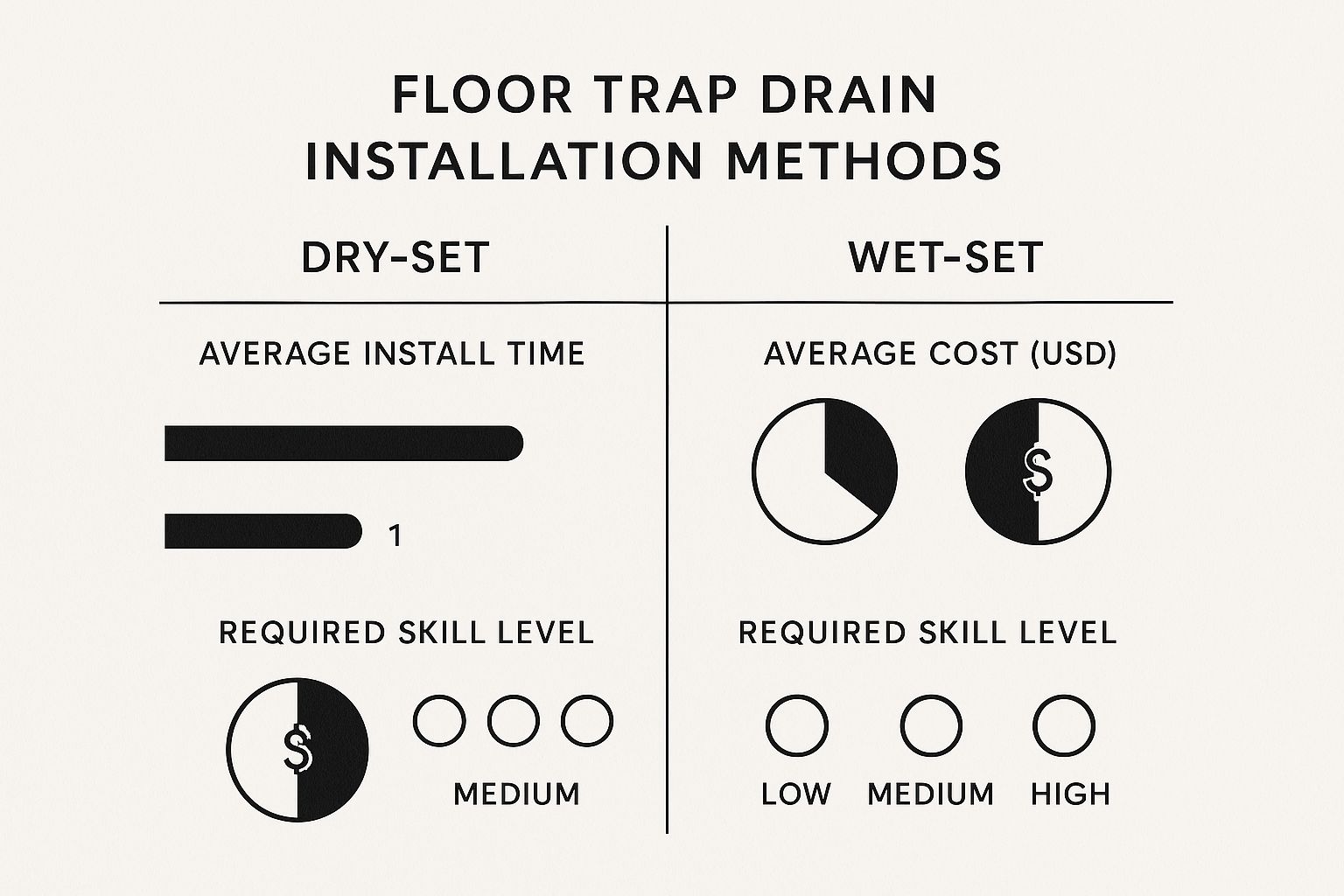
As you can see, a dry-set installation might be quicker on the front end, but the wet-set method, while more involved, delivers far better stability for the long haul.
Selecting The Right Material
The material your floor trap drain is made of is just as important as its design. This choice affects everything from its lifespan and resistance to corrosion to how well it stands up to certain chemicals or high temperatures.
To help you decide, here’s a quick look at how the common materials stack up.
Comparison of Floor Trap Drain Materials
| Material | Best Use Case | Durability/Corrosion Resistance | Typical Cost |
|---|---|---|---|
| Stainless Steel | Commercial kitchens, hospitals, food processing plants | Excellent; resists rust and chemical damage | High |
| Cast Iron | High-traffic areas, industrial facilities, garages | Very high; extremely durable and strong | Moderate-High |
| PVC (Plastic) | Residential bathrooms, laundry rooms, light-use areas | Good; impervious to rust but less durable than metal | Low |
Each material clearly has its place. The key is to match the material's strengths with the demands of the environment to avoid premature failure or maintenance headaches.
For example, bell traps are a major player in the commercial and industrial drainage market, which was valued globally around USD 351 million and is expected to keep growing. Here in the UAE, their use is driven by strict building codes focused on hygiene and indoor air quality, making them a fixture in everything from massive hotels to hospitals where solid drainage and odor control are critical. If you want to dive deeper, you can find more insights about the bell traps and drains market from this research.
How to Select the Right Floor Trap Drain
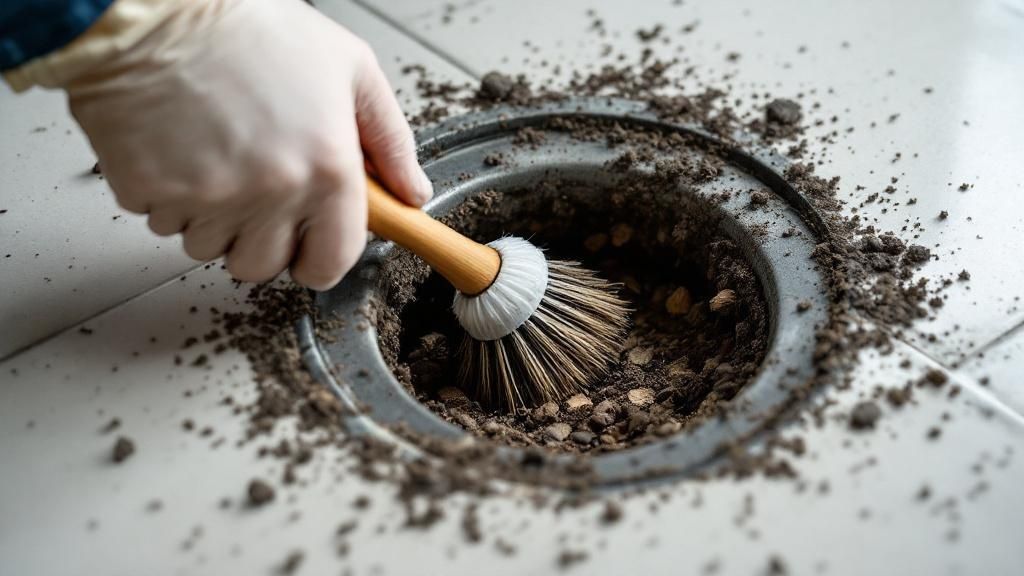
Choosing the right floor trap drain is where the theoretical plans meet the practical realities of a construction project. This decision can make or break the long-term success of an installation. It’s far more than just grabbing a component off the shelf; it's about a careful marriage between the drain's design and the unique demands of its future environment.
Get it wrong, and you're looking at a cascade of problems—from sluggish drainage and persistent bad smells to serious safety hazards and failing to meet code. To avoid this, you need to weigh several key factors. Thinking through these points will give you the confidence to specify a drain that’s built to last and perform flawlessly.
Assessing Functional Requirements
First things first, you need a crystal-clear picture of what the drain will be up against day-to-day. Before you even glance at a product catalog, define the functional needs of the space.
Start by asking these questions:
- Flow Rate: How much water are we talking about, and how fast does it need to disappear? A small bathroom has vastly different requirements than a commercial kitchen that needs to evacuate a huge volume of water during daily wash-downs.
- Load-Bearing Capacity: What's going to be moving over this drain? A simple pedestrian walkway requires one load rating, while a warehouse floor with heavy forklift traffic needs something much more robust.
- Chemical and Thermal Resistance: Will the drain come into contact with aggressive cleaning agents, industrial chemicals, or extreme temperatures? Places like food processing plants demand materials that can handle corrosive substances and thermal shock without breaking down.
Answering these questions creates a performance profile that immediately narrows down your search to only the most suitable options.
The crucial first step is always a thorough site assessment. Understanding the end-use environment—from foot traffic to chemical exposure—is the foundation for making an informed and durable selection.
Ensuring Regulatory Compliance
Compliance with building codes isn't just a good idea—it's mandatory. In the UAE, one of the most important regulations governs the relationship between the grate's open area and the size of the outlet pipe.
Standards like ASME A112.21.1M-1980 are clear: for interior drains, the grate's free area must be at least 1.5 times the cross-sectional area of the outlet pipe. This simple rule is critical for preventing water from backing up, ensuring the system can manage potential overflows in commercial and industrial settings. You can see how this plays out in the specifications from suppliers like ACO UAE, whose cast iron floor drains are engineered to meet these exact regional standards.
Material choice is just as vital for safety and durability. Selecting tough, corrosion-resistant materials ensures a longer service life and aligns with the project's overall quality goals. If you're curious about how material choices can elevate a project, our article on https://yasutrading.com/blog/sustainable-construction-materials/ is a great read. By asking the right questions upfront and making compliance a top priority, you can guarantee an installation that's safe, effective, and built for the long haul.
Best Practices for Installation and Maintenance
Even the most premium floor trap drain is only as good as its installation and upkeep. A perfect installation lays the groundwork for a drainage system you can count on, preventing frustrating leaks and performance headaches down the road. After that, a simple maintenance routine is all it takes to keep the system running smoothly for years.
When it comes to installation, precision is everything. One of the most common pitfalls we see is an incorrect slope. The floor must be properly graded to guide every drop of water toward the drain. Without it, you'll get pooling, which isn't just a slip hazard—it’s a recipe for long-term water damage.
Waterproofing is the other make-or-break step. You have to meticulously seal the area right around the drain to form a watertight barrier. Even the smallest gap in that waterproofing membrane can cause slow, hidden leaks that quietly eat away at the subfloor and compromise the building's structure.
Proactive Maintenance for Longevity
Once the drain is in, the job shifts from installation to smart, proactive care. A little regular maintenance is far cheaper and easier than dealing with an emergency repair call. A good plan prevents clogs and foul odors, but it also genuinely extends the life of the entire drainage system.
Creating a routine is easy. For drains in areas that don't see much use, the biggest risk is actually the water seal in the trap evaporating. When that happens, unpleasant sewer gases have a direct path into the room.
A dried-out trap is the number one reason for mysterious foul odors coming from a floor drain. Thankfully, the fix is simple: just pour a little water down the drain every so often to top up the seal.
This one small action is a game-changer for keeping a space hygienic, especially in guest bathrooms or utility rooms that might go unused for weeks.
For high-traffic areas, your maintenance plan needs to be a bit more involved. Think about adding these tasks to your checklist:
- Regular Cleaning: Pop the grate off and clear out any hair, soap, and other gunk that's collected. This is your first line of defense against blockages.
- Safe Blockage Removal: If a clog does manage to form, reach for a plumbing snake or auger. Avoid harsh chemical cleaners, as they can cause serious damage to the pipes over time.
- Scheduled Inspections: Take a quick look at the trap itself every now and then to make sure the water seal is intact and all the parts look to be in good shape.
This hands-on approach is what separates a good job from a great one. With the global market for metal floor drains expected to hit around USD 1.82 billion by 2033, fueled by massive construction projects in places like the UAE, the demand for quality is soaring. As you can read more about the growing metal floor drain market here, durable materials like stainless steel are the top choice. But even the toughest materials need proper care.
By setting up a simple schedule, you can promise your clients a trouble-free system. To make it even easier, you can use our guide to put together a solid preventive maintenance schedule template for all building components. This forward-thinking approach saves everyone time, money, and headaches, cementing your reputation for quality work.
Common Floor Trap Drain Questions Answered
Even with a solid grasp of how a floor trap drain works, you're bound to run into specific questions on the job site. Let's tackle some of the most common queries we hear from professionals and building owners, offering clear answers to help you troubleshoot issues and build your practical expertise.
Why Is There a Bad Odor Coming from My Floor Drain?
Nine times out of ten, a persistent bad smell points to one simple culprit: a dried-out trap. The water seal that's supposed to be inside the drain has evaporated, breaking the barrier and letting foul sewer gas creep back into the room. This happens all the time in drains that don't see much action, like in a guest bathroom or an out-of-the-way utility room.
Thankfully, the fix is usually just as simple. Pour about a liter of water straight into the drain to get that protective water seal back in place.
If it's a drain in a low-traffic area that's always drying out, here's a pro tip: after adding the water, pour in a tablespoon of mineral oil. The oil forms a thin film over the water, dramatically slowing down evaporation.
If that nasty smell hangs around even after you've refilled the trap, you might be looking at a bigger issue. It could be a stubborn clog deep in the pipe or even a cracked drain body. That’s when it’s time to call in a professional to diagnose and fix it properly.
Can I Install a Floor Trap Drain in an Existing Concrete Floor?
Yes, you can absolutely retrofit a floor trap drain into an existing concrete slab, but this is not a weekend DIY project. It's a complex job that should be handled by qualified professionals to avoid compromising the building's structural integrity.
The process involves several critical steps:
- Cutting the Concrete: First, a section of the concrete floor has to be precisely cut and removed to make space for the new drain.
- Installing Pipework: New drainage piping is laid beneath the floor. This pipe has to be set at the perfect slope—or gradient—to ensure water actually flows away as it should.
- Connecting the Drain: The new floor trap is then connected to this pipework.
- Critical Waterproofing: This is the make-or-break stage. A new waterproofing membrane has to be installed around the drain and flawlessly integrated with any existing waterproofing. If this seal isn't perfect, you’re setting yourself up for serious leaks and water damage down the line.
Once all that is done, new concrete is poured around the drain and finished to match the surrounding floor.
What Is the Difference Between a P-Trap and a Bell Trap?
The main difference comes down to their internal design and how they hold that all-important water seal. A P-trap is the most common type you’ll see, with a simple U-shaped bend in the pipe that traps water. It’s effective for blocking odors, but that tight curve can be a magnet for clogs from hair and other gunk.
A bell trap, on the other hand, is a bit more clever. It uses an inverted cup (the "bell") that sits over an open pipe inside the drain's body. The water seal forms in the channel surrounding this bell. The huge advantage here is easy maintenance. You can just lift the grate and the bell to get right inside and clear out any gunk that's built up. This design makes bell traps a top choice for places like commercial kitchens or industrial settings where you expect a lot of solid debris. These traps often meet the strict hygiene standards required by facility managers, a topic we cover in our guide for Owner Association Managers in Dubai.
How Do I Choose the Right Size Floor Trap Drain?
Sizing a floor trap drain isn't a guessing game. It comes down to two key factors: the outlet pipe's diameter and the grate's free surface area.
The outlet—which you’ll typically find in 50mm, 75mm, or 100mm sizes (that’s 2, 3, or 4 inches)—needs to be big enough for the maximum amount of water you expect. A small residential bathroom might be fine with a 50mm outlet, but a commercial kitchen that gets hosed down daily will probably need a 100mm outlet to keep up.
Here’s the critical part: building codes mandate that the grate's open area (the total space of all the little holes) must be at least 1.5 times the area of the outlet pipe. This is non-negotiable. It ensures water can get down the drain faster than it arrives, preventing it from pooling on the floor. Always, always check your local plumbing codes to make sure your choice is compliant.
For all your building hardware and construction needs, from plumbing fittings to safety equipment, trust Yasu Trading Co. LLC to deliver quality and reliability. We provide premium materials that help you execute every project with confidence. Request a quote today and let us help you build with the best.