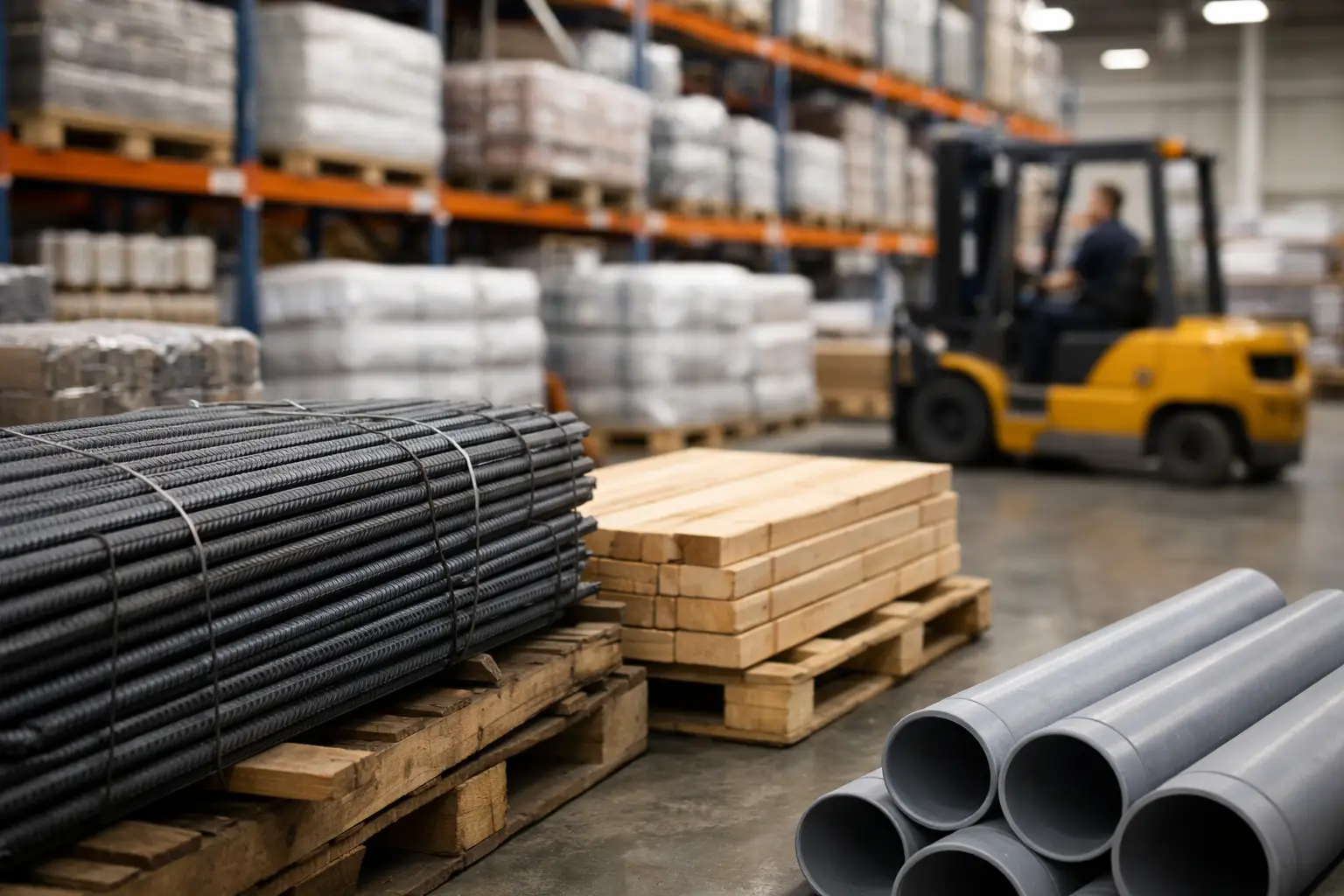
Guide to Warehouse-Backed Material Supply
When a site team runs short on cable lugs, solvent cement, anchor bolts, or safety gear, the real cost is rarely the item itself. It is the stalled crew, the delayed inspection, the extra calls to multiple vendors, and the risk of accepting substitute stock that does not match the approved specification. That is where a guide to warehouse-backed material supply becomes practical, not theoretical. For contractors and procurement teams, inventory depth and dispatch speed directly affect schedule control.
What warehouse-backed material supply actually means
Warehouse-backed material supply means your supplier is not merely forwarding orders or sourcing after you raise a request. The supplier holds active stock in core construction categories and can release material against urgent and planned demand. That difference matters because a stocked supplier can support both day-to-day site consumption and project-based call-offs without turning every purchase order into a lead-time gamble.
In construction and MEP procurement, this model works best when the warehouse carries a broad, jobsite-ready range. That usually includes plumbing pipes and fittings, electrical components, fasteners, adhesives and sealants, hand tools, power tools, paint accessories, sanitary ware, and fire and safety equipment. If those categories sit under one operational roof, the buyer can consolidate purchasing and reduce the time lost coordinating fragmented vendors.
A warehouse-backed supplier is also easier to evaluate. You can judge them by fill rate, dispatch timing, stock continuity, and their ability to maintain municipality-compliant materials across repeat orders. Those are measurable operating strengths, not sales claims.
Why this model matters more on active projects
On a live project, procurement is rarely a one-time event. Material demand changes by floor, trade sequence, inspection timing, design adjustment, and client instruction. A supplier that depends on market sourcing may still help on non-urgent items, but it becomes less reliable when your demand pattern shifts quickly.
Warehouse-backed material supply gives procurement teams more control in three areas.
First, it shortens the gap between requirement and site delivery. Same-day or next-day dispatch is only possible when inventory is already positioned and order processing is built around construction timelines.
Second, it reduces substitution risk. When stocked items are tied to approved brands or known equivalents, buyers are less likely to receive materials that create rework, documentation issues, or inspection delays.
Third, it supports purchasing consistency across multiple sites. A contractor running jobs in Dubai, Sharjah, and Abu Dhabi cannot afford to solve every shortage from scratch. Standardized sourcing improves planning, cost tracking, and site confidence.
That said, warehouse-backed supply is not automatically the cheapest option on every line item. Some niche or highly specialized products may still be ordered against project demand. The value comes from protecting the high-frequency, high-impact items that keep work moving.
A practical guide to warehouse-backed material supply
The right supplier setup starts with how your team buys, not just what it buys. If your monthly pattern includes repeated orders for electrical accessories, plumbing consumables, sealants, PPE, and fixing materials, those are strong candidates for a warehouse-backed arrangement. They move fast, they create site disruption when unavailable, and they are often ordered under time pressure.
Start with your critical consumption categories
Review the material groups that generate the most urgent purchase requests. For many contractors, that means plumbing pipes and fittings, electrical components, fasteners, adhesives and sealants, and fire and safety equipment. These are not always the highest-value packages, but they frequently decide whether work fronts continue without interruption.
If your supplier can hold these categories in dependable quantities, your team spends less time chasing availability and more time aligning orders with the project sequence. The operational gain is stronger than it looks on paper because it cuts calls, revisions, and transport coordination.
Check range depth, not just headline stock
Many suppliers advertise stock, but buyers should look deeper. A meaningful warehouse-backed model includes size ranges, compatible accessories, and the supporting items required to complete installation. Stocking conduit without bends, fittings, glands, or boxes creates the same site delay under a different label.
This matters across MEP and general hardware categories. A proper electrical supply offer should cover not only primary items but also the connectors, fixings, and termination accessories that crews need the same day. The same applies to sanitary ware, hand tools, and power tools, where accessories and replacements often drive the urgent request.
Confirm compliance and brand authenticity early
Fast supply is only useful when the material is acceptable for the job. Procurement managers should ask whether stocked lines are municipality-compliant, traceable to authorized brands, and supported with technical documentation where needed. That is especially important for safety-related items, electrical products, and any line tied to consultant approvals.
There is a trade-off here. If your team pushes only for the lowest spot price, it may end up comparing approved materials with unverified alternatives. That can lower immediate purchase cost while increasing the chance of rejection, warranty disputes, or uneven product performance.
Test dispatch performance on small urgent orders
A supplier proves warehouse readiness through execution. One of the best ways to assess performance is by placing a small but urgent mixed order. Include a few lines from different categories such as pipe fittings, cable accessories, anchor fasteners, sealants, and safety consumables. Then review response time, picking accuracy, packaging, and delivery coordination.
This test reveals whether the operation is truly built for project support. It also shows whether the supplier can handle the everyday reality of construction buying, where one request often combines planned stock replenishment with a last-minute site shortage.
What good warehouse-backed supply looks like in practice
At its best, warehouse-backed supply functions as an extension of your procurement desk. You raise one consolidated requirement, receive clear availability, get pricing without unnecessary middle layers, and schedule dispatch against site need. That saves more than transport time. It reduces admin work, invoice fragmentation, and the hidden cost of managing too many supplier relationships.
For a contractor or MEP subcontractor, this model is strongest when paired with technical guidance. If a buyer needs to verify fitting compatibility, confirm an electrical rating, or match a sealant to application conditions, fast access to product knowledge prevents purchasing mistakes. It also helps site teams avoid workarounds that become quality issues later.
Warranty handling is another overlooked part of the equation. Power tools, branded equipment, and some specialist items carry procurement risk if support is weak after delivery. A dependable supplier should not disappear once the invoice is issued.
Where buyers usually get it wrong
The most common mistake is treating every material request as a standalone transaction. That approach may work for a one-off purchase, but it performs badly across multiple active projects. The buyer saves a little on one line, then loses time and control on the next ten.
Another mistake is overvaluing catalog breadth without checking live availability. A long product list is not the same as stocked readiness. What matters is whether the supplier can fulfill the common, repetitive, and urgent lines that keep crews productive.
A third issue is failing to align logistics with site reality. Delivering to a tower fit-out, a maintenance shutdown, and a new build all require different timing and handling. Good supply partners understand access windows, document requirements, and the importance of accurate site delivery.
Choosing a warehouse-backed partner for UAE project work
In the UAE market, buyers often need a supplier that can combine wholesale pricing with disciplined fulfillment. That means inventory-backed materials, practical technical support, and the ability to deliver to site quickly when schedules tighten. For firms managing work across Dubai, Sharjah, Abu Dhabi, and other emirates, consistency matters as much as speed.
A supplier like Yasu Trading Co. LLC fits this model when the requirement is consolidated procurement across MEP and general construction categories. The value is not only in broad stock. It is in being able to source from one trusted B2B partner that supports approved materials, direct pricing, and rapid dispatch without turning routine procurement into daily escalation.
The best results come when both sides work from a realistic purchasing pattern. Share your repeat items, expected monthly movement, approved brands, and project timelines. A good supplier can then align stock, quote structure, and delivery planning around your actual workload.
Reliable material supply is rarely noticed when it works. That is exactly the point. The right warehouse-backed setup keeps teams installing, inspections moving, and procurement focused on the next milestone instead of the last shortage.