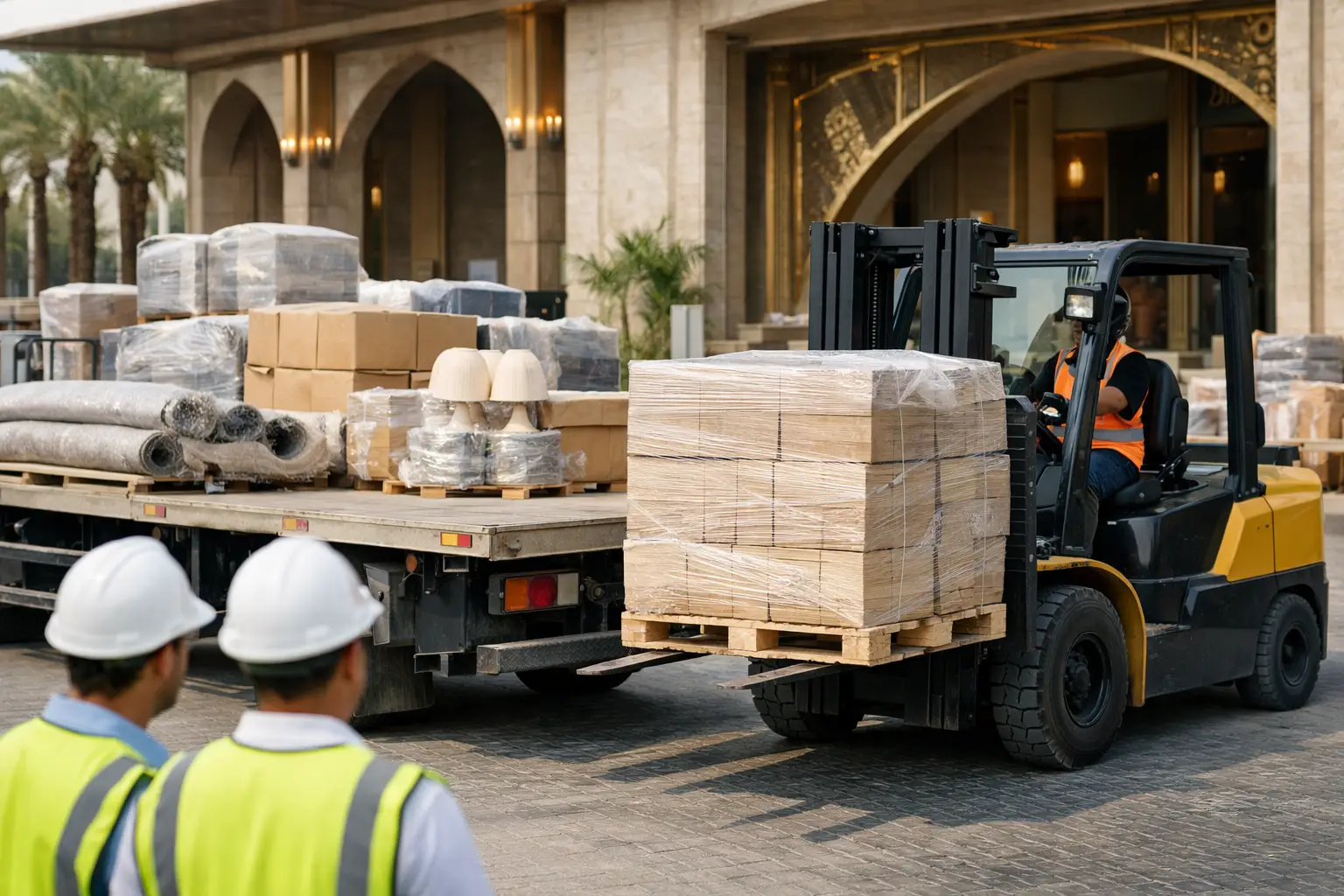
Hotel Fitout Material Delivery Example for UAE Sites
A hotel handover date does not move because a valve is missing, an approved sealant arrives late, or a guestroom hardware package reaches the site before the doors are ready. This hotel fitout material delivery example shows how a procurement team can turn a long material schedule into controlled, phased deliveries that protect installation access, approvals, and labor productivity.
The scenario is a 180-key hotel in Dubai entering its MEP second-fix, guestroom fitout, and public-area finishing stages. The contractor needs frequent deliveries over six weeks, not one bulk drop that blocks loading bays and creates damage risk. The procurement objective is simple: deliver municipality-compliant materials, in the correct quantities, to the correct work zone, when installers are ready to use them.
The Project Delivery Challenge
A hotel fitout combines repeatable guestroom work with high-specification public areas. A typical floor may require plumbing fittings, electrical accessories, flexible conduits, cable management items, valves, sanitary ware, adhesives, sealants, fasteners, hand tools, and fire and safety products. Each category has a different installation sequence, storage requirement, and approval risk.
The common failure is ordering by category alone. For example, ordering all electrical accessories at once may appear efficient on paper, but it creates counting work, storage pressure, and exposure to loss or damage. If ceiling works are incomplete, recessed fixtures and fire-rated accessories may sit unused while the electrical team waits for conduit fittings or approved junction boxes.
A better approach is to organize supply around work fronts. The delivery plan should match the contractor's floor-release schedule, approved material submittals, site access rules, and daily installation capacity. This reduces supplier coordination while giving the site team a clear receipt and issue process.
Hotel Fitout Material Delivery Example: Six-Week Plan
In this example, the hotel has 12 guestroom floors, a lobby, restaurant, back-of-house areas, and a rooftop plant room. The contractor releases two guestroom floors per week after wall closures and first-fix inspection sign-off. Public areas proceed separately because their finishes and sanitary selections require more controlled handling.
Week 1: Establish the Site-Ready Base
The first delivery supports the work that enables every later package. It includes plumbing pipes and fittings for final branch connections, isolation valves, pipe supports, PTFE tape, approved sealants, electrical conduits, adaptable boxes, trunking accessories, cable ties, anchors, screws, drill bits, and site consumables.
This delivery is not simply a large mixed load. Materials are packed by trade and work front. Plumbing fittings for Floors 3 and 4 are labeled separately from electrical accessories for the same floors. Fasteners and consumables are packed in controlled cartons with item codes and quantities visible on the outside. The receiving team can check the delivery against the purchase order without opening every box at the loading area.
The supplier should confirm product approvals before dispatch, especially where the consultant has specified a brand, fire rating, pressure class, or color. Substituting an item because it is available can create a larger delay if the consultant rejects it after installation. For MEP materials, technical alignment matters as much as stock availability.
Weeks 2 and 3: Release Guestroom Second-Fix Packages
As each floor becomes available, deliver a repeatable room package for plumbing and electrical works. A package may include angle valves, flexible connectors, waste fittings, floor drain accessories, electrical switches and sockets, faceplates, junction box accessories, conduit couplers, and mounting hardware. The exact mix depends on the approved room type schedule, including standard rooms, accessible rooms, and suites.
Guestroom deliveries work best when the quantities are tied to a floor takeoff plus a controlled contingency. Sending an extra 10 to 15 percent of every item may feel safe, but it often creates untraceable site stock. Instead, hold an agreed buffer at the supplier's warehouse for urgent replenishment. This keeps the floor clean while maintaining protection against breakage, drawing revisions, or underestimated quantities.
For bathrooms, sanitary ware should arrive only after tiling, waterproofing checks, and access routes are confirmed. Cartons for basins, mixers, toilets, and accessories need protected unloading and a dry, secure storage location. Delivering them too early can lead to chipped finishes, missing components, and warranty disputes that are difficult to resolve at handover.
Week 4: Public Areas and Back-of-House Work Fronts
The lobby, restaurant, and back-of-house spaces need their own delivery schedule. These areas use different materials and usually involve more interfaces between fitout, MEP, fire, and facilities teams. The package may include commercial-grade sanitary fittings, adhesive and sealant systems, door hardware fasteners, paint accessories, power tool consumables, emergency signage fixings, and fire and safety equipment.
At this stage, the site should request deliveries by room or zone, not only by material type. A restaurant bar area, for instance, may need plumbing fittings, isolation valves, electrical accessories, sealant, anchors, and hand tools on the same delivery. Consolidated procurement prevents the supervisor from chasing multiple suppliers for small but essential items that stop a crew.
Weeks 5 and 6: Snagging, Testing, and Closeout Support
The final phase requires speed and accuracy. Site teams identify missing accessories, damaged faceplates, additional fasteners, replacement valves, touch-up materials, and safety items during inspections. These needs are often low in value but high in schedule impact.
A dependable supplier supports this phase with rapid dispatch, clear product identification, and replacement items that match the approved specification. For safety-critical or branded products, warranty documentation and manufacturer authenticity should be available. This is particularly relevant for power tools, fire and safety equipment, electrical components, and sanitary products that the contractor may need to hand over with project records.
What Each Delivery Note Should Control
A fitout delivery is easier to manage when the purchase order and delivery note state more than a quantity. The document should identify the project name, delivery zone or floor, contact person, approved item code, unit of measure, batch or color reference where relevant, and any required handling instruction.
For sealants, adhesives, paints, and chemical products, confirm shelf life and storage conditions before accepting the material. For pipes, fittings, electrical accessories, and valves, check the brand, size, rating, and certification against the approved submittal. For sanitary ware and finished hardware, inspect cartons for visible damage before signing off.
A practical receiving process has four controls:
- Verify quantity and item code against the delivery note before materials are moved to the work front.
- Photograph damaged cartons or short deliveries immediately and record them on the signed receipt.
- Issue materials to the responsible foreman by floor or zone, not from an open central pile.
- Report urgent shortages early enough for same-day or next-day replenishment where project logistics allow.
These controls take minutes, but they prevent arguments later between the procurement office, warehouse, supplier, and subcontractor.
Balancing Bulk Pricing With Phased Delivery
Phased delivery does not mean purchasing small quantities at retail pricing. The contractor can agree a project-based quote for the full forecast quantity while calling off stock in scheduled releases. This approach preserves wholesale pricing and gives the supplier visibility to reserve inventory.
It does depend on accurate forecasting. If the bill of quantities is still changing, separate fixed quantities from variable items. Fixed items can be reserved in bulk, while variable products such as accessory finishes, specialty fittings, or late consultant selections can remain subject to confirmation. The key is to communicate the expected delivery window early, rather than treating every requirement as an emergency.
For contractors working across Dubai, Sharjah, Abu Dhabi, Fujairah, or Ras Al Khaimah, delivery timing should also account for site gate procedures, vehicle restrictions, and unloading slots. A fast dispatch is only useful when the site has authorized access and a team ready to receive the load.
Make the Supplier Part of the Delivery Plan
The strongest hotel fitout delivery plans treat the supplier as an operational partner, not just an order-taking vendor. Share the floor-release program, approved material schedule, and expected call-off dates. Ask for alternatives only when they meet the specification and can be approved before they affect the installation sequence.
Yasu Trading Co. LLC can support this model through consolidated sourcing across plumbing, electrical, tools, fasteners, adhesives, sanitary ware, and safety requirements, with project-based quoting and site-direct dispatch. For a hotel project, that means fewer purchase orders, clearer accountability, and faster action when a work front needs material.
Before the next floor is released, review the installation plan with the foreman, confirm the approved item list, and schedule only the materials that crew can install and protect. That single discipline keeps hotel fitout deliveries moving from loading bay to completed room without turning site storage into the next delay.