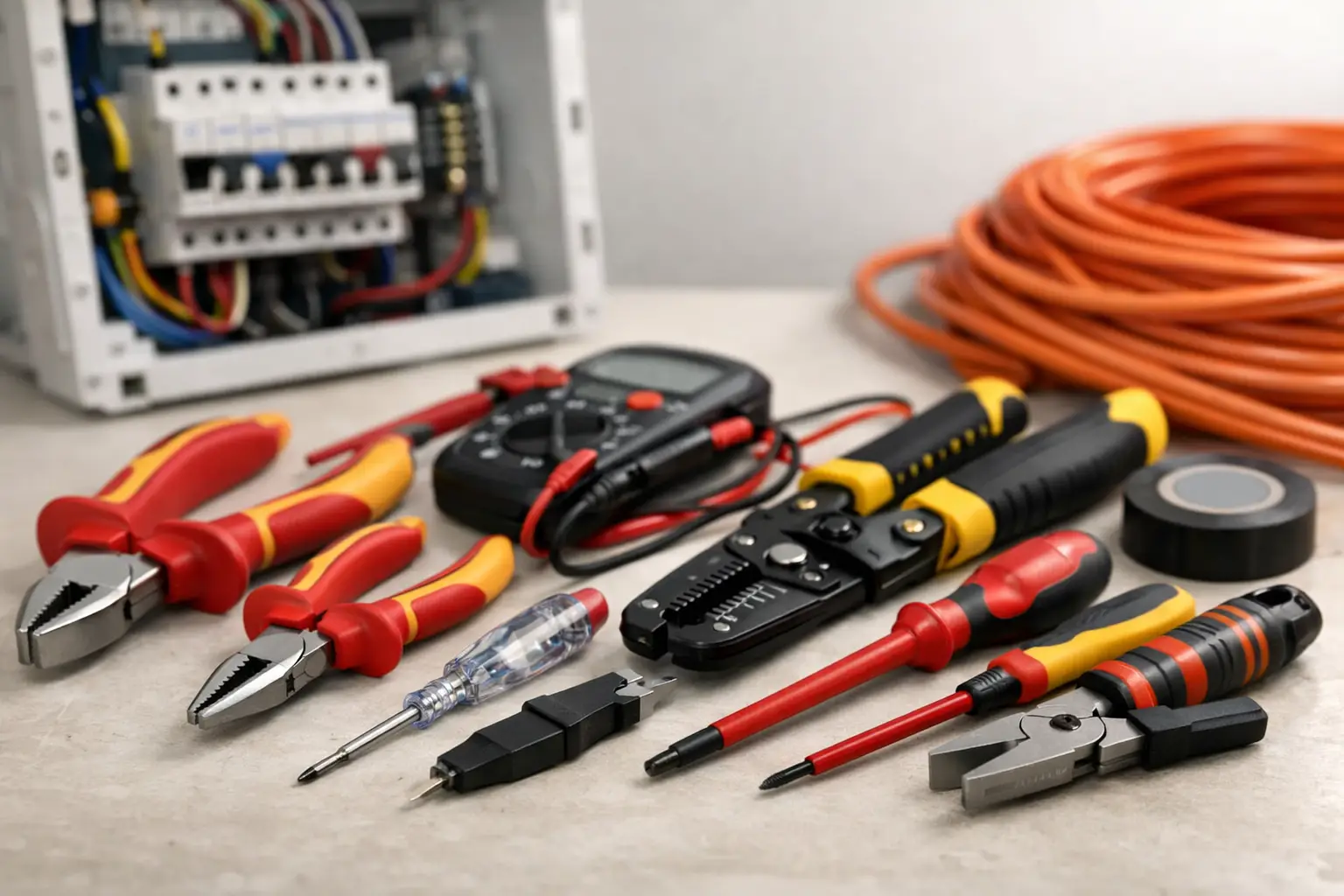
How to Choose Compliant Electrical Accessories
A site can lose a full day over something as small as the wrong cable gland, an unapproved socket, or a junction box that does not match the submitted specification. That is why knowing how to choose compliant electrical accessories is not a paperwork exercise. It is a procurement decision that protects inspections, installation quality, and project timelines.
For contractors, MEP teams, and procurement managers, electrical accessories sit in the category that often looks routine until it causes a rejection. The problem is not usually availability alone. It is buying products that appear similar, but differ in certification, material grade, ingress protection, load suitability, or brand approval status. On active projects, that difference shows up as rework, delayed approvals, and wasted labor.
What compliant electrical accessories really mean on site
Compliance is not just about whether an item is labeled as safe or high quality. In practical terms, compliant electrical accessories are products that match the project specification, meet relevant local approval requirements, and are suitable for the installation environment. That includes basic items such as switches, sockets, isolators, plug tops, [junction boxes](https://yasutrading.com/products/GI Electricals Boxes 3x3, 3x6, floor boxes Etc), cable trays, conduits, cable ties, connectors, and mounting accessories.
A compliant product must also be traceable. If the packaging, markings, technical data, or brand authorization are unclear, you are already taking unnecessary risk. On commercial and residential jobs alike, inspectors and consultants want consistency between approved submittals and delivered material. If your team installs a substitute that has not been cleared, even a technically adequate product can become a problem.
This is where experienced buyers look beyond unit price. A low-cost accessory that fails inspection is not lower cost after labor, replacement, and schedule impact are counted.
How to choose compliant electrical accessories without slowing procurement
The fastest way to buy correctly is to screen products in the same order your project team will be questioned later. Start with specification alignment, then verify approvals, then confirm performance, and finally check supply continuity.
Match the project specification first
Before comparing brands or prices, confirm exactly what the approved material schedule requires. Many procurement mistakes happen because teams buy by appearance or general category instead of by technical requirement. A weatherproof socket is not automatically suitable just because it looks heavy duty. A cable accessory rated for one application may not be acceptable in another.
Check the stated voltage, current rating, IP rating where needed, material type, mounting style, and any consultant-approved brand list. For fit-out, hospitality, industrial, and infrastructure jobs, these details vary more than many teams expect. If the submitted material calls for a specific standard or test rating, the purchase order should reflect that exactly.
Verify municipality and project approval requirements
On UAE projects, local compliance matters because the right product on paper still needs to fit municipal and project-level expectations. That means checking whether the accessory is accepted for use on the intended project type and whether supporting documentation is available when required.
This is especially relevant for electrical components used in exposed areas, wet areas, common building services zones, and fire-sensitive installations. Procurement teams should ask for technical datasheets, conformity information, and brand documentation early - not after the material has reached site. Delays often begin when documentation is requested during inspection and the supplier cannot produce it quickly.
Confirm the operating environment
Electrical accessories fail compliance in real-world use when the environment was not considered properly. An accessory used indoors in a conditioned space does not face the same demands as one installed in a rooftop service area, utility room, or external façade zone.
Heat, dust, moisture, UV exposure, and washdown conditions all affect product selection. The right enclosure, gland, conduit accessory, or isolator depends on where it will be installed and what level of protection the system needs. In the UAE, harsh environmental conditions make this step even more important. Products that are technically functional in mild conditions may not hold up well on demanding sites.
Check load and system compatibility
Some compliance issues are not visible until energization or testing. Accessories must suit the electrical load and the wider system they connect to. This includes conductor size, termination type, enclosure fit, and compatibility with panel components, trunking, and conduit systems.
For example, a connector that does not properly match cable size can lead to poor termination quality. An isolator with the wrong duty rating can create safety and performance issues. Even simple accessories like plugs, sockets, and mounting boxes need to align with the intended use case rather than just the immediate installation requirement.
The trade-off between approved brands and cheaper substitutes
Every procurement team faces the same pressure - keep costs under control without creating downstream risk. There are times when alternative brands are acceptable, but only if they are technically equivalent, properly documented, and approved through the correct channel.
The mistake is assuming equivalence based on appearance or catalog wording. Two accessories may share similar ratings but differ in durability, contact quality, sealing performance, or documentation support. On fast-moving projects, approved brands often save money by reducing inspection friction and replacement risk.
That does not mean the highest-priced product is always the right one. It means the lowest-priced item should never be selected before checking compliance, brand authenticity, and project acceptance. For wholesalers and project buyers, a dependable supply partner adds value by helping compare true equivalents instead of pushing whatever is available that day.
Common mistakes when choosing electrical accessories
Most compliance problems come from a short list of repeat issues. The first is buying from unclear supply channels, where counterfeit or gray-market products can enter the job. The second is ordering based on generic descriptions such as heavy duty, industrial, or weatherproof without checking tested ratings and documentation.
A third issue is splitting purchases across multiple vendors without controlling revision status. One site may receive a socket from one manufacturer, another site gets a visually similar substitute, and maintenance teams inherit inconsistent inventory. That creates long-term operational inefficiency, not just a one-time procurement issue.
Another common problem is focusing only on the main electrical item and ignoring the related accessories that complete compliance. A properly selected conduit system still depends on compliant bends, couplers, saddles, adaptable boxes, and glands. A cable installation is only as reliable as the termination accessories that support it.
Why supplier capability matters as much as product compliance
Even when the product is correct, weak supply support can still expose the project. Procurement teams need fast answers on technical matching, replacement options, documentation, and delivery timing. If the supplier cannot confirm stock depth or dispatch accurately, your approved material may still arrive too late for the workfront.
For that reason, many contractors now treat electrical accessories as part of a broader consolidated procurement strategy. Instead of sourcing electrical items separately from tools, fasteners, sealants, fire and safety items, and general hardware, they work with a single inventory-backed partner that can support multiple packages with consistent documentation and on-time site delivery.
That approach is particularly useful when projects need both routine replenishment and urgent same-day dispatch. It reduces coordination overhead and gives buyers a clearer line of accountability if there is a technical or warranty issue.
How to choose compliant electrical accessories from a supplier
When evaluating a supplier, ask practical questions. Can they provide municipality-compliant materials? Do they supply authorized brands? Can they support project-based quoting for bulk requirements as well as urgent top-up orders? Can they confirm technical details before dispatch, not after? These are operational questions, but they directly affect compliance outcomes.
A reliable B2B supplier should also understand the relationship between electrical accessories and adjacent categories. On many jobs, the procurement team is not only buying switches and sockets. They may also be coordinating conduits, fittings, hand tools, power tools, fasteners, adhesives, sealants, and safety materials for the same work area. When one supplier can support that wider basket with inventory readiness and predictable fulfillment, site execution becomes easier to control.
Yasu Trading Co. LLC works in that model - supporting contractors with municipality-compliant materials, technical guidance, and rapid dispatch for jobsite needs across core construction categories.
A practical buying standard for your next project
If you want a simple internal rule, use this: do not release an electrical accessory order until the item is confirmed against specification, approval status, environment, system compatibility, and documentation. That five-point check catches most of the errors that lead to rejected material.
It also helps to standardize approved accessory ranges across projects where possible. When teams repeatedly buy from known, compliant product lines, they reduce training issues for installers, simplify maintenance stocking, and improve consistency in submittals. Standardization will not fit every project, especially where consultant preferences vary, but it is one of the most effective ways to lower procurement risk over time.
Electrical accessories are small compared with switchgear, cabling, or major equipment packages. But on site, small items stop work just as effectively when they are wrong. Buy them with the same discipline you apply to larger MEP materials, and your inspections, labor productivity, and delivery schedules will be easier to protect.
The smartest purchase is rarely the fastest click or the lowest quote - it is the item that arrives approved, fits the installation, and lets the crew keep moving.