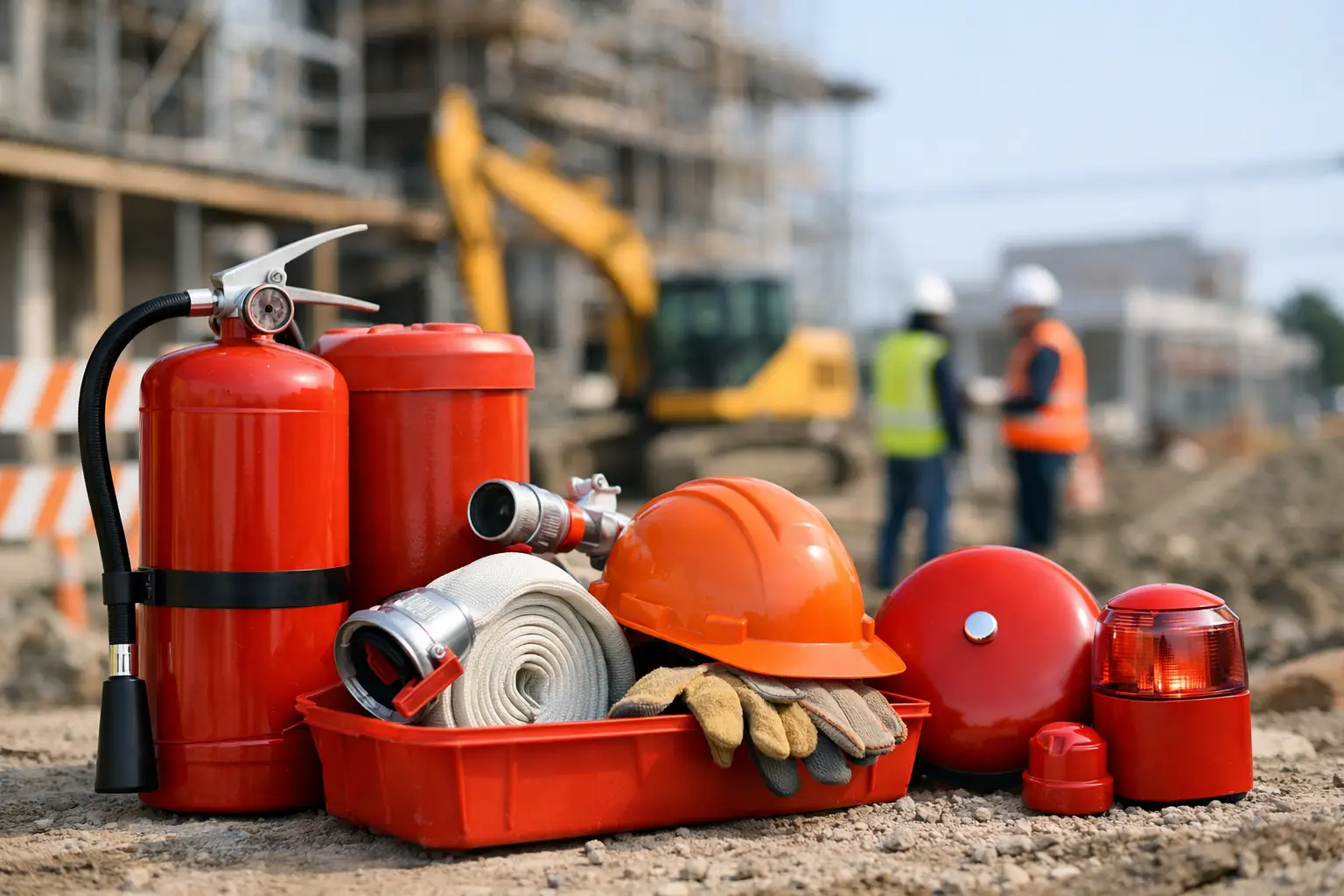
How to Select Fire Safety Equipment for Jobsites
A fire extinguisher mounted at the site gate does not make a project fire-ready. The right equipment has to match the actual work being performed, the building phase, the authority-approved fire strategy, and the team’s ability to inspect and use it. Knowing how to select fire safety equipment is therefore a procurement decision with direct consequences for worker safety, inspection readiness, and project continuity.
For contractors and facilities teams, the objective is not simply to buy more equipment. It is to provide the correct protection at the point of risk, maintain it throughout the job, and avoid substitutions that create compliance issues later.
Start With the Site Fire Risk, Not the Product Catalog
Every project has a different risk profile. A shell-and-core high-rise site may have temporary power, welding activity, diesel-powered equipment, packaging waste, and incomplete access routes. A fit-out project may introduce paints, adhesives, timber, solvents, and densely occupied work areas. A completed facility has a different set of risks tied to kitchens, electrical rooms, server spaces, parking areas, and tenant operations.
Before requesting a quote, identify what can burn, what can start a fire, and how quickly people can evacuate. Review the construction method, work permits, material storage plan, temporary electrical layout, and occupancy conditions. This allows the procurement team to specify quantities and locations based on risk rather than ordering a standard bundle that may not suit the site.
The fire safety plan should also align with the project’s approved drawings, consultant specifications, insurer requirements, and applicable local authority requirements. In the UAE, equipment selection often needs to support Civil Defense expectations and municipality-compliant materials. Product labels, certifications, test records, and installation requirements matter as much as the equipment itself.
Match Extinguisher Type to the Fire Hazard
Portable extinguishers are usually the first category buyers consider, but selecting by size alone is a common mistake. The extinguishing agent must suit the likely fuel source. Using the wrong type can be ineffective or make an incident worse.
For general combustible materials such as wood, paper, fabric, and many site waste materials, water-based or foam extinguishers may be specified where appropriate. Electrical risks call for non-conductive extinguishing media, commonly carbon dioxide or suitable dry powder, depending on the hazard and project requirements. Flammable liquids used in workshops, generator zones, paint storage, or finishing work require equipment rated for liquid-fuel fires. Commercial kitchen areas may require wet chemical units designed for cooking oils and fats.
Dry powder extinguishers are versatile for several site hazards and are often practical in construction environments. The trade-off is cleanup and potential damage to sensitive electrical or electronic equipment. CO2 extinguishers leave no residue, but their discharge duration is limited and they are not the answer for every fire class. The right decision depends on the area being protected, not a preference for one extinguisher type across the entire project.
When procuring extinguishers, confirm the required fire rating, capacity, mounting method, service tag provisions, signage, and whether cabinets or protective covers are needed. Outdoor or dusty areas may need additional protection to keep equipment visible and serviceable.
Select a Complete Fire Safety Equipment Package
Extinguishers are only one layer of protection. A complete selection must consider detection, notification, containment, evacuation, and first response. The exact mix depends on building use and construction stage, but project teams typically assess the following categories:
- Fire alarm and detection equipment, including control panels, smoke detectors, heat detectors, manual call points, sounders, and interfaces with other building systems.
- Firefighting systems, such as hose reels, fire hose cabinets, hydrant accessories, fire pumps, sprinkler components, valves, and related fittings.
- Emergency evacuation equipment, including emergency lights, exit signs, photoluminescent safety signs, evacuation plans, and designated assembly-point signage.
- First-response and area-specific items, including fire blankets, fire buckets, spill-control materials where relevant, welding screens, and hot-work fire watch equipment.
- Personal protective equipment for designated responders, such as helmets, gloves, safety eyewear, protective footwear, and high-visibility clothing.
For a live building or a major handover phase, these components must work as one system. A compliant extinguisher does little good if access is blocked, exit signage is missing, the alarm cannot be heard, or the fire hose cabinet is inaccessible. For active construction sites, temporary measures must be upgraded as the building layout, occupancy, and hazards change.
Do Not Treat Signage and Access as Afterthoughts
Fire equipment must be easy to find under pressure. Mount equipment at approved, visible locations, keep approach paths clear, and provide durable signs that remain readable in low light, dust, and changing site conditions. Equipment should not be hidden behind stored materials, inside locked rooms without controlled access, or mounted where moving plant can damage it.
This is also a logistics issue. Fire points need to be planned alongside temporary fencing, material laydown areas, scaffolding, and access routes. Site teams should verify locations during regular safety walks, especially after major changes in work sequencing.
Verify Approval, Certification, and Product Traceability
Safety-critical products should not be purchased on price alone. A low-cost substitute that lacks the required certification, correct rating, or recognized manufacturer support can create rejection risk at inspection and increase liability after an incident.
Ask suppliers for clear product documentation before material is delivered. This may include certificates of conformity, test approvals, technical data sheets, manufacturer information, warranty terms, and serial or batch traceability where applicable. Confirm that the product supplied matches the approved submittal, not merely a similar description on a quotation.
Brand authenticity also matters. Fire alarm devices, pumps, valves, extinguishers, and related components need reliable compatibility and service support. Mixing unverified parts into a specified system can lead to commissioning failures or make future maintenance harder. For project procurement, it is usually more efficient to source approved fire and safety equipment through a supplier that can coordinate documentation, availability, and replacements rather than splitting responsibility across several vendors.
Plan for Inspection, Maintenance, and Replacement
Equipment selection is incomplete until the maintenance plan is clear. Portable extinguishers require routine visual checks and scheduled servicing by qualified personnel. Fire alarm, emergency lighting, pump, hose reel, and suppression systems require testing at defined intervals and documented records. The responsible party can shift between the main contractor, MEP subcontractor, facilities team, and building operator as a project moves toward handover, so ownership must be explicit.
Build maintenance requirements into the original material schedule. Include spare units where operationally necessary, replacement signage, tamper seals, cabinet keys, and a process for reporting discharged or damaged equipment. For remote compounds, warehouses, and multi-level projects, holding a controlled stock of replacement units can prevent a small incident from leaving an area unprotected for days.
Training is equally practical. Workers should know where equipment is located, when not to fight a fire, how to raise the alarm, and which evacuation route to use. Designated fire wardens and hot-work teams need a higher level of instruction because their response decisions may be made in the first minutes of an emergency.
Buy Around Project Phases and Delivery Windows
Construction fire risk changes quickly. Early works may need temporary extinguishers, signage, and hot-work controls. MEP installation may add cable-related risks, temporary power distribution, and testing activities. Fit-out introduces combustible finishes and chemical products. At handover, the focus shifts to permanent systems, commissioning records, and approved documentation.
Procurement should reflect that sequence. Ordering all safety equipment too early can create storage damage, expired service periods, and lost inventory. Ordering too late can delay permits, inspections, or occupancy. A phased schedule with call-off quantities often gives better control, particularly on projects with changing floor release dates.
For urgent needs, delivery reliability matters as much as item availability. A supplier that can consolidate fire safety equipment with electrical components, plumbing materials, tools, fasteners, and site consumables reduces purchase orders, delivery coordination, and site receiving delays. Yasu Trading supports this approach with inventory-backed sourcing and site delivery for contractors managing time-sensitive work across the UAE.
A well-selected fire safety package should make the site safer without creating another coordination burden. Specify it against real risks, verify every approval and document, maintain it from delivery through handover, and keep it accessible when the jobsite is at its busiest.