Your Guide to Paneling for Ceilings
That big, blank space over your head? It’s so much more than just a lid on a room. Think of it as a clean canvas, begging for a little creative attention. Adding paneling for ceilings is one of those design moves that can completely change the feel of a space. It’s how you add architectural soul, solve practical problems like bad acoustics, and turn a totally forgotten surface into a standout feature.
Why Your Ceiling Is Your Next Design Opportunity
For a long time, ceilings got the short end of the stick—a quick coat of white paint and that was it. But when you start thinking of it as the 'fifth wall,' you suddenly unlock a ton of design possibilities. An accent wall can anchor a living room, right? Well, a well-chosen ceiling can set the entire tone for a space, making it feel deliberate and thoughtfully put together.
This isn't just about looks, either. It’s incredibly practical. Ceiling paneling offers some genuinely smart fixes for common headaches that paint just can't touch.
- Hides Flaws Beautifully: It's the perfect way to cover up old, cracked plaster, water stains, or those dated popcorn textures without a massive mess.
- Improves Room Acoustics: Some materials are fantastic at absorbing sound. This can be a game-changer in big, open-plan homes, cutting down on echo and making the whole house feel calmer and more comfortable.
- Brings in Architectural Character: Paneling adds texture, lines, and depth that naturally draw your eyes up. It can make a room feel taller, cozier, or even a bit more grand, depending on the style you choose.
Shifting Your Design Perspective
Stop seeing the ceiling as just the thing that holds up the light fixtures. Start seeing it as a core part of your design. Picture a cozy den with rich, warm tongue and groove wood planks overhead—it instantly feels like a rustic retreat. Now, imagine a sharp, modern home office with clean-lined acoustic panels that look crisp while also cutting down on distracting noise.
A well-designed ceiling doesn't just finish a room; it elevates it. When you add texture and dimension above, you're creating a visual anchor that makes a space feel more luxurious, considered, and uniquely yours.
This one change can completely redefine a room's atmosphere. It’s a powerful way to inject personality and value into your home, proving that sometimes, the most inspiring design direction is to simply look up.
Exploring Different Types of Ceiling Panels
Choosing the right paneling for ceilings is a bit like selecting the perfect piece of furniture. It’s not just about covering a surface; it’s about defining the entire character of a room. The right panel can take a space from bland to brilliant, setting the tone, improving functionality, and adding a layer of architectural personality that lasts.
Before you get lost in the options, ask yourself: what’s the feeling I’m after? Do you want a cozy, rustic escape or a sharp, modern statement? Let's walk through the most popular styles and see how they really perform, so you can find the perfect match for your vision.
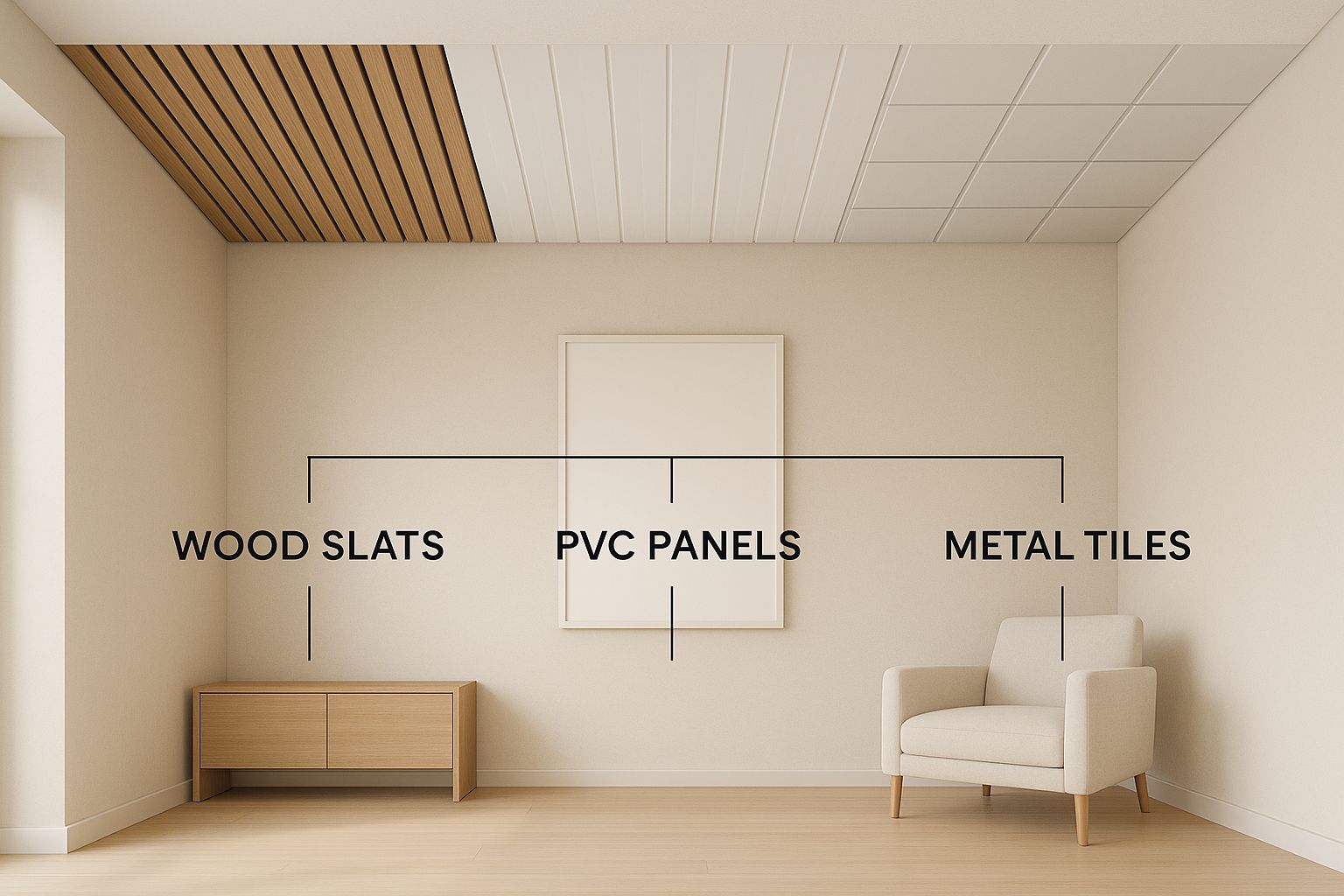
This visual guide shows just how dramatically different materials—from rich wood to crisp PVC and industrial metal—can shape a room's atmosphere.
As you can see, the right choice instantly creates a specific mood, whether it's warmth, minimalist cleanliness, or a touch of industrial chic.
The Timeless Appeal of Tongue and Groove
Tongue and Groove, or T&G, is a classic for good reason. Picture individual planks, each milled with a small projection (the tongue) on one edge and a matching slot (the groove) on the other. They click together perfectly, creating a smooth, unified surface marked by incredibly subtle V-shaped lines.
This clever interlocking design is what gives T&G its famously clean, continuous look. It’s a true chameleon, looking just as at home in a sleek, contemporary villa as it does in a traditional majlis. Once installed, it offers an uninterrupted finish that adds a real sense of warmth and substance. A light-colored wood T&G can make a living room feel bright and open, while a deep, rich stain can bring a dramatic and intimate vibe to a dining space.
The Rustic Charm of Shiplap
Often mistaken for T&G, shiplap brings a completely different personality to the table. Each plank is cut with a special L-shaped notch, known as a rabbet. When the planks overlap, they intentionally leave a small, visible gap, creating a distinct shadow line between each board.
It’s this subtle separation that gives shiplap its laid-back, rustic feel. It's a fantastic choice for creating a feature ceiling with texture and depth. Think of a breezy coastal-themed café or a relaxed family room—shiplap adds a touch of casual sophistication and a handcrafted feel without ever seeming too formal.
The key difference is simple: Tongue and Groove aims for a seamless, unified surface, while Shiplap celebrates the gap, using shadow lines to create texture and a more rustic, laid-back aesthetic.
The Grandeur of Coffered Ceilings
For a dose of pure, formal elegance, nothing quite matches a coffered ceiling. This style isn’t about individual planks but rather a grid of recessed panels formed by a framework of beams. The effect is a stunning three-dimensional pattern that introduces incredible architectural depth and drama.
With roots in grand historical architecture, coffered ceilings instantly signal luxury and scale. They truly shine in rooms with higher ceilings, where their impressive depth can be fully appreciated. A coffered design can transform a standard master bedroom into a stately suite or lend a corporate boardroom an undeniable sense of prestige. It’s a bold move that speaks volumes about quality and timeless design.
The Modern Functionality of Acoustic Panels
In modern design, function is just as important as form, and that’s where acoustic panels really excel. These panels are engineered first and foremost to control sound. Made from highly sound-absorbent materials, they are built to cut down on echo and reverberation, making any space significantly quieter and more pleasant to be in.
Once confined to recording studios and theaters, today’s acoustic paneling for ceilings is a seriously stylish option for open-plan offices, buzzing restaurants, and even residential great rooms. They’re available in a massive range of finishes—from elegant fabric wraps to perforated wood and sleek micro-slats—allowing them to integrate flawlessly into any contemporary design while drastically improving the room's soundscape. They are the smart solution for spaces where both looks and auditory comfort are top priorities.
Comparing Common Ceiling Panel Styles
To help you make the right call, this table breaks down the options at a glance. The best choice always comes down to the
Choosing the Right Materials for Your Ceiling
Picking the right material for your paneling for ceilings goes a lot deeper than just what looks good. Think of it as choosing the core DNA of your ceiling. The material you land on will dictate the room's durability, how much maintenance you’re signing up for, and even how it sounds. In a climate like the AE region, it also has to stand up to environmental factors like humidity.
Ultimately, your choice shapes the entire feel of the space—whether it’s warm and cozy, sleek and modern, or rustic and full of character. It's a foundational decision. Let’s walk through the most common materials to find the perfect match for your project.
The Natural Beauty of Wood
When it comes to pure, authentic warmth, real wood is in a class of its own. Every plank has a story, told through its unique grain, knots, and color. Woods like cedar, pine, or oak can instantly make a room feel more grounded and inviting, adding a touch of natural luxury that’s tough to imitate.
But wood is a living material, and that's something to remember. It can be sensitive to moisture and humidity, which might cause it to warp or expand. Because of this, it's best reserved for climate-controlled spaces like living rooms, bedrooms, or offices where its natural beauty can shine without risk.
Versatile and Cost-Effective MDF
Medium-Density Fibreboard (MDF) is the practical workhorse of the paneling world. It’s an engineered product made by breaking down wood leftovers into tiny particles, mixing them with wax and resin, and then pressing them into panels under intense heat and pressure.
The result is an incredibly stable and smooth material that won't warp like natural wood can. MDF is also a dream to paint, giving you a flawless finish and unlimited color options. It’s a fantastic, budget-friendly pick for creating decorative styles like coffered or beadboard ceilings in dry areas of the home.
The Modern Edge of Metal
If you’re aiming for a contemporary, industrial, or high-tech vibe, metal ceiling panels are a seriously bold move. Materials like aluminum or tin can be finished in all sorts of ways—from brushed to polished to corrugated—creating a look that really makes a statement.
Beyond aesthetics, metal panels are incredibly durable, a breeze to clean, and resistant to fire and moisture. This makes them a great fit for a huge range of applications, from commercial kitchens to modern office spaces. They also do a great job of reflecting light, which can help brighten up a room and make it feel more open.
The material you select is more than just a surface; it's a functional choice. In humid climates, moisture resistance is paramount. In high-traffic commercial spaces, durability takes center stage. Always align your material with the demands of the environment.
The Resilience of PVC
Polyvinyl Chloride (PVC) panels are a modern solution built to handle the toughest conditions. These lightweight, synthetic panels are 100% waterproof, which makes them the go-to choice for high-moisture zones like bathrooms, spas, and kitchens.
PVC just isn't bothered by humidity. It won’t support mold or mildew growth, and it’s incredibly simple to wipe clean. It also comes in a massive variety of finishes, including patterns that do a surprisingly good job of mimicking wood or stone, so you get all that practical performance without giving up on style.
The Regional Champion Gypsum
Here in the UAE and across the region, one material really stands out for its all-around performance: gypsum. A gypsum board is essentially a panel of calcium sulfate dihydrate pressed between thick sheets of paper. It’s loved by builders and designers for its smooth finish, straightforward installation, and excellent fire-resistant properties.
Its popularity in this part of the world is no coincidence. The Middle East and Africa ceiling tiles market has grown significantly, with gypsum-based products grabbing a major market share thanks to their superior fire safety and ease of use. You can get a closer look at these market trends over on the IMARC Group's website. For a deep dive into how it’s used locally, our guide on gypsum board ceiling installations in the UAE is packed with valuable insights.
Gypsum's ability to create seamless, uniform surfaces makes it a favorite for creating a clean canvas, perfect for just about any design vision in both homes and commercial buildings.
The Practical Benefits of Ceiling Paneling
Sure, a beautifully paneled ceiling is a knockout design feature, but its real magic goes way beyond just looking good. Think of high-quality paneling for ceilings as a multi-talented problem-solver. It’s an investment that works hard behind the scenes, offering practical solutions that boost a room's comfort, function, and even its value.
A simple coat of paint can only do so much. Ceiling panels, on the other hand, tackle real-world challenges—from frustrating noise pollution to hiding ugly pipes and wires—turning a room's flaws into its most flawless features.
Masterful Flaw Concealment
Every older building tells a story, and often, that story is written on its ceilings in the form of hairline cracks, old water stains, or bumpy, outdated textures. Fixing these issues directly is often a messy, labor-intensive, and expensive headache.
This is where ceiling paneling offers a much more elegant out. It acts as a brand-new, stylish surface that simply covers up all the history you’d rather forget.
- Hiding Cracks and Stains: Paneling gives you a clean, seamless finish right over damaged drywall or plaster. Those imperfections just vanish.
- Covering Popcorn Ceilings: It's one of the best ways to modernize a space, concealing dated popcorn or artex textures without the hassle and dusty mess of scraping it all off.
This approach doesn’t just save you time and disruption; it delivers a durable, long-lasting fix that instantly elevates the entire room.
A Powerful Tool for Sound Management
Does your open-plan living area feel like an echo chamber? Can you hear every footstep from the apartment upstairs? Unwanted noise can completely ruin a home’s sense of peace or kill productivity in an office. This is where acoustic paneling truly shines.
These specialized panels are engineered with sound-absorbing materials designed to trap sound waves and stop them from bouncing all over the room. The result? A dramatic reduction in echo and reverberation, which creates a calmer, clearer, and more comfortable space. To see just how much of a difference it can make, you can learn more about how acoustic ceiling tiles transform noisy spaces in our detailed guide. It's a functional upgrade you can literally see and hear.
Ceiling paneling is not just a decorative layer; it's an architectural tool. It can correct acoustic imbalances, hide structural necessities, and mask imperfections, all while adding significant visual appeal.
Cleverly Disguise Unsightly Services
Let's face it, modern buildings are a tangle of essential services. Wires, plumbing, and HVAC ductwork are non-negotiable, but they can be a real eyesore in a clean, minimalist design.
Ceiling paneling, especially a suspended or "dropped" ceiling system, is the perfect cover-up. It creates a small void between the original ceiling and the new panels, giving all that infrastructure a discreet and accessible place to live.
This approach gives you that polished, professional look without sacrificing access for maintenance down the road. An electrician or plumber can simply pop a panel out to get to the systems they need, then put it back with zero damage to the finish. It’s a smart, practical solution that marries great aesthetics with long-term functionality.
Planning Your Ceiling Paneling Installation
A truly great ceiling project begins long before you even think about lifting the first panel. Honest-to-goodness planning is what separates a smooth, satisfying job from one that’s plagued with headaches and frustrating trips back to the store. If you take the time to measure, prep, and budget properly, you're setting yourself up for success.
Think of it as drawing up the blueprint for your design. A solid plan acts as your roadmap, guiding every decision from material purchases to your project timeline and helping you sidestep those costly mistakes for a finish that looks genuinely professional.
Measuring Your Space and Calculating Materials
When it comes to ordering your panels, accuracy is your best friend. Start by grabbing a tape measure and getting the length and width of your ceiling. A quick multiplication of those two numbers gives you the total square footage you need to cover.
But here’s a pro tip: never order the exact amount. We’ve all been there—a miscut, a cracked corner, or an oddly shaped nook you forgot about. Always add an extra 10-15% to your total. This little buffer saves you from the project-stalling panic of a last-minute supply run.
Preparing the Existing Ceiling Surface
You can't just slap new panels over any old ceiling. The surface you’re working with has to be clean, dry, and structurally sound. This part of the job is absolutely non-negotiable if you want a high-quality result that will actually last.
Here's what you need to focus on:
- Inspect and Repair: Get on a ladder and take a close look. Are there any signs of water damage, cracks, or sagging plaster? Fix everything first and let it dry completely before moving on.
- Clean It Up: You’d be surprised how much dust, grime, and cobwebs can accumulate up there. A good cleaning ensures your panels or adhesives will have a perfect surface to bond to.
- Deal with Texture: If you're looking up at a bumpy, textured ceiling, you have some decisions to make. For a perfectly flat and stable base, you'll likely need to deal with that texture first. It’s worth looking into professional popcorn ceiling removal to get the ideal foundation for your new panels.
A well-prepped surface is everything. Skimp on this step, and you risk panels that look wavy, don’t sit right, or even start to fail down the road.
A successful ceiling panel installation is 80% preparation and 20% execution. The time you invest in creating a perfect foundation will pay off tenfold in the final appearance and long-term durability of your ceiling.
Creating a Realistic Budget
A smart budget goes way beyond just the cost of the panels. To avoid any unwelcome financial surprises, you need to think through every component of the job.
Be sure your budget accounts for all these items:
- Panels and Trim: This is the main cost, and don't forget to include your 10-15% overage.
- Fasteners and Adhesives: The cost of screws, nails, and construction glue can add up.
- Tools: Will you need to buy or rent anything specific, like a miter saw or a nail gun? Factor that in.
- Finishing Supplies: This covers any primer, paint, or stain you'll need to achieve the final look.
- Labor Costs: If you’re thinking of hiring a pro, it's wise to get at least two or three quotes to get a feel for the going rate.
Deciding Between DIY and Professional Installation
So, should you do it yourself or call in an expert? The right answer really comes down to your own skills, how much time you have, and how complicated the project is. A simple tongue-and-groove plank ceiling in a small, square room? That could be a fantastic weekend project for a handy DIYer.
However, if your vision includes a complex coffered ceiling, tricky angles, or moving electrical fixtures, it’s often best to leave it to the pros. An experienced installer brings efficiency and a high standard of safety and quality, which can be invaluable—especially for bigger or more intricate designs. You have to weigh the cost of labor against the value of your time and the peace of mind that comes with a flawless finish.
Integrating Smart and Sustainable Solutions
The ceiling has come a long way from being a simple, forgotten surface. Today, it’s transforming into a high-performance system that plays a real role in a building's overall health and efficiency. Two major trends are driving this change: a serious commitment to sustainability and the clever integration of smart technology.
This isn't just about making things look good anymore. We’re seeing a fundamental shift where ceilings are becoming active, dynamic parts of our homes and workplaces. Builders, designers, and homeowners are all starting to expect more, demanding solutions that are both environmentally responsible and packed with modern convenience.
The Rise of Sustainable Ceiling Panels
Sustainability isn't just a buzzword in construction these days; it's a foundational principle. This has led to a huge demand for ceiling panels made from eco-conscious materials that prioritize both resource efficiency and the health of the people inside the building.
What makes a panel sustainable? It usually comes down to a few key things:
- Recycled Content: Many of the best panels on the market are made with a high percentage of recycled materials, like reclaimed wood fibers or metals. This simple choice cuts down on the need for new resources and keeps waste out of landfills.
- Low-VOC Finishes: They are often finished with low-VOC (Volatile Organic Compounds) paints. Since VOCs can be released into the air and harm indoor air quality, choosing low-VOC options helps create a much healthier environment.
- Responsible Sourcing: The best manufacturers are transparent about where their raw materials come from, especially wood. They source from responsibly managed forests to ensure their products have a minimal environmental footprint.
This move toward green materials is much more than a fad. Industry research confirms a clear market shift towards ceiling products made with recycled content and low-VOC coatings. If you want to dive deeper, our guide on sustainable construction materials is a great place to start.
Choosing sustainable paneling is a proactive investment in better building practices. It not only reduces a project's environmental footprint but also directly contributes to superior indoor air quality and occupant wellbeing.
The Emergence of Smart Ceilings
While sustainability is one side of the coin, technology is the other. "Smart ceilings" are quickly becoming the next big thing in building automation, embedding technology right into the panels themselves. The result? Spaces that are responsive, efficient, and incredibly user-friendly.
Think about it: a ceiling that does more than just sit there. By integrating different systems, smart panels can turn the ceiling into a central command hub for the entire building.
This is all made possible by integrating features like:
- IoT Sensors: Tiny sensors embedded within the panels can track everything from temperature to humidity in real-time.
- Automated Lighting: Integrated LED systems can automatically adjust brightness and color based on the time of day or whether someone is in the room, which is a huge energy saver.
- Air Quality Monitoring: These sensors can detect pollutants, CO2 levels, and humidity, triggering ventilation systems to keep the air fresh and healthy.
- Occupancy Detection: By knowing when a room is empty, these systems can power down lights and climate control, preventing massive energy waste.
This blend of smart design and technology completely changes what paneling for ceilings can do. It's no longer just a decorative finish, but a key part of a building's brain, delivering better comfort, safety, and real energy savings.
Frequently Asked Questions About Ceiling Paneling
It's natural to have a few final questions when you're exploring a new design element like ceiling paneling. To make sure you're moving forward with total confidence, we've put together some clear, no-nonsense answers to the questions we hear most often about paneling for ceilings.
Can I Install Ceiling Panels in a Bathroom or Kitchen?
You absolutely can, but this is where your material choice becomes critical. In high-moisture zones like bathrooms, kitchens, or even laundry rooms, you need a material that’s up to the challenge.
Look for water-resistant options like PVC or wood panels that have been specifically treated for moisture resistance. These are engineered to prevent warping, swelling, and—most importantly—the growth of mold and mildew. Get this choice right, and your ceiling will stay durable and look fantastic for years to come.
Is Ceiling Paneling Expensive Compared to Just Painting?
Upfront, yes, the initial cost for paneling is higher than a can of paint. But it’s not an apples-to-apples comparison. Painting is a temporary, cosmetic fix. Paneling is a lasting architectural and functional upgrade.
Think of paneling as an investment in your property's value. It solves problems paint can't touch—like deep cracks or poor acoustics—while adding a layer of architectural character that dramatically elevates a room's appeal and worth.
For instance, paneling can completely hide significant ceiling damage that would otherwise mean expensive, messy plaster repairs. It also introduces a level of design sophistication that paint alone can never achieve, making it a very smart long-term investment.
How Do I Clean and Maintain a Paneled Ceiling?
One of the best parts about paneling is how simple the upkeep is. For most materials, including wood and MDF, a light dusting now and then with a soft cloth or a vacuum brush attachment is all it takes to keep it looking pristine.
For tougher surfaces like PVC or sealed metal, an occasional wipe-down with a damp cloth and a bit of mild detergent will handle any grime. The golden rule is to always check the manufacturer’s care guide first to be sure. A little bit of simple care goes a long way in preserving the beauty of your new paneling for ceilings.
Ready to see how the right ceiling can completely transform your space? The expert team at Yasu Trading Co. LLC is here to guide you through our extensive range of premium building materials. From sleek modern panels to timeless wood finishes, we have exactly what you need to bring your vision to life. Request your quote today and get started on your next project.