Choosing Plumbing Materials Suppliers in UAE
When you're on the hunt for plumbing materials suppliers in UAE, you’re doing more than just buying pipes and fittings. You're looking for a partner—a company that brings quality products, deep technical expertise, and rock-solid logistics to your project. The best suppliers ensure every item is certified to meet local standards, giving you peace of mind and guaranteeing your project’s compliance from day one.
Finding the Right Supplier in the UAE Market
The construction scene in the UAE is known for two things: its breakneck speed and its incredibly high standards. This makes your choice of supplier absolutely critical. It’s not about finding the cheapest materials; it's about securing a partner who truly gets the unique challenges of the region, from scorching summer temperatures to the corrosive salinity in coastal areas. A great supplier brings value that goes far beyond their product catalog.
This isn't a small market, either. The wider Middle East HVAC and plumbing sector was valued at around USD 18.5 billion in 2025, with projections showing steady growth. The UAE itself claims a huge slice of that pie, which makes sense given the constant hum of construction activity. If you want to dive deeper into these numbers, you can explore the full market report.
Differentiating Between Supplier Types
In the UAE, you’ll typically run into two kinds of suppliers: large-scale distributors and specialized vendors.
- Large distributors are like the supermarkets of the building world. They offer a massive range of materials from countless brands, making them a convenient one-stop-shop for big, complex projects.
- Specialized vendors, on the other hand, are the boutiques. They focus on niche categories, like high-grade stainless steel pipes or specific types of PVC, and their expertise in that area is second to none.
For most projects, the sweet spot is finding a supplier who balances a comprehensive product range with genuine technical knowledge. A partner who can give you solid advice on which materials will stand up to the UAE climate is worth their weight in gold.
Before you make a decision, it's wise to have a clear vetting process. The table below outlines a simple checklist to help you evaluate potential partners.
Quick Checklist for Vetting UAE Plumbing Suppliers
| Evaluation Criteria | Why It Matters for UAE Projects |
|---|---|
| Product Certification | Ensures compliance with Dubai Municipality (DM) and other local authority standards. |
| Logistics & Delivery | Timely delivery is non-negotiable in the UAE's fast-paced construction environment. |
| Technical Support | Local climate challenges require expert advice on material suitability (e.g., for heat/salinity). |
| Stock Availability | A supplier must have a robust inventory to prevent costly project delays. |
| Market Reputation | A long-standing, positive reputation is a strong indicator of reliability and quality. |
Using a structured approach like this helps you look beyond the price tag and focus on the long-term value a supplier can bring to your project.
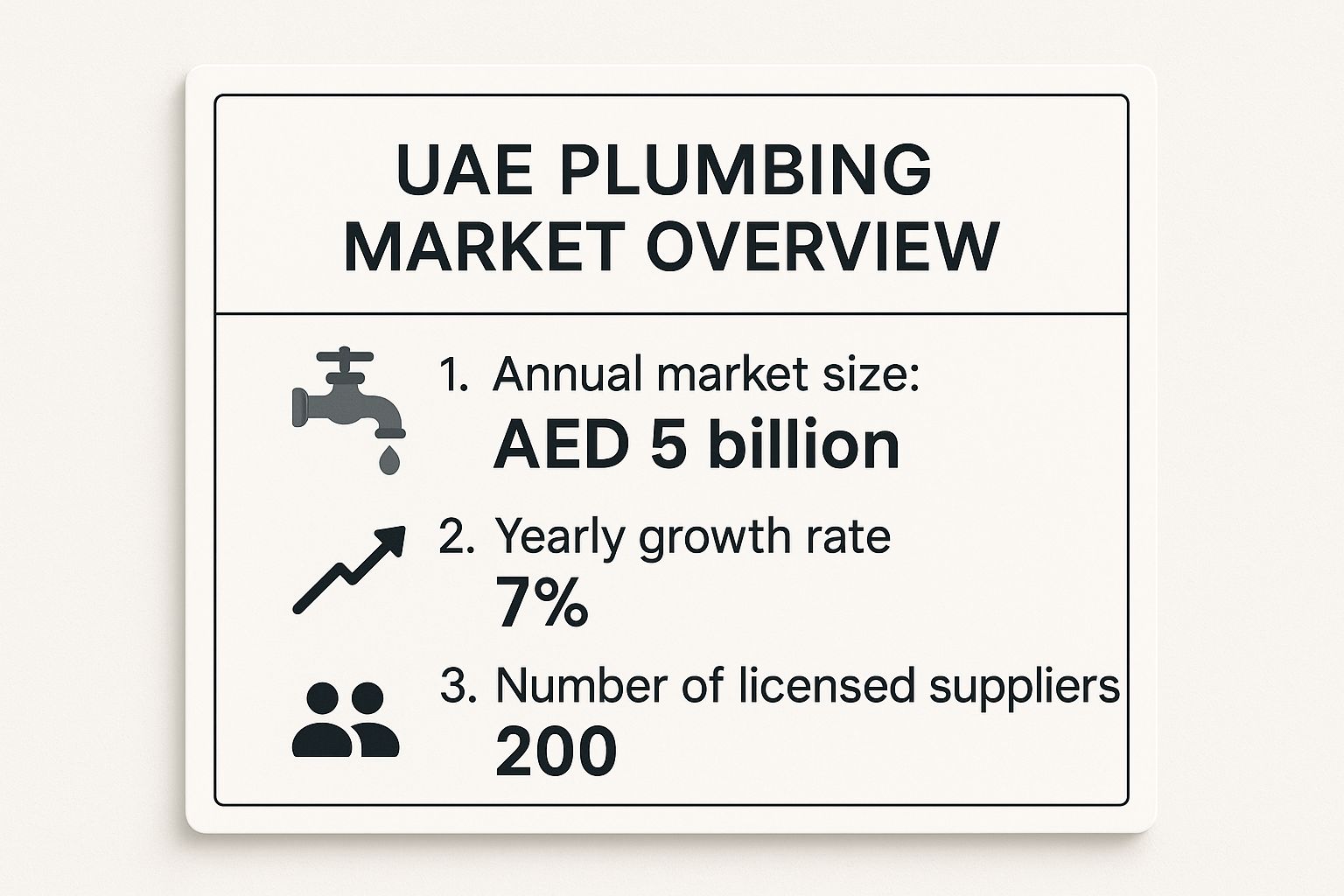
The infographic below paints a clear picture of the UAE's plumbing market, underscoring its impressive size and continued growth.
This data confirms that you have plenty of options in a healthy, competitive market, but it also means you need to choose carefully. A solid selection process is everything, and our guide to choosing a building materials supplier provides a more detailed framework to help you make the right call.
Choosing the Right Plumbing Materials for Your Project
Before you even think about contacting plumbing materials suppliers in the UAE, you need a solid game plan. The materials that are perfect for a suburban villa could be a complete disaster in a high-rise tower on the coast, where the salty air is a constant challenge.
It really boils down to this: your choice of material directly impacts the building's lifespan, how much you'll spend on maintenance down the road, and whether you'll even comply with local codes. In the UAE, you can't ignore the extreme heat, constant humidity, and high water salinity. Choosing the wrong pipe isn't just a simple mistake; it's a ticking time bomb for future problems.
A Look at Common Plumbing Materials
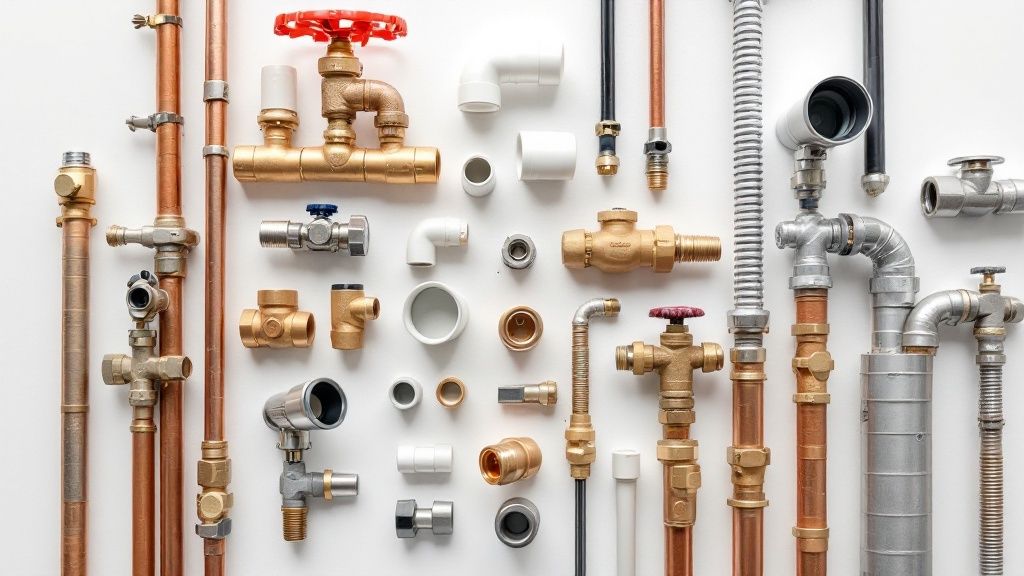
Let’s get into the specifics of what you’ll typically find on the market here. Each material has its own set of pros and cons, and knowing the difference is key.
PVC (Polyvinyl Chloride): This is the workhorse for drainage, waste, and vent (DWV) systems. It’s lightweight, affordable, and its smooth interior keeps things flowing. Best of all, it's completely immune to corrosion, which is a huge plus in coastal areas. Just remember, PVC isn't built for hot water lines—it simply can't handle the heat.
Copper: For years, copper has been the premium choice for potable water supply lines. It's incredibly durable, naturally stops bacteria from growing, and handles high pressure and heat like a champ. The only catch? In the UAE's sometimes acidic or highly saline water, copper can be prone to corrosion if it isn't the right grade or properly protected.
Stainless Steel: When you absolutely cannot compromise on durability and corrosion resistance, stainless steel is your answer. Specifically, Grade 316L is the gold standard for fighting off the chloride corrosion common in coastal developments and desalination plants. Yes, it costs more upfront, but its incredible lifespan often makes it the smarter investment.
I see this all the time on projects in Dubai Marina or Palm Jumeirah. The spec calls for Grade 316L stainless steel for any external water systems, but then they'll use a high-quality PVC for all the internal drainage. It’s a smart, hybrid approach that gives you top-tier performance where it matters most while managing the overall budget.
Matching the Material to the Job
The real skill is aligning a material's inherent strengths with the specific demands of your project. Your supplier has the inventory, but you have to drive the specification.
Think about an industrial facility that deals with chemical waste. You can't just use standard PVC or copper; they'd corrode in no time. For a job like that, you'd need to look at specialized materials like CPVC (Chlorinated Polyvinyl Chloride) or even fibreglass-reinforced plastic (FRP), which are built to handle aggressive chemicals and higher temperatures.
This is where clear communication makes all the difference. When you can walk in and explain exactly why you need a certain pressure rating for your PVC or a specific grade of stainless steel, you're not just a customer anymore—you're an informed partner. That knowledge ensures your supplier can get you the right products and that your project is built to last from the very foundation.
How to Vet Your PVC Pipe Supplier
In the UAE's bustling construction scene, PVC is practically everywhere. But here's something I've learned over the years: not all PVC pipes are made the same. When you're sifting through the long list of plumbing materials suppliers in uae, it's tempting to just look at the price tag. That can be a costly mistake. The quality of that pipe can make a huge difference, affecting everything from how easily it installs to how long the entire system will last.
The market for PVC pipes in the UAE is massive—we're talking an estimated USD 280 million in 2024, and it's only getting bigger. Everyone loves it because it's affordable and doesn't rust. But with that kind of growth, you get a flood of options, and frankly, some of them are subpar. That’s why you have to do your homework.
Verifying Quality and Certifications
First things first, you need to ask for proof. Any supplier worth their salt won't hesitate to show you documentation that backs up their quality claims. Don't be shy about getting into the details.
- ISO Certifications: Keep an eye out for ISO 9001. This isn't just a piece of paper; it shows they have a solid quality management system in place.
- Technical Data Sheets: This is where you find the nitty-gritty details. What are the pressure ratings? How much heat can it handle? The answers should be right here.
- Third-Party Test Reports: You can't beat independent verification. These reports give you an unbiased look at the pipe’s actual strength and durability.
It's also crucial to understand how they operate internally. Strong Quality Assurance in Manufacturing isn't just a buzzword; it's the framework that ensures every single pipe they ship out is consistent and reliable.
A supplier who gets cagey about sharing technical specs or certifications is a major red flag. Transparency is everything. It shows they stand behind their product and can be a trustworthy partner for your project.
Assessing Supplier Reliability and Expertise
Once you've checked the paperwork, it's time to look at the supplier's real-world performance. In the UAE's fast-moving construction world, a supplier who can’t deliver on schedule can throw your entire project off track.
Their expertise is just as important. Do they know their stuff? For example, can they walk you through why you'd want CPVC for hot water lines instead of standard UPVC? Having a supplier who is also a knowledgeable resource is incredibly valuable. If you want to get a head start, our guide on uPVC versus CPVC pipes can give you some great background for those conversations.
Finding the Right Stainless Steel for Your Project
When your project demands the best in durability and corrosion resistance, stainless steel is the only way to go. But when you're working with plumbing materials suppliers in uae, getting the right grade is absolutely critical, especially in the tough coastal climate here. Making the wrong call can spell disaster for your system down the road.
The market for stainless steel plumbing in the UAE is booming for a reason—it’s valued at around USD 558 million in 2024 and is only expected to climb. This isn't just a trend; it's a direct reflection of the material's ability to perform in high-stakes situations. You can dive deeper into the market data over on TechSci Research.
It's All About the Grade
Let's get one thing straight: not all stainless steel is the same. Understanding the key differences between the common grades is the first step in making sure your plumbing system can handle the local environment.
Grade 304: Think of this as your reliable, all-around performer. It has solid corrosion resistance and works perfectly for most indoor plumbing applications where it won't face extreme conditions.
Grade 316L: This is the heavy-hitter. It includes molybdenum, an element that dramatically enhances its ability to fight off chlorides. If your project is anywhere near the coast or will handle desalinated water, 316L is non-negotiable. It’s your best defense against the pitting and corrosion that saltwater inevitably causes.
I’ve seen it happen time and again: a team tries to save a little on the initial budget by using Grade 304 for external pipework on a coastal project. A few years later, they’re dealing with major maintenance headaches and replacements that wipe out any initial savings. Always, always get the material grade certificates from your supplier.
Look for a Partner, Not Just a Product
The best suppliers do more than just sell you pipes and fittings. They bring real value to the table that can make or break your installation.
When you're vetting potential suppliers, ask if they offer custom fabrication. This service is a game-changer for projects with tricky layouts, as it minimizes the need for on-site welding, which can introduce weak points into the system.
Also, don't forget to dig into their warranty policies and the level of technical support they provide. A supplier who backs up their products with a strong warranty and has experts ready to offer advice is more than a vendor—they’re a partner. Our guide on finding the top stainless steel suppliers in UAE can point you toward partners who deliver that complete package, ensuring your investment pays off for years to come.
From Transaction to Partnership: Building Stronger Supplier Relationships
The best projects I’ve seen aren't just built with quality materials; they’re built on solid relationships. It’s easy to fall into the trap of treating your plumbing materials suppliers in UAE as just another line item on a budget, but that's a short-sighted view. The real magic happens when you shift from making simple transactions to building a genuine partnership.
This isn’t just about getting a better price. A true strategic partner gives you a competitive edge. Think about it: you get first dibs on inventory when supplies are tight, you have an expert on call for technical advice, and you get a heads-up on market changes before they hit everyone else. It becomes a relationship where everyone wins.
Creating a Bedrock of Trust
Like any good foundation, a supplier partnership has to be built on trust. And trust isn't built overnight; it's earned through consistent, reliable actions.
- Be the Client They Want to Keep: The fastest way to become a supplier's favorite client? Pay your invoices on time. It sounds simple, but it signals that you're a reliable and professional partner.
- Keep Them in the Loop: Don’t surprise your supplier with massive, last-minute orders. Giving them clear project timelines and a forecast of your material needs helps them manage their inventory, which ultimately helps you.
- Negotiate for the Long Haul: It's tempting to squeeze every last dirham out of a deal. But negotiations should be about finding a fair price that allows both of you to thrive. A win-win agreement builds goodwill that pays dividends down the road.
Think of a strong partnership as your project's insurance policy. When a crisis hits—and it will—a trusted supplier will move mountains for you. For a difficult, price-obsessed customer? You'll just be another name on a list.
Building these kinds of resilient relationships is a core component of effective supply chain risk management strategies. A dependable supplier isn't just a vendor; they're your first line of defense, helping you keep projects moving forward no matter what challenges arise.
When you're sourcing plumbing supplies in the UAE, a few common questions always seem to pop up, especially when you're juggling a complex project. Getting straight answers is key to keeping everything on track and, more importantly, on budget.
One of the first things people ask is about product certification. How can you be sure the pipes and fittings you're buying actually meet the standards set by authorities like the Dubai Municipality (DM)? The answer is simple: ask for the paperwork. A reliable supplier will have material certificates and technical data sheets ready to go. If they hesitate, that's a red flag.
Then there's the issue of logistics. In the UAE's construction scene, everything moves fast. A single day's delay in materials can throw off an entire project schedule. Before you sign anything, have a frank conversation about delivery. What are their typical lead times? How do they handle a last-minute, urgent order? You need a partner who can keep up.
Is This Material Right for the Job?
A question I hear all the time from project managers is, "Will this actually hold up in the UAE's climate?" It's a valid concern. Between the intense heat and the salty air along the coast, a lot of materials just don't last.
This is where you're not just buying a product; you're buying a supplier's expertise. A good one will be able to tell you exactly why 316L stainless steel is a must for a beachfront villa, or why one type of PVC is better for high-temperature water lines than another. Their guidance can save you from costly failures down the road.
Here's the single most important question you should ask any potential supplier: "Can you give me a reference from a recent, similar project?" This moves past the sales pitch and gives you concrete proof they can deliver.
Finally, everyone wants to know about pricing for bulk orders and credit options. Of course, the price matters. But don't let it be the only thing you look at. Sometimes, paying a little more for a supplier who guarantees they'll have what you need in stock and offers flexible payment terms is the smarter long-term move.
For a partner that provides certified materials, reliable logistics, and expert technical support, trust Yasu Trading Co. LLC. Explore our extensive range of plumbing supplies at https://yasutrading.com.