Expert Plumbing Works Dubai | Regulations, Costs & Services
Getting plumbing works in Dubai right is a whole different ball game. It’s more than just connecting pipes; it's about engineering a water system that can take the heat—literally—while ticking all the boxes for some of the world's strictest building codes. Think of it as a blend of rugged engineering and local know-how. Get it wrong, and you’re looking at serious problems. Get it right, and you have a resilient system built for the long haul.
The Blueprint for Plumbing in a Dynamic City
Let's be clear: plumbing here isn't like anywhere else. The scorching summer temperatures and high humidity put a unique strain on every single component. Materials that work perfectly well in Europe or North America can break down surprisingly fast here. Choosing the wrong pipes or fittings isn't a small mistake; it's a fast track to leaks, property damage, and a lot of headaches.
Then you have the regulations. Dubai is laser-focused on water conservation and sustainability, and that's not just talk. Authorities like the Dubai Municipality (DM) and the Dubai Electricity and Water Authority (DEWA) have rules that are set in stone. These aren't just guidelines; they dictate everything from the fixtures you can install to how the entire system is designed. It's all about building safely and efficiently to support the city's green vision.
Understanding the Core Components
Every successful plumbing project follows a clear path, and knowing these steps helps everyone from property owners to developers stay on the same page. It’s a journey with a few critical milestones.
Here’s what a typical project workflow looks like:
- Strategic Design and Planning: This is where it all starts. An expert team creates a detailed blueprint that works with the architectural design, meets all building codes, and prioritises water efficiency.
- Regulatory Approvals: Before a single pipe is laid, you need the green light. That means submitting your plans to authorities like DEWA to secure a No Objection Certificate (NOC). This is non-negotiable.
- Material and Fixture Selection: This is a crucial decision point. You need to pick components that won't corrode or fail under extreme heat, ensuring the system lasts for years.
- Professional Installation and Testing: The work must be done by licensed professionals. Once installed, the entire system undergoes rigorous pressure testing to hunt down any potential leaks.
- Final Inspections and Handover: The last step involves a final check from the authorities. They inspect the work to ensure full compliance before signing off and officially commissioning the system.
Think of a plumbing system as the circulatory system for a building. Just like our bodies need healthy, unobstructed arteries, a building in Dubai needs a perfectly engineered plumbing network to supply clean water and remove waste. Any weak link in that chain threatens the health of the entire structure.
This guide is your roadmap. We’re going to walk through each of these stages, giving you the practical insights you need to make sure your plumbing works in Dubai are not just compliant, but built to last. From navigating the legal maze to choosing the right team for the job, you’ll be ready to manage your project with confidence.
Understanding Dubai's Plumbing Rules and Regulations
Before a single pipe is laid or a fixture is installed in Dubai, you have to get your head around the local rules. It's easy to see regulations as just bureaucratic red tape, but they're the bedrock of a successful project. They ensure everything is safe, efficient, and—most importantly—legal.
Think of it like this: the rules aren't just hurdles to jump over; they're the essential framework holding your entire plumbing system together.
Two main players set the stage for all plumbing works: the Dubai Municipality (DM) and the Dubai Electricity and Water Authority (DEWA). Each has its own focus, but their roles are deeply connected. Getting to grips with what each authority requires is the very first step toward a project that runs smoothly.
DEWA’s world revolves around the water supply itself, from the main city line right up to your property's meter. Their job is to make sure clean water gets to you safely and without waste. On the other hand, DM looks at the bigger picture, setting the building codes that govern the plumbing systems inside your property line.
DEWA's Role in Water Connections
DEWA is meticulous, and for good reason. Their guidelines are all about protecting the public water network. Before any major plumbing work can even start, your contractor needs to get a No Objection Certificate (NOC) from them. This is basically DEWA’s seal of approval, confirming your plumbing design is up to snuff.
Their rulebook covers a few critical areas:
- Material Standards: DEWA has a list of approved materials for pipes and fittings. This isn't about limiting choice; it's about preventing contamination and making sure everything is built to last.
- Backflow Prevention: They have strict rules to stop contaminated water from siphoning back into the public supply. It’s a non-negotiable public health measure.
- Water Meter Installation: There are precise specifications for how water meters must be installed to ensure billing is accurate and monitoring is effective.
Trying to sidestep these standards is a recipe for disaster. You’re looking at hefty fines, long delays, and the real possibility of DEWA refusing to connect your property to the mains.
Dubai Municipality and the Green Building Regulations
Dubai Municipality integrates plumbing into the wider context of building safety and sustainability. Their most important contribution here is the Al Sa'fat Green Building Regulations, which are mandatory for all new buildings.
These rules aren’t just a nice-to-have; they’re a core part of Dubai's vision to reduce the environmental footprint of its buildings, with a major focus on water conservation. For any plumbing project, this means a fundamental shift toward high-efficiency systems and fixtures.
Adherence to these regulations is not just about environmental responsibility; it's about future-proofing your investment. A compliant system uses less water, resulting in lower utility bills and contributing to the long-term sustainability goals of the city.
With the region's rapid urbanisation, these forward-thinking policies are more critical than ever. The demand for skilled plumbers who can install and maintain eco-friendly solutions like low-flow toilets and smart irrigation systems is booming, aligning directly with the UAE’s Vision 2030.
The Al Sa'fat system gets specific about what’s required, directly influencing your plumbing choices:
- Water-Efficient Fixtures: You’ll need to use fixtures like taps, showerheads, and toilets that have low flow rates and meet specific Water Efficiency Label (WELS) ratings.
- Recycling Systems: For larger buildings, installing systems for greywater recycling and condensate recovery is often required to slash reliance on fresh water.
- Leak Detection: The regulations promote advanced leak detection systems to prevent the silent water waste that can happen over a building’s life.
These codes can seem complex, but they’re absolutely essential. To get a better handle on them, you can learn more about Dubai building codes and essential regulations in our detailed guide. Staying compliant means your project won't just be legal—it will be safe, efficient, and perfectly in line with Dubai’s sustainable future.
A Step-by-Step Look at a Typical Dubai Plumbing Project
Getting your head around a full-scale plumbing project can feel daunting. But when you break it down, it's really just a series of well-defined stages. Whether it's for a brand-new villa or a major commercial fit-out, any professional plumbing works in Dubai will follow a logical path from start to finish.
This journey isn’t just about connecting pipes; it’s a carefully managed process designed to meet Dubai's notoriously high standards for quality and safety. Let's walk through what you can expect at each step.
Stage 1: Initial Consultation and Design
Everything starts with a conversation. This is where you, your architect or consultant, and the plumbing contractor all get in the same room to hash out the project's vision. We’re not just talking about where the taps and toilets will go – this is a strategic session to map out the entire water ecosystem for the building.
The big talking points usually include:
- Water Demand Assessment: How much water will the building actually use? We need to calculate this to size the whole system correctly from the get-go.
- Fixture and Appliance Needs: A detailed list of every single fixture, from kitchen sinks to bathroom showers and everything in between.
- Regulatory Check: Making sure the initial ideas are even feasible and line up with the strict guidelines from both DEWA and Dubai Municipality.
Once everyone’s on the same page, the plumbing engineers get to work, creating a full set of drawings and schematics. This is the blueprint for the entire job, showing every pipe route, valve location, and drainage layout.
Stage 2: Approvals and Sourcing Materials
With a solid design in hand, it's time for the paperwork. Your contractor will take the lead, submitting all the plumbing plans to DEWA and any other authorities to get the crucial No Objection Certificate (NOC). This isn't optional; it's the official green light confirming your project is up to code.
At the same time, the shopping list comes out. The contractor starts sourcing all the pipes, fittings, fixtures, and equipment specified in the plan. In a place like Dubai, this means choosing materials built to last in our climate—think corrosion-resistant pipes and water-saving fixtures that meet the Green Building Regulations.
Stage 3: Installation and System Assembly
Now for the hands-on part. This is where licensed plumbers bring the drawings to life, starting with what's known as the "first fix." This is all the behind-the-scenes work, installing the hidden pipework for water and drainage inside the walls, floors, and ceilings.
This covers:
- Laying the main water supply lines from the DEWA connection point.
- Running the entire network of hot and cold water pipes.
- Putting in all the drainage and sewer lines.
After the first fix is done and the walls are closed up and finished, it's time for the "second fix." This is the satisfying part where you see all the visible elements installed. Your chosen taps, sinks, toilets, showers, and water heaters are finally connected to the hidden network of pipes.
This is a good visual breakdown of the services involved.
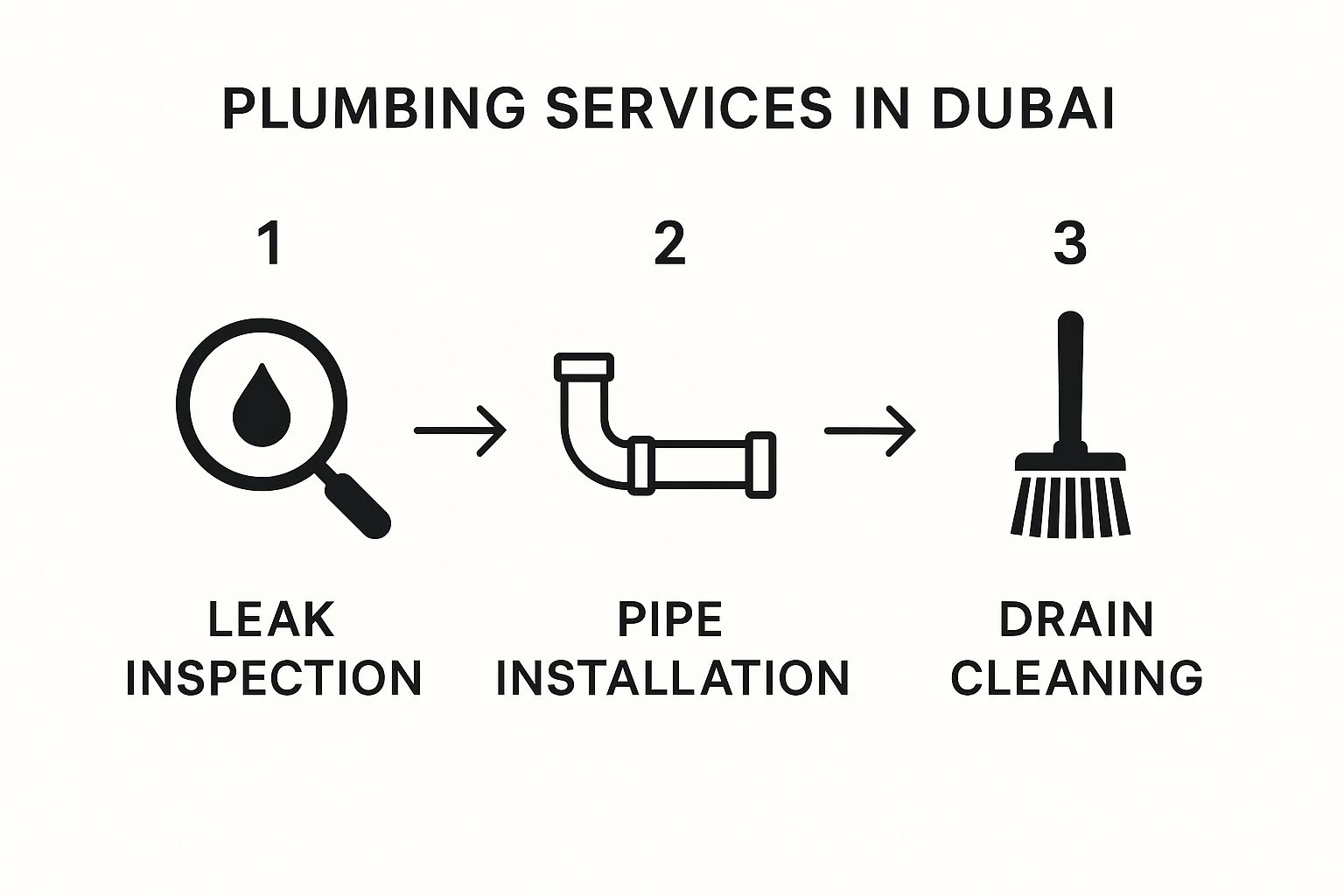
From diagnostics to final maintenance, these activities are the bread and butter of any reliable plumbing operation.
Stage 4: Rigorous Testing and Inspection
Before anyone signs off, the entire system has to be put through its paces. The most important of these is the pressure test. Here, the pipes are filled with water or air at a much higher pressure than normal to expose even the tiniest, pinhole-sized leak.
This testing phase is the project's ultimate quality check. It's far better to identify and fix a minor leak in an exposed pipe now than to deal with major water damage behind a finished wall later.
Once the contractor is happy with their own tests, it’s time for the officials. An inspection is scheduled with DEWA and the Dubai Municipality. Their inspectors will come to the site to physically verify that the installation perfectly matches the approved plans and ticks every regulatory box.
The sheer amount of construction in the region keeps this industry booming. In fact, the HVAC and plumbing market in the Middle East is on track to hit USD 18.508 billion in 2025. The UAE’s slice of that pie is about 11.66%, showing just how central our infrastructure development is. For a deeper dive, you can explore more about the regional plumbing and HVAC market dynamics and find extra insights into this growing sector.
Once the inspectors give their final approval, they issue the completion certificates. This is the official sign-off on all plumbing works and gives the go-ahead to make the water connection live. The last step is the handover, where your contractor provides all the documentation, warranties, and "as-built" drawings, marking a successful end to the project.
Choosing the Right Materials and Fixtures for Dubai's Climate
Picking the right components for your plumbing system is one of the most critical decisions you'll make, especially in a city as demanding as Dubai. It's not just about pipes and taps; it's about building a system that can handle extreme heat, high humidity, and mineral-rich water day in and day out.
Get this part wrong, and you’re setting yourself up for a future of leaks, premature failures, and expensive repairs.
Think of your plumbing materials as the very foundation of your system's long-term health. You wouldn't build a skyscraper on soft sand, and you shouldn't install a plumbing network with materials that will buckle under the local climate. This is precisely where professional insight into plumbing works in Dubai proves its worth, protecting your investment right from the start.
The Workhorse Piping Materials in Dubai
Walk onto any construction site in Dubai, and you'll see a few key types of piping materials being used. Each one has its place, and understanding the pros and cons helps you have a much more productive conversation with your contractor about what your property truly needs.
Here’s a quick rundown of the most common players:
- PPR (Polypropylene Random Copolymer): This is a real favourite for both hot and cold water lines, and for good reason. It’s brilliant at handling high temperatures, it's lightweight, and the fusion-welded joints create a seamless, leak-proof network.
- PEX (Cross-Linked Polyethylene): The big win for PEX is its flexibility. It can snake around corners with fewer fittings, which means fewer potential points for leaks to develop down the line. It's also great at resisting the scale buildup and corrosion that Dubai’s water can cause.
- Copper: The old-school, tried-and-true option. Copper is naturally resistant to corrosion and even has antimicrobial properties. The downside? It's often pricier and demands a skilled hand to solder the joints properly.
- Stainless Steel: This is the top-tier choice for absolute durability. It’s incredibly resistant to corrosion, high temperatures, and pressure. For large-scale projects or luxury properties where you simply can't afford a failure, stainless steel is the way to go.
Making an Informed Decision on Pipes
To make sense of these options, it helps to see them side-by-side. The best choice really hinges on your budget, the scale of the project, and what you expect in terms of performance.
This table breaks down the key differences to help you weigh your options.
Comparison of Common Plumbing Pipe Materials in Dubai
| Material | Pros | Cons | Best For |
|---|---|---|---|
| PPR | Excellent heat resistance, leak-proof fusion joints, affordable, corrosion-resistant. | Can become brittle with prolonged UV exposure (if not protected). | Hot and cold water supply lines in residential and commercial buildings. |
| PEX | Highly flexible (fewer joints), resistant to scale and chlorine, easy to install. | Cannot be used outdoors without UV protection, susceptible to damage from rodents. | Interior plumbing, especially for retrofits and radiant heating systems. |
| Copper | Very durable, naturally antimicrobial, corrosion-resistant, recyclable. | Higher material and labour costs, can be susceptible to acidic water. | Premium residential projects and water lines where hygiene is paramount. |
| Stainless Steel | Extremely durable, superior resistance to corrosion and high pressure, hygienic. | Highest initial cost of all options, requires specialized installation. | High-rise buildings, industrial applications, and luxury projects. |
Ultimately, investing in quality piping pays for itself by preventing future headaches. For a wider view on material selection, our guide on how to choose the right construction materials for Dubai's climate offers a great perspective.
The move towards more robust materials is clear. The UAE stainless steel plumbing pipes market, for example, was valued at around USD 558 million in 2024 and is expected to hit USD 879 million by 2030. This isn't surprising—its ability to withstand harsh conditions and maintain water purity makes it a smart long-term investment. You can learn more about the rise of stainless steel in the UAE market to see where the industry is heading.
Don't Forget Water-Saving Fixtures
Your material choices aren't just about what's behind the walls. The fixtures—your taps, toilets, and showerheads—are where you interact with the system every day. They're also your biggest opportunity to conserve water, which is a massive priority in Dubai.
Thanks to DEWA’s conservation initiatives and the Dubai Municipality's Green Building Regulations, choosing water-efficient fixtures isn't just a nice-to-have anymore; it's a requirement. The bonus? It directly lowers your utility bills.
Always look for fixtures with a high Water Efficiency Label (WELS) rating. These are designed to give you great performance while using a fraction of the water.
- Low-Flow Toilets: A modern dual-flush toilet can cut water use by over 50% compared to an old single-flush model.
- Aerated Taps: These clever taps mix air into the water stream, so it feels just as powerful but uses far less water.
- Water-Saving Showerheads: You can get a fantastic shower experience while significantly cutting down your water consumption per minute.
By being deliberate about both the hidden pipework and the visible fixtures, you create a plumbing system that is smart, efficient, and built to last. It’s this holistic approach that ensures your property’s water infrastructure is perfectly suited to Dubai, delivering reliable performance and real value for years to come.
How to Select a Reliable Plumbing Contractor in Dubai
Let's be honest: your project's success rests squarely on the shoulders of the team you hire. Finding the right contractor for plumbing works in Dubai isn't just about finding someone to connect a few pipes. It's about finding a partner who gets the local regulations, knows how to handle the climate's demands, and is committed to quality.
A great contractor prevents problems before they even start. A bad one? Well, they tend to create them.
Think of this selection process as your first and most important line of defence against shoddy work, endless delays, and nasty budget surprises. You're not just hiring a plumber; you're entrusting them with the circulatory system of your property. A few smart checks upfront will help you spot the true professionals and sidestep the rest.
The Non-Negotiable Checklist
Before you get into the nitty-gritty of your project, there are a few absolute must-haves. If a potential contractor hesitates or can't produce these, it’s a massive red flag. Don't walk away—run.
Make sure your vetting process covers these essentials:
- Valid Licensing and Registration: The company must be officially licensed by the Dubai Department of Economy and Tourism (DET) and registered with the Dubai Municipality. A legitimate business will have no issue proving this. For context, you can learn more about securing a technical service license for mainland operations, which is standard for a professional plumbing company.
- Comprehensive Insurance: Always ask to see their contractor's all-risk insurance and workman's compensation policies. This is your protection against liability if an accident or damage happens on your property. It’s not just a nice-to-have; it's crucial.
- DEWA Accreditation: Their plumbers need to be certified and approved by DEWA, especially for any work touching the main water connections or metering.
These aren't just pieces of paper; they are the baseline for legal, professional work in Dubai's construction scene.
Assessing Experience and Reputation
Once the paperwork checks out, it's time to dig into their real-world performance. A solid track record is your best predictor of how your own project will go.
Start by asking for a portfolio of their completed work, focusing on projects similar in size and scope to yours. But don't just flip through glossy photos. Ask for references—and actually call them. When you speak to a past client, ask about the contractor’s professionalism, communication, and whether they stayed on schedule and within budget.
A contractor's portfolio shows you what they can do, but client references tell you what they actually do. Hearing directly from a past client provides unfiltered insight into their work ethic and problem-solving skills.
Next, check online reviews, but do it with a healthy dose of scepticism. Look for consistent themes in the feedback instead of getting swayed by a single five-star rave or a one-star rant. A pattern of praise for good communication, punctuality, and quality work is a fantastic sign.
And remember, their work is only as good as the materials they use. A dependable contractor partners with reputable suppliers. If you want to learn more about this, check out our guide on https://yasutrading.com/blog/finding-a-top-plumbing-fittings-store-in-the-uae/.
Frequently Asked Questions About Plumbing in Dubai
Even when you have a solid plan, plumbing work always seems to bring up a few specific questions. To help you handle things on the ground, we’ve put together answers to some of the most common queries we hear about plumbing works in Dubai.
Getting your head around these details will help you make smarter decisions, whether you're just scheduling routine maintenance or staring down an unexpected plumbing emergency. Think of this as practical advice for the real-world issues property owners face every day.
How Often Should I Inspect My Plumbing System?
For a typical apartment or villa, a professional plumbing inspection every two years is a pretty safe bet. This gives an expert the chance to catch things like minor corrosion, tiny hidden leaks, or weird pressure drops before they turn into a full-blown disaster.
Now, for commercial buildings, hotels, or any place with heavy water usage, you’ll want to bump that up to an annual inspection. The system is under constant strain, so more frequent check-ups are key to preventing a business-halting failure.
What Are the Most Common Plumbing Problems?
You start to see the same plumbing headaches pop up again and again in Dubai’s homes and buildings. Knowing what they are can help you keep an eye out.
The usual suspects include:
- Clogged Drains: A classic, often caused by a nasty mix of sand, grease, and other gunk.
- Leaking Fixtures: Those constantly dripping taps or running toilets waste more water than you’d think.
- Low Water Pressure: A common gripe, especially in high-rise buildings where complex pump systems are at play.
- Water Heater Malfunctions: Sediment buildup or a failing component is usually the culprit here.
On top of that, the high mineral content in our local water supply often leads to limescale buildup. It’s a silent killer for efficiency, slowly choking pipes and appliances until you have a serious blockage. Honestly, regular maintenance is the only real way to stay ahead of these recurring problems.
"Proactive maintenance is the cornerstone of a healthy plumbing system. It's far more cost-effective to address a small issue found during a routine check than to pay for emergency repairs and water damage after a system failure."
Do I Need a Permit for Minor Plumbing Repairs?
Good news: for the small stuff, you don’t need a permit from DEWA or Dubai Municipality. We’re talking about simple jobs like fixing a leaky tap, swapping out a showerhead, or clearing a basic clog inside your property.
However, the moment the work gets serious, a permit is mandatory. This applies to anything that involves altering the plumbing layout, adding a new bathroom, replacing main water lines, or touching the connection to the DEWA supply. These jobs must be handled by a licensed contractor who knows how to navigate the official approval process and keep everything above board.
For all your projects, from major installations to sourcing the highest quality fixtures, Yasu Trading Co. LLC provides the building materials and plumbing supplies you need to succeed. Find durable, compliant, and reliable products for any scale of plumbing work by visiting us at https://yasutrading.com.