A Complete Guide to Ply Board Sizes in the UAE
Walk into any lumber yard or building material supplier, and you'll quickly notice one size dominates the plywood racks. The industry standard, both here in the UAE and around the world, is the 2440mm x 1220mm sheet.
This familiar dimension, which works out to about 8 feet by 4 feet, is the go-to for a massive range of applications, from construction and joinery to furniture making.
Your Quick Reference for Ply Board Sizes
Knowing the standard ply board size is ground zero for planning just about any project. Whether you're putting up wall sheathing or building a set of custom cabinets, that 8x4 sheet is your starting point. This size wasn't just picked out of a hat; it’s a smart balance between being large enough for substantial projects, manageable for transport, and efficient for manufacturers to produce. This universal adoption makes life easier for everyone, cutting down on waste and simplifying logistics on job sites across the Emirates.
This standard is particularly crucial in fast-growing construction hubs. In the UAE and the broader Gulf region, plywood dimensions have lined up with these international norms. The 2440 mm by 1220 mm sheet reigns supreme because it's easy for a couple of workers to handle and generates minimal offcuts. The region's infrastructure boom has only solidified its position, as detailed in reports on the plywood market's growth.
Standard Ply Board Dimensions at a Glance
For a quick and easy lookup, here are the most common plywood sheet dimensions you’ll find. We’ve listed them in both metric and imperial units.
If you need a more thorough breakdown of how these sizes affect your project planning and material estimates, be sure to check out our complete guide on plywood board sizes in the UAE.
| Measurement System | Length | Width |
|---|---|---|
| Metric | 2440mm | 1220mm |
| Imperial | 8 feet | 4 feet |
This table covers the single most prevalent size, but remember that thickness and grade are just as important when making your selection.
Choosing the Right Plywood Thickness
While the standard 2440mm x 1220mm sheet size gets a lot of attention, picking the right thickness is arguably just as important for your project's success. The thickness of a plywood sheet is directly tied to its strength, weight, and how it will perform under stress. It’s a decision that can make or break your work.
Go too thin, and you risk a flimsy result that could sag or even fail completely. Go too thick, and you're just adding unnecessary weight and driving up your material costs. It's all about finding that sweet spot. For purely decorative jobs like wall panelling or the bottom of a drawer, a lightweight 3mm or 4mm sheet is usually more than enough. But for anything that needs to bear a load, you'll need to step up.
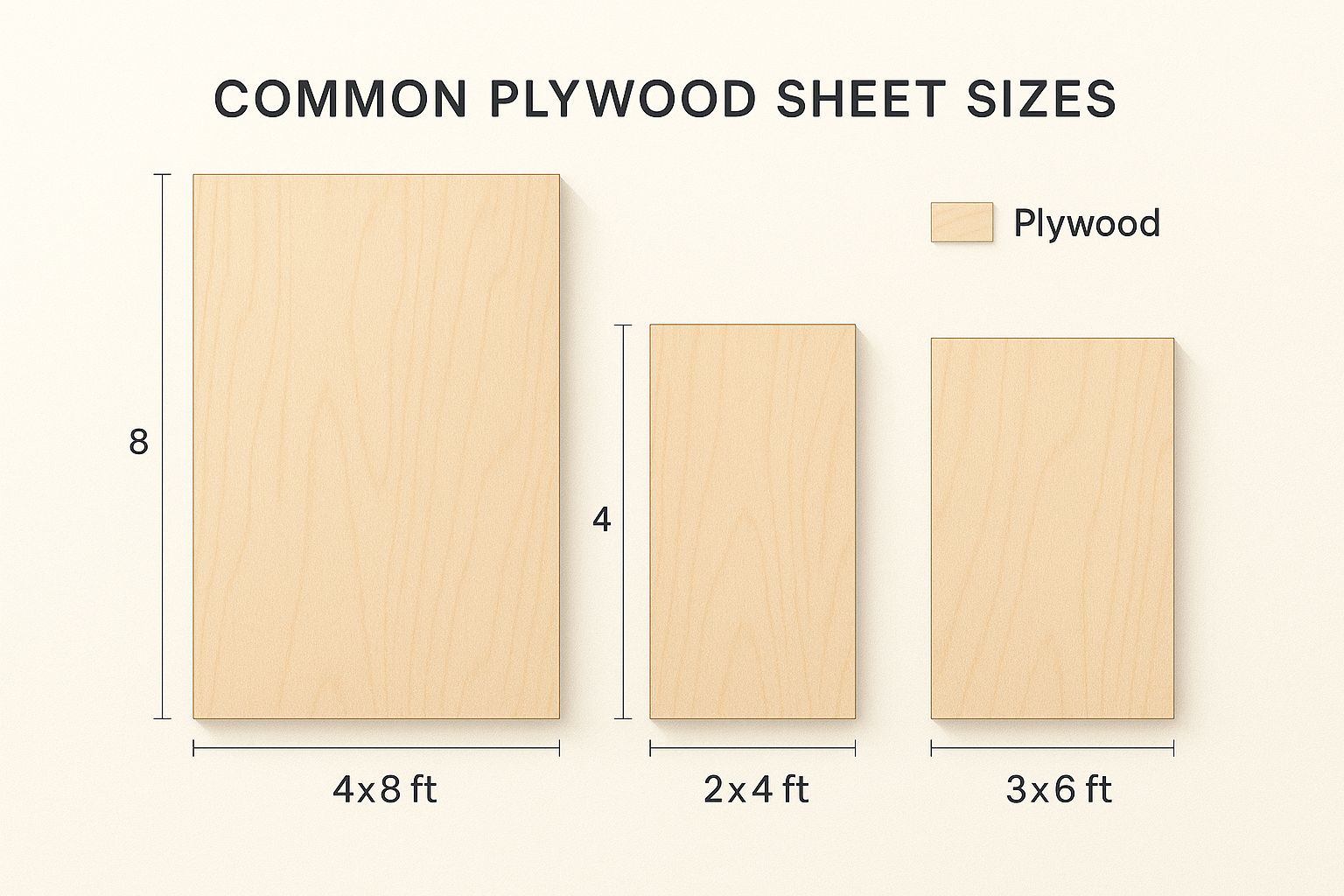
This image gives you a great visual feel for how the different standard ply board sizes stack up against each other.
Seeing them side-by-side really helps you picture the scale of the material you'll be working with.
Plywood Thickness and Corresponding Applications
To make things easier, I've put together a quick reference table. It breaks down the most common plywood thicknesses we see here in the UAE and what they're typically used for. Think of it as a starting point to help you narrow down your options.
| Thickness (mm) | Common Applications | Key Characteristics |
|---|---|---|
| 3-4mm | Drawer bottoms, cabinet backs, decorative panelling, craft projects, laser cutting. | Very flexible and lightweight. Not intended for structural support. |
| 6-9mm | General joinery, shelving (for light items), wall sheathing, temporary hoardings. | A good balance of lightness and rigidity for non-structural tasks. |
| 12mm | Cabinet carcasses, sturdy shelving, general furniture construction, paint-grade doors. | A versatile mid-range option. Strong enough for many common uses. |
| 18mm | Subflooring, roofing, heavy-duty shelving, workbenches, concrete formwork. | The industry workhorse. Offers excellent strength and load-bearing. |
| 25mm+ | Stair treads, heavy-duty industrial flooring, robust countertops, structural beams. | Maximum strength and rigidity for the most demanding applications. |
Remember, this is a guide. The final choice always depends on the specifics of your project, like how far apart your supports are or the total weight you need to hold.
Matching Thickness to the Job
As you can see from the table, matching the thickness to the job is everything. A 12mm ply board is a fantastic all-rounder, perfect for things like cabinet bodies and general shelving where you need decent strength without the bulk.
But when you get into more demanding structural roles, you need to go thicker. The 18mm sheet is the undisputed champion for jobs that need serious support.
- 18mm Plywood: This is what professionals reach for when building heavy-duty shelving, workbenches, roofing, and subflooring. It’s also the go-to for constructing furniture frames that are built to last.
- Formwork: In the UAE's massive construction industry, 18mm ply is the standard for concrete formwork. It has the rigidity needed to hold wet concrete in place for foundations, columns, and floor slabs without bowing.
One last pro tip: for projects that demand absolute precision, get your callipers out and measure the board yourself. The "nominal" size (what it's sold as, like 18mm) can be a fraction different from the "actual" thickness after sanding. It's a tiny variance, but it can make a big difference when you're trying to get perfect, tight-fitting joints.
Navigating Plywood Grades and Quality
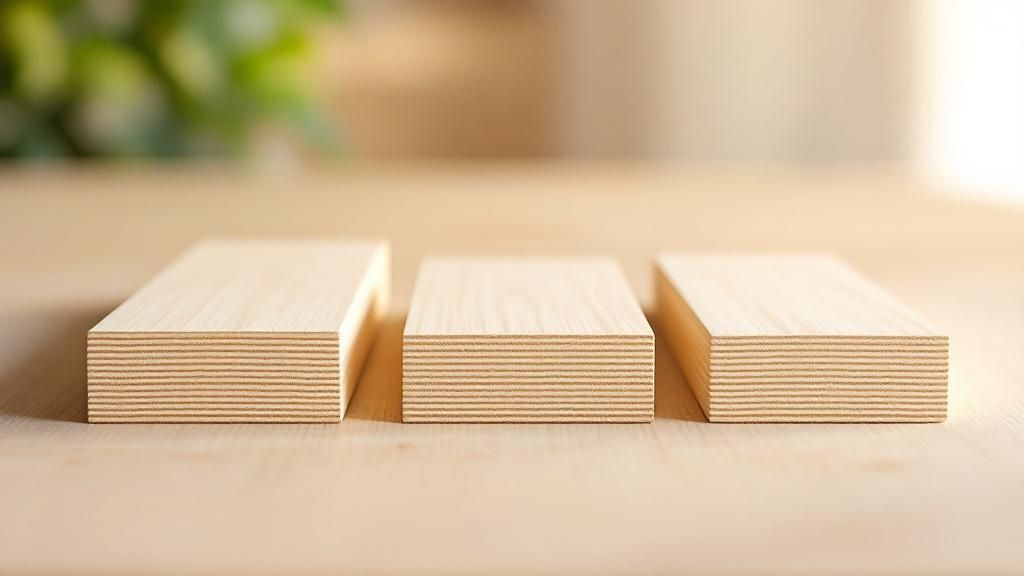
Getting the right ply board sizes and thickness is a great start, but it's only half the story. To really make sure your project looks good and lasts, you need to get your head around plywood grades. It's a straightforward lettering system—from A down to D—that tells you everything you need to know about the surface quality of the wood veneer.
Think of it this way: an A-grade sheet is top-tier, with a smooth, sanded surface that’s practically perfect. As you go down the alphabet, you’ll start to see more natural imperfections like knots, splits, and repairs. This system is your key to balancing the finish you need with the budget you have.
Understanding the Grading System
You'll often see plywood sold with a two-letter grade, something like A-C. This isn't complicated; the first letter simply rates the "face" veneer (the side you’ll see), and the second letter rates the "back" veneer.
A-Grade: This is the best you can get. It has a smooth, paint-ready surface that’s perfect for high-end furniture, cabinetry, or any architectural feature where a flawless look is non-negotiable.
B-Grade: Still a solid, high-quality choice. It might have a few minor, professionally repaired defects like small knots or plugs, but it’s a great all-rounder for most furniture and projects where a good finish matters.
C-Grade: Here, you'll find more noticeable blemishes. Expect knots up to 38mm across and some potential discolouration. It’s a smart, cost-effective pick for structural work like subflooring or wall sheathing where strength is the priority, not looks.
D-Grade: This is the most budget-friendly option, allowing for larger knots and unrepaired defects. D-grade is strictly for structural use where it will be completely covered.
Choosing the right grade is a classic case of form versus function. You can save a lot of money by not paying for a pristine finish on a part that will never be seen. For instance, a C-D grade sheet is perfect for roof decking—it gives you all the strength you need without the premium price of an A-B board designed for visible joinery. That kind of smart selection is crucial for keeping any project budget in check.
Getting to Grips with Plywood Types
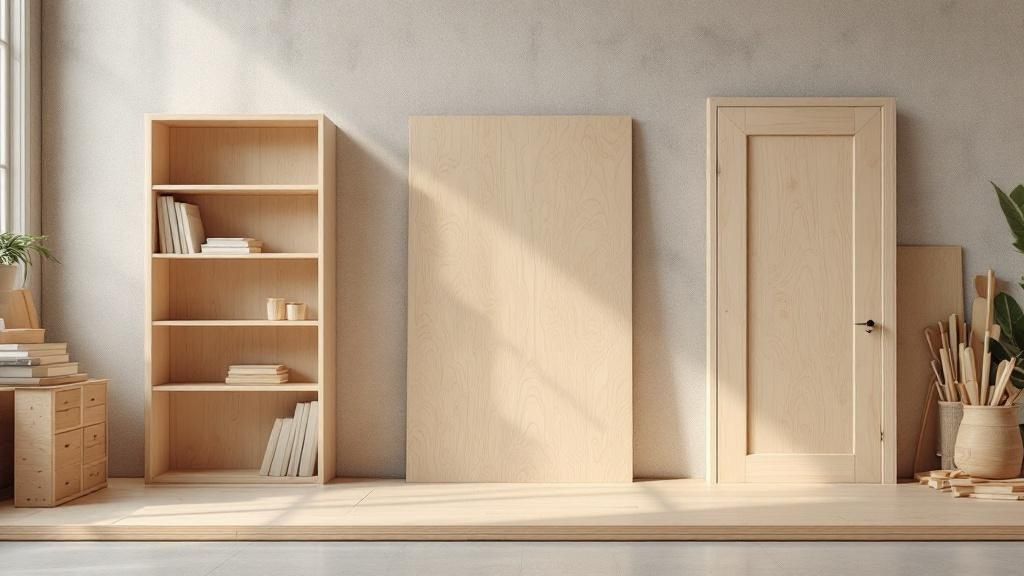
While having standard ply board sizes gives us a reliable starting point, the wood itself is a different story. The market here in the UAE is packed with different types of plywood, and each one is built to handle specific conditions and stresses. Honestly, picking the right type is just as important as getting the dimensions right if you want your work to last.
You'll mainly come across four key players: Commercial MR, BWP/BWR, Marine Grade, and Flexible Plywood. The real difference between them comes down to the wood and the glue used in their construction. This is what determines how well they stand up to moisture, humidity, and general wear and tear, ensuring there’s a board for every job, from indoor fittings to heavy-duty marine applications.
Matching Plywood Type to Application
Knowing what each plywood is good for is key to avoiding headaches like warping or delamination down the line. It all boils down to where your project will be and what you're using it for.
Commercial MR (Moisture Resistant) Grade: This is your go-to, everyday plywood for interior work. It's cost-effective and perfect for furniture, cabinets, and panelling in dry spaces like living rooms and bedrooms where it won't be getting wet.
BWP/BWR (Boiling Water Proof/Resistant) Grade: When things get steamy, you need BWP or BWR grade. It’s made with waterproof adhesive, making it the industry standard for kitchens, bathrooms, and any area where humidity is a factor. When choosing materials, understanding the pros and cons of plywood vs particle board cabinets is crucial for ensuring long-term durability.
Marine Grade Plywood: This is the top of the line. Marine Grade plywood is made with top-quality waterproof glue and has no gaps in its core, which gives it incredible strength. It’s built for boat building and toughing it out in extreme outdoor conditions, especially in coastal areas with all that salt and moisture. For other high-performance options, you can dive deeper into our article here: https://yasutrading.com/blog/film-faced-plywood-2/.
With all the construction going on in the region, the demand for these specialised boards has shot up. The availability of different plywood grades has grown right alongside the market, reflecting just how much standard ply board sizes are being used in new hotels, commercial towers, and luxury homes.
Understanding Plywood Standards in the UAE
https://www.youtube.com/embed/IfXt0BIMvSU
Ever wonder why you see the same plywood dimensions everywhere in the UAE? It's no accident. The region's status as a major hub for global trade and construction means we rely heavily on imported materials, especially timber products. Because of this, international manufacturing standards have simply become our local standards.
The most common size you'll encounter is the 2440mm x 1220mm sheet. This isn't just a random number; it's the bedrock of countless construction projects across the Emirates. This standardisation creates a predictable baseline for everyone involved—architects, suppliers, and contractors all work from the same playbook. It streamlines everything from the initial design phase right through to procurement and on-site logistics.
Global Imports Meet Local Demand
From a practical standpoint, this all comes down to economics. It's far more efficient and cost-effective for suppliers to source plywood from international mills that mass-produce standard sizes than it is to deal with custom orders. This reality dictates what’s available on the market for everyone, from a massive developer building a new skyscraper to a local carpenter working on a small project.
The numbers really tell the story here. In 2023 alone, the UAE imported over 400,000 cubic metres of plywood, and the vast majority of it was the standard 2440x1220 mm sheet. This isn't slowing down either; demand is expected to climb by 5-8% each year through 2030, thanks to ongoing infrastructure and real estate projects. For a deeper look, you can check out the Middle East and Africa Plywood Industry Forecast on globenewswire.com.
While the sheet dimensions are pretty much set in stone globally, we do see some interesting regional preferences pop up. Here in the UAE, for example, there's a huge demand for specific hardwood plywoods like Meranti and Russian Birch. They're prized for their incredible durability and the high-end finish they provide, making them a top choice for premium joinery and interior fit-outs.
Getting to grips with these market dynamics is key. It explains not just why certain ply board sizes are so readily available but also reinforces the need to follow the strict building materials quality standards in the UAE to ensure every project is built to last.
Common Questions About Ply Board Sizes
Got a few lingering questions? You're not alone. Here are answers to some of the most common queries we get about plywood sizes and specifications, helping you clear up any confusion before you start your project.
Can I Get Custom Ply Board Sizes in the UAE?
Absolutely, though it depends on how you go about it. The standard 2440mm x 1220mm sheet is by far the most common and cost-effective option you'll find. For most projects, the best approach is to buy these standard sheets and have them cut to your exact needs. Most major timber suppliers in the UAE have precision cutting services that can handle this for you.
If you're managing a massive commercial project, you might be able to place a custom order directly with a mill. But honestly, for the vast majority of jobs—from professional fit-outs to DIY builds—buying standard and cutting to size is the way to go. It's faster and easier on the wallet.
What’s the Difference Between Nominal and Actual Thickness?
This is a detail that catches a lot of people out, especially when precision is key. Nominal thickness is the rounded, advertised number you see on the label—say, 18mm. The actual thickness, however, is often a fraction of a millimetre less because of the sanding and finishing processes at the factory.
For general construction, that tiny difference won't matter. But if you're doing fine joinery or building cabinets where every millimetre counts, it can throw off your entire fit. The pro tip? Always get your calipers out and measure the board’s true thickness yourself before making any cuts.
How Do I Figure Out How Many Plywood Sheets I Need?
A little bit of planning here saves a lot of hassle later. Nailing your material calculation means no wasted money and no last-minute trips back to the supplier. Just follow these steps:
- First, work out the total area you need to cover. Simply multiply the length by the width to get the figure in square metres.
- Next, divide that total area by the area of one standard sheet. A 2440mm x 1220mm board covers 2.98 sq. metres.
- Finally, and this is important, add a buffer. We always recommend adding an extra 10-15% to your total. This gives you a safety net for off-cuts, mistakes, or complex shapes that produce more waste.
What’s the Best Plywood for Kitchens and Bathrooms in the UAE?
When you're working in high-humidity zones like kitchens and bathrooms, your material choice is everything. You need something that can stand up to moisture day in and day out. The only real choices are Boiling Water Proof (BWP) or Boiling Water Resistant (BWR) grade plywood.
These boards are made with special waterproof adhesives that bond the wood veneers together. This stops them from delaminating or falling apart when they get wet, ensuring your cabinets and fixtures stay solid for years, even in the demanding UAE climate.
For all your construction and building material needs, trust Yasu Trading Co. LLC to deliver quality and reliability. Explore our extensive product range at https://yasutrading.com.