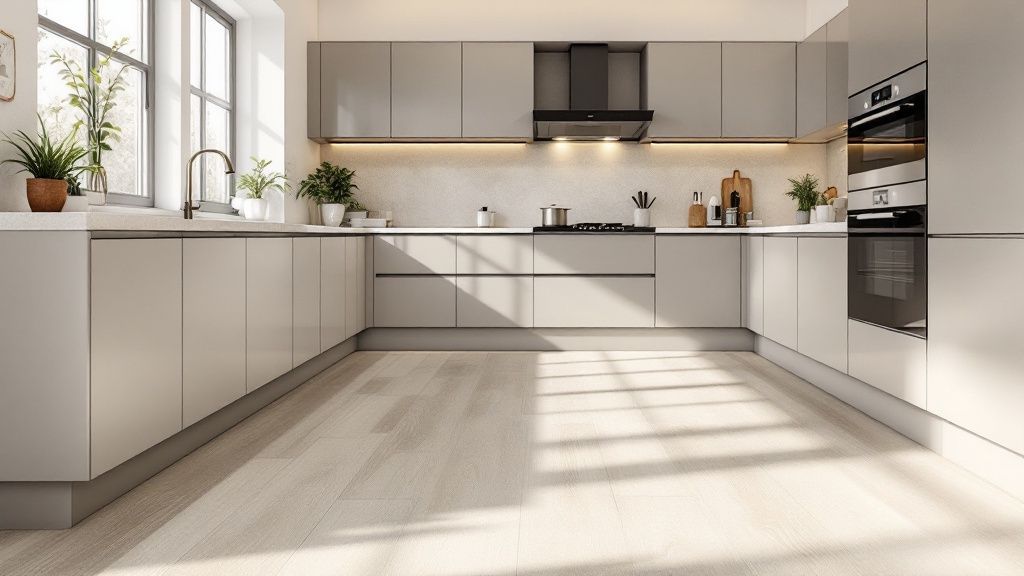
A Complete Guide to Polyvinyl Chloride Flooring
Walk into almost any modern building in the UAE, and you're likely treading on polyvinyl chloride flooring. You probably know it better as PVC or simply vinyl flooring. It’s a synthetic material that has become a go-to for its sheer toughness, water resistance, and incredible design flexibility. It's an engineered product, built in layers, making it a seriously practical choice for just about any space you can think of, from busy offices to family homes.
What Exactly Is Polyvinyl Chloride Flooring?
Let's get past the technical name for a moment. Instead of thinking of it as just a floor covering, picture it as a high-performance material specifically engineered for the daily grind of modern buildings. To really get why it's so popular, you have to look at how it’s made. It’s not a single slab of plastic; it’s more like a multi-layered 'performance fabric' for your floors, where each layer has a distinct job to do.
At its core, PVC flooring is a composite material. It’s created by fusing several key ingredients together using heat and pressure. This carefully balanced recipe is what gives the flooring its signature traits: it's strong, flexible, and has a surface that water just can't get through.
The Core Components
While every manufacturer has its own secret sauce, almost all PVC flooring is built from a few fundamental materials. Grasping these basics is the key to understanding why this flooring is such a fantastic problem-solver in the construction world.
Let's break down the primary ingredients and what they bring to the table.
Core Components of PVC Flooring
| Component | Primary Function | Benefit to Flooring |
|---|---|---|
| Polyvinyl Chloride (PVC) Resin | Forms the main structural body | Provides inherent strength, durability, and resistance to chemicals and moisture. |
| Plasticisers | Increase flexibility and softness | Makes the flooring less brittle, more comfortable underfoot, and easier to install. |
| Stabilisers | Protect against degradation | Prevents damage from heat and UV light, ensuring long-term colour and integrity. |
This combination results in a surface that is uniquely resilient, flexible, and completely waterproof. It's a smart specification for architects, contractors, and facility managers who are constantly battling challenges like moisture, heavy foot traffic, and tight maintenance schedules.
Polyvinyl chloride flooring is a foundational element in modern construction, offering a predictable and high-performing surface that solves more problems than it creates. Its ability to withstand harsh conditions makes it a go-to for projects where longevity is non-negotiable.
A Growing Role in UAE Construction
The rise of PVC flooring isn't just a trend; it's a huge part of the region's construction story. The PVC market here, particularly in the UAE and Saudi Arabia, is directly tied to the incredible pace of construction and infrastructure development.
In 2024 alone, the Middle East consumed around 2.5 million tons of PVC. And it's not slowing down. That figure is expected to climb to 2.6 million tons by 2035, pushing the market value to an estimated $5.3 billion. This surge is driven by the massive urban development projects that are a core part of the UAE's national vision. For a deeper dive, you can explore detailed market insights about PVC demand in the Middle East on mordorintelligence.com.
From the polished floors of a new mall to the durable surfaces in a residential tower, this material consistently delivers.
Comparing the Different Types of PVC Flooring
When you're on a project site, you quickly learn that choosing the right material is everything. The image above, showing interlocking PVC planks being fitted with care, really drives this point home. That level of precision tells you something important: the type of PVC you pick will dictate not just the installation method, but the entire look, feel, and durability of the finished floor.
To get it right, you need to understand the main players in the PVC world. It’s not a one-size-fits-all situation. Each variety has been engineered with a specific job in mind, and knowing the difference is what separates a good result from a great one. Let’s break down the options you’ll find in the market.
Luxury Vinyl Tile (LVT): The Design Chameleon
Luxury Vinyl Tile (LVT) is the showstopper of the vinyl family. Its superpower? The incredible ability to mimic high-end natural materials. Thanks to sophisticated 3D printing, LVT can capture the rich grain of oak, the cool texture of slate, or even intricate geometric patterns with breathtaking realism.
It's built tough, too, constructed in layers with a crucial protective wear layer on top to fend off scratches, scuffs, and daily wear. LVT comes in individual planks or tiles, which opens up a world of creative possibilities. Think elegant herringbone patterns in a hotel lobby or a modern chevron layout in a corporate office. This is why it’s the go-to choice across the UAE for premium retail spaces and chic residential projects where aesthetics are just as important as performance.
LVT really does bridge the gap between the stunning beauty of natural materials and the hard-wearing, practical nature of engineered flooring. You get the high-end look without the high-maintenance headaches of real wood or stone.
It’s always a good idea to weigh up the best flooring options for various climates to truly see where vinyl’s unique benefits shine.
Vinyl Composite Tile (VCT): The Commercial Workhorse
If you need a floor that can take a beating day in and day out, look no further than Vinyl Composite Tile (VCT). This is the undisputed champion of high-traffic commercial spaces. Unlike LVT, VCT is a homogenous product—its colour and material composition are the same all the way through the tile. It’s primarily made from natural pulverised limestone, mixed with colour pigments and vinyl binders.
This through-body construction makes VCT incredibly tough. If it gets chipped or deeply scratched, the colour underneath is identical, so the damage is barely noticeable. It's the reason you see VCT everywhere in:
- Schools and Universities: Standing up to the constant stampede of students.
- Hospitals and Clinics: Lining busy corridors and waiting areas.
- Supermarkets: Handling the heavy rolling loads from trolleys and pallet jacks without a fuss.
While VCT doesn't aim for the hyper-realism of LVT, it offers an incredibly durable and cost-effective solution. A proper maintenance routine of waxing and polishing is all it needs to keep its protective sheen for years.
Sheet Vinyl: The Seamless Champion
Just as the name implies, Sheet Vinyl comes in massive, flexible rolls, usually six or twelve feet wide. Its standout feature is the seamless—or nearly seamless—installation. This creates a solid, watertight surface that is virtually impenetrable to moisture.
This quality makes it the perfect choice for any environment where hygiene and water control are top priorities. With almost no seams for water to sneak through, you eliminate the risk of it seeping into the subfloor and causing mould or structural damage. It’s no surprise that sheet vinyl is specified for:
- Hospitals and Laboratories: Where a sterile, easy-to-clean surface is an absolute must.
- Commercial Kitchens and Bathrooms: To handle constant spills and splashes.
- Nurseries and Childcare Centres: Providing a waterproof, durable, and low-maintenance floor.
Modern sheet vinyl has also come a long way in design, offering a huge variety of patterns and cushioned-back options that add comfort underfoot.
LVT vs VCT vs Sheet Vinyl Showdown
To help you decide which PVC flooring type meets your specific project needs, here’s a quick side-by-side comparison.
| Feature | Luxury Vinyl Tile (LVT) | Vinyl Composite Tile (VCT) | Sheet Vinyl |
|---|---|---|---|
| Primary Advantage | Hyper-realistic aesthetics and design flexibility. | Extreme durability and low lifecycle cost. | Seamless and waterproof surface, ideal for hygiene. |
| Composition | Multi-layered with a printed design layer and protective wear layer. | Homogenous (through-body) with limestone, vinyl, and pigments. | Large, flexible sheets of solid or cushioned vinyl. |
| Appearance | Realistically mimics wood, stone, and other natural materials. | Solid or multi-flecked colours, more institutional look. | Wide range of patterns, colours, and textures available. |
| Best For | High-end retail, hospitality, corporate offices, residential. | Schools, hospitals, supermarkets, high-traffic corridors. | Healthcare, labs, commercial kitchens, bathrooms, education. |
| Installation | Tile/plank format, often click-lock or glue-down. | Glue-down tile installation, requires precision. | Rolled out and glued down, requires professional seaming. |
| Maintenance | Simple sweeping and mopping, no waxing required. | Requires regular stripping, waxing, and polishing to protect. | Easy to clean, minimal seams to trap dirt. |
Each type of PVC flooring has its place. Your final choice will come down to balancing your project's aesthetic goals, performance demands, and budget.
Why PVC Flooring Is a Perfect Match for the UAE Climate
The UAE's environment is undeniably beautiful, but it's incredibly tough on building materials. Between the scorching summer heat, the persistent humidity, and the ever-present fine sand, any material used in a project here has to be built to last. This is exactly where polyvinyl chloride flooring proves its worth, offering a smart, durable solution that's tailor-made for the region's unique challenges.
Think about traditional materials. Natural hardwood can swell and warp in the humidity, while some laminates might peel or delaminate under the intense heat. PVC, on the other hand, is engineered for stability. Its synthetic makeup makes it naturally resistant to the very things that cause other floors to fail.
This built-in resilience is why it has become so popular. Across the UAE and the wider Middle East & Africa region, installations of polyvinyl chloride flooring soared past 600 million square metres in 2023. This isn't a coincidence; it’s a direct response to its incredible heat resistance, easy upkeep, and durability—all qualities that are non-negotiable in an arid climate. You can dig into the specifics of this trend and its drivers in this PVC flooring market growth report on marketgrowthreports.com.
Engineered for Heat and Humidity
The dramatic temperature swings in the UAE can make many flooring materials expand and contract, leading to ugly warping, buckling, and gaps over time. Polyvinyl chloride flooring is specifically designed to handle this.
Its layered construction, which often includes a fibreglass core, gives it fantastic dimensional stability. In simple terms, this means it holds its shape and size, whether it’s in a cool, air-conditioned office or a sun-soaked spot by a window.
Because PVC is non-porous and completely waterproof, high humidity is a non-issue. This prevents mould and mildew from growing underneath the floor, which is a huge win for indoor air quality and the building’s long-term health—especially in coastal cities like Dubai and Abu Dhabi.
A Fortress Against Sand and Foot Traffic
Sand is a fact of life in the UAE. It gets tracked into every building and acts like a fine-grit sandpaper, scratching and dulling the finish on most floors. The wear layer on top of high-quality PVC flooring is its secret weapon against this.
This transparent, protective coating is incredibly tough. It’s engineered to resist the constant abrasion from sand particles and heavy footfall. This makes it the go-to choice for high-traffic areas, including:
- Commercial Entrances: Shrugging off the constant flow of people in malls and office buildings.
- Residential Foyers: Easily handling the daily wear and tear in homes and apartment complexes.
- Hospitality Venues: Keeping its good looks in busy hotel lobbies and restaurants.
Effortless Maintenance and Unmatched Hygiene
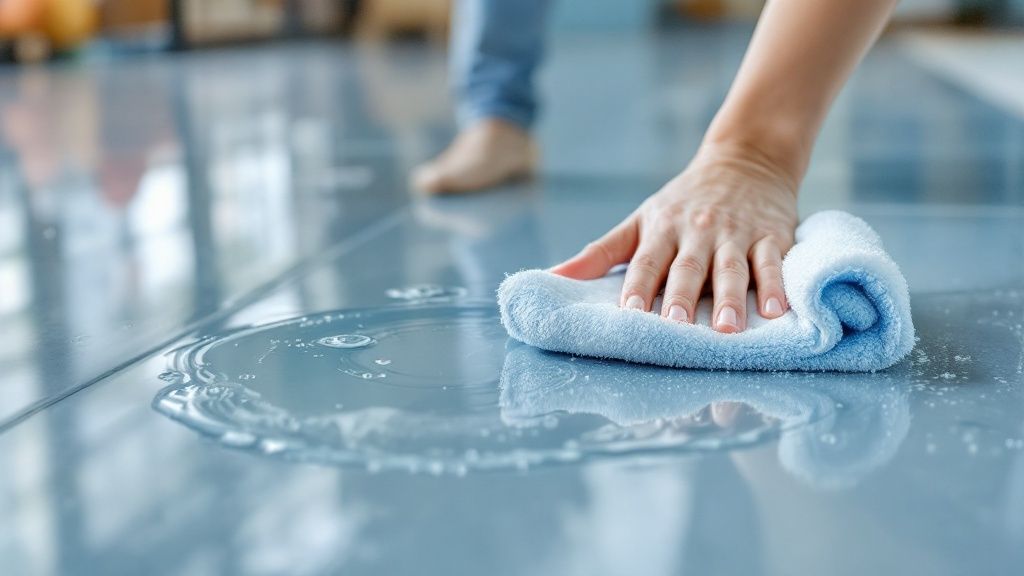
In a fast-paced environment like the UAE, nobody has time for high-maintenance materials. The non-porous surface of polyvinyl chloride flooring means that spills, dirt, and dust simply sit on top instead of soaking in. Cleaning is as simple as it gets—a quick sweep and a wipe with a damp mop is all it takes to keep it looking new.
This hygienic quality is a massive advantage for both homes and businesses. With no grout lines to trap dirt and no pores for bacteria to hide in, PVC flooring helps create a cleaner, healthier indoor space with minimal effort. This is just one piece of the puzzle when it comes to choosing the right materials, a topic we cover in our guide on how to choose the right construction materials for Dubai's climate.
Real-World Applications in UAE Projects
Knowing the technical specs of polyvinyl chloride flooring is one thing, but seeing it perform in the real world—across the UAE’s iconic landscape—is where its value truly clicks. This isn't just a background material. It’s a foundational element supporting the daily grind in some of the region's most demanding sectors.
The real magic of PVC flooring is its chameleon-like ability to adapt. You can engineer it for specific jobs, whether you need extreme toughness, impeccable hygiene, or a high-end look. Let's dig into how it stands up to the challenges of key UAE projects.
The Retail and Hospitality Backbone
Think about the UAE’s world-renowned shopping malls and hotels. First impressions are everything, but the flooring has to be tough as nails. These places handle millions of footsteps, constant cleaning crews, and the endless roll of luggage and service trolleys.
This is where Luxury Vinyl Tile (LVT) really shines. It delivers the sophisticated look of natural wood or stone without the headaches of maintenance. Its robust wear layer shrugs off relentless foot traffic, and the sheer variety of designs means brands can create unique, immersive environments. From the gleaming walkways of Dubai Mall to the grand lobbies of five-star hotels, PVC flooring provides a surface that’s both stunning and built to last. Managing such large-scale ventures often requires a deep understanding of the local business climate, including details like the investor visa requirements for the UAE.
Creating Sterile Environments in Healthcare
In hospitals, clinics, and labs, hygiene isn't just important; it's a matter of life and death. The go-to choice here is almost always seamless sheet vinyl. Why? Its biggest advantage is the near-total lack of seams, which gets rid of the tiny gaps where bacteria and other nasties love to hide. You get a continuous, impenetrable surface that's incredibly easy to sanitise.
In a healthcare setting, the floor is a critical part of infection control. Polyvinyl chloride sheet flooring provides a monolithic, waterproof surface that stands up to the rigorous cleaning protocols needed to keep patients and staff safe.
On top of that, it resists chemical stains from medical supplies and harsh cleaning agents, so it keeps its integrity and appearance for years. This same need for hygiene and durability is crucial in places like commercial kitchens. If you're tackling a project in that space, our expert guide on renovating a kitchen in the UAE has some great pointers.
Fostering Focus in Corporate and Educational Spaces
Modern offices and schools need flooring that does more than just survive foot traffic. It has to actively contribute to a productive and safe atmosphere. In these environments, polyvinyl chloride flooring pulls double duty, offering both acoustic comfort and serious durability.
- Acoustic Performance: Cushioned-back PVC options are fantastic at soaking up ambient sound. This helps quiet down the buzz in open-plan offices and busy school hallways, making it easier for everyone to concentrate.
- Safety and Durability: In schools, slip-resistant finishes are a must-have for keeping kids safe. The material’s resilience also handles the daily chaos of dropped books, scuffed shoes, and inevitable spills.
- Low Maintenance: The fact that it's so easy to clean is a huge operational win, cutting down on long-term costs for both businesses and schools.
This incredible versatility is fuelling demand for PVC across the entire region. Just look at Saudi Arabia—it’s a powerhouse in the Middle East's PVC market. With massive investments in mega-projects like the $500 billion NEOM city, the demand for polyvinyl chloride in construction is exploding, cementing its place in the region's supply chain and shaping the future of the Middle East.
Choosing the Right PVC Flooring with Yasu Trading
Picking the right polyvinyl chloride flooring for a major construction project can feel overwhelming. It’s not just about choosing a colour or pattern; it’s about getting the technical details right and knowing your supplier can deliver. This is where having a specialist partner like Yasu Trading really makes a difference, turning a potential headache into a smooth, straightforward process.
Trying to manage it all yourself means vetting different suppliers, chasing down certifications, and crossing your fingers that deliveries show up on time. We take all that off your plate. Think of us as your guide, clearing the path to the perfect flooring solution for your project, making sure every last technical detail is spot on.
Key Factors in Your Procurement Decision
To ensure your flooring performs for the long haul, you have to look beyond the surface aesthetics. A successful installation that stands up to the demands of projects here in the UAE requires a bit of homework.
Before you make a final decision, here are the non-negotiables you should be looking at:
- Product Certifications: Always check for recognised international standards like ISO 9001. These aren't just for show; they're a genuine guarantee of consistent quality and manufacturing reliability.
- Warranty and Guarantees: A solid manufacturer's warranty tells you a lot about the product's quality. It's your safety net and gives you peace of mind that your investment is protected against defects.
- Technical Specifications: Every space has a different job to do. You need to match the flooring's specs—like the wear layer thickness, slip resistance, and fire safety ratings—to its purpose. A busy hospital corridor has completely different needs than a quiet office space.
At Yasu Trading, we work from a simple belief: good information leads to great results. Our job is to arm you with all the technical data and documentation you need, so you can choose a floor that not only looks fantastic but performs perfectly for years.
How Yasu Trading Streamlines Your Project
Our main goal is simple: make getting polyvinyl chloride flooring an easy, seamless part of your project schedule. We’ve built our services around the real-world pressures of UAE construction timelines, offering practical support from the first drawing to the final handover.
We’ve found this works best when we focus on three key areas:
- Expert Consultations: Our team sits down with you to get a deep understanding of your project’s needs—both technically and visually. From there, we handpick the best options from our trusted network of world-class manufacturers.
- Reliable Logistics: In this business, on-time delivery is everything. Yasu Trading manages the entire supply chain, making sure your materials are on-site, anywhere in the UAE, exactly when you need them. No more costly delays.
- Comprehensive After-Sales Support: Our relationship doesn't stop once the truck leaves. We’re here to provide full support after the sale, answering any questions to make sure you get the most out of your new flooring for its entire lifespan.
By taking care of all these details, we free you up to focus on what you’re best at: creating incredible spaces.
A Guide to Installation and Maintenance
Choosing a high-quality polyvinyl chloride flooring product is just the starting point. The real secret to a floor that looks incredible and lasts for years lies in two things: expert installation and consistent care.
Think of it like this: your beautiful new floor is the final, visible layer of a much deeper system. If the foundation underneath is shaky, even the most premium vinyl will eventually show flaws. What happens before that first plank is laid is what truly guarantees a flawless, long-lasting result.
Taking shortcuts here is a recipe for disaster. Any imperfections in the subfloor—the surface your new vinyl sits on—will telegraph right through to the top, leading to an uneven finish that just won’t stand the test of time.
The Most Important Step: Subfloor Preparation
Before you even think about laying down a single tile, the subfloor has to meet three non-negotiable standards. It must be perfectly clean, completely level, and bone dry. This foundational work ensures the vinyl lays flat and adheres properly, preventing bumps or weak spots from causing problems down the line.
Here’s what goes into getting it right:
- A Deep Clean: Every speck of dust, debris, grease, or old glue has to go. A clean surface is critical for a strong bond in glue-down applications and stops tiny particles from creating lumps under a floating floor.
- Perfectly Level: The surface needs to be flat, with no significant dips or humps. We often use self-levelling compounds on concrete slabs to smooth everything out. This simple step prevents hollow spots and makes the entire floor feel solid underfoot.
- Moisture Check: Any lingering dampness is a major red flag. For concrete, this means running moisture tests to ensure the slab is fully cured. Trapped moisture can ruin adhesives and even lead to mould growth.
A perfectly prepared subfloor is the unseen hero of a successful flooring installation. Investing time here prevents costly repairs and ensures the polyvinyl chloride flooring performs exactly as designed for its entire lifespan.
Choosing Your Installation Method
With the subfloor prepped and ready, it's time to pick the right installation technique. The two main approaches are glue-down and floating systems, and each has its own strengths.
Glue-Down Installation
This is the traditional method, where we use a specialised adhesive to bond each plank or tile directly to the subfloor. The result is an incredibly stable and durable floor, which is why it’s our go-to for busy commercial spaces, hospitals, and any area that has to withstand heavy foot traffic or rolling loads.
Floating (Click-Lock) Installation
This modern system uses an interlocking mechanism, allowing the planks to click together and "float" as a single surface over the subfloor. It's much quicker to install and can often be laid right over an existing hard floor, making it a fantastic choice for homes and light commercial projects where speed is a factor.
Keeping Your Floor Looking New
The great thing about polyvinyl chloride flooring is how easy it is to maintain. The key is simple, regular care—it’s far more effective than letting dirt build up and then doing a massive deep clean. A consistent routine protects the all-important wear layer from the abrasive effects of grit and grime.
A quick sweep with a soft broom or microfiber mop is usually all you need for daily upkeep. When it’s time for a more thorough wash, just use a pH-neutral cleaner mixed with a bit of water. Steer clear of harsh chemicals, abrasive scouring pads, or waxy polishes, as they can strip the finish and leave the floor looking dull.
A few extra tips: stick felt pads under the legs of your furniture and place good-quality mats at all entrances to catch sand before it gets tracked inside. These small habits are a core part of any smart property care plan, reflecting the same principles we discuss in our complete guide on building maintenance in Dubai.
Got Questions About PVC Flooring? We've Got Answers
Even after you've got a good handle on what PVC flooring is all about, a few specific questions always pop up when it comes time to plan a project. Let's tackle some of the most common ones I hear, so you can move forward with confidence.
Is Polyvinyl Chloride Flooring Environmentally Friendly?
It's a fair question, and the answer has changed a lot over the years. Modern PVC flooring has come a long way in terms of sustainability. Many top-tier manufacturers are now making products with recycled content, and a lot of it is even designed to be 100% recyclable when it's time for a change. This is a big deal for keeping construction waste out of our landfills.
Beyond recycling, you should keep an eye out for certifications like FloorScore®. This is your guarantee that the flooring meets strict indoor air quality standards because it has low emissions of volatile organic compounds (VOCs). Plus, think about it this way: its sheer durability and easy-care nature mean you're not replacing it often or using harsh cleaning chemicals, which is another quiet win for the environment.
The industry has really shifted its focus. It's no longer just about making a tough floor; it's about making one that's healthier for people and more responsible for the planet.
How Does PVC Flooring Compare to Laminate Flooring?
This is probably the most common comparison I see. Both are fantastic at mimicking the look of real wood or stone, but what they're made of is completely different, and that's what really matters. It all comes down to one key thing: water.
- PVC Flooring: Because it's made from vinyl through and through, it's 100% waterproof. This makes it the go-to choice for any area that sees moisture – think kitchens, bathrooms, basements, and even busy commercial spaces where spills are a daily reality.
- Laminate Flooring: Laminate, on the other hand, has a fiberboard core. If that core gets seriously wet, it will swell up and warp. Once that happens, there's no going back; the damage is permanent.
There's also a difference in how they feel underfoot. PVC has more give to it, making it a bit softer and quieter to walk on. That flexibility can make a real difference in reducing noise, whether at home or in an office.
Can PVC Flooring Be Installed Over an Existing Floor?
Often, yes! And this can be a massive time and money saver. Those floating LVT planks with the click-lock systems are brilliant for this. You can frequently lay them right on top of an old hard-surface floor, as long as the original floor is in good shape, clean, and completely level.
You can usually go over surfaces like concrete, ceramic tiles, or even old sheet vinyl. But—and this is important—always check the manufacturer's specific instructions first. Laying it over something soft like carpet is a definite no-go; you'll never get a stable base. No matter what, getting the subfloor prepped correctly is the single most important step for a finish that looks professional and lasts for years.
When you're ready to find the perfect polyvinyl chloride flooring for your next project in the UAE, the specialists at Yasu Trading Co. LLC are here to help. Explore our extensive range of construction materials and get a personalised quote today.