PPE Safety Equipment List: 9 Essentials for UAE Sites
What does a complete PPE safety equipment list cover? Most contractors answer with four items: helmet, boots, vest, glasses. That's a dress code, not a hazard assessment. Site inspections across the UAE check a predictable set of categories, and each one has its own trigger, its own standard marking, and its own failure mode in Gulf heat and dust. This list walks through the nine essentials every contractor should have covered, head to boots, with notes on when each becomes mandatory, what the EN and ANSI markings mean, and where a peak-summer shift changes the buying decision. A list written for a commercial kitchen won't transfer to a site, which is why even good food service PPE advice from Monopack stops at the kitchen door.
Table of Contents
- 1. Industrial Safety Helmet (Hard Hat)
- 2. Safety Glasses, Goggles, and Face Shields
- 3. Hearing Protection (Earplugs and Earmuffs)
- 4. Respiratory Protection (Dust Masks and Respirators)
- 5. Safety Gloves
- 6. Safety Footwear
- 7. High-Visibility Clothing
- 8. Fall Protection Equipment (Harnesses and Lanyards)
- 9. Protective Clothing and Electrical PPE
- PPE Categories at a Glance
- Build Your Site PPE Kit Once, and Get It Right
1. Industrial Safety Helmet (Hard Hat)

A hard hat is a shell, a suspension harness and a headband, and only the harness absorbs energy. The common failure isn't a missing helmet. It's a helmet worn loose, or a shell that has spent two summers on a dashboard.
The duty behind it is specific. Dubai's construction safety code requires employers to assess workplace hazards, provide PPE at their own expense, ensure proper fit and train workers in correct use, as set out in the Dubai Code of Safety. Abu Dhabi reinforced its side of the framework when it issued Version 4.0 of its Personal Protective Equipment Code of Practice on 15 July 2024, applying to all employers in the emirate, per Nexdigm's market report.
Retire the shell, keep the harness. Date-stamp every helmet at issue. Plan replacement at three to five years from the manufacturing mark, immediately after any significant impact, and at once if the shell feels chalky or shows stress whitening.
- Check the marking first: EN 397 or ANSI Z89.1 plus the manufacturer's batch information, before any other label detail matters.
- Respect the 25 mm gap: the suspension should hold the shell at least 25 mm clear of the skull, or the clearance does nothing in an impact.
- Store it out of the sun: a vehicle shelf or a store window degrades the shell faster than site wear, and solvents strip it further.
2. Safety Glasses, Goggles, and Face Shields
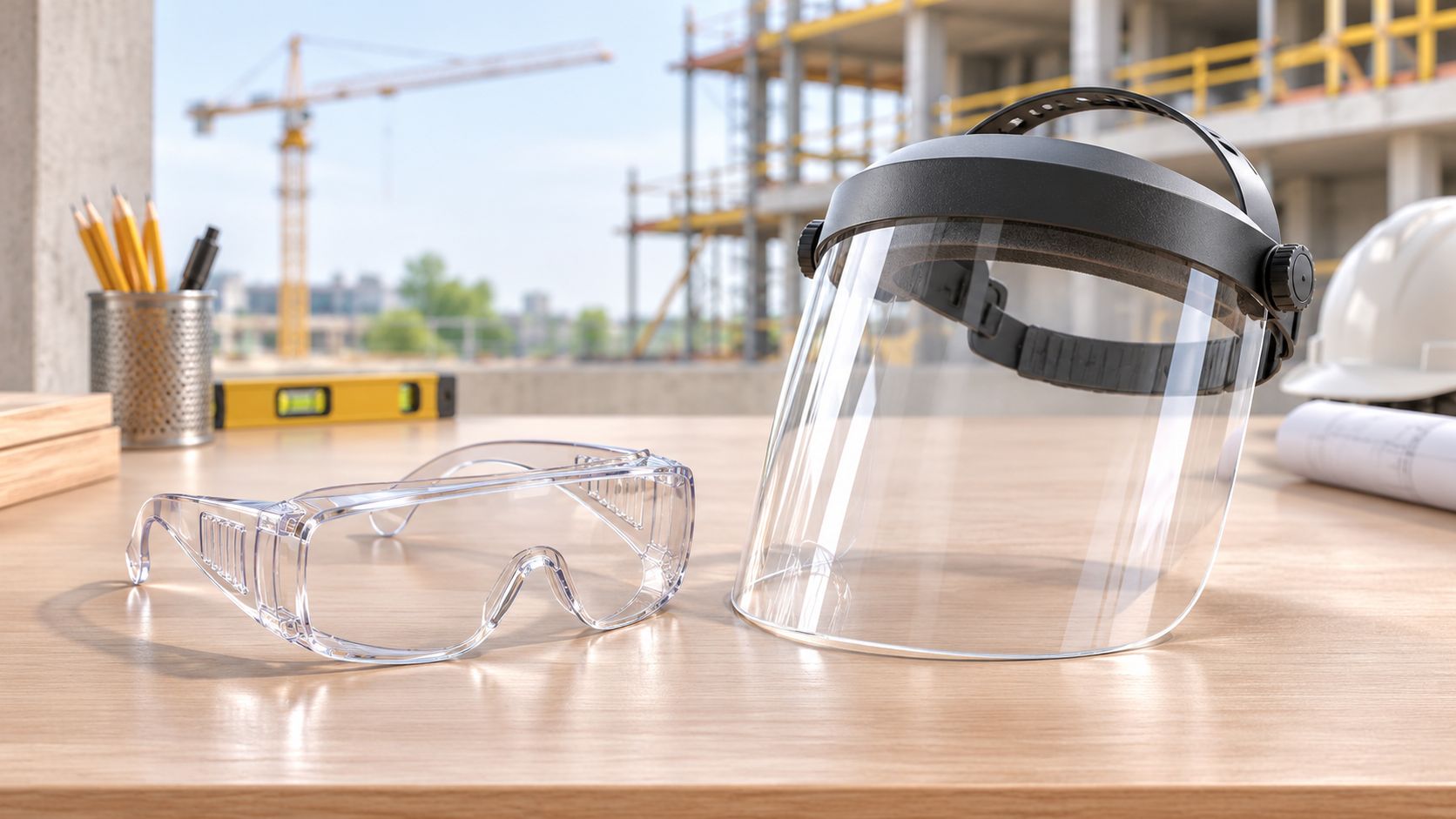
Eye protection is where compliance and behaviour diverge most sharply. A 2020 study of industrial workers in the UAE found that 20% never used safety goggles or glasses, 35% never used face shields and 70% never used welding helmets (Injury Epidemiology). That isn't a supply problem. It's a selection and fit problem, because a worker who can't see through a fogged lens stops wearing it by the second week.
Spectacles handle general impact and flying debris. Sealed goggles handle dust, liquids and chemical splash. A face shield adds coverage for grinding, cutting and arc work, and it goes over spectacles or goggles, never instead of them.
- Match the coating to the task: clear anti-fog lenses indoors, tinted lenses for outdoor glare, and pitted or scratched lenses replaced rather than reused.
- Plan for prescription wearers: either prescription safety glasses or over-goggles that fit over a normal frame, decided at procurement, not on the day.
- Clean with the right cloth: approved wipes and mild soap, never a solvent-based cleaner that clouds polycarbonate.
3. Hearing Protection (Earplugs and Earmuffs)
Noise arrives from breakers, grinders, generators, jackhammers and plant, and the damage is cumulative and painless until it isn't. Foam plugs are the practical default in UAE summer because they don't trap sweat against the ear the way muffs do.
Fit beats rating. A foam plug rolled properly and seated deep gives close to its stated attenuation. The same plug pushed in half-heartedly gives a fraction of it, and no supervisor can tell the difference by looking.
- Roll, reach, hold: roll the plug thin, pull the ear back, insert and hold for a full 20 seconds while it expands.
- Match muffs to the helmet: use helmet-mounted earmuffs with a compatible adapter, because a headband muff under a hard hat breaks its own seal.
- Replace the cushions: hardened or cracked seals leak, and attenuation drops with no visible damage to the shell.
Where crews already run audiometric testing, the clinical side matters as much as the kit, and this guidance on how to protect your hearing on the job covers what a PPE list can't.
4. Respiratory Protection (Dust Masks and Respirators)
Respiratory protection in the UAE sits inside a layered framework rather than a single statute. Federal Law No. 8 of 1980 set employers' general duties to protect worker health and safety, Ministerial Order No. 32 of 1982 added ten construction-specific articles, and Dubai's 2008 Safety Construction Manual reinforced both, as Health and Safety International sets out. The duty covers the lungs, not just the head.
What Silica Work Actually Requires
Cutting, grinding and chasing concrete generates respirable crystalline silica, and a paper dust mask isn't the control. Use FFP3 filtering face pieces or a half-face respirator with P3 filters for those tasks, and fit-test tight-fitting respirators before issue rather than after the first complaint.
The two families below cover most site work, and the choice between them is a hazard question rather than a budget one.
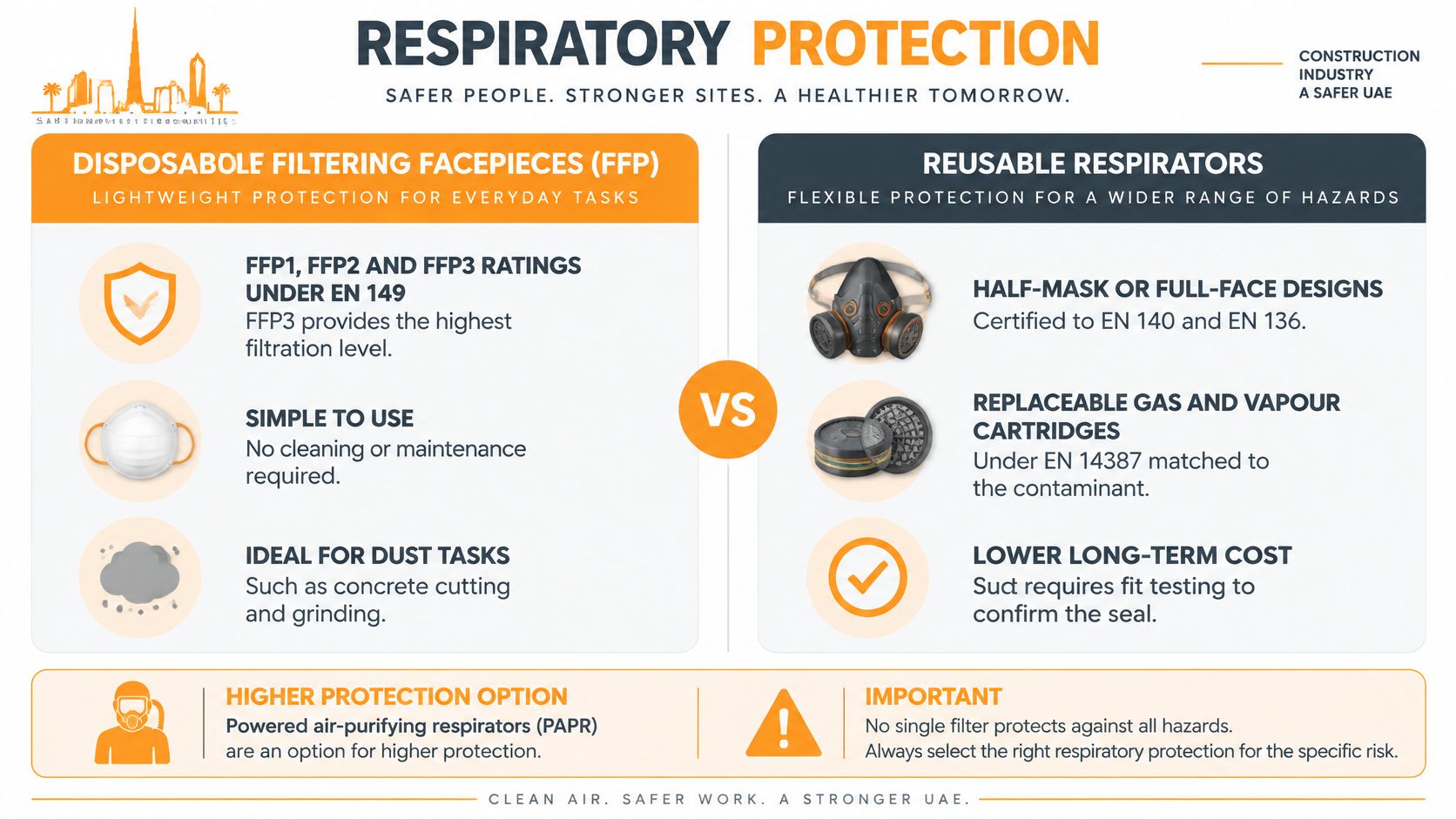
- Match the filter to the contaminant: P-series for particulates, A-series organic vapour cartridges for paints and sealants, and no single filter covers everything.
- Check the seal every donning: a positive and negative pressure check takes ten seconds and catches a leaking strap before the shift does.
- Bag the spares: store unused filters sealed and dated, and write the first-use date on the cartridge.
5. Safety Gloves
Gloves fail in two directions at once. Crews wear the wrong type for the hazard, or they wear the right type until it is torn, swollen and useless. A UAE workplace study reported that 85% of respondents acknowledged being unaware of PPE use (Annals of Behavioral Health), which says the problem starts before the glove box opens.
Cut and abrasion numbers come from the EN 388 four-digit code, chemical resistance from the EN 374 letter codes. Glazing and sheet-metal crews need a high cut level. Electrical work needs insulating gloves with leather protectors, not mechanics' gloves. Nitrile handles oils and mild chemicals, neoprene and butyl handle stronger solvents.
Keep a glove matrix, not a glove bin. Pin one sheet to the store wall mapping each site task to a glove type, a size range and a replacement trigger, so nobody picks by colour.
- Read the codes on the cuff: the printed EN 388 and EN 374 marks matter more than the marketing name on the pack.
- Replace on condition, not on schedule: gloves that are torn, stiff or swollen after chemical contact are finished.
- Size properly: a glove that bunches at the fingertips gets removed near moving parts. For a fuller breakdown of which glove suits which task, see this guide to gloves for workers.
6. Safety Footwear
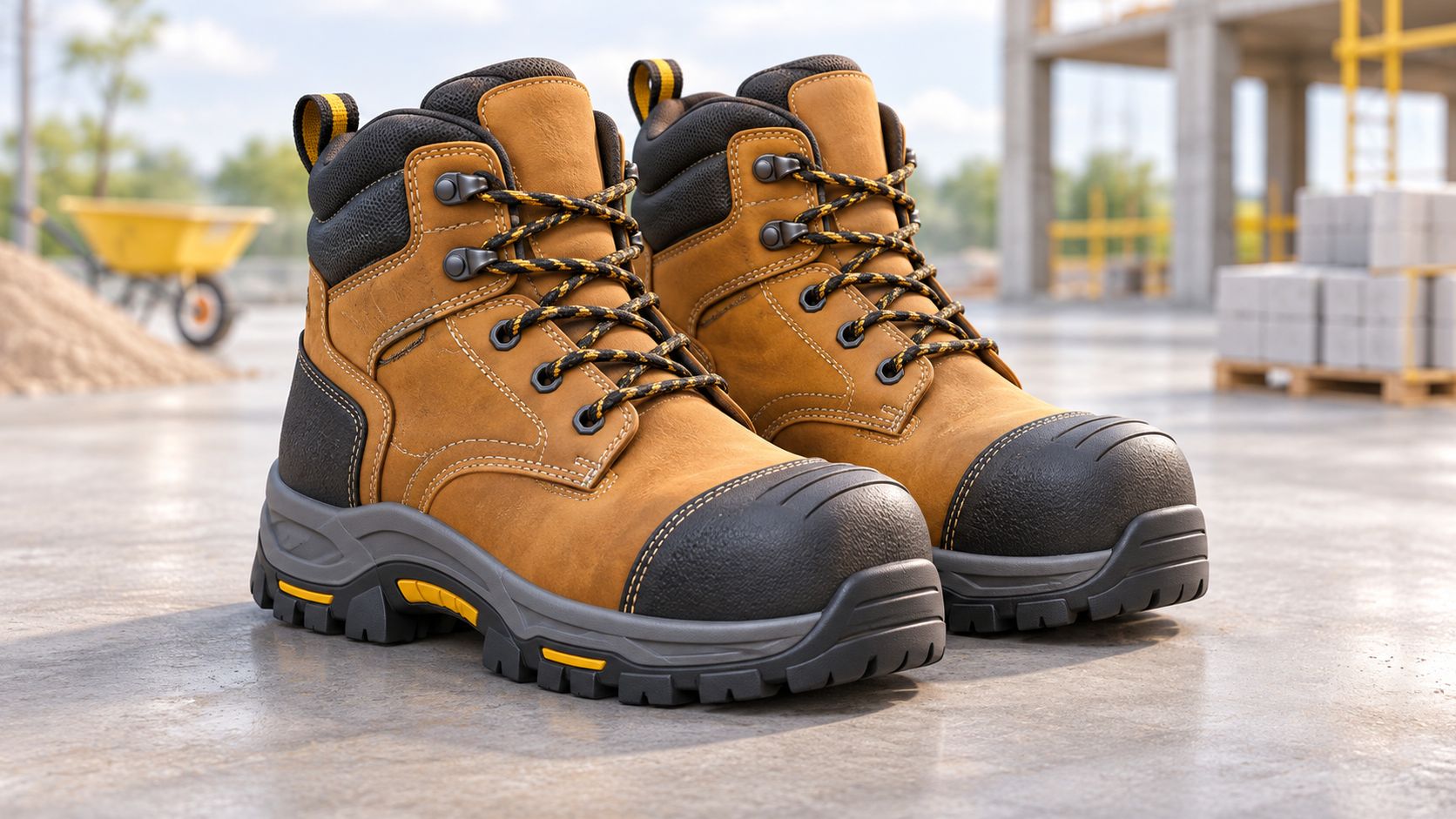
The S-rating ladder does most of the specifying work. S1P adds a penetration-resistant midsole to the basic toe cap, S3 adds water resistance, and S5 covers foundry-grade work most UAE sites don't need. Rebar, trenches and demolition debris push you to S1P or S3 with a steel or composite midsole plate, and wet kitchens and pool plant rooms need an SRC slip rating on top.
Composite toe caps make a real difference in summer. They don't conduct heat or cold the way steel does, and they don't set off metal detectors on handover walks.
Buy at the end of the day. Feet swell across a shift. A boot fitted at 7 a.m. will pinch by 2 p.m., and a pinching boot ends up in the locker while the worker wears trainers.
- Watch the tread: worn lugs on polished lobby marble or wet scaffolding boards are a slip claim waiting to happen.
- Retire a compromised midsole: a bent or cracked plate offers no puncture protection, whatever the upper looks like.
- Manage moisture: breathable linings and moisture-wicking socks reduce the fungal and blister problems that come with 12-hour shifts. For sizing and specification detail in this market, this guide to safety shoes in Dubai covers the practical differences.
7. High-Visibility Clothing
Visibility is about plant operators, drivers and crane banksmen seeing a person, not about a bright colour looking tidy. Class 2 handles general site work in good light. Class 3, with sleeves or full trousers in the same fluorescent and retro-reflective material, is the standard near live traffic lanes and plant.
Dubai's technical-guideline listings separately identify "Management of Heat Stress at Work", and its safety guidance requires PPE to be suitable, comfortable, properly fitting and easy to use while still being worn effectively, per the Dubai Municipality technical guidelines. A vest that traps heat gets carried rather than worn, which is worse than no vest at all.
- Wash without softener: fabric softener coats the retro-reflective tape and cuts its performance, and hot washes shrink the garment out of spec.
- Replace when faded or cracked: grey tape and washed-out fluorescent fabric no longer meet the class printed on the label.
- Choose mesh for summer: mesh vests over light long sleeves balance visibility against UV and heat exposure.
8. Fall Protection Equipment (Harnesses and Lanyards)
Work at height is the single biggest cause of fatal incidents on UAE sites, and the equipment only works as a system. A full-body harness, a lanyard or self-retracting lifeline, certified anchors and connectors are bought together or not at all, because mismatched components are where geometry fails.
Anchor above the head. An anchor at foot level turns a short drop into a long one, and no lanyard is rated for that geometry. If the only anchor is below the deck, the method needs rethinking before the harness comes out.
- Inspect before every use: cuts in the webbing, burns, deformed hardware, and a legible manufacturing label are the four checks that matter.
- Plan the rescue before the work: a suspended worker needs retrieval within minutes, and a written rescue plan is part of the system, not an extra.
- Remove from service after an arrest: any harness that has taken a fall load goes out of circulation for inspection, no exceptions.
9. Protective Clothing and Electrical PPE
Whole-body protection covers the widest range of hazards on a site, from dust and paint mist to chemical splash and arc flash. The scale of the category shows in the buying: the UAE PPE market generated USD 1,535.5 million in revenue in 2025, with protective clothing accounting for 26.08% of that revenue, according to Grand View Research.
Heat changes the calculation. PPE can increase thermal burden, and UAE policy mandates a midday work break from 12:30 to 3:00 p.m. during the hottest months, with exposure assessed using WBGT, heat stress index and thermal work limit readings by work zone and shift, as an Industrial Health field study describes. An impermeable chemical suit worn through a July afternoon is its own hazard.
- Rate the arc, not the fabric name: an arc-flash hazard assessment and incident-energy labels on equipment come before buying arc-rated garments.
- Test insulating gloves every six months: store them in protective bags and inspect for cuts and ozone cracking before each use.
- Avoid synthetic base layers: polyester and nylon melt under arc-rated clothing and make a burn far worse.
- Dress in a clean area: tape wrist and ankle openings where required, and dispose of contaminated disposables under site waste rules.
PPE Categories at a Glance
| Item | Governing Standard | Best For | Key Limitation |
|---|---|---|---|
| Industrial Safety Helmet (Hard Hat) | EN 397 or ANSI/ISEA Z89.1 | Protection from falling objects, impacts, and specified electrical hazards | Heat, UV exposure, and poor fit can reduce comfort or protection |
| Safety Glasses, Goggles, and Face Shields | EN 166 or ANSI Z87.1; EN 169 or EN 175 for welding | Eye and face protection from impact, dust, splashes, and radiation | Fogging, scratches, and gaps can impair visibility or protection |
| Hearing Protection (Earplugs and Earmuffs) | EN 352; NRR or SNR ratings | Reducing hazardous noise from tools and machinery | Poor fit or worn equipment reduces noise protection |
| Respiratory Protection (Dust Masks and Respirators) | EN 149, EN 140, EN 136, and EN 14387 | Protection from dust, fumes, vapours, and gases when matched to the hazard | Poor fit, wrong filters, or heat strain can compromise protection |
| Safety Gloves | EN 388, EN 374, or EN 60903 | Hand protection matched to mechanical, chemical, or electrical hazards | Wrong material or reduced dexterity can create additional risks |
| Safety Footwear | EN ISO 20345 | Protection from crushing, punctures, and slips | Heavy or insulated boots can cause fatigue and heat discomfort |
| High-Visibility Clothing | EN ISO 20471 or ANSI/ISEA 107 | Improving worker visibility near vehicles, machinery, and in low light | Faded fabric or damaged reflective tape reduces visibility |
| Fall Protection Equipment (Harnesses and Lanyards) | EN 361, EN 355, EN 360, EN 362, and EN 795 | Arresting falls during work at height | Requires correct fitting, anchoring, inspection, and rescue planning |
| Protective Clothing and Electrical PPE | IEC 61482-1-2, NFPA 70E, EN 60903, EN 61243, EN 14126, EN 13034, and EN 1073 | Protection from arc flash, electrical, chemical, biological, and particulate hazards | Incorrect selection or poor maintenance can undermine protection; garments may be hot and costly |
Build Your Site PPE Kit Once, and Get It Right
Nine categories, one kit list, and a set of decisions worth making properly once and then maintaining. Map each item to the hazards your site generates: silica and grinding dust to respiratory and eye protection, rebar and trenches to safety footwear rated for puncture, live panels to arc-rated clothing and tested insulating gloves. Insist on the EN or ANSI marking on every item, and log the batch and issue date so replacement runs on a schedule rather than on a complaint.
Gulf conditions deserve their own line in the budget. Shells bake in a parked vehicle, lenses fog in the first minute outdoors, glove liners stay wet all shift, and retro-reflective tape fades after a summer of washing. All of it shortens service life compared with a temperate site, so plan replacement intervals around the conditions your crew works in rather than the service life printed on the box. Fit decides whether any of this matters. Treat sizing as part of the purchase, because the equipment that gets worn is the equipment that works.
For contractors in Dubai and the wider UAE, Yasu Trading Co. LLC stocks municipality-compliant safety gear and PPE alongside its wider construction hardware range from its Deira base, with same-day or next-day site-direct delivery across Dubai, Abu Dhabi, Sharjah and the Northern Emirates. If you are rebuilding a site PPE list or restocking before a new phase, send us your task breakdown and our technical staff will advise on the right specifications before you order. Visit Yasu Trading Co. LLC to browse the safety range and request a quote.