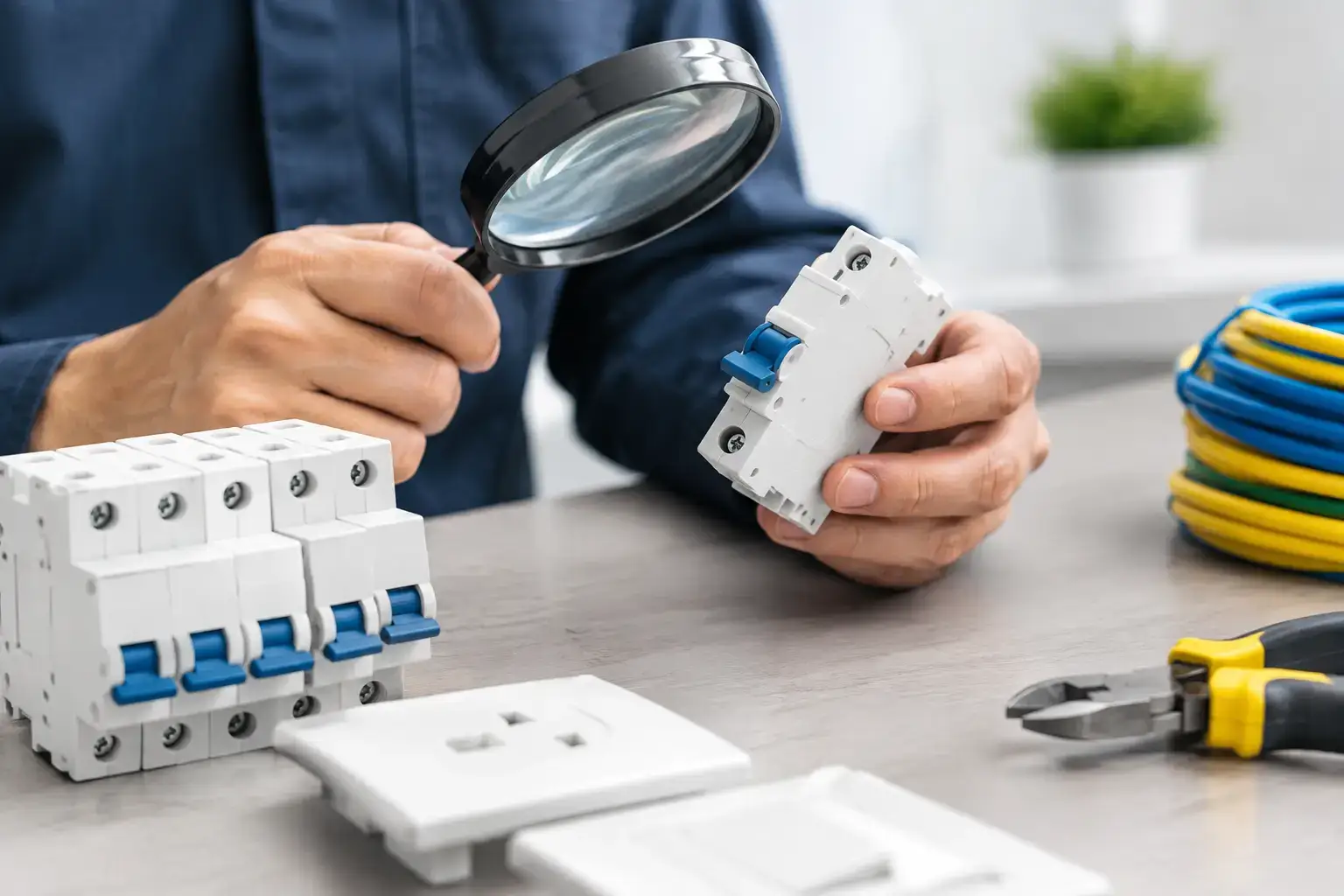
How to Prevent Counterfeit Electrical Accessories
A failed socket outlet, copied circuit breaker, or low-grade cable gland can stop far more than one work area. It can trigger failed inspections, rework, equipment damage, and a safety investigation. To prevent counterfeit electrical accessories, procurement teams need controls that begin before a purchase order is released and continue through receiving, installation, and warranty support.
Counterfeits are not always obvious. Some imitate established brands closely, including logos, labels, and packaging. The difference is often inside: undersized terminals, poor contact pressure, weak insulation, inaccurate ratings, or materials that cannot withstand normal heat and load. For contractors and MEP teams, authenticity is therefore a project-control issue, not simply a purchasing preference.
Why counterfeit electrical accessories create site risk
Electrical accessories sit at the point where systems are connected, isolated, protected, and used every day. Switches, socket outlets, plugs, junction boxes, cable glands, connectors, conduit accessories, and distribution-board components may be relatively small line items, but they affect the performance of the wider installation.
A counterfeit item can appear to work at handover and still fail under sustained load, high ambient temperature, vibration, or repeated use. Loose terminals can create heat. Poor-quality plastics can crack or deform. Incorrect conductor capacity or protection ratings can leave a system outside its design intent. These failures can cause callbacks and replacement work long after the original procurement savings have disappeared.
There is also a compliance exposure. Project specifications, consultant approvals, local authority requirements, and manufacturer installation instructions all depend on using materials that match the approved submittal. If a delivered product cannot be traced to an authorized source, it may be difficult to prove that it is the specified item, even when the package looks correct.
Prevent counterfeit electrical accessories before ordering
The strongest defense is a controlled supplier and product-approval process. Buying from the lowest visible market price without checking the supply route creates a false economy, particularly for safety-critical electrical items.
Start by defining the product clearly in the request for quotation. Include the manufacturer, series or model number, voltage and current rating, IP rating where applicable, finish, mounting type, and any required test or compliance documentation. A vague request such as “white sockets” invites substitutions. A detailed specification gives the buyer and supplier a common reference and makes unauthorized changes easier to identify.
Next, verify the supplier’s source of supply. A professional distributor should be able to explain whether products come through the manufacturer, an authorized importer, or an approved channel partner. For project quantities, ask for a formal quotation that identifies the exact brand and model. This creates an auditable record instead of relying on verbal assurances or a generic invoice description.
Price is a useful warning sign, but it is not a complete test. A lower price can be legitimate when it reflects bulk purchasing, direct wholesale supply, or a discontinued finish. It becomes a concern when the price is dramatically below comparable authorized quotations and the seller cannot explain why. Procurement teams should investigate the source, documentation, batch consistency, and warranty position before accepting the apparent saving.
Match the product to the approved submittal
Do not allow a brand name alone to stand in for approval. A manufacturer may offer several ranges that look similar but have different ratings, internal construction, or intended applications. Match the offered item against the approved data sheet, bill of quantities, and consultant requirements.
This matters especially for items such as modular switches, industrial plugs and sockets, cable glands, terminal blocks, isolators, and miniature circuit breakers. Verify the model number and technical rating, not just the logo. If an equivalent is proposed, route it through the project’s formal substitution process before delivery to site.
Build an inspection process at goods receiving
Counterfeit prevention should not end when the truck arrives. Site stores and procurement staff need a short, repeatable receiving check for electrical materials. It is faster to quarantine a questionable batch at delivery than to remove installed accessories from multiple floors.
For each delivery, check these five points:
- Compare the brand, model number, rating, quantity, and description against the purchase order and approved material record.
- Inspect packaging quality, printing, labels, seals, barcodes, and batch or serial numbers for inconsistencies.
- Review product markings for voltage, current, IP rating, certification information, and manufacturer identification where relevant.
- Open a sample from each batch to examine terminals, screws, contact parts, molded surfaces, and overall construction quality.
- Record the delivery note, invoice, batch details, photos, and receiving inspection result in the project material file.
Packaging alone should never decide authenticity. Counterfeiters can copy cartons, holograms, and labels. However, inconsistent fonts, poor printing, missing batch information, mismatched labels, or products packed loosely without manufacturer documentation are valid reasons to stop and investigate.
Where items carry serial or verification codes, use the manufacturer’s approved verification route or ask the supplier to support the check. For bulk project deliveries, retain samples from important batches. This is especially useful when a later issue requires warranty review or traceability.
Train site teams to recognize practical warning signs
The people accepting materials and installing them often see the first signs of a problem. Give supervisors, electricians, and storekeepers a clear escalation route instead of expecting them to make a final authenticity judgment on the spot.
Warning signs include unusually light components, weak or rough molded plastic, misaligned screw terminals, loose faceplates, unclear ratings, missing instructions, mixed packaging within one batch, and variations in color or finish among supposedly identical items. An accessory that does not fit standard back boxes, conduits, or mating components correctly should also be held for review.
The right response is to quarantine, document, and verify. Do not install a questionable item simply because the program is under pressure. A one-day verification delay is usually less costly than failed testing, a rejected inspection, or an electrical incident after energization.
Use traceability to protect warranties and handover
Traceability connects the material installed on site to the purchase order, supplier, batch, and manufacturer warranty. It is particularly valuable for electrical accessories that may be tested, inspected, or replaced during the defects-liability period.
Keep documentation proportionate to risk. A small maintenance purchase may need a clean invoice and product label record. A tower, hotel, healthcare facility, or industrial project should maintain fuller records for approved brands, delivery batches, inspection reports, test certificates where required, and any manufacturer correspondence.
This approach also helps facilities teams after handover. When a replacement is needed, they can identify the correct series and compatible part instead of mixing unknown products into an existing installation. Consistency supports both safety and appearance, particularly across large fit-out packages.
Choose a supplier that can stand behind the material
A reliable electrical supplier does more than deliver cartons. The supplier should provide clear product identification, stock continuity, technical guidance, and a documented route for warranty handling. For contractors managing several work fronts, consolidated procurement also reduces the chance that urgent site purchases introduce unapproved or untraceable accessories.
Ask practical questions before awarding the order: Can the supplier confirm the exact model? Can they support project quantities from consistent stock? Can they provide product documentation when the consultant requests it? Who manages a warranty claim if a batch issue appears? The quality of these answers often reveals more than a discount offered at quotation stage.
Yasu Trading Co. LLC supports contractor procurement with municipality-compliant materials, authorized brands, and site-focused supply coordination for electrical components alongside wider MEP and construction requirements. That combination helps teams keep purchasing controlled when schedules demand fast dispatch.
Counterfeit prevention works best when it becomes part of normal procurement discipline: specify accurately, buy through accountable channels, inspect every delivery, and retain the records that prove what was installed. When a product’s origin is clear, your team can focus on energizing the project, not explaining a preventable failure.