
Property Management UAE Your Guide to Maximizing Returns
In the buzzing UAE property market, there's a world of difference between just owning a property and running it as a profitable, stress-free investment. That gap is bridged by effective property management. It’s all about bringing in a professional third party to oversee your residential, commercial, or industrial asset, making sure it runs like a well-oiled machine, stays on the right side of the law, and maximises your returns.
Why Smart Property Management in the UAE Is No Longer Optional
It helps to think of your property not just as bricks and mortar, but as a dynamic business. In that sense, a great property manager is your Chief Operating Officer. They’re on the ground, handling all the day-to-day complexities so you, the owner, can step back and focus on the big picture—the investment strategy—instead of getting bogged down in operational headaches.
This role has evolved far beyond just chasing up rent payments. In today's market, it's a strategic necessity for any serious investor looking to get the best possible rental yields, navigate the strict legal requirements set by bodies like the Real Estate Regulatory Agency (RERA), and safeguard the long-term value of their asset.
To really understand what a property manager brings to the table, let's break down their core responsibilities. These are the key tasks that turn the often-stressful duties of ownership into a smooth, profitable venture.
Core Responsibilities of a UAE Property Manager
| Service Area | Key Responsibilities |
|---|---|
| Financial Oversight | Setting competitive rental rates, collecting rent and deposits, handling budgets, and providing transparent financial statements. |
| Tenant Relations | Marketing the property, screening prospective tenants, managing lease agreements, and acting as the main point of contact for all tenant issues. |
| Legal & Regulatory Compliance | Ensuring all contracts and operations comply with UAE laws, including the mandatory Ejari registration for tenancy contracts in Dubai. |
| Maintenance & Upkeep | Coordinating routine inspections, managing repairs, and handling any emergency maintenance to keep the property in top condition. |
A professional manager essentially takes the entire operational burden off your shoulders, ensuring every aspect of your investment is handled with expertise.
The timing couldn’t be more critical. The UAE's real estate sector is hitting record highs. In Dubai alone, we've seen a staggering 26% jump in apartment prices, with total transaction values reaching AED 177.4 billion in just the first half of the year. Experts are forecasting steady price growth of 6-7% annually, and with Dubai's population projected to nearly double by 2040, the market's complexity and potential are exploding. This phenomenal growth makes expert property management in the UAE essential for navigating opportunities in hotspots like Jumeirah Village Circle and Expo City. You can discover more insights about the UAE’s property trends and what they mean for investors like you.
In a market this hot, professional management isn't a luxury; it's a fundamental requirement for securing your investment. It ensures your property not only rides the wave of market growth but also stands out as a premium, well-maintained asset that attracts and keeps high-quality tenants.
At the end of the day, hiring a property management service in the UAE is about mitigating risk and boosting value. It protects your time, your money, and your peace of mind—making it a non-negotiable part of any successful real estate strategy in the region.
Mastering the Legal Maze of UAE Real Estate
Trying to get your head around the UAE's property laws can feel like being handed a complex puzzle, but without the picture on the box to guide you. For any property owner here, getting to grips with this legal framework isn't just a "nice-to-have"—it's the very bedrock of a secure and profitable investment. These rules exist for a good reason: to create a transparent, fair market where the rights of both landlords and tenants are protected.
Think of the legal system as the official operating manual for your property. When you follow it, things run smoothly. When you don't, you're opening the door to disputes, fines, and a whole lot of unnecessary stress. The regulations touch on everything, from how you formalise a tenancy agreement to the proper way to handle disagreements. This is why effective property management in the UAE is so deeply tied to a mastery of these legal nuts and bolts.
The Role of RERA and Other Regulatory Bodies
While different authorities oversee real estate across the UAE, they all share a common mission: to regulate the market and safeguard everyone involved. In Dubai, the big name you'll hear constantly is the Real Estate Regulatory Agency (RERA). RERA pretty much sets the rules of the game for all property transactions, whether you're leasing, buying, selling, or managing.
Other Emirates have their own counterparts, like the Abu Dhabi Municipality, which serves a similar purpose. These bodies are the architects of the legal infrastructure for the property market, ensuring everything is done by the book. This is where a professional property manager really earns their keep; they are your on-the-ground expert, fluent in the specific regulations of whichever Emirate your property is in.
Essentially, they act as your personal compliance officer. They make sure every little thing, from drafting a lease to logging a maintenance request, is fully compliant, shielding you from legal headaches. It’s their job to stay on top of any legislative changes so your investment—and your peace of mind—remains protected.
Here's the key takeaway for any landlord: compliance isn't a choice. The legal framework is designed to protect your asset and your rental income, but that protection only works if you're playing within the rules. Pleading ignorance of the law simply won't fly in a dispute.
Key Legal Obligations for Landlords
As a landlord, a few duties are simply non-negotiable. Getting these right is fundamental to a healthy landlord-tenant relationship and keeping your rental business on the right side of the law.
- Ejari Registration: In Dubai, every single tenancy contract has to be registered on the Ejari system. The name says it all—'Ejari' means 'my rent' in Arabic. This registration is what makes your contract legally binding and officially recognised. Without it, you have no standing to file a dispute with the rental authorities.
- Property Condition: You are legally required to hand over the property in a good, liveable state. This isn't just about a fresh coat of paint; it means ensuring all essential services, like plumbing, AC, and electricity, are working perfectly from day one.
- Major Maintenance: While tenants are usually on the hook for minor, day-to-day upkeep, the landlord is responsible for major maintenance. Think of big-ticket repairs that impact the tenant's ability to actually live in the property—unless your tenancy agreement specifically states otherwise.
Understanding these core responsibilities is your best defence against the most common conflicts that arise between landlords and tenants. A well-drafted tenancy agreement, fully compliant with local law, is your most powerful tool. It clearly defines everyone's obligations from the start, setting the stage for a transparent and professional relationship.
Decoding Property Management Service Tiers
When you start looking for property management in the UAE, you'll quickly realise it’s not a one-size-fits-all service. It’s more like a menu, with different options designed for different kinds of property owners. Your needs, your budget, and how hands-on you want to be will all determine the right choice for you.
After all, not every landlord is in the same boat. A local investor with a single apartment might just need help finding a good tenant. On the other hand, an overseas landlord juggling a portfolio of villas will probably want a complete, hands-off solution. The beauty of these service tiers is that you only pay for what you truly need, keeping your property looked after without unnecessary costs.
Essentially, most services are built around three core pillars. A basic package might cover just one, while a comprehensive plan will weave all three together.
The Three Pillars of Management
Let's break down the foundation of any solid property management package. It really comes down to these three key areas of responsibility.
Tenant Relations: This is the human side of the business. It’s everything from marketing your property and showing it to prospective renters, to carrying out thorough tenant screening and drafting airtight tenancy contracts. It also includes managing day-to-day communication, handling renewals, and mediating any disputes that pop up.
Financial Oversight: This pillar is all about the money. It covers collecting rent and security deposits, paying service charges and other property-related bills on your behalf, and giving you clear, detailed financial statements. A top-tier service will even provide yield analysis to make sure your rental income is keeping pace with the market.
Asset Maintenance: This is all about protecting your physical investment. It starts with detailed entry and exit inspections and extends to coordinating routine upkeep and handling emergency repairs. A good manager will have a network of trusted, reliable contractors to ensure all work is done well and at a fair price.
This is where modern management really shines, blending physical upkeep with digital efficiency to keep things running smoothly.
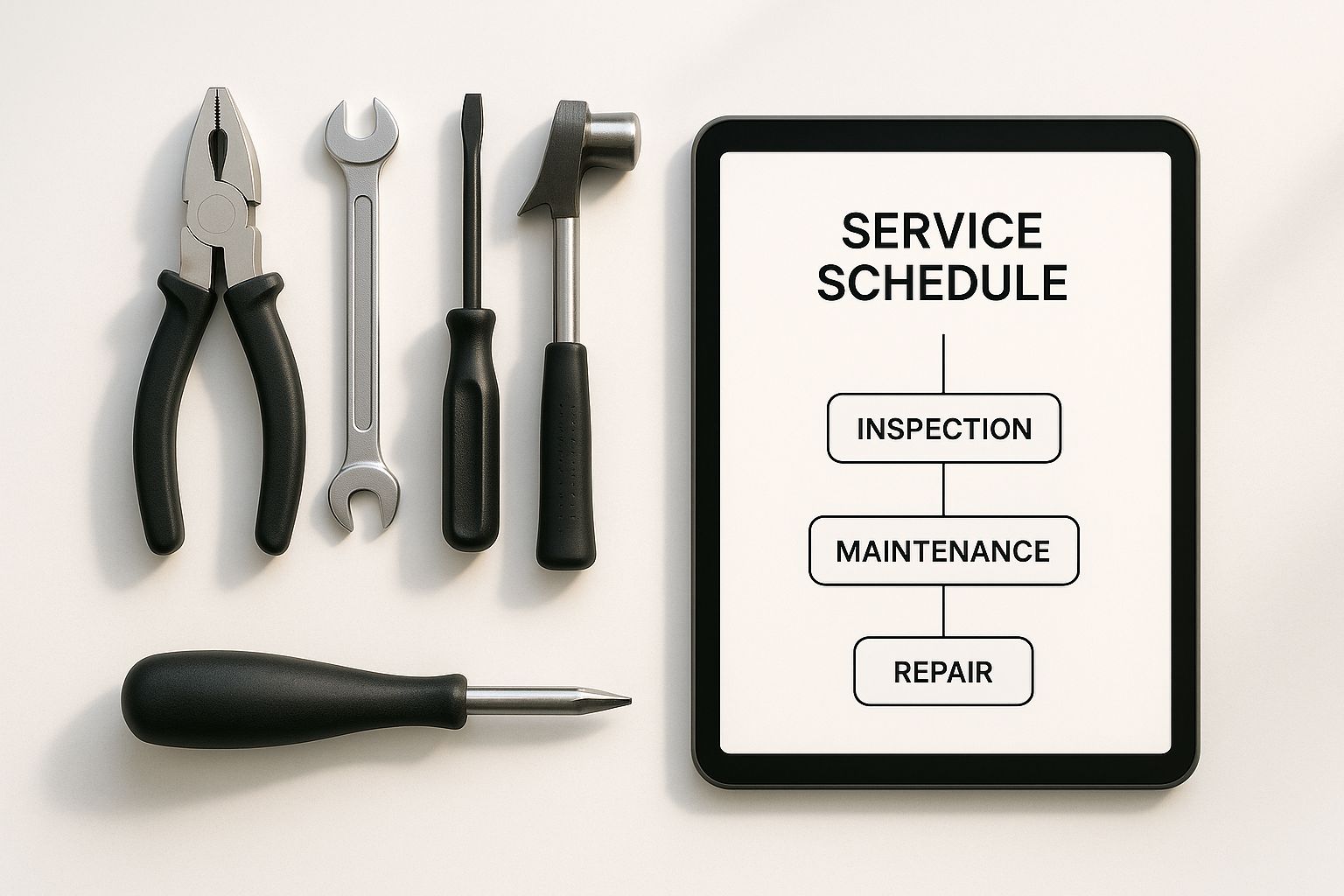
As the image shows, today's approach uses technology to make sure maintenance is scheduled efficiently and owners have a transparent view of everything happening at their property.
Comparing Property Management Service Tiers
So, how do you pick the right package? The best way is to compare how companies bundle these pillars into different service tiers. Think of it less as a list of features and more about how much of your own time and energy you want to invest.
A cheaper package might save you on fees, but it will cost you in time and potential headaches. To help you decide, here’s a look at the most common packages you’ll find across the UAE.
Comparing Property Management Service Tiers
This table breaks down the typical service packages, showing you what's usually included and who each level is best suited for.
| Service Level | Typical Inclusions | Best For |
|---|---|---|
| Lease-Only / Tenant Finding | Property marketing, tenant screening, and lease agreement preparation. Once the tenant moves in, management reverts to the owner. | Hands-on local landlords who are comfortable managing tenant relations and maintenance themselves but need help with marketing and legal paperwork. |
| Rent Collection & Management | Includes all lease-only services plus ongoing rent collection, financial reporting, and handling of lease renewals. The owner still manages maintenance. | Owners who want to offload the financial admin and tricky rent conversations but prefer to handle repairs and tenant communication directly. |
| Full-Service Management | A comprehensive, all-inclusive package covering tenant relations, financial oversight, and all aspects of asset maintenance and repairs. | Overseas investors, busy professionals, or owners with multiple properties who want a completely passive investment experience. |
Ultimately, a full-service package means your management company acts as your proxy for pretty much everything. This is especially crucial for maintenance, which needs a proactive approach. For example, a key task for a full-service manager is preparing a building for the region's extreme weather. You can learn more about what that involves in our guide on seasonal building maintenance for Dubai's climate, which details the preventative steps that protect your property's long-term value.
Of course. Here is the rewritten section, crafted to sound like it was written by an experienced human expert in the UAE property market.
Staying Ahead of Key Market Trends
The property market in the UAE isn't static; it’s a living, breathing thing that’s always changing. For anyone invested in property here, whether you're an owner or a manager, just keeping up isn't enough anymore. The real key to success is getting ahead of the curve and understanding the forces that are shaping the future of property management in the UAE.
It's all about foresight. You have to know what today's tenants are looking for, what new technologies can make your life easier, and how bigger economic shifts are playing out on the ground. Get a handle on these trends, and you can tweak your strategy to make sure your property doesn't just survive, but thrives in this competitive space.
The Rise of Prop-Tech and Automation
One of the biggest game-changers we're seeing is the explosion of Property Technology, or "Prop-Tech". Think of it as a complete digital makeover for the real estate world. We’re finally moving away from clunky spreadsheets and endless phone tag to slick, integrated software that handles it all. It’s making everything run smoother and more openly for everyone involved.
So what does this look like in practice?
- Tenant Portals: These are secure online hubs where tenants can pay rent, log a maintenance issue, or message the manager anytime, day or night. It’s a huge win for tenant happiness and cuts down on so much admin work.
- Automated Reporting: Owners can log in from anywhere in the world and see live financial dashboards, check on maintenance progress, and view occupancy reports. It’s a level of transparency we could only dream of a few years ago.
- Digital Onboarding: The whole process of signing leases, submitting documents, and arranging move-ins is now done online, making the leasing cycle incredibly fast.
The global market for property management software hit USD 24.18 billion in 2024 and is on track to more than double by 2032. This isn't just a niche trend; it’s a clear signal that tech-driven management is becoming the new standard.
This shift to digital doesn't just streamline things; it gives you a goldmine of data. You can use it to make smarter decisions on everything from setting the right rent to predicting when the AC units will need a service.
The Shift to Short-Term and Holiday Rentals
With the UAE's tourism industry absolutely booming, there’s been a massive surge in demand for short-term and holiday home rentals. For property owners, this can be a seriously profitable move, often bringing in much higher returns than a standard long-term lease.
But it’s a different beast entirely. This market demands constant attention—think frequent guest check-ins, professional cleaning between stays, pricing that changes with demand, and active marketing on sites like Airbnb and Booking.com. It’s why specialised property management services for this niche are popping up everywhere. They handle the whole show, from chatting with guests to making sure everything is above board with the Department of Tourism and Commerce Marketing (DTCM).
Sustainability as a Competitive Advantage
"Green" building standards and sustainability used to be nice-to-haves. Now, they're genuine selling points. Today’s tenants, whether they're families or businesses, are more aware of their environmental impact and are often willing to pay more for a space that reflects their values.
Adding sustainable features can be a magnet for high-quality, long-term tenants and can even trim your running costs. We’re talking about things like:
- Energy-efficient HVAC systems and LED lights
- Water-saving taps and smart irrigation for landscaping
- Using sustainable or recycled building materials
- Installing charging stations for electric vehicles (EVs)
These trends are all playing out against the backdrop of a red-hot real estate market. The UAE recently saw a flurry of activity, with over 35,000 property sales in Dubai alone, adding up to more than AED 150 billion. With apartment values expected to climb by 8-12%, it’s clear that investor confidence is strong, largely thanks to the nation's push to diversify its economy. You can find more analysis on UAE property market trends to see how these developments are creating a solid foundation for investment.
How to Select the Right Management Partner
Choosing the right partner to look after your property is easily one of the most important decisions you'll make as an investor. This isn't just about hiring someone to collect rent; you're entrusting a massive asset to a team that needs to protect its value and help it grow.
Get it right, and you'll enjoy real peace of mind and solid financial returns. Get it wrong, and you could be facing a world of costly headaches, tenant drama, and even legal trouble. The selection process has to be deliberate and thorough—don’t just get pulled in by a fancy PowerPoint or the lowest price tag.
Your Vetting Checklist
First things first, create a shortlist of potential companies. Once you have a few names, it's time to dig in and evaluate each one systematically. This isn't the time for gut feelings alone; a structured approach ensures you don't miss any critical details.
Here are the absolute non-negotiables every potential property management UAE partner must have:
- RERA Registration and Licensing: This is your first and most crucial check. Any legitimate property management company in Dubai must be registered with the Real Estate Regulatory Agency (RERA). This confirms they're legally allowed to operate and are bound by professional codes of conduct. No RERA certificate? No deal.
- Proven Local Market Track Record: How long have they actually been on the ground here in the UAE? You want a team with deep local roots. They'll understand the market's unique rhythm, from rental trends in JVC versus the Marina to the specific ways of dealing with local authorities.
- Transparent Fee Structures: You need to get crystal clear on how they make their money. Is it a percentage of the annual rent—typically between 5% to 8%—or a fixed fee? More importantly, ask for a complete breakdown of all potential charges. What about renewal fees, maintenance markups, or eviction costs?
A partnership built on transparency from day one is far more likely to succeed. Any vagueness in their contract or fee schedule is a massive red flag. If they can't be straight with you now, walk away.
A company's approach to maintaining the building is also a huge tell. Proactive upkeep preserves your asset’s value and is key to keeping good tenants happy. To understand what that entails, you can learn more about the wider scope of these services in our detailed guide on facility management in Dubai, which gets into everything from routine inspections to emergency call-outs.
Essential Questions to Ask
Once you've confirmed their credentials, it's time to interview your top candidates. Think of it as a job interview where you're the one doing the hiring. The quality of their answers will tell you everything about their operational know-how and how much they value their clients.
Your questions need to be specific and grounded in real-world situations. This pushes the conversation past their marketing fluff and into the nitty-gritty of how they'll actually handle your property.
Here are a few crucial questions to guide those conversations:
- Tenant Screening: "Walk me through your exact process for vetting a new tenant." You want to hear about credit checks, employment verification, and calls to previous landlords. A strict screening process is your number one shield against future problems.
- Emergency Protocols: "It's 2 AM on a Friday. There's a major water leak in my apartment. What happens next?" Do they have a 24/7 contact number? Who are their on-call contractors, and are they reliable?
- Financial Reporting: "What kind of financial reports will I get, and how often?" Ask them to show you a sample report. You're looking for something that is clear, detailed, and gives you a full picture of all income and expenses.
- Vacancy Rates: "For properties like mine, what is your current average vacancy rate?" A low rate is a great sign—it suggests they are genuinely good at marketing and keeping tenants happy.
Picking the right management partner is that final, critical piece of the puzzle. By using this framework, you can move forward with confidence, knowing you have a skilled and trustworthy team working to protect and grow your investment.
Transforming Management Costs Into a Strategic Investment

It’s tempting to look at a property management fee as just another expense eating into your profits. I've seen countless owners fall into that trap. But it's time to reframe that thinking entirely. Great property management in the UAE isn't a cost—it's one of the smartest investments you can make in your asset's long-term health and profitability.
This is where all the separate threads we've talked about—the legal maze, tenant happiness, and market savvy—get woven together to actively boost your return on investment (ROI). A top-tier manager doesn't just put out fires; they stop them from ever starting. That proactive, strategic mindset is what separates a struggling property from a thriving one.
From Expenses to Earnings
The real magic of professional management is its ability to flip potential costs into genuine profit drivers. It's a carefully coordinated strategy that boils down to one thing: maximising your income while systematically shrinking your expenses and vacancies. This isn't guesswork; it's a delicate balancing act that demands deep market knowledge and operational expertise.
Think about how a manager directly pads your bottom line:
- Strategic Rental Pricing: An expert doesn’t just pull a number out of thin air. They dive deep into market analysis to set a rent that’s competitive enough to attract quality tenants fast, yet high enough to truly maximise your yield.
- Slashed Vacancy Periods: Every single day your property sits empty, it's losing you money. Professionals use targeted marketing, run efficient viewings, and have a finely-tuned leasing process to keep those costly gaps between tenants to an absolute minimum.
- Boosted Tenant Retention: It's simple, really. Happy tenants stick around. By delivering excellent service and resolving issues without delay, managers cut down on turnover, saving you the headache and expense of finding and vetting new people.
A well-managed property does more than just generate consistent cash flow. It becomes a more valuable, appreciating asset over time. The fee you pay isn't an expense; it's the price for the expertise that ensures your property outperforms the rest of the market.
The Power of Preventative Maintenance
One of the biggest, yet often overlooked, ways a manager protects your ROI is through smart, preventative maintenance. Instead of waiting for a catastrophic (and eye-wateringly expensive) breakdown, they put a proactive schedule in place for inspecting and servicing crucial systems like HVAC and plumbing. This approach not only saves you from huge emergency repair bills but also keeps your tenants satisfied.
Effective planning is the key, and many of the same principles apply to both construction and ongoing upkeep. You might find our guide on how construction cost management works useful, as it sheds light on budgeting concepts that are vital for maintenance.
This forward-thinking strategy is especially crucial in the UAE's dynamic economy. With the nation's GDP forecast to grow by 4.7% and the property market firing on all cylinders, you can't afford to be reactive. In a recent quarter, residential values in Dubai shot up by a staggering 28.9% year-on-year. A well-maintained property is perfectly positioned to ride that wave of appreciation.
Ultimately, hiring a professional property manager is a direct investment in your own financial future. It turns your UAE real estate from a passive holding into a high-performance business, optimised for long-term growth and peak profitability.
Frequently Asked Questions About Property Management
Jumping into the world of property ownership in the UAE can feel like learning a new language, with its own set of rules and questions. To help clear things up, we've put together answers to some of the most common questions we get from landlords about property management in the UAE.
Do I Really Need a Property Manager?
Legally, no, you don't have to hire a manager for your apartment in Dubai. But is it a good idea? Absolutely. It’s almost essential if you live overseas or are trying to keep track of a few different properties across the Emirates.
Think of a good property manager as your man on the ground. They handle all the headaches: vetting tenants, chasing rent, and coordinating maintenance calls. More importantly, they make sure you're always on the right side of RERA and Ejari regulations, which can be a minefield. It saves you time, cuts down on legal risks, and usually leads to happier, long-term tenants—turning your property into a hands-off investment.
What Are the Typical Management Fees?
In the UAE, property management fees are almost always a percentage of the annual rent. You can expect this to be somewhere between 5% and 8%.
Some companies might offer a flat fee instead. This usually covers the basics like finding tenants, collecting rent, and handling day-to-day maintenance. Before you sign anything, get a crystal-clear breakdown of what that fee includes. Ask about extras like lease renewal charges or fees for finding a new tenant—you don’t want any nasty surprises later.
Always demand full transparency on fees. A reputable management company will provide a clear, itemised list of all potential charges, ensuring there are no surprises down the line. A vague contract is a significant red flag.
How Are Maintenance and Repairs Handled?
Any decent property management company has a little black book of trusted, licensed contractors for every job imaginable. This covers everything from a burst pipe in the middle of the night to routine checks that keep things from breaking in the first place.
The process is usually pretty streamlined. A tenant reports an issue, the manager gets a few quotes from their network, and then they'll come to you for approval on any major spend. They manage the whole job from start to finish, making sure it’s done right. This approach gets problems fixed fast and at a fair price, protecting your property’s value and keeping your tenants happy.
What Is Ejari and Why Is It Important?
Ejari—meaning 'my rent' in Arabic—is Dubai's mandatory online system for registering every tenancy contract. It was set up by RERA, and it's not optional. If your contract isn't on Ejari, it's not legally recognised.
For a landlord, this is non-negotiable. An Ejari registration is your legal proof of the tenancy, protecting your rights if a dispute ever comes up. It's also what your tenant needs to get their DEWA connected. Crucially, you can't even file a case with the Rent Disputes Settlement Centre without that valid Ejari certificate. A professional manager takes care of all this for you, making sure your investment is buttoned-up and legally sound from day one.
At Yasu Trading Co. LLC, we know that a well-maintained property is a profitable one. We supply the top-quality building hardware, safety equipment, and maintenance products that professional property managers count on to keep their assets in perfect shape. Discover how our premium products can support your property's needs.