Renovating a Kitchen: An Expert Guide for UAE - Tips & Ideas
Thinking about renovating your kitchen in the UAE? It’s one of the best investments you can make in your home, both for your day-to-day life and for its future value. This guide is built from real-world experience to help you navigate the specific hurdles you'll face here—from finding materials that can take the heat to getting the right building approvals.
Think of this as your roadmap to a beautiful, functional kitchen that’s built to last in this climate.
Why Renovating a Kitchen in the UAE Is a Different Ball Game
Updating your kitchen is so much more than a fresh coat of paint and new cabinet doors; it's about fundamentally changing the most-used room in your home. And in the UAE, the process has its own unique set of rules. You’ve got the intense climate, specific municipal regulations, and a huge variety of materials to sift through. It all requires a bit of local know-how.
These days, the kitchen is rarely just for cooking. It’s where the kids do their homework, where you catch up with friends over coffee, or even where you take a video call. This evolution changes everything, from how you plan the layout to the durability of the finishes you choose.
The Make-or-Break Factors
Getting a handle on the local landscape is key. Here are the core things we’ll cover to make sure your project is a success from start to finish:
- Materials That Can Handle the Climate: This is non-negotiable. Your countertops, cabinets, and flooring must be able to withstand high heat and humidity without warping, fading, or falling apart.
- Getting the Paperwork Right: Before a single hammer is swung, you'll likely need permits. This often includes a No Objection Certificate (NOC) from your building management or developer, a crucial first step for any major work.
- Budgeting Like a Pro: Costs here can be all over the map. You absolutely need a detailed, line-by-line budget that includes a 10-15% contingency fund. Trust me, unexpected issues always pop up.
- Designing for Real Life: A smart layout is everything. It needs to support a natural workflow, provide ample storage, and feel connected to the rest of your home.
A successful kitchen renovation in the UAE isn’t just about the latest trends. It’s about creating a space that’s durable, fully compliant with local rules, and genuinely makes your life easier. Get that right, and you'll seriously boost your property's long-term value.
This guide will give you practical, actionable advice for every single stage. We'll walk through everything from the initial spark of an idea and sourcing the right materials to finding a contractor you can trust and locking in the final design. By focusing on these UAE-specific details, you’ll sidestep the common mistakes and end up with a kitchen that’s perfectly tailored for life in the Emirates.
How to Budget for Your Kitchen Renovation
Before you start pinning dream kitchens and falling in love with a particular marble countertop, let's talk money. Honestly, a well-thought-out budget is the most critical tool you'll have for this entire project. It's the roadmap that keeps you from overspending and ensures you end up with a kitchen you love, without the financial headache.
Here in the UAE, the costs are a unique mix. You're not just paying for cabinets and labour; you're also dealing with materials that can handle the climate and sometimes, specific municipal fees.
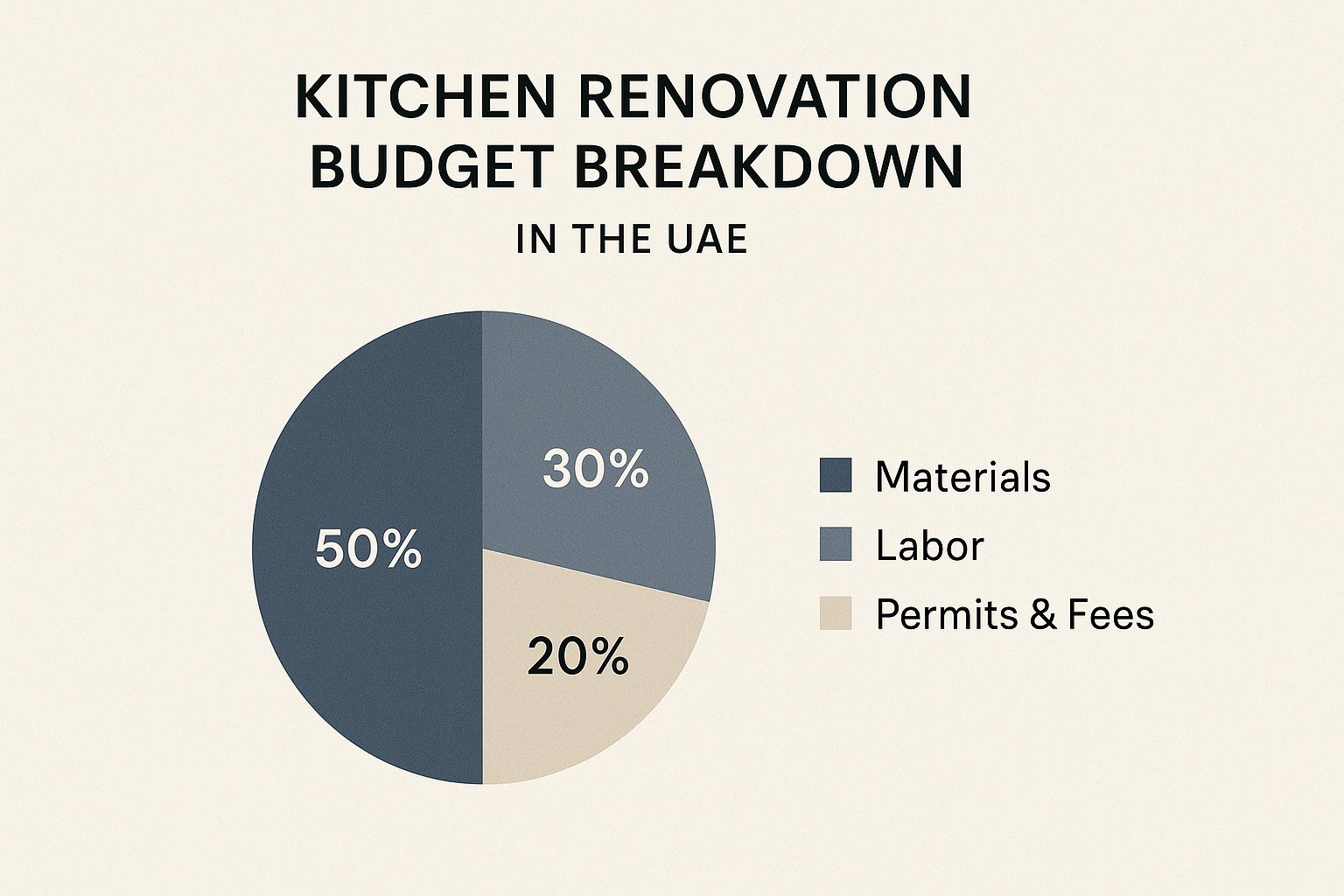
This image gives a pretty clear picture of where your money typically goes in a UAE kitchen renovation. As you can see, materials eat up the biggest slice of the pie.
What this really shows is that nearly half of your total spend will likely go towards the physical stuff—the cabinets, countertops, tiles, and appliances. That’s why sourcing materials smartly is one of the best ways to keep your budget in check.
Getting Real About Your Financial Plan
So, the big question: "How much is this actually going to cost?" The real answer is, it depends entirely on how big you want to go. A simple facelift is one thing; a complete gut job is another.
In 2025, the average kitchen renovation in Dubai can range anywhere from AED 30,000 to over AED 120,000. It's a huge range, I know, but it comes down to the size of your space, the quality of materials you choose, and just how much you're changing.
Let's look at what you can expect at different price points.
A basic refresh, maybe painting the cabinets and updating the hardware, could land between AED 15,000 and AED 25,000. A more common mid-range project—think new cabinets, countertops, and maybe a new backsplash—will probably set you back between AED 30,000 and AED 60,000.
If you're dreaming of a high-end, luxury kitchen with custom cabinetry, smart appliances, and maybe even knocking down a wall, you’re looking at a starting point of AED 70,000, which can easily climb past AED 150,000.
To get a handle on your own numbers, start with a wishlist. Itemise everything you want and begin researching costs. Think through the big-ticket items:
- Cabinets: Are you going for standard stock units, semi-custom, or fully bespoke? The material and finish are huge price drivers.
- Countertops: Your options are vast, from affordable laminate to stunning natural marble or ultra-durable engineered quartz.
- Appliances: Sticking with what you have, or is it time for an upgrade to more energy-efficient models?
- Flooring & Backsplash: Tiles, vinyl, and wood-look flooring all come with different price tags.
- Fixtures: Don't forget the details! Taps, sinks, and lighting can add up faster than you think.
Once you have a rough total for materials, factor in the labour. A good rule of thumb is to budget for labour to be up to 30% of your total project cost. And finally, check if you'll need any permits or No Objection Certificates (NOCs) from your building management or community developer, as those come with fees.
The Non-Negotiable Contingency Fund
Here’s a piece of advice I give every single client: no renovation ever goes exactly to plan. It’s almost a guarantee that once you open up the walls, you’ll find something unexpected—like old plumbing that needs replacing or wiring that isn’t up to code. These surprises can completely derail a tight budget.
Always, always set aside 10-15% of your total budget as a contingency fund. This isn't just "extra" money to play with. It's an essential part of your budget, reserved for those curveballs. If you get lucky and don't need it, great! You’ve just earned yourself a bonus for a fancier coffee machine.
Think of this fund as your project's safety net. It’s what stops an unforeseen issue from forcing you to compromise on the finishes you really wanted.
Estimated Kitchen Renovation Costs in Dubai
To help you visualise these budget tiers, I've put together a simple breakdown of typical renovation costs you might encounter here in Dubai. This should give you a clearer starting point for your own financial planning.
| Renovation Level | Typical Scope of Work | Estimated Cost Range (AED) |
|---|---|---|
| Basic (Cosmetic) | Painting existing cabinets, replacing hardware, new backsplash, minor fixture updates. | 15,000 - 30,000 |
| Mid-Range | New stock/semi-custom cabinets, new countertops (e.g., quartz), new sink and tap, new flooring, standard appliances. | 30,000 - 70,000 |
| High-End (Luxury) | Custom cabinetry, premium stone countertops, high-end smart appliances, layout changes (moving walls/plumbing), designer lighting. | 70,000 - 150,000+ |
Remember, these are just estimates. The final cost will always depend on your specific choices, the contractor you hire, and the size of your kitchen.
Sourcing Quotes and Funding Your Project
When you're ready to bring in the professionals, don't just go with the first contractor you talk to. Make it a rule to get at least three detailed, itemised quotes. A quote that just gives you one big number is a red flag.
A good contractor will break everything down for you, including:
- The cost of all materials, listing specific brands or types.
- Labour charges for each task (demolition, installation, plumbing, etc.).
- Any fees for permit applications.
- A clear timeline and payment schedule.
This level of detail is crucial. It lets you properly compare your options and see exactly where your money is going. It also forms the foundation of a solid contract, protecting both you and the contractor.
For many of us, a major renovation is a significant investment. When looking into financing, understanding the difference between a HELOC vs Refinance can be a game-changer. Each has its own pros and cons that affect your long-term finances, so it’s worth doing your homework to see which one aligns better with your situation. By setting a realistic budget and securing the right funding, you can move ahead confidently and finally get the kitchen you've always wanted.
Getting the Paperwork Right and Finding the Perfect Contractor
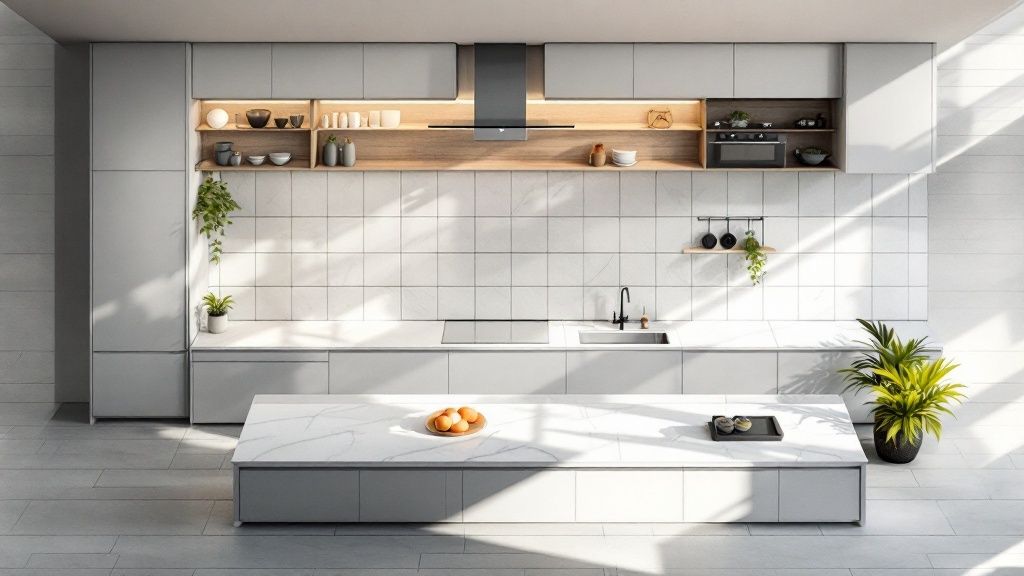
Starting a kitchen renovation in the UAE is incredibly exciting, but it’s easy to get tripped up by the local regulations if you aren't prepared. Before you even think about swinging a hammer, you need to get your head around the necessary paperwork. Ignoring this can lead to some serious headaches, including hefty fines and project delays.
If you live in an apartment or a villa within a managed community, your first port of call is almost always getting a No Objection Certificate (NOC). This is the official green light from your building management or developer, confirming they’re okay with the work you’re planning.
What Actually Needs a Permit?
The good news is that you don't need a permit for every little thing. Simple cosmetic jobs, like repainting cabinet doors or changing a light fixture, typically don't require any formal approval.
However, the moment your plans get more ambitious, the rulebook comes into play. You'll almost certainly need permits for any renovation that involves:
- Knocking down walls: Any structural changes, like creating an open-plan kitchen, need to be signed off.
- Moving your plumbing: Shifting the location of your sink, dishwasher, or gas lines is a big deal and requires official approval.
- Major electrical updates: If you're adding new circuits for powerful appliances or overhauling the wiring, it needs to be done to code and inspected for safety.
For these larger-scale projects, you might need further approvals from bodies like the Dubai Municipality. Your contractor should be an expert in this area and handle all the paperwork for you. For a deeper dive, it's worth learning more about the specific Dubai building codes and how they apply to home renovations.
How to Choose the Right Contractor
Picking your contractor is probably the single most critical decision you'll make in this entire process. A great one can make your renovation a seamless, enjoyable experience. The wrong one can turn your dream kitchen into an absolute nightmare. Take your time here.
A reputable contractor in the UAE will have no issue providing a few key documents. Always ask to see their valid trade licence to confirm they're a legitimate, legally operating business. It’s always safer to go with an established company.
A contractor's portfolio is their CV. Don't just get wowed by the polished "after" photos. Ask for "before" and "during" pictures to really see their work process and the quality of the hidden stuff, like plumbing and wiring.
Go beyond the photos and look for real-world proof of their skills.
- Chat with their past clients: Ask for references from two or three recent projects similar to yours. A confident pro will happily connect you with satisfied customers.
- Ask the tough questions: When you speak to references, get specific. Did the project finish on time? Did they stick to the budget? How did they deal with unexpected problems?
- Check their speciality: A firm that mainly does huge commercial fit-outs might not have the right touch for a detailed residential kitchen. Find someone who lives and breathes home renovations.
Why a Solid Contract is Your Best Friend
Once you've found your ideal contractor, the final step before work begins is getting a detailed, written contract. A handshake and a verbal agreement just won't cut it. You need everything documented to protect your investment.
The contract should clearly outline the full scope of work, leaving no grey areas. This means listing all materials to be used, right down to the brands and model numbers of appliances and fittings.
Make sure these key details are crystal clear:
- A Detailed Job List: Every single task, from demolition to the final touch-ups, should be itemised.
- Payment Milestones: The payment schedule should be tied to progress (e.g., 20% deposit, 30% after demolition, 30% after cabinet install, and the final 20% upon completion). Never, ever pay 100% upfront.
- A Clear Timeline: Set a firm start date and an estimated completion date, and include clauses for handling potential delays.
- Warranty Details: Get clarity on the warranty they offer for both their workmanship and the materials supplied.
This legally binding document is your safety net. It keeps everyone aligned and provides a clear path forward if any issues crop up, making it a non-negotiable part of any successful renovation.
Choosing Materials That Survive the UAE Climate

Here in the UAE, the climate is a major player in any renovation project. The intense heat and relentless humidity can be brutal on building materials, causing lesser-quality surfaces to warp, fade, or even delaminate over time.
Choosing the right materials from the start isn't just about looks; it's a smart financial decision. You'll save a small fortune on future repairs and replacements by investing in durability upfront. When you're comparing samples, don't just think about how they look in the showroom. Take them home. See how they react to direct sunlight and consider how they'll stand up to daily life—spills, steam, and heat from cooking.
Comparing Countertop Options
Your countertop is the workhorse of the kitchen, so it needs to be tough. Quartz is a popular choice for good reason; these engineered surfaces are fantastic at resisting stains and heat. Granite offers that beautiful, natural stone look and handles high temperatures well, but it absolutely must be sealed regularly to prevent moisture from seeping in.
Then there's concrete. It can be poured into unique, custom shapes for a truly modern feel, but it also needs professional sealing to avoid developing hairline cracks.
| Material | Pros | Cons | Maintenance | Cost Level |
|---|---|---|---|---|
| Quartz | Low porosity, UV resistant | Limited heat resistance vs stone | Wipe clean with mild soap | Medium |
| Granite | Natural patterns, heat tolerant | Prone to staining if unsealed | Seal every 12 months | High |
| Concrete | Custom shapes, robust feel | Susceptible to hairline cracks | Re-seal biannually | Medium-High |
Ultimately, the best choice balances the aesthetic you want with a realistic budget and the demands of our local climate.
Selecting Cabinetry Cores
What's inside your cabinets is just as important as the finish on the outside. The core material is what gives your cabinetry its long-term strength and stability. Standard particle board just doesn't cut it in our humid environment.
You're far better off with materials like MDF and moisture-resistant plywood. Even solid wood, which brings such warmth to a space, can expand and contract with the temperature swings if it isn't properly sealed.
- Moisture-Resistant MDF: Great for achieving a smooth, seamless finish and offers consistent quality. Its main weakness is that it can swell if it gets saturated with water.
- Marine-Grade Plywood: This is the champion for humid environments. It’s specifically designed to resist rot and warping.
- Kiln-Dried Solid Wood: Nothing beats the premium look, but it requires a high-quality sealant and regular checks to keep it in top condition.
Durable Flooring and Backsplashes
For floors and backsplashes, you need surfaces that can handle moisture and heavy use without breaking a sweat. Porcelain tiles are a classic for a reason—they’re incredibly durable and almost impervious to water.
If you love the look of wood, luxury vinyl planks (LVP) are a brilliant alternative. They give you that natural aesthetic but are far more tolerant of the steam and spills common in a kitchen. A natural stone backsplash can be a stunning focal point, but just like stone countertops, it will need sealing to keep it from staining.
Why Energy-Efficient Appliances Matter
Let's be honest, the A/C is a non-negotiable part of life here. But your kitchen appliances can also be major energy hogs, driving up your DEWA bills.
Opting for modern, energy-efficient refrigerators and dishwashers, especially those with inverter technology, can genuinely reduce their energy consumption by up to 30%. This translates directly into lower utility costs and a smaller environmental footprint, which is a big deal in a region where cooling is essential. If you're looking for a fresh look without a full replacement, this guide to a dream kitchen makeover with vinyl wraps offers some fantastic, cost-effective ideas.
Selecting Kitchen Fixtures
The small details, like taps, sinks, and handles, can make or break a kitchen's longevity. Constant exposure to water and humidity, especially in coastal areas, means corrosion is a real enemy.
Look for materials designed to resist rust. Stainless steel grade 304 is an excellent choice for its anti-corrosion properties. Brass fixtures are also very durable and add a warm, classic touch, but they need quality plating to maintain their finish and reduce limescale build-up.
- Stainless Steel 304: Offers top-tier corrosion resistance and is a breeze to clean.
- Solid Brass: Very durable and lends a warm tone, though it may need recoating down the line.
- PVD-Coated Finishes: These surfaces are incredibly scratch-proof and stand up well to the coastal humidity in emirates like Dubai and Abu Dhabi.
You can learn more about how to approach this by reading our article on choosing the right construction materials for Dubai’s climate.
Maintenance Best Practices
Once your beautiful new kitchen is complete, a little proactive care will go a long way in protecting your investment. You don't need to spend hours on it; just a few small tasks each month can make a huge difference.
Take a moment to inspect seals around the sink and check the grout lines on your backsplash. Every 6-12 months, re-apply sealant to your stone countertops. Simple things like tightening loose cabinet hardware, cleaning appliance filters, and buffing your taps will keep everything looking and functioning like new for years.
A little regular upkeep can easily extend the lifespan of your renovation, ensuring your kitchen continues to thrive despite the challenges of the UAE climate.
Designing a Kitchen Layout That Actually Works
A beautiful kitchen starts with a smart layout. This isn't just about where the appliances go; it's the blueprint for how you'll cook, entertain, and live in the space every single day. It’s the invisible framework that makes a kitchen feel right. Let’s get beyond the old rules and design a kitchen built for modern life here in the UAE.
The old-school "work triangle"—the path between the sink, cooker, and fridge—is a decent starting point, but our kitchens do so much more now. We multitask, we host friends, and our kitchens often flow directly into our living spaces. A truly modern layout thinks in terms of work zones, not just a simple triangle.
Popular Kitchen Layouts and Their Strengths
The right layout is all about your room's size and shape. Each one offers a different kind of workflow and social vibe, so you need to pick the one that best suits your family and lifestyle.
- L-Shape: This is a classic for a reason, especially in small to medium kitchens. By using two connected walls, it keeps the floor space open. This makes it easy to pop in a small dining table or create a natural flow into the next room.
- U-Shape: If you love to cook and need everything close by, this is your layout. It wraps around you on three sides, giving you tons of counter space and storage. It creates a super-efficient work area where everything is just a step or two away.
- Island Layout: This is the gold standard for open-plan living. A central island can do it all—house a sink or cooktop, offer extra seating for casual meals, and become the natural gathering spot during a party. It’s a statement piece that elegantly connects the kitchen to your living area.
A great layout isn't just about efficiency; it's about creating a space that feels intuitive and effortless. Think about how you move in your current kitchen—what works and what causes a bottleneck? Your renovation is the perfect chance to fix those daily frustrations.
Embracing Modern UAE Kitchen Trends
Kitchen design in the UAE has shifted towards a blend of sleek, minimalist looks with high-tech function and a touch of luxury. The aim is to create a space that feels calm and clean but is also incredibly practical for a busy, modern household.
Integrating technology isn't an afterthought anymore; it's a core part of the design. As of 2025, smart kitchens are a major trend in Dubai renovations. We're seeing more AI-driven ovens that suggest recipes, touchless taps for better hygiene, and interconnected appliances you can control with your voice. This fusion of tech with elegant design—think clean lines, quartz backsplashes, marble countertops, and metallic accents—is what defines the modern Dubai kitchen. You can explore more about these modern kitchen trends in Dubai on radyinterior.ae.
Planning for Workflow and Zoning
Once you've settled on a basic layout, it's time to think about how you'll actually use the kitchen for different tasks. This is called zoning. By creating specific areas for specific jobs, you keep things organised and your benchtops clear.
A well-zoned kitchen might look something like this:
- Prep Zone: Plenty of clear counter space, ideally located near the fridge and sink. You'll want easy access to knives, chopping boards, and your waste bin.
- Cooking Zone: This is the area around your hob and oven. Keep your pots, pans, and cooking utensils within arm's reach. Proper ventilation is also critical here, and our guide on choosing the right kitchen exhaust hood is a great resource.
- Cleaning Zone: Centred on the sink and dishwasher, this spot should have storage for all your cleaning supplies.
- Storage Zone: This is for your pantry items, crockery, and glassware. It’s best to place it somewhere that’s easy to get to without getting in the way of the main cooking action.
Thinking this way creates a smooth, logical flow from one job to the next, which makes all the difference in a busy family kitchen.
Open-Plan Living and Seamless Integration
The move towards open-plan living is huge in the UAE, and it's turned the kitchen into the undisputed heart of the home. This means your kitchen design needs to flow seamlessly into the adjoining living or dining areas, not clash with them.
To get that cohesive look, try using the same flooring and a consistent colour palette across the entire open-plan space. A kitchen island or a peninsula can also act as a subtle visual divider without closing things off. Another great trick is to conceal appliances behind custom panels. This creates a clean, uncluttered aesthetic and lets the real design elements—like a stunning backsplash or elegant countertops—become the focus. It all comes together to create a unified, inviting atmosphere that’s perfect for the way we live now.
Common Questions About UAE Kitchen Renovations
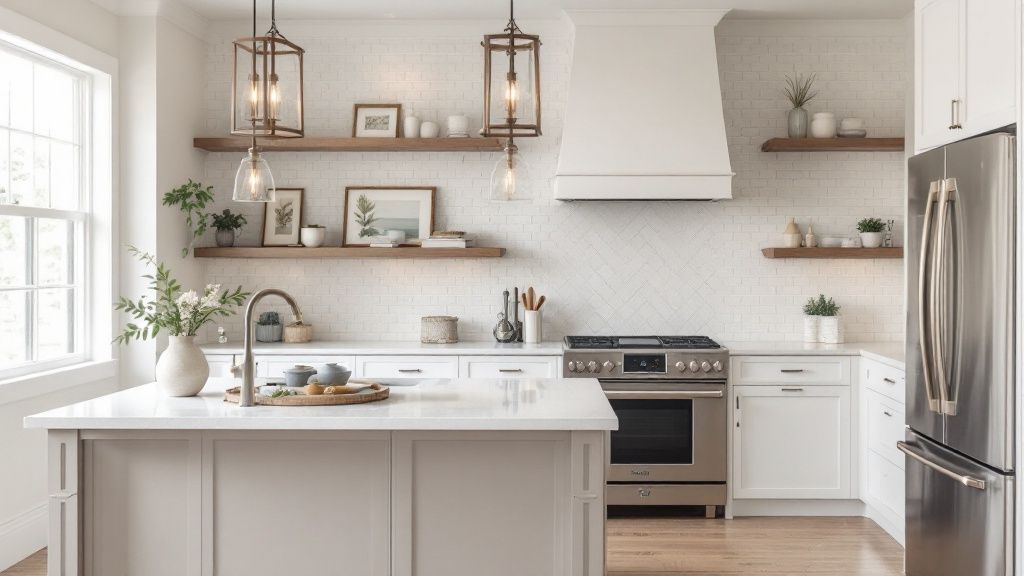
When you start thinking about a kitchen renovation here in the UAE, the questions can pile up quickly. It's totally normal. From how long you'll be without a functioning kitchen to those dreaded hidden costs, getting some clear answers upfront can be the difference between a project you love and one you just want to be over.
Let's dive into some of the most common questions we hear from homeowners. Think of this as a bit of insider knowledge to help you sidestep the usual headaches and make smart choices from the get-go.
How Long Does a Typical Kitchen Renovation Take?
This is usually the first thing people ask, and it makes sense—no one wants their home turned into a construction site for months on end. The truth is, the timeline for a kitchen renovation in Dubai or Abu Dhabi really depends on how ambitious your plans are.
For a standard, full kitchen overhaul, you’re generally looking at 3 to 8 weeks. That's from the day the old kitchen comes out to the final polish.
But the scope of the project is everything.
- A simple facelift? Things like painting cabinets, putting in a new backsplash, or changing the hardware could be done in just a week or two.
- A complete gut job? If you're moving walls, rerouting plumbing, or changing the entire layout, you'll be on the higher end of that scale, closer to 8 weeks or more. Don't forget, securing the necessary building approvals adds time before any physical work even starts.
My advice? Always plan for delays. It’s almost inevitable. Sourcing that perfect countertop might take an extra week, or a surprise issue could pop up once the walls are open. A good contractor will always build a bit of a buffer into the schedule for you.
Do I Always Need a Permit for My Renovation?
Navigating the world of permits can feel a bit overwhelming, but for any major renovation, it's a step you simply can't skip. So, do you always need one? The short answer is no, but it’s critical to know where the line is drawn.
For minor cosmetic tweaks, you're in the clear. Go ahead and paint the walls or swap out your cabinet handles without any paperwork.
However, the moment your plans get more serious, you'll need to think about approvals. This is especially true for work involving:
- Any structural changes, like taking down a non-load-bearing wall.
- Moving plumbing for your sink or dishwasher.
- Altering gas lines (this must be done by a certified professional).
- Major electrical work, like adding new outlets or circuits.
For any of these, you’ll definitely need a No Objection Certificate (NOC) from your building or community management. Your contractor should know this process inside and out and handle the application for you—if they don't, that's a red flag.
What Is the Biggest Hidden Cost in a Renovation?
This is the one that keeps homeowners up at night. Even with a perfectly detailed budget, surprise costs can pop up. In my experience, the biggest culprit is whatever is lurking behind the walls and under the flooring.
Once demolition starts, you might uncover old, faulty wiring that doesn't meet today's safety standards, or find plumbing pipes that are corroded and on the verge of leaking. These are things you just can't see beforehand, and they have to be fixed.
This is precisely why a contingency fund isn't just a "nice-to-have"—it's essential.
Set aside 10-15% of your total project cost for these surprises. It's not "extra" money. It's your safety net that keeps an unexpected issue from forcing you to cut corners on the design elements you’re excited about.
Can I Use My Kitchen During the Renovation?
For a full renovation, the answer is a hard no. It's easy to underestimate the disruption, but your kitchen will be a proper work zone. Think dust, debris, disconnected appliances, and workers coming in and out. It’s neither safe nor practical to try and cook in that environment.
The best way to get through it is to set up a temporary kitchen somewhere else in your home. A little bit of planning here goes a long way.
Find a corner in your dining room or a spare room and equip it with the essentials:
- A microwave
- Your coffee maker (this is non-negotiable for most of us!)
- A small mini-fridge for milk, drinks, and leftovers.
Prepping for this temporary setup makes the whole renovation process far less stressful for you and your family.
For all your project needs, from durable plumbing fittings to high-quality tools and safety equipment, trust Yasu Trading Co. LLC to supply the best materials for your renovation. Explore our extensive product range at https://yasutrading.com.