Top Safety Equipment Suppliers Dubai Trusted Gear Guide
Picking the right safety equipment suppliers in Dubai is far more than just a line item in your procurement budget. It’s a strategic decision that forms the very foundation of your team's safety and, by extension, your business's success. In a city built on high-stakes industries like construction, energy, and logistics, the quality of your Personal Protective Equipment (PPE) is simply not up for debate.
Why Your Supplier Choice Matters More Than You Think
Choosing a supplier for safety gear isn't like ordering stationery. It’s a direct investment in your company’s resilience, your ability to keep projects running, and most importantly, the well-being of your people. The right partner does so much more than just ship boxes; they bring expertise to the table, help you navigate complex regulations, and become an extension of the safety culture you’re trying to build.
Think of them as a co-pilot for your entire safety program. Their reliability and knowledge have a direct impact on whether you reach your destination safely.
This relationship is absolutely critical in Dubai's fast-paced industrial scene. With massive projects constantly changing the city's landscape, the pressure to uphold world-class safety standards is relentless. A second-rate supplier can introduce devastating risks, from counterfeit gear that fails when it's needed most to delivery delays that bring your entire operation to a standstill.
More Than a Transaction: A Safety Partnership
The best safety equipment suppliers in Dubai act more like consultants than salespeople. They get the nuances of local laws and can steer you toward the right solutions for the unique challenges your crew faces every day. This kind of collaborative approach turns a simple purchase into a real strategic advantage.
A true safety partner will help you:
- Navigate Compliance: They make sure every helmet, harness, and pair of gloves you buy meets—or even exceeds—the strict standards set by Dubai Municipality and other authorities.
- Optimise Inventory: They can offer solid advice on managing stock levels and setting up delivery schedules, helping you avoid the costly downtime that comes from running out of essential gear.
- Enhance Training: Many of the best suppliers also provide product training, ensuring your team knows exactly how to use the equipment for maximum protection.
- Future-Proof Your Programme: They'll keep you in the loop about new technologies and changing safety standards, helping you stay ahead of the curve.
The sheer scale of this need is obvious when you look at the market. The UAE’s personal protective equipment market hit around USD 391.2 million in 2024 and is expected to skyrocket to USD 708.1 million by 2033. This boom is fuelled by the very industries that make your choice of supplier so crucial. You can dive deeper into the numbers with this in-depth UAE PPE market analysis.
When you start seeing your supplier as a long-term partner, you naturally shift your focus from the price per unit to the overall value they bring. This mindset is the key to building a truly effective workplace safety culture that protects your people and your profits.
Navigating Dubai's Workplace Safety Regulations
Let's get one thing straight: following Dubai's workplace safety regulations isn't just about avoiding fines. Think of these rules as the foundation for a successful, safe, and productive worksite. When you stick to them, you're not just ticking boxes; you're protecting your most valuable asset—your people—and keeping your projects running without costly interruptions.
In Dubai, the main players setting the safety standards are the Dubai Municipality and the federal Ministry of Human Resources and Emiratisation (MoHRE). These authorities lay down the law on everything from initial risk assessments to the mandatory use of Personal Protective Equipment (PPE).
Getting a firm grip on these regulations is your secret weapon. Why? Because when you know the rules, you know exactly what to ask safety equipment suppliers in Dubai. You can make sure every helmet, glove, and harness is fully compliant and right for the job. This knowledge is your first and best defence against workplace accidents.
The Role of Key Authorities
The Dubai Municipality and MoHRE are the two pillars holding up the emirate's safety framework. While they work together, they have distinct roles.
- Dubai Municipality: This is your local authority. They focus on public health and safety right here in the city, setting specific codes for construction sites, industrial zones, and commercial buildings. Expect their inspectors on-site, ensuring local orders are followed.
- Ministry of Human Resources and Emiratisation (MoHRE): Operating on a federal level, MoHRE oversees labour laws across the entire UAE. Their rules cover broad employer responsibilities for worker welfare, including providing the right safety gear and training.
Ignoring either of these bodies is a bad idea. The penalties can be severe, ranging from hefty fines to a complete project shutdown. To see how these local rules directly impact construction, our guide on Dubai building codes is a great resource.
Core PPE Requirements and Non-Compliance Risks
The regulations go far beyond simply handing out gear. As an employer, you have a duty of care. This means ensuring the PPE is right for the task, kept in good condition, and used correctly by workers who've been properly trained.
Non-compliance is a high-stakes gamble. The immediate financial penalties are often just the beginning. The ripple effects can include reputational damage, decreased employee morale, and even criminal liability in cases of serious injury or negligence.
Just think about the common hazards on a typical Dubai worksite—falling objects, chemical spills, and slips and falls. Each risk demands specific protection. As you manage these, remember to implement effective trip hazard prevention strategies, which are a major focus during safety inspections. This is why a supplier’s catalogue absolutely must include products that meet specific international standards.
Understanding International Certifications
While Dubai has its own robust standards, the authorities frequently require equipment that also meets globally recognised certifications. This is a non-negotiable point to bring up with any potential safety equipment suppliers in Dubai.
A few key certifications to keep an eye out for include:
- EN (European Norms): These are the technical standards used across Europe and are highly respected in the UAE. For example, EN 388 tells you how well protective gloves stand up to mechanical risks.
- ANSI (American National Standards Institute): This U.S. organisation sets standards for a massive range of products, from safety helmets (ANSI Z89.1) to high-visibility vests.
A trustworthy supplier won't just say their products are compliant—they'll prove it with clear documentation for every certified item. Don't be shy about asking for these papers. It’s a simple step that verifies the quality of the gear and ensures it will actually protect your team when it counts.
Key Criteria For Vetting Your PPE Supplier
Choosing the right partner from the many safety equipment suppliers in Dubai is about more than just comparing prices. It’s a deep dive into who you can trust to keep your people safe. You need a methodical way to look past the sales pitch and see who can consistently deliver on quality, compliance, and sheer reliability.
Think of it like a background check for a critical business partner. Because that's what this is.
By breaking down your evaluation into a few key areas, you create a solid framework. This helps you compare suppliers apples-to-apples and make a choice that truly protects your team and your operations, whether you’re running one high-risk construction site or a dozen facilities across the emirate.
Product Quality And Specialisation
First up, and arguably the most important: the gear itself. What’s the quality like, and what do they specialise in? Some suppliers are like a supermarket for safety gear—they have a bit of everything, from basic gloves to complex breathing apparatus. Others are specialists, focusing solely on things like fall protection or fire-retardant clothing.
There are good reasons to go with either. A generalist can be incredibly convenient, especially if your needs are broad but fairly standard. A facilities management company, for example, might love the simplicity of a single order for all their basic PPE.
On the other hand, a specialist brings deep expertise to the table. If your work involves specific, high-stakes hazards—like working at heights or handling aggressive chemicals—you want a supplier who lives and breathes that category. They'll have the best-in-class products designed precisely for that risk. If you’re in construction, our guide to top-tier construction safety equipment suppliers offers some great starting points.
Verifying International Certifications
In Dubai, compliance isn't just a suggestion; it's a hard requirement. Any supplier worth their salt must provide equipment that meets both local rules and internationally recognised standards like EN (European Norms) and ANSI (American National Standards Institute). These certifications are your proof that the gear has been properly tested and won't fail when it matters most.
Don't just take their word for it. Here's how you check:
- Ask for the paperwork: Request the certificates of conformity for the specific products you plan to buy.
- Match the batch numbers: Make sure the documents you receive actually correspond to the products in front of you.
- Watch out for fakes: Counterfeit PPE is a real and dangerous problem. A reputable supplier will have no problem showing you their supply chain and their direct link to manufacturers like 3M, Honeywell, or DuPont.
If a supplier gets defensive or hesitates when you ask for certification documents, that’s a massive red flag. Transparency is the hallmark of a professional, trustworthy operation.
Stock Availability And Logistics
The best safety helmet in the world is useless if it’s stuck on a container ship. A supplier's logistics game is a make-or-break factor, especially when project delays can cost a fortune. You need a partner who can guarantee they have the stock and can get it to your site, fast.
Before you sign anything, grill them on their warehousing and delivery setup. A supplier with a well-stocked warehouse right here in the UAE can handle urgent requests in hours, not weeks. That local presence is a huge advantage over someone drop-shipping everything from overseas.
The image below really drives home how critical it is to have the right gear on hand.
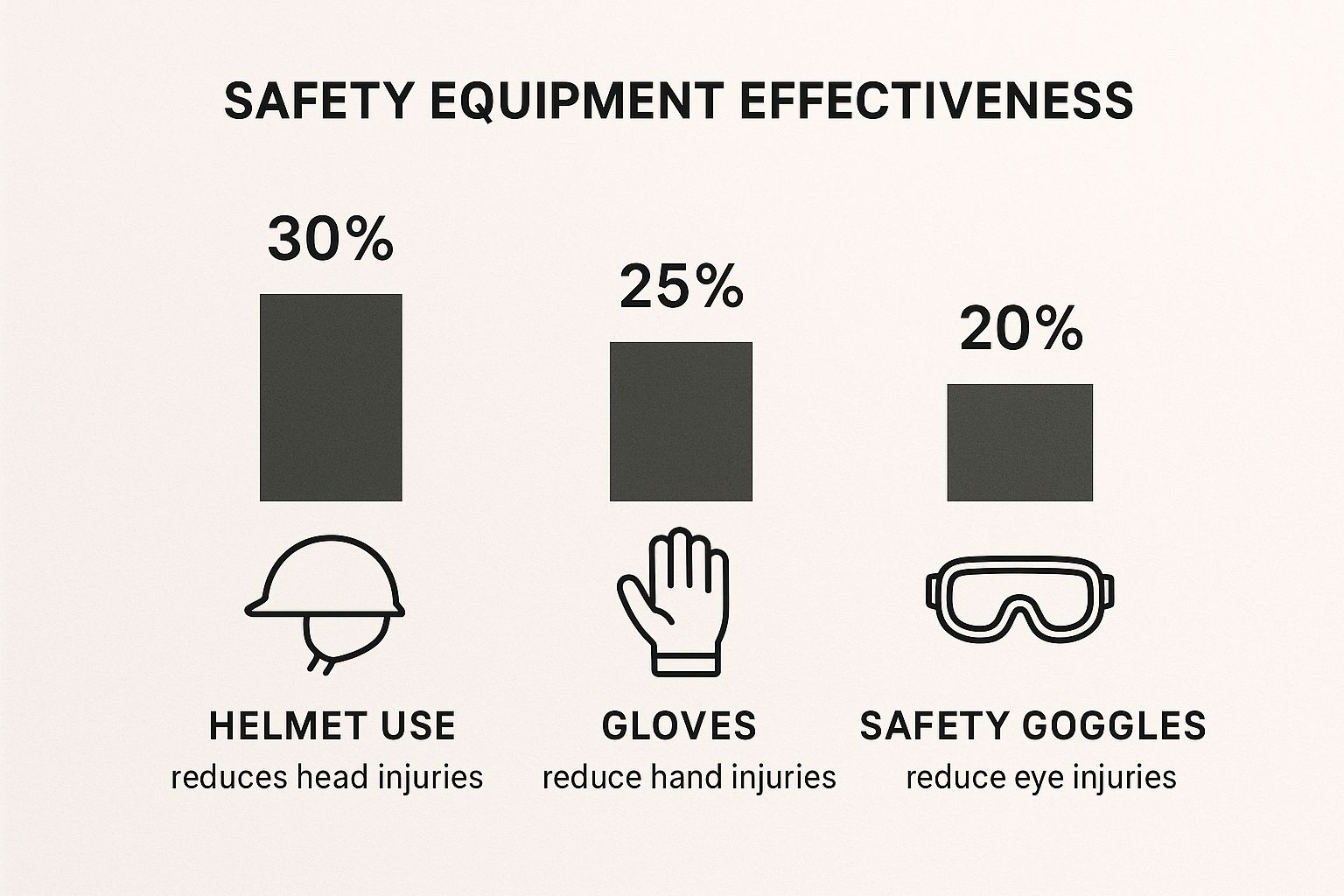
As you can see, having the right equipment in stock isn't just about convenience—it directly prevents injuries and keeps your projects running smoothly.
Reliable After-Sales Support
Finally, what happens after you’ve paid the invoice? A great supplier sticks around. This is where you separate the mere vendors from the true safety partners.
So, what does good support look like?
- Product Training: They should be able to show your team how to use the equipment properly and safely.
- Maintenance Help: For gear like fall arrest systems, they should give you clear guidance on inspection and upkeep.
- A Real Person to Call: You need a dedicated contact who can quickly handle questions, returns, or warranty issues.
This kind of support shows a supplier is invested in your company’s safety for the long haul. They become part of your team, not just a line item on an invoice.
Essential PPE Categories for Dubai's Industries
It's one thing to have a general idea of Personal Protective Equipment (PPE), but it's another thing entirely to know exactly what gear stands up to the unique challenges of Dubai's industrial scene. From the dizzying heights of construction sites to the detailed work in manufacturing plants, every sector has its own risk profile.
A one-size-fits-all approach to PPE isn’t just a bad idea—it’s a dangerous one.
To really get it right when you’re looking at safety equipment suppliers in Dubai, you need a solid grasp of the core categories. This is what lets you ask smart questions and make sure the gear you choose gives your team the exact protection they need to work safely and without hesitation.
Hand Protection for High-Risk Tasks
In almost any job, a worker's hands are right there in the line of fire. That makes top-notch gloves an absolute must-have for any serious safety plan. There’s a good reason the market for hand and arm protection is so big. A 2017 analysis revealed this segment made up 25% of the entire UAE PPE market, with projections showing an impressive 8.3% CAGR.
That growth is fuelled by the real-world risks found every day in construction and manufacturing. You can dive deeper into the numbers in this report on the UAE personal protective equipment market.
Picking the right glove is all about matching its features to the job's specific dangers.
- Cut-Resistant Gloves: Absolutely vital for anyone handling sharp materials like sheet metal, glass, or blades. Always check for gloves with high EN388 cut resistance ratings.
- Chemical-Resistant Gloves: A staple in manufacturing and maintenance work. The material here is everything—nitrile is perfect for oils and solvents, but you’ll need something like butyl rubber for harsher chemicals.
- Heat-Resistant Gloves: Non-negotiable for welders and foundry workers. These are typically crafted from materials like tough leather or aluminised fabrics to fend off sparks and scorching heat.
Head Protection for Dynamic Environments
On any active Dubai worksite, the danger of head injuries from falling tools or accidental impacts is always present. Head protection is your team's first and best defence, and today's gear is a lot more advanced than the simple hard hats of the past.
A safety helmet is more than just a piece of plastic; it's a sophisticated system designed to absorb and distribute the force of an impact, protecting the most critical organ in the body. Never compromise on its quality or condition.
When you're talking to a supplier, ask them about helmets with integrated features. For example, some construction helmets come with built-in hearing protection or have slots to attach face shields—perfect for welders and grinders. For a closer look at gear for this industry, take a look at our guide on essential safety equipment for construction.
Respiratory Protection Against Invisible Dangers
Not every hazard is something you can see. Airborne threats like dust, chemical fumes, and vapours can cause serious, long-term damage to respiratory health. The right respirator completely depends on the type of contaminant in the air.
Choosing the Right Respirator
| Hazard Type | Recommended Protection | Common Application |
|---|---|---|
| Fine Dust/Particulates | Disposable masks (e.g., N95, FFP2) | Construction sites, woodworking |
| Chemical Vapours/Gases | Half-mask or full-face respirators with specific chemical cartridges | Manufacturing, painting, labs |
| Oxygen-Deficient Areas | Self-Contained Breathing Apparatus (SCBA) | Confined space entry |
A good supplier doesn't just have these on a shelf. They have the know-how to help you pick the right cartridges for the specific chemicals your crew is working with. They should also be able to walk you through fit testing, which is absolutely critical for making sure the respirator forms a proper seal and actually works.
An Overview of Dubai's Supplier Landscape
Trying to get your head around the different safety equipment suppliers in Dubai can feel like a mammoth task. The market is buzzing with options, and every single one claims to offer the best quality and reliability. But here’s the thing: not all suppliers are cut from the same cloth. Figuring out the different players is your first real step toward making a smart choice for your business.
I like to think of the supplier market as a city map. You've got your sprawling industrial parks, your major distribution centres, and your specialist boutiques. If you know what you’re looking for, you can head straight to the right district instead of getting lost in the backstreets. This isn’t just about finding a vendor; it’s about finding a genuine safety partner.
Broadly speaking, you can split the landscape into three main categories. Each has its own strengths and is a better fit for different types of customers.
Major Global Manufacturers
These are the big-leaguers of the safety world—names you already know, like 3M, Honeywell, and DuPont. These industry giants either have a physical base here or a very strong representative presence in Dubai. They’re the ones driving innovation, sinking huge amounts of cash into R&D to create the next generation of protective gear.
Their biggest plus? Unbeatable product knowledge and a rock-solid reputation built over decades. When you deal with them directly, you’re getting equipment straight from the source—from the very people who designed and tested it. This is a game-changer for industries that need highly specialised equipment, like advanced respiratory systems or chemical-resistant suits.
- Best for: Large corporations with specific, high-risk needs that demand the very latest technology and direct support from the manufacturer.
- Potential downside: You might run into higher minimum order quantities or find they’re less flexible on price compared to a local distributor.
Large Regional Distributors
These guys are the workhorses of the local PPE market. They’re large-scale operations that bridge the gap between the global manufacturers and the companies on the ground here in the UAE. Think of them as the major logistics hubs of the safety world, with massive warehouses holding a huge range of brands all under one roof.
Their real strength lies in their deep understanding of the regional market and their impressive logistics. A top-tier distributor in Dubai will have a warehouse stacked to the rafters, which means they can get products to you quickly—something that’s absolutely critical for keeping projects on track. They also have strong ties with multiple manufacturers, giving you a much wider selection to choose from.
A great regional distributor gives you the product range of a global player combined with the on-the-ground speed of a local business. Their knack for delivering a wide variety of certified gear at a moment’s notice makes them a massive asset for most construction and industrial firms.
These suppliers are perfect for businesses that need a reliable one-stop shop for all their standard and specialised PPE.
Niche Specialists
Finally, you have the specialists. These are laser-focused suppliers who’ve become the go-to experts in one particular category of safety gear. You’ll find companies that only deal with fall protection systems, others that focus exclusively on fire-retardant clothing, and some that supply nothing but high-end protective footwear.
Their power is in their deep, concentrated knowledge. When you talk to a niche specialist, you’re not just talking to a salesperson; you’re talking to an expert who knows their field inside and out. They can offer tailored advice, customised solutions, and the kind of in-depth training a generalist supplier simply can’t compete with.
Comparing Supplier Types
| Supplier Type | Primary Strength | Ideal Client Profile |
|---|---|---|
| Global Manufacturer | R&D and product innovation | Large enterprises with high-tech needs |
| Regional Distributor | Stock availability and logistics | Most medium to large companies |
| Niche Specialist | Deep expertise and tailored advice | Businesses with specific, high-risk tasks |
Picking the right type of safety equipment suppliers in Dubai really comes down to your company’s day-to-day needs, the size of your projects, and the specific hazards your team faces. Starting with this bird's-eye view helps you cut through the noise and zero in on a partner who’s genuinely the right fit.
Common Procurement Mistakes and How to Avoid Them
Even the sharpest safety strategy can crumble because of simple mistakes made during procurement. Picking the right safety equipment suppliers in Dubai is a great first step, but sidestepping the usual purchasing traps is what really makes sure your investment protects your people. These blunders often feel minor at the moment but can snowball into major risks down the road.
Learning from others' missteps can save you a ton of time, money, and most importantly, keep your team out of harm's way. It’s all about moving from a simple "buy-and-done" mindset to one that's proactive and risk-aware, where every purchase is a conscious step toward a safer workplace.
Mistake 1: Prioritising Cost Over Quality
We all feel the pressure of a tight budget, and it's always tempting to go for the cheapest option on the table. But when it comes to safety, this is probably the most dangerous gamble you can take. Low-cost, uncertified gear often fails to meet basic safety standards, falls apart quickly, and can completely fail when it’s needed most.
Those initial savings? They vanish in a heartbeat when you factor in the long-term costs of accidents, constant replacements, and potential regulatory fines.
A cheap helmet that cracks on the first impact or a flimsy harness that can't pass a load test isn't a bargain; it's a liability. Real value is measured in reliability and compliance, not just the number on the price tag.
Mistake 2: Ignoring Employee Comfort and Fit
Here’s a hard truth: if safety gear is uncomfortable, bulky, or just doesn't fit right, your team won’t wear it properly. Or they might not wear it at all. This is a massive problem. Low adoption rates mean higher on-site risk, making your entire safety investment pretty much useless. Think about it—safety gloves that are too big can easily get snagged in machinery, while ill-fitting glasses that keep sliding down someone's nose offer zero real protection.
This is a huge deal in areas like hand protection. The UAE safety gloves market was valued at a whopping USD 36.35 million in 2023 and is expected to climb to USD 55.38 million by 2032. That number alone shows you how critical this one category is. For a closer look, check out this in-depth analysis of the UAE safety gloves market. The easy fix? Let your employees test the gear. Getting them involved in the selection process to check for comfort and a proper fit will do wonders for compliance.
Mistake 3: Overlooking Training and Supply Chain Issues
Buying the best equipment is only half the battle. If your team doesn't know how to use, inspect, and maintain it correctly, even the most expensive gear is basically useless. A truly reliable supplier will do more than just sell you a product; they should offer training or, at the very least, provide clear and comprehensive user guides.
On top of that, a shaky supply chain can completely sabotage your safety program. Unexpected delays or finding out an item is out of stock leaves your team exposed and vulnerable. To really bulletproof your procurement process, looking into strategies for effective supply chain management is a smart move, especially in a fast-paced market like Dubai. A little proactive planning on the logistics front ensures you'll always have the critical equipment you need, right when you need it.
Frequently Asked Questions About Safety Equipment
Stepping into the world of PPE can bring up a lot of practical questions. You need clear, direct answers to make the right calls for your team and ensure everyone on site is properly protected. Here are some of the most common queries we get from businesses across the region.
What Are The Most Important PPE Certifications In Dubai?
While Dubai certainly has its own local regulations, the best safety equipment suppliers in Dubai will always stock gear that meets rigorous international standards. It's all about looking for the right markings that prove the equipment has been properly tested.
Keep an eye out for these key certifications:
- CE (European Conformity): This is a big one. It's a declaration that the product meets the EU's stringent requirements for safety, health, and environmental protection.
- EN (European Norms): These are more specific, providing detailed ratings for different risks. A great example is EN388, which tells you how resistant a pair of gloves is to abrasion.
- ANSI (American National Standards Institute): You'll often see this on head and eye protection, as it’s a widely respected standard in the industry.
Remember, any supplier worth their salt should be able to provide documentation to back up every single certification claim. No papers, no deal.
Can I Ship PPE To Dubai From An Online International Store?
You can, but honestly, it's a massive gamble. You're opening yourself up to major customs delays, and you run the very real risk that the products won't meet the mandatory UAE regulations.
Partnering with established local suppliers ensures all products are pre-approved and compliant. Local partners also offer crucial after-sales support, training, and easier returns—logistical challenges that are difficult to manage with overseas vendors.
How Often Should We Replace Safety Helmets And Harnesses?
The golden rule is to always follow the manufacturer's specific guidelines, as lifespans can vary quite a bit.
As a general rule of thumb, plan to replace safety helmets every 3-5 years, though this can change based on how heavily they're used and how much sunlight they're exposed to. Fall protection harnesses are in a similar boat, but they absolutely require strict pre-use inspections every single time. A good supplier can work with you to set up a solid inspection and replacement schedule.
For a reliable partner who truly understands Dubai's safety landscape, Yasu Trading Co. LLC offers a complete range of certified safety equipment and expert guidance. Explore our safety solutions and request a quote today.