Scaffold Tag Inspection Guide for Safer Sites
A scaffold can look complete and still be unsafe for use. A missing tie, altered guardrail, damaged plank, or unstable base may not be obvious to the crew arriving for a shift. That is why a scaffold tag inspection guide should be part of the site access process, not an afterthought after the scaffold is already occupied.
For contractors, the objective is straightforward: workers need a clear answer before stepping onto a platform. Is the scaffold safe to use, safe with restrictions, or out of service? A visible tag system supports that decision, but only when it is backed by competent inspection, proper documentation, and control of any changes made after handover.
What a Scaffold Tag Actually Controls
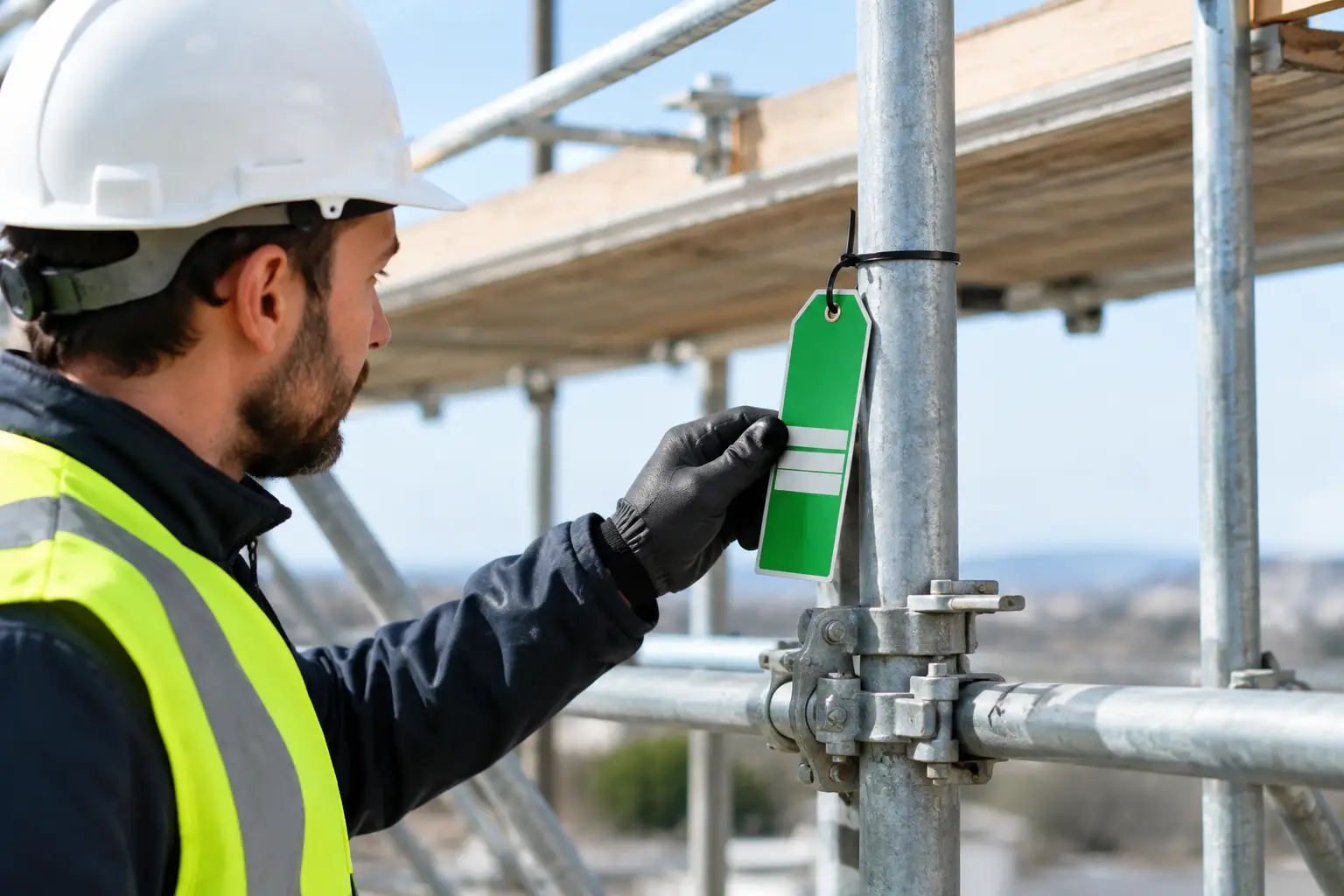
A scaffold tag is a visual status marker placed at the access point to a scaffold. It tells users whether the structure has been inspected and whether access is permitted. It also provides a record of the inspection date, the inspector, and any restrictions that affect how the scaffold can be used.
The tag is not the inspection itself. It cannot compensate for missing components, poor erection practices, or unauthorized modifications. Its purpose is to prevent assumptions at the point where a worker decides to climb. On busy projects, that distinction matters. Multiple trades may use the same scaffold, and each team may assume another party has verified it.
A practical system uses clear status colors, subject to the project safety plan and local requirements. Green commonly indicates that the scaffold is inspected and approved for normal use. Yellow identifies a scaffold that can be used only under stated conditions, such as reduced load, incomplete access, or restricted areas. Red means do not use. Access should be physically prevented as well as clearly tagged.
The color convention should never be treated as universal permission. Site rules, client requirements, and the authority having jurisdiction take priority. The written information on the tag must match the actual condition of the scaffold.
Scaffold Tag Inspection Guide: When Checks Are Required
The inspection frequency depends on the project rules, type of scaffold, weather exposure, and how often the structure is altered. At a minimum, a competent person should inspect a scaffold before initial use, after erection or significant modification, after an event that could affect stability, and at the interval required by the project safety plan.
Events that trigger a new inspection include high winds, heavy rain, impact from plant or vehicles, settlement, loading beyond intended use, and work near the scaffold that may have disturbed ties or braces. A scaffold can also become unsafe through ordinary site activity. Materials may be stacked on platforms, toe boards may be removed to lift equipment, or a worker may relocate a ladder without realizing they have changed the approved access arrangement.
For this reason, daily pre-use checks by users are still valuable even when formal inspections are scheduled. A crew should not climb a scaffold with a missing, unreadable, expired, or damaged status tag. They should report the condition and wait for the responsible supervisor or competent inspector to release it.
Who Should Inspect and Sign the Tag
The inspector must be a competent person as defined by the project and applicable safety requirements. In practical terms, this means someone with the training, knowledge, and authority to identify scaffold hazards and take corrective action. Assigning the task to a person who can complete a tag but cannot stop work creates a paperwork process, not a control measure.
The tag should identify the inspector and the inspection date. Depending on site procedures, it may also state the scaffold identification number, next inspection date, load rating, restrictions, and relevant contact information. Keep the handwriting readable. A tag that cannot be read under site conditions does not help a crew make the right decision.
What to Check Before Releasing a Scaffold
A complete scaffold inspection follows the scaffold design, manufacturer instructions, and project method statement. The exact checklist varies between a simple mobile tower, a façade scaffold, a suspended platform, and a system scaffold. Still, the inspection should confirm the structure is stable, complete, protected against falls, and suitable for the work intended.
Start at ground level. Check that the foundation is firm and capable of carrying the load. Base plates, sole boards, adjustable legs, and casters on mobile towers must be correctly fitted and secure. Look for signs of settlement, water accumulation, excavation activity, or vehicle movement that could compromise the base.
Then inspect the frame. Standards, ledgers, transoms, braces, couplers, ties, and anchors must be present, correctly installed, and free from obvious damage or distortion. Pay close attention to ties and braces because they are often affected when other trades need temporary clearance for materials or services. Any unauthorized removal should place the scaffold out of service until it is reassessed.
Platforms require equally close attention. Boards and decks should be properly supported, fully secured where required, and free from cracks, excessive gaps, contamination, or overloading. Materials must be organized so that walkways remain clear. A platform packed with pipe fittings, cable trays, power tools, and debris may have sufficient structural capacity yet still create a trip hazard and restrict emergency movement.
Check edge protection on every open side and end where a fall risk exists. Guardrails, midrails, toe boards, mesh protection, and gates should be complete and secure. If the work scope requires a temporary opening for lifting materials, it must be controlled under the approved procedure. An open edge is not acceptable simply because the task will take only a few minutes.
Finally, verify safe access. Ladders, stair towers, internal access ladders, gates, and landing areas need to be stable and unobstructed. Workers should not climb cross braces or use improvised access. Where electrical work is being performed, assess overhead lines, temporary power cables, and the condition of electrical components around the scaffold. Good access and properly managed work areas reduce the shortcuts that lead to falls.
Use Tags to Manage Restrictions, Not Hide Them
A yellow or restricted-use tag is useful when the scaffold is structurally safe but has defined operating limits. For example, a platform may be approved only for light-duty inspection work, one level may be excluded from use, or loading may be limited until a planned activity is complete. The restriction must be specific enough for the user to act on it.
Avoid vague notes such as “use caution.” State the limitation clearly: “No material storage,” “Level 3 closed,” or “One worker only while inspection work is underway.” If the restriction is too complex to control through a tag, the safer decision is to keep the scaffold red-tagged until the required work is completed.
A red tag should lead to more than a verbal warning. Block ladders, secure gates, remove access where practical, and inform the affected trades. On a fast-moving project, a red tag can be ignored if an available access point remains open. Physical control protects the work crew and prevents supervisors from discovering an unauthorized user after an incident.
Keep the Record Connected to Site Operations
Tagging works best when it is part of a wider scaffold control process. Give each scaffold a unique identification number and match it to the inspection register, handover record, design information where applicable, and modification history. This makes it easier to confirm which structure was inspected, particularly on large projects with several elevations and multiple work fronts.
Procurement teams also have a role. The inspection process depends on having compatible, approved scaffold components, reliable access equipment, visible safety signage, and appropriate personal protective equipment available when work is planned. Substituting incompatible fittings or delaying a repair because the correct component is unavailable can extend downtime and expose crews to improvised solutions.
For contractors managing several sites, consolidated supply planning helps keep corrective actions moving. When replacement access ladders, warning signs, fasteners, safety equipment, or jobsite tools are required, availability and on-time site delivery can be as relevant to scaffold compliance as the original inspection.
Common Failures That Undermine Tag Systems
The most frequent failure is treating the tag as permanent. Scaffolds change throughout a project, often without a formal handback. A platform altered for HVAC installation, painting, façade work, or piping may no longer match the condition shown on the tag.
Another failure is poor tag placement. If the tag is hidden, exposed to weather until unreadable, or installed away from the actual access point, workers may never see it. Place tags where users must pass them before climbing and replace damaged tags immediately.
Do not overlook communication. Brief crews on the meaning of each tag color, who can authorize changes, and how to report defects. This is particularly necessary when several subcontractors share the same work area and shift patterns change. Clear controls prevent one trade from inheriting another trade’s unreported alteration.
A scaffold tag is a simple tool, but it carries a serious operational message: access is earned through inspection, not assumed because the structure is standing. Keep tags current, make restrictions unmistakable, and treat every modification as a reason to verify the scaffold again before the next crew climbs.