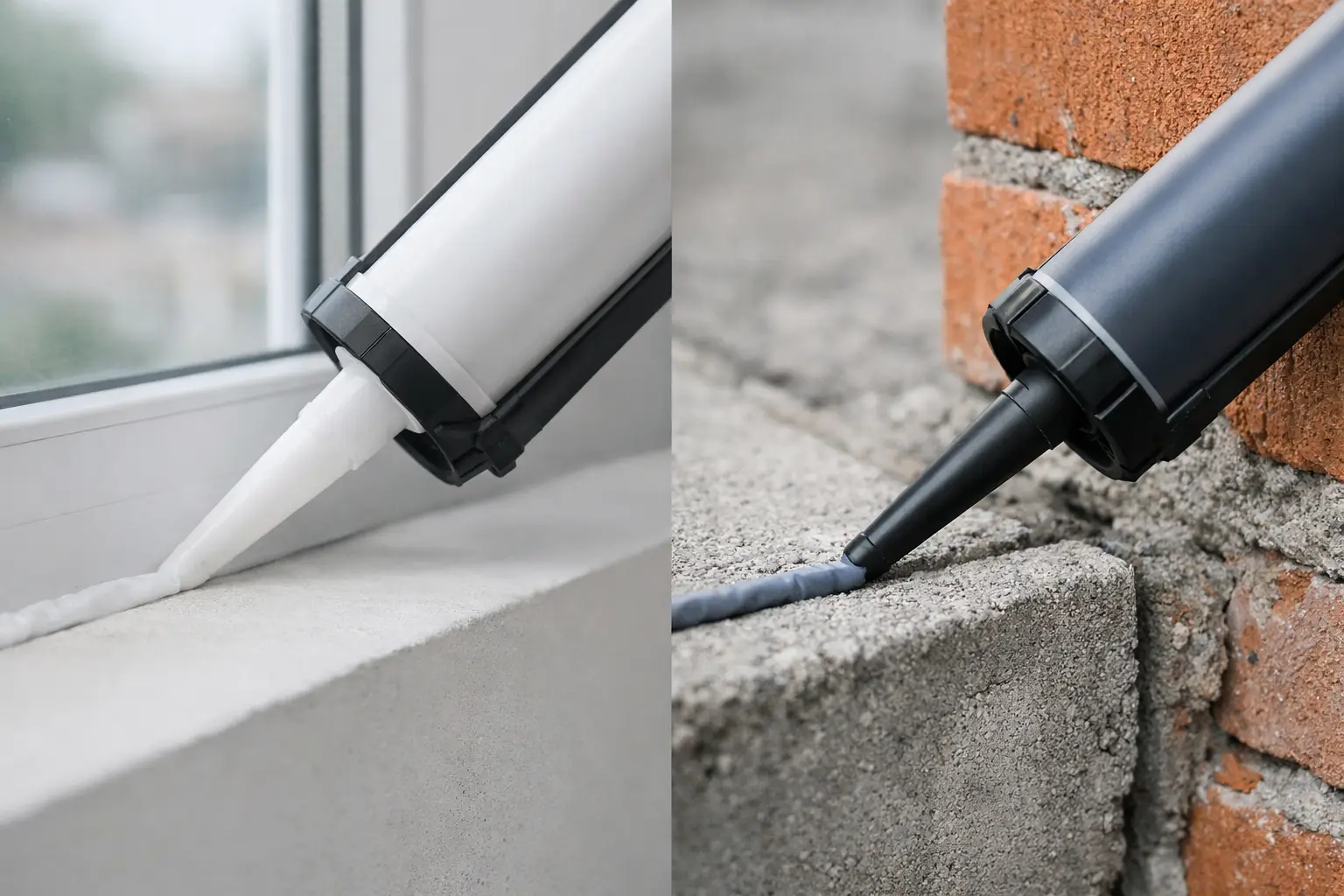
Silicone vs Polyurethane Sealant for Construction
A failed sealant joint is rarely a small defect. On a façade, it can admit water behind finishes. In a wet area, it can lead to mold, staining, and call-backs. Around MEP penetrations, the wrong product can compromise a carefully coordinated installation. The silicone vs polyurethane sealant decision should therefore be made from the joint condition, substrate, movement requirement, exposure, and finishing sequence - not from what happens to be available in the site store.
For contractors and procurement teams, the practical question is not which sealant is universally better. Silicone and polyurethane are both high-performing materials, but they solve different construction problems. Correct specification protects inspection readiness, reduces rework, and keeps follow-on trades on schedule.
Silicone vs Polyurethane Sealant: The Core Difference
Silicone sealant is valued for long-term flexibility, strong resistance to UV exposure, heat, moisture, and weathering. It is commonly used in glazing, curtain wall perimeter joints, aluminum systems, sanitary areas, and exposed exterior joints. Quality neutral-cure silicone adheres well to many nonporous materials, including glass, ceramic, aluminum, and certain coated metals.
Polyurethane sealant, often called PU sealant, is valued for its tough, paintable finish and strong adhesion to many porous construction substrates. It is commonly selected for concrete, masonry, wood, precast elements, metal, and floor or wall joints where abrasion resistance and paint compatibility matter. It generally creates a more durable mechanical bond on rough, absorbent surfaces than standard silicone.
That distinction matters on active jobsites. Silicone typically performs better where weather, water, and sustained movement are the primary risks. Polyurethane is often the more practical choice where the joint must integrate with painted finishes, concrete work, or heavily used building elements.
Start With the Joint, Not the Tube
A sealant specification should begin with the substrates on each side of the joint. Glass-to-aluminum, ceramic-to-sanitary ware, and aluminum-to-coated panel joints usually point toward silicone. Concrete-to-metal, masonry cracks, precast panels, and painted trim joints often point toward polyurethane, subject to the manufacturer’s compatibility guidance.
Movement capability is the next consideration. Building materials expand and contract at different rates, particularly on exterior elevations exposed to strong sunlight and high temperatures. Silicone remains elastic for long periods and is generally the safer choice for high-movement glazing and exterior weather seals. Polyurethane also accommodates movement, but its suitability depends on the product grade, joint design, and expected movement percentage.
Do not treat joint width as a minor detail. A narrow, deep joint may restrict movement and fail even when the correct sealant has been used. For movement joints, installers should use the specified backer rod, maintain the required width-to-depth ratio, and avoid three-sided adhesion. Bonding sealant to the back of the joint as well as both sides can prevent proper elongation and cause premature tearing.
Where Silicone Performs Best
Glazing, Curtain Wall, and Exterior Weather Seals
Silicone is a strong choice for exposed perimeter seals around windows, curtain wall systems, skylights, and aluminum cladding. Its resistance to UV rays and rain makes it reliable for joints that remain visible and exposed throughout the building’s service life.
However, not every silicone is suitable for every glazing application. Some systems require a neutral-cure grade to prevent corrosion or staining on sensitive metals and stone. Structural glazing, in particular, requires an approved structural silicone system and manufacturer-backed design criteria. A general-purpose sanitary silicone is not a substitute for a structural glazing product.
Bathrooms, Kitchens, and Sanitary Fixtures
For joints around washbasins, toilets, shower screens, bathtubs, ceramic tiles, and countertops, silicone is usually the preferred material. It remains flexible under regular wetting and drying cycles and is available in sanitary grades containing fungicide additives.
The substrate must be clean and dry before application. Sealant applied over soap residue, dust, damp grout, or old loose material may look acceptable on day one but lose adhesion quickly. In maintenance work, removing failed sealant fully and cleaning both bond faces is usually faster than attempting a patch that fails again.
High-Temperature and UV-Exposed Areas
Where thermal cycling and weather exposure are constant, silicone generally retains its elasticity better than polyurethane. This is especially relevant for exterior aluminum details, rooflight interfaces, and metal assemblies that heat up significantly during the day.
Where Polyurethane Performs Best
Concrete, Masonry, and Precast Joints
Polyurethane sealant is frequently specified for construction joints in concrete and masonry because it adheres strongly to porous surfaces and cures into a tough, flexible material. It can be used for control joints, gaps around frames, precast connections, and nonstructural crack sealing where the joint design and product rating are appropriate.
Surface preparation remains essential. Concrete should be sound, clean, and free from laitance, curing compounds, oil, and loose particles. In some cases, a compatible primer is required. Skipping primer simply to save application time can create a bond failure that costs far more to correct after handover.
Paintable Finishes and Fit-Out Work
If the sealant line must be painted to match walls, skirting, metal trims, or façade elements, polyurethane is normally the better option. Most silicone sealants resist paint adhesion. Paint may bead, crack, or peel from a silicone joint, leaving a visibly poor finish.
This does not mean every polyurethane product can be painted immediately. The crew must follow the stated cure time and confirm that the selected paint system is compatible. Water-based, solvent-based, and specialty coatings can respond differently, so a small site test is worthwhile on high-visibility finishes.
Tougher Service Conditions
Polyurethane is often selected where a joint faces occasional abrasion or needs a more resilient surface than silicone provides. It can suit certain floor joints, thresholds, metal-to-concrete interfaces, and industrial fit-out details. For vehicular traffic, chemical exposure, or continuously submerged conditions, use a sealant specifically rated for that service rather than assuming a standard PU cartridge will perform.
Key Trade-Offs for Procurement Teams
Silicone is not automatically the premium choice, and polyurethane is not automatically the economical choice. The installed cost includes preparation, primers, labor, cure time, rework risk, and expected service life.
Use these procurement checks before releasing material to site:
- Select silicone for glazing, sanitary joints, exposed weather seals, and applications requiring high UV and moisture resistance.
- Select polyurethane for paintable joints, porous substrates, concrete interfaces, and details requiring a tougher cured surface.
- Confirm the cure type and compatibility where natural stone, coated metal, plastics, or sensitive finishes are involved.
- Match the sealant movement rating, joint geometry, backer rod, primer, and application temperature to the approved method statement.
Color is another common site issue. Silicone is widely available in clear, white, black, and sanitary colors, while polyurethane is often available in construction-oriented shades such as gray, white, and black. Do not approve a color from a catalog alone when appearance is critical. Request a sample or test bead against the actual finish.
Avoid These Common Installation Failures
The most frequent sealant failure is poor surface preparation. Dust, moisture, release agents, oil, and old sealant residue reduce adhesion. The second is using the wrong product for the substrate or exposure condition. The third is poor joint design, including omitted backer rod, excessive sealant depth, or three-sided adhesion.
Application conditions also matter. High humidity, heat, and dusty external work areas can affect skin time, tooling, and final bond quality. Sealant should be applied within the manufacturer’s temperature and humidity limits, and the joint should be protected until it has skinned or cured as required. On fast-moving projects, that coordination is as important as product selection. A finished façade or tiled wall should not be handed over to another trade before the sealant has had the necessary protection time.
For municipality-compliant projects, retain product data sheets, approvals where required, batch information, and warranty documentation in the project material file. This makes it easier to respond to consultant queries, quality inspections, and closeout requirements without searching for information after the work is complete.
Specify the Right Sealant Before Delivery
A reliable purchase request identifies more than cartridge size and color. It should state the joint location, substrates, whether the joint is internal or external, expected movement, paint requirement, exposure to water or UV, and any specific consultant or manufacturer approval. This gives the supplier enough information to recommend a compatible product rather than offering a generic alternative.
Yasu Trading supports contractors with jobsite-ready adhesives and sealants, practical product guidance, and delivery planning that aligns material availability with the work sequence. For projects in Dubai, Sharjah, Abu Dhabi, Fujairah, and Ras Al Khaimah, confirming the sealant system before dispatch helps prevent the familiar problem of discovering a paintability or adhesion issue after installation has started.
The best sealant choice is the one that matches the detail on the drawing and the conditions on the wall, floor, façade, or fixture. Confirm that match early, prepare the joint correctly, and the sealant line becomes one less reason for a project delay.