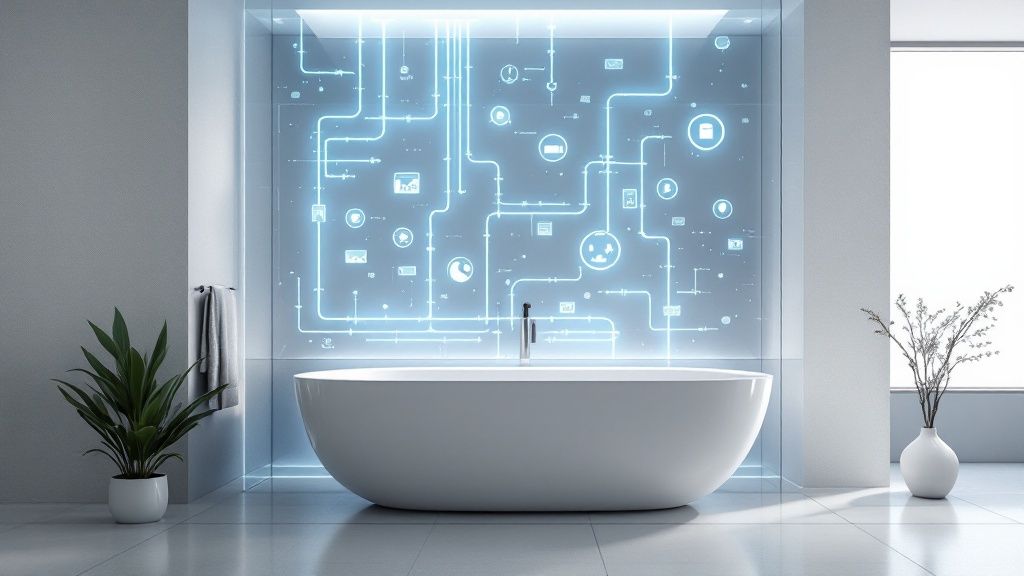
Smart Plumbing 2025: Leak‑Detecting Pipes & Connected Faucets
In 2025, smart plumbing is all about creating an intelligent water network within a building, with leak-detecting pipes and connected faucets at its core. Think of it as a system that not only moves water but also monitors its own health, spots trouble instantly, and gives you the data you need to prevent costly damage and cut down on waste. For professionals in the UAE, this is a game-changer, moving us from scrambling to fix a burst pipe to stopping it before it ever happens.
A New Standard in Water Management
Imagine your building's plumbing doing more than just moving water from A to B. Imagine it thinking, communicating, and protecting your asset 24/7. That's the reality of smart plumbing in 2025. This isn't some far-off concept; it’s rapidly becoming the expected standard for efficient resource management, especially in the UAE's demanding construction environment.
For construction managers and facility operators, this shift hits right at the heart of what matters most. It’s about more than just convenience. It’s a powerful system for managing risk, boosting sustainability credentials, and ultimately, improving a building’s bottom line. Intelligent infrastructure is no longer a luxury—it’s a necessity for any modern, high-performing building.
The Core Components of Smart Plumbing
So, what makes a plumbing system "smart"? It's the fusion of digital tech with traditional pipes and fixtures. This creates a responsive network that can act on its own and deliver detailed reports right to your phone. Let's break down the key pieces.
Here’s a quick look at the main technologies and what they do:
Smart Plumbing Technologies at a Glance
| Technology Component | Primary Function | Key Benefit |
|---|---|---|
| Leak-Detecting Pipes | Constantly monitors water flow, pressure, and acoustics for anomalies. | Detects tiny leaks early, preventing catastrophic water damage. |
| Connected Faucets | Controls water flow, tracks usage, and automates functions like hygiene flushes. | Reduces water waste and enhances building hygiene. |
| Central Control Hub | Aggregates data from all sensors and sends real-time alerts. | Provides a single point of control and immediate issue notification. |
These components work together to form a cohesive, intelligent system. Let's dive a little deeper into what each one brings to the table.
A Closer Look at the Technology
- Leak-Detecting Pipes: These are the sensory network of your building. Outfitted with acoustic, pressure, or flow sensors, they listen and feel for anything out of the ordinary—like the subtle hiss of a pinhole leak or a sudden drop in pressure—long before you’d ever see a water spot on the ceiling.
- Connected Faucets and Fixtures: These are far more than just taps. They are active data points in your network. You can program them for specific flow rates to save water, track usage patterns to understand consumption, or even schedule automated hygiene flushes to maintain water quality in pipes.
- Central Control Hub: This is the brain of the whole operation. It gathers information from every sensor, uses smart algorithms to tell the difference between someone taking a long shower and a potential pipe burst, and pushes instant alerts directly to a facility manager's phone or tablet.
This integrated approach is what’s fueling major industry growth. The Middle East's HVAC and plumbing market is expected to hit around USD 18.5 billion in 2025, and the UAE commands a substantial 11.66% of that. This isn't just a trend; it's a reflection of the nation's commitment to building smarter, more resilient infrastructure. You can learn more about these HVAC and plumbing market trends and see the full scope of this projected growth.
How Smart Pipes Detect Leaks Before They Cause Damage
Picture a building's plumbing as its circulatory system. For decades, those pipes have just been passive tubes carrying water. But leak-detecting pipes are different—they're more like a nervous system, constantly feeling, listening, and reporting on what’s happening. This ability to get ahead of problems is what makes smart plumbing 2025 so valuable.
These intelligent systems rely on a sophisticated network of sensors to keep tabs on the building's water network. It’s not just one type of sensor, but a team of them working together to create a powerful safety net against water damage.
The Trio of Smart Sensors
The real magic behind leak-detecting pipes is how they combine different sensor technologies. Three types form the core of most systems, each with a specific job:
- Acoustic Sensors: These are basically the ears of the plumbing network. They are engineered to listen for the very specific sounds that water makes when it’s escaping a pipe under pressure—think of the faint, high-pitched hiss from a pinhole leak that the human ear would never catch.
- Pressure Sensors: These sensors act like a constant blood pressure check for your pipes. They monitor the water pressure 24/7. If there's a sudden, unexpected drop, it’s a major red flag for a significant breach, like a burst pipe or a failed joint.
- Flow Meters: Placed at strategic points in the system, these ultrasonic or turbine meters measure exactly how much water is moving and how fast. Their job is to spot abnormal flow patterns that point to a slow, persistent leak somewhere downstream.
The concept map below shows how these sensors work in harmony to provide instant alerts and ultimately, significant water savings.
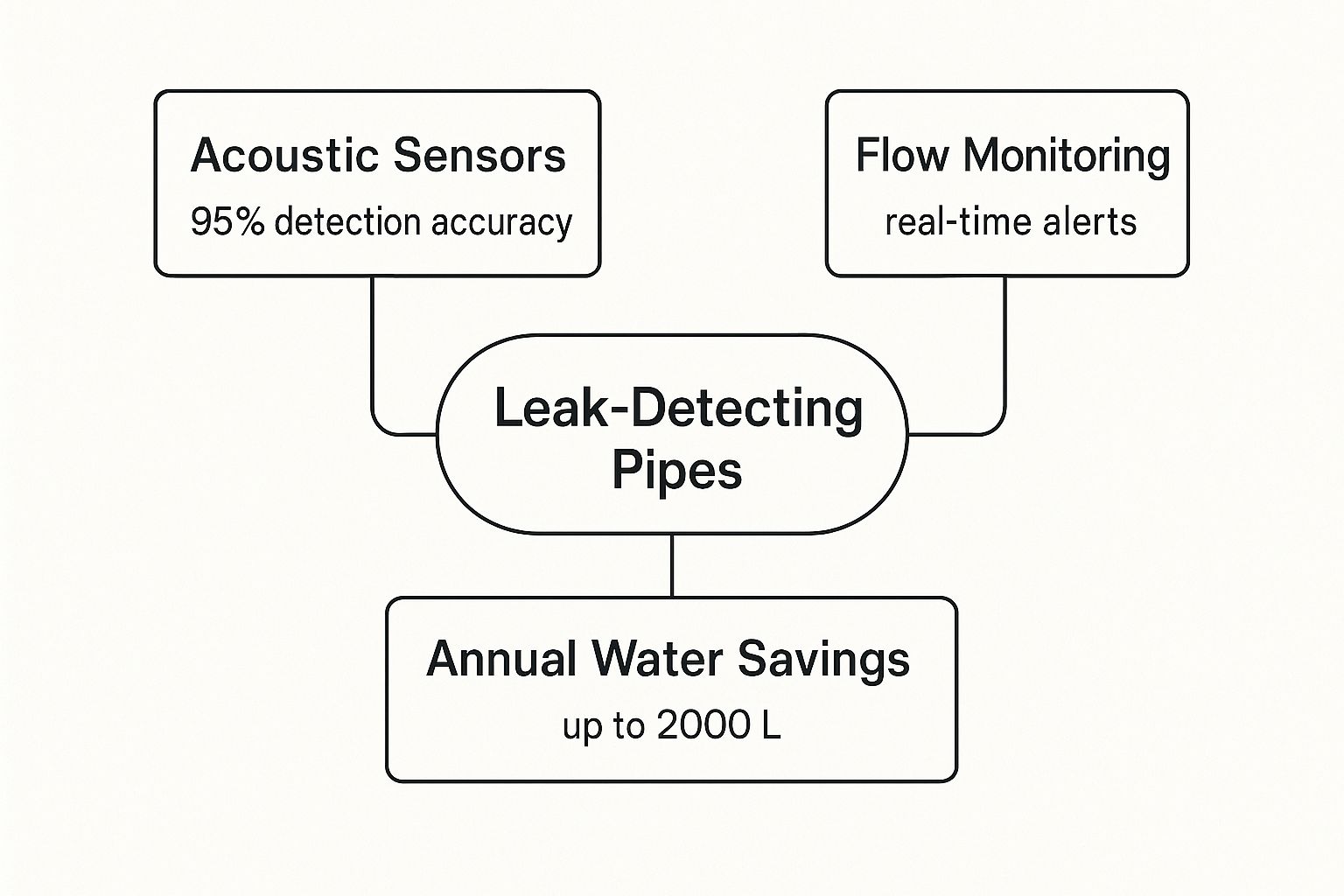
It’s this combination of ultra-sensitive acoustic detection and around-the-clock flow monitoring that lets the system find an issue long before you see a water stain on the ceiling.
From Detection to Action
So, how does this play out in the real world? Let’s say a tiny pinhole leak starts in a pipe buried deep inside a wall. An acoustic sensor immediately picks up the unique sound signature. At the same time, a flow meter downstream registers a very small but continuous water flow, even when all the taps are off.
The system's central brain cross-references these two pieces of data, recognizes it’s not normal water use, and instantly fires off an alert to the facility manager’s smartphone—often with the precise location of the leak. Using the right materials, like high-quality copper pipe insulation, can make the whole system even more efficient and protected against environmental factors.
This completely changes the maintenance game. It moves from being reactive and destructive to proactive and surgical. Instead of ripping out drywall to chase a damp spot, technicians are sent directly to the problem, saving a massive amount of time, money, and disruption.
This shift from emergency fixes to intelligent prevention is a huge leap forward. The capabilities of smart pipes align perfectly with modern operational strategies by understanding the difference between predictive and preventive maintenance.
It's an approach that's becoming crucial in the UAE, where the regional pipe market is already valued at USD 8.1 billion. As the country gears up for a projected $32 billion construction boom, smart plumbing is no longer a luxury—it’s an essential part of modern, resilient infrastructure.
The Power of Data from Connected Faucets
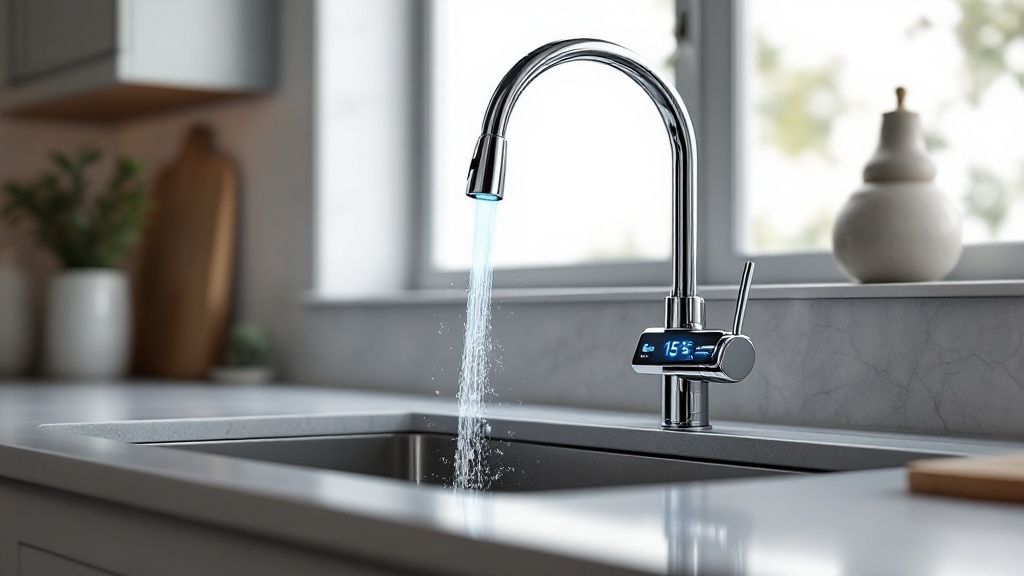
Connected faucets are a whole lot more than just a fancy upgrade. In a modern smart building, they’re genuine data hubs, giving facility managers the kind of operational control they could only dream of a decade ago. We’ve moved past simple on-and-off.
Think of each smart faucet as a tiny, dedicated scout. It doesn't just dispense water—it measures, monitors, and reports back on every single interaction. This constant flow of information gives you an incredibly clear picture of your building’s water consumption, fixture health, and even hygiene patterns.
For facility managers, this is a game-changer. The days of guesstimating water usage or just waiting for a call about a broken fixture are gone. Smart faucets deliver the real-time intel needed to manage the building proactively, not reactively.
Turning Data into Actionable Insights
The real magic happens when you turn all that raw data into a concrete plan of action. This is where smart plumbing 2025 really proves its worth, arming managers with the tools to boost performance, keep people safe, and slash costs.
Here’s what that looks like in the real world:
- Programmable Flow Rates: You can remotely set maximum flow rates and run times. This is a direct lever you can pull to hit sustainability goals and stop water waste before it hits your utility bill.
- Automated Hygiene Flushes: In places like hotels or hospitals, this is huge. Faucets can be programmed to run automatically for a few seconds during periods of low use, keeping water from stagnating in the pipes and cutting down the risk of bacteria like Legionella.
- Usage and Health Reporting: The system generates reports that tell you exactly which faucets are used most. This helps identify underutilized areas and, more importantly, flags fixtures that are showing early warning signs of failure, like a slow drip or inconsistent flow.
Imagine running a large hotel. You get an alert showing that faucets in one wing are showing early signs of wear. You can schedule preventive maintenance before a guest ever has to call the front desk with a problem. On top of that, you can use the precise consumption data to back up your water savings claims for green building certifications like LEED.
Getting this level of detailed control is what modern building management is all about. For anyone looking to bring this into their properties, connecting with experienced faucet suppliers in Dubai is the right first step to make sure you're choosing technology that fits your building’s unique needs.
Ultimately, these systems empower managers to make smarter decisions that result in real, tangible benefits. It’s all about using detailed information to cut utility costs, protect public health, and create a building that runs more efficiently.
Calculating the ROI of a Smart Plumbing Investment
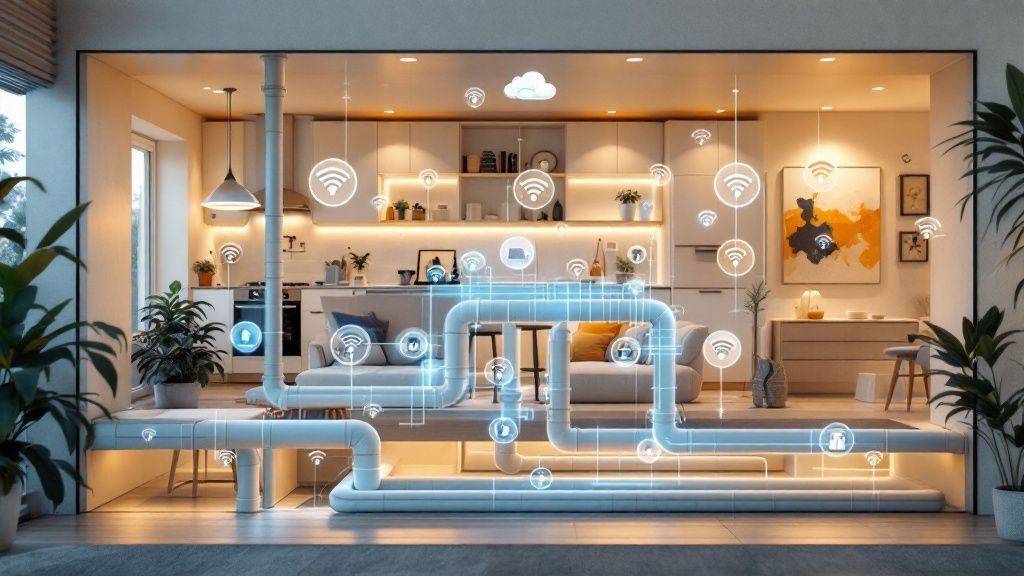
For any professional in construction or facility management, the bottom line is what matters. When it comes to new tech, the big question is always the same: what's my return on investment? With smart plumbing 2025 systems, the payback isn't just about saving a few dirhams on the water bill—it’s a comprehensive boost to your financial, operational, and sustainability goals.
Let's move past the hype and get down to the numbers. The most obvious and immediate return is in dodging a bullet—specifically, catastrophic water damage. A single, unchecked burst pipe can easily spiral into millions of dirhams in structural repairs, not to mention the business downtime and hit to your reputation.
The Financial Benefits
The financial upside here is layered. On one hand, you have the direct savings. Leak-detecting pipes and smart faucets put an end to the silent, money-draining drips and help fine-tune water usage, which you'll see reflected on your utility bills.
On the other hand, insurance companies are taking notice. Many now offer lower premiums for buildings that have certified leak detection systems installed because they see the technology for what it is: a major risk reducer.
Investing in smart plumbing isn't just an expense; it's a financial shield. It actively protects a property's value by preventing the kind of insidious water damage that can cripple a building's structural integrity and market appeal over time.
This approach aligns with broader cost reduction strategies for high-value sectors, where intelligent technology is essential for protecting major assets.
Here’s a simplified look at how the numbers stack up over a five-year period for a typical commercial building.
ROI Comparison of Traditional vs Smart Plumbing Systems
| Cost Factor | Traditional Plumbing (Estimated 5-Year Cost) | Smart Plumbing (Estimated 5-Year Cost & Savings) |
|---|---|---|
| Initial Installation | AED 200,000 | AED 250,000 |
| Water Bills | AED 100,000 | AED 80,000 (20% Savings) |
| Emergency Repairs | AED 50,000 (Average) | AED 10,000 (Early detection) |
| Insurance Premiums | AED 75,000 | AED 67,500 (10% Discount) |
| Maintenance Labor | AED 60,000 | AED 40,000 (Predictive) |
| Total 5-Year Cost | AED 485,000 | AED 447,500 |
| Net Savings | AED 37,500 + Catastrophe Avoidance |
While the initial outlay for smart systems is higher, the long-term operational savings and risk mitigation quickly close that gap and deliver a clear positive return.
The Operational and Sustainability Gains
Operationally, this technology flips the script from reactive to proactive. Forget frantic, expensive emergency calls for a burst pipe. Instead, your facility team gets an alert about a pinhole leak or unusual pressure drop long before it becomes a crisis, allowing them to schedule a repair during off-hours. This shift to predictive work is central to modern building management. You can dive deeper into this concept in our guide on the benefits of preventive maintenance.
From a sustainability standpoint, smart plumbing delivers the hard data you need to meet and exceed the UAE's tough water conservation standards. It also makes a property far more attractive to modern tenants and buyers who value green credentials and smart features.
With private residential projects recently jumping by 58% and non-residential developments by 38% in the UAE, the demand for modern, efficient buildings is undeniable. This technology doesn't just help a building comply with regulations—it positions it as a leader in responsible, forward-thinking resource management.
Planning Your Smart Plumbing Implementation
Getting smart plumbing 2025 technology up and running isn't just about bolting on some new gadgets. It's about weaving a new, intelligent system into the very fabric of your building's operations. A smart plan is the difference between a successful upgrade and a frustrating, expensive headache.
The first move? Figure out exactly what you want to achieve. What's the main driver here? Are you trying to slash those skyrocketing water bills, prevent a devastating leak in a luxury condo, or just make life easier for your maintenance crew? Nailing down these goals upfront will steer every decision you make down the road, from which system you buy to how it gets set up.
Of course, you have to talk about the budget. But don't just look at the initial price tag. A solid plan weighs that upfront cost against the long-term savings from reduced water waste, lower insurance premiums, and fewer emergency repairs.
New Construction vs Retrofitting Existing Buildings
How you bring this tech on board changes dramatically if you're working with a blank slate versus an existing structure.
For new builds, it’s a no-brainer. You can bake smart pipes and faucets right into the blueprints. This is the ideal scenario—it means you can place sensors in the perfect spots and tie everything directly into the Building Management System (BMS) from the get-go.
Retrofitting an older building is a different beast, but it’s far from impossible. Here, the name of the game is minimizing disruption. You'll lean on solutions like ultrasonic clamp-on flow meters or smart shutoff valves that can be attached to the main water lines. You get powerful, building-wide protection without having to tear open walls.
A quick but critical note on cybersecurity: As soon as your plumbing connects to the network, it becomes a potential target. Don't overlook this. Work only with vendors who take security seriously—think strong data encryption and secure access controls. Protecting your building's digital backbone is just as important as protecting its pipes.
Choosing Your Technology Partner
Picking the right vendor is probably the most important decision you'll make. You're not just buying a box of sensors; you're looking for a partner with a track record of real-world success. They should be there for you long after the installation is done, especially when it comes to training your team.
And that training part is non-negotiable. Your facility staff are the ones on the front lines. They need to know what an alert means, how to read the data, and how to use the system's insights to shift from reactive repairs to proactive maintenance. When your team is confident with the technology, that's when you'll truly see the payoff of a smarter, safer building.
Here is the rewritten section, designed to sound completely human-written and natural.
Where Water Technology is Headed in the Middle East
If you think the smart plumbing of today is impressive, just wait. What we’re seeing now with leak-detecting pipes and connected faucets is only the first chapter. By 2025, these individual systems will start talking to each other, creating a network that spans not just buildings, but entire communities across the Middle East.
The real game-changer is going to be artificial intelligence. Picture this: a plumbing system that doesn't just react to a burst pipe but actually predicts water demand. AI will be able to look at past usage, check the weather forecast, and even consider building occupancy to anticipate how much water is needed. This turns a building's plumbing from a basic utility into a smart, proactive asset.
From Smart Buildings to Smart Cities
This isn't just about making one building more efficient; it's about connecting them all. We're on the verge of individual smart plumbing systems plugging into city-wide water grids.
A City-Wide Conversation: Imagine buildings sending real-time water usage data directly to municipal suppliers. This would completely change how cities manage demand, pinpoint major leaks in public pipes, and ensure water gets where it's needed most.
Plumbing Data as a Financial Asset: Soon, a building’s plumbing data will directly influence its market value and insurance premiums. A property that can prove it has a low risk of water damage and high efficiency will be worth more and cheaper to insure. It’s that simple.
For any construction or facility professional in the UAE, the takeaway is crystal clear: this is no longer a "nice-to-have" feature. Smart plumbing is a core investment in a property's future, safeguarding its operational stability and financial performance.
Ultimately, this technology is becoming as fundamental as the concrete and steel in modern construction. Getting these systems in place now is how you prepare a property for the interconnected, efficient, and resilient cities of tomorrow, locking in its value for the long haul.
Answering Your Questions About Smart Plumbing
Bringing any new technology into a building, whether it's a new construction or a decades-old property, naturally comes with a lot of "what ifs." For anyone in construction or facilities management looking at the smart plumbing 2025 landscape, it’s the practical, real-world questions that matter most. Let's dig into some of the most common ones I hear.
How Hard Is It to Retrofit an Older Building?
This is probably the biggest question on everyone's mind. While a brand-new build is a blank canvas, retrofitting smart plumbing into an existing building is absolutely doable—and it’s often much less of a headache than people assume.
The trick is to focus on non-invasive tech that gives you the most bang for your buck. Think ultrasonic clamp-on flow meters or smart valves. These can be attached right onto the main water line with very little downtime for the building. You get powerful, whole-building leak detection without tearing open walls. A good professional assessment is key here; it helps you map out a strategy that delivers real protection without forcing a complete, and costly, system overhaul.
What’s the Real ROI on Leak Detection?
The payback period for smart leak detection is often faster than you’d expect. For most commercial buildings, you’re looking at a full return on investment within 2 to 5 years.
How? It’s a mix of direct and indirect savings:
- Smaller Water Bills: The system immediately spots and helps you fix those annoying, persistent leaks that drive up costs.
- Fewer Big Repair Bills: You prevent the kind of catastrophic water damage that ruins drywall, flooring, and structural components.
- Cheaper Insurance: A lot of insurance carriers will actually give you a discount for having a certified leak prevention system installed.
But honestly, the true ROI can show up in a single afternoon. Averting just one major flood can easily save you more than the entire system cost, paying for itself many times over in an instant.
Will It Still Work if My Wi-Fi Goes Down?
Yes, and this is a critical design feature of any good system. While you need an internet connection for things like getting alerts on your phone or digging into a dashboard full of data, the core protective functions work just fine offline.
Think of it as having local intelligence. The system's onboard sensors can still identify a leak, sound a local alarm, and—most importantly—trigger the automatic shutoff valve to stop the water. This redundancy is everything. It ensures your building stays protected from water damage even if the entire network goes dark.
Whether you’re working on a retrofit or a ground-up project, Yasu Trading Co. LLC has the high-quality plumbing fittings and smart fixtures you need to create resilient, efficient properties. You can explore our full range of building materials at https://yasutrading.com.