Spc Flooring Dubai: Explore spc flooring dubai Options for Your Space
In Dubai's demanding climate, you need flooring that can take a beating. SPC flooring is exactly that—a tough, waterproof solution built around a rigid core of limestone and stabilisers. This unique composition gives it incredible stability against the region's temperature swings and humidity, making it a go-to for new builds and renovations alike.
What is SPC Flooring and Why is it Suited for Dubai?
SPC flooring, or Stone Plastic Composite, is a resilient and waterproof flooring option perfect for Dubai's climate due to its unique layered construction that remains stable in high heat and humidity. Its rigid core, made of limestone and polymers, prevents warping and buckling, making it a first choice for architects and contractors across the UAE.
SPC is quickly becoming the first choice for architects, contractors, and designers here. Think of it as the next generation of vinyl flooring, but engineered specifically to handle tough environments without breaking a sweat.
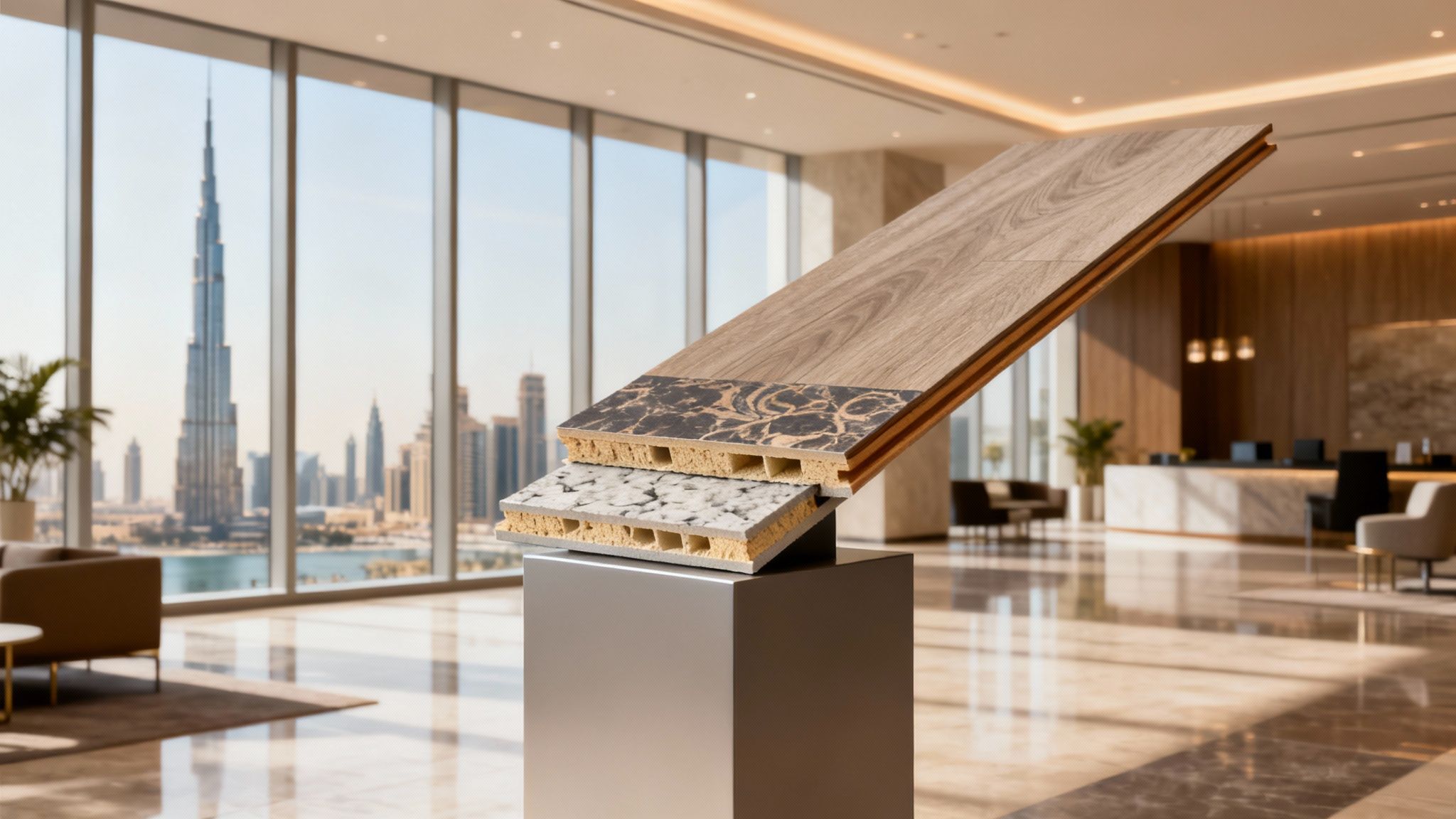
At its core, SPC flooring is a high-tech "sandwich" of several layers, each with a specific job. This is where its performance magic comes from.
- UV Coating: Right on top is a protective shield. It’s crucial for fighting off the fading effects of the intense UAE sun and gives you the first line of defence against everyday scuffs and spills.
- Wear Layer: Just below that sits a clear, tough-as-nails wear layer. How thick this is directly impacts the floor's lifespan, especially in busy commercial spaces like hotel lobbies or retail stores.
- Vinyl Layer: This is the design layer. A high-resolution print gives the plank its stunningly realistic look, whether it's mimicking the warm grain of natural wood or the cool elegance of stone.
- SPC Core: Now for the star of the show. The rigid core is a dense mix of natural limestone powder and stabilisers. This is what makes the flooring 100% waterproof and gives it rock-solid dimensional stability, stopping planks from warping or buckling with Dubai’s famous temperature and humidity shifts.
- Underlayment: Most quality SPC planks come with a pre-attached underlayment pad, usually made of IXPE or EVA foam. This isn't just a bonus—it provides essential sound insulation and makes the floor much more comfortable to walk on.
Why Is This Construction a Game-Changer for the UAE?
This layered construction is exactly why SPC is more than just a passing trend here; it's a genuinely practical solution for local projects. Traditional materials can warp, swell, or degrade in our humid conditions. SPC’s stone-based core, however, remains completely stable and unaffected. That's why you’ll find it specified everywhere, from waterfront villas in the Palm to bustling commercial towers in Downtown.
To really see why SPC is a perfect fit for Dubai, it helps to view it within a broader practical guide to interior design and space planning. Its design versatility means it can slide into any aesthetic vision while still ticking all the necessary performance boxes.
The numbers tell the same story. The SPC flooring market in the UAE hit USD 145.89 million in 2024 and is forecast to surge to USD 515.76 million by 2033, growing at an impressive 15.2% CAGR. This boom is directly tied to Dubai's relentless construction drive, where major projects need durable, waterproof flooring that can be installed quickly to meet tight deadlines. For more on this, deepmarketinsights.com offers some great analysis.
As a leading supplier in Dubai, Yasu Trading Co. LLC connects projects with a wide range of SPC flooring options that meet rigorous UAE construction standards. Our job as a specialised building materials distributor is simple: to make sure contractors and developers get the right product for the job, backed by real technical expertise and dependable logistics.
Which Flooring is Best for the UAE Climate?
SPC flooring is often the best choice for the UAE climate, outperforming competitors like LVT, WPC, and even ceramic tiles in key areas. Its rigid, limestone-based core provides superior dimensional stability against high heat and humidity, making it the most practical solution for demanding projects in Dubai or Abu Dhabi.
Choosing the right flooring for a project in Dubai or Abu Dhabi isn't just about looks. You're battling high heat, humidity, and often, punishing foot traffic. While SPC flooring has become a go-to solution, it's crucial to understand how it really stacks up against other popular materials like LVT, WPC, and the ever-present ceramic tile.
The secret to SPC’s success here lies in its core. That dense, limestone-based composite gives it incredible dimensional stability. It simply doesn't expand and contract like other vinyl-based floors, which is a massive advantage in our fluctuating climate. For contractors, this means a flawless finish that stays flat and a dramatic reduction in costly call-backs.
This quick guide can help you pinpoint the best solution based on your project's specific demands.
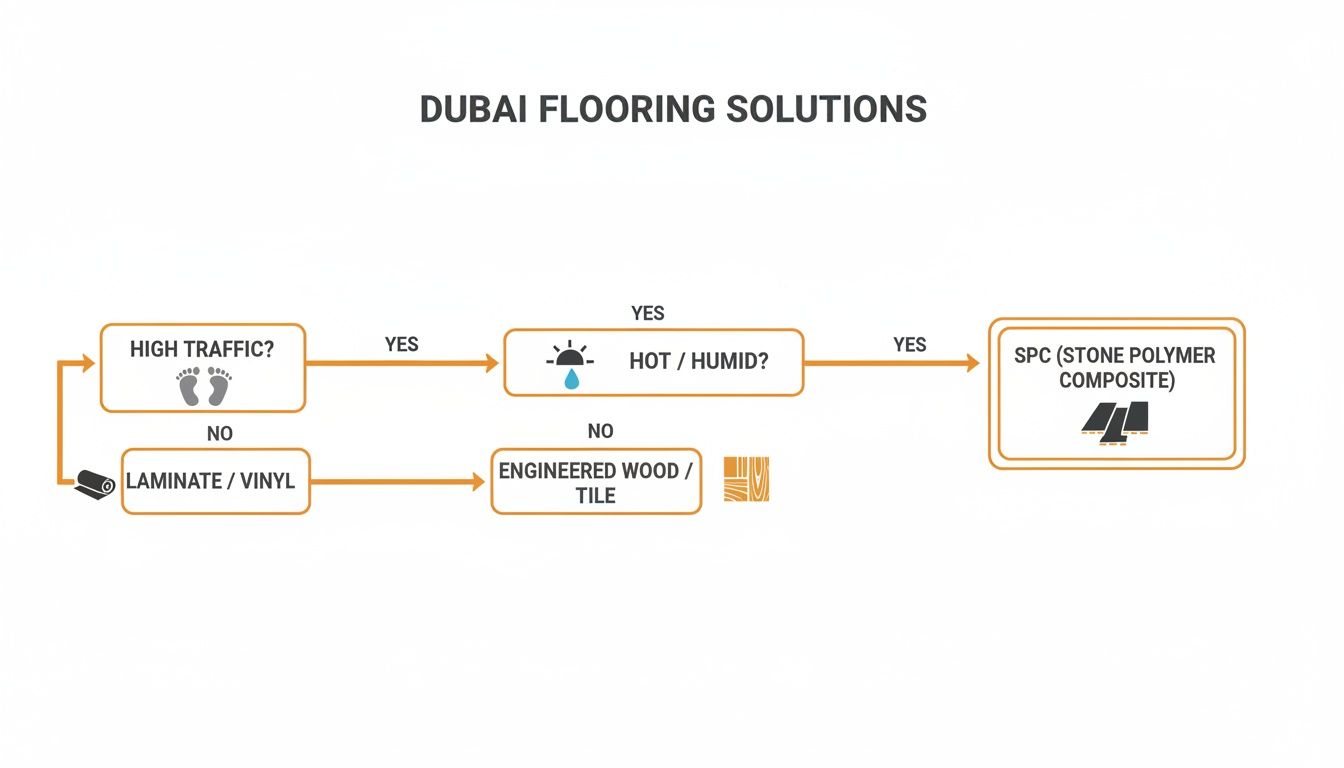
As you can see, when you’re dealing with the dual challenges of heavy use and a hot, humid environment, SPC flooring consistently comes out on top.
How Does SPC Compare to LVT?
Luxury Vinyl Tile (LVT) is praised for being flexible and offering endless design options. In the UAE's climate, however, that very flexibility can become a liability. LVT is more prone to "telegraphing," where tiny imperfections from the subfloor eventually show through on the surface. It can also dent more easily under heavy furniture or in busy commercial spaces.
This is where SPC's rigid core makes all the difference. It provides far greater resistance to dents and impacts, making it the clear winner for retail stores, hotel lobbies, office corridors, and any area where durability is the top priority.
What is the Key Difference Between SPC and WPC Flooring?
Walk on WPC (Wood Plastic Composite) flooring and you’ll notice it feels a bit softer and more cushioned. That’s because its core is aerated or "foamed." While this adds a little comfort, it also makes WPC less dense and, like LVT, more susceptible to denting.
But the real deal-breaker for our local market is how they handle moisture. WPC's core contains wood fibres. Even though they're encapsulated, there's always a risk in extremely humid or coastal settings. SPC’s core, on the other hand, is made of stone and polymer. It’s 100% waterproof, giving you total peace of mind for any installation across the UAE.
Why Not Just Stick with Traditional Ceramic Tiles?
For decades, ceramic and porcelain tiles have been the default choice in the region. They're durable and feel cool underfoot, which is great. But they have their fair share of headaches.
Installation is a slow, messy, and labour-intensive process involving adhesives and grout. Over time, those grout lines inevitably stain and collect dirt, and a dropped heavy object can easily lead to a cracked tile.
SPC flooring turns this on its head. Its click-lock system makes for a much faster, cleaner installation, which can slash labour costs and project timelines. You also get better sound insulation and a surface that’s warmer and more comfortable to walk on—all without giving up the durability you need. As guides on the best flooring for rental properties, such as Luxury Vinyl Plank (LVP) often point out, durability and low maintenance are prime considerations, and SPC excels in both.
How do different flooring types compare for the UAE Climate?
To make the decision clearer, here’s a side-by-side look at how these materials perform against the demands of a typical construction project in the Emirates.
| Feature | SPC Flooring | LVT (Luxury Vinyl Tile) | WPC (Wood Plastic Composite) | Ceramic/Porcelain Tile |
|---|---|---|---|---|
| Heat & Humidity Stability | Excellent; rigid core prevents expansion/contraction. | Fair; can expand and show subfloor imperfections. | Good; more stable than LVT but less than SPC. | Excellent; completely inert to temperature changes. |
| Water Resistance | 100% Waterproof | Highly Water-Resistant | Highly Water-Resistant, but core contains wood elements. | 100% Waterproof |
| Durability & Impact | Very High; dense core resists dents and heavy loads. | Moderate; flexible and can dent under pressure. | Good; softer core is more prone to denting than SPC. | High; but can crack or chip under sharp impact. |
| Installation Speed | Fast; click-lock system, minimal subfloor prep. | Fast; glue-down or click-lock, requires smooth subfloor. | Fast; click-lock system. | Slow; requires mortar, grout, and significant labour. |
| Comfort Underfoot | Good; firm but warmer than tile. Can use underlayment. | Good; flexible and soft. | Excellent; foamed core provides added cushioning. | Poor; very hard and cold surface. |
| Maintenance | Easy; simple sweeping and mopping. No grout lines. | Easy; simple cleaning. | Easy; simple cleaning. | Moderate; grout lines require regular sealing & cleaning. |
This table shows that while every material has its place, SPC flooring consistently offers the most balanced, high-performance profile for the majority of modern projects in our region.
Why Is SPC Flooring a Smart Choice for Projects in Dubai?
When you’re managing a construction or renovation project in Dubai, choosing the right flooring goes far beyond aesthetics. It's a critical decision about performance. You need a material that can stand up to the region's intense heat, high humidity, and the constant foot traffic of a bustling city. This is exactly where SPC flooring proves its worth, offering a powerful mix of practical benefits that make it an intelligent investment for developers, contractors, and property managers alike.
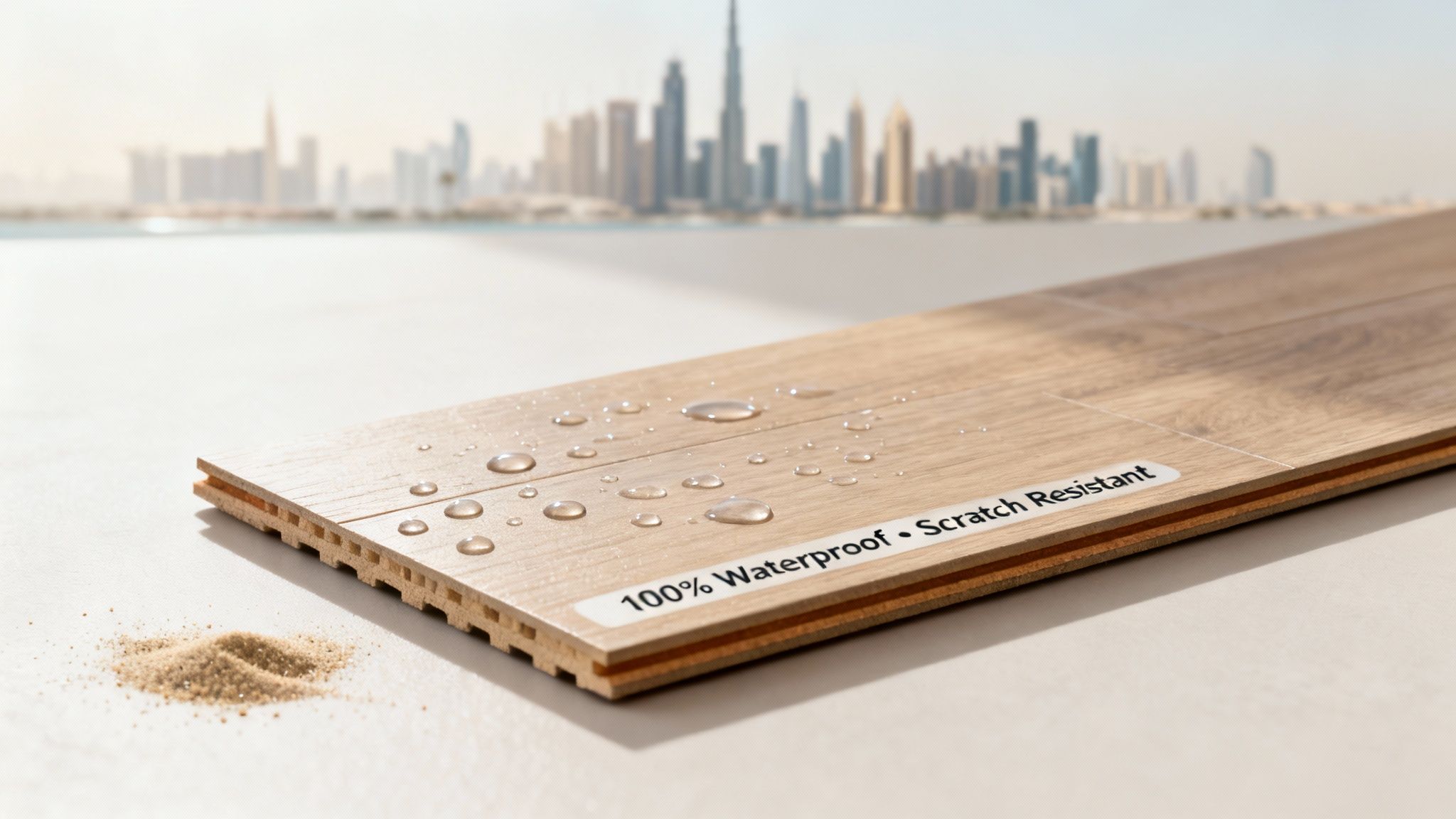
From the busy corridors of a mall to the quiet elegance of a residential villa, the advantages are undeniable. SPC's unique makeup directly addresses the environmental and commercial challenges specific to the UAE, positioning it as a superior choice for long-term value and style.
Why Is SPC So Exceptionally Durable?
The secret to SPC flooring’s incredible durability lies in its dense, rigid core. It’s a composite made from natural limestone powder and polymers, creating a stone-based foundation that offers superb resistance to dents, impacts, and scratches. This makes it a perfect match for high-traffic commercial spaces like offices, retail stores, and hotels where constant activity is just part of the day.
Think about it this way: traditional flooring often shows scuffs and wear from rolling office chairs or heavy footfall. But SPC’s tough wear layer and solid core are engineered to take that pressure day in and day out without showing signs of stress. This resilience means a much longer lifespan and fewer replacement costs down the line—a crucial factor for any commercial project budget.
Is SPC Flooring Genuinely Waterproof?
Yes, it is 100% waterproof, and this is a game-changing feature for Dubai’s humid climate. Unlike wood or laminate, which can swell or warp when exposed to moisture, SPC’s stone-polymer core is completely impenetrable. It simply won't buckle or deform, making it the ideal flooring for kitchens, bathrooms, and even basements.
This waterproof quality is a massive advantage in a city where humidity can quickly compromise other materials. For hospitality venues or healthcare facilities, it also means spills can be wiped away without any worry of damage to the subfloor, ensuring both longevity and hygiene. As a leading building materials distributor, we consistently see this as one of the top reasons clients choose SPC for their projects.
The growth of vinyl flooring, including SPC, is a clear indicator of its suitability for the region. It's the fastest-rising segment in the UAE's floor covering market, which is projected to grow from USD 2.62 billion to 3.42 billion with a 9.76% CAGR from 2026 to 2031. Professionals prefer it because its rigid core excels in the local climate, accelerating renovation cycles in high-rises where project downtime is costly. Discover more insights about the UAE flooring market trends.
How Much Upkeep Does SPC Really Need?
Honestly, very little. SPC flooring is incredibly low-maintenance, a major plus for busy commercial and residential properties. Its surface is non-porous, so dirt, dust, and liquids can't seep in. Cleaning is as simple as a regular sweep and an occasional mop with a pH-neutral cleaner.
This easy-care profile translates directly into lower operational costs. You can forget about the specialised waxes, polishes, or professional deep-cleaning services often needed for natural wood or stone. This simplicity is especially valuable in places like hospitals or restaurants where maintaining strict hygiene standards efficiently is non-negotiable.
What Kind of Design Options Can I Expect?
The aesthetic versatility of SPC flooring is truly impressive. It can accurately replicate the look and feel of natural materials like hardwood, marble, and stone. Using advanced high-definition printing, the design layer captures everything from intricate wood grains to the subtle textures of stone, letting designers achieve a premium look without the high cost and maintenance of the real thing.
Whether you're after the warm, rustic feel of oak for a villa or the sleek, modern look of polished concrete for a corporate office, there’s an SPC design to fit your vision. This huge range of options means you never have to compromise on style to get the performance and durability a Dubai project demands. Partnering with a trusted supplier in Dubai like us ensures you have access to the latest trends and finishes that meet all UAE construction standards.
How to Choose the Right SPC Flooring Specifications
When you're choosing an SPC floor in Dubai, you're doing a lot more than just picking a nice colour. It's a technical decision. Get it right, and the floor will perform beautifully for years, whether it's in a busy hotel lobby or a quiet flat. Get it wrong, and you'll see the signs of wear far too soon.
For contractors and procurement managers, nailing these details from the start is what separates a successful project from a costly problem. It's the difference between a floor that lasts and one that needs replacing before its time.
It's easy to get bogged down in technical terms like "wear layer" and "core density," but they're actually quite simple concepts. Think of it like choosing tyres for a car. You wouldn't put the same tyres on a heavy-duty truck that you'd put on a family saloon. In the same way, a high-traffic retail space needs a much tougher SPC spec than a bedroom.
What Is the Most Important Specification to Check?
The most important specification is the wear layer thickness, measured in millimetres (mm). This clear topcoat is your floor's primary defence against scratches, scuffs, and spills, so a thicker wear layer directly translates to a longer lifespan and better performance.
This tiny, transparent shield is your floor's first and most important line of defence against daily wear and tear. Honestly, under-specifying the wear layer is one of the most common mistakes we see. A floor with a thin wear layer might look great on day one, but in a commercial setting, it will age fast, leading to an expensive, premature replacement.
This is where a specialised supplier in Dubai like Yasu Trading Co. LLC comes in. We can walk you through the options to make sure the product you choose is a perfect match for your project’s foot traffic and meets all UAE construction standards.
How Do I Match the Wear Layer to My Project?
It’s pretty straightforward: match the wear layer thickness to the amount of foot traffic the area will get. You can think of it in three main categories.
Here’s a quick guide to get you started:
- Residential Use (bedrooms, living rooms): A 0.3mm wear layer is usually plenty. It’s built to handle the normal comings and goings of a family home.
- Light Commercial Use (small offices, hotel rooms): Here, you’ll want to step up to 0.5mm. This gives you a necessary boost in durability for that moderate, day-in-day-out traffic.
- Heavy Commercial Use (retail stores, restaurants, corridors): For these demanding spaces, don't even consider anything less than 0.7mm or thicker. This is a true commercial-grade spec, engineered to handle constant footfall, rolling carts, and frequent cleaning without breaking a sweat.
Think of a thicker wear layer as an investment in the floor’s future. It’s about protecting your client’s asset for the long haul.
Does the Overall Plank Thickness Matter?
Absolutely. The overall thickness of the plank and the density of its core are what give the floor its stability and feel. A thicker plank just feels more substantial underfoot, does a better job of insulating sound, and is more forgiving of minor imperfections in the subfloor.
In a climate like Dubai's, where temperatures can shift, a denser, thicker core offers far better dimensional stability. It’s much more resistant to expanding and contracting, which means your planks stay flat and the click-lock system stays tight. Planks in the 5mm to 8mm range offer that solid, rigid feel that clients often associate with quality. As a professional building materials distributor, we always stress looking at the wear layer and the overall thickness together—they’re a team.
When you're putting together your spec sheet, here's the key takeaway: The wear layer protects the floor's looks from surface damage, while the overall plank thickness provides structural integrity and acoustic comfort. You need both for a high-performance installation.
What Kind of Underlayment Should I Look For?
The underlayment is another detail that can make a huge difference, especially when it comes to acoustics and comfort. Most quality SPC comes with a pre-attached underlay, and the two you’ll see most often are IXPE and EVA.
IXPE (Irradiated Cross-linked Polyethylene) is the premium option. It’s a high-density foam that’s fantastic at absorbing sound, which makes it a smart choice for multi-storey buildings like apartment blocks and offices where you need to keep noise transfer to a minimum.
EVA (Ethylene-Vinyl Acetate) is the more standard choice, but it still provides good cushioning and sound dampening. If your project has to meet specific acoustic ratings, however, specifying an SPC with an IXPE underlay is definitely the way to go.
What’s The Best Way To Install And Maintain SPC Flooring?
Getting that perfect, long-lasting finish with SPC flooring isn't about guesswork; it's about a solid installation process and a simple, consistent care routine. Nail these two things, and your floor won't just look incredible on day one—it'll perform brilliantly for years to come. Here in Dubai, sticking to the right procedures is absolutely critical for a professional result that can handle our local environment.
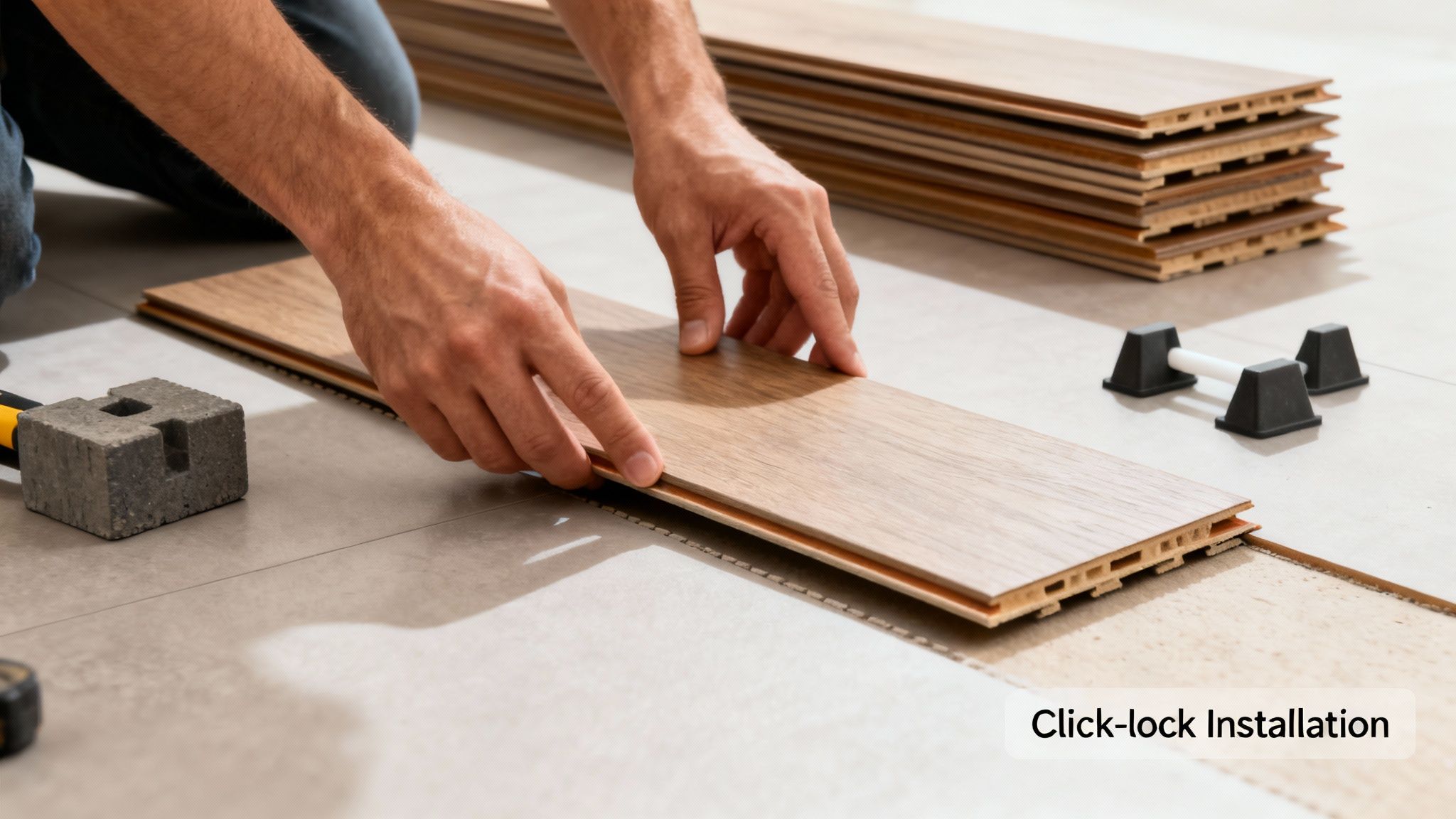
The great thing is, modern SPC flooring is built for efficiency. Its click-lock system is a game-changer, dramatically cutting down installation time and on-site labour costs when you compare it to traditional tiling or messy glue-down floors.
How Should You Prepare For Installation In Dubai?
Ask any seasoned installer, and they’ll tell you that preparation is 90% of the job. Rushing this stage is the quickest route to a failed floor. Given the unique climate in the UAE, there are a couple of extra steps you just can't afford to skip if you want the flooring to stay stable for the long haul.
First, you have to let the planks acclimate. This means leaving the unopened boxes of flooring to sit in the room where they'll be installed for at least 48 hours. It might seem like a small thing, but this allows the material to adjust to the room's temperature and humidity. Skipping this can lead to expansion or contraction down the line, causing ugly gaps or buckling.
Next, your subfloor needs to be flawless. We’re talking clean, dry, and, most importantly, perfectly level. Even small bumps or dips will weaken the click-lock system and could cause the planks to pop or separate over time. It's always a good idea to get a professional to check that the base is up to UAE construction standards.
A flawless installation starts long before the first plank is laid. Acclimatising the flooring and ensuring a perfectly level subfloor are non-negotiable steps that protect the integrity of the entire system and prevent costly future repairs.
What Is The Click-Lock Installation Process?
The click-lock system is what makes installing SPC flooring in Dubai so quick and clean. The planks are engineered with a tongue-and-groove profile, letting them snap together securely without any need for adhesives.
Here’s a quick look at how it works:
- Lay the First Row: Begin along the longest wall in the room, making sure the tongue side faces the wall. Use spacers to leave a small expansion gap.
- Connect the Planks: Angle the next plank, slide its tongue into the groove of the first one, and then press it down firmly. You'll feel it "click" into place.
- Cut End Pieces: When you get to the end of a row, you'll need to measure and cut the last plank to fit. If the offcut is long enough, you can often use it to start the next row, which creates a natural, staggered pattern.
- Complete the Room: Just keep going, row by row, making sure every connection is tight and secure.
As a full-service building materials distributor, Yasu Trading can supply all the tools and accessories you’ll need—from tapping blocks to pull bars—to get the job done right. To figure out how much material your project requires, our handy flooring calculator can help you plan with confidence.
How Do You Maintain SPC Flooring To Handle Sand And Grit?
The upkeep for SPC is refreshingly simple, but the key is consistency—especially with the fine desert sand that inevitably finds its way into every property in Dubai. Think of that grit as sandpaper underfoot; it's the number one enemy of any floor finish.
- Daily Sweeping: A quick daily sweep with a soft-bristle broom or a microfibre dust mop will get rid of sand, dust, and other bits. A vacuum cleaner (without the beater bar spinning) works great, too.
- Weekly Mopping: Once a week, give the floor a wipe with a damp microfibre mop. Stick to a pH-neutral cleaner. Avoid anything harsh like bleach or wax-based products, as these can dull the finish and damage the protective wear layer.
- Immediate Spill Cleanup: SPC is waterproof, which is fantastic, but it's still best to wipe up spills right away to avoid any potential for staining or creating a slip hazard.
Follow these straightforward installation and care tips, and your SPC flooring will keep its beauty and toughness for years, even in the demanding Dubai climate.
How Do You Find and Price SPC Flooring in Dubai?
Getting the right SPC flooring for your Dubai project on time and on budget all comes down to smart sourcing. This isn't just about shopping around for the lowest price per square metre; it's about finding a supply partner who understands the demands of local construction and can deliver consistent quality.
The final price tag on SPC flooring hinges on a few key things. Naturally, the technical specs matter most. A thicker wear layer—say, a robust 0.7mm for a busy commercial space—and a denser core will cost more upfront but will pay for itself in durability. Likewise, the brand's reputation and official certifications confirming it meets UAE construction standards are crucial for compliance and long-term peace of mind.
Why is a Building Materials Distributor Your Best Bet?
The channel you source from can dramatically impact your project's bottom line and timeline. While you might find SPC at a general retailer, a specialised building materials distributor like Yasu Trading Co. LLC is built to serve the unique needs of contractors, developers, and project managers.
Going this route gives you a serious competitive edge. Here’s why:
- Wholesale Pricing: You're getting rates much closer to the source. For large-scale projects, the savings from direct-from-manufacturer pricing are substantial.
- Commercial-Grade Stock: Distributors carry the heavy-duty stuff. You’ll find a deep inventory of high-performance SPC designed for punishing commercial traffic—options you simply won’t see on a retail shelf.
- Logistics That Work: This is a big one. You can rely on an efficient delivery network that gets your materials directly to the site, right when your schedule demands it. No delays, no excuses.
Think of a specialised distributor not as a shop, but as a strategic partner. Procurement becomes less of a chore and more of a collaborative effort to get the perfect product, at the best price, delivered precisely when you need it.
How Can You Get a Quote You Can Trust?
To get an accurate price, you need to provide clear details. Any reputable supplier in Dubai will ask the right questions to give you a solid estimate, which helps everyone avoid unexpected costs down the line.
When you reach out for a quote, have this information ready:
- Project Type: What are we dealing with? A luxury villa, a bustling retail store, or a sleek corporate office? The application dictates the product.
- Total Area: Be ready with the total square meterage you need to cover.
- Required Specifications: Do you need a specific wear layer thickness? What about the overall plank thickness or an acoustic underlayment for sound dampening?
With these details, a good distributor can pinpoint the most suitable and cost-effective SPC flooring for your job. To see what’s possible for your next build, feel free to browse our wide selection of building material products curated for the demands of the UAE market.
Here at Yasu Trading, our team is ready to provide project-specific quotes and expert advice. We'll help you source compliant, high-performance SPC flooring, making sure your procurement process is smooth, efficient, and perfectly matched to your project’s goals.
Your SPC Flooring Questions, Answered
When you're specifying materials for a project in the UAE, you need clear, practical answers. Here are some of the most common questions contractors and developers ask us about SPC flooring.
Is SPC Flooring Suitable for Areas with Direct Sunlight?
Absolutely. A good quality SPC floor comes with a UV-protective top layer specifically designed to stand up to the intense UAE sun without fading.
That said, for rooms that get blasted with direct sunlight for hours on end, it's still smart to use blinds or curtains during the hottest part of the day. This simple step can add years to your floor's life. Always work with a trusted supplier in Dubai who can vouch for their products' UV resistance.
Can You Install SPC Flooring Over Existing Tiles?
Yes, and this is a game-changer for renovation projects. SPC's rigid core is strong enough to be laid directly over old ceramic tiles, neatly covering up minor grout lines as long as the original floor is level and in decent shape.
Of course, a quick professional check of the subfloor is always a good idea to ensure you get that perfect, seamless finish.
Being able to lay SPC directly over tiles is a massive time and money saver. You skip the entire demolition phase—no dust, no mess, no delays. This makes it an incredibly efficient choice for both commercial and residential upgrades.
Does SPC Flooring Need a Separate Underlayment?
Most of the time, no. Modern SPC flooring usually comes with an underlayment already attached, typically a high-density IXPE or EVA foam.
This built-in layer is fantastic for sound insulation and smoothing over tiny imperfections in the subfloor, which makes installation much quicker. If the specific SPC you choose doesn't have an attached pad, we strongly recommend adding one. It makes a real difference in acoustics and how the floor feels underfoot.
How Does SPC Flooring Meet UAE Construction Standards?
Reputable spc flooring dubai from established distributors is made to meet all the important UAE construction standards, covering everything from fire safety and slip resistance to VOC emissions.
It's vital that your supplier can provide the official paperwork to prove compliance with local regulations. This is non-negotiable, especially for commercial and public buildings where safety is paramount. As a professional building materials distributor, we guarantee all our products meet these strict requirements.
For expert guidance and project-specific quotes on high-performance SPC flooring, trust the experts at Yasu Trading Co. LLC. We deliver quality materials that meet UAE standards directly to your site. Explore your options at https://yasutrading.com.