Your Guide to Stainless Pipe Fittings
Think of a piping system as the circulatory system of a building or an industrial plant. The long, straight pipes are the arteries and veins, but it's the stainless pipe fittings that act as the heart valves and complex junctions, directing flow and making the whole network functional. These components are the unsung heroes that connect, control, and steer liquids or gases exactly where they need to go.
Their legendary resistance to corrosion and sheer durability make them the go-to choice for creating connections that are built to last.
Why Stainless Steel Fittings Are Essential
Let's stick with the traffic analogy for a moment. A city needs more than just straight highways to work; it relies on intersections, on-ramps, and roundabouts to manage the flow of vehicles. Stainless pipe fittings perform this exact function for piping systems. They are the critical connectors that bring a plumbing or industrial network to life, ensuring everything moves safely and efficiently from its source to its destination.
Without these fittings, you’d just have a pile of useless, disconnected tubes. They provide the structural backbone and directional control needed for everything, from the simple water line under your sink to a high-pressure pipeline in a sprawling factory.
The Unmatched Advantages of Stainless Steel
You can make fittings out of all sorts of materials, but stainless steel is really in a league of its own. What sets it apart is a unique combination of properties, chief among them being its incredible corrosion resistance. The chromium mixed into the steel creates a passive, invisible layer on the surface that acts like a shield, protecting it from rust and decay, even when up against harsh chemicals or constant moisture.
This built-in toughness makes stainless pipe fittings perfect for environments where failure is not an option.
- Longevity and Durability: Stainless steel can handle high pressures, wild temperature swings, and physical stress without breaking a sweat. This translates to a much longer, more reliable service life.
- Hygienic Properties: The surface of stainless steel is non-porous, meaning there are no tiny crevices for bacteria to hide and grow. This makes it the only real choice for industries where cleanliness is paramount, like food and beverage, pharmaceuticals, and water treatment plants.
- Aesthetic Appeal: Let's be honest, it looks good. With a clean, modern finish, these fittings are often left exposed in architectural designs or upscale commercial plumbing because they add to the look of the space.
Meeting the Demands of a Growing Market
The need for top-tier fittings is clearly visible in global market trends, especially in booming regions. For instance, the Middle East's iron and steel tube and pipe fittings market is on a trajectory to hit an estimated $4.2 billion by 2035. This surge is powered by massive infrastructure projects across the GCC, where the robust performance of stainless steel is a must-have for everything from oil and gas pipelines to new urban centers and water management systems. You can learn more about the regional demand for quality pipe fittings to understand why this material is so critical.
Ultimately, opting for stainless steel is a long-term investment in reliability. It guarantees that the joints of your system aren't its weakest point but its strongest, ensuring safety, efficiency, and peace of mind for years to come.
Understanding Stainless Steel Grades And Standards
Choosing the right stainless pipe fittings is a lot like picking tires for a car. Your standard road tires are great for city driving, but if you're heading off-road into the desert, you’ll need something far tougher. It's the same with stainless steel—not all of it is created equal. Its performance hinges on its specific "grade," which is basically its chemical recipe.
Getting these grades right is non-negotiable. The wrong choice can lead to systems failing prematurely, expensive leaks, and serious safety risks. Each grade offers a unique mix of corrosion resistance, strength, and cost, all tailored for different jobs. Making a smart decision here means your piping system will have the backbone to handle its operational challenges for years to come.
The Most Common Grades Explained
While there are dozens of stainless steel grades out there, a few really do the heavy lifting for the industry. When you're dealing with stainless pipe fittings, you'll almost always run into one of these three.
Grade 304 (The All-Rounder): This is the go-to, the most common stainless steel on the planet. It offers fantastic corrosion resistance for most everyday situations, making it perfect for general plumbing, food and beverage plants, and even architectural details.
Grade 316 (The Coastal Guardian): Think of Grade 316 as 304’s more rugged older brother. Its secret weapon is molybdenum (usually 2-3%), an element that dramatically boosts its ability to fight off chlorides, like salt. This makes it the undisputed champ for marine environments, coastal construction, and chemical processing plants where harsh substances are the norm.
Duplex Steel (The High-Strength Hybrid): Duplex stainless steel is the best of both worlds, blending two steel families (austenitic and ferritic) into one. The result? A material that's roughly twice as strong as standard grades like 304 and 316, with incredible resistance to stress corrosion cracking. You'll see it specified for the really demanding jobs in oil and gas, desalination plants, and heavy-duty structural components.
Picking the right grade isn't just a technicality—it's the foundation of a reliable system that will last. That little bit of molybdenum in Grade 316, for example, is the single most important defense against pitting corrosion in the salt-heavy environments common across the UAE.
To make this even clearer, let's break down how these three popular grades stack up against each other.
Comparison of Common Stainless Steel Grades for Pipe Fittings
| Grade | Key Properties | Best For | Cost Index |
|---|---|---|---|
| 304 | Excellent corrosion resistance, good formability, versatile | General plumbing, food/beverage, architectural | $$ |
| 316 | Superior corrosion resistance (especially against chlorides), durable | Marine environments, chemical processing, coastal areas | $$$ |
| Duplex | Extremely high strength, excellent resistance to stress corrosion cracking | Oil & gas, desalination, structural applications | $$$$ |
This table shows that while Grade 304 is a cost-effective workhorse, investing in Grade 316 or Duplex is crucial when the environment gets more aggressive.
Why Industry Standards Matter
Grades tell you what a fitting is made of, but standards tell you how it was made and tested. These standards are the non-negotiable rulebook that guarantees quality, safety, and compatibility across the board.
Reputable manufacturers of stainless pipe fittings stick to strict guidelines from organizations like ASTM International and the American Society of Mechanical Engineers (ASME). These bodies set the rules for everything—from chemical makeup and mechanical strength to the exact dimensions and pressure ratings of the fittings.
When you see a fitting stamped with an ASTM or ASME code, you're looking at a seal of approval. It’s your assurance that the part was built to a consistent, reliable, and safe specification.
This commitment to quality isn't just about good practice; it's fueling major market growth. The Middle East and Africa stainless steel market was valued at USD 15.95 billion in 2024 and is expected to hit USD 22.41 billion by 2032. This boom is driven by huge infrastructure and industrial projects that need corrosion-proof materials to survive the region's tough conditions.
Ultimately, once you understand both the material grade and the standards that govern it, you can choose fittings with complete confidence. You’ll be building systems that are not just efficient, but fundamentally safe and built to last.
A Look at the Main Types of Pipe Fittings
Picture a piping system not as just a bunch of straight tubes, but as a dynamic network that has to guide fluids or gases exactly where they need to go. Stainless pipe fittings are the unsung heroes that make this precision possible. They're like the traffic signals and intersections of a city, directing flow, changing directions, and making sure everything gets to its destination without a single leak.
Every fitting has a specific job to do. Getting a handle on what each one does is the first step toward building or fixing a system that's both efficient and rock-solid. From making a simple connection to splitting a flow into multiple paths, these components are the real nuts and bolts of any strong piping network.
Fittings That Change Direction
The most basic job in any piping setup is changing the direction of the flow. That's where elbows and bends come in, acting as the curves and sharp turns in your system.
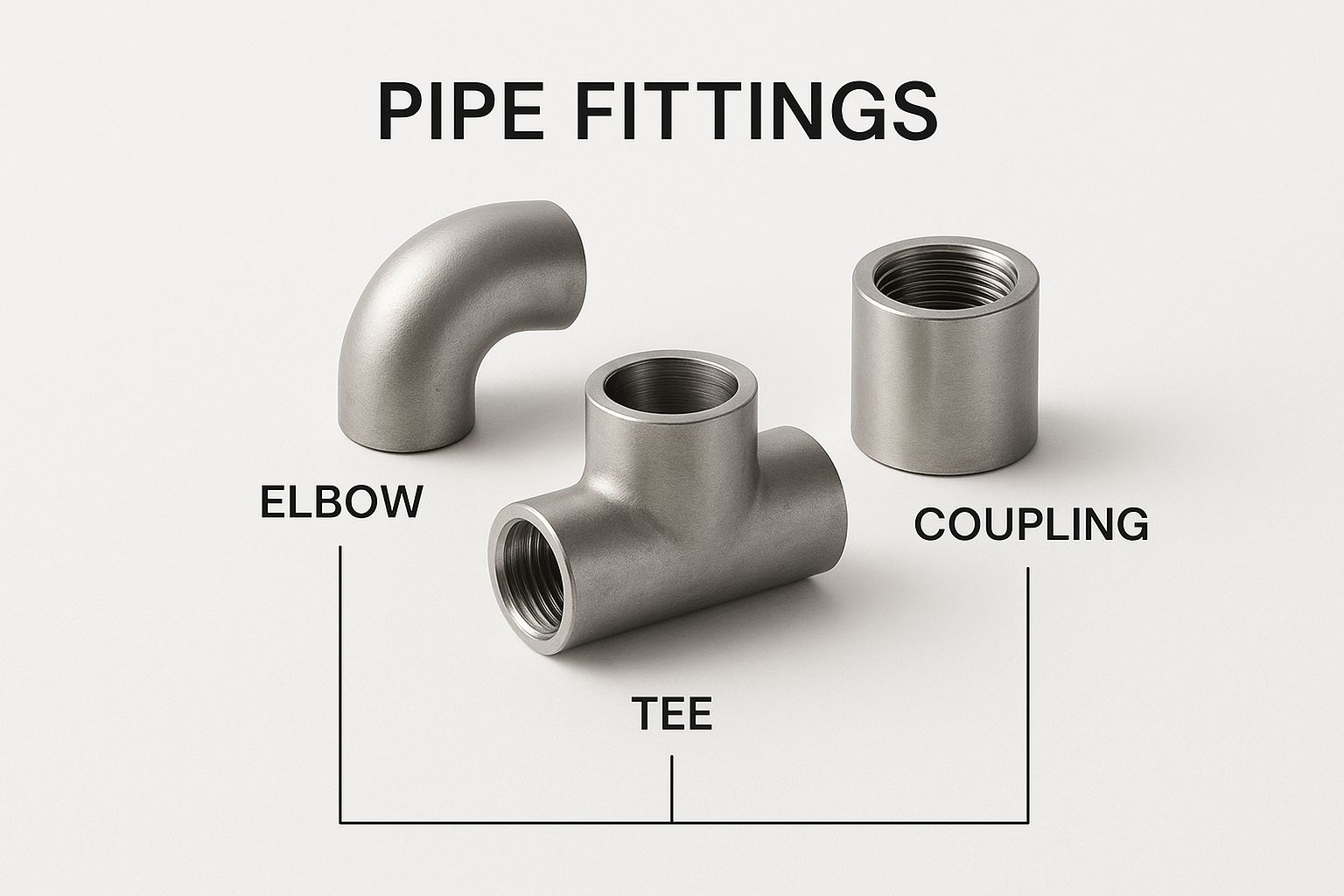
Elbows: You'll find these everywhere. Elbows let you change the direction of a pipe run, most often at a 90-degree or 45-degree angle. Think of them as the corners on a city block, neatly redirecting the path. They're absolutely vital for getting around obstacles and shaping the layout of a system.
Bends: Bends do the same thing as elbows, but they do it more gradually. With a larger radius, the curve is gentler, which helps cut down on pressure drops and turbulence inside the pipe. This makes them perfect for systems where a smooth, steady flow is the top priority.
Fittings That Connect and Combine
Another critical task is joining pipes together or splitting one flow into several. These fittings are the junctions and intersections on your piping highway.
Tees and Crosses: A tee fitting looks just like the letter 'T' and acts as a three-way junction to either combine or divide flow. A cross fitting has four openings, letting four pipes meet at a single point. These are the main intersections that allow for complex branching within a system.
Couplings and Unions: A coupling simply connects two pipes of the same size in a straight line, making a longer, continuous run. A union does the same job but with a twist: it's designed to be taken apart easily. This is a lifesaver for maintenance or future upgrades because you don't have to cut the pipe.
Fittings for Adaptation and Termination
Not every pipe in a system is the same size, and sometimes you just need to stop a line in its tracks. Reducers and caps are the go-to solutions here.
The ability to adapt to different pipe sizes or securely seal a line is not just a matter of convenience—it is fundamental to the safety and operational integrity of the entire system. A single improperly sealed endpoint can lead to catastrophic leaks and pressure loss.
Reducers: These fittings connect pipes of different diameters. A concentric reducer is shaped like a cone and is used for a straight-line transition. An eccentric reducer, on the other hand, has an offset centerline, which is great for preventing air pockets from forming in horizontal pipelines.
Caps and Plugs: They might be simple, but caps and plugs are crucial for safety. A cap fits over the end of a male pipe, while a plug screws into a female fitting. Both are used to seal the end of a line, bringing the flow to a dead stop.
Of course, these are just the most common types; there are countless specialized fittings out there. For instance, a great example of a specialized component is the rugged 3/4 inch stainless steel bulkhead tank fitting, which creates a super secure, leak-proof seal through the wall of a tank. To get a better sense of how all these parts work together in the bigger picture, you can learn more about stainless steel pipe and fittings and their many uses. Each fitting, from a simple elbow to a specialized bulkhead, is a critical piece of a much larger puzzle.
Where Stainless Pipe Fittings Shine: Real-World Applications
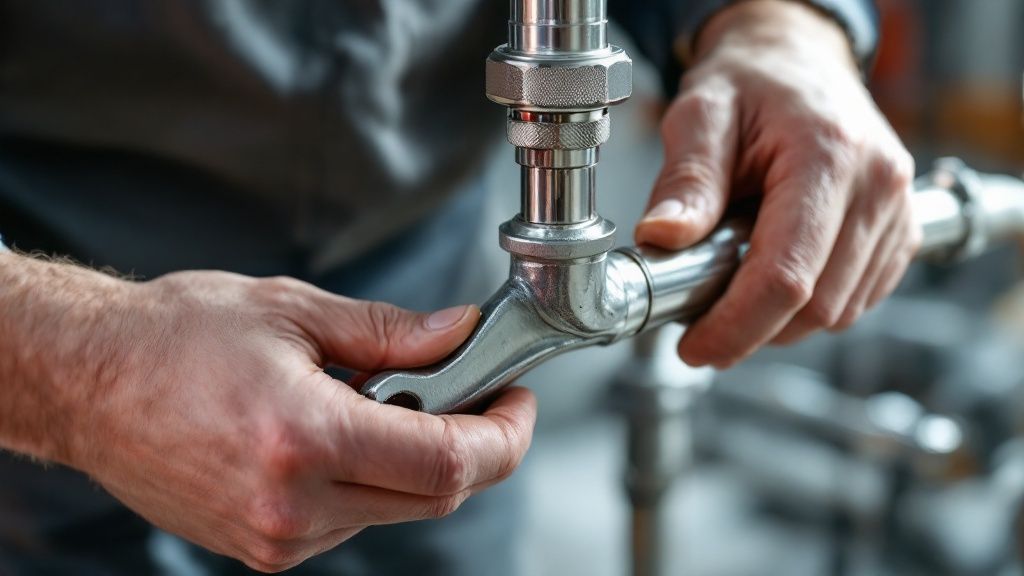
It's one thing to talk about material grades and pressure ratings, but the real story of stainless pipe fittings is told out in the field. This is where their unique mix of muscle, hygiene, and incredible corrosion resistance makes them indispensable in some of the toughest industries on the planet. When you see them at work, you start to appreciate how they deliver real safety, efficiency, and rock-solid reliability day in and day out.
In these demanding settings, fittings aren't just an afterthought; they are vital pieces of the puzzle. They ensure everything runs like clockwork, keeping operations safe from the constant risk of leaks, contamination, and costly downtime. It's this adaptability that makes them a trusted choice across so many different fields.
Food and Beverage Production
When it comes to making the food and drinks we consume, there's zero room for error with hygiene. Stainless steel is the go-to material here, mainly because its non-porous surface gives bacteria nowhere to hide. This is critical for keeping products pure and safe.
You'll find stainless fittings connecting the pipework that moves everything from milk and juice to the high-strength solutions used for cleaning. Their smooth interior is a breeze to sterilize and won't leave any weird taste or smell in the final product. This helps producers meet strict health codes while protecting the quality they're known for.
Oil and Gas Sector
The oil and gas world is a brutal one. We're talking about extreme pressures, wild temperature swings, and substances that would eat right through lesser materials. If you use standard pipes and fittings here, you're asking for trouble.
This is where the sheer toughness of stainless steel, especially advanced alloys like Duplex, becomes non-negotiable. These fittings are built to handle corrosive sour gas, saltwater, and harsh chemicals without breaking a sweat. Whether it’s on a remote offshore rig or in a sprawling refinery, they provide the secure, leak-proof performance needed to keep operations safe.
In high-stakes industries like oil and gas or chemical processing, a fitting is more than just a connector; it is a critical safety device. The ability of stainless steel to resist corrosion under extreme pressure is what prevents catastrophic failures and protects both personnel and the environment.
Construction and Plumbing
Away from the high-tech industrial plants, stainless pipe fittings are also workhorses in general plumbing applications and major construction projects. In modern buildings, they are an upgrade over traditional materials like copper or galvanized steel for drinking water systems, drainage, and gas lines.
Their knack for resisting rust means they deliver clean water and last for decades, cutting down on future maintenance headaches. Plus, architects and designers love the clean, modern look of stainless steel, often leaving it exposed as a design feature.
The demand is growing, too. The pipes and fittings market in the Middle East and Africa was valued at roughly USD 7.98 billion in 2024 and is expected to grow by about 4.47% annually. This boom is driven by huge investments in construction and industrial projects where the long-term reliability of stainless steel is a must. From sky-high towers to new neighborhoods, these fittings are truly the backbone of modern infrastructure.
How to Select the Right Stainless Pipe Fittings
Choosing the right stainless pipe fittings isn't just a minor technical detail—it’s a critical decision that dictates the safety, efficiency, and lifespan of your entire piping system. Get it wrong, and you could be looking at leaks, corrosion, and expensive failures down the road. To avoid that headache, you need a clear framework for making the right choice from the start.
Think of it like building a high-performance engine. Every single component has to be perfectly matched to handle specific pressures, temperatures, and stresses. In the same way, each pipe fitting must be suited for its environment to ensure the whole system works together as a reliable, cohesive unit.
Evaluating Your System's Demands
Before you can even think about picking a fitting, you need a complete picture of the conditions it will face. This goes way beyond just matching pipe diameters; you have to consider all the dynamic forces at play. Start by asking some fundamental questions about your system's operational needs.
These answers are the bedrock of your decision. Getting them right will point you directly to the most suitable material grade and fitting type, ensuring you make a smart investment that balances upfront cost with long-term performance.
Key Factors to Consider
To make this process easier, let's break it down into three core areas. Each one is a crucial piece of the puzzle, and overlooking any of them can seriously compromise your installation.
Media Compatibility: What’s actually flowing through the pipes? Is it clean drinking water, a harsh chemical, a high-purity gas, or a food product? The substance itself is the #1 factor, as it determines which stainless steel grade has the right corrosion resistance for the job.
Operating Conditions: What are the system's maximum and minimum pressures and temperatures? Every fitting has specific pressure-temperature ratings that absolutely cannot be exceeded. A fitting designed for a low-pressure water line will fail spectacularly in a high-pressure steam application.
Mechanical Stress and Environment: Will the system have to deal with vibrations, physical impacts, or external corrosive agents like saltwater spray? In tougher environments, you might need a stronger material like Duplex steel or a more robust connection type to prevent mechanical failure.
Your selection process is a deliberate balancing act between performance and budget. It can be tempting to go with a cheaper option, but investing in the correct fitting for the job is what prevents premature wear, leaks, and the much higher costs of system downtime and repairs.
For example, a Grade 304 fitting is often perfectly fine for a standard commercial plumbing job. But for a chemical plant near the coast, the superior chloride resistance of Grade 316 is non-negotiable to prevent pitting corrosion. To get a better sense of how different materials are used, you can learn more about the versatility of stainless steel sheets in construction and fabrication. This context helps explain why certain grades are chosen for fittings in different scenarios.
To help you put all this together, here’s a simple checklist to walk you through the process.
Selection Checklist for Stainless Pipe Fittings
| Consideration | Key Questions to Ask | Example Recommendation |
|---|---|---|
| Media Type & Corrosiveness | What is flowing through the system (water, acid, food)? Is it corrosive? | For potable water, Grade 304 is standard. For saltwater or mild acids, Grade 316 is necessary. |
| Pressure & Temperature | What is the maximum operating pressure (psi) and temperature (°F/°C)? | High-pressure steam lines require fittings with thick walls and high-temperature ratings (e.g., forged fittings). |
| Mechanical Stress | Will the system experience vibration, shock, or external weight? | For high-vibration areas, threaded fittings may loosen; welded or flanged connections offer more stability. |
| Environmental Factors | Is the installation indoors, outdoors, or in a marine/industrial zone? | In coastal areas, Grade 316L or Duplex steel is recommended to resist external salt corrosion. |
| Installation & Maintenance | Does the system need to be disassembled for cleaning or maintenance? | Threaded or flanged fittings allow for easy disassembly, whereas welded fittings are permanent. |
By systematically thinking through these factors, you replace guesswork with a methodical approach. This ensures every connection in your system is not just secure, but perfectly engineered for its specific job—guaranteeing a safe, durable installation that will stand the test of time.
Getting Installation and Maintenance Right
You can have the best stainless pipe fittings in the world, but if they aren't installed and looked after properly, they're going to fail. I like to think of a fitting like a crucial weld on a race car's frame—its integrity is completely in the hands of the person putting it together. Getting the installation right means a secure, leak-free system from day one. Good maintenance, on the other hand, is what keeps it that way for years to come.
This isn't just about stopping a few drips. It's about preventing a major failure, keeping operations safe, and getting the most out of your investment. From how you seal the threads to a simple visual check, these fundamentals are what separate a reliable piping network from a constant headache.
Nailing the Installation
A perfect installation doesn't start with the final turn of the wrench. It starts with careful prep work and sticking to time-tested techniques that create a joint that’s both strong and sealed tight.
Prep Work is Everything: Before you do anything else, make sure your pipes and fittings are clean and free of damage. Pipe ends need to be cut perfectly square and then deburred to get rid of any sharp edges or shavings. You need a smooth, clean surface to get a perfect seal.
Seal Those Threads Correctly: When you're working with threaded stainless fittings, a good quality thread sealant is non-negotiable. I recommend a solid PTFE (Teflon) tape or a pipe dope specifically made for stainless steel. A key tip: apply it only to the male threads and leave the first thread or two bare. This stops sealant from getting squeezed into the pipe and contaminating the system.
Get the Alignment Right: Never, ever try to force a fitting into place by just cranking down on it. When you misalign a joint, you're building stress right into the fitting and the pipe, which is one of the most common reasons for cracks and leaks down the road. The connection should feel natural, not forced.
A rookie mistake I see all the time is overtightening. People think tighter is better, but it can actually wreck the threads and ruin the seal. You're aiming for a snug, leak-proof fit, not brute force. If the manufacturer provides torque specs, use them.
What to Know About Welding
For jobs that require welding, the main challenge is creating a super-strong joint without damaging the steel's natural ability to resist corrosion.
The intense heat from welding can actually burn off the chromium right at the surface, which creates a "sensitized" area that’s now a weak spot for rust. To get around this, pros will often reach for a low-carbon grade like 304L or 316L. Another common technique is back-purging, which involves flooding the inside of the pipe with an inert gas during welding to shield the joint from oxygen. If you want to see how these broader principles apply in the field, this guide on how to install sewer lines offers some great step-by-step insights.
Simple Maintenance That Works
The good news is that maintaining stainless pipe fittings is pretty straightforward. It’s more about being proactive with inspections than being reactive with repairs. A quick, regular walkthrough can save you from a huge problem later.
Look Around Regularly: Every so often, just walk the lines and check every connection for drips, leaks, or any signs of corrosion. Pay special attention to the joints and welds. If you see any odd discoloration or rust spots, that’s your cue to take a closer look.
Keep Them Clean: The key to stainless steel's corrosion resistance is its clean surface. For routine cleaning, a soft cloth with some mild soap and warm water is all you need. If you've got tougher grime, a cleaner with ammonia will work, but just make sure you rinse it off completely with clean water when you're done.
Don't Cause Contamination: This is a big one. Never use steel wool or a carbon steel brush to clean stainless steel. You'll leave behind tiny iron particles that will absolutely rust and compromise that protective layer you're trying to maintain. Stick with nylon brushes or soft cloths.
By building these simple habits into your installation and maintenance routines, you'll make sure your stainless pipe fittings live up to their reputation for longevity and reliability.
Answering Your Top Questions
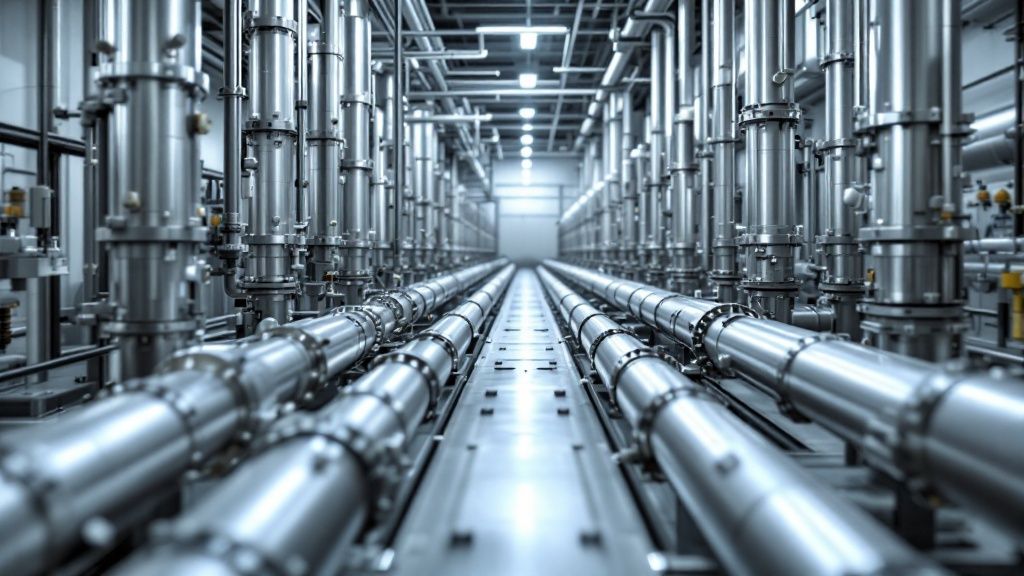
Even after you've nailed down the basics, you'll always have questions pop up on the job site. It's just the nature of working with stainless pipe fittings. Getting those practical questions answered is what separates a good project from a great one—ensuring everything is safe, built to last, and up to code.
Here, we'll tackle some of the most common questions we get from both seasoned pros and dedicated DIYers. Think of this as your go-to guide for quick, practical advice on everything from picking the right material to keeping it in great shape for years to come. Let's get into it.
Distinguishing Between Grade 304 and 316
This is probably the number one question we hear: what's the real difference between Grade 304 and Grade 316 stainless steel? They look the same, but their performance couldn't be more different, and it all comes down to their chemical recipe.
Grade 304 is your all-around workhorse. It’s cost-effective and perfectly suited for most general-purpose jobs, like residential plumbing or food processing equipment. But Grade 316 has a secret weapon: 2-3% molybdenum. That small addition makes a world of difference, giving it incredible resistance to chlorides from things like salt or industrial chemicals.
When to Choose 316: If your project is anywhere near the coast, in a marine environment, or involves harsh chemical exposure, don't even think about it—go with Grade 316. That little bit of molybdenum is your best defense against pitting corrosion, a nasty, localized type of decay that can quickly compromise a fitting.
Can You Connect Stainless Steel to Other Metals?
Absolutely, but you have to do it right. Just connecting a stainless steel pipe to something like galvanized steel or copper is asking for trouble. This creates a phenomenon called galvanic corrosion. Think of it like a tiny battery; when two different metals touch in the presence of water, one of them starts to corrode way faster than it normally would.
To stop this from happening, you need to isolate the metals. The industry-standard solution is a dielectric union. This clever fitting has a plastic liner or rubber gasket that acts as a barrier, breaking the electrical circuit between the metals and stopping galvanic corrosion dead in its tracks.
Keeping Your Fittings in Top Condition
One of the best things about stainless steel is how easy it is to maintain, but a little care goes a long way in preserving its appearance and corrosion resistance. Luckily, it's pretty straightforward.
- Routine Cleaning: For most dirt and grime, a soft cloth with some mild soap and warm water is all you need. The key is to rinse it thoroughly with clean water afterward to get rid of any soap residue.
- Avoid Abrasives: This is a big one. Never use steel wool or carbon steel brushes on stainless steel. They'll scratch the surface and leave behind tiny iron particles that will rust, defeating the whole purpose of using stainless in the first place. Stick with soft cloths or nylon brushes.
- Handle with Care: When you're installing fittings, try to avoid letting them get scraped or banged up by iron or plain steel tools. This can also transfer rust-prone particles onto the surface.
Following these simple rules will ensure your fittings stay strong, clean, and reliable for the life of the system.
For all your project needs, from specialized stainless pipe fittings to a full range of construction materials, trust Yasu Trading Co. LLC to deliver quality and reliability. Explore our extensive product catalog and request a quote today at https://yasutrading.com.