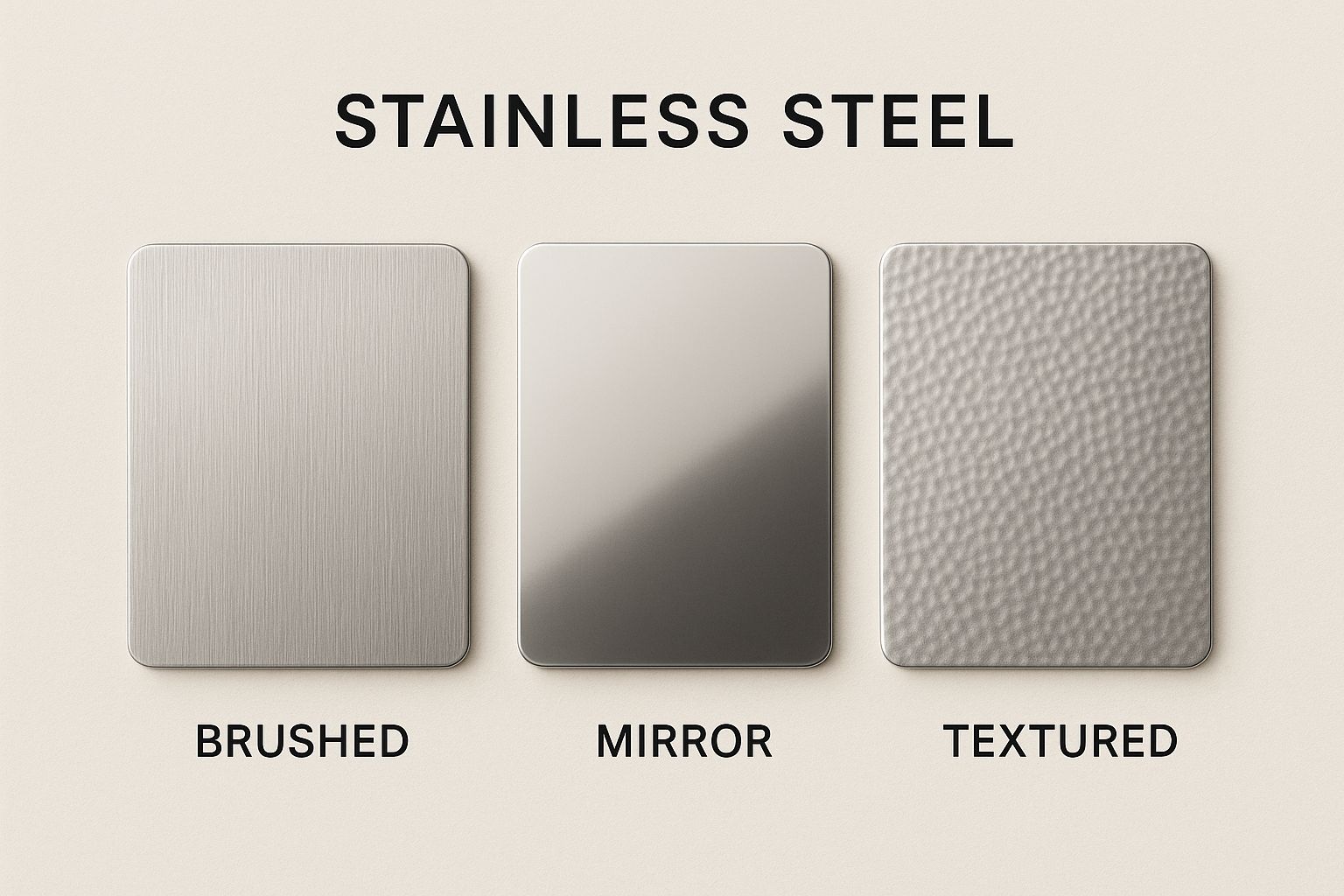
A Contractor's Guide to Stainless Steel Sheets
Stainless steel sheets are a real workhorse in modern construction, but don't think of them as just another piece of metal. They're a high-performance material, offering a powerful combination of strength, corrosion resistance, and a clean, aesthetic finish. The key is knowing how to pick the right one for the job, whether you're cladding a skyscraper or outfitting a commercial kitchen.
Why Choosing the Right Stainless Steel Sheet Matters
Let’s put it this way: you wouldn't use delicate silk to make a heavy-duty tent. It just wouldn't hold up. The exact same logic applies to stainless steel sheets. Each grade and finish is engineered for a specific environment and use. Get this choice wrong, and you could be looking at everything from rust and staining to budget blowouts and a final product that just doesn't perform.
Here in the UAE, this decision is even more critical. Our climate is tough on building materials. The combination of intense heat, high humidity, and salty coastal air puts incredible stress on exterior surfaces. A stainless steel sheet that looks great in an inland project might fail spectacularly on a beachfront villa. This is why a solid understanding of the different stainless steel types isn't just helpful—it's essential for any contractor, engineer, or architect working in the region.
Understanding the Regional Demand
The numbers back this up. The Middle East & Africa stainless steel market, where the UAE is a major hub, was valued at around USD 16.13 billion and is expected to climb to USD 22.65 billion by 2032. This isn't just random growth; it’s fuelled by the relentless pace of industrialisation and the visionary infrastructure projects shaping our cities.
What this tells us is that selecting the right stainless steel isn't a minor technicality. It’s a core business decision that directly affects the durability, safety, and reputation of your project.
The right stainless steel sheet does more than just fulfil a specification; it protects your investment, ensures structural integrity, and upholds your reputation for quality craftsmanship in a competitive market.
This principle extends well beyond massive construction sites. Think about commercial equipment where hygiene is non-negotiable. The grade of stainless steel used for food prep surfaces, for example, has a direct impact on safety and cleanability. It's why knowing the properties of stainless steel in commercial pizza prep tables is just as important as choosing the right cladding for a high-rise.
To make things a bit simpler, let's break down the most common grades you'll encounter here in the UAE.
Quick Guide to Common Stainless Steel Grades in the UAE
Here's a straightforward table summarising the go-to grades for local projects. Think of it as your cheat sheet for matching the right material to the right application.
| Grade | Key Characteristics | Common UAE Applications |
|---|---|---|
| 304 | The "all-rounder." Good corrosion resistance, excellent formability. | Kitchen equipment, indoor architectural trim, food processing. |
| 316 | Superior corrosion resistance, especially against chlorides (salt). | Coastal building facades, marine hardware, outdoor fixtures. |
| 430 | Magnetic, lower cost, good for indoor/mild environments. | Decorative interior panels, appliance trim, automotive parts. |
| 201 | Lower nickel content, cost-effective but less corrosion resistant. | Indoor decorative applications, budget-conscious interior projects. |
This quick guide should give you a starting point. Always remember to consider the specific environmental exposure and structural demands of your project before making a final decision.
Decoding the Most Common Stainless Steel Grades
Stepping into the world of stainless steel grades can feel like trying to crack a secret code. You see numbers like 304, 316, and 430 thrown around, but what do they really mean for your project? The best way I’ve found to explain it is by comparing them to car engines. Some are reliable all-rounders perfect for daily driving, while others are high-performance machines built to handle extreme conditions.
Getting this choice right is a critical balancing act between cost, performance, and long-term durability. The secret is all in the recipe—the specific blend of elements like chromium, nickel, and molybdenum mixed into the steel. This alloy mix dictates everything from how well a sheet fights off rust to how easily it can be shaped and welded. A smart choice means you know exactly what your money is buying.
Grade 304: The Versatile Workhorse
If there’s one stainless steel grade you’ll encounter constantly, it’s Grade 304. It’s the most widely used on the planet, and for good reason. Think of it as the dependable V6 engine in a family SUV—it gives you a fantastic mix of performance, durability, and value. Made up of roughly 18% chromium and 8% nickel, it offers solid protection against most common types of corrosion.
This incredible versatility makes it the go-to for a huge range of jobs. You’ll find Grade 304 stainless steel sheets everywhere, including:
- Kitchen sinks, commercial food prep areas, and splashbacks.
- Interior architectural details like handrails and decorative panels.
- General structural work where it won't face harsh coastal air.
For the vast majority of indoor projects in the UAE, like outfitting a mall or an office tower, Grade 304 is more than up to the task. Fabricators love it, too, because it’s easy to form and work with. It's so popular, in fact, that the 300 series, led by Grade 304, dominates the market. In the Middle East & Africa, this series accounts for about 64% of the market share thanks to its reliable performance.
Grade 316: The Coastal and Marine Guardian
So if Grade 304 is that trusty V6, Grade 316 is the high-performance, turbocharged engine designed specifically for harsh environments. What gives it that extra grit? One key ingredient: molybdenum. While it looks nearly identical to 304, that small addition changes the game completely.
Molybdenum gives the steel a massive boost in resistance to chlorides—the corrosive stuff found in seawater, de-icing salts, and some industrial chemicals. This makes Grade 316 the absolute champion for any project along the Arabian Gulf.
For any exterior application within a few kilometres of the coast, specifying Grade 316 isn’t just a good idea; it’s essential to prevent premature rust and protect the structure’s integrity.
This superior protection does come at a premium, typically costing 25-40% more than Grade 304. But that initial investment pays for itself many times over by avoiding expensive repairs and replacements down the road, especially for coastal villas, marine hardware, or external cladding battered by salt spray. This same logic of matching the material to the environment is crucial for all components, as you'd see in a guide to stainless steel pipe and fittings.
Grade 430: The Economical Indoor Specialist
Finally, let’s talk about Grade 430. This one is from the ferritic family, which means it’s magnetic and has very little (if any) nickel. This makes it a much more budget-friendly choice. Think of it as a small, efficient engine that’s perfect for light-duty jobs in controlled, indoor settings.
Because it’s missing the nickel that its 300-series cousins have, its corrosion resistance is lower. It does just fine in dry, indoor environments but isn’t cut out for outdoor use or places with high humidity. You’ll often see it used in decorative trim on appliances or interior panels where cost is the main consideration. For more on this, there are great resources on choosing the right stainless steel grades for restaurant tables that show how different grades fit different needs.
Selecting a Surface Finish for Aesthetics and Durability
Choosing the finish for a stainless steel sheet isn't just about looks—it’s a critical decision that dictates how the material will perform for years to come. Think of it like picking the right paint. You wouldn't use a high-gloss paint, which shows every scuff, on a high-traffic hallway wall; you’d probably opt for a more forgiving matte or eggshell. The exact same logic applies here.
For contractors working on projects across the UAE, getting this choice right is about balancing the architect's vision with the real-world demands of the location. A finish that works beautifully in a hotel lobby will face a completely different set of challenges on an outdoor facade exposed to sun and sand. Making the right call upfront means avoiding maintenance headaches and ensuring the project looks its best long after the handover.
The Standard Finishes Explained
Let's walk through the most common finishes you'll come across when sourcing stainless steel. Each one has a unique character and a specific job it’s best suited for.
No. 2B Matte Finish: This is your workhorse. As the most widely used and cost-effective option, it has a smooth, muted, and clean appearance. Because it’s not highly reflective, it doesn't show fingerprints or minor smudges easily, making it a go-to for industrial equipment, water tanks, and structural components that aren't purely decorative.
No. 4 Brushed Finish: When you picture stainless steel in a building, this is probably what comes to mind. It has that classic satin look, with fine, parallel lines brushed into the surface. Its real magic lies in its ability to hide minor scratches and everyday wear, which is why it's perfect for high-touch surfaces like lift interiors, kitchen appliances, handrails, and column claddings.
No. 8 Mirror Finish: Just as the name implies, this finish is polished to a flawless, highly reflective shine. It’s all about making a statement, creating a sense of luxury and openness in prestigious projects. You'll see it used for dramatic effect in hotel foyers, high-end retail displays, and decorative art pieces. But be warned: its perfection is also its Achilles' heel. It highlights every single fingerprint, smudge, and scratch, requiring constant and careful cleaning.
A project's finish should always be chosen with its environment and level of human contact in mind. A tough, forgiving finish like the No. 4 brushed is often a much smarter long-term investment for busy areas than a stunning but delicate No. 8 mirror.
Matching Finish to Application
The right finish isn't just about what looks good on day one; it’s about what will still look good on day one thousand. The texture and reflectivity directly impact how much maintenance will be needed and how well the surface resists daily wear.
Take the brushed or satin finishes, for instance. Their textured surfaces scatter light, which cleverly helps to hide small scratches and dings. This makes them the ideal choice for areas that are both functional and visible, where durability is just as important as appearance. On the flip side, the flawless reflection of a mirror finish acts like a magnifying glass for any imperfection, restricting its use to protected, purely decorative elements where its beauty can be maintained.
Here in the UAE, with dust and sand as constant companions, an easy-to-clean finish that doesn't trap particles is a huge plus. While a mirror finish is technically smooth, its static charge can be a dust magnet. For many exterior applications, a practical brushed or matte finish is simply the smarter choice. By thinking through these factors, you can ensure the stainless steel sheets you select not only meet the design brief but are also tough enough for the region’s unique challenges.
How Manufacturing Processes Affect Steel Performance
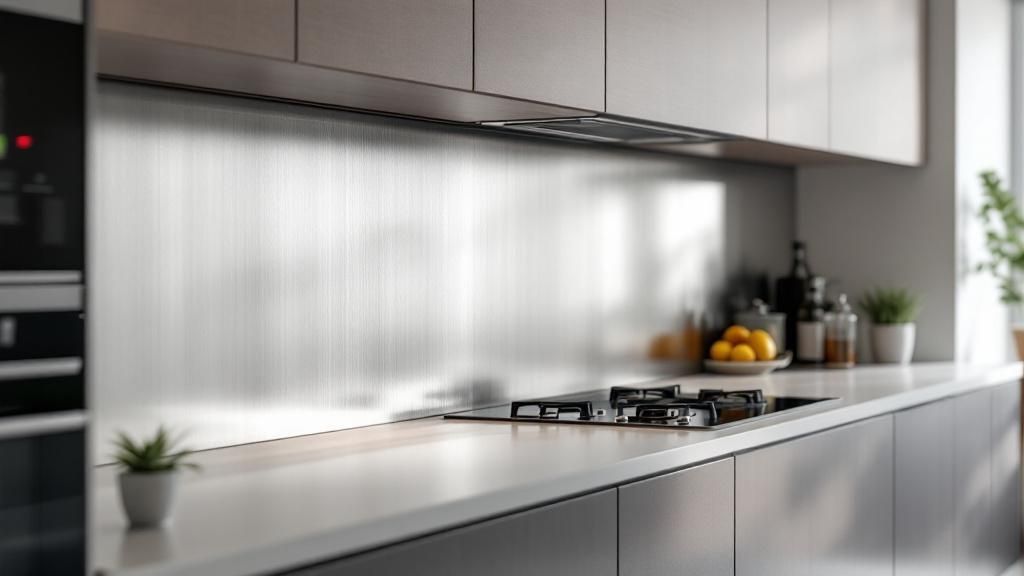
The final properties of a stainless steel sheet aren't just down to its grade. How it’s made—the journey from a raw slab to the finished product you specify—is just as crucial. This journey profoundly impacts its strength, appearance, and ultimate suitability for your project.
Think of it like a baker working with dough. One method might be quick and perfect for a hearty, rustic loaf, while another is more intensive, creating a delicate, refined pastry. The two fundamental processes are hot rolling and cold rolling. For contractors in the UAE, understanding this difference helps you read between the lines on a supplier's data sheet and make a choice that goes far beyond the grade number.
Hot Rolling: The Foundation of Strength
Hot rolling is the first major step. Picture the steel being heated to incredibly high temperatures—often over 1,000°C—making it pliable and almost dough-like. It’s then passed through massive rollers to be shaped into large sheets or coils.
Because the steel is so malleable at this heat, the process is efficient and cost-effective. It's the go-to method for producing steel for structural applications where a perfect surface finish and razor-thin tolerances aren't the primary concern. The resulting steel might have a slightly rougher, scaled surface, which is perfectly fine for things like:
- Structural frames and supports
- Heavy-duty industrial equipment
- Applications where the steel will be further processed or hidden from view
This is your workhorse steel, built for brawn over beauty.
Cold Rolling: Precision and a Flawless Finish
Cold rolling is what happens next. After the steel is hot-rolled and cooled down, it's run through the rollers again, but this time at room temperature. This is like kneading cool dough; it demands significantly more force and pressure.
That extra effort pays off. The process refines the steel's internal grain structure, making it harder and stronger. More importantly for architects and designers, it produces a much smoother, more attractive surface and allows for incredibly tight dimensional tolerances. For a closer look at how modern workshops achieve this level of accuracy, it’s worth understanding the role of advanced metalworking techniques and computer-controlled processes.
Cold-rolled stainless steel is the clear choice whenever aesthetics and precision are non-negotiable. Its smooth surface is the perfect canvas for decorative finishes, like the popular No. 4 brush or a stunning No. 8 mirror, making it ideal for visible architectural elements.
This is why you’ll see cold-rolled sheets specified for high-end architectural cladding, premium kitchen appliances, decorative panels, and any other application where the steel itself is a centrepiece of the design.
Key Applications in Modern UAE Construction
The real test of knowing your stainless steel grades and finishes isn't just theory; it’s seeing them in action. Across the UAE's demanding construction landscape, specific stainless steel sheets are chosen for a reason. It's not just about looking good—it's about surviving unique environmental and functional challenges. Let's move past the spec sheets and see how these materials are put to work in some of the region's most famous structures.
This isn't just a list of uses. It's about connecting the why to the what. Every application involves a deliberate choice, a careful balance of aesthetics, durability, and cost. When you understand these real-world examples, from a skyscraper’s shimmering skin to a simple handrail in a mall, you start to grasp the real consequences of your material selection.
Architectural Facades and Cladding
The skylines of Dubai and Abu Dhabi are basically global symbols of architectural ambition, and stainless steel is a huge part of that story. Many of those iconic towers depend on stainless steel sheets for their facades and cladding. Up there, the choice of material is absolutely critical. Imagine the exterior of a giant like the Burj Khalifa—it has to stand up to intense sun, wild temperature swings, and sandblasting winds every single day.
And when you get near the coast, like on Palm Jumeirah or Saadiyat Island, the requirements get even stricter.
In these marine environments, Grade 316 stainless steel is non-negotiable. That little bit of extra molybdenum is your best defence against the corrosive salt spray carried on the humid sea breeze. It’s what stops rust in its tracks and keeps a building looking pristine for decades.
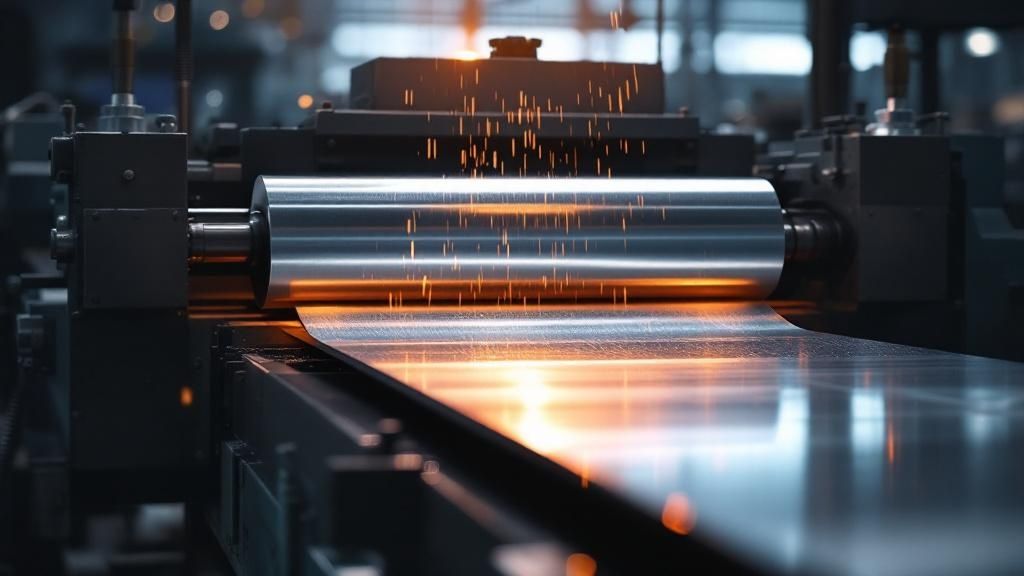
A No. 4 brushed finish is often the go-to for these exteriors. Its satin-like texture is brilliant at diffusing the harsh desert sun, cutting down on glare. It also does a great job of hiding minor scratches from wind-blown dust and sand. This smart combination of the right grade and a practical finish delivers both looks and longevity. Of course, cost is always a factor, and for a closer look at what drives pricing, you can get some great insights by exploring the dynamics of the steel rate in UAE.
Interior Design and High-Traffic Zones
Walk into any major mall, airport, or public building in the UAE, and you're surrounded by stainless steel. You’ll see it on column claddings, inside elevators, on escalators, and as decorative panels. In these busy indoor spaces, the biggest challenges are constant wear and tear and keeping up a clean, modern aesthetic.
For this job, Grade 304 stainless steel is the clear winner. It gives you all the corrosion resistance you need for an indoor setting and fantastic durability, all at a more budget-friendly price than Grade 316. You'll see it used for:
- Balustrades and Handrails: A brushed or satin finish on Grade 304 is perfect for handrails in high-traffic spots like the Dubai Metro. It resists fingerprints and is tough enough to handle constant use.
- Elevator Doors and Cabs: A mix of finishes, maybe a mirror (No. 8) accent with a brushed (No. 4) body, creates a sophisticated look that’s still easy to maintain.
- Commercial Kitchens: In the back-of-house areas of hotels and hospitals, Grade 304 is essential for wall cladding and work surfaces. Its non-porous surface is hygienic, a breeze to sanitise, and stands up to harsh cleaning chemicals.
Specialised and Structural Applications
Stainless steel isn't just for the parts you see. It plays a critical role in less glamorous, but incredibly important, structural applications. Its combination of strength and corrosion resistance makes it the perfect material for structural supports, especially in areas prone to humidity or corrosion. Think water treatment facilities, desalination plants, and industrial buildings where chemical exposure is a daily reality.
In these situations, the choice is all about function. A standard 2B matte finish on either Grade 304 or 316 (depending on the specific chemicals involved) does the job perfectly without the extra expense of a decorative polish. These applications are proof that the versatility of stainless steel sheets goes far beyond just looking good—it forms the tough, resilient backbone of so much of the region's vital infrastructure.
Your Framework for Sourcing Stainless Steel in the UAE
Making that final call on which stainless steel sheets to bring to your site isn't just about ticking a box. It’s a methodical process. You’re pulling together everything you know about grades, finishes, and manufacturing to make a decision that guarantees the material will hold up for the long haul, especially in the UAE's demanding climate.
Think of it as the final pre-flight check. You’ve already picked your aircraft (the steel grade) and its paint job (the finish). Now, it’s time to double-check the paperwork, vet the supplier, and make absolutely sure every component is ready for the journey. A small miss on the ground can turn into a massive headache once you're airborne.
Step 1: Evaluate Your Supplier and Verify Documentation
First things first, you need to size up your potential suppliers. Look for established names with a solid reputation for quality and reliability right here in the local market. A good supplier is more than just a salesperson; they should be a technical partner who can offer real guidance when you need it.
The single most important piece of paper you need to ask for is the Material Test Certificate (MTC), sometimes called a Mill Test Report (MTR). This is the birth certificate for your stainless steel. It gives you the full story: a detailed chemical breakdown and a list of its mechanical properties.
An MTC is your non-negotiable proof of quality. It's what confirms that the Grade 316 sheet you’re paying for actually has the molybdenum content needed to fight off coastal corrosion. Without it, you're buying on trust alone, and that's a huge risk.
This certificate is your only real guarantee that the material meets the exact specifications you need. Never, ever accept a shipment of stainless steel without a matching MTC. It's your primary defence against counterfeit or subpar materials that could put your entire project in jeopardy.
Step 2: Factor in Local Climate and Environmental Stressors
The UAE’s environment is a unique beast. Your sourcing decision has to account for three major challenges:
- High Salinity: If your project is anywhere near the coast, specifying Grade 316 stainless steel isn't a recommendation—it's a must. The high chloride content in the sea air will chew through lesser grades like 304 in no time.
- Intense Heat: The extreme temperatures here can play havoc with material expansion and stress. Make sure the grade and thickness you choose can handle the thermal cycles, particularly for anything on the building’s exterior.
- Humidity: Even away from the coast, the persistent high humidity can speed up corrosion. This just reinforces the need for genuine, high-quality steel with a proper, protective chromium oxide layer.
Step 3: Avoid Common Sourcing Pitfalls
Even the most seasoned contractors can stumble into common traps. Knowing what they are is the best way to sidestep costly errors.
A classic mistake is overlooking the long-term value of a better finish. Sure, a basic 2B matte finish is cheaper upfront. But that No. 4 brushed finish on a high-traffic handrail? It’s going to hide minor scratches and wear much better, cutting down your long-term maintenance costs and keeping the installation looking sharp for years.
Along the same lines, don't let a slightly lower price for an unverified product tempt you. The small saving you make today could easily lead to a catastrophic failure and replacement costs that make the original price difference look tiny. These principles of balancing cost, durability, and application are vital across the board in construction, as this ultimate guide to choosing building hardware in Dubai explains with broader insights.
By following this straightforward framework, you can source your stainless steel sheets with confidence, knowing every project is built to last.
Frequently Asked Questions
When you're dealing with stainless steel sheets, a few questions always come up. Getting the answers right is crucial for your project's success, so let's tackle the common queries we hear from contractors and engineers across the UAE.
What's the Real Difference Between Grade 304 and 316?
At its core, the difference comes down to chemistry and how that affects corrosion resistance. Think of Grade 304 as your reliable, everyday workhorse. It’s fantastic for most general applications, especially indoors or in areas far from the coast where salt isn't a major concern.
Grade 316, on the other hand, has a secret weapon: molybdenum. This one addition dramatically boosts its defence against chlorides, which means salt. For any project in the UAE near the coast or anywhere that gets hit with sea spray, Grade 316 is a non-negotiable choice. It's what stops rust in its tracks and guarantees durability. If you're building inland, 304 will usually do the job just fine.
Can I Weld Any Stainless Steel Sheet?
Pretty much, yes. Most of the common grades you'll encounter, like the 300 series (304, 316), are designed to be weldable. But welding stainless steel is more than just melting two pieces together.
The real skill lies in using the right technique and filler materials. Why? Because you have to protect the steel's corrosion-resistant properties, especially in the area heated by the weld. A bad weld can strip away that protective layer, creating a weak spot. Always stick to the grade-specific welding guidelines and bring in certified pros to ensure the steel’s integrity isn’t compromised.
Preserving the passive layer during welding is just as important as the structural strength of the weld itself. A poor weld can become the first point of failure for corrosion, undoing the benefit of choosing a high-quality grade.
How Should I Clean and Maintain Stainless Steel?
Keeping stainless steel looking its best is surprisingly straightforward, but you have to do it right. For routine cleaning, all you need is a soft cloth, some warm water, and a mild detergent. For fingerprints or tougher spots, a specialised stainless steel cleaner will do the trick.
The most critical part is knowing what not to do. Never use abrasive cleaners like steel wool or harsh chemicals like bleach. They'll scratch the surface and completely destroy the passive chromium-oxide layer—the invisible shield that protects the steel from rust.
Why Do Two Sheets That Look the Same Have Different Prices?
It’s a common scenario: two sheets look identical, but one costs significantly more. The price of stainless steel sheets isn't just about appearances; it's driven by a few key factors:
- Grade: Grade 316 costs more than 304. That extra cost comes from the higher nickel content and the addition of valuable molybdenum.
- Thickness: It's simple maths—thicker sheets use more raw material, so they cost more.
- Finish: A perfect, highly polished No. 8 mirror finish takes a lot more work to produce than a standard No. 2B matte finish, and that labour is reflected in the price.
- Origin: Where the steel was made also plays a role, as production costs and quality control standards vary from one manufacturer to another.
To get a true price comparison for your project, always make sure you're comparing apples to apples—check that the grade, thickness, and finish are identical across quotes.
For all your project needs, from structural essentials to finishing touches, Yasu Trading Co. LLC provides a complete range of high-quality building materials, including premium stainless steel sheets. Request a quote today and build with confidence.