Steel Price in Dubai: Latest Trends & Updates
Trying to pin down the steel price in Dubai is a bit like trying to catch the wind—it’s always moving. The figure you see today isn’t set in stone; it’s a living number, pushed and pulled by everything from local construction booms to global supply chain hiccups. While construction-grade steel like rebar might hover around a certain price per tonne, that can easily change by next week.
Understanding the Current Steel Price in Dubai
Think of tracking steel costs in Dubai like watching the price at the petrol pump. It's a commodity, and that means it's in a constant state of flux. The quote you get on Monday might not be valid by Friday, which makes staying on top of the market absolutely critical for keeping your project budget in check.
This isn't random chaos, though. The price swings are a direct result of a tug-of-war between fierce local demand and the pressures of the international supply chain.
For anyone in procurement or construction management, getting a grip on this reality is the first step to smart spending. The "steel price in Dubai" isn't one single figure. It’s a whole spectrum of prices that depends heavily on what you’re buying. Are you sourcing basic rebar for reinforcing concrete, or are you after the heavy-duty structural steel beams that will form the backbone of a skyscraper? The costs are worlds apart.
To give you a clearer picture, here’s a quick look at the typical price ranges for some of the most common steel products you'll find in the Dubai market.
Estimated Price Range for Common Steel Products in Dubai
This table offers a snapshot of what you can generally expect to pay for different types of steel. Keep in mind, these are estimates and can shift based on market conditions, but they provide a solid baseline for budgeting.
| Steel Product Type | Typical Application | Estimated Price Range (per tonne) |
|---|---|---|
| Rebar (Reinforcing Bar) | Concrete reinforcement in foundations, columns, and slabs | AED 2,200 - AED 2,600 |
| Structural Steel (Beams, Columns) | Building skeletons, bridges, and industrial structures | AED 2,800 - AED 3,500 |
| Steel Sheets/Plates | Cladding, roofing, and manufacturing applications | AED 3,000 - AED 3,800 |
| Hollow Sections (Pipes, Tubes) | Framework, handrails, and mechanical components | AED 2,900 - AED 3,600 |
As you can see, the specific application heavily influences the cost. Always be sure you're comparing apples to apples when getting quotes.
The Impact of Megaprojects
One of the biggest forces shaping local steel prices is the UAE's relentless drive for bigger and better infrastructure. This constant hunger for materials creates a powerful baseline for steel demand, which naturally props up prices.
Just look at what's happening right now. We've got massive, headline-grabbing initiatives like the USD 11 billion Etihad Rail project and the ambitious USD 5.9 billion Dubai-Abu Dhabi Hyperloop proposal. On top of that, there are major roadworks like the USD 2.7 billion Sheikh Zayed double-deck road. These aren't small jobs; they consume staggering amounts of steel, keeping demand consistently high. If you want to dive deeper into the numbers, this detailed industry report breaks down how these projects affect the entire market.
Key Takeaway: With a steady stream of megaprojects in the pipeline, Dubai and the wider UAE have a built-in high-demand environment. This acts as a strong anchor for local steel prices, even when global markets get a bit shaky.
What does this mean for you? It means that a government announcement about a new project can have just as much impact on your procurement costs as a shift in international commodity markets. To truly get ahead, you've got to keep one eye on the local news and the other on global trends.
What Really Drives Steel Prices in the UAE
Trying to understand the swings in the steel price in Dubai feels a bit like watching a tug-of-war. On one end, you have the UAE's massive, non-stop construction appetite pulling hard. On the other, you have the wild currents of global commodity markets, which can change direction with little warning.
It's this constant push and pull that sets the price. The cost of your materials is shaped by decisions made in a local boardroom just as much as it is by a trader on a commodities floor thousands of miles away. A new government project gets the green light, and suddenly local demand tightens. A shift in international trade policy, and costs can unexpectedly climb.
The Global Commodity Connection
Let’s get back to basics. Steel is fundamentally made from iron ore and, increasingly, recycled scrap. The market prices for these raw materials are the absolute bedrock of what you end up paying.
When the global cost of iron ore spikes because of higher mining costs or a surge in demand from another major economy, that increase eventually finds its way to the steel rate in UAE. It’s an unavoidable ripple effect that hits your project's budget.
Think of it like a bakery. If the price of flour goes up, the price of bread has to follow. It’s the same exact principle for steel production.
This direct link to global commodities makes the market incredibly sensitive to what's happening in the world. A political spat in a major mining country or a new environmental law can have a very real, very direct impact on the cost of steel delivered to your site in Dubai.
Demand from Local Megaprojects
While global trends set the stage, it's the UAE's relentless pipeline of megaprojects that keeps local demand consistently strong. This constant hunger for steel creates a solid price floor, stopping costs from falling too far even when the global market cools off.
Local suppliers always have a ready-made market for their product, and that reality absolutely shapes their pricing. The sheer scale of these projects—consuming enormous amounts of rebar, structural beams, and more—creates a fierce procurement environment where high demand often puts upward pressure on the local steel price in Dubai.
International Trade and Logistics
Finally, you can't forget about the journey the steel takes to get here. Logistics and international trade policies are a huge piece of the puzzle. Since a lot of steel is imported, things like shipping container costs, port congestion, and fuel prices matter. A lot.
A single disruption in a major shipping lane can cause delays and hike up freight charges, directly inflating the final landed cost of steel in the UAE.
On top of that, you have international trade politics. Tariffs or export duties from producing countries can completely change the flow and cost of steel. We saw a perfect example of this in late 2023 when the Asian steel market jumped nearly 7%. This was tied to a temporary spike in iron ore prices linked to China's real estate troubles. Even though things stabilised, it’s a clear reminder of just how interconnected everything is.
How Global Supply Chains Affect Local Prices
The steel price in Dubai isn't decided in a bubble. Far from it. Think of it as the final price tag after a long, complicated journey across the globe. Because the UAE brings in a huge chunk of its steel from abroad, our local market is incredibly sensitive to what’s happening thousands of kilometres away.
This creates a direct line between the health of international supply chains and the cost you see on your invoice. A policy change in Beijing or a new regulation in New Delhi can send immediate ripples through Dubai's construction scene, hitting everything from project deadlines to budgets.
It’s important to remember that Dubai’s market is more of a price taker than a price maker on the world stage. We have to adapt to the conditions set by the big steel-producing countries and the logistical webs that connect us to them.
The Ripple Effect from Major Producers
Countries like China and India are essentially the world's steel factories. When their domestic policies shift, the entire global market feels the tremor. For example, if a major producer decides to dial back steel output to hit environmental goals, the global supply tightens up.
Simple supply and demand kicks in. This creates scarcity, which drives up prices for everyone, including importers right here in Dubai. In the same way, if a country slaps on new export taxes to keep more steel for its own building projects, the cost for international buyers climbs almost overnight.
These aren't just what-if scenarios; they happen all the time and are a huge reason for the price swings we see in the UAE.
A port shutdown in a key exporting country is like a sudden dam on a river. The flow of materials stops, but the demand downstream in Dubai keeps pulling, causing prices to surge as buyers compete for the limited available supply.
Getting a handle on these dynamics is the key to seeing market shifts before they happen. For a closer look at the nuts and bolts of it all, this complete international supply chain management guide is a great resource.
Vulnerability to Global Disruptions
This heavy reliance on imports makes our local market especially exposed to disruptions. The path from a steel mill overseas to a Dubai construction site is riddled with potential roadblocks:
- Shipping and Freight Costs: Wild swings in fuel prices, a shortage of shipping containers, or congestion on major sea lanes all add directly to the final cost of steel.
- Geopolitical Tensions: Conflicts can shut down major trade routes, forcing ships to take longer, more expensive detours.
- Supplier Country Policies: A sudden change in export tariffs or trade deals can make sourcing from a particular country financially unworkable from one day to the next.
In 2024, the average import price for raw steel and pig iron in the UAE hit around $514 per ton, which was a 15% jump from the previous year. This really shows how much prices from key suppliers can differ—imports from Germany, for instance, are pricier than those from the United States. This is a clear-cut example of how global supply chain issues directly hit the bottom line for local projects.
Decoding Prices for Different Types of Steel
Walking into the steel market and just asking for "steel" is a bit like going to a restaurant and just ordering "food." You'll need to be a lot more specific. The single, overarching steel price in Dubai that you might hear about is really an average. In reality, it’s a collection of many different prices for many different products, and each one has its own story and cost structure.
Plain and simple: not all steel is created equal, and their price tags show it.
Think about the journey from raw iron ore to a finished product. For some types, it's a relatively straightforward path. For others, it involves complex alloying, specialised coatings, or intricate manufacturing steps. Every extra step adds to the final cost. This is why the rebar that forms the skeleton of a skyscraper has a completely different price point than the sleek stainless steel panels cladding its exterior.
Common Steel Categories and What Drives Their Cost
If you want to make smart purchasing decisions, you have to get to grips with why these price differences exist. A basic carbon steel beam will nearly always be cheaper than its galvanised or stainless steel cousin. Why? Because it’s simpler to make and the raw materials aren’t as expensive.
Let’s quickly break down the most common types you’ll find in the Dubai market:
- Rebar (Reinforcing Steel): This is the absolute workhorse of the construction world, used to give concrete its tensile strength. Its price is very closely tied to the cost of raw materials like scrap steel and iron ore.
- Structural Steel (Beams and Columns): The backbone of buildings. The cost here isn't just about the raw materials; it’s also heavily influenced by the complexity of fabrication and the specific grade you need for the job.
- Galvanised Steel: This is essentially carbon steel that’s been given a zinc coat to fight off rust. That galvanisation process is a significant extra step, and it adds a noticeable amount to the production cost.
- Stainless Steel: Known for its fantastic corrosion resistance and clean look, stainless steel is an alloy that includes chromium. The addition of pricier elements like chromium and nickel makes it one of the most expensive—and desirable—steel categories.
To give you a clearer picture, here’s a quick comparison of how these factors play out for different types of steel commonly used across the UAE.
Comparison of Steel Types and Price Factors
| Steel Type | Primary Use | Key Price Influencers | Relative Price Level |
|---|---|---|---|
| Rebar | Concrete reinforcement in foundations, slabs, and columns. | Raw material costs (iron ore, scrap), energy prices. | Low |
| Structural Steel | Building frames, bridges, industrial structures. | Raw material costs, fabrication complexity, grade specifications. | Medium |
| Galvanised Steel | Roofing, fencing, outdoor structures where rust is a concern. | Base steel price + zinc cost and the galvanisation process. | Medium-High |
| Stainless Steel | Architectural finishes, kitchens, medical equipment, marine applications. | Cost of expensive alloys (chromium, nickel), complex production. | High |
As the table shows, the more you demand from your steel—whether it's rust protection or a polished finish—the more complex and costly its journey from the mill to your site becomes.
The visual below really drives home the trend we've been seeing in steel prices over the last few years.
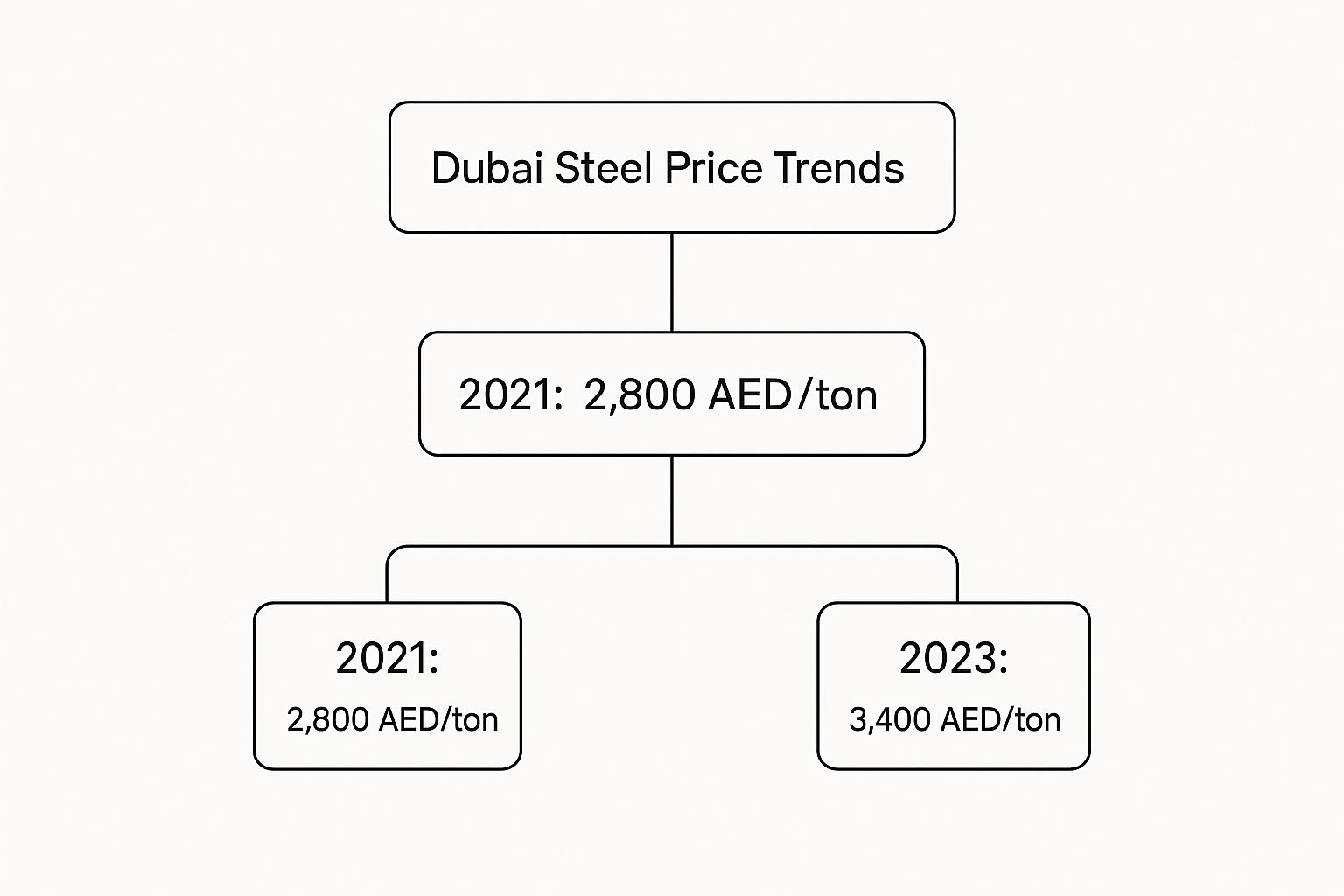
It’s a clear upward climb, year after year. This isn't just one thing; it's the combined pressure of booming demand and rising supply chain costs all pushing in the same direction.
Key Insight: The more processing, alloying, or coating a steel product needs, the higher its price will be. The trick is to always match the steel type to the specific application. Don't overspend on high-spec materials you don't actually need. Getting these details right can seriously sharpen your budget and make your entire project more cost-effective.
Partnering With Yasu Trading Co to Manage Volatility
Knowing what drives the steel price in Dubai is one half of the battle. Actually navigating those choppy waters? That's a whole different story. The constant ups and downs can feel like a high-stakes guessing game, making steel procurement a real headache for any project manager.
This is exactly why shifting from a simple supplier transaction to a genuine partnership is so critical. A real partner does more than just drop off materials. They give you the market intelligence and supply chain stability you need to protect your budget.
At Yasu Trading Co, that’s our entire philosophy. Think of us as your shield against sudden price shocks and logistical nightmares.
Our deep-rooted relationships with a diverse network of local and international mills aren’t just contacts in a phonebook—they’re your project's first line of defence. This network gives us the power to source materials reliably, even when global supply chains are stretched thin, cutting down the risk of expensive delays and unexpected price jumps.
Beyond Supply: A Resilient Partnership
We believe in giving our clients the insights they need to make smart, proactive decisions instead of just reacting to market swings. Our team is constantly analysing emerging trends to help you pinpoint the best moments to buy.
This isn't just a service; it's a completely different way to procure steel:
- Market Trend Insights: We keep a close watch on global commodity prices and local demand signals, giving you a much clearer picture of where the market is headed.
- Flexible Purchasing Options: We'll work with you to build a procurement plan that fits your project timeline and budget. You get flexibility that a standard supplier just can't offer.
- Supply Chain Resilience: Our strong supplier network means you get a steady flow of materials, which drastically reduces your project's exposure to disruptions.
By focusing on these core areas, we bring a crucial dose of stability to a notoriously unpredictable market. It's about moving from simply buying steel to strategically managing your procurement risk for the long haul.
Building a Foundation for Success
Getting a handle on price volatility is a huge part of risk management. While we live and breathe the steel market, the core principles apply to any business. If you’re curious to learn more, this a complete guide to risk management offers some great in-depth strategies.
Here at Yasu Trading Co, we turn those principles into practical, on-the-ground support. Our goal is to build a partnership that doesn’t just secure the best possible steel price in Dubai but also creates a tough procurement strategy that can weather any storm. This mindset isn't limited to steel; it applies to all the essential products we supply, as we cover in our overview of key UAE building materials.
When we work together, market volatility stops being a threat and becomes just another manageable part of your project plan. That collaborative spirit is what truly keeps your operations on schedule, on budget, and set up for success.
Smart Procurement Strategies for the Dubai Market
Getting a great price on steel in Dubai isn't just about finding the lowest quote. It’s about having a proactive, intelligent game plan. Think of it as your best defence against the market's ups and downs, keeping your project on track and on budget. Let’s walk through a playbook of best practices you can start using right away.
The first move? Nail down your project specifications. If your material lists are vague or inaccurate, you're setting yourself up for costly over-ordering or, even worse, last-minute scrambles for materials at inflated prices. A precise bill of quantities means you buy exactly what you need, cutting out waste and budget bloat from day one.
Verifying Quality and Negotiating Terms
With your requirements crystal clear, it’s time to look at your suppliers. This part is non-negotiable: you have to verify their credentials and make sure every piece of steel comes with the proper quality certifications. In Dubai's high-stakes construction world, using subpar materials is a risk you just can't take. A little diligence here protects your project’s integrity and its safety for years to come.
Smart negotiation is the other side of the coin.
- Lock in Prices: Whenever you can, negotiate contracts that shield your project from sudden price hikes.
- Plan Ahead: Getting your procurement sorted out early gives you more leverage to get better rates and guarantees your supply.
- Clarify Logistics: Talk through delivery schedules and any unique logistical challenges in the region. A simple conversation can prevent some very expensive delays down the road.
In a fast-moving market like Dubai, mastering vendor contract management is key when you're engaging with suppliers to secure steel. A solid, well-written agreement is one of your most powerful tools for heading off financial risk.
Creating a Resilient Supply Chain
A truly bulletproof strategy goes beyond a single purchase. It’s about building strong, lasting relationships with reliable suppliers like us at Yasu Trading Co. to create a more resilient supply chain. This kind of partnership gives you valuable market insights and a much-needed buffer against unexpected disruptions.
While steel is a huge part of your budget, it pays to understand the entire construction cost landscape. You can get a head start by checking out our guide on discovering https://yasutrading.com/blog/discovering-affordable-building-materials-in-dubai/. By mixing meticulous planning with smart supplier engagement, you can navigate the market like a pro and get the absolute best value for your project.
Answering Your Top Questions About Steel Prices
When you're trying to navigate the steel market, a few key questions always come up. Here are the straight answers to the queries we hear most often from project managers and procurement officers looking for the best steel price in Dubai.
What’s the Biggest Mistake Buyers Make?
Chasing the absolute lowest price per tonne while ignoring everything else. It’s a classic trap. You might find a supplier who shaves a few dirhams off the initial quote, but if they aren't reliable, you'll pay for it later. We’ve seen it happen time and time again—costly delays, materials that don't meet spec, and logistical headaches that blow the project budget right out of the water.
A slightly lower upfront cost isn't a win if it ends up costing you more in the long run.
How Far in Advance Should I Place My Order?
Good planning is your best friend here. For standard, off-the-shelf materials, giving yourself a four to six-week lead time is a smart move.
But if you need something specialised or custom-fabricated? You’ll want to double that, aiming for at least eight to twelve weeks. This buffer isn't just about avoiding last-minute panic; it protects you from supply chain hiccups and actually gives you more power at the negotiating table.
Planning is your best defence against market volatility. The further in advance you can secure your steel supply, the more effectively you can lock in a favourable price and protect your project from unexpected cost increases.
Does My Order Size Affect the Price?
Absolutely. Volume is a major factor. Larger orders almost always get a better price per tonne, and it all comes down to simple efficiency. It’s much more cost-effective for a supplier to process, handle, and ship one massive order than dozens of smaller ones.
Don't be shy about it—always ask about volume discounts when you're getting a quote.
Which Steel Is Best for Coastal Projects?
In a coastal city like Dubai, corrosion is the enemy. You have to think long-term. For any construction near the water, galvanised or stainless steel are your go-to options.
Yes, they cost more upfront than standard carbon steel. But their ability to stand up to salt and humidity saves a fortune over the life of the building by preventing rust, structural damage, and the need for expensive repairs down the line.
At Yasu Trading Co. LLC, we don't just sell steel—we provide the market knowledge and dependable supply chain you need to make the right call. For a transparent quote and some expert advice on your next project, reach out to us at https://yasutrading.com.