Steel rates in uae: A Clear Guide for Builders & Contractors
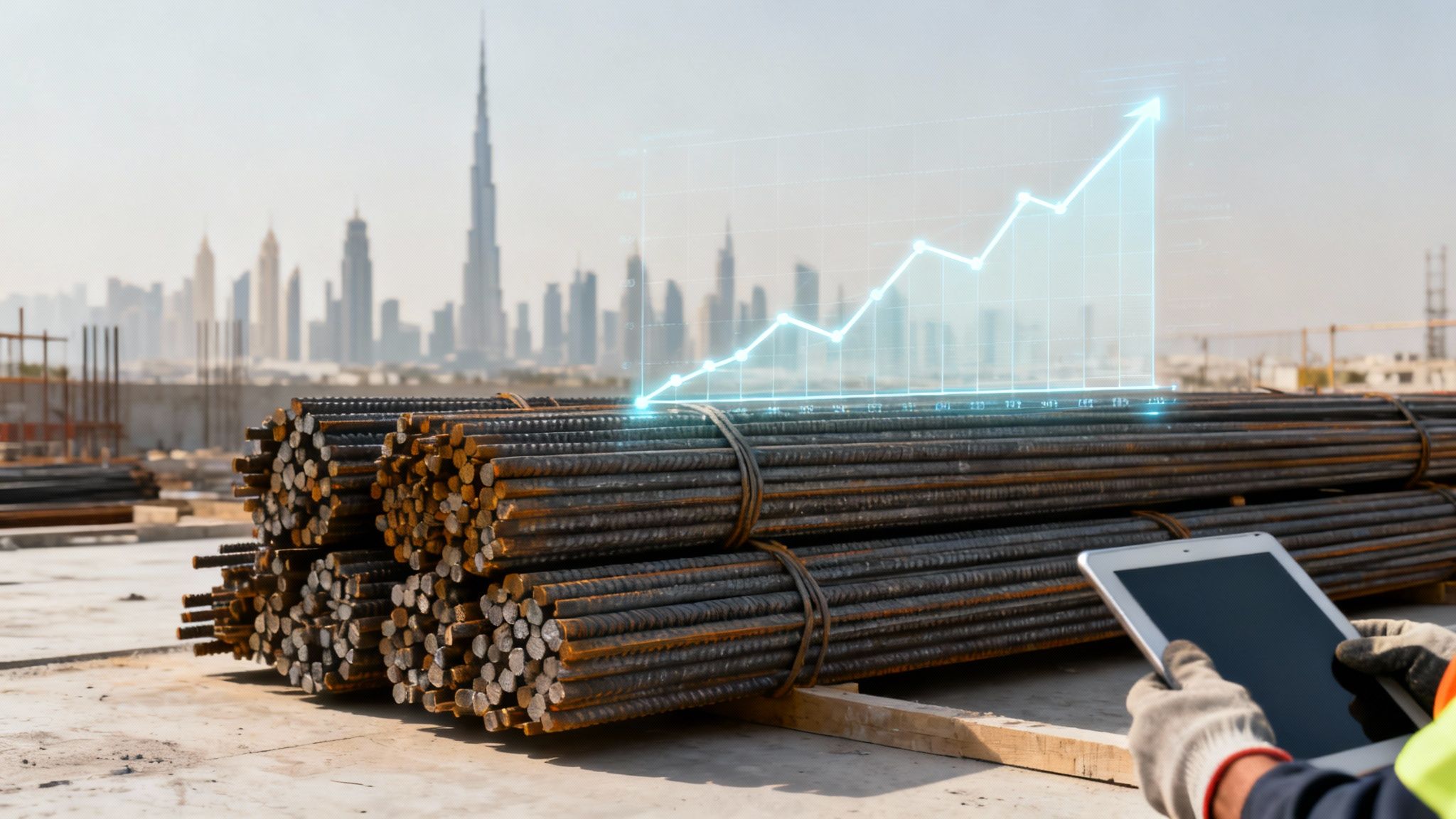
If you're in the construction game in the UAE, you know that steel prices are anything but static. They move, they shift, and keeping a close eye on them is key to a healthy project budget.
Right now, there's a noticeable gap depending on where you source your materials. Rebar from primary mills is sitting at around AED 2,442 per tonne (ex-works), while you can find it from secondary mills for closer to AED 2,230-2,240 per tonne delivered. That difference isn't just a number—it’s a strategic choice you have to make.
A Look at Current UAE Steel Market Prices
Getting a grip on the UAE steel market means looking past the headline price. It's really about understanding the story behind the numbers. The biggest factor? Your supplier. Whether you're buying freshly produced steel from a primary mill or sourcing from a secondary mill, the price, quality, and application will differ. This is a critical distinction for anyone trying to stick to a budget while meeting the stringent UAE construction standards.
For contractors and project managers, this isn't just background noise; it's essential intelligence. Take the recent market chatter, for example. In October, the UAE's main mill, Emsteel, kept its rebar price firm at AED 2,442 per tonne ex-works. But the word on the ground was that a price hike of AED 92 to 110 per tonne was coming for November orders.
That’s a potential jump of 4-5% in a single month. As a building materials distributor, this is the kind of insight that helps us guide our clients effectively. For a deeper dive into these trends, the analysis over at seaisi.org is well worth a read.
To give you a clearer picture, here’s a quick breakdown of what you can expect to see in a typical quote.
Snapshot of Current UAE Steel Rebar Prices
| Supplier Type | Product | Price (AED per tonne) | Basis |
|---|---|---|---|
| Primary Mill | Rebar (Straight) | AED 2,442 | Ex-Works |
| Secondary Mill | Rebar (Straight) | AED 2,230-2,240 | Delivered |
This table neatly summarises the current landscape, showing the price difference between mill types and how the terms of delivery can affect your final cost.
How are steel prices quoted in the UAE?
In the UAE, steel is priced in Emirati Dirhams (AED) per tonne, but the final number you pay hinges on the quoting basis. You'll often see terms like "ex-works," which means you're getting the price at the factory gate and need to handle transport yourself, while a "delivered" price includes transportation to your site. A trustworthy supplier in Dubai will always make these terms crystal clear from the start, so there are no surprises.
This chart illustrates the price points from different mills and, more importantly, hints at the market's direction.
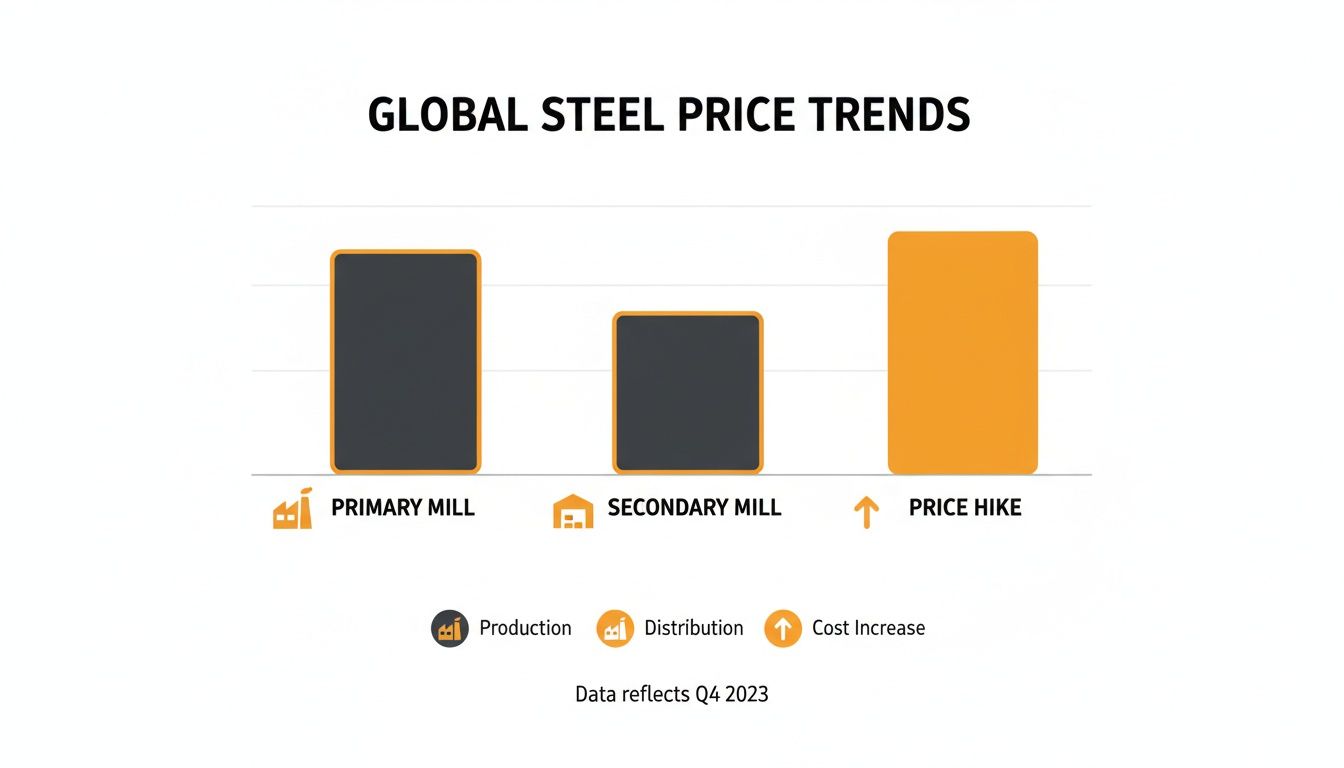
As you can see, the gap between primary and secondary mills is clear, but that looming price hike is what smart contractors are watching. When you understand these dynamics, you can make much sharper procurement decisions that balance cost, quality, and your project's timeline.
What drives steel price changes in the UAE?
Seeing the numbers on a steel quotation is one thing, but truly understanding why they move up and down is what separates a good project budget from a great one. The steel rates in UAE aren't pulled out of thin air; they’re the result of a constant push and pull of global and local forces, not unlike the international oil market. For any contractor or developer, getting a feel for these shifts can be the difference between a profitable project and a painful budget overrun.
So, what are the key factors that every procurement manager should have on their radar? It really boils down to a mix of global supply chains, international demand, and local economic policies all stirring the pot.
What is the biggest global factor affecting steel prices?
The single biggest global factor affecting steel prices is the cost of raw materials, specifically iron ore and scrap steel. Think of them as the primary ingredients for the steel industry; when their prices change, the cost of the final product inevitably follows. Any swing in their international market price has a direct knock-on effect for a building materials distributor and, eventually, for your construction site.
The logic is simple. When iron ore prices spike because of high demand or a supply issue in a major producing nation like Australia or Brazil, the cost for steel mills everywhere to fire up their furnaces goes up. In turn, the ex-works price for everything from rebar to structural steel climbs, and that's a trend we feel very strongly here in the UAE.
Pro Tip: Keep an eye on the global commodity indices for iron ore and scrap. It's like an early warning system for upcoming price changes and can help you time your large-scale purchases much more effectively.
How does local demand influence UAE steel rates?
On the ground in the UAE, nothing puts more upward pressure on steel prices than local demand from massive infrastructure and real estate projects. When the construction sector is booming with new mega-projects, the demand for steel can easily outstrip local production capacity, causing prices to rise. This intense demand is a defining characteristic of the UAE economy.
The local steel market, already valued at USD 4,701.65 million, is forecast to swell to USD 6,231.75 million by 2033, all thanks to these landmark developments. To feed this growth, the country had to import a staggering USD 6.24 billion worth of iron and steel in 2023 alone. As a key supplier in Dubai, we see it firsthand—a few big project announcements can tighten the market almost overnight. For a deeper dive, you can explore the data behind this expansion in detailed industry reports.
Of course, a few other local factors also shape the market:
- Government Policies and Tariffs: Import duties aimed at protecting local mills can make foreign steel more expensive, which influences how every domestic supplier sets their prices.
- Energy and Logistics Costs: The price of electricity to run the mills and the fuel to transport the finished steel are baked directly into every quotation you receive.
- Currency Exchange Rates: Steel is a global commodity, usually priced in US dollars. While the AED is pegged to the dollar, any fluctuation can still subtly impact the final landed cost of imported steel.
How to Read a Steel Quotation from a Dubai Supplier
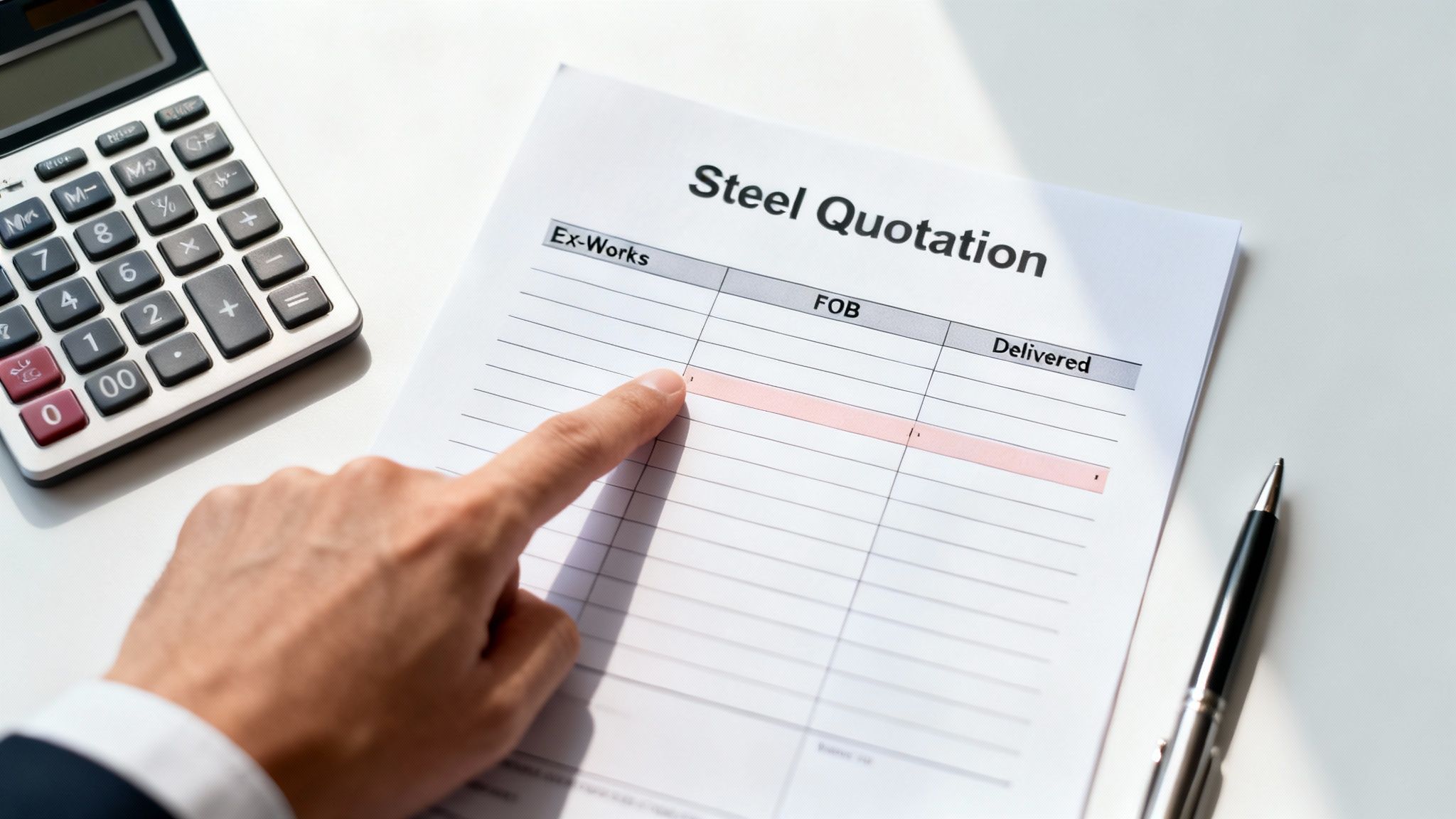
Getting a steel quotation packed with industry acronyms and line items can feel like you’re trying to decipher a foreign language. To properly compare offers and sidestep any nasty surprises on the final invoice, you need to know exactly what you’re looking at. The big number at the top is almost never the full story.
This is where getting familiar with the language of a building materials distributor really pays off. A good quote breaks everything down clearly, but it's on you to know what to look for. The real goal is to see past the headline price per tonne and understand the total cost to get that steel onto your site.
What is the difference between Ex-Works and Delivered pricing?
Ex-Works (EXW) means the price is for the steel as it sits in the supplier's warehouse, requiring you to arrange and pay for all transportation. A Delivered price includes the cost of transport right to your project location, offering a more all-inclusive figure. Getting this wrong can wreck your budget, as a cheaper EXW quote can become expensive once you add last-minute freight costs.
Any reputable supplier in Dubai will make these terms crystal clear from the start, so the steel rates in UAE you're quoted are the ones you can actually work with.
How are different steel products priced?
Not all steel is priced by weight; the unit of measure changes depending on the product, so it's crucial to compare like-for-like. This is a classic quoting mistake that can be costly if overlooked. You have to be sure you're comparing apples to apples.
Here’s a quick breakdown to help you make sense of it all:
- Per Tonne: This is the go-to for bulk materials. Think steel rebar and heavy structural I-beams, where weight is the name of the game.
- Per Metre: Products sold by length, like steel pipes, angles, and channels, are almost always priced this way.
- Per Piece: Custom or specialised items are often sold individually. This includes things like fabricated components, specific fittings, or sheets cut to a precise size.
A professional quotation will always clearly state the unit of measure right next to the price. If you don't see it, that's a red flag. It’s your cue to ask for clarification before you sign anything, ensuring your materials meet UAE construction standards.
Once you grasp these fundamentals, that confusing quote turns into a powerful tool. It gives you the confidence to ask the right questions, negotiate from a position of strength, and choose a supplier who offers not just a good price, but total transparency. This knowledge is your best defence against hidden costs and project delays.
Choosing the Right Steel for Your Construction Project
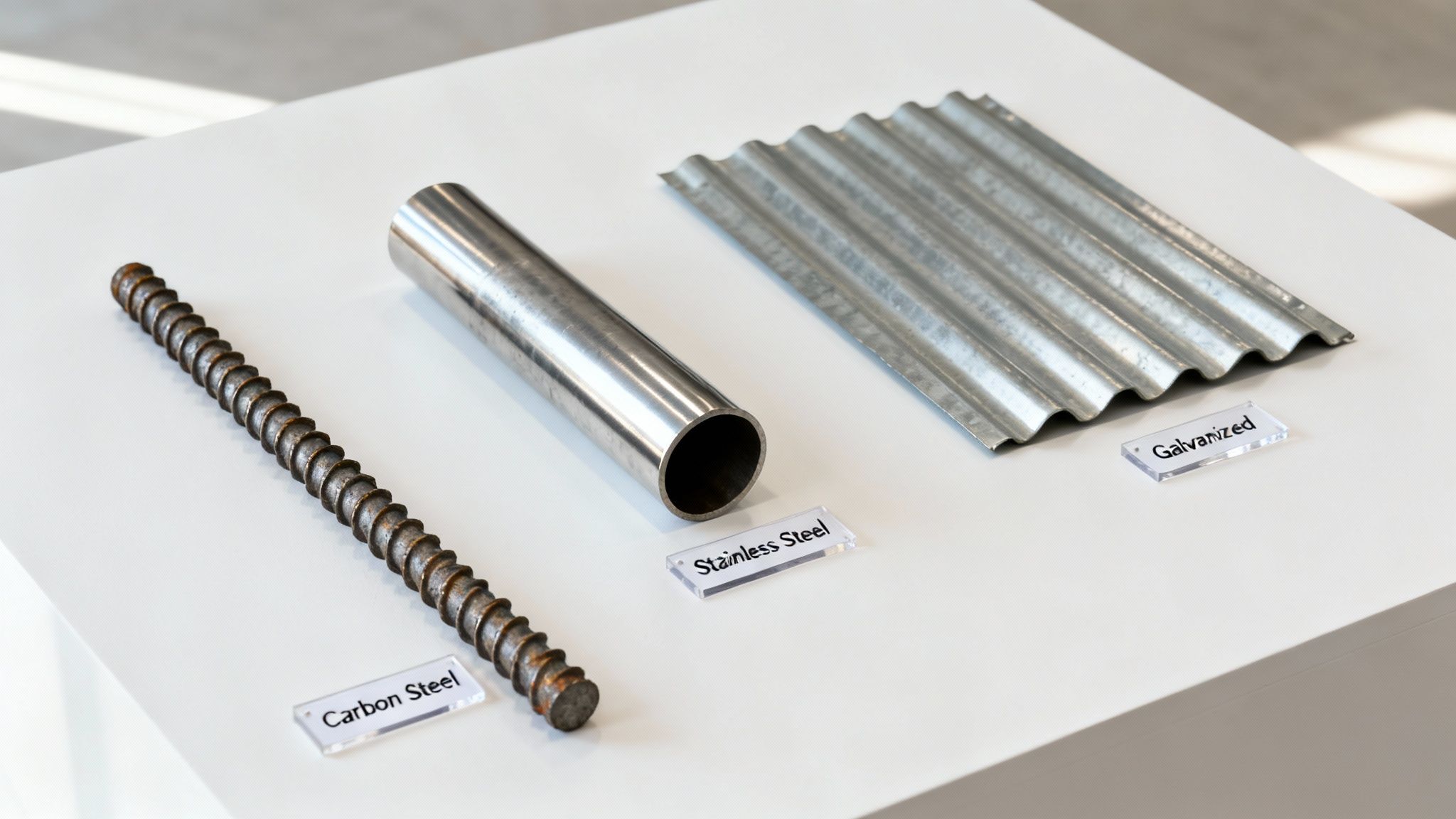
While getting a handle on the steel rates in UAE is a huge part of budgeting, it’s only half the battle. Picking the right type of steel for the job is absolutely critical for your project's safety, longevity, and even its legal compliance.
Think of it this way: grabbing the wrong material isn't just a simple mix-up. It's an expensive mistake that can lead to serious issues down the line, from structural weaknesses and project delays to failing to meet the UAE's strict building codes. The steel you choose impacts everything, from the core strength of your structure to what it will cost to maintain decades from now.
Steel isn't just one single product; it's a whole family of specialised materials, and each one has a very specific job to do. A good supplier in Dubai won’t just quote you a price. They’ll act as your partner, guiding you to the right material that meets all the necessary UAE construction standards. This is how you ensure every beam, pipe, and panel performs exactly as it should.
What is carbon steel best used for?
Carbon steel is the undisputed workhorse of the construction world, best used for structural framing and reinforcement. Its incredible strength combined with its cost-effectiveness makes it the go-to material for forming the skeleton of most buildings. You'll find it in heavy-lifters like I-beams that span large spaces and rebar that gives concrete its tensile strength.
When should you use stainless steel?
You should use stainless steel for applications where corrosion resistance and aesthetics are critical. Its ability to withstand rust makes it ideal for architectural finishes, kitchen fittings, handrails, and plumbing lines exposed to moisture or chemicals. As we detail in our guide to stainless steel sheets and their uses, its durability is vital for maintaining both appearance and hygiene in public or high-end spaces.
Think about a luxury hotel on the Dubai coastline. Local regulations would demand a specific grade of stainless steel for its hot water system. It costs more initially, yes, but its resistance to corrosion from high-temperature, treated water prevents costly leaks and ensures the system lasts for years. It's about protecting the investment and the hotel's reputation.
Why is galvanized steel used outdoors?
Galvanized steel is used outdoors because its protective zinc coating offers excellent rust protection at a more affordable price than stainless steel. At its core, it's carbon steel that’s been given a protective layer. This makes it a favourite for anything destined for the outdoors or for behind-the-scenes Mechanical, Electrical, and Plumbing (MEP) work, like roofing sheets, fencing, air ducts, and outdoor support structures.
As a leading building materials distributor, we guide contractors through these decisions daily. Our job is to help you find that perfect balance between cost, performance, and the regulations. At the end of the day, matching the right steel to the right application is the bedrock of any successful construction project.
Strategies to Lower Your Steel Procurement Costs
Getting the best value on your steel spend goes much deeper than just looking at the daily steel rates in UAE. Real cost control is about finding that sweet spot where price, quality, and delivery all align perfectly with UAE construction standards.
The key? Partnering with a reliable supplier in Dubai who acts more like a partner than just a vendor. A seasoned building materials distributor can open up opportunities for bulk savings and take the headache out of procurement.
Here are a few proven tactics:
- Bulk Purchasing: Combine your orders to negotiate for better rates, often shaving 5–8% off the per-tonne price.
- Fixed-Rate Contracts: Lock in your prices for six to twelve months to protect your budget from market swings.
- Smart Inventory Planning: Schedule your deliveries precisely to minimise on-site storage fees and handling.
The Power of Buying in Bulk
Think of it like a fleet manager getting a discount on fuel by buying in large quantities. When you place a single, substantial bulk order, you gain negotiating power.
This approach doesn't just lower the price per tonne; it can also slash handling and transport expenses by as much as 10%. Fewer purchase orders mean less administrative work and more predictable cash flow for your project.
Locking in Long-Term Rates
Fixed-rate agreements are your project's insurance policy against market volatility. It’s like locking in a great fuel price at the pump before heading out on a long road trip. You know exactly what you'll pay, regardless of what happens next.
These contracts shield you from sudden price hikes driven by international iron ore fluctuations or rising energy costs.
“Securing a contract at today’s price can save more than 4% when markets rally,” says one experienced procurement manager.
Beyond just the steel price, it pays to look at the bigger picture. Exploring broader strategies on how to reduce construction costs can bring even greater efficiency to your project's bottom line.
Fine-Tuning Your Delivery Logistics
Getting your delivery logistics right is just as important as tracking market prices.
By coordinating shipments efficiently, you can significantly cut down on fuel surcharges and prevent costly delays on site.
- Maximise Truck Capacity: Combine orders to ensure every truck is fully loaded.
- Schedule Smart: Plan for off-peak drop-offs to steer clear of traffic congestion.
- Go Direct: Use site-direct shipping to cut down lead times and double handling.
When you work with Yasu Trading Co., you get the benefit of our logistics network, which ensures same-day or next-day delivery to your site in Dubai, Abu Dhabi, Sharjah, and the Northern Emirates.
Simplify and Save: Consolidate with One Distributor
Why juggle multiple suppliers when you can get everything you need under one roof? Centralising your material procurement brings incredible clarity and control to your project.
Imagine your steel, pipes, fittings, and fasteners all arriving together in a single, coordinated delivery. Your team spends less time chasing suppliers and more time building. This consolidated approach can trim administrative overhead by up to 6% and helps you avoid the rework that comes from mixing materials with different compliance standards.
Consolidation is the anchor of a smooth procurement voyage.
Ready for a Smarter Quote?
It's time to optimise your costs without ever compromising on quality. Contact Yasu Trading Co. LLC to see how we can help.
Visit our website at Yasu Trading Co. or give our logistics desk a call for a detailed, municipality-compliant steel quote tailored to your project's needs.
By partnering with a single, trusted building materials distributor, you centralise your pricing, simplify your logistics, and get expert technical support all in one place. With over 20 years of experience supplying materials for MEP, civil, and finishing works, we know what it takes to keep your project moving.
- Municipality-compliant products to avoid costly rework and delays.
- Same-day stock availability to ensure your project stays on schedule.
Get your customised quote today and let's turn the volatile steel rates in UAE into a predictable, manageable cost for your project.
You can reach us at info@yasutrading.com or call +971 4 222 0000 for a direct conversation.
Why Your Choice of Building Materials Distributor Matters
Let’s be honest: juggling volatile steel rates, complex project specs, and tight deadlines is one of the biggest headaches in UAE construction. This is exactly where your choice of supplier can either make or break your project. A seasoned building materials distributor isn’t just a vendor; they’re your single, reliable source for everything you need, simplifying the entire procurement puzzle.
Think of the right partner as an extension of your own team. They give you consistent access to a huge inventory of materials that all meet strict UAE construction standards. They’ll also offer genuine expert advice and, most importantly, guarantee that your materials arrive on-site, on time. This turns a simple transaction into a strategic partnership focused on keeping you on schedule and on budget.
The real value of a great distributor isn’t just getting a good price on steel. It's the sheer operational efficiency they add to your project. When you consolidate all your procurement through one partner, you slash administrative busywork, untangle logistical knots, and get one single point of contact who is accountable for everything.
How does a distributor protect my budget?
A strategic supplier in Dubai protects your budget by providing stability and predictability in a volatile market. They help you lock in prices on large bulk orders, shielding you from sudden market spikes and giving you control over the constantly changing steel rates in UAE. They also ensure every item is fully municipality-approved, saving you from the nightmare of costly rework and fines.
This kind of quality assurance is non-negotiable for avoiding long delays. We’ve covered this in more detail in our guide on what to look for in a bulk building hardware supplier in Dubai.
At the end of the day, a distributor's worth is measured in the time you save, the risks you avoid, and the smoothness of your project’s execution. They take on the headaches of sourcing and logistics so your team can get back to what they do best: building.
Got Questions About UAE Steel Prices? We've Got Answers.
When you're trying to budget a construction project, the shifting world of steel prices can throw a wrench in the works. We get a lot of questions from project managers and contractors trying to make sense of it all. Here are the straight answers to the most common ones we hear.
How often do steel prices actually change in the UAE?
Steel rates in the UAE can fluctuate weekly or even daily due to global market pressures and local demand. While major mills might announce official prices on a monthly basis, the actual transactional prices in the market are far more fluid. This means a quote from last week is likely already outdated.
The takeaway? Never base your project budget on an old quote. Always get a fresh, valid quotation from your building materials distributor before you lock in your numbers. That price from last week probably isn't good anymore, so double-check the validity period on any quote to avoid nasty surprises down the line.
Is it better to import steel or just buy from a local Dubai supplier?
Buying from a local Dubai supplier is generally better than importing steel directly for most construction projects. While direct importing might seem cheaper initially, it comes with significant risks like logistical delays, customs issues, and potential quality control problems that don't meet UAE construction standards.
When you work with a trusted local supplier in Dubai, you're getting peace of mind. You know the materials are compliant with local municipality rules and meet all required standards. Plus, you get immediate stock availability and delivery you can count on. It just works.
Choosing a local partner translates to reliability. You're not just buying steel; you're securing a predictable supply chain that keeps your project moving forward without costly interruptions.
What’s the smartest way to get a quote for all my building materials?
The smartest way is to consolidate your request with a single, comprehensive building materials distributor that can supply everything you need. Instead of chasing a dozen different vendors, you send one complete list of materials—steel, pipes, fittings, and more—to one partner.
This approach simplifies everything. You get one point of contact, one consolidated delivery to your site, and one clear quote. It's a simple change that saves a huge amount of administrative time and lets your team focus on what they do best: building.
Ready for a clear, competitive, and consolidated quote for all your building materials? Let's talk. Yasu Trading Co. LLC delivers municipality-compliant products directly to your site, anywhere in the UAE.
Request your quote today at yasutrading.com and see how we can simplify your procurement.