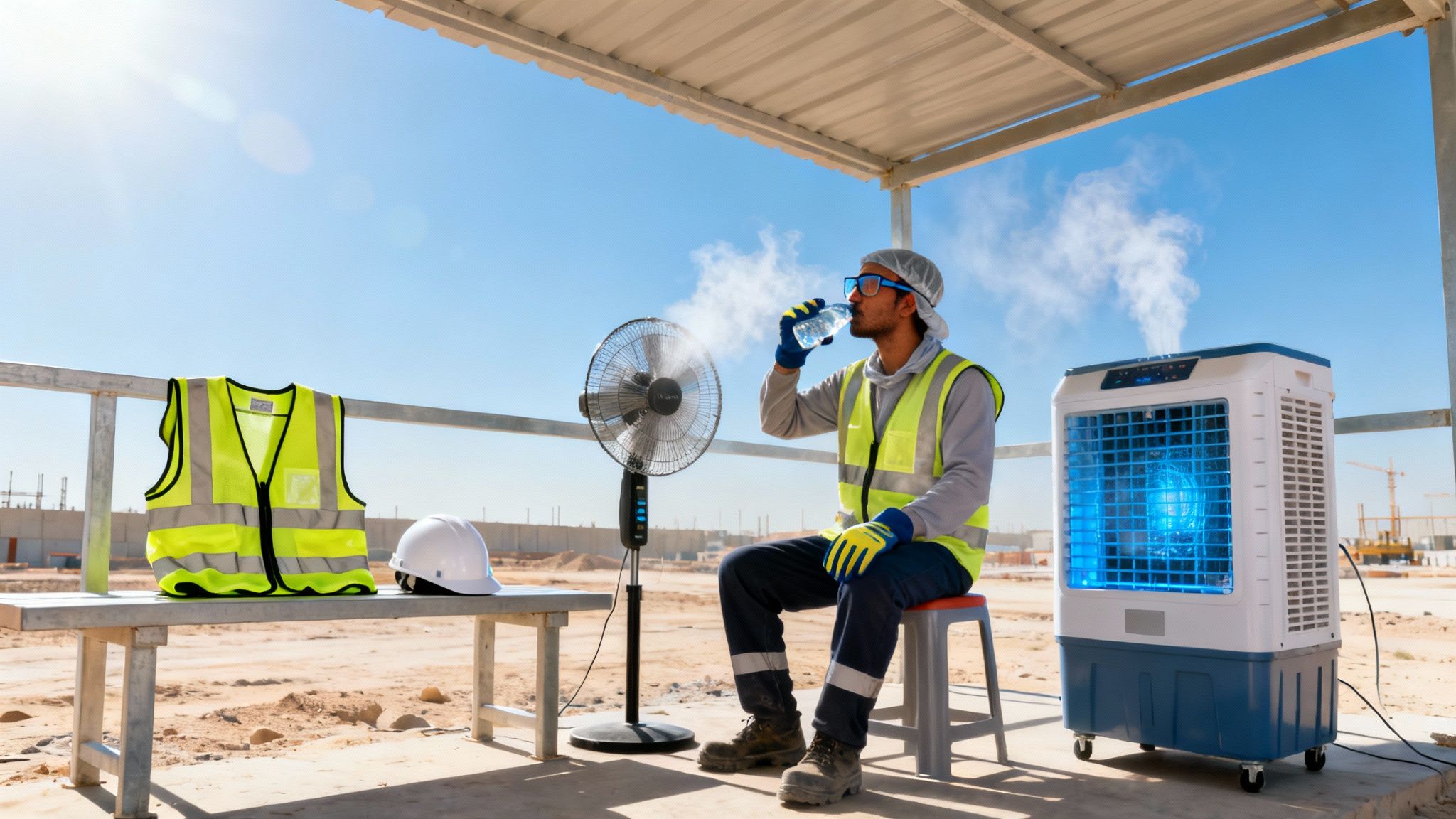
Guide: Summer Work Ban in the UAE: Essential Cooling Gear & Safety Equipment.
Navigating another scorching UAE summer? It’s that time of year again, and understanding the midday work ban isn't just about compliance—it’s about protecting your people and keeping your projects on track.
What is the UAE Summer Work Ban?
The UAE summer work ban is a non-negotiable part of the annual project calendar, established by the Ministry of Human Resources and Emiratisation (MoHRE). This regulation is a critical lifeline for anyone working outdoors in sectors like construction or facilities maintenance, mandating a break during the hottest part of the day to prevent heat-related illnesses.
At its heart, the ban is a strategic pause. It’s a direct response to the serious physical toll that extreme heat takes on the body. By mandating a break during the most dangerous part of the day, the regulation drastically cuts down on heat exhaustion, heat stroke, and dehydration. This not only safeguards your crew's health but also prevents the kind of accidents and emergencies that can bring a site to a grinding halt.
What are the key dates and times to know?
The timeline for the ban is consistent every year, running from June 15 to September 15. During these three months, all work in open areas and under direct sunlight must stop between 12:30 PM and 3:00 PM, which is when solar radiation and temperatures peak.
What are your fundamental responsibilities as an employer?
Employers must create a safe summer environment that goes beyond simply stopping work for a few hours. This includes providing shaded rest areas, cool drinking water, posting the work schedule clearly, and training teams on the signs of heat stress.
Here’s what’s on your checklist:
- Provide a Proper Rest Area: You must have a designated resting place that’s easy for workers to get to. It needs to be fully shaded, properly ventilated, and have some form of cooling.
- Keep Hydration Front and Centre: A constant supply of cool drinking water is mandatory. It's also wise to provide hydration solutions with electrolytes to help workers replenish what they lose through sweat.
- Post the Schedule Loud and Clear: The daily work schedule, showing the midday break times, must be displayed prominently. Make sure it's in a language your workers can easily read and understand.
- Train Your Team: Your crew needs to know the signs of heat stress. Educate them on how to spot the symptoms in themselves and their colleagues, and what to do in an emergency.
Following these rules is about more than just avoiding fines. It’s about building a safety culture that shows you genuinely care for your team. That trust is the bedrock of any successful project.
Now in its 21st year, this policy has become a cornerstone of occupational health in the region. The results speak for themselves, with an incredible 99% compliance rate across both government and private companies. This isn't surprising, given the penalties for non-compliance are steep: AED 5,000 per worker, with a maximum fine of AED 50,000. You can read more about the ban's success over on Gulf News.
Properly managing the work ban requires a lot of paperwork and documentation. Many firms are now looking into document automation software platforms to keep everything organised and ensure nothing gets missed. Ultimately, being proactive is the best way to meet the legal requirements of UAE construction standards and, most importantly, fulfil your duty of care.
What is the best cooling gear for outdoor workers?
The best strategy is a two-pronged attack: powerful area cooling systems paired with effective personal cooling apparel. This combination is absolutely critical for creating safe microclimates on site, giving workers a genuine space to rest, recover, and avoid the serious risks of heat-related illness.
Choosing the right equipment isn't just about ticking a compliance box; it's a strategic investment in your people's safety and your project's productivity. Think of it as building an oasis of relief in the middle of a desert of heat. The aim is to deliver immediate and effective cooling that your team can count on during their mandatory breaks and throughout the rest of their demanding shifts.
To put the core rule into perspective, this decision tree breaks down the primary action you need to take during the summer work ban.
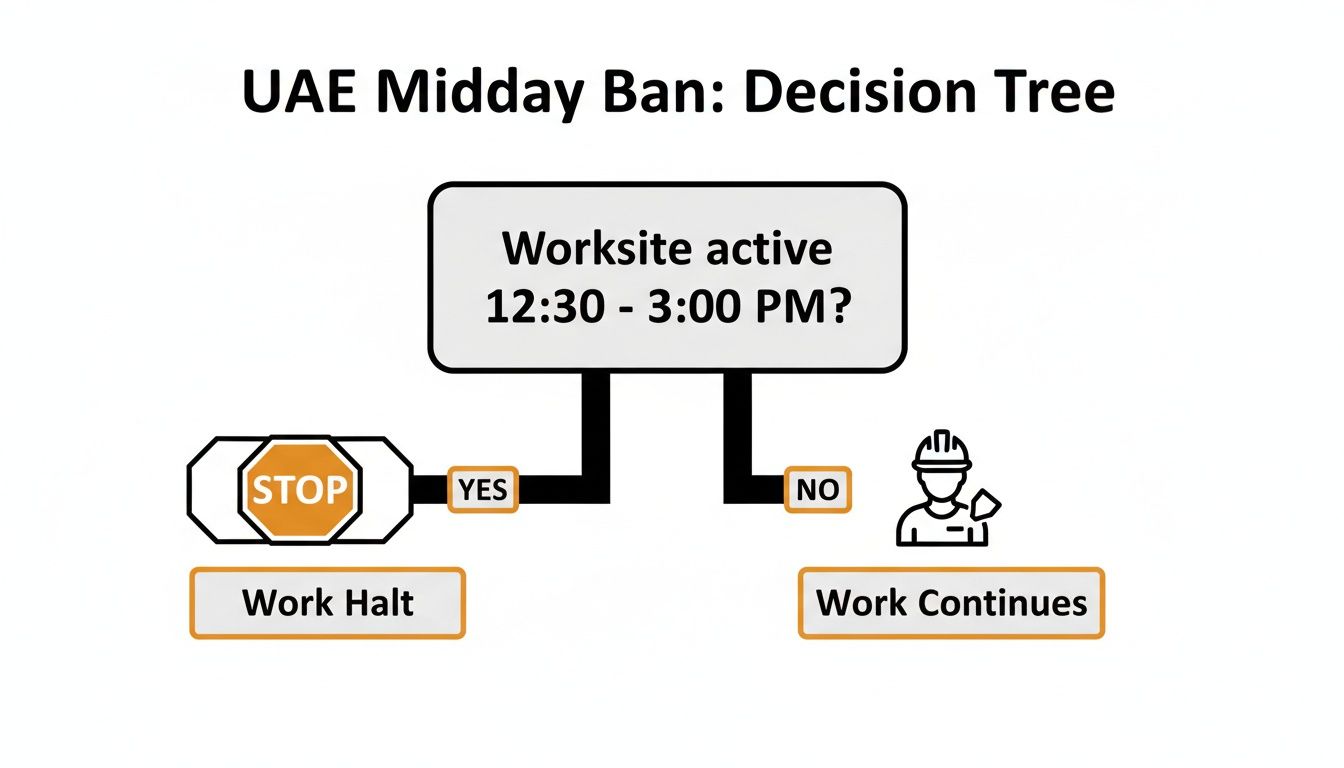
The graphic makes the regulation simple: if your site is active in direct sunlight between 12:30 PM and 3:00 PM, operations must stop. This underscores just how essential those well-equipped rest areas are.
What are the most effective area cooling systems?
For outdoor worksites, industrial-grade evaporative coolers and high-pressure misting fans are the most effective area cooling systems. These machines are engineered to bring down the ambient temperature in semi-enclosed spaces like rest tents or shaded zones, making them worlds more comfortable.
Evaporative coolers, which you might know as swamp coolers, work by pulling hot, dry air through water-soaked pads. As the water evaporates, it absorbs a massive amount of heat and releases much cooler, humidified air—a process that's incredibly effective in the UAE’s arid climate.
High-pressure misting fans, on the other hand, atomise water into an ultra-fine mist that flash-evaporates, cooling the air around it without leaving surfaces damp. They're perfect for more open-air rest zones where traditional air conditioning just isn't an option.
When you’re sourcing a unit from a building materials distributor, keep an eye on these specs:
- Cooling Capacity: Look for the CFM (Cubic Feet per Minute) rating. You need to match the unit's power to the size of your rest area. A good rule of thumb is one large industrial cooler for every 25-30 square metres.
- Water Tank Size: A bigger tank means fewer interruptions for refilling, which is a huge deal for efficiency on a busy site.
- Portability: Make sure it has sturdy wheels and a durable frame. You’ll need to move these units around as the project layout changes.
Which personal cooling gear offers the best protection?
Advanced cooling vests, moisture-wicking neck gaiters, and innovative hard hat shades offer the best personal protection. This is gear that provides active cooling directly to the body, helping to regulate core temperature when it matters most.
Cooling vests, for instance, come in different types, from simple evaporative models you soak in water to advanced phase-change vests that use frozen inserts. An evaporative vest alone can lower a person's skin temperature by several degrees for hours on end.
Similarly, a cooling neck gaiter soaked in cold water offers instant relief by targeting a key heat-exchange point on the body. And don’t forget hard hat shades and neck shields—they are vital for blocking direct sun from hitting the neck and face, an often-overlooked area where a lot of heat gets absorbed.
Outfitting your team with the right personal cooling gear is a direct investment in their well-being. It demonstrates a commitment to safety that goes beyond basic compliance and fosters a more resilient, focused workforce.
To help you get started, this quick-reference checklist compares different cooling gear options and their best uses on site.
Essential Cooling Gear Checklist for UAE Worksites
| Cooling Gear Type | Primary Function | Best For | Key Specification to Check |
|---|---|---|---|
| Evaporative Coolers | Lowers ambient temperature in a large area by evaporating water. | Large, shaded rest tents or semi-enclosed workshops. | Cooling capacity (CFM), water tank size, portability features. |
| Misting Fans | Creates a fine mist that flash-evaporates to cool open-air spaces. | Open-air break areas, outdoor fabrication zones. | Misting pressure (PSI), water consumption rate, fan coverage area. |
| Cooling Vests | Directly cools the wearer's core body temperature. | Workers in high-exertion roles or with prolonged sun exposure. | Cooling method (evaporative, phase-change), duration of cooling effect. |
| Neck Gaiters/Towels | Provides immediate cooling to the neck and head. | All outdoor workers for quick, accessible relief. | Material (moisture-wicking), reusability, cooling duration. |
| Hard Hat Shades | Blocks direct solar radiation from the face and neck. | Anyone wearing a hard hat, especially in exposed areas. | UV protection factor (UPF), compatibility with standard hard hats. |
Having this mix of area and personal cooling gear on hand ensures you have a comprehensive system in place, ready to protect every worker in every situation.
The UAE's midday ban, now running for 21 consecutive years, has achieved a remarkable 99.9% compliance rate recently. This high level of adherence shows just how seriously employers are taking the provision of essential cooling gear & safety equipment. MoHRE's policies explicitly require shaded, ventilated rest areas stocked with items like cooling towels, battery-powered fans, and an ample supply of chilled water—all of which a comprehensive supplier in Dubai can provide. Firms such as Yasu Trading Co. LLC specialise in distributing these items B2B across the Emirates, helping companies meet both municipality and UAE construction standards. For a deeper dive into the latest compliance figures, you can learn more about MoHRE's findings on Khaleej Times.
This strong commitment to the summer work ban in the UAE proves it's not just about having rules, but about having the right equipment on hand to follow them effectively.
Which safety equipment is mandatory during summer?
Standard personal protective equipment (PPE) remains mandatory but requires an upgrade to handle the unique challenges of intense heat and sun exposure. This summer-specific gear is the first line of defence on any worksite and is a non-negotiable part of meeting UAE construction standards.
Sourcing the right gear is more than a simple procurement task—it's a core component of your duty of care. Every single item, from the helmet on a worker's head to the gloves on their hands, must be selected with punishing summer conditions in mind. The best approach is to partner with a trusted safety equipment supplier in Dubai who can provide gear that is not only certified but also proven to perform in our region's harsh climate.
What are the key features of summer-specific PPE?
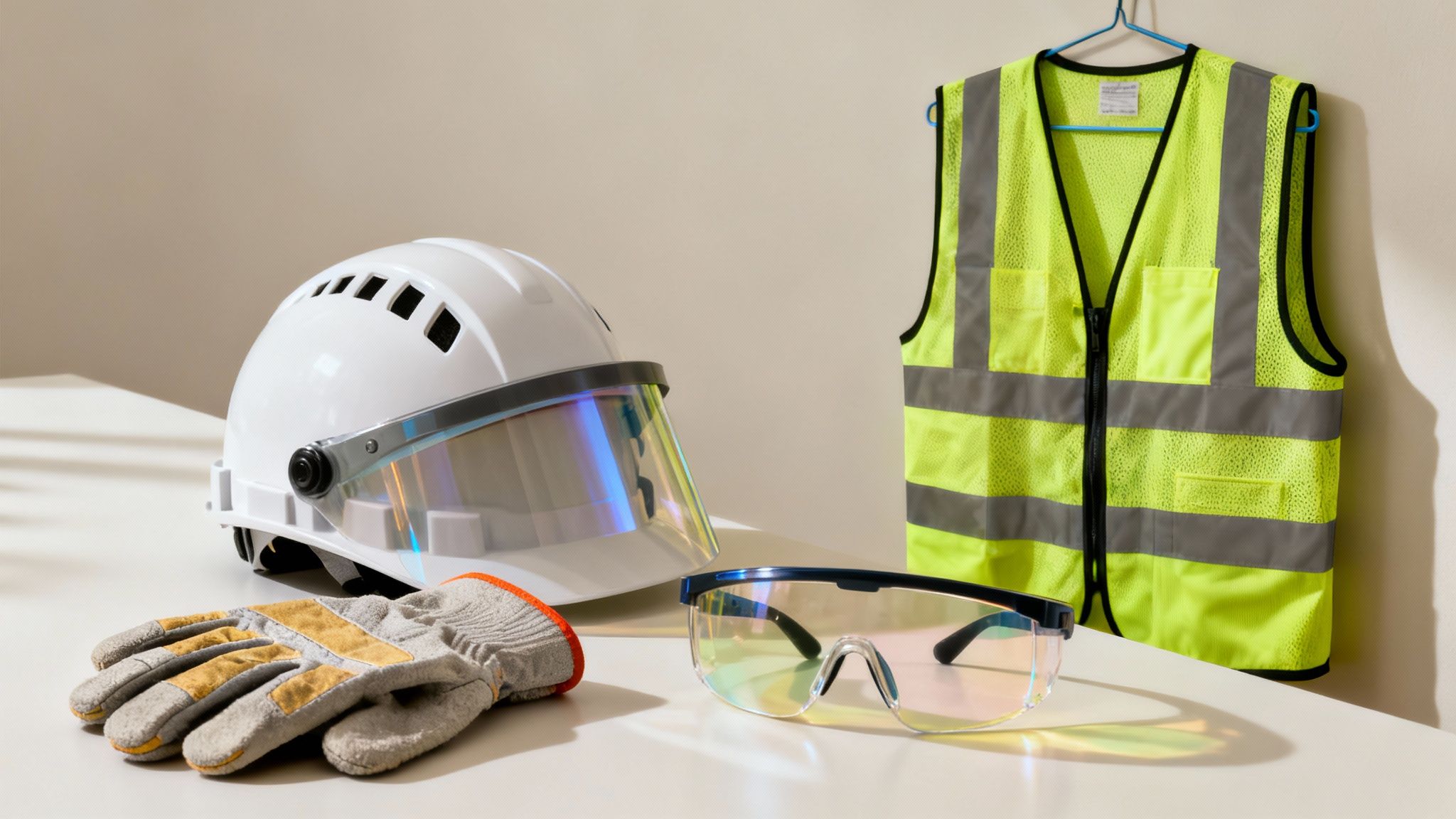
Summer-ready PPE must provide standard protection against physical hazards while also actively helping to mitigate heat. Look for ventilated hard hats, breathable high-visibility clothing, heat-resistant gloves, and safety glasses with an anti-fog coating.
For example, a ventilated hard hat isn't a gimmick. It allows hot air to escape, dramatically reducing heat build-up around the head compared to a standard solid-shell model. In the same way, moisture-wicking fabrics used in safety vests actively pull sweat away from the skin, which helps the body's natural cooling process. These seemingly small details make a world of difference in preventing heat stress on site.
How do you verify equipment is compliant and effective?
You can verify equipment compliance and effectiveness by checking for internationally recognised safety certifications like ANSI/ISEA or EN (European Norms). These codes are your assurance that the equipment meets strict performance standards and has been independently tested for safety and reliability.
When you're buying PPE, any authorised building materials distributor should be able to provide you with the documentation to prove these certifications for every item. This is your guarantee that the equipment will actually perform as promised when it matters most, providing real protection for your workers.
A safety certificate is more than a piece of paper; it’s a promise that the equipment your team relies on has been proven to withstand the specific hazards it was designed to protect against. Never compromise on certified gear.
What is the most important summer safety gear?
While all PPE is vital, high-visibility clothing is arguably one of the most critical items for summer. The intense sun glare can create challenging visual conditions, and a breathable hi-vis vest ensures workers remain clearly seen by heavy equipment operators.
To get a better sense of its role, you can find out more in our detailed guide on why high-visibility vests are mandatory on UAE construction sites. This gear is a fundamental part of site safety, especially when vision is impaired by dust or bright sunlight.
Here’s a quick breakdown of the must-have summer safety gear and what you should be looking for:
- Ventilated Hard Hats: Prioritise models that have adjustable vents and come with built-in sweatbands to help manage both heat and perspiration. Make sure they meet EN 397 or ANSI Z89.1 standards.
- Anti-Fog Safety Glasses: Choose eyewear that offers both UV protection and a robust anti-fog coating. Fogging is a constant problem when moving between hot and air-conditioned zones, and clear vision is essential.
- Breathable High-Visibility Vests: Opt for vests made from lightweight mesh or moisture-wicking polyester. These materials boost airflow and are crucial for helping to keep a worker's core body temperature down.
- Heat-Resistant Work Gloves: You'll want gloves that provide solid thermal protection without making it impossible to work. Materials like leather or certain specialised synthetics are perfect for handling hot tools and surfaces.
Of course, beyond the immediate needs of cooling and visibility, your overall site safety plan must remain robust. For project managers dealing with multiple risk factors, it’s always wise to consult broader resources, such as guides on working at height safety equipment, to maintain a complete safety framework. This holistic view ensures that while you're focused on summer-specific dangers, other critical hazards aren't accidentally overlooked.
How can you create compliant rest and hydration stations?
Creating a compliant rest station involves setting up an accessible, fully-equipped recovery zone where your team can cool down properly. This is a core requirement under MoHRE regulations, designed to actively combat heat stress by providing a real escape from the sun.
Setting up these stations is a basic tenet of upholding UAE construction standards. The whole point is to create a space that offers genuine relief. That means getting the structure, ventilation, space, and supplies just right.
What are the structural requirements for a rest station?
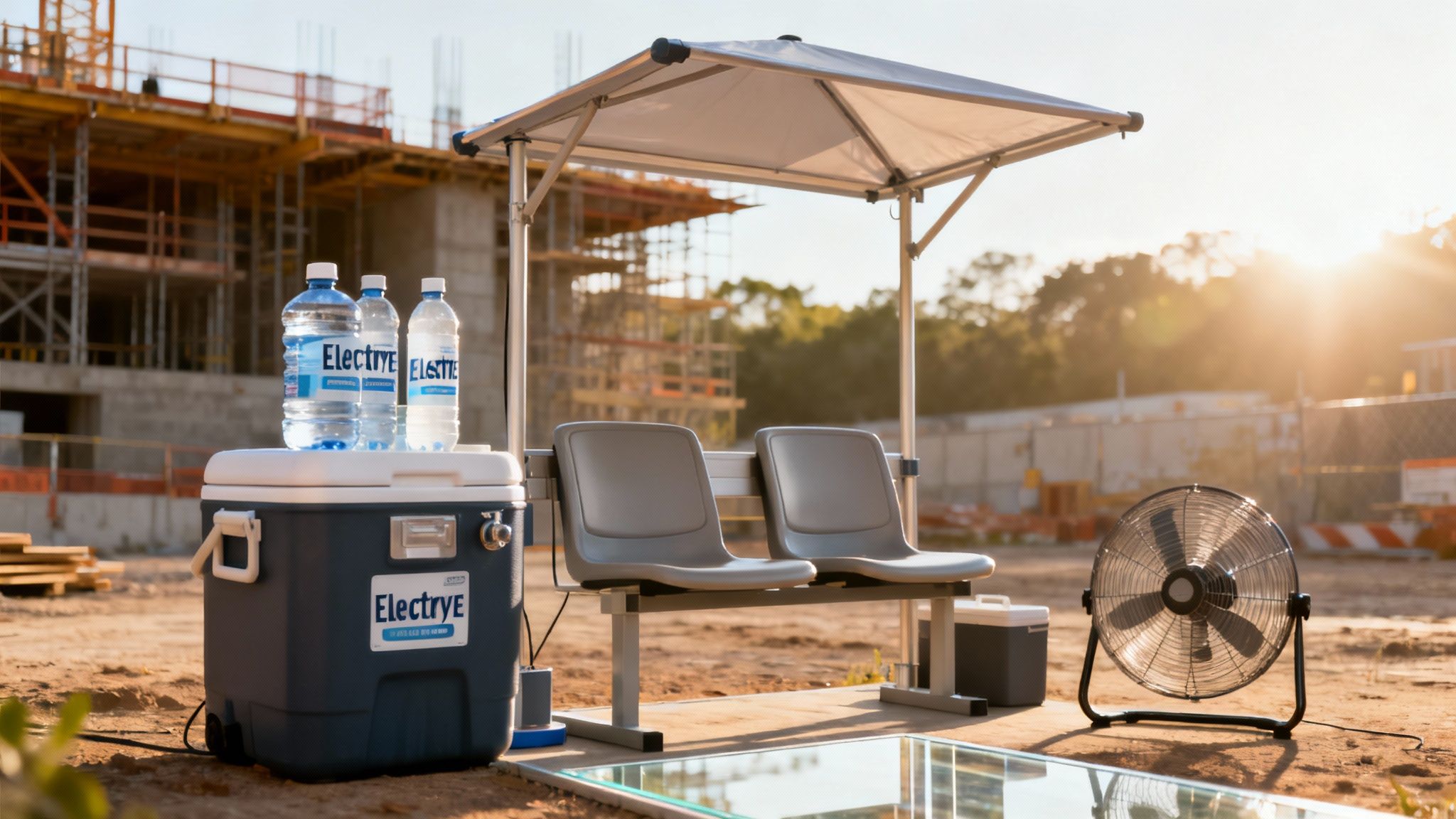
A rest station must be completely shielded from direct sunlight and have good ventilation. It must also be large enough for everyone on break to sit comfortably without being cramped, allowing for free air movement.
This could be a solid, well-secured tent, a temporary cabin, or even a designated indoor room. To really drop the temperature, place industrial fans or portable evaporative coolers in strategic spots. These are essential for circulating air and making the space feel significantly cooler. Keep the floor clean and clear of trip hazards to maintain a safe, hygienic area where your crew can properly rest during their breaks.
How much water should be provided per worker?
You should plan for at least 3-4 litres of cool, clean drinking water per person per shift. On exceptionally hot days or for physically demanding jobs, you will likely need to provide more.
But just having water available isn't enough; you have to actively encourage your team to drink it. It's also a smart move to stock electrolyte replacement drinks or hydration powders. These are brilliant for restoring the essential salts and minerals lost through sweat—something water alone can't do. This simple step goes a long way in preventing serious issues like dehydration and heat exhaustion.
"A well-stocked hydration station is the simplest yet most effective tool in preventing heat-related incidents. It’s not just about compliance; it's about proactively managing worker health in extreme conditions."
What supplies should a rest station include?
A compliant station needs to be stocked with seating, cooling provisions, hydration supplies, and a first-aid kit equipped for heat-related illnesses. It should also have emergency information posted clearly in multiple languages.
Essential Rest Station Checklist:
- Sufficient Seating: You need enough chairs or benches for everyone on break. Nobody should be left standing or sitting on the floor.
- Cooling Provisions: This means industrial fans, misting systems, or portable air coolers to bring down the ambient temperature.
- Hydration Supplies: Keep large water coolers filled, with plenty of disposable cups and electrolyte supplements on hand.
- First-Aid Kits: Your kit must be equipped for heat-related illnesses. That includes instant cold packs, oral rehydration salts, and a thermometer.
- Emergency Information: Post clear contact details for emergency services and on-site first aiders. Make sure this information is in multiple languages.
Getting all these items together can be a headache, but you can make it easier by working with a single building materials distributor. A reliable supplier in Dubai can deliver everything from the plumbing fittings for water coolers and the electricals for fans to the first-aid supplies themselves. This approach simplifies your procurement, ensuring all your essential cooling gear & safety equipment meets the right standards and arrives on time, making compliance with the summer work ban in the UAE far more straightforward.
Why is it important to implement smart work-rest schedules and training?
It is important because the human element—how your crew works, rests, and responds to heat—is just as crucial as the gear they wear. Even with the best essential cooling gear & safety equipment, real on-site safety comes down to smart operational practices and a team that knows exactly what to do.
This is where intelligent work-rest schedules come into play. Going beyond the single, mandatory midday break can make a world of difference. Think of it like interval training for an athlete; a series of shorter, more frequent breaks can be far more effective at stopping heat from building up in the body than one long stop.
This approach helps workers keep their core temperature in check throughout the day, which massively reduces the cumulative strain of heat exposure. It's a proactive strategy that not only keeps your team safer but also helps maintain productivity by preventing the deep fatigue that comes with overheating.
How can you design an effective work-rest schedule?
An effective schedule must be dynamic, taking into account work intensity, direct sun exposure, and the daily heat index. The goal is to balance job completion with proper physiological recovery by scheduling demanding tasks for cooler parts of the day.
First things first, identify the most physically demanding jobs on your site. These are the tasks you absolutely must schedule for the coolest parts of the day—think early morning or later in the afternoon. For jobs with moderate intensity, a cycle of 50 minutes of work followed by a 10-minute break in a shaded, cooled area can be incredibly effective.
The best schedules are living documents. They should be adjusted daily based on the weather forecast and, just as importantly, feedback from the crew on the ground. A rigid plan that ignores the human factor is a plan destined to fail.
Weaving these schedules into your daily toolbox talks and site plans is a critical step. A detailed plan for managing heat stress is a core part of any solid health and safety framework. If you need a hand structuring this, you can get started with our detailed guide to a construction risk assessment template, which will help you systematically pinpoint and control heat-related hazards.
What should worker training cover?
Worker training must be practical and clear, empowering everyone to be a safety champion. It should focus on recognizing heat stress symptoms, proper hydration habits, emergency protocols, and acclimatisation rules for new workers.
Crucially, the training has to equip them to recognise the early warning signs of heat stress—not just in themselves, but in their colleagues too.
Core Training Modules:
- Spotting the Signs: Train your team to immediately identify symptoms like heavy sweating, dizziness, headaches, nausea, and confusion. Make sure they understand the critical difference between heat exhaustion (the warning sign) and heatstroke (a life-threatening medical emergency).
- Hydration Habits: This is more than just telling people to "drink more water." Explain why it's vital to hydrate before they even feel thirsty and how electrolytes help their bodies function properly under strain.
- Emergency Protocols: Every single person must know the exact steps to follow when someone shows signs of severe heat stress. Who do they call? Where is the first-aid station? How do they provide immediate cooling assistance while waiting for medics to arrive?
- Acclimatisation Rules: New workers, or those returning after a long break, are at the highest risk. Your training must cover the acclimatisation protocol, which means gradually increasing their workload and heat exposure over their first 7-14 days on the job.
By investing in smart scheduling and thorough training, you're doing more than just complying with the summer work ban in the UAE. You're transforming a legal requirement into a powerful strategy for protecting your people and ensuring your project stays on track.
Answering Your Questions About the UAE Work Ban
Even when you know the rules, real-world questions always pop up. Let's break down some of the most common queries we hear from contractors and facility managers about handling the summer work ban and keeping your team safe with the right cooling and safety gear.
Are some jobs exempt from the midday ban?
Yes, some jobs are exempt, but only in specific situations where work is technically impossible to pause. This includes tasks like pouring concrete, laying fresh asphalt, or carrying out emergency repairs on essential utilities.
However, getting an exemption isn't a free pass. The requirements for these sites are even tougher. You're expected to provide an abundance of cold drinking water, electrolyte supplements, and a fully-stocked first-aid kit. You'll also need to set up powerful cooling facilities, like industrial fans or portable coolers, in shaded rest areas. Crucially, a detailed schedule of working hours and rest times must be clearly displayed in a language every worker understands.
What should you do if you see a company breaking the rules?
If you see a worksite operating in violation of the midday break, you can report it directly to the Ministry of Human Resources and Emiratisation (MoHRE). The easiest way is to call the MoHRE call centre at 600590000 or use the official MoHRE smart app.
To make sure inspectors can act quickly, be ready to provide the company's name and the precise location of the worksite. This public vigilance is a huge part of why the ban is so effective.
What is the real difference between heat exhaustion and heatstroke?
The real difference is that heat exhaustion is the body's warning signal, while heatstroke is a life-threatening medical emergency. Heat exhaustion involves heavy sweating and weakness, whereas heatstroke involves a dangerously high body temperature, hot/red skin, and potential loss of consciousness.
Look for symptoms like heavy sweating, weakness, clammy skin, and a pulse that’s fast but weak. If you see this, get the person to a cool place immediately, apply cool cloths, and have them sip water slowly. Heat stroke, on the other hand, is a full-blown medical emergency. This is when the body’s internal thermostat fails completely. The person’s body temperature will be dangerously high (above 40°C), their skin will feel hot, red, and often dry, and their pulse will be rapid and strong. They may even lose consciousness.
If you suspect heat stroke, call for an ambulance immediately. While you wait, do everything you can to cool the person down. This is a life-threatening situation that demands urgent medical help.
Making sure your supervisors and workers understand this distinction is a non-negotiable part of your on-site training for the summer work ban in the UAE.
Can you really get all your compliant gear from one supplier in Dubai?
Yes, you can, and it is the smartest way to ensure compliance and streamline procurement. Working with a single, reliable building materials distributor takes the headache out of the process, allowing you to get everything from PPE to cooling systems from one trusted source.
A good one-stop supplier in Dubai will have it all: municipality-approved PPE and safety gear, industrial fans for your rest stations, plumbing fixtures to set up hydration points, and all the electricals to power them. When you consolidate your buying with a trusted partner, you know everything meets UAE construction standards, and you can often manage your budget better too. It’s simply the most efficient path to getting the essential cooling gear & safety equipment you need to keep your people safe and your project on track.
Don’t get caught unprepared this summer. Yasu Trading Co. LLC is your single-source partner for all municipality-compliant cooling gear, safety equipment, and construction materials. Let us help streamline your procurement. See how at https://yasutrading.com.