Your Guide to uPVC Pipes Dubai
When you start looking for uPVC pipes in Dubai, you quickly realise they're the backbone of plumbing, drainage, and irrigation systems all across the city. For contractors and developers here, their incredible durability and smart pricing make them a clear winner.
Why uPVC Pipes Are Essential for Dubai Construction
Picture the intricate network that keeps a powerhouse city like Dubai ticking—it’s like a massive circulatory system. Tucked away behind walls and buried underground, the unsung hero of this entire operation is the uPVC pipe. It does its job silently, making sure clean water reaches the top of the tallest skyscrapers and wastewater is whisked away without a hitch.
Unlike old-school materials such as metal or concrete, uPVC (unplasticized polyvinyl chloride) is perfectly matched to the region's tough climate. It naturally resists corrosion, which is a huge problem in coastal areas where the soil and air are salty. Because it doesn’t react with its environment, the material won’t rust or break down, ensuring a long, reliable life and keeping the water supply pure.
Built for the Environment
Dubai’s scorching heat and relentless sun can wear down most building materials, but uPVC is engineered to handle these extremes. Its chemical makeup gives it fantastic resistance to both chemical damage and wild temperature swings, so the pipes won't get brittle or lose their shape. This ruggedness is precisely why it’s the go-to choice for everything from residential towers to massive industrial complexes. Picking the right materials is a big deal, a topic we dive into in our guide on choosing the right construction materials for Dubai’s climate.
This kind of reliability has cemented its place in the market. The demand for uPVC pipes in Dubai isn't just steady—it's booming.
The UAE PVC pipes market was valued at around USD 280 million in 2024 and is expected to climb to USD 384 million by 2033. This surge is directly linked to the UAE's non-stop urban growth and huge investments in infrastructure. You can get more details on these trends from IMARC Group's detailed analysis.
Key Advantages for Modern Projects
The benefits go way beyond just being tough. Engineers and developers love uPVC for a few very practical reasons that directly affect a project's budget and schedule:
- Lightweight and Easy to Handle: uPVC is a featherweight compared to metal pipes. This cuts down on transport costs and makes installation on-site much faster and safer for the crew.
- Cost-Effective Solution: The material itself is more affordable, and when you add in the lower labour costs for installation, the savings really stack up, especially on large-scale projects.
- Low Maintenance: Once they're in, uPVC systems are pretty much a "set it and forget it" solution. Their slick inner surface stops scale and clogs from building up, keeping everything flowing smoothly for decades.
Navigating uPVC Pipe Standards and Sizes in the UAE
Choosing the right uPVC pipe isn't just a technical box-ticking exercise. It's a critical decision that directly impacts the safety, efficiency, and longevity of your entire project. For anyone sourcing uPVC pipes in Dubai, getting a firm grasp on the different standards and sizes is the first—and most important—step.
Think of these standards not as a confusing alphabet soup of codes, but as a universal language. This language guarantees that a pipe made in one factory is compatible and performs just as well as one from another, as long as they meet the same spec.
You'll commonly come across international standards like the British Standards (BS), European Norms (EN), and the American Society for Testing and Materials (ASTM). Top-tier suppliers in the UAE stick to these religiously. That compliance is your proof that the pipe has been through the wringer, passing tough tests for durability and performance.
Understanding Pressure and Diameter
When you're specifying a uPVC pipe, two numbers matter most: its diameter and its pressure rating. The pressure rating is usually referred to as its PN class.
The diameter is simple enough—it’s the size of the pipe. The PN class, however, tells you a much more important story: it's the maximum internal pressure (in bars) that the pipe can handle safely at a temperature of 20°C.
For instance, a low-pressure PN6 pipe is often the perfect fit for a simple gravity-fed drainage system in a residential villa. But if you're working on a high-pressure water supply line for a skyscraper, you'll need something far more robust, like a PN16, to manage that intense force.
Matching the PN class to the job is absolutely non-negotiable. Using an underrated pipe for a high-pressure application is a ticking time bomb—it's not a matter of if it will fail, but when. Getting this right ensures your system runs smoothly for its entire service life.
This image below really drives home the long-term value uPVC brings to the table, especially when you compare its lifespan and cost-effectiveness against older, traditional materials.
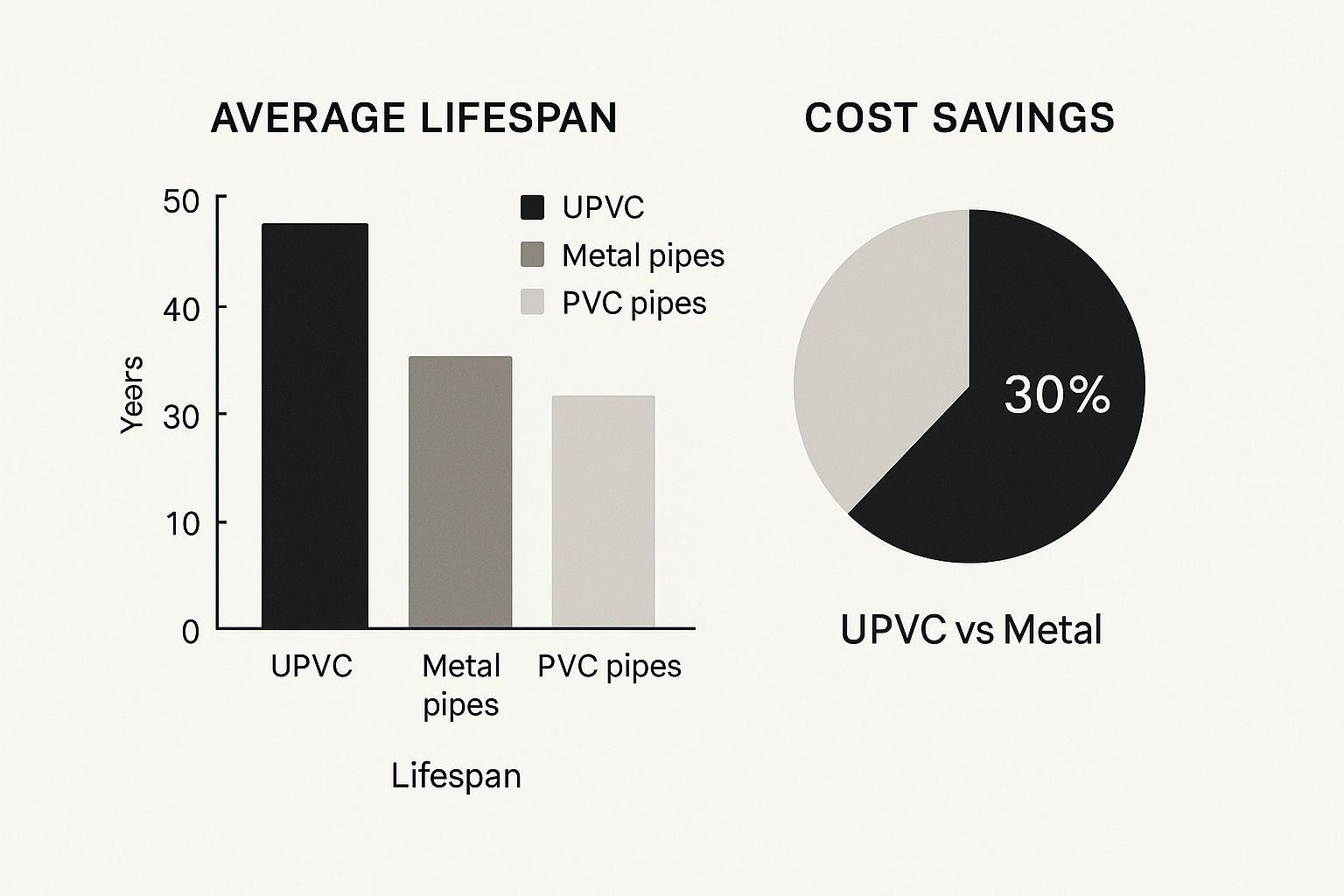
The numbers don't lie. uPVC pipes consistently outlast their metal counterparts and offer significant savings over the long haul, making them a smart, forward-thinking investment.
Matching uPVC Pipe Specifications to Dubai Projects
To make things even clearer, here’s a quick-reference table that connects common construction scenarios in Dubai with the appropriate uPVC pipe specifications. Think of it as a starting point for your project planning.
| Application Area | Common Diameter Range (mm) | Recommended Pressure Class (PN) | Key Considerations |
|---|---|---|---|
| Residential Villa Plumbing | 20mm - 110mm | PN10 - PN16 | Potable water lines need higher pressure ratings; drainage can use lower. |
| High-Rise Building Risers | 75mm - 250mm | PN16 - PN20 | Must withstand high static pressure from the building's height. |
| Commercial Landscaping/Irrigation | 50mm - 160mm | PN6 - PN10 | Focus on flow rate and UV resistance for exposed pipes. |
| Municipal Sewer & Drainage | 200mm - 630mm | PN4 - PN6 | Larger diameters are needed for volume; gravity flow means low pressure. |
| Industrial Process Piping | 50mm - 315mm | Varies (PN10+) | Chemical resistance and temperature tolerance are as critical as pressure. |
This table should help you quickly narrow down your options based on the specific demands of your site, ensuring you select a pipe that’s not just adequate, but optimal.
Sizing Conventions Explained
It's also essential to be comfortable with the different sizing conventions. Here in the UAE, metric measurements (millimetres) are the go-to standard. However, you'll still find imperial sizes (inches) pop up, especially when dealing with older systems or certain international fittings.
This is exactly why having a solid reference guide is a lifesaver. For an in-depth look at every dimension, you can explore this detailed uPVC pipe size chart. It's the best way to double-check that you're ordering the precise size your project demands.
Ultimately, making the right call boils down to answering three simple questions:
- What will the pipe be used for? (Is it for drinking water, drainage, or irrigation?)
- What flow rate do you need? (This will guide your choice of diameter.)
- What’s the maximum pressure in the system? (This will determine the required PN class.)
With these answers in hand, you can confidently select the right uPVC pipes in Dubai. You'll end up with a system that not only meets your project's technical specs and international quality standards but is also built to last for decades.
Real-World Applications for uPVC Pipes in Dubai
Technical specs are one thing, but to truly understand the value of uPVC pipes in Dubai, you need to see where they’re put to the test. This material isn't just another component; it's the hidden workhorse of the city's modern infrastructure, performing flawlessly in some of the most demanding environments you can imagine.
You'll find uPVC everywhere, from the penthouses of glittering skyscrapers to the vast green communities that define Dubai's landscape. Its sheer versatility is why it's become the go-to solution for so many different jobs, with each application playing to one of the material's core strengths. This adaptability is exactly why it's a cornerstone of the region’s relentless development.
Powering Urban and Residential Life
Think about Dubai's iconic high-rise towers. Inside their walls, uPVC pipes are doing the heavy lifting for both clean water supply and wastewater management. Because they're so lightweight, installation in complex, multi-storey structures is far simpler than wrestling with traditional heavy metal pipes.
Even more critical is the material's inert nature. It won't react with the water flowing through it, which means drinking water stays pure and safe on its journey to the tap. The pipe's smooth interior surface is another unsung hero, preventing the scale and sediment build-up that can lead to clogs and headaches down the line. It's built for reliable, decades-long service.
This isn't just a local trend. The entire Middle East uPVC market is booming, with projections showing the UAE will command a massive 16.19% share by 2025. This growth is fuelled by the constant hum of construction and a pressing need for piping solutions that can stand up to the region's climate. You can dive deeper into this data by checking out the full uPVC market report findings.
Supporting Green Spaces and Industrial Operations
Dubai’s beautiful parks, world-class golf courses, and lush residential communities wouldn't exist without massive irrigation networks humming away beneath the surface. For these underground systems, uPVC is the perfect fit—it's tough, cost-effective, and built to last. It easily handles soil pressure and won't break down when exposed to moisture or fertilisers, keeping the water flowing and the city green.
Head over to the industrial zones in Jebel Ali, and you'll see uPVC playing a completely different, yet equally vital, role. Its robust chemical resistance makes it the top choice for a range of tough jobs:
- Chemical Transport: It can safely move all sorts of industrial fluids and chemicals without corroding or failing.
- Ventilation Systems: It’s used for ducting to vent corrosive fumes that would eat right through metal.
- Cooling Systems: It circulates water for cooling machinery, handling moderate temperature changes without any issues.
The success of uPVC in these diverse settings is no accident. It’s a direct result of its inherent qualities—corrosion resistance, chemical inertness, and a smooth internal surface. These features make it a reliable, low-maintenance choice for almost any fluid transport application.
From delivering clean water to a penthouse apartment to irrigating a championship golf course, uPVC pipes form the dependable backbone of Dubai's day-to-day life. Their consistent performance in these real-world scenarios is exactly why engineers and developers across the city continue to choose them.
How to Select the Right uPVC Pipe Supplier in Dubai
Choosing where you get your uPVC pipes in Dubai is just as critical as picking the right pipe specifications. A great supplier isn’t just a vendor; they're a partner in your project's success. They ensure materials show up on time, meet tough quality standards, and come with solid technical backup. Make the wrong choice, and you're looking at expensive delays and shoddy quality.
Your decision needs to go way beyond just comparing price lists. Think of it as a strategic move. A reliable supplier underpins the very integrity of your building's plumbing and drainage systems, which are absolutely fundamental to its long-term performance.
This means you’ve got to dig a little deeper and ask the tough questions. A supplier’s real worth is found in their certifications, their delivery capabilities, and the expert support they offer from the moment you place an order to the final installation.
Vetting Quality and Compliance
Your first step, without question, should be quality assurance. In a market flooded with options, certifications are your non-negotiable proof that the product is safe and well-made. Only consider suppliers whose products carry internationally recognised marks.
Here are the key certifications to look for:
- ISO 9001 Certification: This tells you the supplier has a solid quality management system in place, which points to consistency and a commitment to high standards.
- WRAS Approval: If the pipes are for drinking water, Water Regulations Advisory Scheme (WRAS) approval is an absolute must. It guarantees the pipes and fittings won't leach anything harmful into the water supply.
- Kitemark or Equivalent: This mark shows that a third party has independently tested the product to confirm it meets the relevant British or European standards.
Don't just take a salesperson's word for it. Always ask to see the actual certification documents for the specific products you plan to buy. This simple act of due diligence can save your project from the disaster of using substandard materials.
Assessing Inventory and Logistics
A supplier’s stock levels and logistical muscle are what keep your project running on schedule. A massive warehouse is useless if they can’t get the pipes to your site when you need them. When you're talking logistics with potential suppliers of uPVC pipes in Dubai, get specific.
Ask about their delivery fleet, what the typical lead times are for both standard and custom orders, and what their track record for on-time delivery looks like. In Dubai's fast-moving construction scene, a supplier with a strong logistics game can prevent crippling downtime on your site.
A great supplier acts as an extension of your project team. They understand that a delayed pipe delivery can halt work for plumbers, electricians, and civil crews, creating a domino effect of delays and budget overruns. Their reliability is your project's insurance policy.
Finally, look at the breadth of their inventory. Do they also stock all the necessary fittings, valves, and solvent cements you'll need? Getting everything from one trusted source makes procurement easier and guarantees that all your components are compatible. For a deeper dive into what separates the best from the rest, our guide on identifying the top PVC pipe suppliers in Dubai offers more practical advice. Getting the right partner from the start is the key to a smooth, successful build.
Decoding uPVC Pipe Pricing in the Dubai Market
When you're budgeting for uPVC pipes in Dubai, the initial quote only tells you part of the story. The price per metre can swing quite a bit, and getting to grips with what’s behind those numbers is crucial for making a smart investment. It’s not about hunting for the absolute cheapest option; it's about finding the best long-term value for your specific project.
A few core factors really drive the price. The biggest one is the cost of the raw PVC resin itself. Because it's tied to global oil prices and supply chain shifts, what’s happening in the world market can directly affect your final bill.
Key Factors Shaping the Price Tag
Moving past raw materials, the physical specs of the pipe are a huge part of the cost equation. It's simple, really: a larger diameter pipe with a thicker wall, built for high-pressure jobs, will cost more than a small, low-pressure pipe. It just uses more material.
Here are the main cost drivers you’ll come across:
- Pipe Dimensions: Both the diameter and the wall thickness are directly linked to the price.
- Pressure Rating (PN Class): Pipes with a higher PN rating are built tougher to handle more force. This means thicker walls, more material, and a higher cost.
- Brand and Certifications: You'll often pay a bit more for pipes from well-known manufacturers with international certifications. That premium reflects their proven quality and commitment to strict standards.
- Supplier Stock Levels: Major suppliers who buy in bulk and keep large local inventories can often offer more competitive prices.
Understanding Total Cost of Ownership
Focusing only on the upfront price is a classic mistake. The real financial genius of using uPVC pipes in Dubai shines through when you look at the total cost of ownership. This isn’t just about the purchase price; it’s about every single cost over the pipe’s entire life.
The true value of uPVC is in the long game. Because it's so lightweight, installation is quicker and labour costs drop. Plus, its incredible durability and corrosion resistance mean you'll spend next to nothing on maintenance or replacements for decades.
Put uPVC up against traditional materials like galvanised iron or copper, and it consistently wins on cost. The initial price is lower, installation is faster, and long-term upkeep is virtually non-existent. This powerful combination delivers a fantastic return on investment, shielding your project budget from the headache of surprise repairs and future replacement bills. When you evaluate suppliers based on this total value, you're making a decision that will pay off for years to come.
Common Installation Mistakes and How to Avoid Them
Even the best uPVC pipes in Dubai are only as good as their installation. You can buy top-of-the-line materials, but if the technique on-site is sloppy, you're setting yourself up for headaches. Small mistakes during the installation process can quickly turn into major problems like leaks, pressure drops, and expensive rework.
Let's talk about the most common culprits. Improper jointing is a big one. This usually happens when the crew rushes the solvent cementing job, either by skimping on the cement or not letting it cure properly. A weak joint is basically a ticking time bomb, just waiting to fail under pressure.
Another frequent oversight is not deburring the pipe ends after cutting. It seems like a small step, but leaving those rough edges or shavings behind is asking for trouble. They can snag debris and cause blockages, or worse, they can prevent a perfect solvent weld, creating tiny, invisible channels that will eventually start to leak.
Ensuring a Secure and Lasting Installation
To get a leak-proof system that stands the test of time, your installation team needs to nail a few fundamental practices. These steps aren't complicated, but they are absolutely non-negotiable for any project using uPVC pipes in Dubai.
- Proper Solvent Cementing: Always start with a primer. It cleans and softens the surfaces of the pipe and fitting, preparing them for a solid bond. Apply an even coat of solvent cement, then join the pieces with a slight twist to spread it uniformly. You have to hold them together firmly for at least 30 seconds to let the initial bond take hold.
- Clean and Square Cuts: Every single cut has to be perfectly square. A crooked cut means the pipe won't sit flush inside the fitting, reducing the surface area for the cement and creating a weak spot.
- Deburring Every Time: After cutting, use a deburring tool to create a small, clean bevel on the pipe's edge. This simple action prevents the tool from pushing all the cement out as you insert the pipe, ensuring a solid, complete seal.
A particularly expensive mistake to make in Dubai's climate is forgetting about thermal expansion. When temperatures swing, uPVC pipes expand and contract. If you don't install expansion loops or joints to accommodate that movement, the stress can cause pipes to buckle or literally pull fittings apart.
Supporting the System Correctly
Taking shortcuts on pipe support is another common but dangerous mistake. Long runs of uPVC pipe, especially when filled with water, will sag under their own weight if they aren't supported at the right intervals. This sag, or deflection, puts a huge amount of stress on the joints and fittings, which will eventually lead to failure.
The fix is simple: follow the manufacturer's guidelines for support spacing. Generally, smaller pipes and systems running hotter fluids need supports closer together. It's also smart to use wide, smooth clamps. Using anything narrow or sharp can create pressure points on the pipe, compromising its integrity over the long haul.
Your Questions Answered: uPVC Pipes Explained
When you're dealing with building materials, a few questions always come up. It's only natural. Getting the right answers for your uPVC pipes in Dubai is the key to a project that not only runs smoothly but also meets every technical standard. Let's tackle some of the most common things we hear from contractors and developers on the ground.
A big one right off the bat is about temperature. Can standard uPVC pipes handle the hot water lines?
The short answer is no. Standard uPVC pipes aren't built for hot water. Once you get above 60°C, they can start to soften and lose their shape. For any hot water systems, you need to switch to CPVC (Chlorinated Polyvinyl Chloride), which is designed specifically to handle those higher temperatures without breaking a sweat.
Getting this right is absolutely crucial for the safety and long-term health of any plumbing system, whether it’s in a family villa or a towering skyscraper.
Durability and Getting Them Installed
People also want to know how these pipes hold up in our climate and what it takes to get them installed properly.
How long do uPVC pipes actually last out here?
When they're installed the right way and kept out of direct, relentless sunlight, high-quality uPVC pipes can easily last over 50 years. They're naturally tough against corrosion and chemicals, which makes them a perfect match for the local soil and weather conditions. That kind of longevity is a huge reason they're so widely used in major infrastructure projects.
Do I need a bunch of special tools to install them?
Not at all, and that’s one of the best things about working with uPVC. You can get the job done with basic tools you probably already have. All you really need is a pipe cutter or a fine-toothed saw, a deburring tool to smooth out the edges after a cut, a measuring tape, and a brush for the solvent cement. It’s that simplicity that keeps installation fast and affordable for any crew.
For a full lineup of certified uPVC pipes in Dubai and some practical advice for your next project, look no further than Yasu Trading Co. LLC. You can check out our huge inventory and get a quote by visiting our website at https://yasutrading.com.