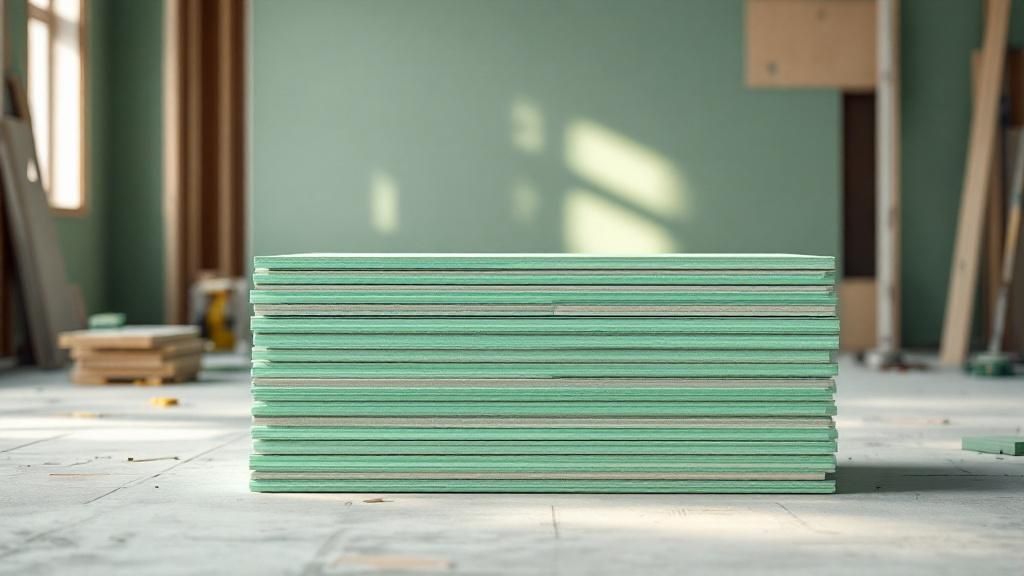
A Guide to Waterproof Gypsum Board in the UAE
In the UAE, the constant humidity isn't just a weather report talking point—it's a serious challenge for our buildings. Standard construction materials can really struggle, which is why waterproof gypsum board has become less of a luxury and more of an absolute necessity. It’s the essential line of defence for your interiors, protecting your investment from the kind of persistent moisture that leads to serious, expensive damage.
Think of it as a high-performance raincoat, but for the most vulnerable spots in your property.
Why Waterproof Gypsum Board Is a Necessity in the UAE
In a region where ambitious construction meets extreme humidity, our choice of materials is constantly being tested. Regular gypsum board, with its standard paper facing and absorbent core, basically acts like a sponge in damp areas like bathrooms and kitchens. This weakness quickly becomes a breeding ground for mould, mildew, and rot, which doesn't just look bad—it can compromise the building's structure and ruin indoor air quality.
Waterproof gypsum board was engineered specifically to solve this problem. It’s built differently, from its core to its surface, to actively repel water and stop mould from ever taking hold. This isn’t some quick surface-level fix; it's a fundamental improvement in material science, designed for years of reliable performance.
The True Cost of Ignoring Moisture
Trying to save a bit of money by using standard board in wet areas is a classic example of a false economy. It might trim the initial budget, but it almost always leads to bigger, more expensive headaches down the road. The fallout can be pretty severe:
- Structural Damage: Think warped walls, ceilings that sag, and drywall that literally crumbles. The only fix is a complete tear-out and replacement.
- Mould Remediation: Getting rid of a mould infestation is a huge, costly job, not to mention the health risks it poses to occupants.
- Aesthetic Ruin: All your hard work on interior design is undone by peeling paint, ugly water stains, and discoloured surfaces.
Investing in waterproof gypsum board from day one is really about buying peace of mind. It's a smart, proactive move that helps you avoid the frustrating and costly cycle of repairs that plagues so many properties in our climate.
A Market Driven by Necessity
You can see how crucial this is just by looking at the market trends. The GCC gypsum board market was valued at around USD 1.72 billion in 2024, with projections showing it could climb to nearly USD 2.56 billion by 2033. A massive part of that growth is coming from residential projects where developers and homeowners demand materials that can actually stand up to the local environment. You can discover more about the GCC's construction material trends and market growth.
At the end of the day, waterproof gypsum board isn't just another product on the shelf. It’s a vital component of any modern, durable building system designed to last in the UAE.
Right, so how does this stuff actually keep water out? It’s not just one magic ingredient, but a really smart combination of materials that work together to create a fortress against moisture. Think of it less like a simple wall and more like a high-tech shield, with each layer playing a specific role in deflecting humidity and water. Let’s peel back those layers and see what makes it so tough, especially for the demanding conditions we see across the UAE.
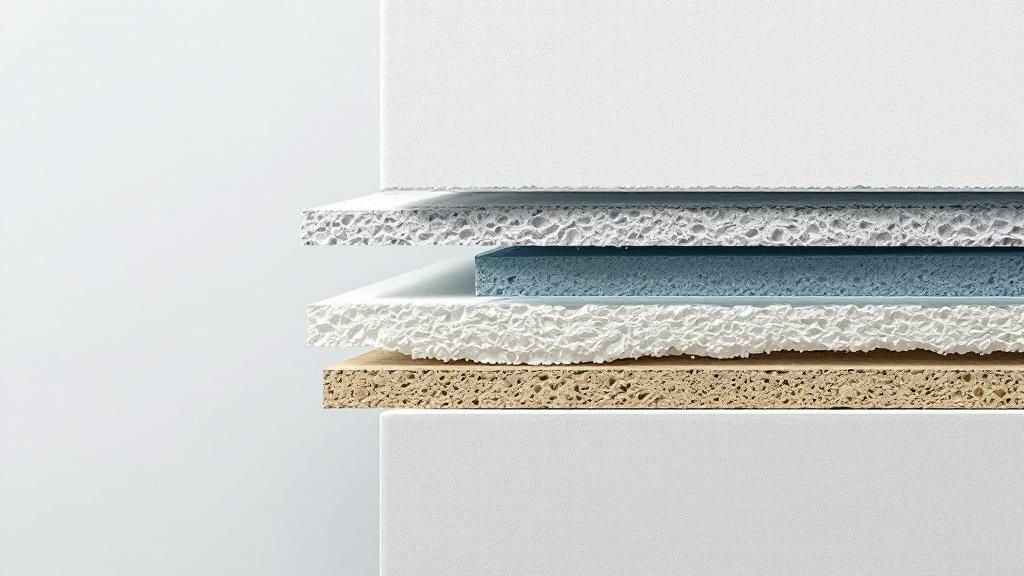
The real secret starts deep inside, at the very core. Standard drywall has a gypsum core that loves to soak up water like a sponge. But with waterproof board, that core is infused with silicone and other water-repelling additives. These agents completely change the game, turning a material that would normally welcome moisture into one that actively pushes it away. This treated core is your first and most important line of defence.
Of course, the core is only part of the story. What truly sets this board apart is the material that protects it on the outside.
The Power of Fibreglass Mat Facers
Forget the paper facing you find on regular drywall—that stuff can get damp, break down, and become a perfect meal for mould. Instead, waterproof gypsum board is wrapped in durable fibreglass mats. These mats are pressed onto the front and back, forming a tough, non-organic skin that water simply can't penetrate.
This outer layer does two critical jobs:
- It physically blocks water: The fibreglass mat is a powerful barrier, stopping steam, humidity, and direct moisture from ever getting to the core.
- It adds serious structural strength: These mats make the board incredibly rigid, preventing it from sagging or weakening, even after years of exposure to dampness.
It’s this one-two punch of a water-repellent core and a tough fibreglass shell that creates such a reliable system. Moisture is stopped dead in its tracks, at every level.
By engineering both the inside and the outside to fight moisture, manufacturers have created a product that isn't just okay with humidity—it's built for it. This complete approach is exactly why it runs circles around standard plasterboard and even the old moisture-resistant "green boards" in places like bathrooms and kitchens.
The Final Layer of Protection
There's one more piece to this puzzle: the integration of antimicrobial agents. During manufacturing, these additives are mixed right into the gypsum core and sometimes even into the fibreglass facing itself.
Their purpose is straightforward but absolutely vital. They stop mould and mildew from ever getting a foothold. Even in a super humid environment, these agents make the board a completely unsuitable home for fungal growth. This is a massive advantage in the UAE's climate, where mould can be a constant battle in buildings without the right protection.
Together, these three elements—the treated core, fibreglass facers, and antimicrobial additives—create the comprehensive defence that makes waterproof gypsum board an indispensable material for modern construction.
Choosing the Right Board for Your Project
Making the right material choice can feel like a small decision at the start, but it has massive consequences down the line. It’s a classic tale we see all the time in the UAE construction scene.
Imagine two identical bathroom renovations happening in parallel. The first project uses standard, paper-faced gypsum board to save a few dirhams. The second invests a little more in waterproof gypsum board. For the first few months, you couldn’t tell them apart. Both look fantastic.
Then, the UAE’s signature humidity gets to work. In the first bathroom, steam from daily showers begins to silently soak into the standard board's paper facing. Soon, the paint starts to bubble near the ceiling. A few months later, the ceiling itself sags ominously, and dark, telltale spots of mould creep into the corners. The owner is now facing a costly, disruptive, and entirely avoidable do-over.
Meanwhile, the second bathroom remains pristine. Its waterproof gypsum board, fortified with a fibreglass mat and moisture-repellent core, simply shrugs off the constant humidity. No sagging, no mould, no expensive repairs—just a bathroom that looks as good as the day it was finished. This isn’t an exaggeration; it’s a common reality in our climate. The upfront choice dictates the entire future of the space.
Comparing Regular vs. Waterproof Gypsum Board
So, what really sets these two materials apart? It’s not just one thing; it’s a combination of composition, performance, and where they belong in a project. Think of it as choosing the right tool for the job—you wouldn't use a hammer to drive a screw. This table breaks down the crucial differences.
| Feature | Regular Gypsum Board | Waterproof Gypsum Board |
|---|---|---|
| Core Composition | Standard gypsum mixed with starch and other additives. | Gypsum mixed with silicone, wax, and other water-repellent additives. |
| Facing Material | Untreated paper. | Water-resistant fibreglass mat or specially treated paper. |
| Water Absorption | High. Acts like a sponge, absorbing moisture and humidity. | Very low. Designed to repel water and prevent absorption. |
| Mould Resistance | Low. The paper facing provides an ideal food source for mould. | High. The inorganic facing and treated core inhibit mould growth. |
| Ideal Use Cases | Dry interior areas like living rooms, bedrooms, and hallways. | High-moisture areas like bathrooms, kitchens, laundries, and exterior soffits. |
| Durability | Prone to sagging, swelling, and degradation when wet. | Maintains structural integrity and shape even in damp conditions. |
As you can see, while regular board is perfect for the majority of a building, it becomes a major liability the moment consistent moisture is introduced. That’s where its waterproof counterpart truly shines.
Performance Under Pressure
The fundamental difference boils down to how each board reacts to water. A standard board is porous, absorbing moisture like a sponge and holding onto it. In stark contrast, waterproof gypsum board is engineered to be non-porous, actively resisting water penetration from the get-go.
This visual really drives the point home, showing the stark contrast in performance.
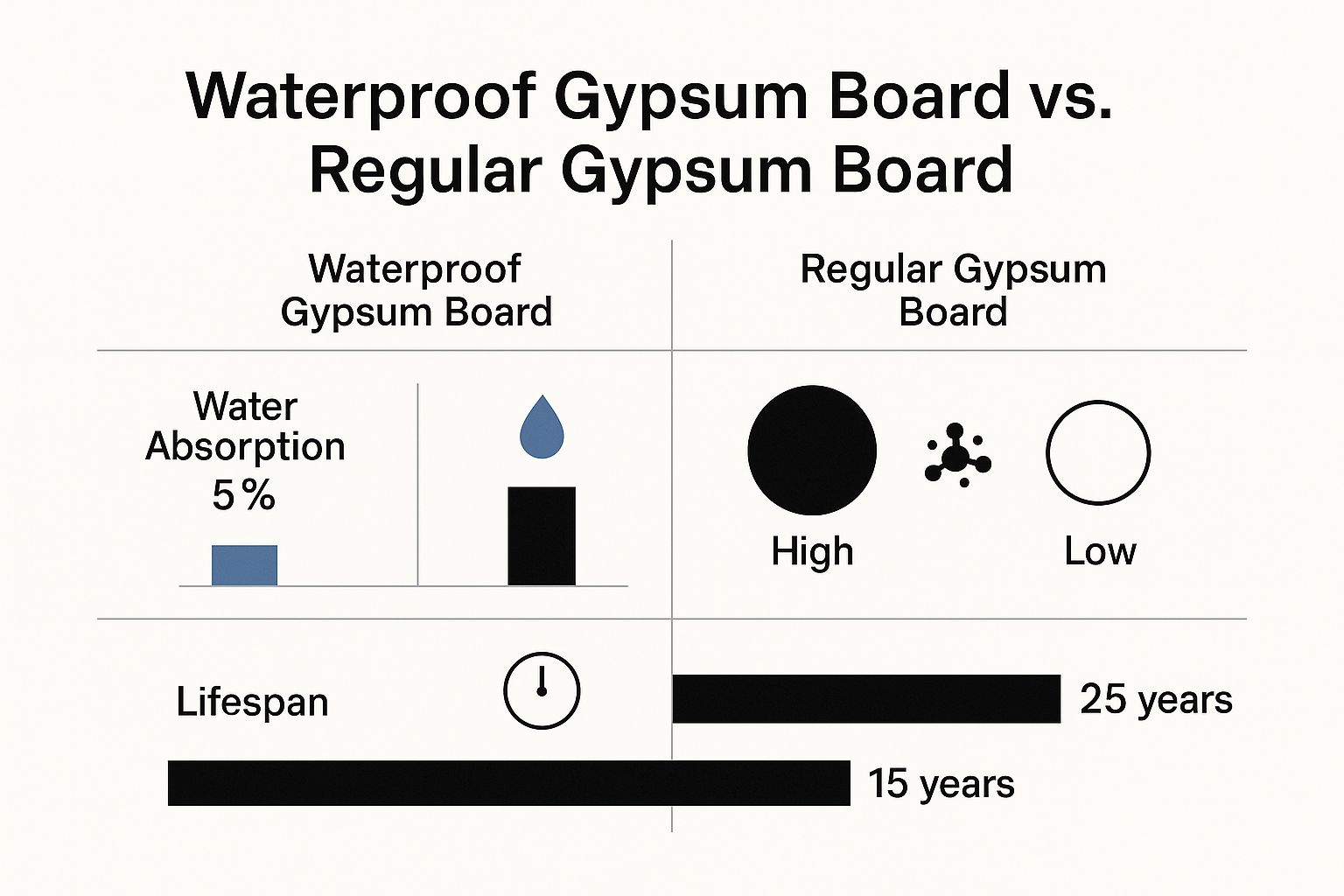
The data is clear: waterproof gypsum board absorbs up to 7 times less water and offers a significantly longer lifespan. It’s not just a better option for wet areas; it's the only sensible option.
Choosing the right board isn’t just about preventing water damage; it’s about ensuring the longevity and structural integrity of your entire wall system. The initial higher cost of a waterproof board is a small price to pay to avoid the future costs and headaches of a complete failure.
Beyond the Obvious Differences
While water resistance is the main event, the choice also affects the practicalities of installation. Because waterproof board is inherently more robust and often denser, it requires specific handling and fastening techniques.
Furthermore, getting the thickness right is key. Selecting the appropriate board thickness ensures it not only stands up to moisture but also meets the structural demands of the space, whether it's a residential bathroom or a high-traffic commercial kitchen. For a deeper dive into this, you can explore our guide on common gypsum board sizes and their applications.
Key Applications in UAE Construction
Any building material is only as good as its real-world performance. You can talk theory all day, but where the rubber meets the road—or in this case, where the board meets the steam—is what truly matters. For waterproof gypsum board, its true value shines in places where humidity and moisture are just a part of life.
Here in the UAE, that describes a lot of environments. This makes waterproof board an indispensable material for both homes and commercial buildings, protecting the structure itself and keeping interiors looking sharp for years to come.
The market numbers back this up. The gypsum board market in the Middle East and Africa (MEA) pulled in a massive USD 3.62 billion in 2023, with projections showing even more growth ahead. A huge part of that is driven by residential projects right here in the UAE, where builders and homeowners are demanding materials that stand up to humidity and prevent mould.
Critical Residential Use Cases
Think about the parts of your home that are in a constant battle with water and steam. If you use standard plasterboard in these areas, you're not just taking a risk—you're practically guaranteeing future headaches like peeling paint, sagging ceilings, and the dreaded spread of mould. This is precisely where waterproof gypsum board steps in as the non-negotiable solution.
- Bathrooms and Wet Rooms: This is the most obvious, and most critical, place for it. The board creates a solid, water-resistant backing for tiles in showers, behind sinks, and on ceilings. It stops steam and splashes from ever reaching the wall cavity.
- Kitchens: Between pots boiling on the stove and steam billowing from the dishwasher, kitchens are surprisingly humid. Using waterproof board for backsplashes and ceilings is a smart move that prevents the kind of moisture damage that leads to expensive fixes down the line.
- Laundry Rooms and Basements: These utility spaces are often forgotten, but they can have incredibly high moisture levels. Waterproof gypsum ensures these hardworking areas stay durable and free from mould.
When you're planning a project in one of these wet areas, it helps to look at the whole picture. For example, understanding the cost of walk-in shower installations shows you the scale of the investment. Using the right board from the very beginning is the most critical step to protect it.
Essential Commercial Applications
In the commercial world, the stakes are even higher. These spaces need materials that can take a beating from heavy use and often extreme conditions. In these scenarios, waterproof gypsum board isn't just a good idea; it's essential for keeping the business running safely and smoothly.
In a commercial setting, a material failing isn't just a repair bill. It can mean shutting down operations, failing health inspections, and damaging a hard-earned reputation. Waterproof gypsum board is your insurance policy against these exact risks.
You'll find it playing a vital role in several key commercial areas:
- Hotel and Hospital Bathrooms: These high-traffic spots need walls that can handle relentless cleaning and constant humidity without breaking down.
- Commercial Kitchens and Restaurants: The sheer intensity of the steam, grease, and heat in a professional kitchen demands a wallboard that won’t warp, swell, or become a breeding ground for mould.
- Exterior Soffits and Ceilings: For building exteriors, balconies, and covered walkways exposed to the UAE’s ambient humidity, this board acts as a weather-resistant shield, protecting the core of the building.
- Utility and Mechanical Rooms: Any space with HVAC systems, boilers, or major plumbing is a prime candidate for leaks and condensation. Waterproof board is key to protecting that critical infrastructure.
In every case, from a private villa’s bathroom to the facade of a five-star hotel, waterproof gypsum board delivers the resilience needed to build structures that last in the UAE’s unique climate.
Installation Best Practices for a Watertight System
Even the world's best waterproof gypsum board is only as good as its installation. Think of it like mastering large format tile installation; the final result depends entirely on meticulous technique. The board itself is just one piece of the puzzle. The real magic—and durability—comes from how the whole system is put together.
A premium product demands a premium installation. This isn’t a time to look for shortcuts. Using the wrong screws or a cheap sealant will create weak points, completely undermining the board's moisture-fighting abilities and leading to the exact problems you were trying to avoid.
A Checklist for System Integrity
The goal here is to build a seamless, monolithic shield against moisture. Every single joint, screw head, and corner needs to be treated as a potential weak spot. For any serious contractor in the UAE, following a strict protocol isn't just a suggestion—it's essential for a job that lasts.
Here are the non-negotiables for any waterproof gypsum board installation:
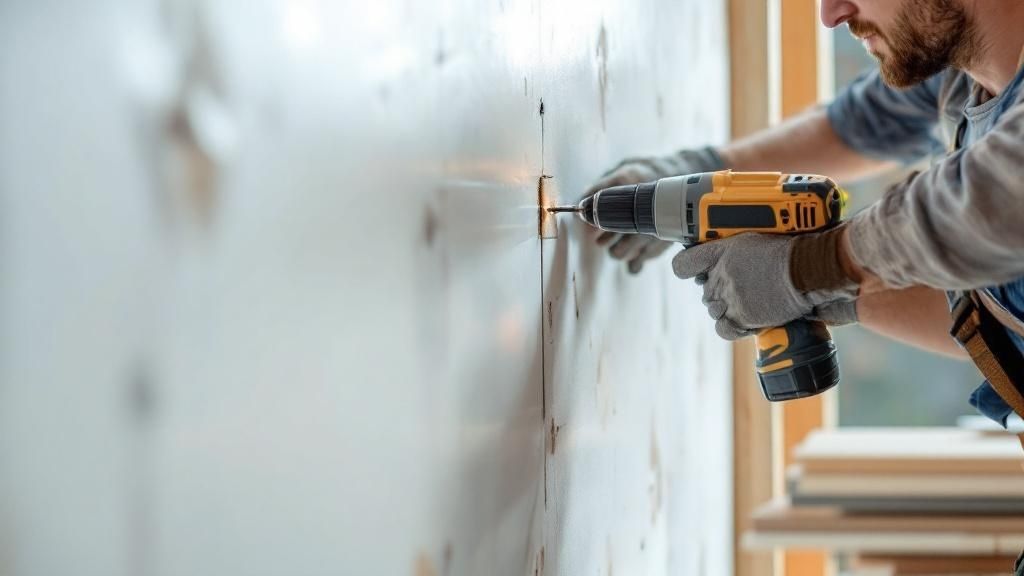
Use Corrosion-Resistant Fasteners: Your standard drywall screws are a no-go. In the damp environments where this board is used, they’ll rust. That rust will not only stain your beautiful finish but, more critically, it will weaken the screw's grip over time. You must use specialised fasteners, like ceramic-coated or stainless steel screws, designed specifically for wet areas.
Seal Every Penetration and Joint: This is where most failures happen. Every seam between boards, every inside and outside corner, and every single cutout for plumbing or electrical fixtures has to be meticulously sealed. Use a high-quality, waterproof sealant or joint compound to create an unbroken barrier that water simply can't get through.
Choose Compatible Finishing Compounds: Not just any joint compound will do. You need a setting-type, or "hot mud," compound that is explicitly rated for moisture and mould resistance. A standard, air-drying compound will act like a sponge, absorbing moisture and becoming a breeding ground for mould, completely defeating the purpose of using waterproof board in the first place.
A waterproof system is only as strong as its weakest link. A single unsealed joint or a handful of rusted screws can let moisture creep in, silently compromising the entire wall from the inside out. There's simply no margin for error.
Beyond the Board Itself
Remember to look at the bigger picture. The wall framing behind the board plays a huge role. If the studs aren't straight and properly spaced, you risk putting stress on the gypsum boards, which can lead to cracks and, eventually, water intrusion.
It's also vital to recognise that different speciality boards require different techniques. The methods for installing waterproof board are distinct from those needed for a fire-rated wall assembly, for instance. You can learn more about fire-rated gypsum board to see just how specific these installation requirements can be.
When you treat the installation as a complete, integrated system—not just hanging a few sheets of drywall—you ensure the wall delivers the long-term protection it was designed for.
Choosing Yasu as Your Gypsum Board Partner
Getting your building materials right is half the battle won, but finding the right supplier? That's just as critical for your project’s success. At Yasu Trading Co., we're not just here to sell you products. We see ourselves as your partner, making sure you get the exact waterproof gypsum board you need for your job here in the UAE.
We stock a comprehensive range of top-tier waterproof and moisture-resistant boards. Every single one is put through its paces, tested rigorously to meet tough local standards and international ones like ASTM. This means you can have total peace of mind, knowing your materials are built to handle the region’s demanding, humid climate.
This shift towards high-performance materials isn't just a local trend. It's happening everywhere. The global market for moisture-resistant gypsum board was already valued at around USD 74.55 billion in 2023, and it's still growing. That's especially true in the UAE, where construction pros are increasingly demanding materials that can stand up to moisture. You can actually explore more about the global moisture-resistant board market to see how these trends are playing out worldwide.
More Than a Supplier—A Project Partner
So, what really makes Yasu different? It’s the support we provide. Our expert team is on hand to offer consultations, helping you cut through the jargon and navigate all the specifications. We’ll make sure you select the perfect board for your application, whether it’s for a family bathroom or a massive commercial façade.
We believe our job is to make your procurement process straightforward and hassle-free. By offering expert advice and guaranteeing full regulatory compliance, we help you build with confidence.
When you choose Yasu, you're not just buying a board off a shelf. You're bringing on a trusted consultant who is genuinely invested in your project's success.
Common Questions About Waterproof Gypsum Board
It's one thing to understand the benefits of waterproof gypsum board on paper, but when it comes to a real project, practical questions always pop up. Let's tackle some of the most common queries we hear from builders and contractors to clear up any confusion and help you get the most out of your materials.
Is It Completely Immune to Water Damage?
This is probably the most important question to ask. While we call it "waterproof," a better way to think of it is as exceptionally water-resistant. The board’s specially engineered core and fibreglass mat facers are brilliant at stopping moisture in its tracks and preventing mould from ever getting a foothold.
But it's not a submarine hatch. It isn't designed to withstand constant, direct soaking like a sheet of plastic or a dedicated membrane. Think of it this way: for a high-exposure spot like the inside of a shower, the waterproof gypsum board is the perfect backing. It just needs to be part of a complete system that includes a liquid or sheet membrane on top, with every joint and fixture sealed tight.
Can You Paint Directly on the Surface?
Absolutely, but not without a little prep work first. If you want a professional, lasting finish, you can't just slap paint onto the raw board—it won't stick well and will look patchy.
For a durable and visually appealing outcome, you must first tape and finish all joints using a water-resistant setting-type compound. Afterwards, apply a high-quality, moisture-resistant primer across the entire surface. This crucial step seals the board and creates a uniform base for your final paint coats to adhere to properly.
How Much More Does It Cost?
There's no getting around it: waterproof gypsum board has a higher upfront cost than standard drywall. That initial price difference can sometimes make project managers hesitate.
However, looking at it as just an expense is short-sighted. It’s an investment in your building's long-term health and durability. To get a better handle on the numbers, you can check out our detailed guide on gypsum board prices and the factors that influence them.
That slightly higher initial cost is your insurance against the massive expense of mould remediation, structural repairs, and the kind of water damage that’s all too common when standard materials are used in the UAE's humid climate.
For top-tier building materials that meet rigorous UAE standards, partner with Yasu Trading Co. LLC. We provide a comprehensive range of certified waterproof gypsum boards and expert guidance to ensure your project's success. Explore our solutions and request a quote today.