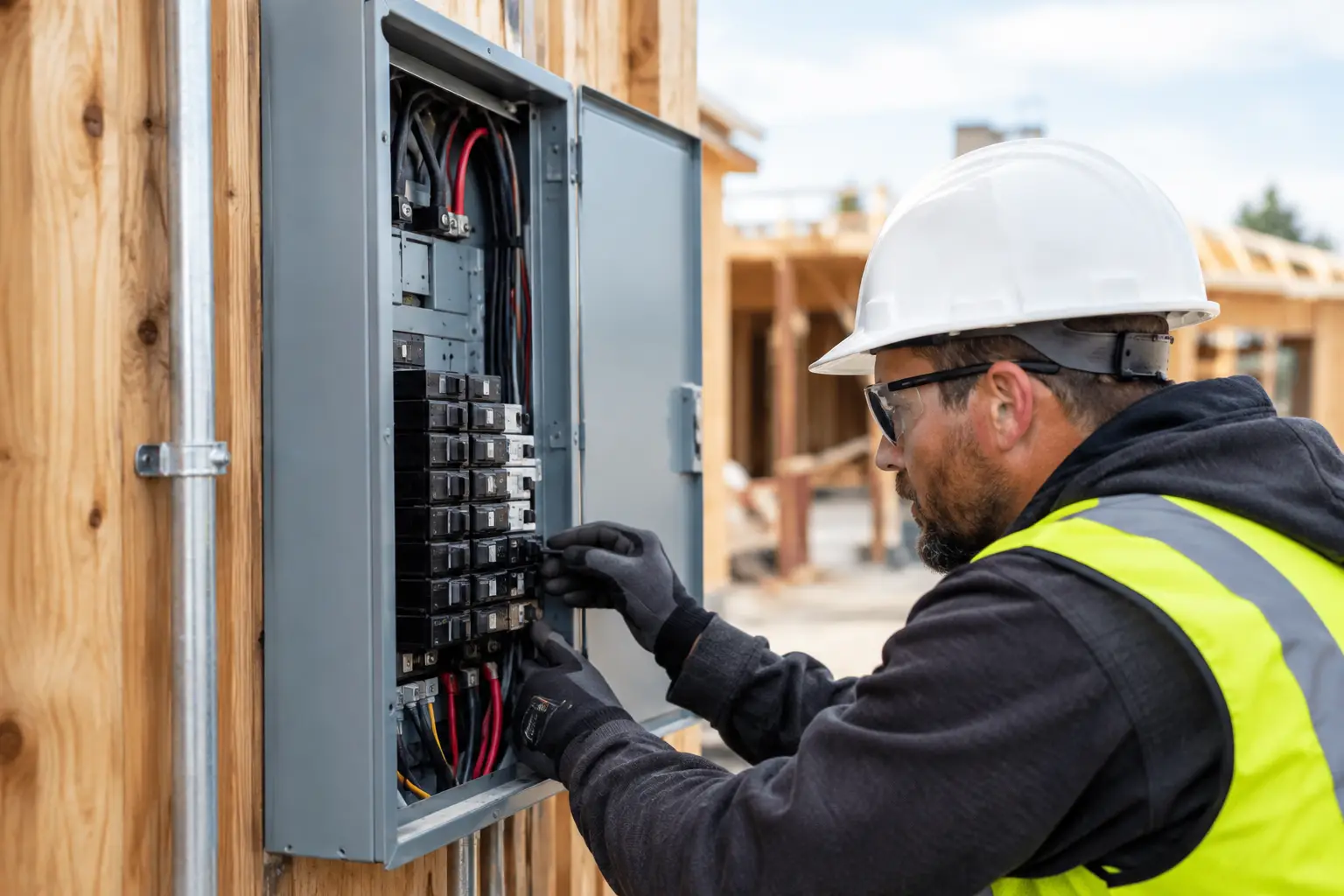
What Causes Circuit Breaker Trips on Jobsites?
A breaker that trips once may be protecting a circuit from a temporary overload. A breaker that trips repeatedly is a jobsite signal that requires action. For contractors, MEP teams, and facilities managers, understanding what causes circuit breaker trips helps prevent unsafe resets, damaged equipment, failed inspections, and avoidable downtime.
The circuit breaker is not the fault. It is the protective device responding to abnormal current, leakage, heat, or a defect in the circuit. The right response is to identify the cause before restoring power, then confirm that the selected electrical components, cable capacity, and protective devices match the installation and connected load.
What Causes Circuit Breaker Trips Most Often?
Most trips fall into four categories: circuit overload, short circuit, ground fault or earth leakage, and equipment or breaker failure. The symptoms can look similar from the panel, but the cause determines the correct repair and the risk level.
A professional diagnosis starts with the trip pattern. Did the breaker open when a specific tool started? Does it trip only when several loads operate at the same time? Did it trip immediately after electrical work, water exposure, or a new equipment connection? These details reduce troubleshooting time and help teams avoid replacing the wrong component.
Overloaded circuits
An overload occurs when connected equipment draws more current than the circuit is designed to carry for the duration of use. The breaker trips to prevent conductors, terminals, and accessories from overheating.
This is common on active sites where temporary power boards serve multiple trades. A circuit intended for light-duty loads may end up feeding grinders, welding equipment, chargers, portable air-conditioning units, and site lighting at the same time. A single high-load tool may not create a problem, but the combined demand can exceed the breaker rating.
Overloads are often intermittent. The circuit may operate normally early in the day, then trip after more tools are connected or once motors have been running long enough to generate heat. Repeatedly resetting the breaker does not increase available capacity. The practical correction is to calculate the connected and expected demand, separate high-load equipment onto dedicated circuits, and verify conductor sizing, breaker rating, and distribution-board capacity.
Do not solve an overload by installing a larger breaker without confirming the cable and downstream accessories are rated for it. Oversizing protection can allow conductors to overheat before the breaker opens, creating a fire and compliance risk.
Short circuits
A short circuit occurs when current finds an unintended low-resistance path, usually between live conductors or from a live conductor to neutral. Current rises sharply, and the breaker normally trips immediately.
Damaged cable insulation is a frequent cause in construction environments. Cables can be crushed under access equipment, cut during fit-out work, pinched by sharp metal edges, or degraded by heat and mechanical wear. Loose strands at a terminal, incorrect connections inside junction boxes, and damaged plugs can also create faults.
If a breaker trips the instant it is turned on, or immediately when a particular appliance is connected, treat the issue as a potential short circuit. Isolate the circuit and have a qualified electrician test the cable route, terminations, outlets, plugs, and connected equipment. Visual checks are useful, but insulation-resistance and continuity testing are needed to confirm the fault location safely.
Ground faults and earth leakage
Ground faults occur when electrical current leaks from an energized conductor to earth, grounded metalwork, or another unintended path. In many installations, residual current devices and RCBOs detect this imbalance and disconnect power quickly to reduce shock risk.
Moisture is a common trigger. Outdoor connections, wet service areas, plant rooms, washdown zones, and poorly protected temporary power points are especially exposed. Condensation inside enclosures, water entering a plug top, or a damaged extension lead can be enough to cause nuisance or genuine earth-leakage trips.
The term “nuisance trip” should be used carefully. A sensitive protective device may trip because of normal accumulated leakage from electronic equipment, but it may also be detecting a deteriorating appliance, contaminated enclosure, or damaged cable. The solution depends on test results. It may involve separating circuits, selecting properly rated RCBOs, improving enclosure protection, or replacing faulty equipment. Bypassing an RCD or RCBO is never an acceptable site workaround.
Motor startup current and equipment demand
Motors draw a high inrush current when starting. Pumps, compressors, extraction fans, refrigeration equipment, and some power tools can briefly draw several times their normal running current. If the protective device is poorly matched to the equipment, the breaker may trip at startup even though the motor runs within its rated load afterward.
This is not automatically a reason to increase breaker size. The installation must be assessed as a system: motor data, starting method, cable length, voltage drop, protective-device curve, ambient temperature, and the presence of other loads all matter. A properly designed motor circuit may require dedicated protection or a different trip characteristic, subject to project specifications and local authority requirements.
Equipment faults can produce a similar pattern. Worn brushes, failing windings, damaged leads, blocked cooling, or mechanical binding can make a motor draw excessive current. If one tool repeatedly trips a known-good circuit while other comparable tools run normally, remove it from service for inspection rather than continuing to reset the board.
Less Obvious Reasons a Breaker Keeps Tripping
Not every problem is visible at the outlet. Loose terminals can create heat and intermittent faults, particularly in distribution boards, isolators, and high-use socket outlets. A connection may pass current at low demand but fail when a heavy load is applied.
Heat also affects performance. Breakers are thermal devices as well as magnetic protective devices, and high ambient temperatures inside poorly ventilated panels can reduce the current they tolerate before tripping. This is relevant in plant rooms, external cabinets, and temporary boards exposed to direct heat. Panel loading, enclosure selection, spacing, and ventilation should be considered during installation rather than after recurring trips begin.
An aging, damaged, or incorrectly selected breaker can also be the problem. Mechanical wear, corrosion, poor-quality components, incorrect pole configuration, and incompatible accessories can compromise reliable operation. However, replacing the breaker first is not a complete diagnosis. If the underlying circuit fault remains, a new device will trip as well, or worse, protection may be compromised by an unsuitable replacement.
A Safe Site Response When a Breaker Trips
The immediate priority is to protect people and preserve the installation for inspection. Resetting a breaker once after a clearly identified temporary overload may be reasonable under site procedures. Repeated trips require isolation and investigation by competent personnel.
Use a disciplined sequence:
- Record which circuit, board, and protective device tripped, plus the equipment operating at the time.
- Disconnect portable loads from the affected circuit before attempting a controlled reset.
- If the breaker holds with loads removed, reconnect equipment one item at a time to identify the suspect load.
- If it trips with all loads disconnected, isolate the circuit and arrange electrical testing.
- Tag defective tools, leads, plugs, or accessories out of service so they cannot return to use on another circuit.
For panels, fixed wiring, water-affected installations, burning smells, discoloration, or repeated immediate trips, do not rely on basic site checks. Apply the project's isolation and lockout procedures and assign the work to a qualified electrician. A fast but undocumented reset can turn a minor fault into equipment damage, injury, or schedule disruption.
Preventing Circuit Breaker Trips During Project Execution
Prevention begins at procurement and design stage. Specify municipality-compliant electrical components from authorized manufacturers, with ratings that match the actual duty of the circuit rather than the lowest initial cost. This includes breakers, RCBOs, distribution boards, sockets, isolators, glands, cable management, and suitable enclosures for the installation environment.
Temporary power deserves the same discipline as permanent work. Separate lighting from high-demand tools, provide dedicated supplies for major plant, protect cables from mechanical damage, and inspect extension leads routinely. For fit-out and maintenance work, clear circuit labeling is equally valuable. It allows teams to isolate the correct area quickly instead of affecting unrelated operations.
Procurement teams should also consider availability of compatible replacement parts. Mixing unverified components or substituting protection devices without technical confirmation creates risk during handover and future maintenance. A dependable B2B electrical supplier can support specification alignment, authentic product sourcing, and timely delivery of electrical components when a site needs corrective materials without waiting on multiple vendors.
At Yasu Trading, project buyers can consolidate core electrical materials alongside tools, fasteners, sealants, and safety equipment, helping maintenance and construction teams restore safe operations without losing time to fragmented sourcing.
A tripping breaker is doing the job it was designed to do. Treat the trip as useful information, verify the cause with competent testing, and correct the circuit or load before work resumes. That approach protects people, supports compliance, and keeps the next delivery, inspection, and handover on schedule.