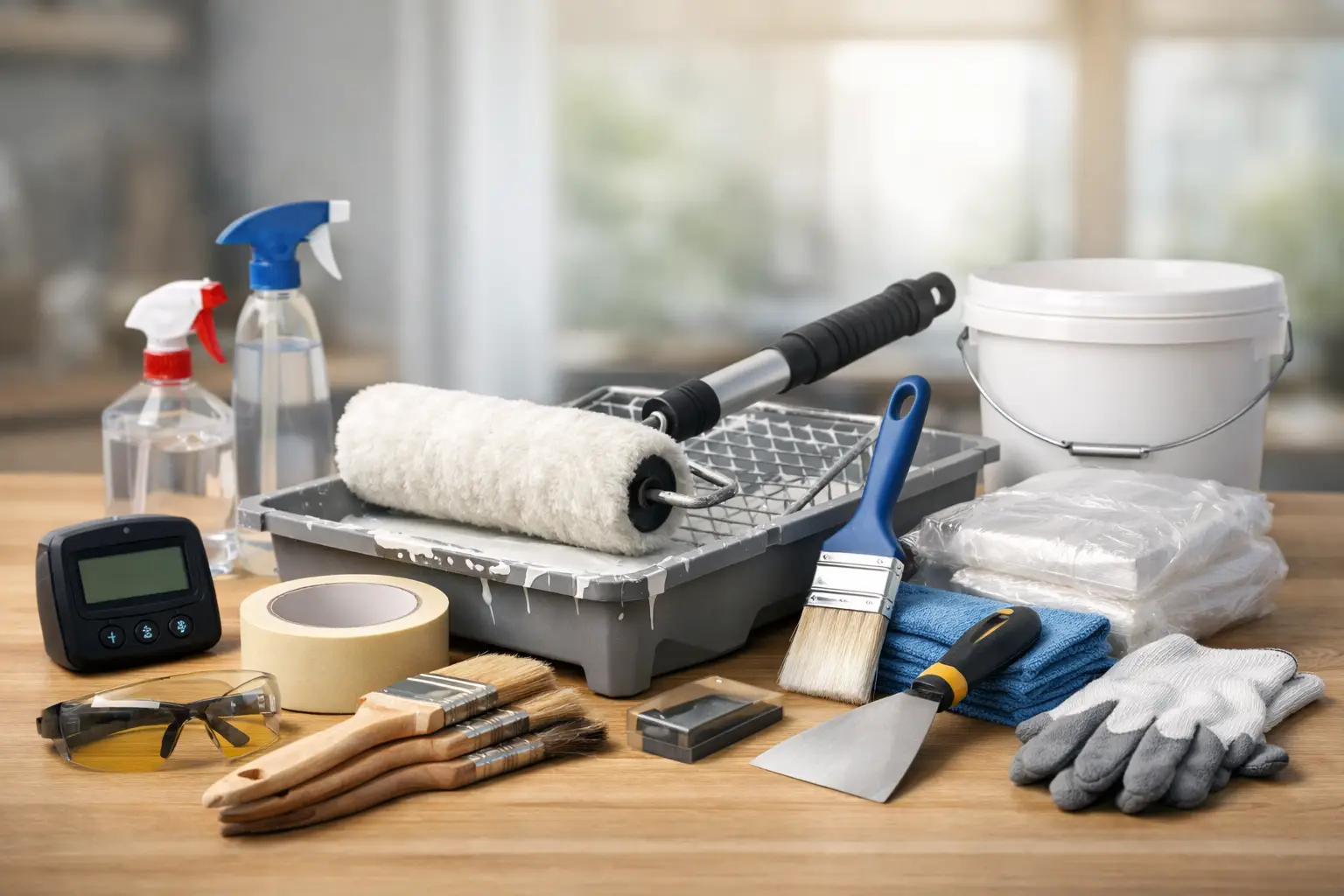
Best Paint Accessories for Projects That Stay on Schedule
A paint crew can have the specified coating, the right color code, and enough labor on site, then still lose a day to roller shedding, leaking trays, poor masking, or missing extension poles. The best paint accessories for projects are not minor add-ons. They control finish consistency, labor productivity, material waste, and the likelihood of a clean handover.
For contractors, fit-out teams, and facilities maintenance buyers, accessory selection should start with the substrate, coating system, access conditions, and required finish level. A low-cost tool that fails halfway through a large application area is rarely the economical choice once repainting, cleanup, and schedule disruption are considered.
Start With the Surface and Coating System
Paint accessories must suit the work, not just the paint category. Smooth gypsum partitions, textured concrete, metal railings, timber doors, ceilings, and external masonry each demand different application tools and preparation methods. Specifying one general-purpose roller and brush assortment for every area may simplify purchasing, but it can compromise coverage and create visible variation between surfaces.
Water-based acrylic coatings usually require synthetic-filament brushes and quality roller covers that release paint evenly. Solvent-based coatings, primers, and enamel systems may need compatible brushes, rollers, trays, and cleaning materials that will not soften, swell, or contaminate the finish. Always confirm the coating manufacturer’s application guidance before ordering in bulk, especially where warranty requirements or approved-system specifications apply.
The accessory package should also reflect the finish standard. A back-of-house utility room and a reception lobby have very different tolerance for roller marks, bleeding tape lines, dust, and inconsistent sheen. Procurement teams should identify high-visibility areas early so crews receive premium tools where they add measurable value.
Best Paint Accessories for Projects by Jobsite Need
Roller frames, covers, and extension poles
Rollers remain the fastest choice for large walls and ceilings, but the cover determines how the coating performs. Short-nap microfiber or woven covers are appropriate for smooth plasterboard and prepared walls where a uniform finish is required. Medium-nap covers suit lightly textured surfaces, while longer-nap covers carry more paint into rough masonry and blockwork.
Do not treat roller covers as a reusable commodity without inspection. Worn covers lose fibers, load unevenly, and leave a finish that needs correction under final lighting. For large packages, standardize roller widths and nap sizes by work zone, then issue spare covers to avoid crews stopping when a cover becomes damaged or saturated.
Heavy-duty roller frames matter on repetitive work. A weak frame can flex under pressure, producing uneven contact and premature fatigue. Extension poles are equally important for ceilings, stairwells, high walls, and open-plan areas. Adjustable, secure-lock poles reduce unnecessary ladder moves and help teams maintain a steady application pattern. They should be selected for reach and rigidity, not maximum length alone.
Professional brushes for cutting in and detail work
Brushes handle edges, corners, door frames, louvers, piping penetrations, touch-ups, and areas where a roller cannot deliver control. Angular sash brushes are particularly useful for straight cutting-in along ceilings, skirting, and trims. Flat brushes suit broader detail work and coating narrow metal or timber components.
Filament quality has a direct impact on finish quality. Better brushes hold paint without dripping, maintain a clean edge, and release coating more consistently. Cheap brushes often lose bristles into the wet film, creating defects that become visible during inspection. For a high-spec fit-out, this is a preventable handover issue.
Keep brush sizes matched to the detail. Oversized brushes slow accurate work around frames and electrical boxes. Very small brushes can turn a simple edge line into a labor-intensive task. A balanced site stock normally includes fine trim brushes, medium sash brushes, and wider flat brushes for components and touch-up work.
Trays, buckets, grids, and liners
Paint loading equipment is easy to overlook until it becomes the source of spills and wasted coating. Durable roller trays are suitable for smaller rooms and controlled interior work. For larger areas, buckets with roller grids reduce frequent refilling and make better use of five-gallon or bulk paint containers.
Tray liners simplify color changes and cleanup, particularly where a crew moves between multiple units or finishes in one shift. They are also useful when the same tray must be kept clean for a specified topcoat. The trade-off is consumable waste, so liners are best used where turnaround speed and contamination control justify them.
Choose stable trays and buckets that can handle site movement. Thin plastic trays crack, tip, and flex under load. A spill in a completed apartment, corridor, or occupied facility costs far more than a properly specified tray system.
Masking tape, protective film, and drop cloths
Protection materials are part of quality control. Masking tape creates clean transitions at trims, frames, glass, switches, and finished surfaces, but tape selection depends on adhesion level and removal time. High-tack tape can pull fresh coating or damage delicate surfaces. Low-tack tape may lift on dusty or textured substrates. Test a small area if the surface is sensitive or recently finished.
Plastic masking film and paper protect windows, floors, cabinetry, sanitary fixtures, and installed MEP components from overspray and drips. Canvas or absorbent drop cloths provide better traction and can be reused, while plastic sheets offer faster coverage for furniture and broad floor areas. In active fit-out zones, use enough protection to prevent cleanup becoming a separate work package.
Tape should be removed at the correct stage, typically before the coating fully hardens, to preserve a clean edge. Leaving it until the next day may tear the paint film and create a touch-up cycle.
Surface preparation tools
A coating is only as good as the surface beneath it. Putty knives, scrapers, sanding blocks, abrasive sheets, wire brushes, caulking guns, and cleaning cloths should be planned with the painting tools, not purchased after defects are found.
For gypsum board and plaster repairs, flexible filling knives help apply compound smoothly, while sanding blocks keep pressure more even than folded abrasive paper. For metal surfaces, wire brushes and appropriate abrasives remove loose rust and failed paint before priming. For timber, sanding tools help create the profile needed for consistent coating adhesion.
Dust control is a frequent source of paint defects. Tack cloths, microfiber cloths, and suitable cleaning materials help crews remove sanding residue before priming or topcoating. Where the project specification requires a particular surface-preparation standard, the tools and consumables must support that requirement rather than relying on visual judgment alone.
Caulking guns and joint-finishing tools
Small gaps around frames, skirting, architraves, and penetrations can make an otherwise good paint job look incomplete. A reliable caulking gun allows controlled application of compatible acrylic or paintable sealant before the final coat. The bead should be sized for the joint and tooled promptly for a neat finish.
Avoid using paint to hide movement joints or large gaps. Paint will not solve an underlying joint issue and may crack shortly after handover. Where flexibility, fire rating, acoustic performance, or moisture resistance is required, coordinate the correct sealant with the relevant construction package before painting begins.
Build a Procurement Package, Not a Mixed Cart
The most efficient paint accessory purchase is organized by scope and sequence. Separate preparation tools, priming tools, finishing tools, protection materials, and cleanup supplies. This makes site issuing easier and reduces the common problem of crews using a finish-coat roller for primer, then carrying contamination into a visible final coat.
For repetitive work across apartments, floors, villas, or commercial units, create standard kits by room type or crew size. Include planned consumable quantities and a contingency allowance for replacement covers, tape, abrasives, and liners. The right allowance depends on surface condition, color changes, access constraints, and expected rework, so it should be based on site reality rather than a generic percentage.
Consolidated procurement also reduces coordination pressure. A single supplier that can support paint accessories alongside hand tools, sealants, safety equipment, and general construction materials helps procurement teams avoid fragmented deliveries and last-minute substitutions. For time-sensitive sites in Dubai, Sharjah, or Abu Dhabi, stock availability and dispatch reliability can matter as much as unit price.
Check Quality Before Materials Reach the Work Face
Before issuing accessories, verify roller nap, brush type, tape grade, pole locking mechanism, tray condition, and compatibility with the specified coating. Keep batch and product records where the project requires approved materials or manufacturer warranty support. A quick pre-start check is much easier than tracing a finish defect after a client inspection.
Yasu Trading Co. LLC supports project buyers with jobsite-ready paint accessories and related construction consumables, helping teams align quantities, specifications, and delivery timing with the work program. For bulk scopes, request a project-based quotation that separates durable tools from high-turnover consumables, so replacements can be planned without overstocking.
A well-finished surface starts before the first coat is opened. Put dependable accessories in the crew’s hands at the right time, and the painting package is far more likely to leave the site clean, compliant, and ready for handover.