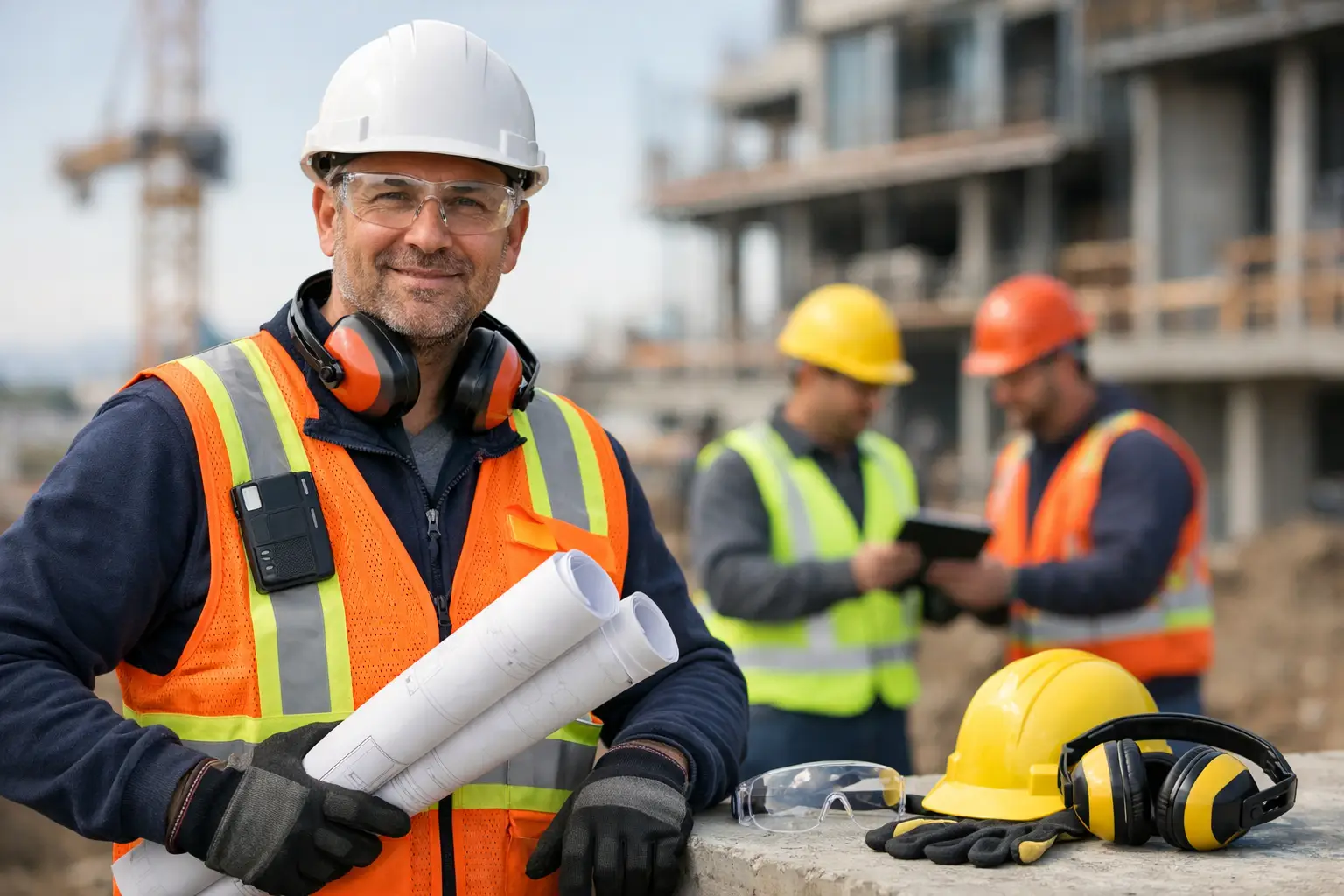
Best PPE for Construction Supervisors
A construction supervisor can spend the first hour in a site office, the next at a slab edge, and the next walking through MEP rough-in with three different subcontractors. That is exactly why the best PPE for construction supervisors is not just a stripped-down version of what crews wear. It has to match constant movement between admin, inspection, coordination, and active work zones without creating gaps in protection.
Supervisors are exposed to many of the same hazards as labor crews, but in a different pattern. They may not be cutting concrete all day or tying rebar for a full shift, yet they repeatedly enter changing environments where suspended loads, sharp debris, electrical work, vehicle traffic, and slip risks are all present. PPE selection should reflect that reality. The right kit protects the supervisor while supporting clear communication, mobility, and compliance on a fast-moving jobsite.
What makes the best PPE for construction supervisors different
The biggest mistake in PPE selection is treating supervisors as low-exposure personnel. On paper, they may be responsible for oversight. In practice, they walk active floors, inspect confined access areas, verify fire stopping, check electrical rooms, and coordinate deliveries. Their PPE needs to work across multiple zones without slowing them down or encouraging shortcuts.
That means comfort matters, but only after protection and compliance. If a hard hat is poorly ventilated, safety glasses fog constantly, or boots are too heavy for long site walks, supervisors are more likely to remove gear between tasks or wear it incorrectly. For procurement teams, this is where product quality directly affects actual compliance, not just purchase compliance.
Head protection: start with a reliable hard hat
A hard hat remains the baseline requirement on most construction sites, but supervisors often need a model suited for long wear. That usually means a secure suspension system, good weight balance, and compatibility with other PPE such as eye and hearing protection.
For general site supervision, Type I hard hats are common, but some projects may justify higher-performance helmets depending on site rules and risk profile. If the supervisor regularly moves around scaffolding, structural steel, or areas with overhead activity, retention and fit become especially important. A hard hat that shifts during ladder climbing or frequent head movement is not doing its job well.
Procurement should also think about replacement cycles. Sun exposure, rough handling in vehicles, and repeated use in high-heat environments can shorten service life. Keeping municipality-compliant fire and safety equipment readily available helps avoid the common problem of expired or damaged PPE staying in circulation because replacement stock is not on hand.
Eye protection should work in heat and dust
Supervisors are often in and out of dusty zones without warning. They may enter an area for a two-minute inspection and still face airborne particles, grinding sparks nearby, or windblown debris. Safety glasses with side protection are usually the minimum, but lens clarity, anti-fog performance, and fit are what determine whether they are worn consistently.
Clear lenses work well for indoor inspections and low-light conditions. Tinted options may make sense for exterior work under strong sun, especially on open sites. The trade-off is that one pair rarely suits every condition. On larger projects, it often makes more sense to issue more than one lens type rather than expect one product to cover every task effectively.
High-visibility clothing is not optional
Supervisors spend a lot of time around moving vehicles, lifting operations, and delivery zones. High-visibility vests or jackets are essential because they help equipment operators and drivers identify management personnel quickly, especially in mixed-traffic areas.
The best option depends on the site. A lightweight vest may be enough for daytime building work, while road-adjacent or low-light conditions may require higher visibility performance. Supervisors also tend to carry radios, drawings, pens, phones, and inspection notes, so pocket layout can be more useful than many buyers assume. If the vest tears easily or lacks practical storage, people replace it with whatever is available, and consistency drops.
Foot protection: where many buying decisions go wrong
If there is one item supervisors will complain about first, it is usually boots. That matters because they may walk longer distances than some trade workers, especially on large developments, warehouses, towers, and multi-phase fit-out sites. The best PPE for construction supervisors includes safety footwear that can handle impact and puncture hazards without creating fatigue.
Toe protection is standard, but sole performance deserves equal attention. Slip resistance is critical where water, dust, tile adhesive, oil, or loose aggregate may be present. Puncture-resistant midsoles are valuable on active construction sites with offcuts and fasteners underfoot. Ankle support also helps, particularly where supervisors climb temporary stairs, access ladders, or cross uneven ground.
There is always a trade-off between heavier-duty boots and all-day comfort. For high-risk shell and core projects, heavier protection may be justified. For fit-out, maintenance, or snagging phases, lighter models can improve wear compliance while still meeting site requirements.
Hand protection depends on how hands are used
Some supervisors assume gloves are mainly for workers handling materials. That is too narrow a view. Supervisors open crates, check installed components, move access panels, handle rough samples, and inspect areas with sharp edges. A practical glove policy should account for these intermittent but real exposures.
General-purpose cut-resistant gloves are often a good fit because they offer flexibility for handling documents, devices, and tools while still protecting against abrasions and cuts. Bulkier gloves may provide more protection, but if they interfere with writing, touchscreen use, or quick inspections, they are less likely to be worn. The right answer depends on task frequency and site conditions.
Hearing protection for selective high-noise exposure
Supervisors are not always stationed in high-noise zones, but they often enter them unexpectedly. Demolition, core drilling, cutting, generators, and heavy equipment can create short-term exposure that still requires protection. Keeping hearing protection immediately accessible is more effective than assuming personnel will go back and retrieve it when needed.
For many supervisors, compact earplugs are practical because they are easy to carry in a pocket or vest. In consistently noisy environments, earmuffs may offer easier on-and-off use. The decision is operational. If hearing protection is inconvenient, it will not be used during brief site visits, which is often when exposure is overlooked.
Respiratory protection is a hazard-based decision
Dust, fumes, insulation fibers, silica exposure, paint vapors, and confined-space conditions can all affect supervisors depending on the project stage. Respiratory protection should never be issued as a generic box-checking item. It needs to match the actual hazard and site controls.
For short exposure to nuisance dust, a simple disposable option may appear sufficient, but tasks involving silica, chemical vapors, or poor ventilation require more careful specification. Fit, filtration level, and worker training all matter. For procurement managers, buying respiratory protection without considering the specific use case creates waste at best and a compliance problem at worst.
Fall protection still applies to supervisors
Supervisors are often the first to inspect elevated work areas, roof access points, slab edges, or temporary platforms. Being in a management role does not reduce fall risk. If the work area requires fall protection, the supervisor entering that area needs the same level of protection as the crew.
This is where many companies run into inconsistency. Crew fall arrest equipment may be tightly controlled, while visitor or supervisor gear is treated as secondary. That approach breaks down quickly on active projects. Harnesses, lanyards, and related equipment should be inspected, sized properly, and kept available in ready-to-deploy condition, not stored as a last-minute backup.
The best PPE program is built around procurement discipline
Choosing the best PPE for construction supervisors is partly a safety decision and partly a supply chain decision. Even well-specified PPE fails if replacement stock is delayed, sizing is inconsistent, or approved brands are swapped without review. Construction teams need a dependable source that can support standardization across multiple jobs, urgent replenishment, and product guidance when project conditions change.
For that reason, many contractors prefer consolidated procurement across fire and safety equipment, power tools and hand tools, fasteners, adhesives and sealants, and general site materials. It reduces vendor coordination and helps ensure supervisors are not waiting on basic safety gear while the job moves ahead. On projects with tight schedules, same-day or next-day site delivery can make the difference between maintaining compliance and improvising with whatever is left on site.
The strongest PPE choice is rarely the most expensive item in the catalog. It is the gear that fits the hazard, gets worn consistently, meets site requirements, and can be replenished without delay. If you are buying for supervisors across multiple projects, standardize where possible, allow for task-specific exceptions, and treat PPE availability as part of project execution, not just a stores item.