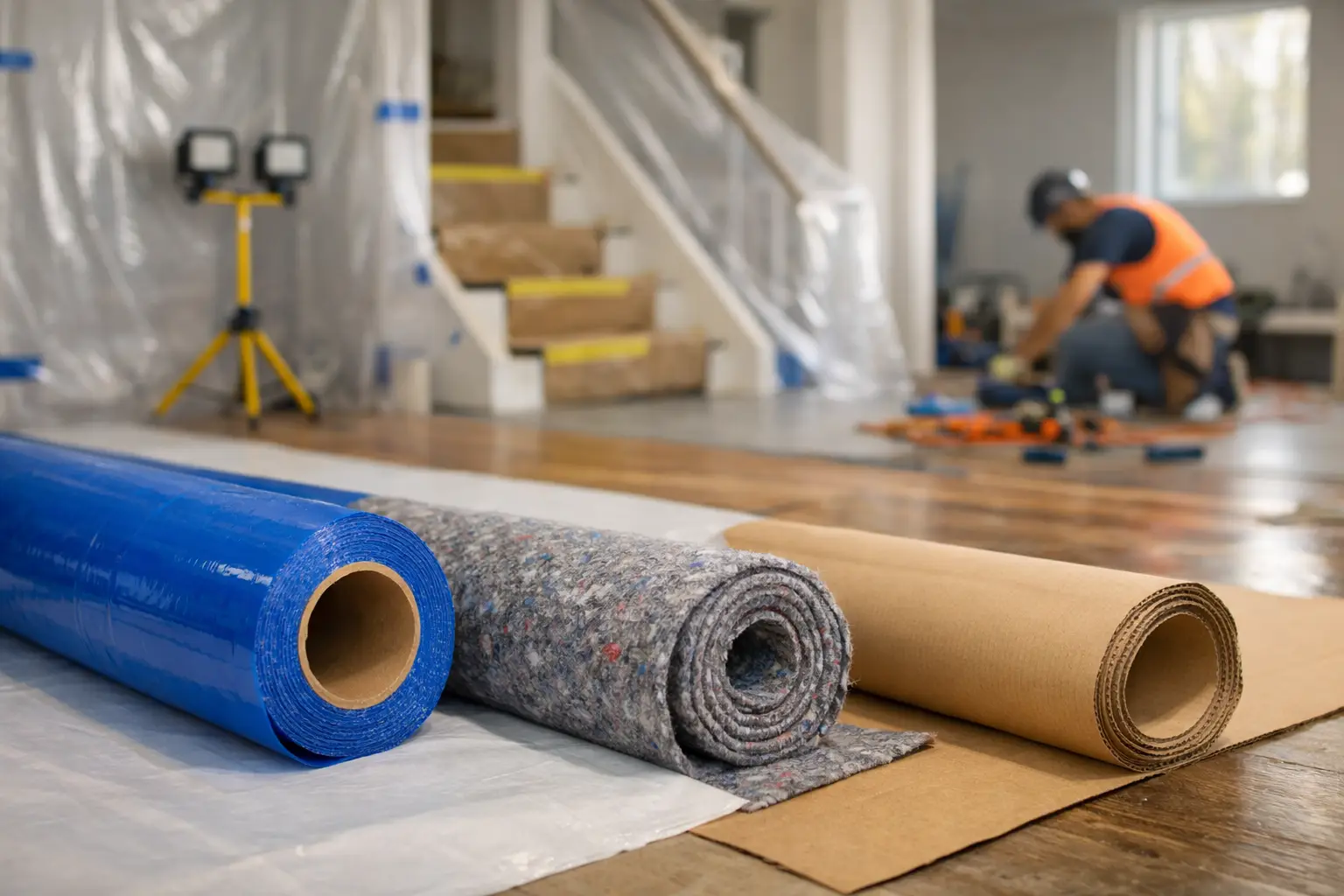
Best Temporary Surface Protection for Jobsites
A handover can be delayed by something as preventable as scratched tile, paint overspray on aluminum frames, or a stained stone lobby floor. The best temporary surface protection is not one product used everywhere. It is a coordinated system selected around the finished surface, the trade activity, traffic level, moisture exposure, and removal date.
For contractors and fit-out teams, protection should be specified as early as the finishing schedule. Waiting until flooring, glass, sanitary ware, or joinery is installed usually means rushed purchasing, incorrect tapes, and avoidable rectification work. The right material protects the completed asset while keeping access routes safe and work moving.
What Makes the Best Temporary Surface Protection?
A suitable protection system must absorb the abuse expected on site without damaging the surface underneath. That means looking beyond thickness alone. A heavy board can protect against dropped tools but may trap moisture on newly cured floors. Adhesive film can keep paint and dust off glazing but may leave residue if exposed to heat for too long.
Start with five practical questions: What is being protected? Who will work over or around it? What can damage it? How long must the protection remain in place? How will it be removed and disposed of?
The answers determine whether you need a breathable floor covering, impact-resistant sheets, low-tack film, edge guards, or a combination of materials. On an active site, a single layer is rarely enough for premium finishes in high-traffic areas.
Match protection to the actual risk
Foot traffic, wheeled equipment, falling materials, wet works, dust, UV exposure, and adhesive transfer are different risks. Protecting against only one can leave the project exposed to another.
For example, a corridor with finished porcelain tile may need a clean, non-staining underlayer plus rigid board on top to manage trolley traffic. A glass partition may only need low-tack protective film during paint and silicone work, but its corners may require additional edge protection where materials are being moved nearby.
Floor Protection by Finish Type
Floor finishes generally receive the highest volume of site damage because they are installed before multiple trades have completed their work. Select protection based on the finish, cure condition, and site traffic plan.
Tile, porcelain, and natural stone
Corrugated plastic sheets and heavy-duty floor protection boards are effective where impacts and repeated foot traffic are expected. Tape joints carefully so that edges do not lift and become trip hazards. For polished stone, marble, and sensitive tile, use a clean, non-abrasive underlayer first. Grit caught under a protective sheet can scratch a surface as workers walk over it.
Avoid sealing wet or recently installed stone beneath non-breathable coverings unless the installer confirms it is safe. Moisture retention can cause discoloration, delayed curing, or adhesive-related issues. In wet areas, coordinate with the waterproofing and tiling teams before covering the finished floor.
Wood, laminate, and vinyl flooring
Wood and vinyl finishes require more care than hard tile because they can dent, stain, or react to adhesives. Use breathable felt or purpose-made floor coverings that allow the floor to acclimate. Avoid plastic sheeting directly on wood flooring where heat or moisture may build up.
Where carts, ladders, and mobile equipment will pass through, add a rigid traffic layer over the breathable base. Test any tape in an inconspicuous area and use low-tack products designed for finished surfaces. Standard duct tape may save minutes during installation and cost days during cleanup.
Concrete, epoxy, and industrial floors
Not every concrete or epoxy surface needs full coverage. On industrial projects, it may be more efficient to protect only travel lanes, loading zones, corners, and areas beneath active work. This reduces material consumption while protecting the sections most likely to be damaged.
For newly applied epoxy or coatings, confirm cure times before placing boards, mats, or wheeled loads. Protection installed too early can imprint the coating or interfere with its finish.
Wall, Glass, and Joinery Protection
Finished vertical surfaces are often damaged during the final stages of a project, when trades are moving tools, ladders, and materials through completed spaces. Protection should extend beyond the obvious face surface.
Low-tack protective film works well for glass, aluminum, stainless steel, and selected painted panels. It helps prevent paint splashes, dust buildup, and light scuffing. Film must be compatible with the substrate and removed within the manufacturer’s recommended timeframe, particularly in hot, sun-exposed areas where adhesive residue can become difficult to remove.
For wall corners, use cardboard or plastic corner guards from floor level to above the height of moving materials. This simple control is especially valuable in corridors, lift lobbies, stairwells, and fit-out access routes. For completed joinery, protect exposed edges and handles, then restrict material storage against cabinets, doors, and decorative panels.
Temporary Surface Protection for High-Traffic Routes
The best temporary surface protection plan separates normal work areas from protected routes. Without a defined route, workers will naturally take the shortest path, often across finished flooring or through completed rooms.
Mark designated access paths before final finishes are installed. Use rigid floor protection boards in main corridors, lift approaches, and material transfer points. Secure edges flush to the floor and inspect them daily. Loose sheets, curled tape, and wet coverings can create safety risks that are as disruptive as surface damage.
Where heavy deliveries are expected, coordinate with the logistics team in advance. Confirm the weight and wheel type of trolleys, pallet jacks, lifts, or carts. A covering that handles boots and hand tools may not withstand concentrated wheel loads. If necessary, use load-spreading boards and limit delivery movement to approved routes.
Adhesives, Tapes, and Removal Matter
A protection material is only as safe as the tape or adhesive holding it in place. The wrong tape can pull paint, leave residue on aluminum, stain stone, or damage a coating during removal. Use low-tack, surface-compatible tapes for finished substrates and avoid taping directly onto delicate surfaces whenever an alternate fixing method is available.
Before full installation, conduct a small adhesion test. Check removal after the expected exposure period, not only after a few minutes. Heat, humidity, dust, and direct sunlight can change tape behavior significantly.
Removal should be treated as a controlled closeout activity, not a last-minute cleanup task. Remove covers slowly, inspect as sections are opened, and document any defects immediately. This gives the responsible trade a clear opportunity to address damage before handover inspections begin.
Procurement Checklist for Site Teams
When ordering temporary protection materials, procurement teams should request more than a generic roll or sheet quantity. Confirm the finish type, area dimensions, expected duration, traffic classification, tape compatibility, and whether the material must be breathable, waterproof, fire-rated, or reusable.
It also helps to order protection in line with the installation sequence. Flooring protection is needed after flooring is cured, while glazing film may be required before painting starts. Holding all materials on site too early can create storage issues or expose products to unnecessary damage.
For multi-trade projects, consolidate related site requirements such as protective sheets, masking tapes, adhesives and sealants, hand tools, safety equipment, and cleaning supplies under one procurement plan. This reduces urgent purchases and gives site management better control over material availability. Yasu Trading Co. LLC supports this approach with jobsite-ready construction supplies and project-based fulfillment aligned to site schedules.
Common Mistakes That Create Rework
The most expensive protection failures are usually procedural. Covering a surface before it has cured, using aggressive tape, leaving film on too long, and failing to protect corners are recurring causes of damage. Another common mistake is allowing water, sand, or metal debris to remain beneath floor coverings.
Protection also fails when nobody owns it. Assign responsibility for installation, daily inspection, repair, and removal. Include protection checks in site walk-throughs, particularly after major deliveries, ceiling works, painting, and MEP testing.
A surface protection plan does not need to be complicated. It needs to reflect how the site will actually operate. Choose materials for the finish and risk, create protected routes before traffic begins, and inspect them as carefully as any other temporary works. That discipline protects the final finish, reduces handover disputes, and keeps the project team focused on completing work rather than repairing it.